Henri B. Kagan and Kenso Soai were awarded the 2026 Nobel Prize in chemistry on Wednesday for discovering how to manipulate “mirror image” molecules, paving the way for manufacturing more precise and safer drugs.
Kagan, 95, of the Université Paris-Sud in France, and Soai, 76, of Tokyo University of Science in Japan, solved a chemical mystery: Some molecules exist in the world that are mirror images of one another. This is a phenomenon known as chirality, from the Greek word for hand (as hands are mirror images of one another). Amino acids, the building blocks of proteins, are among chiral molecules, and a living organism can only contain one of the versions. The other mirror molecule is found rarely elsewhere in nature. More than half of clinically employed drugs are chiral, so understanding how this imbalance of two mirrored molecules occurs had crucial relevance for pharmacology.
As the Nobel Committee puts it, imagine needing to make copies of a set of keys, but when you try to make them, you get both the key that correctly fits the lock, and a mirror image of it. It’s very hard to distinguish which is which, so you risk trying the wrong key into the lock.
The stakes are much higher if that key is a drug: when chemists develop new drugs, they often end up with some of their chiral versions, too. Sometimes, the mirror molecule does something completely different from what it was originally intended to — take novrad, a cough medicine, and darvon, a painkiller, which are chiral molecules (hence their mirror names, too). Other times the mirror molecule can cause serious side effects.
Still, drugs are typically sold as so-called “racemates” containing an equal mixture of both molecules, and prior to Kagan and Soai ,it was pretty much the only option, as chemists had not found a way to produce a molecule without its chiral version in equal parts.
That changed with the scientists’ “discovery of non-linear effects and autocatalysis in asymmetric organic synthesis,” as the Nobel Committee described it. In 1986, Kagan found a way to manipulate chemical reactions so that they produced more of one type of mirror images. Seventeen years later, Soai was finally able to develop an experiment that created only one of the two variants, creating a chiral molecule out of a non-chiral combination of molecules for the first time “since the dawn of life.”
“This is probably the coolest experiment in organic chemistry,” said Peter Somfai, a member of the Nobel Committee for Chemistry, referencing the Soai reaction.
From a pharmaceutical point of view, this opened the door to the creation of chiral drugs containing only the necessary version of the molecule, achieving greater precision and lower side effects.
“I’m very excited to receive this very nice news about the Nobel Prize,” said Soai, calling into the award ceremony at the Karolinska Institutet in Stockholm, Sweden, from his native Hiroshima, Japan. “Of course this is one of the most exciting days of my life. I am very glad to share the award with professor Kagan.”
There have been 202 award winners since the first chemistry prize was awarded in 1901, of which 8 have been women. However, only 200 individuals won the award, as both Frederick Sanger and Barry Sharpless have been awarded twice. The youngest recipient was 35, the oldest 97.
The award has been given 118 times: 63 times to a single individual, and has been shared among two winners 26 times, and among three (the maximum allowed by the Nobel statute) 29 times.
The winners will receive 12 million Swedish Kronor (SEK), or roughly $1.2 million.
The medicine and physics prizes were awarded earlier this week.
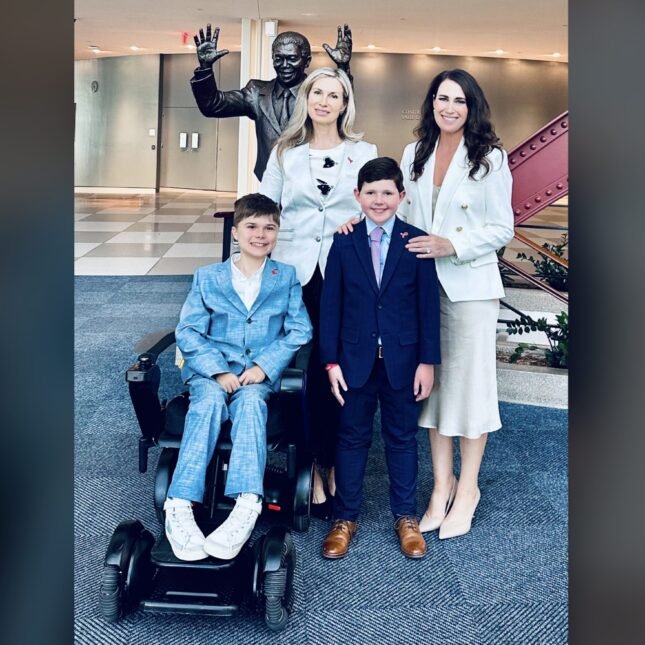
There’s a boy like you in Minnesota, Yannick’s mom told him a few years ago. He has the same disease. He has the same kind of smile. Maybe you could talk?
They clicked. After school and on weekends, the two boys boot up their computers, Yannick in San Diego and Brecken in a suburb of St. Paul, Minn. They play Roblox or build virtual worlds on Minecraft: a zoo, for example, like the real-world one 13-year-old Yannick wants to build when he grows up, full of lions, tigers, and giraffes.
They seldom talk about Duchenne muscular dystrophy, the rare fatal muscle-wasting disease they live with. But lately it’s all their moms can talk about. In stolen phone calls on the way to coffee or back from school, they compare the two boys: how quickly Yannick is declining and how steadily Brecken is — shockingly — improving.
Last winter,Brecken, 12, started receiving an experimental drug developed by Avidity Biosciences. The medicine makes the cell’s protein-building machinery “skip” part of the gene, called an exon, behind Duchenne, allowing patients to make a shortened but functional version of a protein essential for muscle survival. In trials, it appeared to virtually arrest the disease in some patients.
The approach, however, is out of most patients’ reach. In principle, “skipping” strategies could benefit about 70% of the 10,000 to 15,000 Duchenne boys and men in the U.S. (The disease almost exclusively affects males.) But the medicines have to be targeted to a patient’s specific mutation. Only about 7% of patients — or roughly 900 Americans — are eligible for Avidity’s drug, called Del-zota, which is now under Food and Drug Administration review.
For decades, health systems have invested in creating operational visibility inside the hospital. Leaders are accustomed to tracking bed capacity, anticipating demand, identifying bottlenecks and coordinating the movement of patients and resources within the four walls of the hospital.
But healthcare no longer begins and ends at the hospital doors.
Care continues to move into physician practices, specialty clinics, imaging centers, ambulatory surgery centers, and at home with virtual care. Yet many health systems still lack the same enterprise-level operational visibility at these settings as they do inside the hospital. The result is a gap in ambulatory visibility that limits patient access, threatens network integrity, and stifles revenue growth.
Research has shown that missed appointments alone cost the U.S. healthcare system approximately $150 billion annually. At the same time, McKinsey has found substantial unused capacity within employed physician networks, and demonstrated the financial value health systems can realize by improving access and utilization.
The challenge is not necessarily a lack of capacity. Often, it’s a lack of visibility to where that capacity exists and the operational ability to act on it.
The patient journey has changed. The operating model must follow.
Historically, inpatient and ambulatory care developed as distinct operating environments. Physician practices were often independent organizations with their own technology, workflows and processes. As health systems acquired practices and expanded their outpatient footprints, many of those operations remained relatively independent.
The result today can be an enormous network of care supported by fragmented operational systems.
A scheduler may need to navigate multiple platforms to determine where a patient can be seen. An executive looking at an access KPI may have to ask analysts or operational leaders to determine which region, location, specialty or provider is causing the problem. A referral coordinator may know a patient needs specialty care but lack visibility into availability across the entire network.
The information exists. It simply exists in too many places.
A patient leaving the hospital may need primary care, a specialist, imaging, laboratory testing and other services. Each represents another point at which the health system can either maintain that person as a patient or risk losing them.
In many organizations, schedulers and referral coordinators work across multiple systems simply to find appropriate appointments for a patient. The result is fragmentation that limits the ability to identify the appointment that best meets a patient’s needs based on availability, location and provider type.
That fragmentation matters because an ambulatory visit can no longer be viewed as separate from the overall patient journey.
When patients leave the network, revenue follows
Consider a patient discharged from the hospital with a referral to a specialist.
The health system has already invested in that patient’s care. Clinicians understand the patient’s history, records are available, and maintaining continuity within the network benefits both the patient and the health system.
But what happens when the preferred specialist can’t see the patient for six weeks?
Without network-wide visibility, a scheduler may not know that another location has an opening next week. The patient only knows that they can’t be seen for six weeks and looks elsewhere to continue their care.
For patients managing a new diagnosis or recovering from a complex procedure, that gap is not simply inconvenient. It creates clinical risk that the health system is no longer positioned to see or manage.
Once that happens, the health system risks losing much more than one appointment.
The specialty visit may generate imaging, procedures, follow-up appointments or additional services. Losing visibility into the patient’s care can also make it harder to manage outcomes under value-based care arrangements.
The question, therefore, isn’t simply, “Do we have an appointment available?” It should be “Where across our entire network can we best meet this patient’s need?”
Capacity you can’t see is capacity you can’t use
One of the problems of ambulatory access is that patients can face long waits for appointments while capacity simultaneously goes unused.
McKinsey quantified the problem in an analysis of more than 10 health systems with large employed-physician organizations. Across those organizations, actual, or retrospective, appointment-slot utilization ranged from 48% to 93%, with a median of just 70%. McKinsey also found a difference of approximately 20 percentage points between prospective and retrospective fill rates, driven by cancellations that were not backfilled, late cancellations and no-shows.
That distinction is critical. A schedule may appear full when viewed prospectively, but that doesn’t always mean the available capacity translates into completed patient visits. Without visibility into actual utilization, leaders can overestimate how effectively capacity is being used.
At enterprise scale, this becomes increasingly important. A health system may have hundreds or thousands of providers spread across dozens of locations. One practice may have a three-week wait while another has appointments available. Without network-wide operational visibility, leaders and schedulers may not recognize that imbalance in time to act.
The result is more than an efficiency problem. Patients who can’t get timely care are likely to seek it outside the network, taking not only the immediate encounter but the imaging, procedures, specialty care and future services with them.
Visibility changes the growth equation
Limited visibility also makes it harder to determine where health systems should invest.
When access is constrained, the instinct may be to add providers, extend clinic hours or build additional locations. But those decisions should begin with a more fundamental question: Is there truly insufficient capacity, or is existing capacity distributed inefficiently across the network?
One location may be overwhelmed while another has unused appointments. A specialty may appear constrained across the enterprise when the real bottleneck exists within only a handful of providers or appointment templates.
The data needed to make those distinctions often already exists, but it may be fragmented across multiple systems, reports and departments. Bringing that information together creates an opportunity not only to identify access and capacity constraints, but also to make better decisions about where service lines should expand, where providers should be deployed and where resources may be underutilized.
Growth should begin with understanding the capacity you already have.
From visibility to action
The next evolution of ambulatory operations is not simply another dashboard, it’s complete operational orchestration.
Leaders need operational intelligence that allows them to move from seeing a problem to understanding its cause and then being able to act on it.
Imagine an executive seeing that days to access have increased and immediately drilling down by region, location, department and provider. At the same time, an operator could see that one clinic is approaching capacity while another has availability and redeploy resources accordingly. A scheduler could tell a patient, “This location can’t see you for three weeks, but another location 20 minutes away can see you Tuesday.”
Today, gathering that level of information can require multiple reports and hours of analysis. The opportunity is to surface that information immediately for executives, managers and schedulers so they can make decisions, open capacity and better navigate patients across the network.
Artificial intelligence is the next step in this evolution. Rather than simply identifying a capacity constraint, purpose-built operational orchestration platforms can analyze historical and anticipated demand and recommend actions like adjusting templates, shifting resources or adding provider coverage where demand warrants it while keeping the operator in control of the decision.
That moves ambulatory operations from reporting what happened to helping teams decide what should happen next.
Building a boundaryless health system
The opportunity ultimately extends beyond ambulatory care.
As care continues moving into outpatient, and eventually virtual home settings, health systems need to stop viewing the patient journey through organizational boundaries. The goal should be a truly boundaryless operating model capable of seeing demand, capacity and patient movement wherever care occurs.
We already understand the value of this kind of visibility inside the hospital. The next challenge is extending it across the rest of the health system.
That requires more than technology. It requires people, process and technology working together around a shared operational picture. It requires leaders prepared to use real-time data and increasingly AI-driven recommendations to make faster, more informed decisions.
Most importantly, it requires viewing ambulatory care not as a collection of individual clinics, but as an interconnected enterprise and an integral part of the complete patient journey.
The billions lost to missed appointments, unused capacity, patient leakage and inefficient utilization are symptoms of a larger challenge: health systems can’t optimize what they can’t see.
Closing the ambulatory operational visibility gap gives organizations an opportunity to change that equation, connecting patients to the right care at the right time and location, making better use of existing resources, protecting network integrity and building a more sustainable platform for growth.
As more care moves beyond the hospital, enterprise-wide visibility will no longer be optional. It will be fundamental to how health systems compete, grow and care for their patients.
About Michelle Skinner
Michelle Skinner is the Chief Clinical Executive at TeleTracking Technologies, where she brings together clinical insight and operational strategy to help health systems unlock capacity, expand access, and drive scalable growth. A former trauma and critical care nurse, Michelle has led enterprise transformation initiatives across hospital operations, service line development, and patient flow redesign. Her career spans the front lines of care to the executive table—making her a trusted partner to health system leaders navigating complexity and change. She is committed to solving the structural barriers that limit care delivery and believes that rethinking capacity is key to building a more resilient, responsive, and equitable health system.
As healthcare organizations increasingly lean on connected technology, hospital leaders need to think beyond traditional disaster-recovery planning and prepare for prolonged technology outages. That was the message of cybersecurity experts who met last week to discuss today’s most pressing threats to healthcare data and infrastructure at a healthcare summit hosted by Rubrik.
Rubrik is a cybersecurity and data management company based in Palo Alto, California.
The timing of this conversation is notable. Last month, senators reintroduced the Health Infrastructure Security and Accountability Act, which applies baseline minimum cybersecurity requirements for healthcare organizations, along with $1.3 billion to help hospitals bolster their defenses. In August, a cyberattack on Boston Scientific disrupted manufacturing and supply chains, highlighting how attacks can have far-reaching impacts on healthcare operations.
Throughout the summit, experts echoed the same concern: AI-driven cybersecurity attacks pose a new level of risk for hospitals and health systems. These supercharged attacks could disrupt clinical operations for weeks, potentially leaving patients waiting for care.
Nicole Perlroth, bestselling author and host of the To Catch a Thief podcast, expounded on her concerns regarding AI cyberattacks.
“What we can really expect is that any vulnerability or any misconfiguration or any human error that you have in managing your security estate will be discovered at machine speed and exploited at machine speed,” she said.
John Riggi, national adviser for cybersecurity and risk at the American Hospital Association, added to the gloomy picture, calling cyberattacks on healthcare organizations a “threat to life”. He called out how these attacks can disrupt operations in every step of the healthcare delivery workflow, to the point that patient care is badly delayed – which could be life-threatening.
When technology fails due to some design failure because it wasn’t designed securely,“but which the bad guys have exploited or found today at machine speed — when those systems go down, there is an immediate disruption and delay to healthcare delivery,” Riggi warned.
Cybersecurity threats are also manifold in that they can come from a variety of sources: they could emanate from foreign actors in Russia, China, North Korea, and Iran who want to target healthcare entities, particularly now that AI tools offer less-sophisticated attackers the opportunity to launch significant operations.
Speakers suggested interventions to bolster cybersecurity within healthcare systems. They emphasized that hospitals must be prepared to operate without IT for prolonged periods of 30 days or more, and encouraged regular testing of downtime and continuity plans, as well as strengthening backup systems.
However, this heightened era of threats could also have a positive outcome in the future of healthcare cybersecurity.
“Long term, I hope that we basically get to a place we’ve never been before,” Perlroth said. “That this forces us to do the things we have talked about to death over the past few years in terms of secure-by-design, formal methods, patching, backups, real time backups, backup intelligence, et cetera.”
The Federal Trade Commission sent warning letters to 24 of the “nation’s largest” healthcare services companies, citing concerns that they may be failing to provide transparent price information.
The letters were signed by FTC Chairman Andrew N. Ferguson. The agency did not disclose which organizations it sent the letters to.
It notes in the letter that Section 5 of the FTC Act requires these organizations to provide patients with “timely, accurate, and complete pricing for healthcare services, especially for non-emergency services that are scheduled in advance.” The agency urged the organizations to conduct a review of their pricing practices and make changes if they find they’re in violation of the FTC Act.
The letter also stated that price transparency is a major priority of the FTC across several sectors, including rental housing, hotels and grocery delivery services. Consumers can’t compare offerings and make informed decisions without price transparency, the letter said.
“Price transparency is particularly critical in the hospital and healthcare setting because healthcare is often one of the most significant and financially burdensome costs consumers face,” Ferguson wrote in the letter. “Patients frequently must invest substantial time and effort to travel for in‑person visits, making it even more important that they understand costs upfront before committing to care. Moreover, hospitals and healthcare facilities can charge dramatically different prices for the same services, leaving consumers vulnerable to wide and often unexpected cost discrepancies.”
CMS requires hospitals to publicly disclose pricing information for healthcare services through machine-readable files and consumer-friendly pricing information. They also must provide uninsured and self-pay patients with good-faith estimates of expected charges before scheduled care. However, the FTC stated that complying with CMS price transparency requirements doesn’t necessarily mean a healthcare provider is complying with the FTC Act, which may impose additional requirements.
The letter notes that the price of healthcare services is a “material term,” meaning “clear and conspicuous disclosures” are needed so consumers are not deceived.
“Accordingly, failing to disclose the price of a healthcare service may be deceptive if it is likely to mislead consumers acting reasonably under the circumstances,” Ferguson wrote. “Even when some price terms are disclosed, disclosures may be deceptive when they are incomplete — such as when they omit certain charges like physician fees or facility fees, or cover only a portion of the expected care — because consumers may reasonably believe they have been provided the total cost of care. Likewise, inaccurate disclosures mislead consumers and cause substantial harm.”
The FTC said the letters do not conclude that the recipients violated the FTC Act.
Forbion, already one of Europe’s largest life sciences venture capital firms, now has more investment firepower with €2.3 billion (about $2.6 billion) raised for two new funds.
The fundraise is the largest in Forbion’s 20-year history, the Naarden, Netherlands-based firm said Tuesday. It comes in a market generally characterized by a shortage of capital, particularly in Europe.
This year through the third quarter, VC firms globally have raised $142.1 billion total, according to a new report from Pitchbook. VC fundraising is on pace to top $200 billion for the full year, which would mark a strong rebound from 2025. But the report also shows more money going into fewer funds.
Furthermore, there’s geographic imbalance in the fundraising. About two thirds of this year’s financial commitments to date are for firms in North America. Pitchbook said that despite this year’s global fundraising already surpassing 2025 figures, Europe is on pace for its lowest fundraising total since 2019, excluding last year.
The imbalance is also evident in tallies of VC investments. The number of deals and the deal values are up year over year, but that reflects strong activity in North America, the report said. Every other region in the world is on pace for a decline in deal count year over year, which Pitchbook attributes to the lack of liquidity across global markets.
Forbion said it has already completed the first investments from its two new funds, Forbion Growth Opportunities Fund IV and Forbion Ventures Fund VIII. The firm added that it expects its new capital will support investments in about 30 portfolio companies. In the announcement, Forbion co-founder and Managing Partner Sander Slootweg said the capital enables the firm to invest in “the most exciting biotech companies.”
“We will continue to focus on building and scaling those companies that develop the most paradigm-shifting treatments, addressing true unmet needs and delivering societal impact,” Slootweg said.
Forbion said its new capital comes from existing investors as well as new ones. Disclosed investors include MN, PGGM, KfW Capital, Kauffman Foundation, and Eli Lilly and Company. With the capital raised for the two new funds, Forbion said it has €7.5 billion (about $8.5 billion) in assets under management spread across 13 funds, making it Europe’s largest dedicated life sciences VC firm.
Utah pilots AI service to prescribe acne treatment, drug price disclosures are coming, and more biotech news
HECTOR RETAMAL/AFP via Getty Images
Elaine’s stories explore the boom in new obesity treatments, new drug payment models, the ways companies are affected by FDA changes, and the emerging psychedelics drug sector. She co-writes The Readout newsletter, and co-hosts STAT’s weekly biotech podcast, The Readout Loud. You can reach Elaine on Signal at elaineywchen.70.
Allison covers what hot startups are getting up to, and who’s financing them. She is also co-host of the weekly biotech podcast, “The Readout Loud.” You can reach Allison on Signal at AllisonDeAngelis.01.
Want to stay on top of the science and politics driving biotech today? Sign up to get our biotech newsletter in your inbox.
Good morning. From DC to Boston to Utah, we’ve got news from all over today.
The need-to-know this morning
BridgeBio said the FDA granted priority review to its oral treatment for children with achondroplasia, a common form of dwarfism. An approval decision on the drug, called infigratinib, is expected by Feb. 4, 2027.
Japan’s Shionogi has acquired for $2 billion the U.S.-based biotech IntraBio, the maker of an approved drug that treats the neurological symptoms of two rare diseases.
Arrivent Biopharma said its experimental treatment for exon 20-mutated lung cancer failed to delay tumor progression in a Phase 3 study.
Trump admin says drug price disclosures are coming
Trump administration officials said yesterday they will start developing a system for health insurers to disclose prescription drug prices, and a “hopeful” final plan will come out by next May.
Elaine’s stories explore the boom in new obesity treatments, new drug payment models, the ways companies are affected by FDA changes, and the emerging psychedelics drug sector. She co-writes The Readout newsletter, and co-hosts STAT’s weekly biotech podcast, The Readout Loud. You can reach Elaine on Signal at elaineywchen.70.
Biotech Startups and Venture Capital Reporter
Allison covers what hot startups are getting up to, and who’s financing them. She is also co-host of the weekly biotech podcast, “The Readout Loud.” You can reach Allison on Signal at AllisonDeAngelis.01.
John writes about the politics of health care, and he is the author of the twice-weekly D.C. Diagnosis newsletter. You can reach John on Signal at John_Wilkerson.07.
You’re reading the web edition of D.C. Diagnosis, STAT’s twice-weekly newsletter about the politics and policy of health and medicine. Sign up here to receive it in your inbox on Tuesdays and Thursdays.
Celebrity doctor Mike Varshavski has been contacted by The Bachelor for its 30th season. Send news tips and hot physicians to [email protected] or John_Wilkerson.07 on Signal.
A lame lame-duck
On Friday, President Trump said he will give $90 to more than 20 million seniors to help pay for Medicare premiums.
John writes about the politics of health care, and he is the author of the twice-weekly D.C. Diagnosis newsletter. You can reach John on Signal at John_Wilkerson.07.
You’re reading the web edition of STAT’s Health Tech newsletter
Adobe
Mario covers technology in health care, including FDA regulation of artificial intelligence; how Medicare pays for health tech; the use of AI in clinical care; mental health chatbots; and consumer wearables. He’s also the co-author of the free, twice weekly STAT Health Tech newsletter. You can reach Mario on Signal at mariojoze.13.
You’re reading the web edition of STAT’s Health Tech newsletter, our guide to how technology is transforming the life sciences. Sign up to get it delivered in your inbox every Tuesday and Thursday.
Good morning health tech readers!
Just one week until the STAT Summit in Boston. I’ll be on stage. If you are interested in coming but are on the fence, give me a shout.
Mario covers technology in health care, including FDA regulation of artificial intelligence; how Medicare pays for health tech; the use of AI in clinical care; mental health chatbots; and consumer wearables. He’s also the co-author of the free, twice weekly STAT Health Tech newsletter. You can reach Mario on Signal at mariojoze.13.