Waiting on doctors and insurers to get on board would have taken too long, Clairity says
Adobe
Katie covers the impact of health technology on patients, clinicians, and businesses. Her stories explore the price tag of clinical AI, digital health at the FDA, and the boom in direct-to-consumer telehealth. Confidential tips can be sent on Signal at palmer.01.
You’re reading Part 5 of Paying for AI, a series examining how new clinical artificial intelligence tools influence the affordability of health care and patients’ long-term health. Here’s Part 1, Part 2, Part 3, and Part 4.
“Don’t wait. Choose to be informed.”
That’s the call to action that patients will find on the site for digital health company Everlywell, which has offered at-home lab tests directly to consumers for a decade. But last week, it wasn’t marketing a prick to measure blood glucose or screen for celiac disease: It was launching one of a new generation of AI-based risk prediction algorithms for medical images.
Katie covers the impact of health technology on patients, clinicians, and businesses. Her stories explore the price tag of clinical AI, digital health at the FDA, and the boom in direct-to-consumer telehealth. Confidential tips can be sent on Signal at palmer.01.
A systematic review by researchers at the University of North Carolina’s Sheps Center for Health Services Research reached a starker finding: every one of the seven studies examining telehealth by modality reported significantly lower video use among patients with limited English proficiency. Of the roughly 25.6 million people in the United States with limited English proficiency, those who do connect are disproportionately routed to audio-only care, the modality where interpretation is hardest and clinical observation is weakest.
Here is what competence looks like in practice.
Book the language, not just the appointment
Language needs must be captured as a structured field at scheduling and must carry an interpreter reservation with it. Two failures are near-universal. First, preferred language is recorded but never triggers anything downstream. Second, the language is recorded too coarsely “Chinese” instead of Cantonese or Mandarin, “Arabic” without dialect, “Spanish” without noting an Indigenous first language behind it. A mismatched interpreter burns the appointment slot as thoroughly as no interpreter at all.
Book by encounter type as well as language. A 15-minute medication check and a 45-minute oncology consult are different assignments, and rare languages need lead time that on-demand queues cannot always deliver.
Send three links, and test them
The interpreter needs a dedicated participant link not the patient’s link forwarded, and not a phone line bridged into a video visit. Bridging is where three-way encounters most often collapse: the interpreter cannot see the patient, and roughly half of what an interpreter relies on disappears.
That is not only a quality problem. The technical standards carried into Section 1557 require a sharply delineated image large enough to show the faces of both the interpreter and the person being served, along with real-time video free of lags or irregular pauses. The rule explicitly bars reliance on low-quality video remote interpreting, and OCR’s December 2024 Dear Colleague letter signaled that these obligations are active and enforceable. An interpreter on a phone line is a compliance exposure, not a workaround.
Where the platform allows it, pin the interpreter’s video so the patient can see them throughout, and confirm the connection before the patient joins.
Spend sixty seconds on the pre-session
The single highest-yield habit in interpreted care costs one minute. Before the clinical conversation begins, the clinician and interpreter align on the encounter: the visit’s purpose, any specialized terminology likely to come up, whether difficult news is expected, and how the interpreter should signal a need to pause.
This is also where the interpreter states the ground rules to the patient that everything said will be interpreted, that nothing will be omitted or added, and that the encounter is confidential. Patients who understand this speak more freely. Patients who do not tend to compress their answers.
Run the visit in the first person
Speak directly to the patient, not to the interpreter. “Where does it hurt?” not “Ask her where it hurts.” The interpreter renders in the first person. This is standard practice, and it is not a stylistic nicety: third-person framing pushes the patient out of their own encounter and invites the clinician to build rapport with the wrong person.
Deliver one or two sentences at a time and pause. Long uninterrupted passages force the interpreter to summarize, and summarization is where clinical detail is lost. Expect the interpretation to take longer than the original. Build the extra time into the slot rather than accelerating to recover it.
Two habits matter especially on video. Silence carries no visual explanation, so narrate what you are doing when you turn to the chart. And when the interpreter requests a clarification, treating it as a quality signal rather than an interruption it usually means a term has no clean equivalent, which is precisely the moment a misunderstanding would otherwise pass unnoticed.
Document the interpretation, not just the visit
Record the interpreter’s name or ID, the language and dialect, the modality, and the duration. Most organizations cannot currently stratify outcomes by language because this data never reaches the chart, which makes a known disparity invisible to the quality committee that is accountable for it.
Teach-back is where a language-discordant visit is verified or lost. Ask the patient to explain the plan in their own words, through the interpreter, before anyone disconnects. Written follow-up should be reviewed by a qualified human, the 2024 rule requires exactly that for critical communications produced with machine translation.
The system-level point
None of this is difficult. It is unassigned. Interpreter integration usually belongs to no one: not the telehealth platform team, not the clinical informatics group, not the compliance office that owns the language access plan on paper.
Health systems now buying ambient documentation, AI translation, and virtual-first care are making architectural decisions about a population that is already using video least. Deciding who owns the three-way visit before those tools are configured rather than after is the cheapest equity investment on the roadmap.
About Philip Rosen
About Philip Rosen
Philip Rosen is the Founder and Managing Director of Capital Linguists, a US-based language services firm providing certified interpreting and translation across more than 210 languages. He works with healthcare systems, government agencies, and academic institutions on language access in high-stakes settings.
The U.S. healthcare system is facing a tragedy of the commons, in which each stakeholder is incentivized to act in their own self-interest. That is the focus of Trilliant Health’s report released on Tuesday.
Trilliant Health is a healthcare analytics and market research firm. The report examines six trends drawn from Trilliant’s claims database, price transparency data and government and industry sources.
“The six different trends that we cover all really tie into the tragedy of the commons, which ultimately is this idea that incentives reward individual actors for their behavior that the collective cannot sustain, and this is just something that we see throughout our healthcare system,” said Trilliant Health’s Chief Research Officer Allison Oakes. “Unfortunately, everyone in the healthcare system is really incentivized to be managing and sort of optimizing for their own revenue and profits, and no one is entirely responsible for actually improving health.”
The six trends include:
1. The healthcare system isn’t functioning as a system: About 70% of Americans believe the healthcare system has major problems or is in a state of crisis, and healthcare costs are continuing to rise. Employee deductibles and premiums are increasing faster than wages and inflation.
“Americans are more concerned about affording healthcare than they are about gas, housing, utilities, and groceries. … I think this affordability issue is really starting to hit a breaking point,” Oakes said.
2. Population unwellness is a systemic failure: The U.S. population is increasingly becoming unwell due to poor diet, physical inactivity and social isolation. However, healthcare incentives continue to prioritize sick care over prevention.
Pediatric behavioral health visits for pervasive developmental and anxiety disorders increased substantially from 2019 to 2025. In 2025, 6.4% of children were taking five or more medications, and more than 10% of patients in 11 states received opioid prescriptions from three or more providers.
3. Disconnect between demand and supply: Behavioral health and primary care physician supply is lacking. By 2038, the overall physician supply is projected to meet just 87.7% of demand, with adult psychiatrists and primary care physicians facing the largest shortages at 49.8% and 80.4% adequacy, respectively.
In addition, advanced imaging and behavioral health visits grew faster than primary care from 2019 to 2025, while consumers increasingly turned to self-testing and other nontraditional approaches to meet their health needs.
4. Value is not incentivized, nor measured or managed: CMS uses more than 800 active quality measures, but only 27% are tied to outcomes. In addition, hospital negotiated rates show little correlation with quality, with higher prices not necessarily associated with lower 30-day mortality rates, the report found.
5. Fraud, waste and abuse: Misaligned incentives are contributing to fraud, waste and abuse, the report shows. From 2019 to 2024, the number of for-profit hospices rose 11.2%, and nonprofit hospices fell 2%. In addition, for-profit hospices saw a 13.7% Medicare margin in 2023, versus -1.3% for nonprofits.
6. Negative-sum game: New medications are challenging the U.S. healthcare system’s traditional reliance on higher patient and procedure volumes to drive revenue.
The growing use of drugs such as GLP-1s and SGLT2 inhibitors has coincided with declines in certain procedures, suggesting that medications could increasingly replace or reduce demand for costly interventions.
SoloVitals, which captures patients’ heart rate and respiratory rate using only the camera on their device, will be available for private preview with select customers, with wider availability expected in December. The New York-based telemedicine company did not identify those customers. SoloScribe, an ambient, EHR-integrated documentation tool, is now generally available.
Both tools integrate with the already-established Solo virtual care platform, so that the more than 15,000 global customers can smoothly integrate the new capabilities without the need to add new technology, according to the company’s news release. SoloVitals and SoloScribe aim to support patient care operations and reduce technology fragmentation across health systems so that providers can keep their focus where it’s truly needed – on the patient.
“SoloVitals addresses a common gap many hospital virtual care teams experience, where they cannot collect real-time physiologic data from patients during a virtual visit,” said Joby McKenzie, general manager of North American health systems at Teladoc Health.
Danny Sanchez, vice president of technology and innovation at Teladoc Health, explained how SoloVitals collects patient vital signs contactlessly.
“During intake for a virtual visit, the patient uses the camera on their own device to capture supported vital signs of heart rate and respiration rate,” Sanchez said. “It uses remote photoplethysmography (“rPPG”) to detect very small changes in the color of the skin caused by blood flow. This data is combined with a computer vision assessment of patients’ fine movements and is then evaluated by sophisticated algorithms to return multiple physiologic measurements.”
Results are then available for the provider before or during the virtual visit, offering real-time physiologic data which can help to inform care decisions. Sanchez noted that patients do not need to download a separate app, and that the process is guided by on-screen prompts to facilitate a smooth user experience.
SoloScribe offers ambient AI documentation – that alone is not unique, but what makes SoloScribe stand out is simple: it doesn’t require hospital systems to apply new technology. It works within the Solo platform that’s already integrated into the EHR – be it Epic or Oracle Health.
“Most ambient scribe tools on the market ask hospitals to buy, install and manage one more piece of technology,” said Sanchez. “Our clients keep telling us they want the opposite: new capabilities built into the products and workflows they already know and use.”
This goes to the heart of one of the biggest challenges health systems face today, that McKenzie identified as “technology fragmentation.”
She added that “each new capability comes with another vendor, another login, another device, or another workflow. The larger opportunity of integration is to help health systems move from a collection of disconnected tools to a more unified care environment.”
Nobel-recognized technology is being explored for safety and clinical potential
Optogenetics involves genetically engineering specific brain cells to increase their sensitivity to light.CAROL AND MIKE WERNER/SCIENCE PHOTO LIBRARY
Annalisa (Nalis) Merelli is focused on boys’ and men’s health: She looks into reproductive health, trending treatments, screening approaches, mental health, and everything in between.
Retinitis pigmentosa is a genetic disorder that causes degeneration of the light-sensing cells in the retina. Generally diagnosed in childhood or early adolescence, patients gradually lose peripheral and night vision, often becoming legally blind by young adulthood.
With the exception of a subset of patients who present a specific genetic mutation and can be treated with gene therapy, there is no cure for the condition. Cases are addressed by measures to slow degeneration and preserve what is left of the vision.
Annalisa (Nalis) Merelli is focused on boys’ and men’s health: She looks into reproductive health, trending treatments, screening approaches, mental health, and everything in between.
Clinical artificial intelligence platform Healthleap announced that it has raised $38M in combined seed and Series A financing backed by Sequoia Capital, First Round Capital, and Hummingbird Ventures (consisting of an $8M seed round co-led by Sequoia and First Round and a $30M Series A led by Hummingbird).
Directly targets an entrenched inpatient diagnostic blind spot: up to 50% of hospitalized patients are clinically at risk for disease-related malnutrition, yet fewer than 9% ever receive a formal clinical diagnosis, exacerbating patient morbidity, mortality, and hospital length of stay (LOS).
Replaces static, manual screening workflows: while acute hospitals historically screen for malnutrition using a two-question survey administered once at admission—routinely missing sedated, confused, intubated, or critically ill patients—Healthleap ingests every patient’s complete medical record every morning, synthesizing clinical notes, laboratory trends, vital signs, medication orders, and active problem lists.
Inpatient Record Synthesizer: Screening Every Patient Every Morning
Founded in 2022 by sibling duo Josiah Meyer (CEO) and Jemima Meyer (clinician and co-founder), Healthleap operates as an EHR-integrated clinical surveillance layer:
Continuous Multi-Source Chart Ingestion: The platform reads each patient’s complete electronic health record every morning—synthesizing physician progress notes, nursing assessments, laboratory panels, vitals trajectories, active medication orders, and historical problem lists.
Prioritized Clinical Worklists: Rather than overwhelming providers with static alerts, Healthleap ranks patient risk and routes actionable scores into optimized EHR workflows, highlighting for bedside clinicians and registered dietitians who requires evaluation first.
Proactive Diagnostic Capture: Enables hospitals to screen their entire inpatient census daily with high diagnostic precision, identifying deteriorating or undernourished patients who would otherwise go unnoticed until post-discharge complications develop.
Compliance and Security: The platform operates under full HIPAA compliance and maintains SOC 2 certification.
Measured Clinical Efficacy and Hard-Dollar Financial Returns
Healthleap’s adoption demonstrates significant clinical and revenue cycle impacts across academic health systems:
Penn Medicine Financial Return: At one Penn Medicine hospital, deployment of Healthleap generated $23.8 million annually through a combination of incremental reimbursement capture and the financial return of length-of-stay (LOS) reductions.
Diagnostic Expansion at Enterprise Scale: In enterprise health system rollouts, deployments yielded a 39% increase in identified and treated malnutrition cases, unlocking $11 million in incremental reimbursement revenue within a single health system network.
Appropriate Case-Mix and DRG Reimbursement: Because severe malnutrition qualifies as a major complication or comorbidity (MCC) under Medicare Severity Diagnosis Related Group (MS-DRG) payment methodologies, accurate identification and clinical nutritional intervention allow hospitals to capture approximately $11,000 in incremental reimbursement per qualified encounter while reducing avoidable inpatient days.
Expanding Beyond Malnutrition: The Multi-Condition Roadmap
Building on its validated clinical malnutrition algorithms, Healthleap is deploying its daily chart-surveillance architecture across high-cost acute inpatient conditions:
Congestive Heart Failure (CHF): Detecting early subclinical fluid retention and decompensation markers before acute exacerbation.
Pressure Ulcers: Flagging mobility, nutritional, and skin-integrity risk factors to initiate targeted nursing interventions and prevent hospital-acquired stage III/IV pressure injuries.
Hospital-Acquired Infections (HAIs): Identifying early physiologic and laboratory indicators of systemic sepsis, catheter-associated urinary tract infections (CAUTIs), and surgical site complications.
“Every week, millions of patients leave hospitals with unresolved health conditions that will erode their health and cost up to 10x more to treat later,” said Josiah Meyer, Co-founder and CEO of Healthleap. “Finding them now is prevention, and it’s a win for everyone. Patients get treated before they get sicker. Hospitals shorten stays and are paid for the care they deliver. Payers avoid the much larger cost of complications down the road. Our goal is to improve care and save lives by catching these conditions early.”
Caribou Biosciences has an off-the-shelf cell therapy with encouraging clinical data to date and agreement with the FDA on the design of a pivotal study in advanced cases of a difficult-to-treat blood cancer. What the company doesn’t have is the capital for that Phase 3 clinical trial.
Given the financial challenges, Caribou is stopping work on that program and a second one — its only remaining therapeutic candidates. The discontinuations announced after Tuesday’s market close will lead to job and spending cuts as the Berkeley, California-based biotech explores “strategic alternatives” that it said could include a merger, acquisition, or sale of its assets.
“The Board took these actions in view of the current financing environment for allogeneic CAR-T cell therapies, which has made it increasingly challenging to secure the capital necessary to responsibly advance the Company’s allogeneic CAR-T cell therapy programs,” the company said in a Tuesday regulatory filing.
Caribou’s allogeneic cell therapies are made by engineering immune cells sourced from healthy donors. The engineering is done with CRISPR technology; Caribou was co-founded by Jennifer Doudna, the scientist who won a Nobel Prize in Chemistry for her CRISPR discoveries. The off-the-shelf approach of allogeneic CAR-T cell therapies was intended to offer manufacturing and therapeutic advantages over first-generation CAR-T drugs, autologous therapies made by harvesting and engineering a patient’s own T cells.
Caribou’s Phase 3-ready therapeutic candidate, vispacabtagene regedleucel (vispa-cel), is an allogeneic CAR-T cell therapy developed to treat relapsed or refractory cases of B cell non-Hodgkin lymphoma. It’s engineered in a way that enhances its activity and limits exhaustion of the cell therapy, which is a problem for autologous CAR-T therapies. The second discontinued Caribou program is CB-011, which is designed to target the protein BCMA to treat relapsed or refractory multiple myeloma.
Autologous therapies use a patient’s own T cells, but these cells have diminished fitness and function from fighting cancer and enduring earlier lines of treatment that damages them. By contrast, allogeneic therapies start with healthy immune cells from healthy donors, which could lead to better outcomes. But one of the key challenges facing all allogeneic cell therapy developers is achieving the same or better durability as autologous cell therapies. Caribou’s discontinuations mean the company won’t have the opportunity to show its therapies can offer these advantages.
In a research note, Leerink Partners analyst Daina Graybosch noted that Caribou’s announcement came on the heels of AbbVie reporting its T cell engager (TCE), Epkinly, succeeded in a Phase 3 test as a first-line treatment for diffuse large B-cell lymphoma, an aggressive type of non-Hodgkin lymphoma. Graybosch said that in a world where TCEs are becoming entrenched as first-line treatments for these cancers, there’s still a place for allogeneic cell therapies for patients who need it after a TCE.
“This view is grounded in the real-world observation that autologous CAR-T efficacy can become compromised in patients who received prior TCE, potentially due to reduced fitness of the patient-derived starting cell product material,” she said. “By delivering an allo-CAR-T derived from a healthy donor cell source, the modality can sidestep this mechanistic liability.”
Graybosch said investors who appreciate Caribou’s approach might be interested in the clinical-stage allogeneic CAR-T programs of Fate Therapeutics and AvenCell Therapeutics.
Caribou was founded in 2011 and went public a decade later, raising $304 million in an upsized IPO. At the time, vispa-cel (then known as CB-010) and CB-011 were in early clinical development. Despite the strong investor interest in the IPO, the company has since weathered financial and competitive challenges. While allogeneic cell therapies would offer manufacturing advantages compared to autologous therapies, biopharma companies and investors are increasingly turning their focus to in vivo cell therapies with much less manufacturing cost and complexity.
As of February, Caribou’s headcount was 97, according to the company’s annual report. In its second quarter 2026 financial report, Caribou said its cash position was $113.8 million.
Caribou’s board of directors approved the current restructuring last Friday, the company said in the regulatory filing. The “substantial reduction” of the workforce will take place in the current quarter, leaving a limited number of employees to complete the strategic alternatives process and wind down the business. Expenses related to the restructuring will be between $15 million and $19 million.
Photo by Flickr user Thomas via a Creative Commons license
John Wilkerson, a Washington correspondent, is the author of D.C. Diagnosis, a twice-weekly newsletter about the politics and policy of health and medicine.
John writes about the politics of health care, and he is the author of the twice-weekly D.C. Diagnosis newsletter. You can reach John on Signal at John_Wilkerson.07.
WASHINGTON — The brand drug industry’s main trade group is suing the Trump administration over a pilot program tying Medicare drug prices to those in peer countries.
The Pharmaceutical Research and Manufacturers of America said Wednesday that it had filed a complaint in the U.S. District Court for the District of Columbia asserting that the “most-favored nation” pilot in Medicare Part B exceeds Medicare’s statutory authority.
The pilot, called GLOBE, is not expected to have much impact because the administration exempted all but a handful of companies in return for their agreement to voluntary deals to charge Medicaid MFN prices.
John writes about the politics of health care, and he is the author of the twice-weekly D.C. Diagnosis newsletter. You can reach John on Signal at John_Wilkerson.07.
A webinar moderated by MedCity News Editor-in-Chief Arundhati Parmar delved into findings of the recently published Healthcare AI Readiness Index. Panelists discussed how best to balance AI adoption, governance, how to scale AI at healthcare institutions and best practices for doing so. Sponsored by Cotiviti, the webinar included perspectives from Cotiviti CIO Sean Warren and Thomasina Anane, Associate Vice President, Enterprise Analytics, with the Alliance of Community Health Plans.
Cotiviti turns fragmented data into actionable insights. It helps healthcare organizations reduce waste, fraud, and abuse, and works with them to simplify their operations.
“In many ways, what we’ve become is the connective tissue that helps healthcare work more efficiently across all of the payers, providers, and other stakeholders,“ Warren said.
Anane referenced a recent annual meeting of ACHP, which included a candid discussion on AI governance.
“One theme that really came through clearly is that AI governance has to start well before deployment and evolve along the use case. Many of our health plans are grappling with issues like: What is my state saying about AI use? What does that look like federally and what does that look like as a health plan?….What data are actually involved? What decision is being influenced? What happens when the output is wrong?”
The biggest challenge with AI governance in a clinical and payer setting is the need for constant vigilance, a point made by both Anane and Warren.
“Deployment is really not the finish line,” Warren said. “It’s constant follow-up, constant security checks, and we have a lot of human-in-the-loop and human oversight with observability. It’s ten times more important when we add AI to the mix to be able to know what that AI is doing. Do you have the guardrails around what the AI is doing in your environment? Do you have the ability to undo it? Do you have the ability to follow and trace every transaction?”
The webinar discussion also touched on other issues such as:
What should leaders assess before moving an AI use case from pilot to enterprise deployment?
Are traditional vendor questionnaires and point-in-time assessments still sufficient?
What is driving shadow AI use?
Important considerations for Chinese AI models and frontier AI models.
Why might traditional cybersecurity controls be necessary, but insufficient in the new threat environment healthcare organizations face?
To access a recording of the webinar, fill in the form below:
Ed’s stories explore prescription drug pricing, affordability and access, as well issues surrounding patents, litigation, and legislation. He is also the author of the morning Pharmalittle newsletter and the afternoon Pharmalot newsletter.
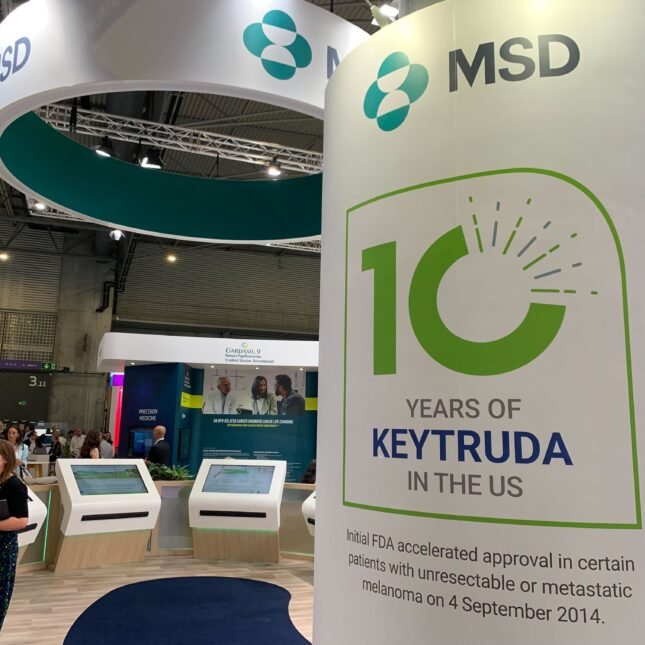
In a setback for Merck, a Dutch court ruled that the company infringed on a patent pertaining to a subcutaneous formulation of its Keytruda cancer treatment and was ordered to halt manufacturing and marketing of the medication in several European countries, including France, Italy, Sweden, Switzerland, and the Netherlands.
The ruling came as part of a widening patent infringement dispute with Halozyme Therapeutics over the best-selling cancer treatment. Patients requiring Keytruda will still have access to the existing intravenous version, which is not affected by the patent dispute or court order.
In a statement, Merck said it “strongly” disagreed with the court’s decision.