
A Healthcare Dive analysis of highly anticipated stars data shows a mixed bag of winners and losers, though — as expected — the quality scores slipped overall. See how major carriers fared for 2027.

A Healthcare Dive analysis of highly anticipated stars data shows a mixed bag of winners and losers, though — as expected — the quality scores slipped overall. See how major carriers fared for 2027.

A cadre of elite techies, financiers, and high-level Trump administration officials have spent a year quietly charting an extraordinary and rapid campaign to persuade Americans to use apps and other artificial intelligence-powered tools to manage their healthcare and medical records.
As that campaign has unfolded, administration officials have granted tech companies an unusual opportunity to nudge the nation’s health department toward a loosely regulated future for AI health apps in which the government reimburses them for services as it does medical professionals.
In February, federal health officials invited those businesses — including tech giants Microsoft, Anthropic, OpenAI, Apple, and Google — to a listening session on conversational AI products for patients, such as chatbots. Representatives from at least 35 industry organizations attended the meeting held by the Food and Drug Administration, which is responsible for regulating health apps as medical devices. Companies were prompted in advance to explain their AI products and how they access patients’ sensitive medical information.
But the meeting did not appear on the FDA’s public calendar or regulatory notices, nor was the public invited. Rather, the invitation for a select group to help shape federal policy governing AI in healthcare was extended in a chat room on the messaging service Slack.
“This is a great opportunity to support HHS’ goals and share your state-of-the-art understanding of safe Conversational AI development and monitoring to help FDA shape future guidance,” CMS senior policy adviser Morgan Taylor wrote in the Slack workspace.
The Centers for Medicare & Medicaid Services has not formally announced the chat room through federal regulatory channels, though CMS officials have talked about it at industry conferences. Legal experts said the chat room resembles a federal advisory panel, which would be required to operate in public view.
KFF Health News reviewed thousands of Slack messages, meeting transcripts, and video recordings that reveal how the Trump administration has granted the industry a direct line to top government officials — including former head of the Department of Government Efficiency Amy Gleason.
The conversation took place behind the scenes as federal health officials publicly worked to integrate AI and other technology into nearly every aspect of healthcare, a plan they’ve branded the “Health Technology Ecosystem.”
“We wanted to give industry a chance to play in the sandbox of government-supported healthcare,” CMS Administrator Mehmet Oz said in September at the public launch of an initiative that allows health apps to bill Medicare for AI services such as wearable device tracking. Last week, Health and Human Services Secretary Robert F. Kennedy Jr. delivered an enthusiastic endorsement of AI in healthcare, claiming it is “much better informed than any doctor in the country.”
Meanwhile, HHS staff even promised that a recently launched Medicare App Library would serve as a lucrative pipeline for those businesses to get new users. The library’s webpage currently promotes only two dozen commercial apps to millions of American seniors and those with disabilities.
As Trump officials sell it, Americans will get easier access to their medical records so apps can swiftly provide health or wellness advice. In practice, however, so will the tech companies.
Doctors, meanwhile, are increasingly worried about how patients use and share their medical records with the nascent technology.
“Some of these tools just aren’t ready for primetime,” said John Whyte, CEO of the American Medical Association. “We don’t have enough data about them. We don’t understand how they work, how they’re using the information. There’s no liability if these tools get things wrong.”
CMS officials declined to answer several questions about the Slack workspace, including about its legality.
“CMS is focused on giving Medicare beneficiaries greater access to their health information and useful digital tools while promoting an open, interoperable healthcare system,” Gleason, now chief product officer for the newly created Office of Health Technology and Products at CMS, wrote in an emailed statement. “The Health Technology Ecosystem is an open, voluntary technical collaboration. CMS will continue working with patients, providers, payers, technology organizations, and other stakeholders to make health information more accessible and useful to the Americans it serves.”
The FDA did not respond to a request for comment.
The Conversation Begins
The behind-the-scenes effort to funnel more Americans to AI-powered health apps began in August 2025 in the Slack workspace.
“Welcome all!” Gleason wrote. “Please be sure to read the Code of Conduct and see the Channel list as well to help you find channels that are relevant to you.”
Gleason is best known for serving as the acting administrator of Elon Musk’s Department of Government Efficiency, as it gained access to millions of Americans’ sensitive personal and financial data, including at the Social Security Administration.
As her work with DOGE wound down last year, Gleason welcomed a variety of tech leaders, investors, and entrepreneurs to the chat room.
The Slack workspace’s participants include representatives from major digital wellness companies like Oura Health, AI companies like Palantir, and investment outfits like 8VC, a venture capital firm associated with Kennedy’s son Finn. While the Slack’s member count has ballooned to 1,700 over the past year, only a handful of patient advocates, doctors, and hospital representatives are in it.
The code of conduct Gleason shared on Slack in August 2025 documented that CMS had quietly established a technology working group.
The document also set ground rules for the Slack workspace, noting that the group does not constitute an “advisory committee,” nor would it be used “to obtain advice or recommendations for HHS, CMS, or any HHS/CMS officials.” The code also advises that federal employees “are prohibited from endorsing any product, service, or enterprise.”
Joseph Daval, a former FDA lawyer who is now a research specialist at Harvard Medical School, reviewed messages from the Slack workspace at the request of KFF Health News. He said the chat room in some ways resembles a federal advisory committee — an independent panel that can be formally stood up by an agency head, Congress, or the president to ensure agencies act in the best interest of the public rather than industry.
The law on advisory committees “was passed in part out of a concern about interest group capture, about anticompetitive capture of agency policymaking, about corruption,” he said.
Daval said the chat group looks like a committee, with members interacting with one another and building consensus on preferred courses of action.
If it were a formal advisory committee, though, Daval said, it would be subject to certain “membership requirements having to do with independence and fair balance.”
A ‘Sales Engine’
Over a series of video calls, CMS officials promised tech leaders participating in the Slack workspace that the agency would promote their health apps.
Jacob Shiff, the chief AI and technology officer at CMS’ Innovation Center, told industry representatives in a Zoom meeting in February that he hoped the agency’s work would be a “sales engine” for the health apps.
“We’re going to have a directory of all the organizations,” Shiff said in a video recording reviewed by KFF Health News. “The people on this call who hopefully will have amazing solutions that work will be the winners, and you have every incentive to obviously drive down your costs so you can be extremely profitable and scale. So hopefully we’re selling — or enabling you guys to thrive.”
A recording of the call had been publicly available through a Google Drive link but was made private the day after KFF Health News asked about comments made during the meeting.
CMS did not respond to queries about how the agency has decided which AI-powered health apps appear in the Medicare App Library or why federal employees have promised to promote the products.
Days before publicly launching the Medicare App Library, CMS officials promised AI tech leaders during an informal meeting that the new webpage would become an important distribution channel for health apps because Medicare enrollees would place trust in products listed on the CMS website.
“If medicare.gov is promoting it, for lack of a better word, then yeah, it would be an app that I would trust and explore,” CMS’ Taylor said during the April 7 meeting, channeling enrollees, according to a transcript of the call.
The Medicare App Library’s webpage encourages older and disabled Americans to manage health conditions such as obesity, cancer, or diabetes using two dozen AI-driven apps developed by some of the world’s largest corporations, including Microsoft and Google. Many of the apps promise in their product descriptions to give insight, perform analyses, or develop plans that will help patients lose weight or manage diabetes.
CMS officials have suggested to tech representatives during at least two meetings this year that those apps will be prioritized for a new agency program that reimburses companies for AI chatbot advice or wearable device tracking, according to video recordings.
CMS has not publicly divulged all the criteria it uses to decide which apps are listed in its library, but the webpage promotes apps still in their infancy.
Among them is Slothwise, a health app launched this year from a San Francisco apartment by a young, self-described biotech entrepreneur and triple citizen of Russia, Israel, and the U.S. The app says it “knows your whole health” by analyzing medical records and tracking health data for $9.99 a month. It has been reviewed on the Apple and Google app stores only a handful of times.
“I trusted slothwise with my health info because it was endorsed by medicare,” one reviewer wrote in a Google review in August. “Connecting info was smooth and I learned a lot about my health.”
In a statement, Slothwise CEO Sofia Sigal-Passeck did not answer questions about the size and medical expertise of her current team, nor about the availability of a doctor to consult with patients who use the app. The app, she said, is only “informational” at this time.
“I’ve spent years building at the intersection of AI and complex biological data,” Sigal-Passeck wrote in an email. “A small team is not the same thing as an inexperienced team. Slothwise is built by physicians, PhD researchers and engineers.”
‘No Regulation, No Rulemaking’
What’s often less clear — and buried deep in lengthy privacy policies — is that these apps are tapping into the intimate details of patients’ medical records to fuel their AI-driven analyses.
Tech vendors have lobbied the government to treat these apps, once they are vetted and authorized by a third-party organization, like a patient requesting records. That position gives apps sweeping access to pull sensitive health data from the national network through which providers electronically exchange medical records, called the Trusted Exchange Framework and Common Agreement, or TEFCA.
A small but influential group of those tech company executives directly made the case to federal health officials during a formal meeting in May, arguing that when health apps request medical records they should be treated as if they are standing “in the shoes” of a patient.
On Slack, tech vendors have lobbied for a “frictionless pathway” for verified users, after they’ve consented once, that allows the app to gain limitless access to patients’ medical records from the TEFCA network.
Ryan Howells, a healthcare management consultant who lobbies for a Washington, D.C.-based digital health tech organization called the CARIN Alliance, has spearheaded an effort for patients — vis-à-vis apps — to more easily access medical records. He has regularly noted in Slack that health apps accessing TEFCA must be vetted by a third-party organization — one of which he sits on the board of — and agree to a code of conduct, developed by the alliance he lobbies for.
“What more can you do to have trust in these apps?” he wrote in a March Slack message, responding to concerns about how much patient consent is needed for apps to access medical records on the network.
Kristen Valdes, the CEO of b.well, a company that also connects apps to the TEFCA network, made a similar argument.
“My opinion is that we need to stop protecting patients from themselves,” she wrote in the same message thread. “Full stop.”
Howells did not respond to an emailed list of questions from KFF Health News. In an interview, Valdes told KFF Health News that her comment reflected her frustration at the “paternalism” of the healthcare system, which she said has historically made it difficult for patients to access their records. Although, she said, “there are going to be good and bad apps.”
Other tech leaders worried in Slack about the approach.
One startup founder cautioned the group to think about the pitfalls of giving health apps broad leeway to pull medical records.
“We might all be good, honest actors here but security & privacy systems have to be designed around the presence of malicious actors – especially if we want this system to scale up to thousands of apps,” wrote Jason Kulatunga, who runs Fasten Health, a medical records management platform.
Gleason, the CMS official, has publicly championed the vision shared by Howells and Valdes. In her speeches, she frequently urges doctors to accept patient medical records directly from apps and calls on them to “Kill the Clipboard,” also the title of a 2025 white paper co-authored by Howells that urges doctors’ offices to abandon paper records.
Last month, Gleason spoke to a crowd gathered at a swanky hotel in Washington for an event hosted by the MAHA Institute, a think tank that supports Secretary Kennedy’s agenda. She laid out her work with tech companies over the past year as she discussed the Trump administration’s efforts to make medical records more digitally accessible.
As she told it, more Americans can now download an app and access their medical records.
“Once you’ve verified your identity you can just click a simple button and say, I’d like my medical records into whatever app I choose,” Gleason said.
She continued: “That was all done just — no regulation, no rulemaking — just by challenging industry to work together.”
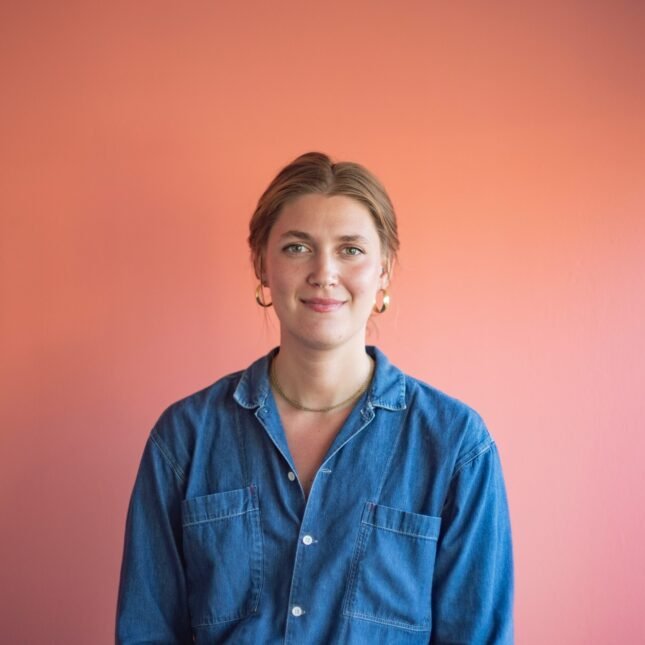
Betsy Pleasants was studying one historic disruption to abortion access when a more seismic one emerged.
In spring 2022, as a graduate student at UC Berkeley School of Public Health, Pleasants was researching the effects of the Covid-19 pandemic on abortion services when a leaked draft opinion indicated that the U.S. Supreme Court would overturn Roe v. Wade. The court finalized its decision that June, ending the nearly 50-year-old constitutional right to abortion and ushering in an era of rapid change and increased state restrictions.
Working with her thesis committee, Pleasants, who is interested in expanding access to abortion and other reproductive health care, adapted her dissertation to study conversations on the social network Reddit. Her new focus was tracking emerging barriers to abortion access in real time and examining the role of online resources in connecting people with evidence-based health information and services.
“When it became clear that Roe v. Wade was going to be overturned, we all agreed that we had to shift the project,” said Pleasants, now a postdoctoral research associate at the Center for Women’s Health Research at the University of North Carolina. The Supreme Court decision “is something that required a response, and this project was positioned to offer timely insights into what this policy change means in people’s lives.”
Pleasants and her colleagues plumbed thousands of posts from the Reddit forum r/abortion using natural language processing (NLP) — a type of computational analysis used to identify patterns in human language — alongside a qualitative close reading of a subset of posts. Through this dual approach, grounded in safeguards for user privacy, Pleasants is defining a framework for using artificial intelligence tools without losing sight of the context, complexity, and people behind the data.
“We are in a complex policy moment for reproductive health,” said Pleasants, who was recently named a STAT Wunderkind. This type of research “is an act of documenting in an effort to work towards evidence-based policy change over time, and to advocate for the change that’s needed to promote access to reproductive health care.”
Findings by Pleasants and her colleagues reaffirmed well-established barriers to access, including high costs and limited appointment availability, while also revealing lesser-known challenges, such as delays in receiving abortion medications by mail, low credibility of online ordering platforms, and concerns about the legal risks of seeking abortion or related medical care.
“Embracing this opportunity and new methods was visionary,” said Ushma Upadhyay, professor in the Department of Obstetrics, Gynecology, & Reproductive Sciences at the University of California San Francisco, who mentored Pleasants during her doctoral research. “At the time, I didn’t know of any other studies using NLP to study online discourse on abortion. Most researchers will just take a random sample of a manageable number that they can analyze, and so this approach was really great because Betsy was able to get a more complete picture.”
For scientists like Pleasants, the value of NLP goes beyond making large-scale research more efficient. It offers a broader view of how people communicate and behave at a scale that would otherwise be difficult to capture.
“Computational research is like a stepping stool over a tall fence that lets you look at the other side and see everything that’s around you,” said Danny Valdez, associate professor of public health at the Indiana School of Public Health-Bloomington, who has employed NLP to study vaccine misinformation, addiction and recovery, and cancer care. “NLP, machine learning, and, increasingly, AI methods give you a 1,000-foot overview of how people communicate when they need help. You can learn a lot about the pulse of the nation, which helps us understand and inform where future policy could be headed.”
Growing up in North Carolina, Pleasants got her first window into how people access health information, sparking an interest that would eventually shape her career. Even in Durham, a liberal core city of North Carolina’s Research Triangle, she recalled receiving abstinence-only sex education from a gym teacher. The contrast between the information she received at school and at home made her aware of how unevenly health knowledge and resources could be distributed.
“I saw peers and other people in the community navigating not having good sex education, not having access to desired health services, and stigma,” said Pleasants. “All of these things really shaped the capacity they had to make decisions for themselves about their reproductive health.”
Those early observations would become a throughline in Pleasants’ career, from earning her undergraduate degree at the University of North Carolina to completing her master’s and doctorate at UC Berkeley, and ultimately returning to UNC for her postdoctoral research.
Pleasants entered college with an eye on becoming a physician, but was instead drawn to medical anthropology and broader discussions of how history, politics, and culture have shaped, and continue to shape, the U.S. health care system.
“A big question that came up for me was: ‘Do I want to work within that system or do I want to critically engage with it?’” said Pleasants. “So, I ended up on this trajectory of research with an interest in asking questions of how we offer health services, particularly for women, and seeking to understand how we can make that better for all people as much as possible.”
Analyzing r/abortion while at Berkeley allowed Pleasants to capture perspectives often overlooked by conventional research methods. The platform’s relative anonymity gave people space to speak candidly about personal experiences they might hesitate to share elsewhere. And because most community members had not interacted with the health care system, their experiences would often be missed by practice-based analysis.
“Following the reversal of Roe v. Wade, a lot of people were turning to Reddit for support,” said Upadhyay.
Pleasants and her collaborators used NLP to analyze more than 7,000 posts from the months before, during, and after the leak of the Supreme Court’s draft decision, identifying 55 distinct topics. Human oversight was integral throughout, both to validate the computational approach and to guide deeper qualitative analysis. The team closely examined posts within the identified topics to understand not only what people were discussing, but how they were navigating their experiences.
The research revealed a wide range of barriers to abortion care, from state bans, high costs, and long travel distances to stigma and lack of social support. It also surfaced emerging challenges, including delays receiving abortion medications by mail, uncertainty about the legitimacy of online services, and concerns about potential legal risks. The qualitative analysis provided further insight into the impacts of these barriers, including anxiety and isolation and, in some cases, the need to self-manage abortions.
The emphasis on human supervision also extended to protecting the privacy of Reddit users. As NLP and AI tools become more widely integrated into public health research, their use has fueled broader discussion, both within the research community and among the public, about the ethical use of online data. Pleasants said the stakes are particularly high in reproductive health research.
“We are studying issues that are, at minimum, sensitive and stigmatized, and in some cases even pose risks for prosecution,” she said. “This becomes even more complex when you’re working with publicly available data where people may not be aware that their posts could be used for research.”
To protect Reddit users, the team employed a “heavy disguise” process, replacing potentially identifiable posts with composite quotations that combined and rephrased similar experiences. The researchers then tested these composites using online searches and plagiarism-detection tools to help ensure they could not be traced back to their original sources.
Together, these practices have established a model for studying sensitive online discourse at scale.
“As this technology keeps getting faster and faster and faster, you do have very talented and forward-thinking researchers like Betsy, who are slowing things down and looking at how to make this as rigorous and concrete as possible through a very firm qualitative lens,” said Valdez, who was not involved in Pleasants’ research, though both have received funding from the Society of Family Planning. “We need work like Betsy’s that’s already acknowledged the difficulties of social media mining … and to show very high regard for the content that people are leaving on social media.”
Today, Pleasants said her research, which has now expanded to include contraception and misinformation online, has taken on greater urgency as shifting policies increasingly constrain access to reproductive health care. She noted that researchers, advocates, and clinicians in the field have long worked amid scrutiny and uncertainty.
“The importance of the research doesn’t lessen just because policies make the work harder. Rather, the opposite seems true right now,” she said.

The career of Anthony Philippakis has tracked with the evolution of molecular medicine. The cardiologist started medical school in 2001, one year after the first draft of the human genome was published. As a PhD student, he studied human genetics. At GV, where Philippakis is currently a general partner, he played a key role in the firm’s investment in Foundation Medicine, a precision medicine company that provides cancer tests and analyzes tumor samples, identifying genetic mutations that inform treatment decisions.
“My professional career has been following the genome wherever it leads,” he said.
Philippakis’s journey in genetics has reached its next stop. He’s the co-founder and CEO of Arboretum LifeSciences, a startup firmly planted in both diagnostics and drug development. The company is now out of stealth with a handful of partnerships and the ambition to leverage its genomic analyses into alliances with pharmaceutical companies, each side of its business working toward the shared goal of developing new medicines for common diseases. The Cambridge, Massachusetts-based company has raised $30 million in new funding to execute that mission.
Arboretum is a molecular information company, a concept that Philippakis said goes back to an idea from Foundation Medicine. While a molecular diagnostics company only does diagnostics, a molecular information company does diagnostics and then uses the data generated from those tests to develop therapies, he explained. This concept first took root in cancer, where it’s easier to identify a particular genetic mutation as the driver of the disease — matching a drug to that genetic signature is fairly straightforward. But in a more common conditions like heart disease, there’s usually no single disease driver. To address such diseases, scientists need genetic approaches that define patients based on many variants rather than a single one.
Arboretum supplies whole genome sequencing tests that support precision medicine programs at health systems. The company then analyzes data from those tests, using the analyses to guide drug development. The startup’s business model would not have been possible years ago, said Clare Bernard, Arboretum’s president. Alongside the rise of AI capabilities, the cost of genome sequencing has come down, making it easier to sequence larger numbers of patients, she explained. There’s also a growing number of indications where genetic testing is clinically indicated and payer reimbursed.
Arboretum’s analysis yields a risk score indicating genetic predisposition to a particular disease. Bernard said these scores allow the company to identify disease targets as well as patients who could be a match to a clinical trial. These data can also help Arboretum design a clinical trial or match patients to a trial. These data can become the basis of partnerships with pharmaceutical companies, guiding their drug research. In these instances, Arboretum is not acting as a technology vendor. Philippakis said these deals involve risk sharing where the startup gets some of the financial upside if its analysis leads to a successful drug.
“When we find one of those opportunities, either we approach a pharmaceutical company and say, ‘You’re developing a drug, we have insight on how to run a smarter trial,’ and do a partnership,” Philippakis said. “Alternatively, there might be an early-stage molecule somewhere in the world where we say, oh, let’s go in-license it because we have a differentiated insight on the development.”
Arboretum aims to form startups around in-licensed assets. These startups would incubate within Arboretum. Philippakis said his company has “a number of active discussions” and he expects to have more to share in 2027.
The alliances that are public are with health systems. Advocate Health, Geisinger, Providence Healthcare, and Cardiovascular Associates of America are all partners with Arboretum, using the startup’s genetic tests and creating longitudinal molecular registries. The startup also recently started sequencing its first patients in the United Kingdom, and Philippakis said the company aims to grow internationally.
From the patient perspective, the patient’s doctor would order the Arboretum test, Bernard said. That could be an oncologist or a cardiologist. In some cases, it’s a primary care physician. The test is a simple cheek swab that can be done at a clinical site. Alternatively, a kit can be sent to the patient’s home. After the test, patients may consent to have their data included in a research biobank to be part of Arboretum’s research.
“If they’re part of the research study, they can get additional results returned,” Bernard said. “That also gives them the opportunity to participate in clinical trials and gives us greater consent to match them to clinical trials in the future.”
Arboretum started with $5 million in seed financing from GV and F-Prime. The new financing is a Series A round led by GV, F-Prime, .406 Ventures, Hims & Hers, Amgen and other unnamed healthcare investors. Philippakis estimates the capital will last at least three years. In that time, he aims for Arboretum to blossom to half a million people sequenced and several opportunities in drug development, either startups spun out of the company or partnerships with big pharma.
The concept of Arboretum started taking shape during the Covid-19 pandemic, when Philippakis and Bernard both worked at the Broad Institute. During long outdoor walks, Philippakis said they talked about the confluence of automation, diagnostics, and biotechnology, as well as the shift of these disciplines to more capital-efficient approaches. The startup’s name is a reference to the Arnold Arboretum, which is near Bernard’s home and where the pair took those walks.
“We like the metaphor an arboretum grows trees, we’re growing biotech companies,” Bernard said.
Photo by Flickr user Jason Baker via a Creative Commons license


Spearheaded by vaccine skeptic Robert F. Kennedy Jr., the initiative will involve a new NIH clinic, an updated monitoring system and reimbursements for doctors who report suspected side effects.


Vitalize, an AI platform that helps hospitals manage labor and capacity, announced Tuesday that it raised $31 million in Series A funding.
The platform functions like an “air-traffic control” system for the healthcare workforce, according to Veeraj Shah, co-founder and CEO of Vitalize. It coordinates scheduling, staffing and patient capacity. It supports processes across inpatient, ancillary and ambulatory care settings.
“Labor accounts for 50-60% of hospital operating costs, yet many health systems still manage staffing and capacity through manual, disconnected processes,” Shah told MedCity News. “Vitalize is helping move these operations from manual and reactive to automated and predictive, reducing administrative burden and unnecessary labor costs while improving patient flow.”
The Series A round was led by Oak HC/FT, with participation from Norwest, .406 Ventures, Constellation Ventures, Y Combinator, Rock Health Capital and MemorialCare Innovation Fund. Vitalize declined to share its total funding to date.
“Labor is a nearly trillion-dollar line item for U.S. health systems, making it one of the largest and most underpenetrated software markets in healthcare,” said Vig Chandramouli, partner at Oak HC/FT, in a statement. “What sets Vitalize apart is that it doesn’t just surface insight – it drives action, and the ROI shows up fast. We’re thrilled to back co-founders Veeraj Shah and Sanketh Andhavarapu, and a founding team with the clinical, operational, and technical depth to capture a market this size.”
The financing will be used to build Vitalize’s growth and deployment teams, as well as to invest in their AI models, Shah said.
The company’s platform is achieving results, according to some clients. St. Luke’s Chief Information Officer David Pereles said the company saw a 54% reduction in premium labor spend across overtime and agency costs in just 12 weeks. Rochester Regional Health Chief Nurse Executive Dan Ireland said its clinical leaders are spending 50% less time on manual staffing and scheduling.
Shah said the company’s ultimate goal is to “unlock healthcare’s full capacity.”
“Our thesis is that the workforce is the key to unlocking the hardest operational challenges in healthcare delivery and enabling our system to see more patients,” he said. “After labor operations, Vitalize will move to capacity management and supply chain optimization to serve as an intelligence layer for healthcare operations.”
Photo: Richard Drury, Getty Images


Once scientists are able to develop practical quantum computers, the technology could quickly break the encryption methods protecting patient data. Experts say healthcare leaders should start preparing for that reality today.


Mario covers technology in health care, including FDA regulation of artificial intelligence; how Medicare pays for health tech; the use of AI in clinical care; mental health chatbots; and consumer wearables. He’s also the co-author of the free, twice weekly STAT Health Tech newsletter. You can reach Mario on Signal at mariojoze.13.
You’re reading the web edition of STAT’s Health Tech newsletter, our guide to how technology is transforming the life sciences. Sign up to get it delivered in your inbox every Tuesday and Thursday.
Good morning health tech readers!
I had the pleasure of profiling Yasha Ektefaie, a fellow at the Broad Institute, who is newly announced STAT Wunderkind. Check out our annual list of promising young researchers here.
STAT+ Exclusive Story
Already have an account? Log in


Already have an account? Log in
To read the rest of this story subscribe to STAT+.
Mario covers technology in health care, including FDA regulation of artificial intelligence; how Medicare pays for health tech; the use of AI in clinical care; mental health chatbots; and consumer wearables. He’s also the co-author of the free, twice weekly STAT Health Tech newsletter. You can reach Mario on Signal at mariojoze.13.




Elaine’s stories explore the boom in new obesity treatments, new drug payment models, the ways companies are affected by FDA changes, and the emerging psychedelics drug sector. She co-writes The Readout newsletter, and co-hosts STAT’s weekly biotech podcast, The Readout Loud. You can reach Elaine on Signal at elaineywchen.70.
Want to stay on top of the science and politics driving biotech today? Sign up to get our biotech newsletter in your inbox.
Good morning. Let’s get straight to the news.
Over the past few years, pharma companies have flocked to China to license existing drug candidates. Roche is taking a new approach, partnering with Chinese startup Defand Therapeutics to discover new medicines.
STAT+ Exclusive Story
Already have an account? Log in
Already have an account? Log in
To read the rest of this story subscribe to STAT+.
Elaine’s stories explore the boom in new obesity treatments, new drug payment models, the ways companies are affected by FDA changes, and the emerging psychedelics drug sector. She co-writes The Readout newsletter, and co-hosts STAT’s weekly biotech podcast, The Readout Loud. You can reach Elaine on Signal at elaineywchen.70.


Patient demand and payer pressures have been nudging procedures out of expensive inpatient settings, according to a new report.