Annalisa (Nalis) Merelli is focused on boys’ and men’s health: She looks into reproductive health, trending treatments, screening approaches, mental health, and everything in between.
It is probably impossible to overstate how complex a brain is: A network of billions of intertwined neurons forming an intricate anatomy, capable of working on the millisecond scale to perceive reality, detect sensations, create plans, and take actions.
“All of this is incredibly complicated, and so of course the challenge that we face as neuroscientists and as physicians treating brain disorders is how can we hope to make headway without tools that match the complexity and the precision of the brain?” said Karl Deisseroth, a Stanford University and Howard Hughes Medical Institute researcher who on Monday won the 2026 Nobel Prize for Medicine, alongside German colleagues Peter Hegemann and Georg Nagel, for work developing such tools.
“Our perception of reality and all our inner subjective states come from cells, and so the appropriate tool that would be matched to how the brain works would be something that was fast and could be targeted to individual cells or individual types of cells,” he said in an interview after the announcement.
On Friday, President Donald Trump announced that the federal government is making one-time payments of $90 per person for more than 20 million people to help them pay for Medicare Part B premiums.
These payments are coming from the Medicare Improvement Fund, which is meant to make improvements to the Medicare fee-for-service program and has been given $2 billion by Congress. Eligible seniors will receive the payment via a direct deposit in early October.
According to a fact sheet, those whose premiums are paid by Medicaid or who pay an Income-Related Monthly Adjustment Amount don’t qualify for payments. Those enrolled in private Medicare Advantage plans also aren’t eligible.
This one-time payment likely won’t do much when it comes to offsetting rising healthcare costs, noted Juliette Cubanski, vice president and director of the Program on Medicare Policy at KFF, in a recent post.
Currently, Medicare’s standard Part B premium is $2,435 and is expected to increase by $79 annually for 2027, according to KFF. This means that “this increase alone would consume most of the $90 payment,” Cubanski noted. In addition, beneficiaries will likely see healthcare costs rise in other ways, such as deductibles and cost sharing for medical and drug benefits.
Cubanski also compared these $90 payments to a similar proposal announced by Trump ahead of the 2020 election, which involved a $200 drug card to offset out-of-pocket drug costs for Medicare beneficiaries.
“The cards were to be provided under a Section 402 demonstration designed to test whether lowering out-of-pocket drug costs would improve medication adherence, reduce unnecessary health care use, and lower Medicare spending,” Cubanski said. “Ultimately, the drug cards were never sent, amid questions about the design of the experiment and its nearly $8 billion projected cost.”
Cubanski noted that the $90 payments will mostly deplete the Medicare Improvement Fund.
These payments also come after the Trump administration announced in September $500 refunds per person to nearly 1 million Americans with Affordable Care Act coverage. One healthcare expert previously told MedCity News that these checks will do little to address healthcare affordability.
“There is no question that $500 matters to a family struggling to pay its bills, and Americans are struggling,” said Dr. Adam Brown, an emergency physician and founder of ABIG Health. “Healthcare costs are a significant part of that burden. But we have to put this refund into context. For someone paying the full cost of an ACA plan, $500 doesn’t even cover one month’s average premium. … Ultimately, we shouldn’t confuse a check with a healthcare affordability strategy.”
Bob Herman is the author of Health Care Inc., an award-winning weekly newsletter about the business of health and medicine.
Bob covers the money in health care, focusing on health insurance and hospitals. His stories delve into Medicare Advantage, opaque prescription drug benefits, and how much executives actually make. He is also the author of the Health Care Inc. newsletter. You can reach Bob on Signal at bobjherman.09.
The Trump administration released new regulations Monday that will force health insurance companies to publish cleaned-up spreadsheets of the prices that they pay hospitals and doctors, while stripping out meaningless data that clogged up the files.
Trump officials also said they will start developing the system for disclosing prescription drug prices next month. A “hopeful” final plan for drug pricing data will come out by next May, said Mehmet Oz, the head of Medicare and Medicaid, at an event Monday. The government will enforce those requirements by the end of 2027.
Bob covers the money in health care, focusing on health insurance and hospitals. His stories delve into Medicare Advantage, opaque prescription drug benefits, and how much executives actually make. He is also the author of the Health Care Inc. newsletter. You can reach Bob on Signal at bobjherman.09.
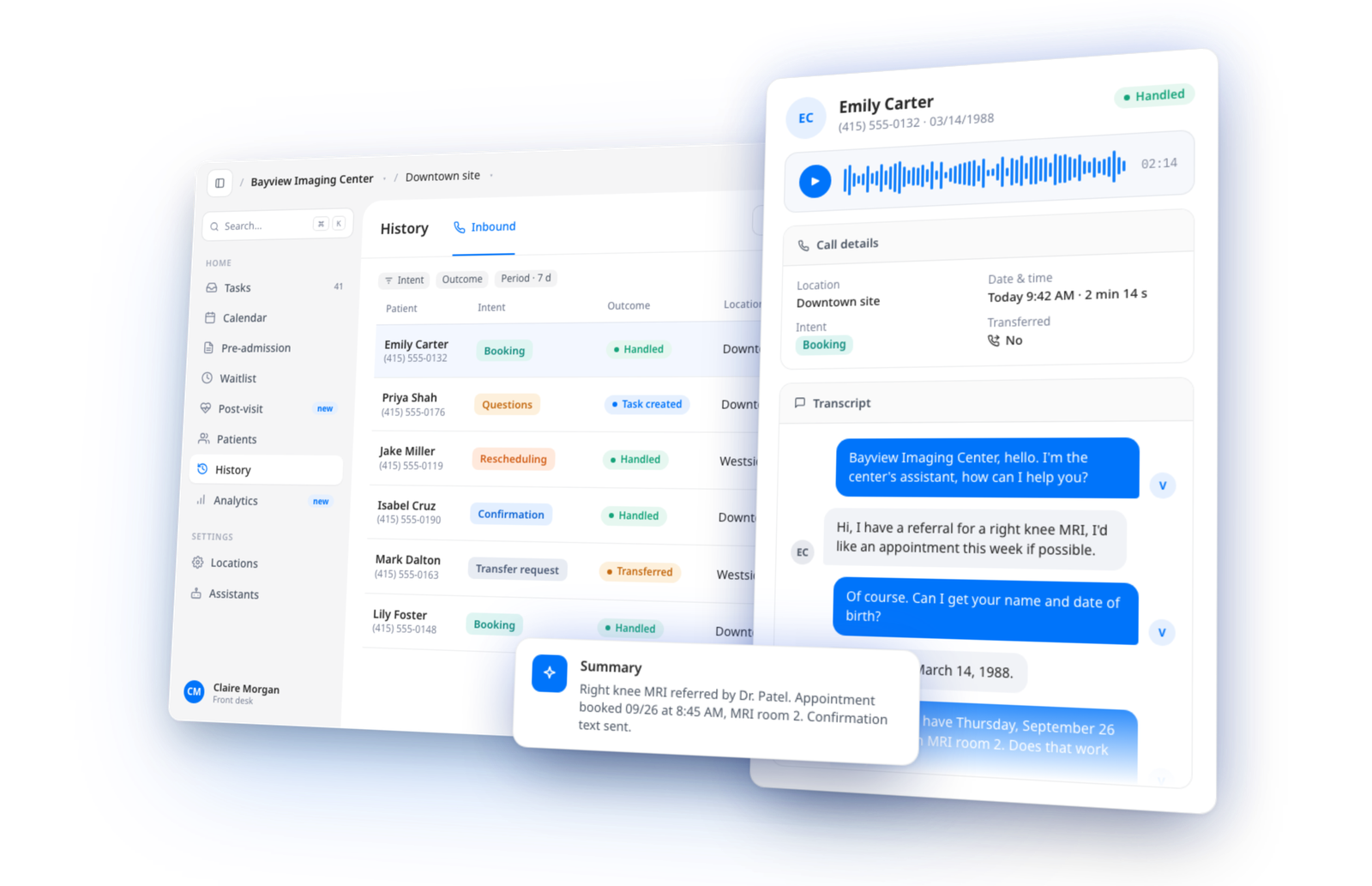
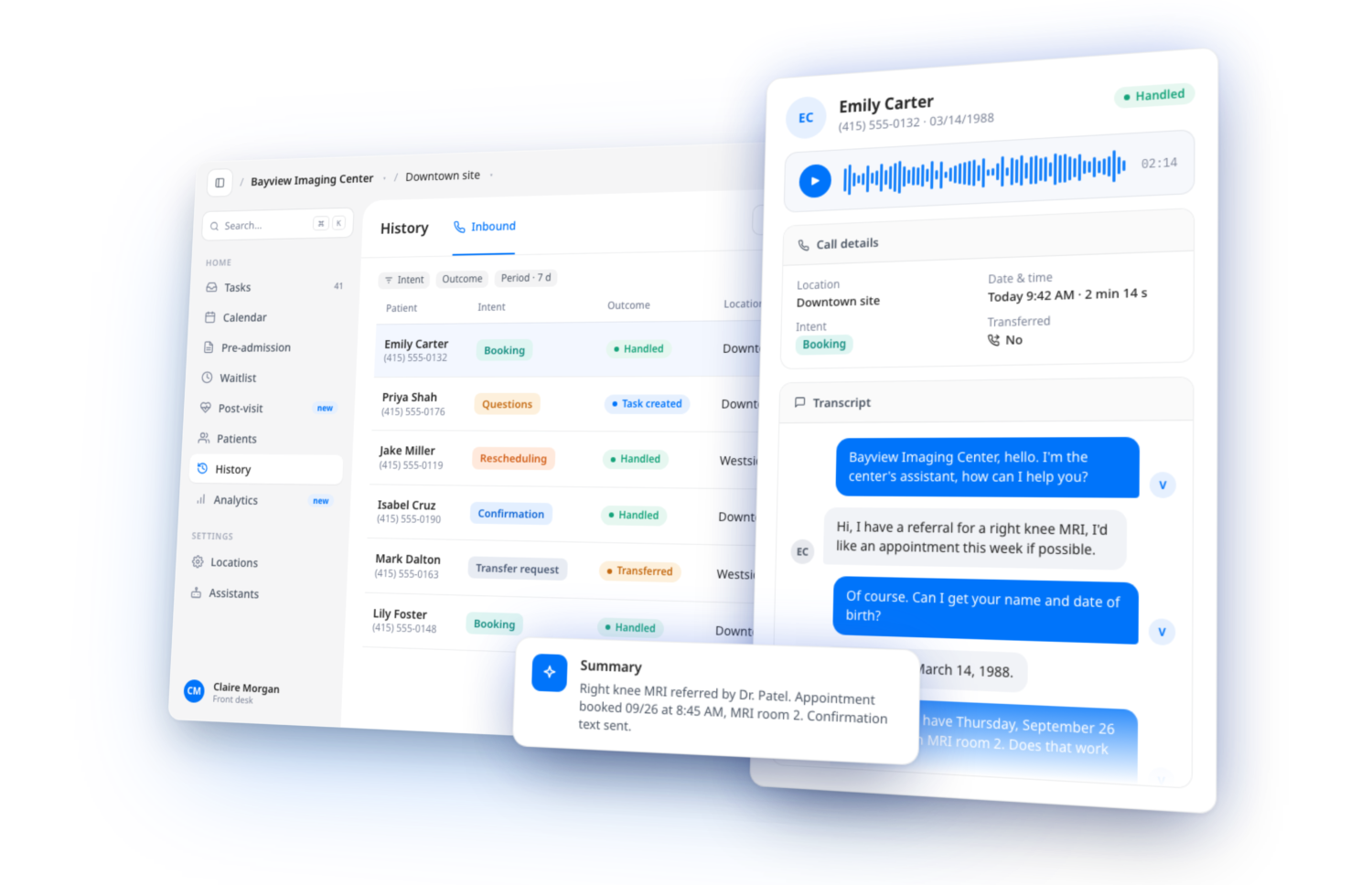
Healthcare conversational AI platform Vocca secures $20M Series A funding round led by Norrsken VC, bringing total cumulative funding to $25M.
The financing syndicate features participation from Heal Capital, Speedinvest, and Firstminute Capital, alongside angel backing from founders of European tech unicorns Alan and Datadog.
Records explosive enterprise growth: expanded from 2,000 practitioners at its seed round to 15,000 medical practitioners in twelve months, operating across 1,500 medical practices and 20+ clinical specialties in the United States and Europe.
Commercial Expansion and Deployment Footprint
The Series A follows significant enterprise expansion across the United States and Europe over the past 12 months:
Rapid Practitioner Density: Grew from 2,000 medical practitioners at its September 2025 seed round to more than 15,000 active practitioners today.
Enterprise Clinic Footprint: Deployed across 1,500 clinical practices spanning 20+ distinct medical specialties.
Volume and Top-Line Trajectory: Platform conversation volume expanded 10x year-over-year, now processing over 1 million inbound patient conversations each month, while top-line revenue increased 7x over the same period.
High Autonomous Resolution: Vocca resolves an average of 70% of inbound calls fully end-to-end with zero human staff intervention, with mature specialty implementations exceeding 85% autonomous resolution.
Large-Scale Deployments Across Acute and Specialty Care
Vocca has established enterprise deployments across multi-site specialty consolidators and acute hospital networks:
Hôpital Fondation Adolphe de Rothschild: The major specialty hospital system handles patient intake, call management, and appointment confirmations using Vocca for its 350,000 annual patients across more than 300 physicians. The system resolves over 75% of incoming calls autonomously (handling bookings, exam-prep guidance, and administrative inquiries), instantly routing clinical emergencies to front-desk staff and queuing low-priority requests for structured callbacks.
DAG Dental: Automates front-office intake and scheduling across 37 dental practices, absorbing repetitive scheduling volume and returning hours of operational capacity daily to office coordinators.
Point Vision: Manages high-throughput scheduling across 67 ophthalmology clinic locations.
Résonance Imagerie: Directs complex diagnostic scheduling and exam-preparation workflows across 60 outpatient medical imaging centers.
Architecture: Vertical Scheduling Engines Over Generic Bots
Vocca differentiates its voice platform by pairing natural language models with a specialized deterministic rules engine:
Specialty-Specific Rule Libraries: Unlike horizontal LLMs prone to hallucinating appointment rules, Vocca encodes specialized clinical scheduling taxonomies—distinguishing between hundreds of imaging and procedural examination codes to route patients to the correct clinical modality, facility, and preparation regimen.
Rapid Deployment Velocity: Because scheduling logic is pre-built into specialty-specific modules rather than built from scratch per clinic, practices can achieve production deployment within days rather than months.
Dual Sovereign Cloud Architecture: Operates isolated data and compute environments, hosting U.S. client data within domestic boundaries and European data inside the EU. The underlying infrastructure maintains SOC 2, ISO 27001, and French HDS (Hébergeur de Données de Santé) healthcare certifications, operating as a compliant HIPAA Business Associate.
“Practices don’t ask us about price. They ask how fast we can deploy and how we handle their edge cases,” said Eliott Hoffenberg, CEO and Co-founder of Vocca. “Doctors want an AI that works like their best scheduler, follows the rules of their specialty to the letter, and fills more appointments without compromising on quality.”
Bob covers the money in health care, focusing on health insurance and hospitals. His stories delve into Medicare Advantage, opaque prescription drug benefits, and how much executives actually make. He is also the author of the Health Care Inc. newsletter. You can reach Bob on Signal at bobjherman.09.
This is the online version of STAT’s weekly email newsletter Health Care Inc. Sign up here.
Hi! Would you drive a microcar? It seems like the perfect errand vehicle, but it still costs as much as an outpatient surgery. As you’ll see, I’ve got prices on the mind. Send me your takes, microcar or otherwise: [email protected].
The price of admission
Greg Kahn for STAT
Workers and employers are confronting staggeringly high health insurance premiums that, in some cases, are forcing businesses to reconsider how or whether they offer coverage. But those premiums don’t appear out of thin air. They are driven by the industry’s high and inscrutable prices.
Bob covers the money in health care, focusing on health insurance and hospitals. His stories delve into Medicare Advantage, opaque prescription drug benefits, and how much executives actually make. He is also the author of the Health Care Inc. newsletter. You can reach Bob on Signal at bobjherman.09.
The multi-year transformation has compressed rapidly: while 84% of healthcare executives in 2025 expected generative AI to transform treatment decisions within three to five years, 71% confirm it already has in 2026.
Financial payback is arriving twice as fast as originally underwritten: enterprise buyers modeled a 24-month horizon, yet realized a material return within ~12 months, generating an average 3.5x return on investment (ROI) and exceeding initial financial underwriting in roughly 40% of deployed use cases (with 54% seeing material ROI within year one).
Realized ROI and Autonomy Across Enterprise Domains
Rather than relying on soft satisfaction surveys or speculative multi-year projections, the 2026 Scorecard tracks realized return multiples on deployed capital:
Provider Revenue Cycle Management (RCM): Delivers a 4.0x realized ROI, with 67% of solutions operating as semi- or fully autonomous agents. Value is primarily driven by faster speed to output, increased net revenue capture, and direct labor efficiencies.
Payer Claims Operations: Generates a 3.4x realized ROI, powered by direct FTE reductions and accelerated claims turnaround times.
Pharma Preclinical Discovery: Posts a 3.4x realized ROI, driven by frontier model efficiency gains across target identification and molecular screening pipelines.
Payer Provider Network Management: Achieves a 3.3x realized ROI, primarily through accelerated credentialing timelines and automated directory maintenance.
Payer Member Engagement: Delivers a 3.2x realized ROI, with 62% of solutions deployed as semi- or fully autonomous agents that handle digital navigation and inbound call deflection.
Provider Front Office (Patient Access): Returns a 3.1x realized ROI, driven by conversational scheduling agents that expand capacity capture, maximize slot utilization, and reduce patient no-show rates.
Provider Clinical Workflows: Sits at a 2.9x realized ROI, with only 4% of solutions running with semi- or fully autonomous agency. Returns remain concentrated in optimized decision-making and quality metrics rather than hard-dollar labor reductions or new top-line revenue.
Pharma Commercial: Realizes a 2.6x realized ROI, led by field-force targeting and automated marketing content generation.
Pharma Clinical Development: Achieves a 2.3x realized ROI, where realizing near-term value remains constrained by multi-year clinical trial execution timelines.
Key Macro Trends & Market Dynamics
Payback Speed Has Exposed Systematic Underinvestment: Nearly every enterprise healthcare AI budget approved between 2024 and 2025 assumed a 24-month payback window. Because actual returns landed in roughly 12 months—exceeding expectations in approximately 40% of use cases—organizations continuing to model two-year paybacks are materially underinvesting relative to their own realized financial performance.
The Decay of Internal Hospital Builds: In 2025, health systems heavily favored proprietary internal software builds. Today, 61% of organizations report that half or fewer of their internally developed AI tools are still actively maintained and in use, with 32% reporting that less than a quarter survived. While internal IT teams successfully created functional MVPs, they struggled to maintain production-grade reliability, manage model drift, and defend algorithms during compliance audits.
Aggressive Vendor Consolidation: 42% of healthcare buyers have completed or are actively executing vendor consolidation initiatives, driven by desires to simplify their IT stacks (37%) and reduce software licensing costs (32%). Market share for recent deployments shifted sharply toward healthcare-specific AI vendors (+12 percentage points) and established HCIT incumbents (+7 percentage points), while internal builds dropped by 16 percentage points.
Platform Wedges Outcompeting Point Tools: With 57% of executives reporting that they are inundated by point-solution pitches, enterprise momentum has consolidated around platforms that entered via a sharp clinical or operational wedge (such as Abridge in ambient scribing or SmarterDx in prebill review) and systematically expanded into adjacent administrative workflows.
Workforce Restructuring and Headcount Reductions: 50% of surveyed organizations have already reduced headcount as a direct result of AI or plan to within six months, with targeted reductions averaging 8% to 13% of affected functions.
Labor Displacement Centered in the Back Office: Workforce reductions track financial returns closely: 73% of providers reporting labor cuts cite revenue cycle and billing, while 71% of payers cite claims operations.
Absorbing Structural Shortages Over Mass Displacement: Back-office automation is cushioning severe structural labor shortages rather than creating net unemployment. With the American Medical Association estimating a 30% nationwide shortage of certified medical coders (and the average certified coder now over age 50), automation closes an unfillable labor gap. Furthermore, health systems are actively redeploying clinical administrative staff—such as utilization review nurses—back into bedside care management and patient coordination.
The Clinical AI Paradox: Four Blockers to the $3 Trillion Opportunity
While 71% of healthcare executives state that generative AI has already begun transforming clinical treatment decisions (up from an expected 3-to-5-year horizon in 2025), clinical AI realization significantly lags administrative workflows, constrained by four structural barriers:
The Trust and Override Gap: Only 46% of clinicians trust AI-generated tools for clinical decision-making, and 77% override AI clinical recommendations more than half the time. Clinicians report that establishing trust requires stronger peer-reviewed clinical validation (67%), transparent recommendation rationales (53%), patient-specific performance data (47%), and native EHR integration (44%).
Individual Clinician Liability: 58% of providers affirm that the treating clinician bears primary legal responsibility for AI-influenced decisions, and 50% identify medico-legal exposure as the primary reason clinical AI fails to scale past pilots. The 77% override rate reflects a rational risk-mitigation strategy by clinicians who bear personal malpractice liability.
Regulatory and Compliance Ambiguity: 36% of organizations have canceled or delayed a clinical AI deployment due to regulatory uncertainty, driven by the absence of established FDA post-market surveillance regimes for autonomous, pan-indication clinical reasoning models.
Payment and Reimbursement Architecture: Fee-for-service payment models reimburse clinician time and specific procedural actions, offering no established billing codes for autonomous algorithmic care delivery. 48% of commercial payers explicitly refuse to reimburse fully autonomous AI care, whereas only 5% object to AI-assisted care where a clinician reviews and signs off on the recommendation.
Mario covers technology in health care, including FDA regulation of artificial intelligence; how Medicare pays for health tech; the use of AI in clinical care; mental health chatbots; and consumer wearables. He’s also the co-author of the free, twice weekly STAT Health Tech newsletter. You can reach Mario on Signal at mariojoze.13.
Utah regulators on Monday announced a plan to allow an artificial intelligence product to evaluate patients for acne treatment and write new drug prescriptions without prior human review.
A startup called Nolla Health will launch an AI-powered service in the state that will assess a patient for mild-to-moderate acne treatment using a structured intake and by analyzing photos of their skin. The product may determine whether one of a list of low-risk drugs is appropriate. In the first stages of the pilot, the decisions of the AI will be reviewed by a licensed clinician who will sign off on prescriptions, but Nolla may eventually be allowed to prescribe drugs without this review. The company last year announced it raised $4.5 million from investors including General Catalyst, and Nolla aspires to direct treatment for a host of conditions using AI.
The new pilot is part of a significant expansion of a closely watched “AI sandbox” program that allows Utah’s Office of Artificial Intelligence Policy, or OAIP, to waive regulations, including around the practice of medicine, for companies that want to test AI products under state supervision.
Healthcare data platform Arcadia announced a major product portfolio restructuring during its annual customer conference, Aggregate, introducing three core solutions: Arcadia Ascent™, Arcadia CareJourney™, and Arcadia LifeScience.
The solutions transition healthcare organizations from retrospective data reporting into active, coordinated execution across clinical, operational, and financial domains using embedded artificial intelligence and agentic workflows.
The portfolio is anchored by the Ascent™ Platform, unified by Ascent™ Connect—a standards-based interoperability layer that synchronizes disparate EHR and claims systems without typical integration overhead—supporting five purpose-built operational applications.
One Performance Platform for Payer and Provider Workflows
At the core of the portfolio is the Ascent Platform, which couples Ascent Connect—a standards-based interoperability layer designed to link EHRs, payer claims, and operational data without standard integration friction—with five purpose-built workflow applications:
Ascent Performance: Targets clinical quality improvement, proactive care gap closure, and compliant risk adjustment to protect revenue across risk-bearing contracts.
Ascent Care: Combines AI-driven patient prioritization with an autonomous care navigation agent, scaling longitudinal whole-person care coordination beyond accountable cohorts to an organization’s entire attributed population.
Ascent Insight: Employs conversational AI, automated report delivery, and predictive risk modeling underpinned by governed data management to deliver explainable intelligence to executive and clinical leadership.
Ascent Finance: Coordinates the complete value-based contracting lifecycle—from actuarial modeling and risk scenario forecasting to contract execution and multi-payer reconciliation across Medicare, Medicaid, and commercial books of business.
Ascent Network: Combines provider performance scoring, episode-level analytics, and market benchmarks to evaluate network adequacy, optimize steerage, and prevent costly out-of-network referral leakage.
Governance Strategy: Calibrated Autonomy Over “All-or-Nothing” AI
Addressing enterprise skepticism regarding generative AI safety and hallucination risks, Arcadia introduces a variable governance framework:
The Spectrum of AI Oversight: In contrast to point tools configured only as “always on,” Arcadia calibrates agentic automation according to clinical and financial risk. Workflows run in an assistive mode while trust and baseline accuracy are verified, progressing toward autonomous execution only after performance thresholds are proven.
Auditable Action Logging: Every autonomous intervention—whether an outreach dispatch, scheduling trigger, or quality documentation prompt—maintains a complete, tamper-evident audit log detailing the algorithmic reasoning and data lineage behind the action.
Healthcare has one recurring diagnosis when it comes to software: the people who see the problem most clearly are almost never the ones allowed to fix it. A front-desk lead knows exactly which scheduling step causes no-shows. A billing manager can tell you, to the minute, where a claim stalls. But turning that knowledge into a working tool has always required someone else, like a developer, a vendor, or a build queue.
Vibe coding is starting to close that gap, and we’re seeing the successes beginning to emerge in dental tech. The idea is simple: describe what you want in plain language, and an AI system generates a working version of it, refined through conversation instead of code. It’s spread quickly across general software development. What’s less understood is what happens when it reaches an industry where the stakes and regulations are much higher.
Why healthcare needed this more than most
For twenty years, fixing a broken workflow has followed the same script. A clinician or administrator flags the problem, hands it off to a software team, and waits, often a year or more, for something to come back. What comes back rarely matches what was described, because something always gets lost in the handoff between the person who understands the problem and the person who has to build around a secondhand account of it.
That handoff exists because coding ability has always gated who gets to build software. Knowing what’s wrong and knowing how to fix it in code have been two separate jobs, held by two different people. Vibe coding doesn’t erase the second job. It shrinks how much of it you need on day one, which means far more people can now act directly on problems they already understand instead of routing that understanding through someone else.
That distinction matters most in an industry where the shortage was never insight. Ask anyone working the floor of a dental practice or a billing office what’s actually broken, and they’ll answer instantly. It’s the 20-minute hold with an insurer. It’s the note written twice: once for the chart, once for the payor. It’s the referral that vanishes into a fax or email and resurfaces three weeks later. Nobody has ever needed convincing on what to fix. What they’ve lacked is a way to act on it themselves, in something close to real time instead of on a vendor’s roadmap.
Faster, but also different
The old chain — request, prioritization meeting, development sprint, rollout — usually delivered a solution well after the problem had stopped being anyone’s top concern. Vibe coding shortens that chain by letting the person who lives inside the workflow build the first working version of the fix, often in less time than it used to take to write up the request.
In an industry where administrative burden is a leading driver of clinician burnout, that’s not just a speed gain. It changes who gets to build, and how much distance sits between spotting a problem and doing something about it.
Guardrails have to come first, not after
None of this holds up if it’s treated as a way around rigor. Healthcare data carries real consequences when it’s handled carelessly, and a tool that makes it easy for a non-engineer to build something can just as easily make it easy for that same person to build something unsafe, unless the guardrails are already there before they start.
That responsibility doesn’t disappear. It relocates. It moves off the individual builder and onto the platform they’re building on. Permissions, data boundaries, and security can’t be configuration steps left to a first-time builder. They have to be the default setting, invisible until something goes wrong. Clinical accuracy carries its own version of this: automating a claims dashboard is a low-risk build, but a tool touching clinical documentation or decision support is a different category entirely, and no amount of conversational ease should let it skip validation.
The organizations that get this right won’t be the ones that threw the door open widest. They’ll be the ones that made opening it safe in the first place.
Already taking shape
We’re seeing this show up in small, unglamorous ways like a dental clinic manager building the exact claims view her team needs instead of waiting on a vendor’s one-size-fits-all dashboard, or a practice leader building a reporting layout that matches how her organization actually runs, rather than reshaping her operations to fit someone else’s software. None of these, on their own, looks like a revolution. Together, they point to a new default: the person who spots the problem is the one who builds the solution, instead of a request sitting in a queue for someone who has to imagine it from a distance.
That shift is likely to outlast any single new app healthcare adopts this year. The industry was never short on people who understood what needed fixing. What it lacked was a way to let that understanding go straight to work, without a long wait for someone else’s turn, and without trading one risk for another in the process.
Photo: Tom Werner, Getty Images
This post appears through the MedCity Influencers program. Anyone can publish their perspective on business and innovation in healthcare on MedCity News through MedCity Influencers. Click here to find out how.
Fraud, waste, and abuse (FWA) continue to challenge dental plans as overtreatment, miscoding and inappropriate billing practices drive unnecessary costs and weaken payment integrity. For dental payers, the stakes extend beyond financial losses: these issues can also expose members to unnecessary procedures and consume benefits that should be preserved for appropriate care.
With an estimated $198 billion spent on dental care in 2025, and approximately 3–10% of these payments lost annually to FWA, dental payers need more effective ways to identify suspect claims before payment. A more advanced approach to dental claim editing can help plans improve payment accuracy, surface emerging risk patterns, and better protect plan resources and member benefits.
By pairing automated dental claim editing with expert clinical, documentation, and coding review, plans can address FWA more proactively to prevent errors while reducing disruption that often accompanies postpay recovery efforts.
What’s driving FWA in dental billing
Dental billing gives providers more discretion and fewer guardrails than medical billing. A few key factors drive FWA risk, including:
⒈ Limited pre-authorization requirements. Medical procedures billed to health plans often require pre-authorization tied to a documented diagnosis. In dental practices, non-surgical procedures like crowns get billed and coded at the discretion of the dentist with no comparable check before the claim is submitted.
⒉ Consolidation and profit-driven performance goals. As more dental practices are acquired by larger organizations, providers are increasingly pressured to align with stakeholder performance targets. This can push practices towards more standardized treatment approaches rather than individualized care plans that are tailored to the needs of the patient.
⒊ Heightened exposure in Medicare Advantage. MA plans can be especially vulnerable to overpayments. Some plans may cap dental benefits, but others place no limit on procedures a provider deems essential—creating an opening for bad actors to overtreat. A patient with a $2,000 dental allowance, for example, may be steered toward unnecessary procedures simply to exhaust the benefit.
⒋ Outside consultants may advise on revenue, not clinical best practices. Many dental offices engage consultants focused on hitting revenue goals, often without grounding in clinical or billing standards. The result is predictable: staff are coached to bundle procedures—billing for a build-up alongside every crown, for instance—even when the build-up is unnecessary, or in some cases, never performed.
Operational impacts of dental FWA
FWA is estimated to cost the U.S. healthcare system hundreds of billions of dollars annually, and dental billing contributes to that burden through overtreatment, miscoding, and other inappropriate reimbursement practices. For dental plans, even a small percentage of improper payments can translate into meaningful losses, especially as claim volume and coding complexity continue to rise.
The downstream effect is broader than overpayment alone: FWA contributes to higher administrative cost, unnecessary utilization, and pressure on premiums and plan resources.
Individual cases of overtreatment such as unnecessary crowns, buildups or periodontal procedures can be costly on their own. At scale, those patterns can create substantial financial and operational impact for dental payers.
Beyond direct overpayments, FWA increases the administrative burden associated with auditing, investigating, appealing and recovering paid claims. When inaccurate or inappropriate claims are identified before adjudication, plans can avoid pay-and-chase recovery, improve payment integrity, and reduce unnecessary provider abrasion.
Dental FWA claim patterns
Waste and abuse can take many different forms in dental billing and claims submission, and many of them can be addressed through stronger claim editing and expert review. Overtreatment, upcoding, repetitive add-on procedures, and suspect billing patterns can all undermine payment accuracy, trust, and patient well-being. Below are examples of FWA-related issues that advanced dental claim editing may help identify for deeper review:
⒈ Add-on codes for crown procedures, which are categorized as abuse or fraud if the procedure was not performed.
⒉ Upcoding, such as billing for a higher extraction code than warranted.
⒊ Overtreatment, such as performing unnecessary fillings. This can be especially damaging for patients’ teeth, considering that putting a crown on a healthy tooth will naturally weaken it and shorten its longevity. Periodontal procedures such as root planing and scaling are another common example of overtreatment.
⒋ Billing under different providers’ names within a multi-dentist practice in an attempt to sneak FWA past the dental claim system and claim editors.
An effective approach to dental payment integrity
While many dental plans already rely on a primary editor to catch duplicates or simple coding conflicts, advanced dental claim editing provide a critical next layer of protection. A second-pass prepayment review can evaluate claims against national and proprietary edits, clinical guidelines, member history, and plan-specific rules to identify suspect billing that may signal waste, abuse, or potential fraud—without overwhelming internal staff. This deeper level of review helps plans intervene earlier, before inappropriate claims are paid. For example, a national dental payer realized over $64 million in annual savings and a 3% incremental savings rate through Cotiviti’s enhanced dental claim review in a single year.
When suspect claims are flagged and validated before payment, plans can prevent incorrect reimbursement rather than pursuing recovery after the fact. This helps avoid the cost and friction of pay-and-chase while improving financial accuracy upfront. And when patterns suggest broader provider behavior concerns, postpay review and investigation can still play an important role in determining next steps, including provider outreach, education, or escalation in more serious cases. Cotiviti’s dental prepay and postpay solutionscan inform each other by suggesting provider enhanced review and identifying new, emerging schemes.
Dental claim editing is further strengthened by professional review of documentation, x-rays and treatment history when needed to validate whether billing services are clinically appropriate and supported by plan guidelines. Applying advanced clinical and coding algorithms to suspect claims help plans distinguish between routine billing variation and issues that warrant intervention, creating a more precise and defensible approach to combating FWA.
Detecting and stopping FWA through more precise dental claim editing and review helps dental plans reduce losses, protect member benefits, and discourage both inappropriate billing and treatment. With the right payment integrity strategy, plans can strengthen oversight, improve claim accuracy, and create better outcomes for payers, providers and members alike.