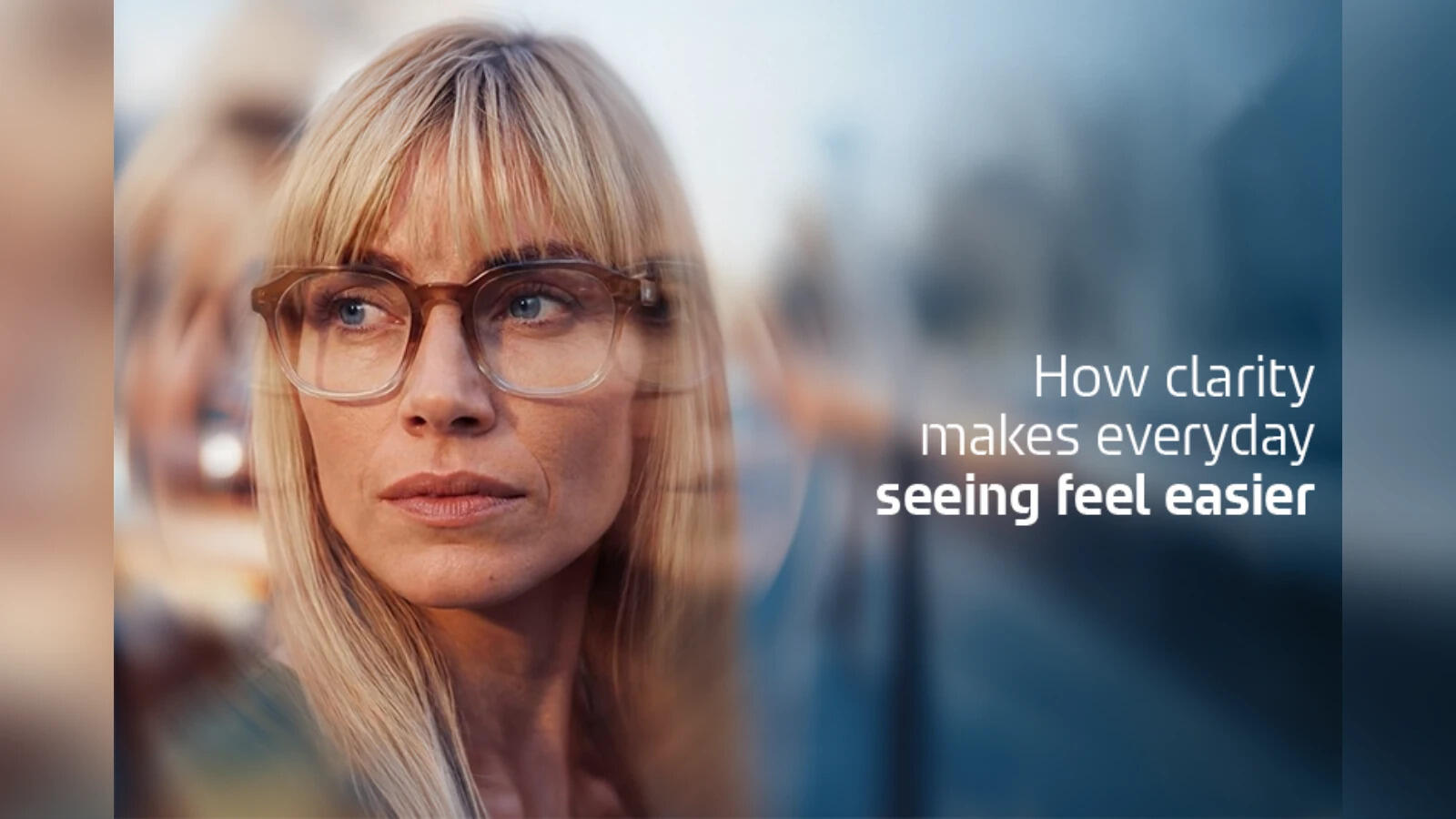
Good vision is easy to overlook when everything comes into focus without much thought. You read a message, recognise a face or spot a sign and move on to whatever comes next. Clear vision allows these everyday activities to happen without constantly drawing attention to the act of seeing.
It is when seeing something takes repeated attention that we start noticing the difference. You may squint at small text, move a screen closer, look twice at a sign or pause before recognising something in the distance. These small actions can change how easy a visual task feels, particularly when blurred vision makes details harder to distinguish.
That is where the relationship between clear vision and visual effort becomes interesting. Clarity is not just about whether something can be seen. Clear vision can also influence how naturally we carry out the task in front of us.
When Clear Vision Becomes a Task
Imagine trying to read a menu in a dim restaurant. The words are there, but you have to concentrate harder to make them out. With clear vision, the same task may feel more straightforward. Or think about reading a presentation where the text is small and poorly contrasted. You can still get through it, but you may find yourself checking individual words or adjusting your position.
The information has not disappeared. It has simply become harder to take in comfortably. When blurred vision is part of the experience, small adjustments like these are easy to ignore because they happen automatically. But repeated throughout a day, they can make certain visual activities feel less effortless, even when you usually experience clear vision.
Clear Vision Matters Most When Details Matter
Not every visual task requires the same level of detail. Recognising the general shape of a building is different from reading its address. Spotting that a car is approaching is different from reading a road sign. Looking at a photograph is different from finding a small number in a spreadsheet.
The finer the detail we need to see, the more noticeable differences in clarity can become. This is one reason clear vision remains such an important part of everyday vision. It is not simply about passing an eye test. Clear vision is about being able to access the details needed for the activity at hand.
When blurred vision affects those details, the task may require more attention.
Clear Vision and Distance Can Change the Experience
The same principle applies when viewing distances change. Reading a phone brings small text close to the eyes. Looking at a laptop involves a different distance. A presentation on a screen may require attention to details farther away, while driving involves looking across a much larger space.
Moving between these distances is part of ordinary life. So is adjusting to different sizes, lighting conditions and levels of detail. Clear vision at one distance does not necessarily mean every visual task will feel identical at another. A visual task that feels effortless at one distance may feel less comfortable at another, particularly when it continues for a long time.
For digital tasks, lenses for computer use may be relevant to the different viewing demands involved in working at a screen. The choice of lenses remains connected to how a person uses their vision throughout the day. Clear vision can therefore be considered alongside the different visual demands of each activity.
Clear Vision Is Not the Same in Every Situation
There is also a difference between having a clear prescription and having the same visual experience in every situation. Two people may have similar spectacle prescriptions but use their vision very differently. One may spend most of the day reading and working on a laptop, while another spends more time driving, moving between indoor and outdoor spaces or looking at objects at varying distances.
Their visual needs are shaped by what they actually do. This is why everyday visual behaviour has become an area of interest alongside traditional measurements of visual clarity. Clear vision remains important, but researchers can also look at where people naturally direct their gaze, how it moves and how viewing patterns change between activities.
What Everyday Vision Can Tell Us About Lenses
Understanding these real-world patterns is also influencing lens design.
, for example, were developed using insights from neuroscience and research into everyday visual behaviour. ZEISS NeurOptix technology is informed by research into how people naturally use their vision across different activities and viewing distances.
In wearer evaluations, 96%* of wearers reported extremely clear vision.
The approach reflects a broader idea: the experience of a spectacle wearer does not begin and end with the eye chart. Lenses are used while reading, working, travelling, talking to people and moving through different environments. Lenses for computer use are one example of how lens needs can relate to the activities a person carries out during the day.
Clear vision therefore remains one part of a broader visual experience. The way people use their lenses, the distances they view and the activities they perform can all shape that experience.
Making Sense of Visual Effort
Clear vision does not mean every visual task will always feel effortless. Long periods of concentration, changing light or extended close-up work can still make a task feel more demanding.
Understanding that Zeiss Clearmind lenses gives us a broader way to think about everyday sight. Clear vision is not just about what we can see, but how naturally we read, work, move and experience the world around us
*Opinion-based survey among wearers of ZEISS ClearMind lenses in Germany, Italy, India and China (N=298, Single Vision, Digital and Progressive lenses), 2025, Carl Zeiss Vision International GmbH, DE (unpublished, data on file, Top2boxes). Individual experiences may vary.
Disclaimer: The above content is non-editorial, and TIL hereby disclaims any and all warranties, expressed or implied, relating to it, and does not guarantee, vouch for or necessarily endorse any of the content.
Join the community of 2M+ industry professionals.
Subscribe to Newsletter to get latest insights & analysis in your inbox.
All about ETHealthworld industry right on your smartphone!
- Download the ETHealthworld App and get the Realtime updates and Save your favourite articles.