Category: Pharma & Biotechnology

  • Merck and Moderna have ‘lot of exploring to do’ after initial cancer vaccine success

    Merck and Moderna have ‘lot of exploring to do’ after initial cancer vaccine success

    By Jason Mast

    Oct. 15, 2026

    General Assignment Reporter

    After public school teacher Gary Keblish was diagnosed with melanoma in 2019, a surgeon cut out the tumor. But he wasn’t out of the woods. In some patients, melanoma aggressively recurs after surgery, so his doctors referred him to a new trial: for Merck and Moderna’s personalized mRNA cancer vaccine. 

    Speaking by video at the STAT Summit on Thursday, Keblish compared the journey — in all its physical and emotional turbulence — to a trip on Ms. Frizzle’s Magic School Bus. “Seatbelts, everyone!” he said, quoting the iconic line.

    He’s glad he went. Today, he is still teaching, and Merck and Moderna are preparing to file the vaccine for approval, after announcing in August that it significantly delayed both cancer recurrence and the development of metastatic disease in melanoma patients like Keblish, in a large Phase 3 trial.  

    It’s a landmark moment for a cancer vaccine field that has long struggled to live up to its hype. But the two companies’ work is far from complete. They are now looking to prove the vaccine isn’t just a powerful tool for certain melanoma patients but that it can also transform a sea of other tumors, as an early generation of immunotherapies did. 

    It is careful and costly work.

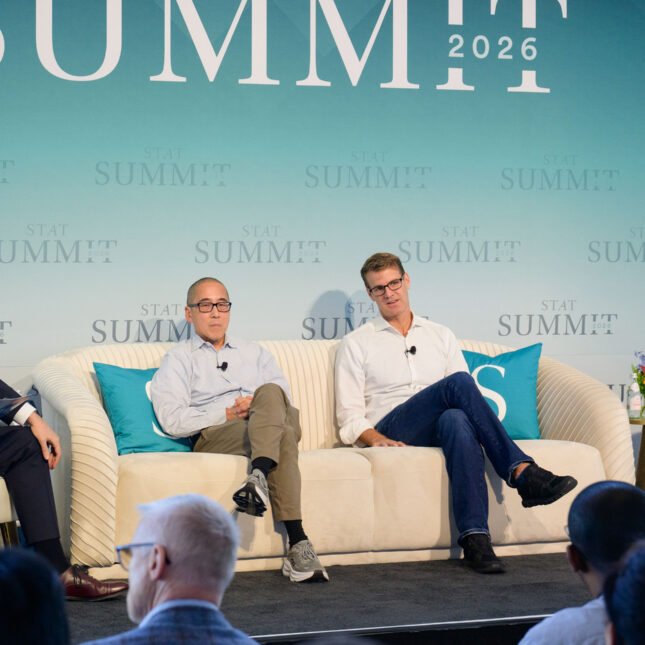
    “We have a lot of exploring to do and need to prioritize where we explore,” Moderna President Stephen Hoge said on stage at the summit.

    Beside Hoge, Merck R&D chief Dean Li outlined an exploration strategy. The vaccine, known chemically as intismeran autogene, works in combination with Merck’s blockbuster immunotherapy Keytruda, which has been tested in thousands of trials over the last 15 years. Keytruda works better in some tumors — so-called hot tumors, which often have lots of mutations — than other so-called cold tumors.

    “We know exactly where I-O [immuno-oncology] works, where a checkpoint inhibitor works, where it doesn’t, where it almost worked and didn’t make it,” said Li.

    Gary Keblish participated in an early trial of the Merck-Moderna cancer vaccine.Courtesy Gary Keblish

    The pair has largely focused to date on settings where Keytruda has worked best, such as an  adjuvant — add-on — therapy for melanoma patients whose visible tumors have already been removed by a surgeon. They are already running trials in adjuvant lung, kidney, and bladder cancer. 

    Li and Hoge suggested other settings they may explore or where trials are just beginning, including in tumors where Keytruda failed but another kind of immunotherapy worked, or as a standalone therapy in very early-stage tumors. “There’s an incredible opportunity to think about how we bring immunotherapy into earlier interventions and really intercept cancer so that we don’t present with stage 3, stage 4 disease later,” said Hoge. 

    Li contrasted their approach with “other people” who “may not have the advantage” of their expertise and have chosen to go after cold or metastatic tumors — an apparent nod at Moderna’s mRNA rival BioNTech, which has some early promising early data but also notable failures.

    “We have chosen not to do this,” Li said. “But I can tell you: Anyone has positive data and it’s out there, you will never see Moderna and Merck pivot [so] fast.”

    Small tests in adjuvant pancreatic and gastric cancer are underway, to test the possibility. Li also floated the possibility of using the vaccine in patients whose metastatic tumors have already been shrunk by other treatments.

    In the meantime, they continue to try to improve the technology. The vaccine is made by looking at individual tumors and using an algorithm to select up to 34 mutant proteins, in hope that you can then flash those as a “wanted sign” to the immune system.

    The algorithm is imperfect. But by closely analyzing the immune systems of patients in their trials, Moderna and Merck could in theory build even better software. 

    “It’s a real privilege to have all that information across the now several thousand people in our Phase 3 program,” Hoge said. “I’m looking forward to digging into it.”
  • STAT+: Verastem’s KRAS inhibitor shows promise in pancreatic cancer

    STAT+: Verastem’s KRAS inhibitor shows promise in pancreatic cancer

    Want to stay on top of the science and politics driving biotech today? Sign up to get our biotech newsletter in your inbox.

    I, too, wanted to express how devastated I am over losing our colleague Helen Branswell.  She was kind, scrupulous, brilliant, and truly inspiring in action. Thank you, Helen. 

    The need-to-know this morning

    • Privately held U.K. biotech OMass Therapeutics raised $310 million to support the clinical development of a drug to treat congenital adrenal hyperplasia, an inherited endocrine disorder. 
    • The investment firm Orbimed raised nearly $3 billion for two, new private equity funds that will invest in U.S, European and Asian health care companies. 

    Investor: China’s biotech boom threatens U.S. venture capital

    From STAT’s Allison DeAngelis: The rise of Chinese biotech isn’t just impacting U.S. companies, one investor is warning. It’s threatening VC firms.

    STAT+ Exclusive Story

    Already have an account? Log in

    STAT+

    STAT+

    This article is exclusive to STAT+ subscribers

    Unlock this article — plus in-depth analysis, newsletters, premium events, and news alerts.

    Already have an account? Log in

    View All Plans

    To read the rest of this story subscribe to STAT+.

    Subscribe

  • STAT+: Pharmalittle: We’re reading about former FDA head calling DOGE a ‘disaster,’ an AstraZeneca AI deal, and more

    STAT+: Pharmalittle: We’re reading about former FDA head calling DOGE a ‘disaster,’ an AstraZeneca AI deal, and more

    By Ed Silverman

    Oct. 15, 2026

    Pharmalot Columnist, Senior Writer

    Top of the morning to you. And a fine one it is. Lots of sunshine and clear blue skies are greeting us as we prepare for another day on the road, which means we are as busy as ever hunting and gathering items of interest, as well as an acceptable cup of stimulation. We can be fussy, you know. So while we roam the streets, you can enjoy the latest menu of interesting items assembled below. Hope you have a grand day and do stay in touch — but only real people, please, no AI bots. …

    Three former U.S. Food and Drug Administration chiefs lit into the Trump administration, criticizing the now former FDA officials who oversaw a massive staff exodus and saying they robbed the agency of institutional knowledge that will take years to restore, STAT reports. “DOGE will go down as one of the biggest disasters in American history,” said Robert Califf, who was FDA commissioner under Presidents Obama and Biden. The DOGE cuts of 3,500 workers preceded a larger staff exodus under the tumultuous leadership of former FDA Commissioner Marty Makary, who resigned in May.

    The Trump administration is delaying by 90 days a federal rule that could prevent Americans from obtaining prescription drugs from licensed international pharmacies, STAT writes. The move follows growing criticism that the rule, which was initially slated to go into effect on Oct. 22, could drastically reduce the flow of medicines from Canada and other countries. In recent weeks, patient advocacy groups and dozens of congressional lawmakers urged the administration to rethink its approach. The administration is trying to crack down on illegal goods — particularly opioids — that it says enter the U.S. through low-value foreign shipments and for which shippers generally do not pay tariffs or submit data for tracking.

    STAT+ Exclusive Story

    Already have an account? Log in

    STAT+

    STAT+

    This article is exclusive to STAT+ subscribers

    Unlock this article — plus in-depth analysis, newsletters, premium events, and news alerts.

    Already have an account? Log in

    View All Plans

    To read the rest of this story subscribe to STAT+.

    Subscribe

  • STAT+: Trump administration delays new rule that could restrict imported medicines from Canada and overseas

    STAT+: Trump administration delays new rule that could restrict imported medicines from Canada and overseas

    By Ed Silverman

    Oct. 14, 2026

    Pharmalot Columnist, Senior Writer

    Ed’s stories explore prescription drug pricing, affordability and access, as well issues surrounding patents, litigation, and legislation. He is also the author of the morning Pharmalittle newsletter and the afternoon Pharmalot newsletter.

    The Trump administration is delaying by 90 days a federal rule that could prevent Americans from obtaining prescription drugs from licensed international pharmacies.

    The move follows growing criticism that the rule, which was initially slated to go into effect on Oct. 22, could drastically reduce the flow of medicines from Canada and other countries. In recent weeks, patient advocacy groups and dozens of congressional lawmakers urged the administration to rethink its approach.

    The administration is trying to crack down on illegal goods — particularly opioids — that it says enter the U.S. through low-value foreign shipments and for which shippers generally do not pay tariffs or submit data for tracking. The rule targets the de minimis exemption, which previously allowed shipments valued under $800 to pass through customs more easily.

    STAT+ Exclusive Story

    Already have an account? Log in

    STAT+

    STAT+

    This article is exclusive to STAT+ subscribers

    Unlock this article — plus in-depth analysis, newsletters, premium events, and news alerts.

    Already have an account? Log in

    View All Plans

    To read the rest of this story subscribe to STAT+.

    Subscribe

  • STAT+: FDA adcomm members’ ties to industry under scrutiny

    STAT+: FDA adcomm members’ ties to industry under scrutiny

    Elaine’s stories explore the boom in new obesity treatments, new drug payment models, the ways companies are affected by FDA changes, and the emerging psychedelics drug sector. She co-writes The Readout newsletter, and co-hosts STAT’s weekly biotech podcast, The Readout Loud. You can reach Elaine on Signal at elaineywchen.70.

    Good morning. Yesterday, we got the devastating news that STAT’s infectious disease correspondent, Helen Branswell, passed away. She was a reporter I always looked up to and was also an incredibly generous colleague. Please take the time to read this tribute to her.

    The need-to-know this morning

    • Liquidia and United Therapeutics reached a settlement agreement that resolves their ongoing patent litigation over Liquidia’s treatment for pulmonary arterial hypertension. 

    Researchers in Pittsburgh are launching a novel type of GLP-1 trial — testing not only if the drug will help people with addiction, but also if it will help reduce recidivism while improving other employment, health, and housing outcomes.

    The Center for Addiction Science, Policy and Research (CASPR), a non-profit organizing the effort, and the Allegheny County Department of Human Services are planning to launch the trial in early 2027. They will enroll up to 1,200 adults with alcohol use disorder, opioid use disorder, or both, who are also at high risk of criminal-justice involvement. Half will be randomly assigned to take Novo Nordisk’s Wegovy, according to a press release issued yesterday.

    STAT+ Exclusive Story

    Already have an account? Log in

    STAT+

    STAT+

    This article is exclusive to STAT+ subscribers

    Unlock this article — plus in-depth analysis, newsletters, premium events, and news alerts.

    Already have an account? Log in

    View All Plans

    To read the rest of this story subscribe to STAT+.

    Subscribe

  • STAT+: Pharmalittle: We’re reading about Sanofi settling an EU antitrust probe, ‘pharma bro’ Shkreli, and more

    STAT+: Pharmalittle: We’re reading about Sanofi settling an EU antitrust probe, ‘pharma bro’ Shkreli, and more

    By Ed Silverman

    Oct. 14, 2026

    Pharmalot Columnist, Senior Writer

    Good morning, everyone, and welcome to the middle of the week. Congratulations on making it this far, and remember there are only a few more days until the weekend arrives. So keep plugging away. After all, what are the alternatives? While you ponder the possibilities, we invite you to join us for a needed cup of stimulation, which we hope to find shortly since we are on the road. Perhaps we can meet? Meanwhile, here is the latest menu of tidbits to help you on your way. We hope you conquer the world and have a wonderful day. And as always, please do stay in touch. We appreciate feedback, tips, and criticism. …

    Martin Shkreli is back, but the U.S. Federal Trade Commission is not happy, STAT says. The agency and seven states asked a U.S. court to hold Shkreli in contempt for “flagrantly and repeatedly” violating a court order banning him from working in the pharmaceutical industry. Shkreli, known as “pharma bro” for imperiously defending his decision to raise the price of a drug by 5,000%, was sentenced to seven years in prison for defrauding investors in 2018. Before his release in 2022, a court banned him from ever working in the industry again, saying he illegally tried to prevent generic competition to the drug. Since then, he became a prolific trader in pharma stocks, broadcasting his analysis in posts and livestreams on X and other platforms.

    European Union antitrust regulators accepted concessions from Sanofi to settle an investigation into an allegedly “misleading” campaign that disparaged the only rival flu vaccine recommended for vulnerable patients at risk for developing the illness, STAT tells us. In doing so, the company avoided being fined. The European Commission had suggested that Sanofi portrayed the Fluad vaccine marketed by CSL Seqirus as inferior to its own Efluelda vaccine in a communication campaign that primarily targeted health care professionals in Germany and France. Sanofi holds a dominant position in both countries, according to the EC.

    STAT+ Exclusive Story

    Already have an account? Log in

    STAT+

    STAT+

    This article is exclusive to STAT+ subscribers

    Unlock this article — plus in-depth analysis, newsletters, premium events, and news alerts.

    Already have an account? Log in

    View All Plans

    To read the rest of this story subscribe to STAT+.

    Subscribe

  • STAT+: Sanofi avoids fine as EU accepts offer to end antitrust probe over disparaging rival vaccine

    STAT+: Sanofi avoids fine as EU accepts offer to end antitrust probe over disparaging rival vaccine

    By Ed Silverman

    Oct. 14, 2026

    Pharmalot Columnist, Senior Writer

    Ed’s stories explore prescription drug pricing, affordability and access, as well issues surrounding patents, litigation, and legislation. He is also the author of the morning Pharmalittle newsletter and the afternoon Pharmalot newsletter.

    European Union antitrust regulators accepted concessions from Sanofi to settle an investigation into an allegedly “misleading” campaign that disparaged the only rival flu vaccine recommended for vulnerable patients at risk for developing the illness. In doing so, the company avoided being fined.

    The European Commission had suggested that Sanofi portrayed the Fluad vaccine marketed by CSL Seqirus as inferior to its own Efluelda vaccine in a communication campaign that primarily targeted health care professionals in Germany and France. Sanofi holds a dominant position in both countries, according to the EC.

    To resolve the probe, Sanofi committed to a corrective communication campaign rectifying its “possible disparaging behavior” and to refrain from such behavior in the future, according to Teresa Riberta, the European Commission executive vice president for Clean, Just and Competitive Transition. The agreement is legally binding.

    STAT+ Exclusive Story

    Already have an account? Log in

    STAT+

    STAT+

    This article is exclusive to STAT+ subscribers

    Unlock this article — plus in-depth analysis, newsletters, premium events, and news alerts.

    Already have an account? Log in

    View All Plans

    To read the rest of this story subscribe to STAT+.

    Subscribe

  • STAT+: Many patient, consumer reps on FDA advisory panels have ties to groups funded by pharma, analysis finds

    STAT+: Many patient, consumer reps on FDA advisory panels have ties to groups funded by pharma, analysis finds

    By Ed Silverman

    Oct. 13, 2026

    Pharmalot Columnist, Senior Writer

    Ed’s stories explore prescription drug pricing, affordability and access, as well issues surrounding patents, litigation, and legislation. He is also the author of the morning Pharmalittle newsletter and the afternoon Pharmalot newsletter.

    Nearly 40% of Food and Drug Administration advisory committee meetings held over a recent 20-year period included either a patient or consumer representative with active ties to an advocacy group funded by pharmaceutical companies, according to a new analysis. And for several committees, the number of such reps exceeded 50%.

    In addition, more than one in 10 advisory committee meetings included a rep who was affiliated with an organization that received funding from the drugmaker whose medicine was being reviewed by the committees. Yet most of these organizational ties were not disclosed at the meetings, raising questions about voting behavior.

    The analysis, which was published in Health Affairs Scholar, noted the FDA has well-established conflict-of-interest policies for its scientific advisory committee members, but policies concerning patient and consumer reps are not as well developed, especially concerning industry funding of advocacy groups whose members appear on committees.

    STAT+ Exclusive Story

    Already have an account? Log in

    STAT+

    STAT+

    This article is exclusive to STAT+ subscribers

    Unlock this article — plus in-depth analysis, newsletters, premium events, and news alerts.

    Already have an account? Log in

    View All Plans

    To read the rest of this story subscribe to STAT+.

    Subscribe

  • STAT+: FTC demands Martin Shkreli divest his pharma stocks

    STAT+: FTC demands Martin Shkreli divest his pharma stocks

    Federal agency and seven states accuse ‘pharma bro’ of ‘flagrantly’ violating a court order

    Martin ShkreliDrew Angerer/Getty Images

    By Jason Mast

    Oct. 13, 2026

    General Assignment Reporter

    Jason is a general assignment reporter, with particular focus on genetic medicine and rare disease. Confidential tips can be sent on Signal at JasonMast.77.

    Martin Shkreli is back. The Federal Trade Commission isn’t happy. 

    The FTC and seven states on Tuesday asked a federal court to hold Shkreli in contempt for “flagrantly and repeatedly” violating a court order banning him from working in the pharmaceutical industry. 

    Shkreli, who became known nationwide as “pharma bro” in the 2010s for imperiously defending his decision to raise the price of an anti-parasitic drug called daraprim by 5,000%, was sentenced to seven years in prison for defrauding investors in 2018. Before he was released in 2022, a court banned him from ever working in the drug industry again, saying he illegally tried to prevent generic competition to daraprim.

    STAT+ Exclusive Story

    Already have an account? Log in

    STAT+

    STAT+

    This article is exclusive to STAT+ subscribers

    Unlock this article — plus daily coverage and analysis of the pharma industry — by subscribing to STAT+.

    Already have an account? Log in

    View All Plans

    To read the rest of this story subscribe to STAT+.

    Subscribe

    1. General Assignment Reporter

      Jason is a general assignment reporter, with particular focus on genetic medicine and rare disease. Confidential tips can be sent on Signal at JasonMast.77.

  • STAT+: Pharmalittle: We’re reading about concerns over a rare disease drug, pharma payments to docs, and more

    STAT+: Pharmalittle: We’re reading about concerns over a rare disease drug, pharma payments to docs, and more

    By Ed Silverman

    Oct. 13, 2026

    Pharmalot Columnist, Senior Writer

    Rise and shine, everyone, another busy day is on the way. And it is getting off to a pleasant start here on the Pharmalot campus, where clear blue skies and comfy breezes are greeting us. As for the official mascots, they are happily snoozing in their respective corners. As for us, we are firing up the trusty kettle for another cup of stimulation. Our choice today is butter pecan. Of course, you are invited to join us. For the full experience, we are now hawking replicas — take a look. Meanwhile, here are a few items of interest. As always, do keep in touch. We appreciate feedback, criticism, and tips. …

    Two months after the release of an open letter on potential safety issues tied to a rare disease drug sold by Neurocrine Biosciences, patient advocates and some experts are expressing growing alarm over the perceived risks of the therapy, STAT reports. The drug, approved to treat Prader-Willi syndrome, which can cause an insatiable feeling of hunger, has been linked to the deaths of seven people and the  hospitalization of nearly 100 others — all since the treatment, called Vykat XR, was approved 18 months ago. Case reports on those deaths and hospitalizations that were submitted to regulators do not prove causality; many of the Vykat cases involved complex medical issues and multiple medications. But some experts say the evidence is sufficient to conclude Vykat is causing unacceptable harm.

    The gifts and payments that doctors receive from drugmakers increased inappropriate prescribing and the number of prescriptions written, likely leading to rising health care costs, STAT writes, citing a Cochrane review of dozens of previous studies that have explored the influence the pharmaceutical industry has on medical practice. In addition, pharmaceutical advertising or education aimed at doctors may also increase inappropriate prescribing, probably increases the number of prescriptions written, and may increase the costs of prescriptions. But conflict-of-interest policies that restrict or manage interactions between companies and doctors probably improved prescribing practices.

    STAT+ Exclusive Story

    Already have an account? Log in

    STAT+

    STAT+

    This article is exclusive to STAT+ subscribers

    Unlock this article — plus in-depth analysis, newsletters, premium events, and news alerts.

    Already have an account? Log in

    View All Plans

    To read the rest of this story subscribe to STAT+.

    Subscribe