Thiruvananthapuram: Keralam Health Minister K Muraleedharan on Monday said an expert team of the department would investigate alleged irregularities in the construction of isolation wards in 88 constituencies in the state after the Covid-19 pandemic.
Muraleedharan said the wards, built at a cost of around Rs 1.8 crore each, were of little use to the public as they lacked basic facilities.
He was replying to a submission in the state assembly by Congress MLA V P Sajeendran, who represents Kunnathunad, alleging that the isolation wards were sanctioned by former state Health Minister Veena George and describing the project as a “loot”.
Sajeendran demanded that a Special Investigation Team be constituted to probe the alleged irregularities and that the two agencies involved in setting up the wards be blacklisted.
“The officials responsible should be punished, and it should be investigated whether George had any role in the matter,” he contended.
The minister said the government had decided to set up modern isolation wards in 88 constituencies at a sanctioned cost of Rs 250 crore. The project was intended to help the state deal with future outbreaks of communicable and infectious diseases.
He said a Thrissur-based agency was awarded the contract to construct the wards at a cost of around Rs 1.38 crore each, while the Kerala Medical Services Corporation Limited (KMSCL) was tasked with procuring equipment at approximately Rs 44 lakh per ward.
“Of the 88 wards, work on only 55 was completed. They were also inaugurated in phases. As of October 2026, 33 of the 55 wards had been handed over to hospitals, while the remaining 22 had been made operational with the assistance of Kerala Infrastructure Investment Fund Consulting Private Limited (KIIFCON),” the minister said.
Muraleedharan further said none of the 55 completed wards could be used to accommodate or treat patients.
“Additionally, the buildings themselves have several problems. The wards lack air-conditioning and toilet facilities, civil works remain incomplete, and fans cannot be installed on the ceilings,” he claimed.
With around Rs 1.83 crore spent on each ward, none of the completed facilities was fit for accommodating patients. An expert team headed by the Principal Secretary, Health, has therefore been constituted to investigate the matter, Muraleedharan said.
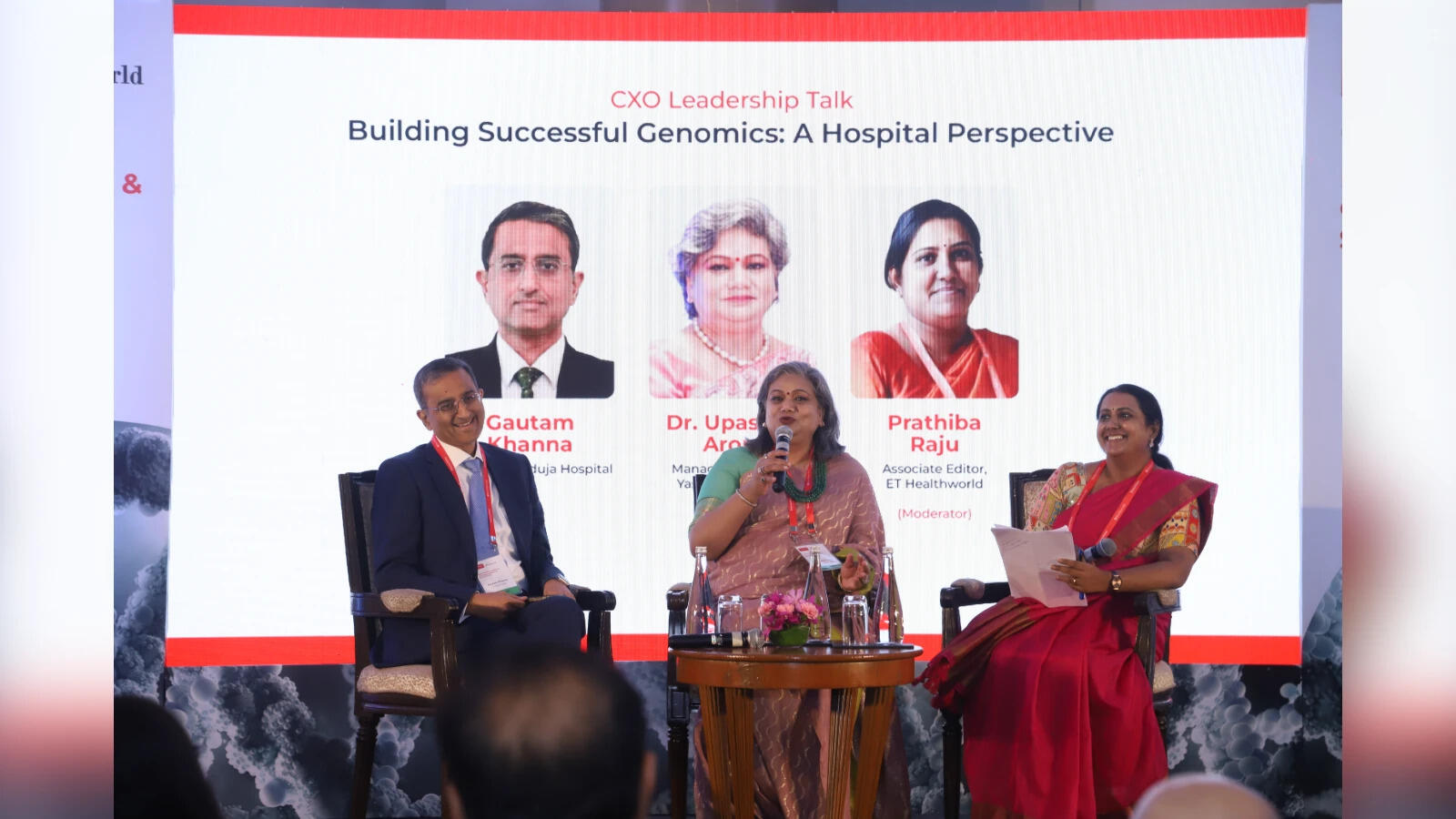
For years, genomics remained largely confined to research settings and specialised laboratories. As it enters routine clinical practice, hospitals face a different challenge: how to adopt it at scale while keeping it clinically relevant, financially sustainable, and accessible to patients. At the India Precision Health & Genomics Leadership Summit 2026, hosted by Thermo Fisher Scientific in association with The Economic Times, a panel discussion on The Hospital Business Case for Genomics Application took place.
The panel brought together Varun Sharma, Chief Strategy Officer, Sir Ganga Ram Hospital; Dr Shuchin Bajaj, Founder Director, Ujala Cygnus Hospitals; Dr Bishnu Panigrahi, Group Head, Medical Strategy and Operations, Fortis Healthcare; and Tom Berkovits, Commercial Director, Clinical Sequencing Division, Asia Pacific & Japan, Life Sciences Solutions, Thermo Fisher Scientific. Dr Shashikant Pawar, Chief Operating Officer, Kokilaben Dhirubhai Ambani Hospital, moderated the session.
Beyond the laboratory
For Varun Sharma, genomics represents more than a diagnostic technology. “I look at it as a structural force,” he said, describing genomics as a development capable of influencing the entire continuum of care, from prevention and early detection to treatment, follow-up and disease management.
As hospitals invest in genetic expertise, bioinformatics capabilities and data-driven decision-making, clinical pathways themselves begin to evolve. Treatment becomes more precise, care models change and, ultimately, hospital economics change as well. One of the most significant shifts, he argued, will be in how hospitals engage with patients.
“The moment today you have a patient, you are organised around an event or an episode. Five to ten years, this episode economics of a hospital will move towards engagement economics,” he said.
Genomics opens the possibility of continuous engagement through risk assessment, predictive screening, surveillance and long-term monitoring. In oncology, where a large share of cancers in India continue to be detected at advanced stages, earlier diagnosis could lower treatment costs while improving outcomes.
Sharma also challenged healthcare leaders to look beyond conventional financial metrics when evaluating genomics investments. “Don’t look at it from an ROI perspective. Look at it from a value on investment (VOI) perspective,” he said.
Investing with local realities in mind
For Dr Shuchin Bajaj, the discussion around genomics looks very different when viewed from smaller towns and underserved regions. Bajaj argued that before discussions on affordability and accessibility can begin, healthcare providers often face a more basic challenge: availability. In many communities, access to advanced genomic services is limited. Even where such services are available, they must be appropriate for the population they serve. He questioned whether broad genomic testing necessarily improves clinical decision-making in every setting.
“Building volume and aggregation is the first thing we need to do if it has to be successful in a country like ours,” Bajaj said.
Rather than replicating expensive infrastructure across multiple facilities, he suggested that regional hubs could aggregate samples and expertise while allowing patients to remain closer to home. Such models, supported by appropriate payer structures and cross-subsidisation where required, could make genomic services more scalable.
Measuring impact, not volume
As genomic testing becomes more widely adopted, Dr Bishnu Panigrahi argued that hospitals need a clear framework to evaluate success. He proposed four areas for assessment: clinical utility, operational efficiency, patient impact and economic value. The starting point is whether genomics actually changes patient care.
“Does it help you in identifying the right drug to give, the right dose to give, and your treatment modality?” he asked.
Operational efficiency should extend beyond laboratory turnaround times to include the entire pathway from test ordering to clinical action. How quickly genomic findings influence treatment decisions is often more meaningful than testing speed alone.
Few areas to evaluate the value of genomics are improvements in patient survival, reduced recurrence rates and better overall disease management.
“It is not how many tests that you do, but whether the test that you did had a positive impact on the outcome for the patient,” he said.
According to Panigrahi, testing can be centralised or outsourced where appropriate. Clinical decision-making cannot. He reminded the need for India-specific genomic databases and evidence as continued dependence on Western datasets will limit the full potential of precision medicine in the country.
Lessons from global adoption
Drawing on international experience, Tom Berkovits said successful genomics programmes tend to be embedded within broader healthcare systems where testing, treatment and outcomes are closely connected. “They’re managing not only the patient and the patient outcome, but they’re managing the treatment as well,” he said.
In many countries, testing and treatment are funded through separate budgets. Berkovits pointed to examples such as countries in South America, where pharmaceutical companies collaborated to fund testing programmes in areas where reimbursement mechanisms were insufficient.
He also encouraged hospitals to look beyond sequencing alone. “Everybody needs to get better at biobanking, at keeping specimens, and then being able to interrogate those samples and ask further questions down the track,” he said.
As technologies such as proteomics, spatial biology and single-cell analysis continue to advance, hospitals that preserve samples and build local data repositories will be better positioned to generate insights relevant to their own patient populations.
The real challenge ahead
As the discussion drew to a close, Dr Shashikant asked the panelists to identify the biggest hurdle preventing hospitals from scaling genomic testing from hundreds to thousands of patients. Talent emerged as the dominant concern. Sharma said the challenge is not technology but the shortage of trained professionals needed to support scale. Dr Bajaj pointed to two barriers: aligning skilled human resources and securing greater acceptance from insurers, many of whom have yet to support reimbursement models for genomic testing.
Dr Panigrahi summed that growth depends on having the right people in the right roles, backed by accountability and ownership rather than passion alone. Tom echoed concerns around shortages across the genomics workforce, from pathologists to lab technicians, while also highlighting the need for wider education among patients and clinicians to build awareness and confidence in genomics beyond oncology.
Disclaimer: The views and opinions expressed in this content are those of the speaker ( except for Tom Berkovits who participated as a Thermo Fisher Scientific representative) and do not necessarily represent an endorsement, promotion, or official position of Thermo Fisher Scientific India or reflect any views of Thermo Fisher Scientific India. This content is intended for educational purposes only and should not be considered medical advice. The information discussed may not be applicable to all patients or situations. Healthcare professionals should use their own clinical judgment and consult relevant guidelines before making any medical decisions.
Disclaimer: The above content is non-editorial, and TIL hereby disclaims any and all warranties, expressed or implied, relating to it, and does not guarantee, vouch for or necessarily endorse any of the content.
Join the community of 2M+ industry professionals.
Subscribe to Newsletter to get latest insights & analysis in your inbox.
All about ETHealthworld industry right on your smartphone!
The Delhi High Court on Monday declined to grant PepsiCo permission to continue manufacturingbeverages containing the “energy drink” label. But the court asked a single-judge bench to explain why it had denied the company that relief.
A division bench of Acting Chief Justice Nitin Wasudeo Sambre and Justice Sanjay Sharma was hearing PepsiCo’s appeal against an October 6 order that allowed the company to sell its existing stock of Sting Energy and Adrenaline Rush but barred it from manufacturing fresh products with the “energy drink” tag.
During the proceedings, PepsiCo’s senior counsel argued that while the single judge had protected the company from any action over the FSSAI directive, it did not allow the company to continue manufacturing beverages under the same label.
The counsel also pointed out that similar relief had been granted to another beverage company in a different case involving Red Bull.
The division bench, however mentioned that it would not examine the merits of the dispute at this stage, considering the fact that PepsiCo’s request for confirmation of interim relief was still pending before the single judge.
“What is in operation is an ad-interim relief in the matter,” the court observed.
The bench noted that the October 6 order did not give specific reasons for preventing PepsiCo from manufacturing products with the “energy drink” label, especially when similar permission had been granted in the Red Bull case.
“We are prima facie of the view that the single judge has not recorded any specific reasons for not permitting the petitioner in the matter of manufacturing with the label ‘energy drink’, which otherwise was permissible in (the Red Bull case),” the bench said.
It directed the single judge to record the reasons within a week so that the division bench could consider the issue.
“We deem it appropriate to relegate the matter to the single judge with a direction that for observations in paragraph 13 of the order dated 6.10.2026, let there be reasons recorded so as to enable this court to deal with the issue,” the court ordered.
Meanwhile, counsel for the FSSAI opposed PepsiCo’s appeal, arguing that it was not maintainable.
The dispute began after the food regulator directed PepsiCo to remove the “energy drink” descriptor from its beverages and instructed food safety officers across the country to seize products containing the label.
PepsiCo argues against the directions before the Delhi High Court. On October 6, the single judge granted the company interim protection from coercive action and allowed it to clear its existing stock of beverages labelled as “energy drink”.
However, the court stopped short of allowing fresh manufacturing under the same label, prompting PepsiCo to approach the division bench.
As of now, PepsiCo can continue to sell its existing stock under the protection granted by the court, but the restriction on manufacturing new products with the “energy drink” label remains in place.
Pennsylvania’s Franklin County reported a measles-associated death on Monday, bringing the state’s death toll from the infectious disease to six.
The 39-year-old woman had several underlying health conditions, including a recent history of measles that had been treated with medication, the coroner’s office said in a statement.
The office said her death, investigated on Saturday, met the Pennsylvania Department of Health’s definition of a measles-associated death.
The coroner’s office did not release further details, citing privacy concerns.
The state health department did not immediately respond to Reuters request for comment. According to the Pennsylvania Office of Administration’s 2026 holiday schedule, the offices were closed on Monday for Indigenous Peoples’ Day.
Pennsylvania’s health department previously reported more than 1,000 cases and five deaths related to measles as the state continues to grapple with a rapidly growing outbreak.
However, the US Centers for Disease Control and Prevention has confirmed only two measles-related deaths nationwide, amid a disagreement between Pennsylvania Governor Josh Shapiro and US Health Secretary Robert F. Kennedy Jr. over how such deaths are defined.
The CDC has shifted to using mortality data from the National Center for Health Statistics (NCHS) for its national measles death count, moving away from reliance on state health departments – drawing scrutiny.
The agency has said it is working with state epidemiologists on a standard definition for measles-related deaths. The agency said its death count could change as additional information becomes available and reviews are completed.
Measles is a highly contagious viral disease but can be prevented with the measles, mumps and rubella vaccine, which is about 97% effective after two doses.
New Delhi: The Food Safety and Standards Authority of India (FSSAI) is considering formulating regulations specific to the ecommerce ecosystem, including quick commerce platforms and cloud kitchens, after cracking down on packaged foods and beverages, alcoholic beverages and retail stores, its chief executive Rajit Punhani said.
“We’ve had stakeholder consultations with ecommerce and quick commerce players. We’re planning to amend the regulation so that consumers know the manufacturing date, expiry date and batch number of products they’re ordering,” he told ET in an interview.
The regulator has also started inspections of dark stores of quick commerce firms and cloud kitchens, he said. While platforms often mention a product’s shelf life, consumers may not know the actual expiry date or batch number of products before placing an order.
The government has been examining complaints accusing quick commerce platforms such as Blinkit, Zepto and Swiggy Instamart of failing to display product information, including expiry, best-before and use-by dates.
The Legal Metrology (Packaged Commodities) Amendment Rules 2017 requires mentioning ‘best before’ or ‘use by’ date, month and year’ on food packets. The Central Consumer Protection Authority, after reviewing complaints received through the National Consumer Helpline, sent notices to ecommerce firms in 2024, directing them to display the manufacturing and expiry dates on packs. No regulation was passed at the time amid resistance from platforms.
Companies argued it was difficult to display detailed information, including expiry, best-before and use-by dates and batch numbers, for hundreds of thousands of grocery items. Pushback and pressures from Big Food “don’t keep me awake at night”, Punhani said, responding to a question on whether there was lobbying from large MNCs, especially on front-of-pack labelling for packaged food. It is “unethical for food companies to mislead consumers on labelling”, said the IAS officer and IIM-Bangalore alumnus.
“We are doing nothing wrong; we are just implementing the regulations,” he said. “So, we expect, especially big companies, to lead the way in following the regulations. They should be the first to not make misleading claims to consumers or misleading ads. We expect them to be the role models for the smaller companies and startups.”
The FSSAI in recent months issued notices to more than 150 food and beverage makers, including Nestle, PepsiCo, Dabur, ITC, Ferrero, Danone, Red Bull and Abbott, on issues ranging from incorrect and misleading labelling claims about ingredients to non-compliances on labelling. “It’s not that there are large numbers of violations; they are very few in terms of percentage,” Punhani said.
The regulator is actively moving towards implementing front-of-pack labelling for packaged food, more than a decade after making the initial proposal that faced resistance from global and Indian packaged foods makers and multiple litigations. In a recent affidavit filed at the Supreme Court, FSSAI proposed red, hexagonal front-of-pack warning labels, displaying the amount of nutrients such as sugar, salt and saturated fat in the contents, and is awaiting the court’s decision to take the next step.
His focus, Punhani said, was on enforcement. This involved strengthening of the state-level machinery. “I don’t see (state) food commissioners under pressure,” he said.
Join the community of 2M+ industry professionals.
Subscribe to Newsletter to get latest insights & analysis in your inbox.
All about ETHealthworld industry right on your smartphone!
In a notice issued last week, NMC advised all medical colleges and med institutions to appoint a patient safety nodal officer and set up a dedicated patient safety committee or cell to monitor safety practices, review incidents and recommend corrective action.
Experts said medical errors are preventable lapses causing harm, ranging from wrong drugs or dosages and infections due to unsterile equipment to bedsores.
The estimate was cited in a May 8 communication from additional director general of health services, which flagged the need to strengthen patient safety practices across medical colleges & hospitals.
The proposed cells will cover 11 domains, including medication and surgical safety, blood transfusions, medical devices, lab and diagnostic procedures, hospital-acquired infections, antimicrobial resistance, vaccine and injection safety, and facility safety.
The committees will be responsible for facilitating the reporting and analysis of patient safety incidents, near misses and high-risk events. They will identify gaps in systems, recommend corrective and preventive measures.
Join the community of 2M+ industry professionals.
Subscribe to Newsletter to get latest insights & analysis in your inbox.
All about ETHealthworld industry right on your smartphone!
New Delhi: People with long Covid, where symptoms persist after recovery from an acute Covid-19 infection, may have distinct differences in the mix of bacteria living in their mouths and lungs, research has shown.
The differences in the lung microbiome are linked to respiratory symptoms, as well as the cognitive and digestive problems known to occur in long Covid, researchers said.
The findings, published in the European Respiratory Journal, may contribute towards understanding why some people develop long Covid and point to new ways to treat the condition, they said.
“Prior studies have shown some changes in the gut microbiome with long Covid, but Covid is a lung disease and so it makes sense to look to see if the lung microbiome is changed in long Covid,” lead author Daniela Alferes de Lima Headley from the University of Dundee, UK, said.
“We know that millions of people worldwide are still affected by long Covid and its cause is still unknown. Long Covid affects multiple organs. The microbiome is important to maintain health throughout the body, so it is a strong candidate for something that may contribute to long Covid,” she said.
The study examined 771 people treated for Covid-19 at one of 38 UK hospitals between February 2020 and March 2021.
The participants were divided into four groups based on how bad their symptoms were five months after being discharged from hospital, ranging from ‘very severe’ with serious physical, mental, and cognitive impairments to ‘mild’, with few symptoms and good recovery.
Six months after hospital discharge, samples were collected from patients’ mouths through saliva and from their lungs through sputum. DNA sequencing was used to identify the microbes present.
By analysing the variety and quantities of microbes and comparing them with patients’ symptoms, researchers found that people with very severe long Covid had marked differences in their oral and lung microbiomes compared with those who did not have severe long Covid.
The results also revealed differences linked to specific symptoms, including reduced lung function, in which the lungs cannot hold as much air as normal or air cannot flow in and out as easily.
The researchers also found differences in the mouth and lungs microbiome between people with varying neurocognitive symptoms — including ‘brain fog’, difficulties with memory, attention and concentration — and gut symptoms, including pain, nausea, diarrhoea and loss of appetite.
Among the changes associated with long-Covid symptoms, was an over-abundance of bacteria that produce lactic acid, which was also linked to signs of inflammation found in samples of patients’ blood.
Lead researcher James Chalmers, chair of respiratory research at the University of Dundee, UK, said, “People who had the worst symptoms five to six months after Covid infection had big changes in the microbiome in their mouth and lungs.”
“We also found that changes in the airway microbiome were linked not just to lung problems, but also to symptoms like brain fog and gut symptoms, suggesting the lung microbiome could have effects on health more broadly,” he said.
Patients with lesions caused by herpes simplex virus have a new FDA-approved treatment option, an oral antiviral drug from Asahi Kasei.
The late Friday regulatory decision covers the treatment of adults whose lesions do not respond to the three oral antivirals that make up the current standard of case. Asahi Kasei’s once-daily pill, known in development as pritelivir, will be commercialized under the brand name Hovilpri.
In people with healthy immune systems, herpes simplex virus (HSV) infection is often asymptomatic or causes mild disease. But in people with weakened immune symptoms — those who have undergone a transplant procedure, or patients with HIV, cancer, or autoimmune disorders — HSV infection can occur more frequently and with greater severity. While oral antivirals are available to treat HSV, viral mutations can lead to resistance to these older drugs. There are alternative treatment options, but they require intravenous dosing.
Hovilpri gives patients the choice of an oral drug with a different mechanism of action. This small molecule is designed to inhibit a complex of enzymes key to the synthesis of viral DNA. The drug was developed to treat both types of HSV, HSV-1 and HSV-2.
The regulatory submission for Hovilpri was based on the results of a Phase 3 study that showed statistically significant superiority in lesion healing up to day 28 compared to the physician’s choice of treatment. The most common adverse reaction reported for the study drug was headache.
“Today’s approval delivers the first FDA-approved treatment for refractory mucocutaneous HSV lesions with a novel mechanism of action in nearly 30 years and marks an important advancement for immunocompromised adults,” Stacy Wheeler, CEO of Asahi Kasei Therapeutics in the U.S. and Europe, said in a prepared statement. “Hovilpri offers a new oral treatment option for adult patients with a persistent, difficult-to-treat disease.”
Hovilpri was originally developed by AiCuris Anti-Infective Cures, a Germany-based biopharmaceutical company acquired by Asahi Kasei for €780 million (about $919 million). In the February acquisition announcement, Tokyo-based Asahi Kasei said the deal strengthens the company’s presence in severe infectious disease. It added that HSV patients addressed by Hovilpri are commonly seen in transplant centers and specialized hospital settings where the company has established commercial relationships and infrastructure.
Asahi Kasei has been expanding its portfolio and pipeline via business deals. In 2020, the company closed the 8.3 billion Danish krone (about $1.3 billion) acquisition of Veloxis Pharmaceuticals, a company that develops and sells therapies for organ transplant patients. The Japanese company’s 11.8 billion Swedish krona (about $1.18 billion) acquisition of Calliditas Pharmaceuticals in 2024 brought a portfolio that includes Tarpeyo, which has FDA approval for treating the rare kidney disorder immunoglobulin A nephropathy.
The Aicuris acquisition brought more than Hovilpri. Asahi Kasei gains royalty income from Prevymis, a cytomegalovirus drug whose global rights Aicuris had licensed to Merck. The Japanese company also gets an experimental antisense oligonucleotide that Aicuris has advanced to Phase 1 testing as a treatment for BK virus infection in kidney transplant patients.
Outro, a neuroscience-based platform, announced last week that it raised $7 million in pre-seed and seed funding.
The New York-based company helps patients discontinue psychiatric medications. Patients visit with clinicians trained in safe deprescribing and receive access to personalized tapering plans. They also gain access to compounded medication doses.
“Roughly 1 in 6 Americans take antidepressants. There are tens of millions of people on these drugs, yet no science-based way to get off safely. … Outro is the off-ramp that should have been built from the beginning. We want getting off a medication to be as supported as getting on it – arguably even more,” said Brandon Goode, co-founder and CEO of Outro.
Outro’s funding included participation from Listen Ventures, Cake Ventures, Jason Calicanis’s LAUNCH, Actions Capital, Hannah Grey Ventures, SemperVirens, Brock Recovery Group and Pave Health Ventures.
According to Listen Ventures, Outro is filling a gap in the healthcare system.
“Outro is building the infrastructure, therapeutic options, and support for deprescribing, starting with antidepressants — a model we believe will become a standard part of modern healthcare,” said Ellen Wilcox, partner at Listen Ventures, in a statement.
With the financing, Outro will expand its network of deprescribing-trained clinicians and create AI clinical decision support for deprescribing, Goode said. It will also expand beyond antidepressants into other areas. Several other drug classes require safe off-ramps, such as benzodiazepines, gabapentinoids and GLP-1s, Goode noted.
Research from Outro’s co-founder, Dr. Mark Horowitz, shows that four in five long-term antidepressant users were unable to stop their medications due to withdrawal symptoms. Horowitz helped create the hyperbolic tapering method that the company’s platform is based on. Hyperbolic tapering is a method of gradually reducing a medication dose by smaller and smaller amounts as the dose gets lower, rather than reducing it by equal increments.
“Deprescribing guidance has existed in countries like the U.K. for years,” Horowitz said in a statement. “Yet in America, where antidepressant use is widespread, tapering support is very hard to come by, so millions of patients are left without support when they are ready to come off. As someone personally impacted by a lack of tapering guidance, I am proud to be building a service to bridge this gap.”
Ultimately, Outro aims to make deprescribing a normal part of healthcare, Goode said.
“More than that, we want to empower patients with a fair opportunity to safely and sustainably transition to a life free from medication, if that’s what they want,” he said.
It’s the second time the HHS has tried to kickstart a 340B rebate program — and the second time hospitals have sued to block it, alleging rebates will threaten their financial viability.