Category: Digital Health & Technology

  • When Cybercriminals Impersonate Care: Why Trust Is Part of the Treatment

    When Cybercriminals Impersonate Care: Why Trust Is Part of the Treatment

    When Cybercriminals Impersonate Care: Why Trust Is Part of the Treatment
    Cindi Carter, Global Chief Information Security Officer, Check Point Software

    For years, healthcare organizations have encouraged patients to become more digitally connected to their care.

    Use the patient portal. Check your test results online. Respond to appointment reminders. Communicate electronically with your care team. Use digital tools to take a more active role in managing your health.

    Patients listened.

    That progress has made digital engagement an important part of the healthcare experience. Unfortunately, cybercriminals understand that relationship, too.

    Recent phishing campaigns impersonating MyChart demonstrate an important evolution in healthcare cyber risk. Attackers are using fraudulent emails, text messages, phone calls, and websites designed to look like familiar healthcare communications. Some promise free Medicare kits or health-related products. More concerning schemes have used fake MyChart websites and fabricated medical information to create urgency around supposedly critical test results.

    The technology may be fraudulent, but the emotion it creates is very real.

    Imagine receiving a notification that appears to come from your healthcare provider telling you that abnormal laboratory results require immediate attention. In that moment, most patients aren’t thinking like cybersecurity professionals. They’re thinking like patients.

    What did they find? Is something wrong? What do I need to do?

    That is precisely what makes these attacks so effective.

    Cybercriminals Aren’t Just Exploiting Technology. They’re Exploiting Trust.

    Healthcare has always operated on trust. Patients trust clinicians with deeply personal information and life-changing decisions. Increasingly, they must also trust the digital systems through which healthcare is delivered.

    That makes cybersecurity part of the patient experience.

    When an attacker impersonates a patient portal, the immediate objective may be to steal credentials or financial information, or to install malware. But there is another consequence healthcare leaders should consider: every convincing impersonation can make patients a little less certain about whether the next legitimate communication can be trusted.

    That matters.

    If patients become afraid to click an authentic appointment notification, access a test result, or respond to a message from their care team, the consequences move beyond information security. Security friction can become healthcare friction.

    Trust is part of the treatment.

    Protecting it requires healthcare organizations to think beyond defending their own infrastructure. The organization’s digital identity, and the communications patients associate with it, must also be protected.

    Healthcare Organizations Need to Protect the Digital Relationship

    The first priority is prevention. Healthcare organizations should continue strengthening email security, identity protections, multifactor authentication, domain protections, and monitoring for brand impersonation and lookalike domains. But technology alone is not enough.

    Organizations should establish recognizable and consistent patterns for patient communications. Patients should know how their healthcare organization communicates, which domains and phone numbers it uses, what information it will request electronically, and, equally important, what it will never request.

    Healthcare organizations should also make the trusted path easy to find.

    Instead of asking patients to determine whether every link is authentic, teach a simpler behavior: when something feels unexpected, urgent, or unusual, leave the message and access the patient portal through the healthcare organization’s official app or known website.

    Security, communications, digital health, patient experience, and clinical leadership should also have a coordinated response plan for patient-targeted impersonation campaigns. When a campaign emerges, organizations need to communicate quickly and consistently across their websites, patient portals, call centers, clinical practices, and other trusted channels.

    This is an important distinction: an organization does not need to have suffered a breach for a cyberattack to affect its patients. Someone impersonating your organization can create risk for the people you serve even when your own systems remain secure.

    Patients Have a Role, Too

    Patients should approach unexpected healthcare messages with healthy skepticism, particularly those that create urgency, offer free products, or request personal, insurance, financial, or login information.

    A few habits can dramatically reduce risk:

    • Access MyChart through the official mobile application or the healthcare provider’s known website rather than through an unexpected message.
    • Never provide passwords or verification codes by email, text, or phone. Legitimate MyChart support will not request them through those channels.
    • Be suspicious of unexpected offers for free healthcare products, Medicare kits, prizes, or rewards.
    • Never follow instructions from a website telling you to run commands, install software, or bypass a computer security warning.
    • If a message involves an alarming diagnosis or unexpected medical result, verify it through the official patient portal or contact the healthcare provider directly.

    Patients who believe they interacted with a fraudulent message should change their portal credentials, review their contact information and account activity, and contact their healthcare organization’s support team.

    But we should be careful not to place the entire burden on patients.

    Modern phishing attacks are becoming increasingly sophisticated. Generative AI makes it easier to produce convincing language, personalize messages, and replicate trusted communications at scale. “Look for spelling mistakes” is no longer an adequate cybersecurity strategy.

    The safer approach is to make verification habitual and simple.

    Protecting Confidence in Digital Care

    Healthcare’s digital transformation depends on patients being willing to engage with technology.

    We want patients checking their records. We want them communicating with clinicians. We want them using digital tools to schedule appointments, manage medications, review test results, and participate more actively in their care.

    Cybersecurity therefore has a responsibility beyond protecting systems and data. It must help preserve patients’ confidence in those interactions.

    The MyChart phishing campaigns offer an important reminder for healthcare leaders: cybercriminals will exploit not only our vulnerabilities, but also the relationships and trusted brands we have worked for years to build.

    The answer isn’t to make patients afraid of digital healthcare.

    It’s to make trustworthy digital healthcare easier to recognize and harder to impersonate.

    Because in an increasingly connected healthcare ecosystem, protecting the patient means protecting the technology, the communication, and the confidence that connects them.

    Trust is part of the treatment.


    About Cindi Carter 

    Cindi Carter is a global, multi-industry Cybersecurity and Information Technology Executive who consistently delivers the optimal outcome. As a transformational leader from startups to enterprises she excels at building cybersecurity practices in highly regulated industries, turning strategic goals into action, and highly collaborative engagement to lead the organization in managing cyber risk. At Check Point Software Technologies, Cindi is a Global Chief Information Security Officer in the Office of the CISO, leading Check Point’s Healthcare Center of Excellence where human safety is essential to care. With over two decades in the healthcare and financial industries, Cindi’s purpose is deeply rooted in human safety, bringing together the capabilities that protect the security and privacy of each individual.


  • Outro Secures $7M to Build Healthcare’s First Neuroscience-Based Deprescribing Platform

    Outro Secures $7M to Build Healthcare’s First Neuroscience-Based Deprescribing Platform

    What You Should Know

    • Neuroscience-based deprescribing platform Outro announced that it has raised $7M in combined pre-seed and seed financing to establish clinical and technological infrastructure for discontinuing psychiatric medications safely.
    • The financing syndicate is backed by Listen Ventures, Cake Ventures, Jason Calacanis’s LAUNCH, Actions Capital, Hannah Grey VC, SemperVirens, Brock Recovery Group, Pave Health Ventures, and additional strategic digital health investors.
    • Outro combines specially trained deprescribing clinicians, evidence-informed hyperbolic tapering protocols, continuous remote patient monitoring, longitudinal psychosocial counseling, and purpose-built software.

    Clinical Architecture: Grounding Tapering in Neurobiology

    Founded by digital health entrepreneur Brandon Goode and clinical researcher Dr. Mark Horowitz, Outro translates specialized psychopharmacology into an outpatient virtual delivery model:

    • Scientific Foundation: Co-founder Dr. Mark Horowitz is a leading global researcher on psychiatric medication discontinuation whose academic work established the neurobiological basis for hyperbolic tapering—a protocol that reduces drug dosage by progressively smaller increments as doses decrease to account for non-linear serotonin transporter receptor occupancy curves.
    • The Flagship “Taper Management” Program: Currently live across 14 U.S. states, the platform combines a specialized network of deprescribing-trained clinicians, individualized evidence-informed tapering schedules, continuous remote symptom tracking, and structured psychosocial support.
    • National Policy Alignment: The funding coincides with federal recognition of deprescribing as a critical care standard. In 2026, the U.S. Department of Health and Human Services (HHS) formally prioritized the development of national evidence-based deprescribing guidelines in collaboration with the American Psychiatric Association (APA) and the American Society of Clinical Psychopharmacology (ASCP).

    Capital Allocation & Technical Roadmap

    The $7M capital injection will be deployed expanding Outro’s licensed clinical network to grow its footprint beyond the initial 14-state footprint. The expanded pharmacological scope extending its evidence-informed tapering model beyond selective serotonin reuptake inhibitors (SSRIs) and SNRIs into additional psychiatric drug categories prone to physical dependence, including benzodiazepines, sleep aids, and antipsychotics.


    “Only a few years ago, it was considered taboo to even talk openly about mental health,” said Brandon Goode, Co-founder and CEO of Outro. “Today, patients are asking a different question: if starting medication deserves support, why does stopping often happen without it? We’ve built the on-ramp for medications. Now it is time to build the off-ramp.”

    Reader Interactions

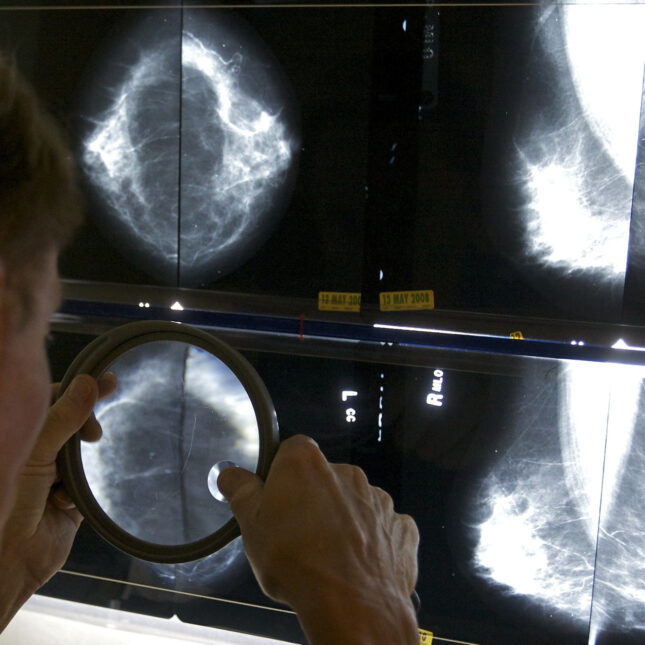
  • STAT+: AI for breast cancer risk prediction goes DTC, regulatory cloud over Utah sandbox, and AI psychosis

    STAT+: AI for breast cancer risk prediction goes DTC, regulatory cloud over Utah sandbox, and AI psychosis

    You’re reading the web edition of STAT’s Health Tech newsletter

    Damian Dovarganes/AP

    Mario covers technology in health care, including FDA regulation of artificial intelligence; how Medicare pays for health tech; the use of AI in clinical care; mental health chatbots; and consumer wearables. He’s also the co-author of the free, twice weekly STAT Health Tech newsletter. You can reach Mario on Signal at mariojoze.13.

    You’re reading the web edition of STAT’s Health Tech newsletter, our guide to how technology is transforming the life sciences. Sign up to get it delivered in your inbox every Tuesday and Thursday.

    Good morning health tech readers!

    I had the pleasure of profiling Yasha Ektefaie, a fellow at the Broad Institute, who is newly announced STAT Wunderkind. Check out our annual list of promising young researchers here.

    STAT+ Exclusive Story

    Already have an account? Log in

    STAT+

    STAT+

    This article is exclusive to STAT+ subscribers

    Unlock this article — plus in-depth analysis, newsletters, premium events, and news alerts.

    Already have an account? Log in

    View All Plans

    To read the rest of this story subscribe to STAT+.

    Subscribe

    1. Health Tech Correspondent

      Mario covers technology in health care, including FDA regulation of artificial intelligence; how Medicare pays for health tech; the use of AI in clinical care; mental health chatbots; and consumer wearables. He’s also the co-author of the free, twice weekly STAT Health Tech newsletter. You can reach Mario on Signal at mariojoze.13.

  • STAT+: Why this startup is taking its AI to predict breast cancer risk directly to patients

    STAT+: Why this startup is taking its AI to predict breast cancer risk directly to patients

    Waiting on doctors and insurers to get on board would have taken too long, Clairity says

    Adobe

    Katie covers the impact of health technology on patients, clinicians, and businesses. Her stories explore the price tag of clinical AI, digital health at the FDA, and the boom in direct-to-consumer telehealth. Confidential tips can be sent on Signal at palmer.01.

    You’re reading Part 5 of Paying for AI, a series examining how new clinical artificial intelligence tools influence the affordability of health care and patients’ long-term health. Here’s Part 1, Part 2, Part 3, and Part 4.

    “Don’t wait. Choose to be informed.” 

    That’s the call to action that patients will find on the site for digital health company Everlywell, which has offered at-home lab tests directly to consumers for a decade. But last week, it wasn’t marketing a prick to measure blood glucose or screen for celiac disease: It was launching one of a new generation of AI-based risk prediction algorithms for medical images. 

    STAT+ Exclusive Story

    Already have an account? Log in

    STAT+

    STAT+

    This article is exclusive to STAT+ subscribers

    Unlock this article — and get additional analysis of the technologies disrupting health care — by subscribing to STAT+.

    Already have an account? Log in

    View All Plans

    To read the rest of this story subscribe to STAT+.

    Subscribe

    1. Health Tech Correspondent

      Katie covers the impact of health technology on patients, clinicians, and businesses. Her stories explore the price tag of clinical AI, digital health at the FDA, and the boom in direct-to-consumer telehealth. Confidential tips can be sent on Signal at palmer.01.

  • Telehealth Was Built for Two. Interpreted Care Requires Three

    Telehealth Was Built for Two. Interpreted Care Requires Three

    Philip Rosen, Founder and Managing Director of Capital Linguists

    Telehealth was supposed to widen access. For patients who do not speak English, it narrowed access.

    An analysis of California Health Interview Survey data published in Health Affairs found that patients with limited English proficiency used telehealth at a rate of 4.8 percent, against 12.3 percent among proficient English speakers, roughly half the odds even after adjusting for other sociodemographic factors. 

    A systematic review by researchers at the University of North Carolina’s Sheps Center for Health Services Research reached a starker finding: every one of the seven studies examining telehealth by modality reported significantly lower video use among patients with limited English proficiency. Of the roughly 25.6 million people in the United States with limited English proficiency, those who do connect are disproportionately routed to audio-only care, the modality where interpretation is hardest and clinical observation is weakest.

    Here is what competence looks like in practice.

    Book the language, not just the appointment

    Language needs must be captured as a structured field at scheduling and must carry an interpreter reservation with it. Two failures are near-universal. First, preferred language is recorded but never triggers anything downstream. Second, the language is recorded too coarsely  “Chinese” instead of Cantonese or Mandarin, “Arabic” without dialect, “Spanish” without noting an Indigenous first language behind it. A mismatched interpreter burns the appointment slot as thoroughly as no interpreter at all.

    Book by encounter type as well as language. A 15-minute medication check and a 45-minute oncology consult are different assignments, and rare languages need lead time that on-demand queues cannot always deliver.

    The interpreter needs a dedicated participant link not the patient’s link forwarded, and not a phone line bridged into a video visit. Bridging is where three-way encounters most often collapse: the interpreter cannot see the patient, and roughly half of what an interpreter relies on disappears.

    That is not only a quality problem. The technical standards carried into Section 1557 require a sharply delineated image large enough to show the faces of both the interpreter and the person being served, along with real-time video free of lags or irregular pauses. The rule explicitly bars reliance on low-quality video remote interpreting, and OCR’s December 2024 Dear Colleague letter signaled that these obligations are active and enforceable. An interpreter on a phone line is a compliance exposure, not a workaround.

    Where the platform allows it, pin the interpreter’s video so the patient can see them throughout, and confirm the connection before the patient joins.

    Spend sixty seconds on the pre-session

    The single highest-yield habit in interpreted care costs one minute. Before the clinical conversation begins, the clinician and interpreter align on the encounter: the visit’s purpose, any specialized terminology likely to come up, whether difficult news is expected, and how the interpreter should signal a need to pause.

    This is also where the interpreter states the ground rules to the patient  that everything said will be interpreted, that nothing will be omitted or added, and that the encounter is confidential. Patients who understand this speak more freely. Patients who do not tend to compress their answers.

    Run the visit in the first person

    Speak directly to the patient, not to the interpreter. “Where does it hurt?” not “Ask her where it hurts.” The interpreter renders in the first person. This is standard practice, and it is not a stylistic nicety: third-person framing pushes the patient out of their own encounter and invites the clinician to build rapport with the wrong person.

    Deliver one or two sentences at a time and pause. Long uninterrupted passages force the interpreter to summarize, and summarization is where clinical detail is lost. Expect the interpretation to take longer than the original. Build the extra time into the slot rather than accelerating to recover it.

    Two habits matter especially on video. Silence carries no visual explanation, so narrate what you are doing when you turn to the chart. And when the interpreter requests a clarification, treating it as a quality signal rather than an interruption  it usually means a term has no clean equivalent, which is precisely the moment a misunderstanding would otherwise pass unnoticed.

    Document the interpretation, not just the visit

    Record the interpreter’s name or ID, the language and dialect, the modality, and the duration. Most organizations cannot currently stratify outcomes by language because this data never reaches the chart, which makes a known disparity invisible to the quality committee that is accountable for it.

    Teach-back is where a language-discordant visit is verified or lost. Ask the patient to explain the plan in their own words, through the interpreter, before anyone disconnects. Written follow-up should be reviewed by a qualified human, the 2024 rule requires exactly that for critical communications produced with machine translation.

    The system-level point

    None of this is difficult. It is unassigned. Interpreter integration usually belongs to no one: not the telehealth platform team, not the clinical informatics group, not the compliance office that owns the language access plan on paper.

    Health systems now buying ambient documentation, AI translation, and virtual-first care are making architectural decisions about a population that is already using video least. Deciding who owns the three-way visit before those tools are configured rather than after is the cheapest equity investment on the roadmap.

    About Philip Rosen

    About Philip Rosen

    Philip Rosen is the Founder and Managing Director of Capital Linguists, a US-based language services firm providing certified interpreting and translation across more than 210 languages. He works with healthcare systems, government agencies, and academic institutions on language access in high-stakes settings.

  • Healthleap Raises $38M for Clinical AI Screening Platform Targeting Overlooked Inpatient Conditions

    Healthleap Raises $38M for Clinical AI Screening Platform Targeting Overlooked Inpatient Conditions

    What You Should Know

    • Clinical artificial intelligence platform Healthleap announced that it has raised $38M  in combined seed and Series A financing backed by Sequoia Capital, First Round Capital, and Hummingbird Ventures (consisting of an $8M seed round co-led by Sequoia and First Round and a $30M Series A led by Hummingbird).
    • Directly targets an entrenched inpatient diagnostic blind spot: up to 50% of hospitalized patients are clinically at risk for disease-related malnutrition, yet fewer than 9% ever receive a formal clinical diagnosis, exacerbating patient morbidity, mortality, and hospital length of stay (LOS).
    • Replaces static, manual screening workflows: while acute hospitals historically screen for malnutrition using a two-question survey administered once at admission—routinely missing sedated, confused, intubated, or critically ill patients—Healthleap ingests every patient’s complete medical record every morning, synthesizing clinical notes, laboratory trends, vital signs, medication orders, and active problem lists.

    Inpatient Record Synthesizer: Screening Every Patient Every Morning

    Founded in 2022 by sibling duo Josiah Meyer (CEO) and Jemima Meyer (clinician and co-founder), Healthleap operates as an EHR-integrated clinical surveillance layer:

    • Continuous Multi-Source Chart Ingestion: The platform reads each patient’s complete electronic health record every morning—synthesizing physician progress notes, nursing assessments, laboratory panels, vitals trajectories, active medication orders, and historical problem lists.
    • Prioritized Clinical Worklists: Rather than overwhelming providers with static alerts, Healthleap ranks patient risk and routes actionable scores into optimized EHR workflows, highlighting for bedside clinicians and registered dietitians who requires evaluation first.
    • Proactive Diagnostic Capture: Enables hospitals to screen their entire inpatient census daily with high diagnostic precision, identifying deteriorating or undernourished patients who would otherwise go unnoticed until post-discharge complications develop.
    • Compliance and Security: The platform operates under full HIPAA compliance and maintains SOC 2 certification.

    Measured Clinical Efficacy and Hard-Dollar Financial Returns

    Healthleap’s adoption demonstrates significant clinical and revenue cycle impacts across academic health systems:

    • Penn Medicine Financial Return: At one Penn Medicine hospital, deployment of Healthleap generated $23.8 million annually through a combination of incremental reimbursement capture and the financial return of length-of-stay (LOS) reductions.
    • Diagnostic Expansion at Enterprise Scale: In enterprise health system rollouts, deployments yielded a 39% increase in identified and treated malnutrition cases, unlocking $11 million in incremental reimbursement revenue within a single health system network.
    • Appropriate Case-Mix and DRG Reimbursement: Because severe malnutrition qualifies as a major complication or comorbidity (MCC) under Medicare Severity Diagnosis Related Group (MS-DRG) payment methodologies, accurate identification and clinical nutritional intervention allow hospitals to capture approximately $11,000 in incremental reimbursement per qualified encounter while reducing avoidable inpatient days.

    Expanding Beyond Malnutrition: The Multi-Condition Roadmap

    Building on its validated clinical malnutrition algorithms, Healthleap is deploying its daily chart-surveillance architecture across high-cost acute inpatient conditions:

    • Congestive Heart Failure (CHF): Detecting early subclinical fluid retention and decompensation markers before acute exacerbation.
    • Pressure Ulcers: Flagging mobility, nutritional, and skin-integrity risk factors to initiate targeted nursing interventions and prevent hospital-acquired stage III/IV pressure injuries.
    • Hospital-Acquired Infections (HAIs): Identifying early physiologic and laboratory indicators of systemic sepsis, catheter-associated urinary tract infections (CAUTIs), and surgical site complications.

    “Every week, millions of patients leave hospitals with unresolved health conditions that will erode their health and cost up to 10x more to treat later,” said Josiah Meyer, Co-founder and CEO of Healthleap. “Finding them now is prevention, and it’s a win for everyone. Patients get treated before they get sicker. Hospitals shorten stays and are paid for the care they deliver. Payers avoid the much larger cost of complications down the road. Our goal is to improve care and save lives by catching these conditions early.”

    Reader Interactions

  • STAT+: Why health AI pilots in Utah may be on a collision course with the FDA

    STAT+: Why health AI pilots in Utah may be on a collision course with the FDA

    You’re reading the web edition of STAT’s AI Prognosis newsletter

    STAT/Adobe

    Brittany Trang, Ph.D., covers AI in health and medicine: Does it actually work? Who benefits, or might be harmed? She writes the weekly AI Prognosis newsletter. Follow her on Threads, Mastodon, and Bluesky. You can reach Brittany on Signal at btrang.01.

    Mario covers technology in health care, including FDA regulation of artificial intelligence; how Medicare pays for health tech; the use of AI in clinical care; mental health chatbots; and consumer wearables. He’s also the co-author of the free, twice weekly STAT Health Tech newsletter. You can reach Mario on Signal at mariojoze.13.

    This is the web edition of STAT’s AI Prognosis newsletter, our guide to artificial intelligence in health care and medicine. Sign up to get it delivered in your inbox every Wednesday. 

    I have refused to read or watch “The Love Hypothesis” — I referred to it as the “Title IX movie” the other day when I forgot its name. But the clips are inescapable on my Instagram feed, and the science gaffes seem … real bad. Absolute butchering of how academia works? The impossible chemistry on the poster? Wearing miniskirts in the lab? Vortexing a test tube? *shudders*

    Once again: I firmly believe STAT would allow me to consult on science-related elements on film sets. Offers for Hollywood gigs, health tech story tips, comments: [email protected]

    STAT+ Exclusive Story

    Already have an account? Log in

    STAT+

    STAT+

    This article is exclusive to STAT+ subscribers

    Unlock this article — plus in-depth analysis, newsletters, premium events, and news alerts.

    Already have an account? Log in

    View All Plans

    To read the rest of this story subscribe to STAT+.

    Subscribe

    1. Brittany Trang, Ph.D., covers AI in health and medicine: Does it actually work? Who benefits, or might be harmed? She writes the weekly AI Prognosis newsletter. Follow her on Threads, Mastodon, and Bluesky. You can reach Brittany on Signal at btrang.01.

    2. Health Tech Correspondent

      Mario covers technology in health care, including FDA regulation of artificial intelligence; how Medicare pays for health tech; the use of AI in clinical care; mental health chatbots; and consumer wearables. He’s also the co-author of the free, twice weekly STAT Health Tech newsletter. You can reach Mario on Signal at mariojoze.13.

  • Teladoc Health Unveils SoloVitals and SoloScribe: AI-Powered Contactless Biometrics and Enterprise Documentation

    Teladoc Health Unveils SoloVitals and SoloScribe: AI-Powered Contactless Biometrics and Enterprise Documentation

    Teladoc Health Launches Chronic Condition Management Solution

    What You Should Know

    • Enterprise virtual care leader Teladoc Health launches two native AI-powered capabilities integrated directly into its enterprise smart care platform, Solo: SoloVitals and SoloScribe.
    • Directly targets acute hospital “point-solution fatigue,” allowing health systems to scale remote physiological tracking and ambient documentation without procuring, integrating, or managing disparate third-party software vendors

    Key Capabilities: SoloVitals and SoloScribe

    Rather than functioning as standalone third-party add-ons, both features operate natively inside the clinician’s core virtual encounter window:

    • SoloVitals (Contactless Biometric Acquisition via rPPG):
      • Remote Photoplethysmography (rPPG): SoloVitals captures vital signs without physical patient contact by analyzing subtle, micro-vascular color fluctuations across facial skin using the patient’s existing consumer device camera (such as a standard smartphone, tablet, or laptop).
      • Clinical Indications: Generates clinically validated measurements for heart rate and respiratory rate during remote video consultations, providing objective physiological signals before or during virtual encounters without requiring external hardware cuffs or wearable sensors.
      • Availability: Currently launched in private preview with select enterprise health systems, with general availability scheduled for December 2026.
    • SoloScribe (Embedded Ambient Clinical Documentation):
      • Synchronous Virtual Documentation: SoloScribe listens to the clinical dialogue during the encounter to generate structured, specialty-specific clinical summaries in real time.
      • Hybrid Consultation Support: Operates across direct-to-patient virtual appointments as well as device-based telemedicine encounters (such as inpatient telestroke carts and virtual ICU boom stations).
      • EHR Data Pipeline: Automatically pushes structured note summaries directly into Epic, Oracle Health, or other underlying EHR charts, eliminating manual copy-pasting across systems.
      • Availability: Generally available (GA) across all supported enterprise deployment

    Reader Interactions

  • Health Systems Can’t Optimize What They Can’t See: TeleTracking on Ambulatory Capacity, Leakage, and Operational AI

    Health Systems Can’t Optimize What They Can’t See: TeleTracking on Ambulatory Capacity, Leakage, and Operational AI

    Health Systems Can’t Optimize What They Can’t See: TeleTracking on Ambulatory Capacity, Leakage, and Operational AI
    Michelle Skinner, MBA, BSN, RN, Chief Clinical Executive, TeleTracking

    For decades, health systems have invested in creating operational visibility inside the hospital. Leaders are accustomed to tracking bed capacity, anticipating demand, identifying bottlenecks and coordinating the movement of patients and resources within the four walls of the hospital.

    But healthcare no longer begins and ends at the hospital doors.

    Care continues to move into physician practices, specialty clinics, imaging centers, ambulatory surgery centers, and at home with virtual care. Yet many health systems still lack the same enterprise-level operational visibility at these settings as they do inside the hospital. The result is a gap in ambulatory visibility that limits patient access, threatens network integrity, and stifles revenue growth.

    Research has shown that missed appointments alone cost the U.S. healthcare system approximately $150 billion annually. At the same time, McKinsey has found substantial unused capacity within employed physician networks, and demonstrated the financial value health systems can realize by improving access and utilization.

    The challenge is not necessarily a lack of capacity. Often, it’s a lack of visibility to where that capacity exists and the operational ability to act on it.

    The patient journey has changed. The operating model must follow.

    Historically, inpatient and ambulatory care developed as distinct operating environments. Physician practices were often independent organizations with their own technology, workflows and processes. As health systems acquired practices and expanded their outpatient footprints, many of those operations remained relatively independent.

    The result today can be an enormous network of care supported by fragmented operational systems.

    A scheduler may need to navigate multiple platforms to determine where a patient can be seen. An executive looking at an access KPI may have to ask analysts or operational leaders to determine which region, location, specialty or provider is causing the problem. A referral coordinator may know a patient needs specialty care but lack visibility into availability across the entire network.

    The information exists. It simply exists in too many places.

    A patient leaving the hospital may need primary care, a specialist, imaging, laboratory testing and other services. Each represents another point at which the health system can either maintain that person as a patient or risk losing them.

    In many organizations, schedulers and referral coordinators work across multiple systems simply to find appropriate appointments for a patient. The result is fragmentation that limits the ability to identify the appointment that best meets a patient’s needs based on availability, location and provider type.

    That fragmentation matters because an ambulatory visit can no longer be viewed as separate from the overall patient journey. 

    When patients leave the network, revenue follows

    Consider a patient discharged from the hospital with a referral to a specialist.

    The health system has already invested in that patient’s care. Clinicians understand the patient’s history, records are available, and maintaining continuity within the network benefits both the patient and the health system.

    But what happens when the preferred specialist can’t see the patient for six weeks?

    Without network-wide visibility, a scheduler may not know that another location has an opening next week. The patient only knows that they can’t be seen for six weeks and looks elsewhere to continue their care.

    For patients managing a new diagnosis or recovering from a complex procedure, that gap is not simply inconvenient. It creates clinical risk that the health system is no longer positioned to see or manage.

    Once that happens, the health system risks losing much more than one appointment.

    The specialty visit may generate imaging, procedures, follow-up appointments or additional services. Losing visibility into the patient’s care can also make it harder to manage outcomes under value-based care arrangements.

    The question, therefore, isn’t simply, “Do we have an appointment available?” It should be “Where across our entire network can we best meet this patient’s need?”

    Capacity you can’t see is capacity you can’t use

    One of the problems of ambulatory access is that patients can face long waits for appointments while capacity simultaneously goes unused.

    McKinsey quantified the problem in an analysis of more than 10 health systems with large employed-physician organizations. Across those organizations, actual, or retrospective, appointment-slot utilization ranged from 48% to 93%, with a median of just 70%. McKinsey also found a difference of approximately 20 percentage points between prospective and retrospective fill rates, driven by cancellations that were not backfilled, late cancellations and no-shows.

    That distinction is critical. A schedule may appear full when viewed prospectively, but that doesn’t always mean the available capacity translates into completed patient visits. Without visibility into actual utilization, leaders can overestimate how effectively capacity is being used.

    At enterprise scale, this becomes increasingly important. A health system may have hundreds or thousands of providers spread across dozens of locations. One practice may have a three-week wait while another has appointments available. Without network-wide operational visibility, leaders and schedulers may not recognize that imbalance in time to act.

    The result is more than an efficiency problem. Patients who can’t get timely care are likely to seek it outside the network, taking not only the immediate encounter but the imaging, procedures, specialty care and future services with them.

    Visibility changes the growth equation

    Limited visibility also makes it harder to determine where health systems should invest.

    When access is constrained, the instinct may be to add providers, extend clinic hours or build additional locations. But those decisions should begin with a more fundamental question: Is there truly insufficient capacity, or is existing capacity distributed inefficiently across the network?

    One location may be overwhelmed while another has unused appointments. A specialty may appear constrained across the enterprise when the real bottleneck exists within only a handful of providers or appointment templates.

    The data needed to make those distinctions often already exists, but it may be fragmented across multiple systems, reports and departments. Bringing that information together creates an opportunity not only to identify access and capacity constraints, but also to make better decisions about where service lines should expand, where providers should be deployed and where resources may be underutilized.

    Growth should begin with understanding the capacity you already have.

    From visibility to action

    The next evolution of ambulatory operations is not simply another dashboard, it’s complete operational orchestration.

    Leaders need operational intelligence that allows them to move from seeing a problem to understanding its cause and then being able to act on it.

    Imagine an executive seeing that days to access have increased and immediately drilling down by region, location, department and provider. At the same time, an operator could see that one clinic is approaching capacity while another has availability and redeploy resources accordingly. A scheduler could tell a patient, “This location can’t see you for three weeks, but another location 20 minutes away can see you Tuesday.”

    Today, gathering that level of information can require multiple reports and hours of analysis. The opportunity is to surface that information immediately for executives, managers and schedulers so they can make decisions, open capacity and better navigate patients across the network.

    Artificial intelligence is the next step in this evolution. Rather than simply identifying a capacity constraint, purpose-built operational orchestration platforms can analyze historical and anticipated demand and recommend actions like adjusting templates, shifting resources or adding provider coverage where demand warrants it while keeping the operator in control of the decision.

    That moves ambulatory operations from reporting what happened to helping teams decide what should happen next.

    Building a boundaryless health system

    The opportunity ultimately extends beyond ambulatory care.

    As care continues moving into outpatient, and eventually virtual home settings, health systems need to stop viewing the patient journey through organizational boundaries. The goal should be a truly boundaryless operating model capable of seeing demand, capacity and patient movement wherever care occurs.

    We already understand the value of this kind of visibility inside the hospital. The next challenge is extending it across the rest of the health system.

    That requires more than technology. It requires people, process and technology working together around a shared operational picture. It requires leaders prepared to use real-time data and increasingly AI-driven recommendations to make faster, more informed decisions.

    Most importantly, it requires viewing ambulatory care not as a collection of individual clinics, but as an interconnected enterprise and an integral part of the complete patient journey.

    The billions lost to missed appointments, unused capacity, patient leakage and inefficient utilization are symptoms of a larger challenge: health systems can’t optimize what they can’t see.

    Closing the ambulatory operational visibility gap gives organizations an opportunity to change that equation, connecting patients to the right care at the right time and location, making better use of existing resources, protecting network integrity and building a more sustainable platform for growth.

    As more care moves beyond the hospital, enterprise-wide visibility will no longer be optional. It will be fundamental to how health systems compete, grow and care for their patients.


    About Michelle Skinner

    Michelle Skinner is the Chief Clinical Executive at TeleTracking Technologies, where she brings together clinical insight and operational strategy to help health systems unlock capacity, expand access, and drive scalable growth. A former trauma and critical care nurse, Michelle has led enterprise transformation initiatives across hospital operations, service line development, and patient flow redesign. Her career spans the front lines of care to the executive table—making her a trusted partner to health system leaders navigating complexity and change. She is committed to solving the structural barriers that limit care delivery and believes that rethinking capacity is key to building a more resilient, responsive, and equitable health system.