
Tag: Digital Health

  • Zocdoc Acquires Sohar Health: Expanding Care Access Infrastructure and Automated Insurance Verification

    Zocdoc Acquires Sohar Health: Expanding Care Access Infrastructure and Automated Insurance Verification

    Zocdoc Acquires Sohar Health: Expanding Care Access Infrastructure and Automated Insurance Verification

    What You Should Know

    • Healthcare scheduling and access infrastructure leader Zocdoc announced that it has officially acquired Sohar Health, an automated insurance benefits eligibility and discovery technology company (the transaction closed on October 2, 2026).
    • Marks a historic corporate milestone: this transaction represents the first corporate acquisition in Zocdoc’s nearly 20-year operating history.
    • Accelerates Zocdoc’s strategic transformation from a standalone consumer appointment marketplace into an omnichannel “healthcare access infrastructure” layer that powers real-time provider discovery and booking wherever patients initiate search.

    Transaction Mechanics and Partner Synergy

    The acquisition formalizes a deep technical collaboration established over the preceding year. Zocdoc initially selected Sohar Health as its core insurance verification partner in 2025 following an extensive evaluation of legacy clearinghouses and modern eligibility APIs. Millions of patients have already verified coverage using Sohar’s underlying technology inside Zocdoc.

    Unlike legacy eligibility platforms that require patients to input precise group numbers, subscriber IDs, and obscure payer portal codes, Sohar utilizes minimal demographic inputs—such as a patient’s legal name and date of birth—to programmatically surface active coverage, verify benefits, and confirm in-network tiering in real time. Operationally, Sohar will continue to operate without platform disruption, retaining its brand identity, product suites, leadership team, and independent commercial book of business alongside its deep integration into Zocdoc’s core infrastructure.


    Technical Capabilities and Standalone Enterprise Reach

    Founded in 2023 by physician Ashish Mandavia, MD, and software engineer Lucas Gordon, Sohar has established significant density across modern digital health and behavioral health platforms. Its platform connects to more than 1,000 commercial, Medicare Advantage, and Medicaid health plans nationwide via modern REST APIs.

    The software automates real-time insurance discovery, eligibility and benefit checks, network participation status, and patient out-of-pocket cost estimation prior to care delivery. Beyond Zocdoc, Sohar’s technology powers front-end patient intake, coverage discovery, and intake revenue integrity for leading scaled behavioral health networks, including BetterHelp, Headway, Rula, and Talkiatry.


    Expanding the “Care Access Network” Beyond the Marketplace

    Zocdoc’s inaugural acquisition reflects key strategic shifts across digital health distribution, patient access, and front-end revenue cycle integrity. First, it directly powers Zocdoc’s headless infrastructure play through the Care Access Network. Earlier in October 2026, Zocdoc announced the launch of its Care Access Network, decoupling its underlying scheduling engine, provider registry of over 200,000 providers across 200-plus specialties, and calendar synchronization rails from its native website and mobile app. By embedding real-time provider booking directly into third-party surfaces—including Gemini, Amazon Health AI, Yelp, Healthgrades, and Blue Shield of California—Zocdoc is positioning itself as the universal operating layer for healthcare appointment booking. Acquiring Sohar provides Zocdoc with the proprietary eligibility engine required to instantly verify coverage across all third-party AI and consumer endpoints.

    Second, it eliminates upstream billing friction. In line with the industry-wide push toward proactive revenue cycle management, eliminating administrative waste requires catching errors upstream before care takes place. Front-end eligibility errors represent one of the largest single drivers of initial claim denials. By validating coverage and network tiering at the exact millisecond an appointment is booked, Zocdoc and Sohar intercept denials before patient records reach the practice management system.

    Third, it reinforces the zero-input consumer standard. Consumer adoption succeeds when digital tools reduce friction rather than add administrative paperwork. Sohar’s ability to locate coverage using only a name and date of birth removes the cognitive hurdle of physical health plan cards, significantly lifting search-to-booking conversion rates for provider practices.

    Finally, the deal underscores broader market consolidation momentum. Healthcare platforms are increasingly transitioning from point-tool buyers to platform consolidators, bringing proprietary infrastructure in-house to protect unit economics and build enterprise moats.
  • Labcorp Partners with Thrive Global to Launch Thrive 5 Health Test: ApoB, hs-CRP, and HbA1c Paired with Behavior Change

    Labcorp Partners with Thrive Global to Launch Thrive 5 Health Test: ApoB, hs-CRP, and HbA1c Paired with Behavior Change

    Labcorp Partners with Thrive Global to Launch Thrive 5 Health Test: ApoB, hs-CRP, and HbA1c Paired with Behavior Change

    What You Should Know

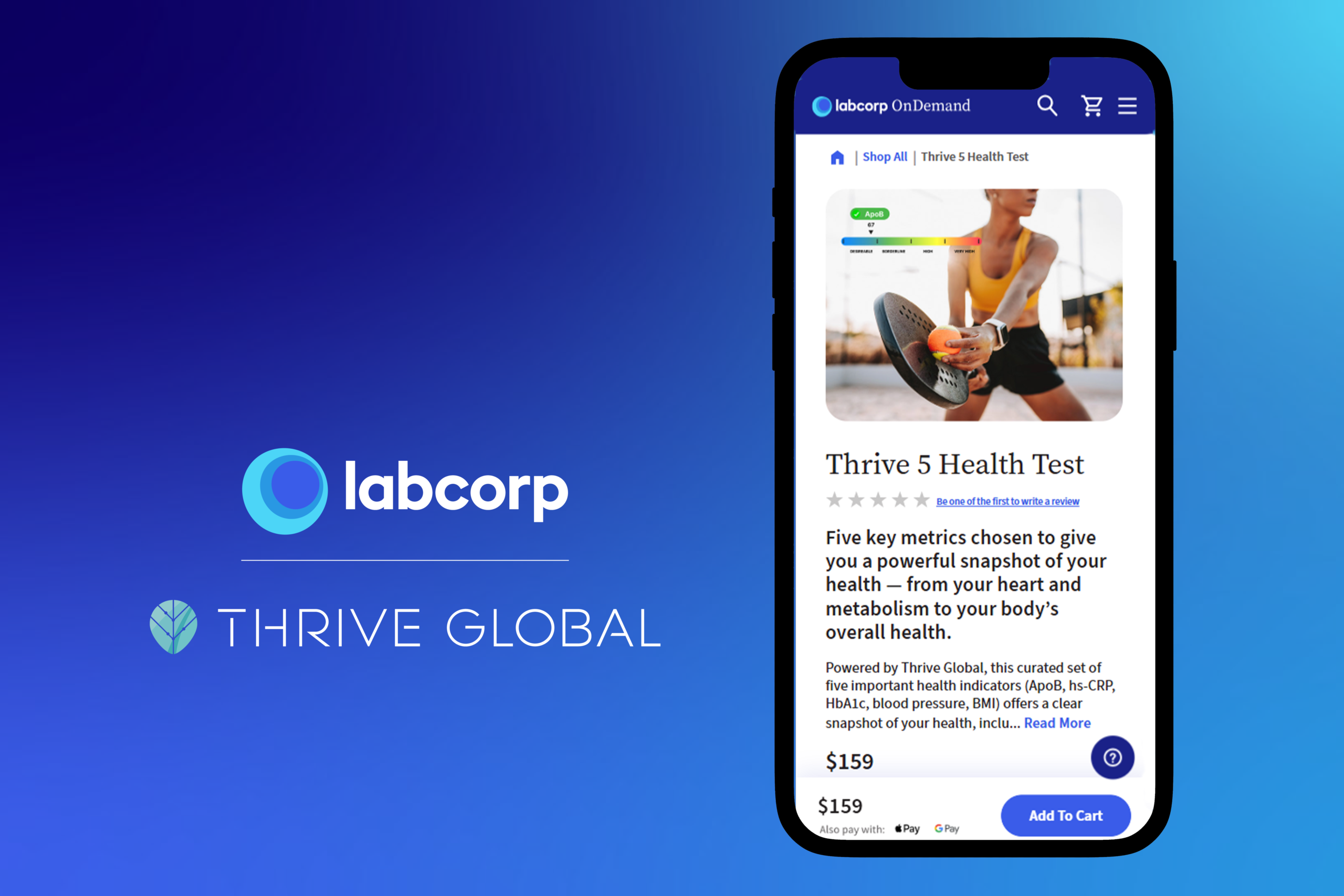
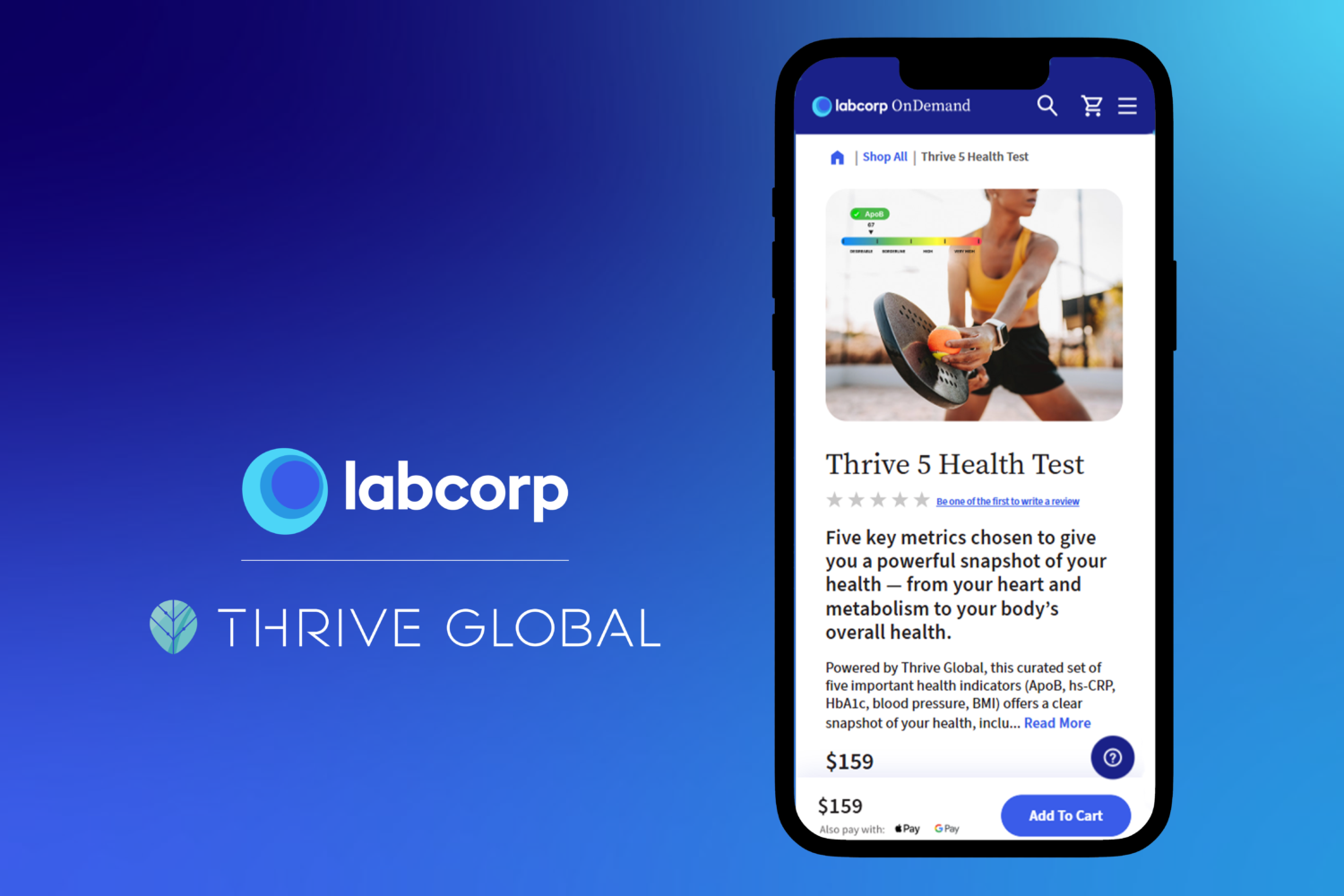
    • Diagnostic laboratory provider Labcorp announced the commercial launch of the Thrive 5 Health Test, representing the first diagnostic lab panel offered in strategic collaboration with Arianna Huffington’s behavior change technology enterprise, Thrive Global.
    • Directly targets the “actionability gap” in consumer health testing: while direct-to-consumer lab kits frequently return dense biochemical reference ranges without behavioral context, the Thrive 5 test translates clinical biomarkers into daily habit modifications.
    • Available via Labcorp OnDemand, the offering represents the first clinical diagnostic product integrated directly with Thrive Global’s habit-formation methodologies, combining five validated cardiometabolic markers with tailored, daily behavioral micro-actions.

    The Clinical Biomarker Core: 5 Cardiometabolic Anchors

    Rather than offering an uncurated, broad-spectrum biomarker panel, the Thrive 5 Health Test focuses on five integrated cardiovascular, inflammatory, and metabolic indicators designed to assess cumulative chronic disease risk:

    • Apolipoprotein B (ApoB): Measures the total particle number of atherogenic lipoproteins carrying cholesterol into the artery wall, providing a more sensitive and predictive assessment of cardiovascular disease risk than standard LDL-C calculations.
    • High-Sensitivity C-Reactive Protein (hs-CRP): Assesses low-grade, systemic arterial and metabolic inflammation, a primary driver in plaque instability, metabolic dysfunction, and cardiovascular events.
    • Hemoglobin A1c (HbA1c): Reflects average blood glucose concentrations over the preceding 90 days, screening for subclinical insulin resistance, prediabetes, and type 2 diabetes progression.
    • Blood Pressure: Captures systolic and diastolic resting pressure dynamics, evaluating arterial resistance and hypertension risks.
    • Body Mass Index (BMI): Measures anthropometric baseline composition, serving as an adjunctive indicator of adiposity-related cardiometabolic strain.

    From Lab Draw to “Thrive Microsteps”

    The testing and digital engagement workflow is designed to eliminate friction between clinical lab results and daily routines. Individuals purchase the panel directly through the Labcorp OnDemand storefront and schedule blood draws at any of Labcorp’s thousands of Patient Service Centers across the United States.

    Diagnostic values, interpretive educational content, and personalized habit recommendations are delivered securely through Labcorp’s consumer portal and the MyLabcorp mobile application. Rather than issuing overwhelming lifestyle overhauls, such as generic directives to exercise 150 minutes weekly or eliminate carbohydrates, results are paired with Thrive Global’s proprietary Thrive Microsteps. These are small, science-backed behavioral changes distributed across five core lifestyle pillars: nutrition and meal timing, physical movement, sleep architecture, stress mitigation, and social connection.

    The platform also formats results into a structured clinical summary that consumers can bring directly to primary care encounters, facilitating informed discussions around preventative pharmacology, such as lipid-lowering therapies, or structured lifestyle medicine.

    “Too often, we get information about our health without guidance on what to do about it,” said Arianna Huffington, Founder and CEO of Thrive Global. “Through our collaboration with Labcorp, we are closing that gap by combining Thrive Global’s behavior change approach with lab testing for the first time. Labcorp’s scientific expertise helps people better understand what’s happening inside their bodies, and Thrive Global then helps turn that understanding into small daily habits that improve health—whether they’re managing a chronic condition or taking steps to protect their health for the future.”

    Reader Interactions

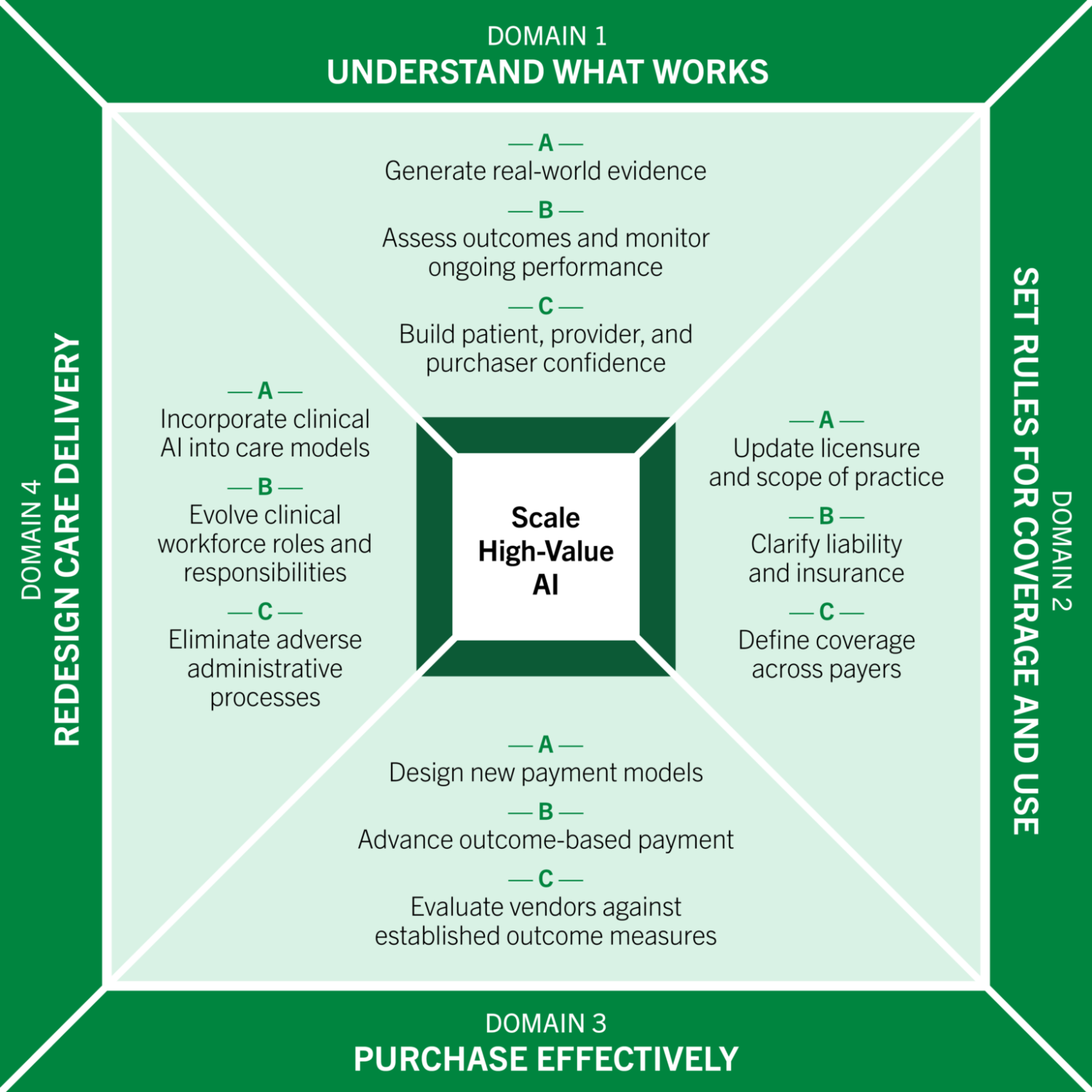
  • Peterson Health Technology Institute Report: Driving Adoption of High-Value AI in Healthcare Across Evidence, Coverage, and Payment

    Peterson Health Technology Institute Report: Driving Adoption of High-Value AI in Healthcare Across Evidence, Coverage, and Payment

    What You Should Know

    • The Peterson Health Technology Institute (PHTI) released a major national market report, titled Driving Adoption of High-Value AI in Healthcare, authored under the direction of Executive Director Caroline Pearson.
    • The report highlights that AI is fundamentally different from prior health technologies because it can perform work that previously required human labor and expertise, with the potential to expand the health system’s capacity to reach undertreated patients.
    • Formulates a critical industry warning: while artificial intelligence fundamentally differs from prior health IT by autonomously executing cognitive work previously restricted to human labor, under current fee-for-service incentives, administrative AI is accelerating broken processes, entrenching wasteful administrative friction, and driving inflationary upcoding rather than lowering total healthcare spending.

    Automating the Churn: How Fee-for-Service Warped the Algorithmic Promise

    The fundamental malfunction does not lie within the neural networks, but in the archaic financial machinery that feeds them. Because the American healthcare economy still overwhelmingly runs on fee-for-service plumbing—where hospital systems get paid for the volume and intensity of discrete transactions rather than keeping people healthy—AI is behaving exactly as free-market incentives dictate. It is automating the churn.

    Nowhere is this perversion more visible than in the quiet explosion of ambient scribing and algorithmic coding platforms. While these tools have legitimately lessened the clerical nightmare of keyboard-bound doctors, they have simultaneously handed hospitals an automated revenue pump. PHTI points to recent clinical implementations where deploying an AI scribe in ambulatory and emergency departments generated an immediate 5 percent spike in high-complexity Level 5 visits and a 7 percent jump in Level 4 encounters for established patients, putting an average of $1,004 in extra monthly billing into each doctor’s ledger. Across health networks, claims data reveals an immediate surge in billing intensity the moment an algorithm is switched on.


    The Payer-Provider Arms Race: Fighting an Automated War of Attrition

    Predictably, the nation’s health plans have not taken this lying down. Faced with what they deem aggressive algorithmic upcoding, commercial insurers have deployed their own defensive algorithms to systematically downcode, audit, and deny hospital claims before human adjusters ever see them.

    The result is a Kafkaesque, multi-billion-dollar bot war. In prior authorization—a bureaucratic gatekeeping ritual that already costs the system billions in phone calls and faxes—providers now unleash generative software to automatically compile medical necessity appeals, while payers deploy algorithmic gatekeepers to reject submissions with equal velocity. With procedure rules wildly fragmented across insurers, the automation has solved nothing. It has merely increased the speed and volume of the fighting, leaving human reviewers drowning in automated queues while patients wait in limbo for necessary care. As PHTI executive director Caroline Pearson notes, administrative AI is actively optimizing an adversarial game that drives up system-wide costs without buying a single ounce of better health.


    Starved in the Wings: The Tragic Neglect of Autonomous Chronic Care

    Meanwhile, the genuine clinical breakthroughs that could fundamentally alter the human condition remain starved of oxygen. Consider the quiet catastrophe of hypertension, an affliction that stalks nearly half of all American adults. Despite the existence of dirt-cheap, highly effective generic medications, three out of four diagnosed patients do not have their blood pressure under control because episodic, fifteen-minute doctor appointments are woefully inadequate for the titration and lifestyle coaching required to tame it.

    Clinical AI could easily crack this open. Algorithms are already capable of analyzing continuous biometric data from home cuffs, predicting individual drug responses, and adjusting doses between visits under protocol-driven guardrails. The exact same opportunity exists across behavioral health, where half the nation lives in a shortage area for mental health professionals and purpose-built conversational agents have demonstrated clinically meaningful drops in depression and anxiety.

    Yet these tools are financially suffocated because our payment rails require a human clinician’s hands and time to trigger a claim. An autonomous algorithm that monitors twenty thousand hypertensive patients and keeps them out of the cardiac intensive care unit cannot easily bill a fee-for-service code. In a system that bills for activities, an algorithm that quietly prevents an encounter generates zero revenue for a health system, while an ambient scribe that extracts an extra comorbidity code pays for itself on day thirty.


    A Blueprint for Sanity: Rewiring Incentives and Liability

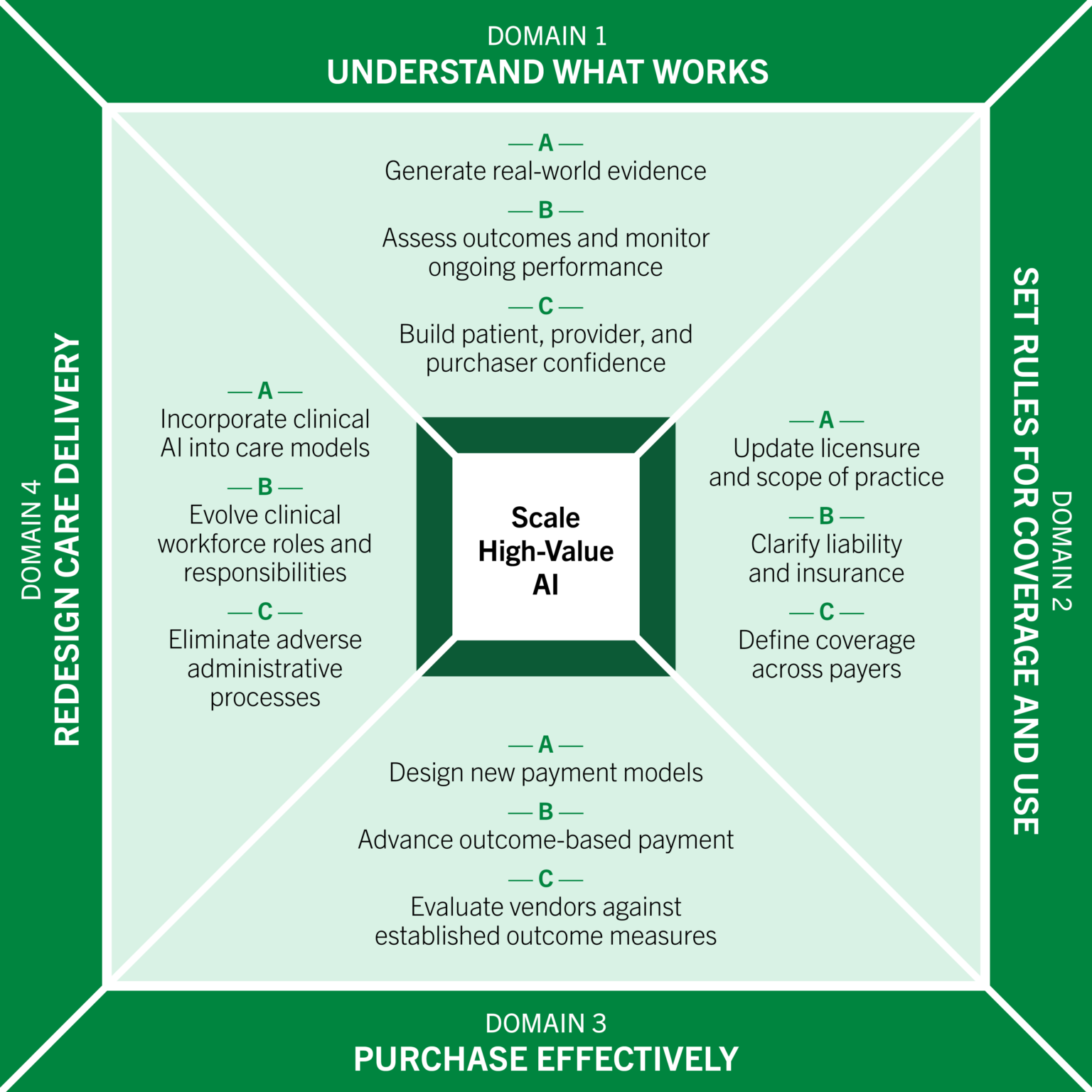
    To break this self-defeating spiral, PHTI’s blueprint—hammered out alongside hospital executives, top health plans, tech pioneers, and federal regulators at CMS, the FDA, and ARPA-H—argues that policymakers must stop treating healthcare AI like a technological problem and start treating it as a payment design problem.

    Reimbursement must decisively shift toward outcome-based payment architectures. PHTI highlights initiatives like the Center for Medicare and Medicaid Innovation’s ACCESS model, launched in mid-2026, which ties compensation to documented clinical endpoints over time rather than encounter volume. When providers are paid to achieve verified blood pressure control or depressive remission, autonomous and assistive AI suddenly becomes an indispensable cost-saving engine rather than an unbillable operational headache.

    Crucially, the report insists that payment for AI must be designed dynamically. Because software scales at near-zero marginal cost once deployed, paying standard per-use fees for clinical AI risks triggering an unprecedented wave of inflationary overutilization. Reimbursement rates should start high enough to encourage upfront clinical risk and workflow overhaul, and then ratchet downward as the software scales and unit costs collapse, ensuring the economic dividend of automation flows back to patients, employers, and taxpayers in the form of lower premiums.

    At the same time, the regulatory apparatus must catch up with reality. Medical malpractice doctrine and state licensing boards are still predicated on the fiction that an individual doctor makes every clinical choice. As initiatives like the Utah AI regulatory sandbox and the FDA’s TEMPO pilot are proving, the nation urgently needs statutory guardrails that delineate clear liability boundaries when algorithms act autonomously, shielding clinicians from unfair exposure while holding developers accountable for algorithmic drift and bias.


    “If thoughtfully deployed, clinical AI tools can close existing care gaps, extend services beyond in-person care, and improve efficiency throughout the system,” said Caroline Pearson, executive director of PHTI. “While this technology has the potential to improve patients’ health, make care more accessible and convenient, and increase affordability, we don’t currently have the systems in place to achieve that vision. We need to develop broadscale changes that enable high-value AI solutions to enter the market and to ensure that the impact and savings they produce benefit patients and families.”

  • FDA Launches Rare Disease Framework Initiative to Modernize Small-Cohort Trial Design

    FDA Launches Rare Disease Framework Initiative to Modernize Small-Cohort Trial Design

    FDA Announces Real-Time Clinical Trial Pilot Program and Proof-of-Concept Studies with AstraZeneca and Amgen

    What You Should Know

    • The U.S. Food and Drug Administration (FDA), an operating division of the U.S. Department of Health and Human Services (HHS), officially announced the launch of the Rare Disease Framework Initiative.
    • Accompanied by the publication of a new agency white paper outlining a “fit-for-purpose” regulatory model engineered to match trial requirements to the realistic evidentiary constraints of ultra-small, geographically dispersed patient populations.
    • Addresses a critical clinical deficit across orphan therapeutics: although an estimated 7,000 to 10,000 distinct rare diseases affect more than 30 million Americans, only approximately 5% currently possess an FDA-approved treatment.
    • The initiative is coordinated across agency divisions by the FDA’s Rare Disease Innovation Hub, operating in formal partnership with the Office of the Commissioner, the Center for Drug Evaluation and Research (CDER), and the Center for Biologics Evaluation and Research (CBER).

    The Five Percent Dilemma

    The initiative comes at a critical inflection point for biotechnology. Over four decades since the passage of the landmark Orphan Drug Act of 1983, regulatory flexibility and market incentives have spurred life-saving gene therapies, enzyme replacements, and targeted biologics. Yet the sheer scale of unmet medical need remains staggering: roughly 95 percent of all identified rare conditions still lack a single FDA-approved therapy.

    For families navigating ultra-rare genetic mutations, the agonizingly slow pace of drug development is compounded by regulatory unpredictability. Promising therapies often stall during late-stage reviews when sponsors struggle to demonstrate statistical significance using conventional clinical endpoints, or when chemistry, manufacturing, and controls requirements designed for mass-market pills prove ill-suited to custom, patient-derived cell therapies.

    The FDA’s new framework seeks to realign that process with the statistical realities of micro-populations. Under the initiative, the agency will evaluate therapeutics through customized evidentiary lenses, factoring in the biological nuances of each disease, the natural history of progression, and novel Bayesian trial designs that can extract statistically valid efficacy signals from just a handful of trial participants.

    A New Architecture at White Oak

    Central to the rollout is the newly established Rare Disease Innovation Hub, a cross-cutting regulatory entity designed to break down bureaucratic silos across the FDA’s two primary review divisions: the Center for Drug Evaluation and Research (CDER) and the Center for Biologics Evaluation and Research (CBER).

    Historically, developers targeting the same rare disorder with different therapeutic modalities—such as a small-molecule drug handled by CDER versus an adeno-associated virus gene therapy overseen by CBER—could face drastically divergent evidentiary demands and conflicting reviewer cultures. The Hub, directed by rare disease veteran Amy Comstock Rick, will serve as a single point of operational alignment, ensuring sponsors receive consistent guidance regardless of whether their product is a pill, an antibody, or an individualized genetic edit.

    Agency leadership signaled that the transformation will reach beyond clinical trials into manufacturing and post-market surveillance. The agency has committed to applying risk-based models to pre-approval inspections and chemistry standards, preventing regulatory bottlenecks from indefinitely delaying life-saving batches of customized treatments. In parallel, the framework plans to formalize patient and caregiver testimony directly into milestone review meetings, treating lived experience as structured qualitative data rather than a ceremonial addendum.

    A Crucible for the Future of Medicine

    To begin shaping the detailed regulations, revised guidances, and internal reviewer training modules, the FDA will convene a major public stakeholder summit on October 28 at its White Oak headquarters in Silver Spring, Maryland, facilitated by the Reagan-Udall Foundation. The hearing will bring together patient advocacy coalitions, academic geneticists, venture-backed biotechnology executives, and federal reviewers for the first of several sector-specific roundtables.

    Reader Interactions

  • Verily Health Awarded CDC Contract for National Wastewater Surveillance System: Scaling Genomic and Metagenomic Public Health Analytics

    Verily Health Awarded CDC Contract for National Wastewater Surveillance System: Scaling Genomic and Metagenomic Public Health Analytics

    Verily and Vanderbilt Extend Partnership to Power NIH's All of Us Researcher Workbench

    What You Should Know

    • Healthcare data intelligence leader Verily Health Inc. has been awarded a multi-year contract renewal by the Centers for Disease Control and Prevention (CDC) to continue operating and expanding the National Wastewater Surveillance System (NWSS).
    • Builds on a four-year operational foundation: the contract extension expands the public health surveillance partnership Verily has maintained with the CDC since 2023.
    • Delivered through Verily Sightline, the company’s specialized public health platform that unifies wastewater epidemiology, high-throughput molecular laboratory testing, bioinformatic data analytics, and software infrastructure to monitor population-level infectious disease transmission trends.
    • Introduces advanced genomic capabilities: the expanded CDC program will support continuous pathogen detection, targeted viral and bacterial genomic sequencing, and the incorporation of potential metagenomic surveillance capabilities to detect novel and emerging pathogens before they appear in clinical settings.

    Core Program Architecture: Verily Sightline & Expanded Metagenomics

    Under the renewed CDC mandate, Verily combines physical laboratory pipelines with population-level health informatics to track infectious disease dynamics:

    • End-to-End Operational Pipeline: Verily Sightline integrates sample intake from municipal wastewater treatment facilities, high-throughput biospecimen processing, quantitative PCR assays, and automated cloud data pipelines that feed actionable epidemiological intelligence directly into CDC reporting dashboards.
    • Pathogen-Specific Assays: Continues routine monitoring for established respiratory and gastrointestinal pathogens, including SARS-CoV-2, Influenza A/B, and Respiratory Syncytial Virus (RSV), alongside flexible surge testing for emerging zoonotic threats such as avian influenza (H5N1).
    • Genomic Sequencing & Variant Tracking: Performs high-density genomic sequencing to track lineage mutations, detect novel viral variants, and monitor antimicrobial resistance (AMR) markers before they appear in clinical hospital isolates.
    • Metagenomic Surveillance Expansion: Integrates prospective metagenomic next-generation sequencing (mNGS) capabilities. Metagenomic testing analyzes total genetic material in a wastewater sample without requiring pre-designed targeted primers, equipping public health officials with an unbiased discovery tool to identify previously uncharacterized or novel biological threats.

    “We’re proud to continue our work with the CDC on a program that strengthens national public health surveillance,” said Stephen Gillett, Chairman and CEO of Verily Health. “At Verily Health, we are building the data foundation for the future of healthcare intelligence, bringing together complex health data, scientific expertise, and advanced analytics to generate actionable insights that accelerate research and improve healthcare.”

    Reader Interactions

  • Agilent to Acquire Proscia for Up to $270M to Build Scientific Intelligence Layer in Digital Pathology

    Agilent to Acquire Proscia for Up to $270M to Build Scientific Intelligence Layer in Digital Pathology

    Agilent to Acquire Proscia for Up to $270M to Build Scientific Intelligence Layer in Digital Pathology

    What You Should Know

    • Analytical and clinical laboratory technology giant Agilent Technologies Inc. announced that it has entered into a definitive agreement to acquire digital pathology software and AI company Proscia®.
    • Transaction financial terms: an all-cash acquisition valued at $240M in cash at closing, plus up to an additional $30M contingent on achieving future operational and financial performance milestones (total potential deal value of $270M).
    • Closes the loop on a four-year commercial partnership: Agilent and Proscia originally entered into a multi-year global distribution agreement in September 2022 to co-market an open digital diagnostic pathology ecosystem.
    • Unifies an end-to-end precision medicine triad: merges Agilent’s established portfolio of automated slide stainers, pathology instrumentation, diagnostic reagents, and companion diagnostics (CDx) with Proscia’s vendor-agnostic enterprise software platform, Concentriq®, which serves as an operational orchestration layer across scanners, LIS networks, and AI algorithms.

    Assembling the Full Pathology Stack

    By acquiring Proscia, Agilent secures the missing software operating system. Instead of selling discrete instruments and reagents, Agilent can now deliver an end-to-end ecosystem: tissue preparation reagents, automated staining instrumentation, vendor-neutral whole-slide ingestion, and regulatory-cleared diagnostic software.

    Agilent and Proscia originally entered into a multi-year global distribution agreement in September 2022 to co-develop and sell integrated diagnostic pathology workflows. Acquiring Proscia transitions an external commercial alliance into an owned intellectual property core.

    Agilent is a primary diagnostic partner for global pharma, co-developing FDA-approved companion diagnostic tests that determine patient eligibility for targeted cancer immunotherapies. Integrating Concentriq gives Agilent a direct digital data conduit into 16 of the top 20 biopharmas, creating an R&D feedback loop that unites prospective biomarker discovery with downstream clinical commercialization.


    Transaction Economics & Target Operating Benchmarks

    The acquisition brings a high-margin, recurring-revenue software foundation into Agilent’s diagnostic portfolio:

    • Valuation Multiple & Purchase Price: Agilent is deploying $240M in cash at closing plus up to $30M in earnouts against Proscia’s trailing twelve months (TTM) revenue exceeding $18M —representing an upfront enterprise value-to-revenue multiple of approximately 13.3x (expanding to 15.0x including full earnouts), reflecting high market demand for enterprise software operating layers in diagnostics.
    • Commercial Scale and Penetration: Proscia’s platform—anchored by its flagship Concentriq® software—is deployed across more than 4,000 laboratories, hospital systems, and clinics across North America and Europe.
    • Top-Tier Biopharma Validation: Proscia software currently supports translational research and trial operations for 16 of the top 20 global pharmaceutical companies.
    • Clinical Performance Benchmarks: Proscia earned 2026 Best in KLAS for Digital Pathology (securing the highest vendor performance score across both U.S. and European markets) and holds U.S. FDA 510(k) clearance for primary clinical diagnosis.

    “Digital pathology is quickly becoming the foundation for pathology data generation, analysis, and application across biopharmaceutical research, clinical development, and diagnostics, and our acquisition of Proscia meaningfully expands our presence in this fast-growing market,” said Padraig McDonnell, President and CEO of Agilent. “The acquisition establishes an Agilent platform for scientific intelligence in tissue-based precision medicine, connecting data generation with AI-based interpretation in a workflow that supports biomarker research through routine clinical use. With Proscia’s leading platform and talented team, we will be better equipped to help laboratories and biopharma customers manage and derive insights from pathology data.”

    Reader Interactions

  • Readily Secures $11M for AI-Native Compliance Platform for Healthcare

    Readily Secures $11M for AI-Native Compliance Platform for Healthcare

    Readily Secures $11M for AI-Native Compliance Platform for Healthcare

    What You Should Know

    • Healthcare AI compliance and enterprise oversight platform Readily announced an $11M Series A funding round led by Define Ventures, with participation from Y Combinator and the California Health Care Foundation Innovation Fund.
    • Closes the operational execution gap in healthcare compliance: while traditional legal and regulatory tools alert organizations when a state or federal mandate changes, Readily connects regulatory text directly to internal health plan policies, assigns remediation tasks to accountable teams, monitors operational workflows, and compiles audit-ready evidence.
    • Readily supports health plans and risk-bearing healthcare organizations managing more than 25 million covered lives across 46 states (including key markets in California, Florida, Michigan, New York, and Texas).

    Connecting Mandates to Operational Follow-Through

    Readily operates as a centralized regulatory intelligence layer, bridging the divide between external regulatory text and internal operational execution. Readily scans and parses federal registers, state administrative updates, and Medicaid plan letters in real time, automatically mapping statutory changes to affected internal policies, member benefit grids, and vendor contracts.

    Key features include: 

    Automated Redlining and Policy Drafting: Generates redlined policy revisions and updated procedure language that align with newly enacted rules, reducing manual legal and policy review cycles from weeks to minutes.

    Workflow Accountability & Task Orchestration: Assigns operational updates directly to business unit owners (e.g., claims configuration, utilization management, network contracting) and tracks completion status across teams, eliminating blind spots where policy changes fail to reach frontline workflows.

    Continuous Audit Evidence Compilation: Automatically aggregates required universes, correlates operational actions with statutory requirements, and compiles auditable evidence packages—allowing health plans to defend their compliance posture during CMS or state audits in seconds rather than spending months retrieving files.

    Human-in-the-Loop Governance: Keeps qualified compliance, operational, and legal leaders accountable for final sign-off, ensuring that algorithmic analysis augments human oversight without displacing professional legal judgment.


    Commercial Footprint and Customer Density

    Readily has achieved rapid enterprise penetration across the U.S. managed care ecosystem:

    • Covered Lives Under Management: The platform supports health plans and risk-bearing healthcare organizations responsible for more than 25 million covered lives across 46 states (with major density across California, Florida, Michigan, New York, and Texas).
    • Enterprise Payer Client Base: Deployed across national commercial carriers, Medicare Advantage organizations, and regional managed Medicaid plans.
    • Anchor Health Plan Validation: Live in production with L.A. Care Health Plan, the nation’s largest publicly operated health plan (serving over 2.9 million members).

    Reader Interactions

  • Mount Sinai Scientists Launch Human Tissue Organoids into Space: SpaceX CRS-35 Investigates Neurological and Cardiovascular Aging

    Mount Sinai Scientists Launch Human Tissue Organoids into Space: SpaceX CRS-35 Investigates Neurological and Cardiovascular Aging

    Mount Sinai Researchers Develop AI-Driven Surgical Education Model to Improve Quality of Resident Training

    What You Should Know

    • Mount Sinai Health System researchers launched bioengineered human brain and cardiovascular tissue models into orbit aboard the SpaceX CRS-35 Commercial Resupply Services mission to the International Space Station (ISS).
    • Developed across Mount Sinai’s Departments of Stem Cell Biology and Regenerative Medicine, Neuroscience, and Surgery, alongside the Cardiovascular Research Institute, the dual investigations pair patient-derived stem cell organoids and microfluidic “organ-on-a-chip” systems with automated space biology hardware engineered by Space Tango in collaboration with NASA.
    • Leverages the microgravity and elevated radiation environment of low Earth orbit (LEO) as an accelerated biological model to study the cellular mechanics of human aging, neurodegeneration, and cardiovascular decline.

    The Biological Payloads: miBrain and µCVchip

    The mission deploys two distinct human tissue platforms into low Earth orbit to assess neurological signaling, vascular dynamics, and cellular stress in real time:

    • The miBrain Platform (Neural Aging & Genetic Susceptibility):
      • Cellular Composition: Derived from human induced pluripotent stem cells (iPSCs), the miBrain model reconstructs human brain tissue architecture by incorporating all major cerebral cell lineages—including neurons, astrocytes, microglia (immune cells), and functional microvasculature.
      • Orbital Science Objectives: Led by Joel W. Blanchard, PhD, the project evaluates how microgravity and elevated space radiation alter neural cellular communication, blood-brain barrier permeability, and neuroinflammatory injury markers.
      • Terrestrial Disease Modeling: Crucially, the mission tests how high-risk neurodegenerative genetic variants—specifically the APOE4 allele, the strongest genetic risk factor for late-onset Alzheimer’s disease—influence cellular aging kinetics and susceptibility to environmental stressors, comparing orbital degradation rates against baseline Earth controls.
    • The µCVchip Platform (Functional Cardiovascular Organoids):
      • Automated Microfluidic Architecture: Co-led by Kevin D. Costa, PhD, and David Sachs, PhD, the project sends two microfluidic chips containing up to 16 beating human cardiovascular organoids grown from healthy stem cells.
      • Autonomous Orbit Testing via Space Tango CubeLab: Building upon a 2023 preliminary cell viability mission aboard SpaceX CRS-29, the CRS-35 hardware integrates automated electrical pacing, hydraulic pressure testing, high-resolution microscopic imaging, and programmatic fluid sample collection to track cardiac contractility and vascular remodeling under continuous microgravitational unloading.
      • Translational Cardioprotection: The data aims to isolate cellular mechanisms behind spaceflight-induced cardiac deconditioning and vascular stiffness, informing novel therapeutic targets for heart failure and vascular disease in aging terrestrial populations.

    Reader Interactions

  • Rock Health Q3 2026 Market Update: Fifteen Years of Digital Health, $11.1B YTD Funding, and the Rise of AI-Native Platforms

    Rock Health Q3 2026 Market Update: Fifteen Years of Digital Health, $11.1B YTD Funding, and the Rise of AI-Native Platforms

    Rock Health Q3 2026 Market Update: Fifteen Years of Digital Health, $11.1B YTD Funding, and the Rise of AI-Native Platforms

    What You Should Know

    • Venture fund and digital health advisory firm Rock Health published its Q3 2026 Market Update in October 2026, titled Q3 2026 Market Update: Crystallizing Fifteen Years of Digital Health, commemorating the 15th annual Rock Health Summit and reflecting on the sector’s evolution since 2011.
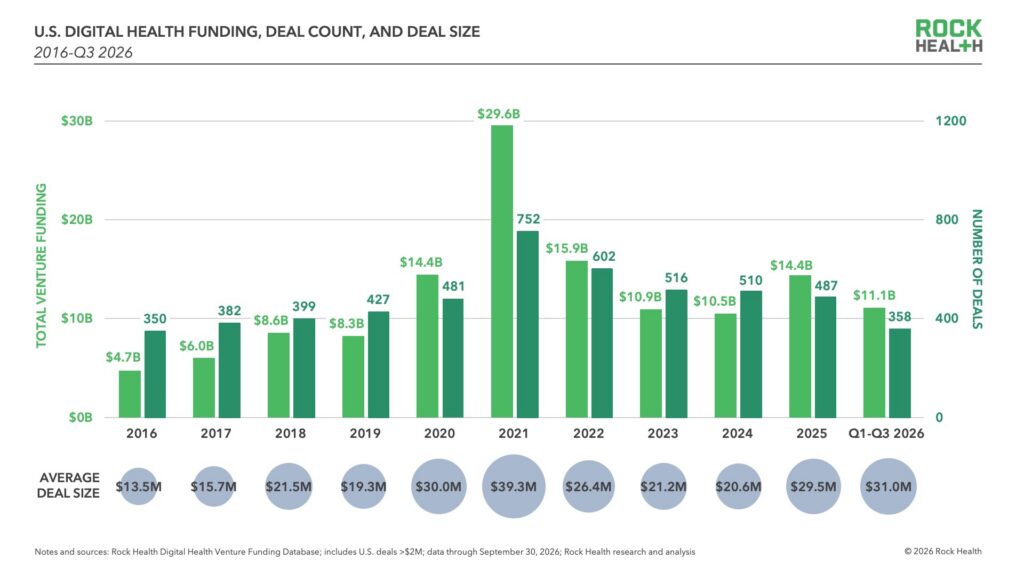
    • U.S.-based digital health startups raised $3.7B across 114 deals in Q3 2026, bringing 2026’s year-to-date (YTD) total to $11.1B across 358 deals (projected to surpass $14.8 billion by year-end).
    • Capital continues to consolidate into larger checks across fewer companies: the 2026 YTD average deal size climbed to $31.0M, up from $29.5M in 2025 and $20.6M in 2024.

    Rock Health’s 15-Year Market Review Analyzes $140B in Capital and Q3 2026’s Flight to Deployable Value

    Marking its 15th anniversary and the 15th annual Rock Health Summit, digital health venture fund and advisory firm Rock Health released its Q3 2026 Market Update: Crystallizing Fifteen Years of Digital Health. The report pairs venture funding, M&A, and public-market tracking with a 15-year retrospective featuring founding pioneers, venture capitalists, and health system executives.

    The central takeaway reflects a maturing, disciplined asset class: while total venture funding has normalized from pandemic peaks into sustained annual totals exceeding $10 billion, capital is consolidating into larger checks and fewer companies. Concurrently, enterprise buyers have abandoned point-solution experimentation in favor of architectural consolidation, shifting competition from speculative software builds toward proven implementation and deployable value.


    Q3 2026 & Year-to-Date Venture Capital Benchmarks

    Digital health financing across the first nine months of 2026 demonstrates consistent capital concentration:

    • Quarterly Capital Inflow: U.S.-based digital health startups secured $3.7B across 114 funding rounds in Q3 2026.
    • Year-to-Date Volume: YTD 2026 funding reached $11.1B across 358 deals, tracking toward an annualized projection of $14.8B (roughly 12 times the total invested in 2011).
    • Expanding Average Check Size: Capital is concentrating into fewer, higher-conviction bets, with the 2026 YTD average deal size expanding to $31.0M, up from $29.5M in 2025 and $20.6M in 2024.
    • Steady Strategic M&A: The sector logged 45 M&A transactions in Q3 2026, bringing the YTD exit total to 164 deals—tracking closely alongside 2025’s post-2021 high-water mark of 172 transactions through Q3.
    • Muted Public Listings: Public markets have remained largely quiet with no new listings since HeartFlow in August 2025, though several mature digital health leaders continue evaluating paths to liquidity.

    15-Year Sector Arc: 2011 vs. 2026

    The retrospective contrasts the infancy of the sector in 2011 with the enterprise reality of 2026:

    • Capital Availability: In 2011, early digital health investment resembled a fragmented market where founders had to defend the category itself; only 35 venture-backed digital health companies were tracked through August 2011, and the entire year totaled $1.2 billion across 96 deals (with 84% of entrepreneurs bootstrapped). Today, over 3,200 venture-backed companies have raised $2M or more.
    • Lowering Barriers to Build: Early founders had to build custom infrastructure from scratch. Modern founders start “floors higher,” assembling tech stacks in months using pre-built APIs for claims adjudication, insurance verification, EHR integration rails, virtual clinician staffing networks, and AI foundation models.
    • The Buyer Transition: Health systems have shifted from skeptical “dabblers” conducting isolated pilots to C-suite-driven architectural transformations. Health systems are actively terminating unintegrated point solutions to construct unified digital operating environments.

    “In 2011, we saw less convergence between healthcare and technology, with few accelerators and talent oriented around the category,” noted Sean Duffy, Co-Founder and CEO of Omada Health. “My advice to founders is: make sure you’re really clear on the why. Building anything worth building is extremely difficult, and so much of success comes down to grit and not giving up.”


    Four Structural Themes Defining the Next Era of Digital Health

    Insights from the report’s industry pioneers and venture leaders highlight structural transitions across four key areas:

    • From “Digitization” to “Addition by Subtraction”: The first wave of digital health simply transferred analog paperwork onto computer screens, often worsening clinician burnout. The current wave focuses on removing cognitive load and administrative friction—such as ambient clinical scribes, automated prior authorization, and predictive capacity orchestration.
    • The New Moats in an “Easy-to-Build” Environment: Because generative AI and commoditized APIs make assembling software faster and cheaper, building a feature no longer creates a sustainable barrier to entry. Future competitive moats rely on enterprise implementation depth, tight EHR/workflow integration, clinical validation, and a willingness to absorb operational or regulatory liability.
    • Navigating the Illiquid Exit Runway: While venture funding has stabilized, liquidity remains constrained. With public markets demanding consistent profitability and M&A yielding mixed outcomes, late-stage companies must continuously evaluate private recapitalizations, dual-track M&A, and public readiness rather than waiting for speculative IPO windows to reopen.
    • The Re-Emergence of Hybrid Consumer Models: Early direct-to-consumer (D2C) health models suffered from high customer acquisition costs, episodic demand, and low lifetime value, prompting a widespread pivot toward B2B/employer channels in 2017. In 2026, the consumer has returned to the center: 57% of adults now track health metrics digitally and 46% own a wearable, forcing traditional payers, health systems, and B2B2C platforms to compete on seamless consumer-grade user experiences.

    For more information about the Rock Health report, visit https://rockhealth.com/insights/q3-2026-market-update-crystallizing-fifteen-years-of-digital-health

    Reader Interactions

  • Scarlet Raises $50M to Build AI-Native Medical Device Certification

    Scarlet Raises $50M to Build AI-Native Medical Device Certification

    Scarlet Raises $50M to Build AI-Native Medical Device Certification

    What You Should Know

    • Medical device regulatory and certification platform Scarlet raises $50M in Series B funding round led by Headline, with participation from new investor Notion Capital and existing backers Atomico, Creandum, Kindred Capital, and Entrepreneurs First; Nancy Xiao McLaughlin, Partner at Headline, joins Scarlet’s Board of Directors.
    • Targets an acute regulatory bottleneck in digital health innovation: machine learning teams can train and validate an AI diagnostic model in weeks, yet legacy certification bodies typically subject developers to 12 to 18 months of review for initial market clearance, followed by six to eight months of administrative delay for minor algorithmic updates.
    • Operates as a government-designated certification body: out of the approximately 52 notified bodies designated under the European Union Medical Device Regulation (EU MDR), Scarlet is the only one exclusively specialized in software and artificial intelligence, built to support agile, iterative continuous deployment (CI/CD) pipelines.

    Triple-Designated Statutory Authority

    Unlike regulatory consulting firms or compliance software platforms that merely format submission documents, Scarlet operates as a formal, government-designated statutory auditing and certification body. Among the roughly 52 officially designated certification bodies under the European Union Medical Device Regulation, Scarlet is the sole entity purpose-built and designated exclusively for Software as a Medical Device and artificial intelligence.

    The company also holds formal statutory designation from the UK Medicines and Healthcare products Regulatory Agency to issue UKCA markings for medical software, alongside accreditation under the U.S. Food and Drug Administration’s Third-Party Review Program, which authorizes Scarlet to conduct substantive regulatory reviews of eligible 510(k) premarket notifications. Founded in 2021 by former Babylon Health AI engineers James Dewar and Jamie Cox, the company spent its initial three years in rigorous collaboration with international regulatory agencies to secure full formal accreditation before issuing its first commercial certificates.

    Operating Architecture: Modernizing Technical File Audits

    Scarlet replaces manual, paper-heavy regulatory dossiers with an AI-enabled certification operating system designed for agile software sprints. Medical device manufacturers upload clinical evaluation reports, verification and validation data, risk management files, and software architecture artifacts in any format. Scarlet’s ingestion layer parses and correlates technical documentation against international harmonized standards.

    Technical assessments are conducted by specialized software and clinical AI reviewers who evaluate machine learning architectures, training and testing distribution shifts, and cybersecurity controls with software-native speed. Every audit finding, validation trace, and conformity decision is systematically evidenced within an immutable audit trail, providing competent authorities and regulatory bodies with full visibility into the technical reasoning behind certification decisions.

    Operating on a recurring enterprise subscription model, Scarlet covers ongoing post-market surveillance, mandatory annual quality management system audits, and continuous product changes. This framework enables manufacturers to clear bi-weekly model iterations and algorithmic updates without filing duplicative, multi-month re-submissions.

    Enterprise Client Roster and Market Validation

    Scarlet’s AI-native assessment platform serves leading digital health enterprises, consumer giants, acute health systems, and high-volume clinical AI providers. In scaled consumer health, it powers regulatory certification for Flo Health, the women’s health application supporting over 500 million downloads. Across diagnostic and clinical specialties, the platform evaluates algorithmic oncology software such as skin cancer detection specialist Skin Analytics, as well as acute enterprise imaging infrastructure for U.S. radiology platform DeepHealth.

    Public institutional care infrastructure is represented by deployments with NHS England, while clinical voice and agentic documentation platforms include ambient scribes Heidi Health and Tandem, both of which recently completed nine-figure Series B financing rounds. The operational advantage of this agile framework is reflected in deployments like digital physiotherapy platform Flok Health, which utilizes Scarlet to deploy validated clinical updates to its regulated medical device twice per month—an iteration velocity previously unachievable under legacy European Notified Bodies.

    Capital Allocation and Global Expansion Strategy

    The $50 million Series B injection will be deployed to broaden Scarlet’s international footprint and engineering capabilities. Geographically, the company is establishing dedicated operational hubs across the United States and the Asia-Pacific region to support cross-border software-as-a-medical-device clearance pipelines.

    Scarlet will also expand its internal roster of specialized machine learning auditors, bio-engineers, and regulatory clinicians. Furthermore, the company plans to broaden its certification portfolios to cover emergent multimodal foundation models, autonomous diagnostic agent frameworks, and generative clinical reasoning tools.