Neuroscience-based deprescribing platform Outro announced that it has raised $7M in combined pre-seed and seed financing to establish clinical and technological infrastructure for discontinuing psychiatric medications safely.
Outro combines specially trained deprescribing clinicians, evidence-informed hyperbolic tapering protocols, continuous remote patient monitoring, longitudinal psychosocial counseling, and purpose-built software.
Clinical Architecture: Grounding Tapering in Neurobiology
Founded by digital health entrepreneur Brandon Goode and clinical researcher Dr. Mark Horowitz, Outro translates specialized psychopharmacology into an outpatient virtual delivery model:
Scientific Foundation: Co-founder Dr. Mark Horowitz is a leading global researcher on psychiatric medication discontinuation whose academic work established the neurobiological basis for hyperbolic tapering—a protocol that reduces drug dosage by progressively smaller increments as doses decrease to account for non-linear serotonin transporter receptor occupancy curves.
The Flagship “Taper Management” Program: Currently live across 14 U.S. states, the platform combines a specialized network of deprescribing-trained clinicians, individualized evidence-informed tapering schedules, continuous remote symptom tracking, and structured psychosocial support.
National Policy Alignment: The funding coincides with federal recognition of deprescribing as a critical care standard. In 2026, the U.S. Department of Health and Human Services (HHS) formally prioritized the development of national evidence-based deprescribing guidelines in collaboration with the American Psychiatric Association (APA) and the American Society of Clinical Psychopharmacology (ASCP).
Capital Allocation & Technical Roadmap
The $7M capital injection will be deployed expanding Outro’s licensed clinical network to grow its footprint beyond the initial 14-state footprint. The expanded pharmacological scope extending its evidence-informed tapering model beyond selective serotonin reuptake inhibitors (SSRIs) and SNRIs into additional psychiatric drug categories prone to physical dependence, including benzodiazepines, sleep aids, and antipsychotics.
“Only a few years ago, it was considered taboo to even talk openly about mental health,” said Brandon Goode, Co-founder and CEO of Outro. “Today, patients are asking a different question: if starting medication deserves support, why does stopping often happen without it? We’ve built the on-ramp for medications. Now it is time to build the off-ramp.”
A systematic review by researchers at the University of North Carolina’s Sheps Center for Health Services Research reached a starker finding: every one of the seven studies examining telehealth by modality reported significantly lower video use among patients with limited English proficiency. Of the roughly 25.6 million people in the United States with limited English proficiency, those who do connect are disproportionately routed to audio-only care, the modality where interpretation is hardest and clinical observation is weakest.
Here is what competence looks like in practice.
Book the language, not just the appointment
Language needs must be captured as a structured field at scheduling and must carry an interpreter reservation with it. Two failures are near-universal. First, preferred language is recorded but never triggers anything downstream. Second, the language is recorded too coarsely “Chinese” instead of Cantonese or Mandarin, “Arabic” without dialect, “Spanish” without noting an Indigenous first language behind it. A mismatched interpreter burns the appointment slot as thoroughly as no interpreter at all.
Book by encounter type as well as language. A 15-minute medication check and a 45-minute oncology consult are different assignments, and rare languages need lead time that on-demand queues cannot always deliver.
Send three links, and test them
The interpreter needs a dedicated participant link not the patient’s link forwarded, and not a phone line bridged into a video visit. Bridging is where three-way encounters most often collapse: the interpreter cannot see the patient, and roughly half of what an interpreter relies on disappears.
That is not only a quality problem. The technical standards carried into Section 1557 require a sharply delineated image large enough to show the faces of both the interpreter and the person being served, along with real-time video free of lags or irregular pauses. The rule explicitly bars reliance on low-quality video remote interpreting, and OCR’s December 2024 Dear Colleague letter signaled that these obligations are active and enforceable. An interpreter on a phone line is a compliance exposure, not a workaround.
Where the platform allows it, pin the interpreter’s video so the patient can see them throughout, and confirm the connection before the patient joins.
Spend sixty seconds on the pre-session
The single highest-yield habit in interpreted care costs one minute. Before the clinical conversation begins, the clinician and interpreter align on the encounter: the visit’s purpose, any specialized terminology likely to come up, whether difficult news is expected, and how the interpreter should signal a need to pause.
This is also where the interpreter states the ground rules to the patient that everything said will be interpreted, that nothing will be omitted or added, and that the encounter is confidential. Patients who understand this speak more freely. Patients who do not tend to compress their answers.
Run the visit in the first person
Speak directly to the patient, not to the interpreter. “Where does it hurt?” not “Ask her where it hurts.” The interpreter renders in the first person. This is standard practice, and it is not a stylistic nicety: third-person framing pushes the patient out of their own encounter and invites the clinician to build rapport with the wrong person.
Deliver one or two sentences at a time and pause. Long uninterrupted passages force the interpreter to summarize, and summarization is where clinical detail is lost. Expect the interpretation to take longer than the original. Build the extra time into the slot rather than accelerating to recover it.
Two habits matter especially on video. Silence carries no visual explanation, so narrate what you are doing when you turn to the chart. And when the interpreter requests a clarification, treating it as a quality signal rather than an interruption it usually means a term has no clean equivalent, which is precisely the moment a misunderstanding would otherwise pass unnoticed.
Document the interpretation, not just the visit
Record the interpreter’s name or ID, the language and dialect, the modality, and the duration. Most organizations cannot currently stratify outcomes by language because this data never reaches the chart, which makes a known disparity invisible to the quality committee that is accountable for it.
Teach-back is where a language-discordant visit is verified or lost. Ask the patient to explain the plan in their own words, through the interpreter, before anyone disconnects. Written follow-up should be reviewed by a qualified human, the 2024 rule requires exactly that for critical communications produced with machine translation.
The system-level point
None of this is difficult. It is unassigned. Interpreter integration usually belongs to no one: not the telehealth platform team, not the clinical informatics group, not the compliance office that owns the language access plan on paper.
Health systems now buying ambient documentation, AI translation, and virtual-first care are making architectural decisions about a population that is already using video least. Deciding who owns the three-way visit before those tools are configured rather than after is the cheapest equity investment on the roadmap.
About Philip Rosen
About Philip Rosen
Philip Rosen is the Founder and Managing Director of Capital Linguists, a US-based language services firm providing certified interpreting and translation across more than 210 languages. He works with healthcare systems, government agencies, and academic institutions on language access in high-stakes settings.
Clinical artificial intelligence platform Healthleap announced that it has raised $38M in combined seed and Series A financing backed by Sequoia Capital, First Round Capital, and Hummingbird Ventures (consisting of an $8M seed round co-led by Sequoia and First Round and a $30M Series A led by Hummingbird).
Directly targets an entrenched inpatient diagnostic blind spot: up to 50% of hospitalized patients are clinically at risk for disease-related malnutrition, yet fewer than 9% ever receive a formal clinical diagnosis, exacerbating patient morbidity, mortality, and hospital length of stay (LOS).
Replaces static, manual screening workflows: while acute hospitals historically screen for malnutrition using a two-question survey administered once at admission—routinely missing sedated, confused, intubated, or critically ill patients—Healthleap ingests every patient’s complete medical record every morning, synthesizing clinical notes, laboratory trends, vital signs, medication orders, and active problem lists.
Inpatient Record Synthesizer: Screening Every Patient Every Morning
Founded in 2022 by sibling duo Josiah Meyer (CEO) and Jemima Meyer (clinician and co-founder), Healthleap operates as an EHR-integrated clinical surveillance layer:
Continuous Multi-Source Chart Ingestion: The platform reads each patient’s complete electronic health record every morning—synthesizing physician progress notes, nursing assessments, laboratory panels, vitals trajectories, active medication orders, and historical problem lists.
Prioritized Clinical Worklists: Rather than overwhelming providers with static alerts, Healthleap ranks patient risk and routes actionable scores into optimized EHR workflows, highlighting for bedside clinicians and registered dietitians who requires evaluation first.
Proactive Diagnostic Capture: Enables hospitals to screen their entire inpatient census daily with high diagnostic precision, identifying deteriorating or undernourished patients who would otherwise go unnoticed until post-discharge complications develop.
Compliance and Security: The platform operates under full HIPAA compliance and maintains SOC 2 certification.
Measured Clinical Efficacy and Hard-Dollar Financial Returns
Healthleap’s adoption demonstrates significant clinical and revenue cycle impacts across academic health systems:
Penn Medicine Financial Return: At one Penn Medicine hospital, deployment of Healthleap generated $23.8 million annually through a combination of incremental reimbursement capture and the financial return of length-of-stay (LOS) reductions.
Diagnostic Expansion at Enterprise Scale: In enterprise health system rollouts, deployments yielded a 39% increase in identified and treated malnutrition cases, unlocking $11 million in incremental reimbursement revenue within a single health system network.
Appropriate Case-Mix and DRG Reimbursement: Because severe malnutrition qualifies as a major complication or comorbidity (MCC) under Medicare Severity Diagnosis Related Group (MS-DRG) payment methodologies, accurate identification and clinical nutritional intervention allow hospitals to capture approximately $11,000 in incremental reimbursement per qualified encounter while reducing avoidable inpatient days.
Expanding Beyond Malnutrition: The Multi-Condition Roadmap
Building on its validated clinical malnutrition algorithms, Healthleap is deploying its daily chart-surveillance architecture across high-cost acute inpatient conditions:
Congestive Heart Failure (CHF): Detecting early subclinical fluid retention and decompensation markers before acute exacerbation.
Pressure Ulcers: Flagging mobility, nutritional, and skin-integrity risk factors to initiate targeted nursing interventions and prevent hospital-acquired stage III/IV pressure injuries.
Hospital-Acquired Infections (HAIs): Identifying early physiologic and laboratory indicators of systemic sepsis, catheter-associated urinary tract infections (CAUTIs), and surgical site complications.
“Every week, millions of patients leave hospitals with unresolved health conditions that will erode their health and cost up to 10x more to treat later,” said Josiah Meyer, Co-founder and CEO of Healthleap. “Finding them now is prevention, and it’s a win for everyone. Patients get treated before they get sicker. Hospitals shorten stays and are paid for the care they deliver. Payers avoid the much larger cost of complications down the road. Our goal is to improve care and save lives by catching these conditions early.”
Enterprise virtual care leader Teladoc Health launches two native AI-powered capabilities integrated directly into its enterprise smart care platform, Solo: SoloVitals and SoloScribe.
Directly targets acute hospital “point-solution fatigue,” allowing health systems to scale remote physiological tracking and ambient documentation without procuring, integrating, or managing disparate third-party software vendors
Key Capabilities: SoloVitals and SoloScribe
Rather than functioning as standalone third-party add-ons, both features operate natively inside the clinician’s core virtual encounter window:
SoloVitals (Contactless Biometric Acquisition via rPPG):
Remote Photoplethysmography (rPPG): SoloVitals captures vital signs without physical patient contact by analyzing subtle, micro-vascular color fluctuations across facial skin using the patient’s existing consumer device camera (such as a standard smartphone, tablet, or laptop).
Clinical Indications: Generates clinically validated measurements for heart rate and respiratory rate during remote video consultations, providing objective physiological signals before or during virtual encounters without requiring external hardware cuffs or wearable sensors.
Availability: Currently launched in private preview with select enterprise health systems, with general availability scheduled for December 2026.
Synchronous Virtual Documentation: SoloScribe listens to the clinical dialogue during the encounter to generate structured, specialty-specific clinical summaries in real time.
Hybrid Consultation Support: Operates across direct-to-patient virtual appointments as well as device-based telemedicine encounters (such as inpatient telestroke carts and virtual ICU boom stations).
EHR Data Pipeline: Automatically pushes structured note summaries directly into Epic, Oracle Health, or other underlying EHR charts, eliminating manual copy-pasting across systems.
Availability: Generally available (GA) across all supported enterprise deployment
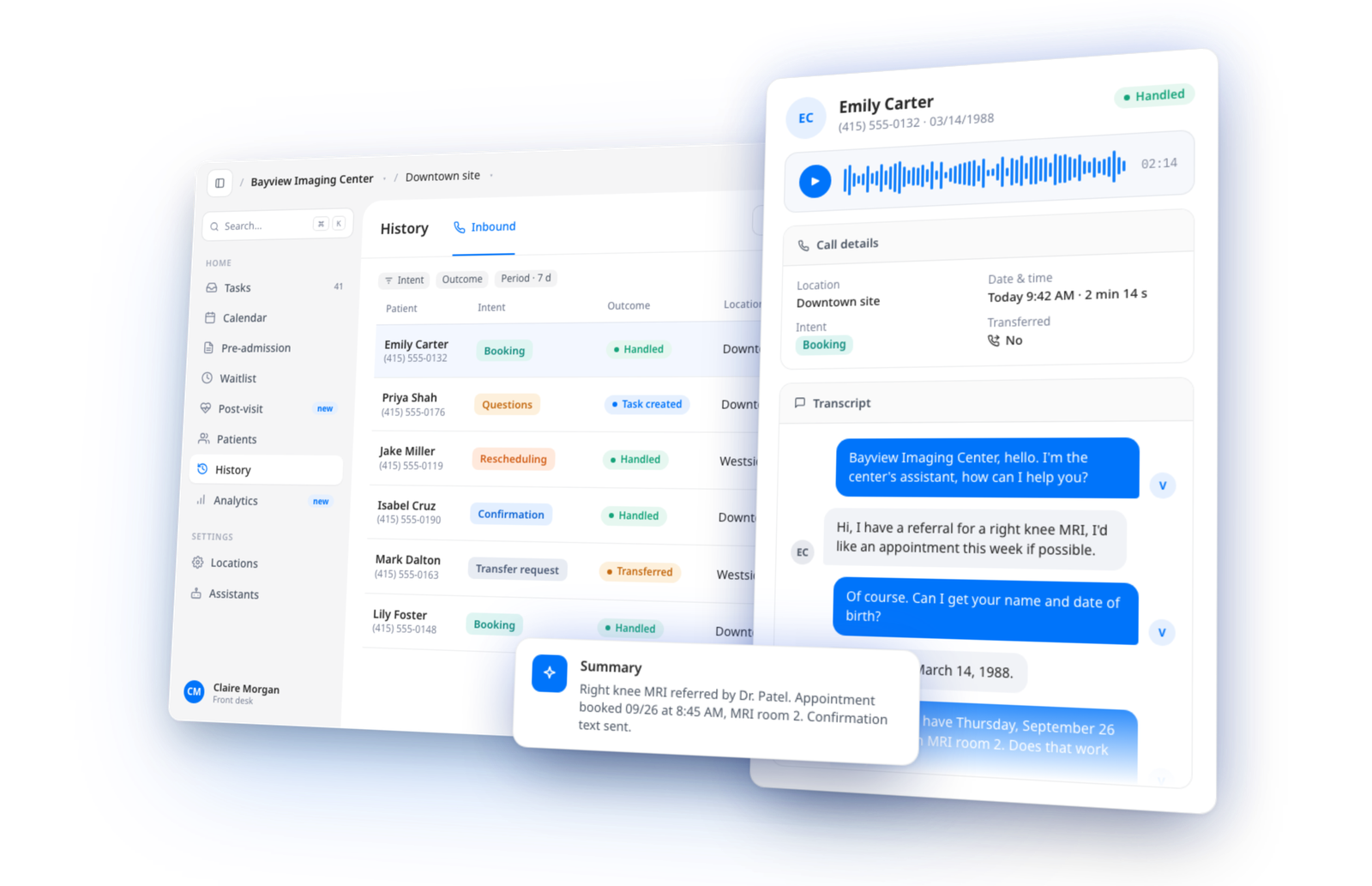
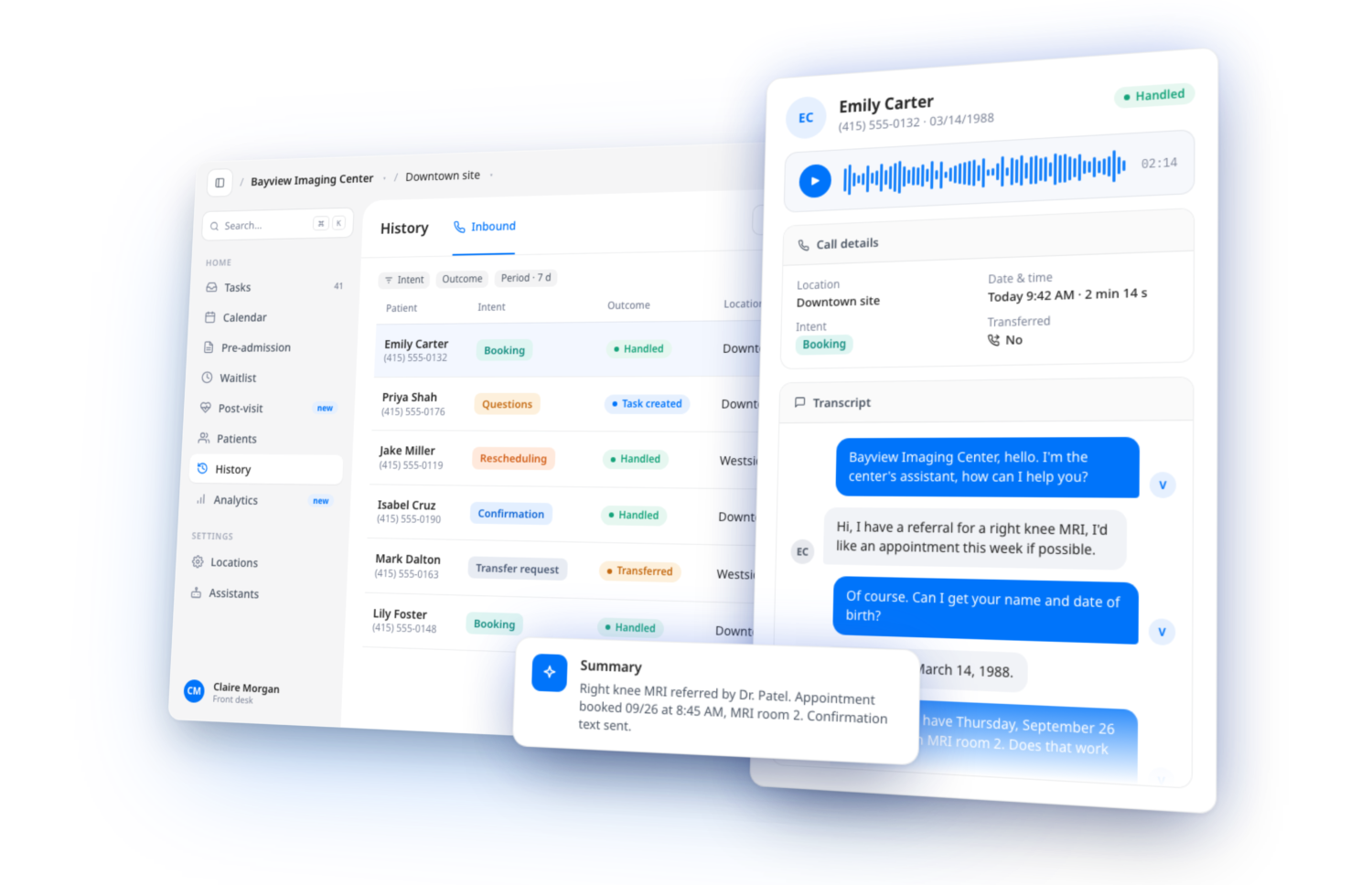
Healthcare conversational AI platform Vocca secures $20M Series A funding round led by Norrsken VC, bringing total cumulative funding to $25M.
The financing syndicate features participation from Heal Capital, Speedinvest, and Firstminute Capital, alongside angel backing from founders of European tech unicorns Alan and Datadog.
Records explosive enterprise growth: expanded from 2,000 practitioners at its seed round to 15,000 medical practitioners in twelve months, operating across 1,500 medical practices and 20+ clinical specialties in the United States and Europe.
Commercial Expansion and Deployment Footprint
The Series A follows significant enterprise expansion across the United States and Europe over the past 12 months:
Rapid Practitioner Density: Grew from 2,000 medical practitioners at its September 2025 seed round to more than 15,000 active practitioners today.
Enterprise Clinic Footprint: Deployed across 1,500 clinical practices spanning 20+ distinct medical specialties.
Volume and Top-Line Trajectory: Platform conversation volume expanded 10x year-over-year, now processing over 1 million inbound patient conversations each month, while top-line revenue increased 7x over the same period.
High Autonomous Resolution: Vocca resolves an average of 70% of inbound calls fully end-to-end with zero human staff intervention, with mature specialty implementations exceeding 85% autonomous resolution.
Large-Scale Deployments Across Acute and Specialty Care
Vocca has established enterprise deployments across multi-site specialty consolidators and acute hospital networks:
Hôpital Fondation Adolphe de Rothschild: The major specialty hospital system handles patient intake, call management, and appointment confirmations using Vocca for its 350,000 annual patients across more than 300 physicians. The system resolves over 75% of incoming calls autonomously (handling bookings, exam-prep guidance, and administrative inquiries), instantly routing clinical emergencies to front-desk staff and queuing low-priority requests for structured callbacks.
DAG Dental: Automates front-office intake and scheduling across 37 dental practices, absorbing repetitive scheduling volume and returning hours of operational capacity daily to office coordinators.
Point Vision: Manages high-throughput scheduling across 67 ophthalmology clinic locations.
Résonance Imagerie: Directs complex diagnostic scheduling and exam-preparation workflows across 60 outpatient medical imaging centers.
Architecture: Vertical Scheduling Engines Over Generic Bots
Vocca differentiates its voice platform by pairing natural language models with a specialized deterministic rules engine:
Specialty-Specific Rule Libraries: Unlike horizontal LLMs prone to hallucinating appointment rules, Vocca encodes specialized clinical scheduling taxonomies—distinguishing between hundreds of imaging and procedural examination codes to route patients to the correct clinical modality, facility, and preparation regimen.
Rapid Deployment Velocity: Because scheduling logic is pre-built into specialty-specific modules rather than built from scratch per clinic, practices can achieve production deployment within days rather than months.
Dual Sovereign Cloud Architecture: Operates isolated data and compute environments, hosting U.S. client data within domestic boundaries and European data inside the EU. The underlying infrastructure maintains SOC 2, ISO 27001, and French HDS (Hébergeur de Données de Santé) healthcare certifications, operating as a compliant HIPAA Business Associate.
“Practices don’t ask us about price. They ask how fast we can deploy and how we handle their edge cases,” said Eliott Hoffenberg, CEO and Co-founder of Vocca. “Doctors want an AI that works like their best scheduler, follows the rules of their specialty to the letter, and fills more appointments without compromising on quality.”