Tag: Artificial Intelligence

  • Immunology Startup ai3Bio Aims to Redefine What It Means to Reset the Immune System

    Immunology Startup ai3Bio Aims to Redefine What It Means to Reset the Immune System

    Immune reset has become a particularly active area of immunology R&D as companies develop therapies intended to eliminate disease-driving immune cells, enabling the immune system to start anew with cells that don’t attack the body. This growing field is still taking shape, but many of the approaches involve reprogramming one type of immune cell to pursue and deplete a different type of immune cell that’s driving autoimmune disease.

    Startup ai3Bio has a more straightforward strategy: tap into a built-in cellular pathway that leads pathogenic cells to self-destruct. The Watertown, Massachusetts-based company is now out of stealth, revealing its science along with $48 million in financing to support a pipeline that could start its first tests in humans next year.

    Immune reset is like a blank slate — give the immune system the opportunity for a fresh start with new cells that have no memory of attacking healthy tissue. But this approach also means eliminating protective antibodies built up over a patient’s lifetime, everything from childhood polio vaccination to this season’s flu shot. Ai3Bio aims for a more precise approach that doesn’t sacrifice a patient’s existing protections.

    “This strategy does not eliminate your pre-existing memory T cells that would be specific for [cytomegalovirus], flu, and all the other things that you want to maintain defense against,” said Jonathan Kagan, ai3Bio’s’s scientific co-founder. “We’d like to position ourselves as a very nice example of something that folks often champion but rarely achieve, and that is precision therapies.”

    The startup’s first target is Th17 cells, a type of helper T cell that fights infections. While Th17 cells are key for immune responses, excessive activity of these cells leads to autoimmune disease. Medicines are already available to address IL-17, a signaling protein secreted by Th17 cells. Novartis’s Cosentyx, Eli Lilly’s Taltz, and Bimzelx from UCB are all blockbuster-selling IL-17 inhibitors approved for several immunological indications. These monoclonal antibodies block the signaling protein but they don’t stop immune cells from churning out more of it, so the therapies must be taken chronically. Ai3Bio’s approach could offer the advantage of stopping IL-17 at the protein’s source, said CEO Steven Altschuler.

    Ai3Bio’s therapy consists of a lipid nanoparticle (LNP) that delivers messenger RNA with instructions that trigger cell death. This therapy finds its way to pathogenic Th17 cells with the guidance of a targeting antibody designed to bind to CD161, a protein overexpressed on these cells. When the therapy reaches its destination, mRNA activates an immunological pathway called cGAS-STING. For nearly 20 years, drug hunters have been researching ways to hit this pathway. So far, there are no FDA-approved drugs that target it.

    [The following two paragraphs updated to clarify the origins of ai3bio.] Ai3Bio’s name references three disciplines: advanced immunology, autoimmunity, and artificial intelligence. The company itself is the combination of technologies from two startups, Corner Therapeutics and Novasenta. Kagan, who holds positions at Harvard Medical School and Boston Children’s Hospital, was the scientific co-founder of Corner, a developer of immunotherapies for cancer and infectious diseases. Novasenta was a drug discovery startup launched by UPMC in 2021.

    Corner remains a standalone company; its autoimmune technology, including its experience with LNPs, was combined with Novasenta. Additional research showed that targeting the STING pathway in T cells would lead to cell death. Novasenta’s AI technology platform for identifying druggable targets led to the development of the CD161-targeting antibody that ai3Bio is using to go after Th17 cells.

    “We’re not delivering a grenade into the cell,” Kagan said. “We are effectively delivering instructions to the cell to kill itself or self-destruct.”

    Ai3Bio’s approach offers a potential safety edge compared to other immune reset strategies. Companies such as Cabaletta Bio and Kyverna Therapeutics are in the camp approaching autoimmune diseases with CAR T-cell therapies made by the ex vivo engineering of a patient’s T cells. Pharmaceutical companies are joining the immune reset chase with business deals. Over the summer, Johnson & Johnson began a partnership on a Sail Biomedicines therapeutic candidate that reprograms T cells in vivo, getting them to target pathogenic B cells. Other big pharma companies that have struck deals for in vivo cell therapies include AbbVie, Bristol Myers Squibb, Gilead Sciences, and Eli Lilly.

    Whether a cell therapy is produced in a lab or in the patient’s body, one known complication is an excessive immune response called cytokine release syndrome (CRS). Cell therapies eliminate disease-driving cells by breaking them open. The resulting release of cellular contents can trigger immune responses, such as CRS.

    Kagan said ai3Bio’s approach is naturally immunosuppressive, eliminating the bad-acting cells in a way that does not come with the risk of CRS. There are also manufacturing and logistical advantages. Engineering cell therapies from a patient’s own immune cells involves multiple steps. Furthermore, patients must undergo a preconditioning drug regimen to prepare for the therapy — a step that wipes out the immune system’s memory of its past protections. Altschuler said ai3Bio’s drug can treat patients in in a single step. Without the need for any preconditioning, infusion of the startup’s LNP-delivered therapy leads to self-destruction of the pathogenic cells.

    Eliminating T cells from diseased tissue typically leads to rapid replenishment of those cells. In ai3Bio’s animal testing, data indicate its therapy depleted inflammatory T cells, Kagan said. He added that ai3Bio’s approach also starts a process that prevents helper T cells from differentiating into Th17 cells, which goes further to achieving the immune reset goal. There’s more. Results from tests in monkeys indicate the therapy goes beyond the blood, leading to deep depletion in places such as the spleen and lymph nodes. That’s important because these are regions of the body that are difficult to manipulate immunologically, Kagan said.

    Immune reset is hoped to provide patients with a long-lasting, perhaps even a one-time treatment. Kagan said the durability of ai3Bio’s approach still needs to be shown in humans. Ai3Bio aims to pursue clinical testing in several immunological disorders starting with autoimmune diseases of the liver, Altschuler said. He noted that infiltration of Th17 cells into the liver drives primary sclerosing cholangitis, primary biliary cirrhosis, and autoimmune chronic active hepatitis — all indications with limited treatment options.

    The new funding behind ai3Bio, a Series A financing, was led by founding investors Ziff Capital Partners, which was an investor in Corner, and UPMC Enterprises, the investment arm of UPMC that was a financial backer of Novasenta. The new round also includes support from Cockrell Interests and Tanis Ventures.

    With ai3Bio now out of stealth, the startup will look to bring multiple programs to the clinic in the next two years, Altschuler said. He estimates the current financing will last into the second quarter of 2027, so ai3Bio will need more money. While the surge in immunology research and dealmaking makes immune reset competitive, Altschuler pointed out that nearly all of these deals involve B cell-focused therapies. Ai3Bio’s approach could also apply to B cells, but Altschuler said that for now, the startup aims to stand apart from the crowd.

    “While there are many strategies out there to treat autoimmune diseases, we would be one of the only that are in the business of actually resetting the T cell repertoire,” Altschuler said.

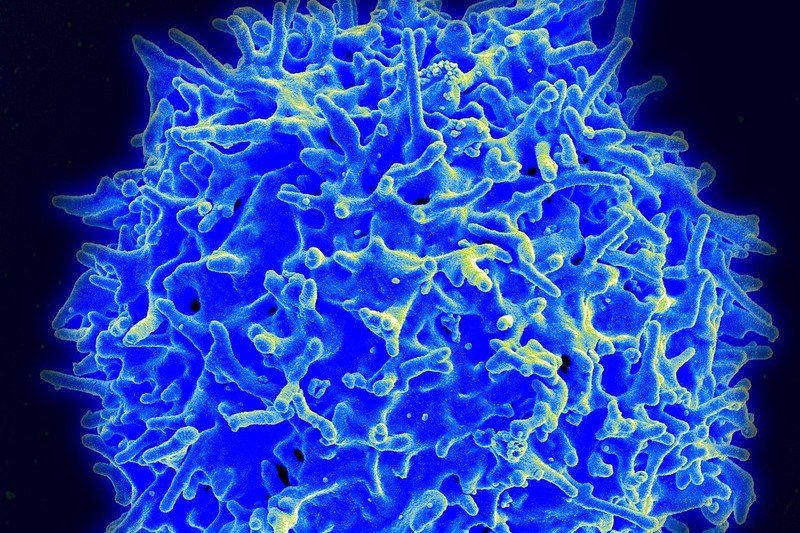
    Image by Flickr user NIAID via a Creative Commons license

  • Opinion: Claude analyzed my genome in 30 minutes. Now we need standards for the results

    Opinion: Claude analyzed my genome in 30 minutes. Now we need standards for the results

    Unpacking from vacation a couple months back, I decided to give artificial intelligence a task. I paused folding my laundry, sat down with Claude, and asked it to analyze the entirety of my genome.

    Back in 2009, this was a task that quite literally took a village of 30 people — including me — working together to interpret the whole genome sequence of a colleague, friend, and fellow scientist named Stephen Quake. This endeavor brought together experts in genetics, computer science, pharmacology, and clinical medicine.

    We built an engine specifically designed for genome analysis, examined millions of genetic variants, reviewed the scientific literature, and debated which findings might matter most for his individual health circumstances.

    The resulting study, published in The Lancet in 2010, was among the first attempts to interpret the complete genome, and the first to translate that analysis into personalized medical recommendations. (About a year later, our team used a similar framework to analyze my own genome, though it was never officially published.)

    This month, Claude attempted the same task — sans the 30 people and nearly yearlong expenditure.

    In a prompt of 180 words, I asked Claude to follow the same framework our team had set forth back in 2009, probing it to identify rare variants that could cause an inherited disorder, genetic abnormalities that could impact my response to different medications, and whether it had enough data to estimate my risk for common diseases.

    Though it was a fairly simple prompt, the task was anything but. My genome file is more than a decade old, was generated using an earlier version of the human reference genome, and lacks information available in newer sequencing formats. These limitations could easily produce an analysis that is misleading or inaccurate.

    Despite that, Claude was able to re-identify many of the most important findings from our original analysis, including the most consequential result in my genome: I carry two copies of the APOE ε4 variant, which is associated with an increased risk of Alzheimer’s disease. It found no major gene-disrupting variant linked to a rare inherited disorder, matching the outcome reached by our original team. It also flagged variants in the DPYD and CYP2C19 genes, which can influence how we respond to certain medications. I asked it to calculate genetic risk scores for common diseases, but it rightfully warned me that my file did not contain enough information to do so reliably.

    Amazingly, this entire interaction used only around 400,000 tokens and cost approximately $5. Most of the half-hour was spent just waiting for scientific databases to load. All in all, a task that once took nearly a year and required a large, specialized team can now be attempted at home for roughly the price of a 2-liter bottle of soda.

    That accessibility opens doors once thought unimaginable. And as these doors open to the general public, the scientific community has a responsibility to develop clear standards for what makes up a medically reliable genome in the first place.

    A genome is not a definitive record

    It is tempting to think of a genome sequence as a permanent record that can be preserved forever after one read. In reality, though, every genome analysis is influenced by multiple factors, such as the reference genome used for comparison and the technology used to sequence the DNA itself.

    Sequencing technologies have seen enormous improvement over the past couple of decades. Scientists can now examine sections of DNA that were once inaccessible and detect forms of genetic variation that older methods may have missed.

    But limitations remain. Almost all existing genomes were produced using a technique called “short-read sequencing,” which breaks DNA into millions of fragments and uses software to reconstruct where these fragments belong. Though this approach works well across much of the genome, it can be less reliable in the regions where sequences can repeat, resemble one another, or contain large structural changes.

    Though difficult to sequence, those regions are by no means irrelevant: Disease-causing variants can occur where conventional sequencing struggles to pick them up. In turn, an interpretation may report that no concerning variant was found without making clear that the relevant gene was not fully examined.

    Another barrier is the reference genome itself. To date, most analyses have compared patients’ genomes against a standard DNA sequence constructed from a limited number of people. As it stands, that baseline does not adequately represent the full diversity or complexity of human genomes, making some variants more difficult to detect, especially in populations that remain under-represented in genomic datasets.

    Newer references now represent many different versions of the human genome through branching paths rather than forcing everyone’s DNA onto one template. This can improve variant detection, especially in complex regions and across diverse populations. Yet laboratories, databases, and clinical systems have not adopted them consistently.

    The call for clear standards

    Now, with the general public able to readily use AI for genomic interpretation that may impact the course of their life and future health decisions, we have never had a more urgent need to develop standards to determine what a high-quality medical genomic interpretation should actually include. 

    Current quality checks are efficient at detecting simple genetic changes, such as an altered DNA letter or a small piece of DNA that has been removed or added. Medically important changes, however, can be much trickier to detect. I liken it to proofreading a book: Finding a misspelled word is quite straightforward, while catching a sentence or paragraph that may not be in the right place takes a bit more nuance.

    A medical-grade genome test should therefore be evaluated on whether it can reliably detect the full range of genetic changes that may affect a person’s health, not only the simplest ones.

    This is an ask that will require a diverse set of exceptionally well-characterized genomes that laboratories, researchers, and AI developers can use as reference materials. These genomes should reflect the full sequence of both chromosome copies and the diversity of the global population, rather than relying on one person or one ancestral group as a universal standard.

    It is also important that the scientific community develops a shared, regularly updated catalog of medically significant genes that are historically difficult to sequence. For each gene, the catalog would ideally describe its technical complexity, identify which methods can reliably analyze it, and document when a specialized test is required.

    Standards must also reflect the task at hand. A test that is not sensitive enough can miss a finding entirely. For example, an inherited variant is present in nearly every cell, making detection fairly clear. Circulating tumor DNA, by contrast, may make up only a tiny fraction of the cell-free DNA in a blood sample. Each application therefore demands that clear minimum thresholds be set for what can be detected and how reliably, and what conclusions the result can support.

    The standards cannot lag behind the technology

    We are heading toward a world in which companies routinely give consumers access to their genomic data, including variant call files (digital files that list the genetic differences identified in a person’s DNA), that they can upload directly into systems such as Claude or ChatGPT.

    Consumer genetic testing was an important first step toward this kind of access, but the shift now is different in scale and interactivity. Services like 23andMe have largely focused on a relatively limited set of common genetic variants.

    A whole genome contains vastly more information. And with AI agents, consumers are no longer limited to a fixed interpretation of their results. They can ask follow-up questions, request additional analyses, and continue investigating particular findings. That kind of ongoing interaction with one’s own genomic data was simply not possible before.

    Now, imagine someone uploading their genome file into a system such as Claude or ChatGPT. Minutes later, alone at their laptop, they are told by AI that they may be at risk for Alzheimer’s disease or cancer.

    This may be true, but there is also the chance that the result is based on incomplete data, and the finding is much less definitive than the AI may suggest. Either way, they may feel completely blindsided, and there may not be a clinician available to talk through the result, whether it should be confirmed, or what the next steps should be.

    This is one of the most consequential challenges of accessible genomic interpretations. Interpretations are available before (or completely without) additional care and support.

    In my own experiment, Claude was able to recognize that my genome file did not contain enough information to make reliable conclusions regarding genetic risk scores for common diseases. This is encouraging — a trustworthy system should be able to pump the brakes and realize when data inputs are too unreliable to make accurate estimations. Even so, that judgment should also be governed by a shared medical standard, rather than left to the discretion of AI developers.

    Putting that standard into practice will require coordination across specialties. Professional societies and standards organizations will need to develop and regularly update the technical requirements. Labs and AI developers should have transparent disclosures on what their systems detect reliably, and which findings still require confirmation. Health systems, meanwhile, will need practical ways to support the increasing number of patients who may arrive with AI-generated results, including confirmatory testing and genetic counseling.

    In 2009, the scarce resources were expertise, time, and money. Today, however, what’s scarce may be reliability. As we embrace the new bioinformatics revolution, marked by incredible speed and accessibility in data interpretation, we must urgently work towards developing standards that increase the likelihood that a casual user can upload their genomic data into an AI system and receive a trustworthy response.

    Euan Ashley is chair of the Department of Medicine at Stanford University and a physician-scientist whose research spans genomics, precision medicine, digital health, and artificial intelligence. Rebecca Handler, a science writer and researcher at Stanford’s Department of Medicine, contributed to this piece.

  • STAT+: HHS announces new efforts to speed up, expand clinical trials with AI

    STAT+: HHS announces new efforts to speed up, expand clinical trials with AI

    WASHINGTON — The Department of Health and Human Services announced a set of new initiatives aimed at speeding up clinical trials by incorporating more artificial intelligence and computational models and moving away from sharply delineated trial phases. 

    The centerpiece five-year program, dubbed SURPASS — “Simulation-augmented, Real-time Platform Adaptive Seamless Trials” — will kick off later this fall by accepting “ground-breaking ideas from cross-disciplinary teams in statistics, AI, and clinical trial design, operations, and regulation,” reads a website about the program. 

    HHS is launching the program through the Advanced Research Projects Agency for Health. The initial announcement did not note how much funding was designated for the new initiatives, nor did it provide details on whether participants would be offered more flexibility or resources.  

    STAT+ Exclusive Story

    Already have an account? Log in

    STAT+

    STAT+

    This article is exclusive to STAT+ subscribers

    Unlock this article — plus daily coverage and analysis of the biotech sector — by subscribing to STAT+.

    Already have an account? Log in

    View All Plans

    To read the rest of this story subscribe to STAT+.

    Subscribe

  • STAT+: What health tech leaders are talking about in Washington policy circles

    STAT+: What health tech leaders are talking about in Washington policy circles

    You’re reading the web edition of STAT’s AI Prognosis newsletter

    STAT/Adobe

    Brittany Trang, Ph.D., covers AI in health and medicine: Does it actually work? Who benefits, or might be harmed? She writes the weekly AI Prognosis newsletter. Follow her on Threads, Mastodon, and Bluesky. You can reach Brittany on Signal at btrang.01.

    This is the web edition of STAT’s AI Prognosis newsletter, our guide to artificial intelligence in health care and medicine. Sign up to get it delivered in your inbox every Wednesday. 

    It never crossed my mind that there would be a Cookie Monster AI satire piece in the New Yorker, but it does exist and I love it so much. h/t to my colleague Sarah Todd for sharing “Cookie Monster Tries to Meet His A.I. Mandate.”

    News I missed, story tips, comments: [email protected]

    STAT+ Exclusive Story

    Already have an account? Log in

    STAT+

    STAT+

    This article is exclusive to STAT+ subscribers

    Unlock this article — plus in-depth analysis, newsletters, premium events, and news alerts.

    Already have an account? Log in

    View All Plans

    To read the rest of this story subscribe to STAT+.

    Subscribe

    1. Brittany Trang, Ph.D., covers AI in health and medicine: Does it actually work? Who benefits, or might be harmed? She writes the weekly AI Prognosis newsletter. Follow her on Threads, Mastodon, and Bluesky. You can reach Brittany on Signal at btrang.01.

  • STAT+: In radiology, AI is blurring the line between technology development and clinical practice

    STAT+: In radiology, AI is blurring the line between technology development and clinical practice

    Katie covers the impact of health technology on patients, clinicians, and businesses. Her stories explore the price tag of clinical AI, digital health at the FDA, and the boom in direct-to-consumer telehealth. Confidential tips can be sent on Signal at palmer.01.

    A decade ago, machine learning scientist and Nobel laureate Geoffrey Hinton made a proclamation that still puts radiologists on edge.

    “If you work as a radiologist,” the so-called godfather of artificial intelligence said at a conference, “you’re like a coyote that’s already over the edge of the cliff, but hasn’t yet looked down.” Deep learning was getting so good, so fast, said Hinton, that “people should stop training radiologists now.” In five years — ten, max — AI would do better than radiologists, he predicted. 

    The clock has run out on that prediction. But the field of radiology isn’t just staring at its shoes, waiting to see how technology upends the profession. Instead, a growing number of radiology practices, in particular outpatient and teleradiology groups, are aggressively embracing AI: developing and acquiring their own tech, deploying it in-house, and marketing their “AI-native” capabilities to radiologist employees and hospital customers alike. 

    STAT+ Exclusive Story

    Already have an account? Log in

    STAT+

    STAT+

    This article is exclusive to STAT+ subscribers

    Unlock this article — and get additional analysis of the technologies disrupting health care — by subscribing to STAT+.

    Already have an account? Log in

    View All Plans

    To read the rest of this story subscribe to STAT+.

    Subscribe

  • STAT+: AI doomerism: Here’s how to make sense of it

    STAT+: AI doomerism: Here’s how to make sense of it

    This is the web edition of STAT’s AI Prognosis newsletter, our guide to artificial intelligence in health care and medicine. Sign up to get it delivered in your inbox every Wednesday. 

    *Bernie Sanders voice* I am once again asking you to … forward this email to a friend! Non-subscribers can now sign up to get (a truncated version of) AI Prognosis. Tell ya buddies and coworkers!

    Also, tell your buddies about this essay from our new trust-in-science reporter, Nick Florko. Faced with health problems, he’s tried diets, supplements, and peptides — he understands the allure of non-scientifically backed treatments, and wants to listen to skeptics as he writes about doubt, misinformation, and distrust.

    Making sense of AI doomerism

    Over the last couple weeks, the fervor about whether AI will kill us all and needs to be slowed has continued on at a rolling boil.

    At STAT, we’ve discussed whether we need to write about it. But I have qualms: Firstly, the kind of nefarious AI that could potentially lead to human extinction is so far removed from still-error-prone health care AI that it’s almost impossible to talk about both at the same time.

    Then: Is this all marketing, as Anthropic and OpenAI prepare to go public? Are all of the recently disclosed AI safety incidents actually just examples of AI companies’ basic incompetence at cybersecurity and infrastructure skills, packaged to make the AI look impossibly smart?

    And then there’s the matter of finding someone who knows enough about AI to talk about it knowledgeably, but who also doesn’t have any incentive to frame it one way or another. (More on that in the next section.)

    In today’s issue, I’ll refer you to a few good reads in a few different areas (general AI, health care, and biology) to help make sense of this.

    STAT+ Exclusive Story

    Already have an account? Log in

    STAT+

    STAT+

    This article is exclusive to STAT+ subscribers

    Unlock this article — plus in-depth analysis, newsletters, premium events, and news alerts.

    Already have an account? Log in

    View All Plans

    To read the rest of this story subscribe to STAT+.

    Subscribe