Jonathan Eagle explains how the NHS England API Management team tackled some of the biggest pain points in API development in the NHS – and how a new tool called Proxygen is cutting integration time with the NHS API Platform from weeks to days.
Category: Digital Health & Technology
-
STAT+: In radiology, AI is blurring the line between technology development and clinical practice

Katie covers the impact of health technology on patients, clinicians, and businesses. Her stories explore the price tag of clinical AI, digital health at the FDA, and the boom in direct-to-consumer telehealth. Confidential tips can be sent on Signal at palmer.01.
A decade ago, machine learning scientist and Nobel laureate Geoffrey Hinton made a proclamation that still puts radiologists on edge.
“If you work as a radiologist,” the so-called godfather of artificial intelligence said at a conference, “you’re like a coyote that’s already over the edge of the cliff, but hasn’t yet looked down.” Deep learning was getting so good, so fast, said Hinton, that “people should stop training radiologists now.” In five years — ten, max — AI would do better than radiologists, he predicted.
The clock has run out on that prediction. But the field of radiology isn’t just staring at its shoes, waiting to see how technology upends the profession. Instead, a growing number of radiology practices, in particular outpatient and teleradiology groups, are aggressively embracing AI: developing and acquiring their own tech, deploying it in-house, and marketing their “AI-native” capabilities to radiologist employees and hospital customers alike.
STAT+ Exclusive Story
Already have an account? Log in


This article is exclusive to STAT+ subscribers
Unlock this article — and get additional analysis of the technologies disrupting health care — by subscribing to STAT+.
Already have an account? Log in
To read the rest of this story subscribe to STAT+.
-
Design for understanding: Lessons from the NHS Healthy Choices Quiz
Adeline describes the lessons learned from the design process of the NHS Healthy Choices Quiz.
As part of the NHS 10 Year Health Plan, greater emphasis is being placed on prevention and helping people feel more able to improve their own health. Supporting people to build healthier habits in their daily lives could reduce preventable ill health and, over time, ease demand on NHS services.
The NHS Healthy Choices Quiz is a web-based tool that helps people reflect on 6 areas of their lifestyle: eating, drinking, physical activity, smoking or vaping, mental health and sleep. It provides a personalised score, tailored advice and links to relevant NHS apps, tools and resources, helping people identify a realistic next step towards healthier habits.
The challenge was not simply a lack of knowledge. Most people already understand what healthier choices look like, yet 83% of adults aged 40 to 60 in 2014 had at least one of 3 major lifestyle risk factors: drinking above recommended guidelines, physical activity, or being overweight or obese. Research with the target audience suggested that healthier living can feel overwhelming or out of reach, and that some people are sceptical about whether digital tools can help someone like them. The opportunity was therefore to create a simple, personalised first step that made healthier change feel achievable.
-

STAT+: AI doomerism: Here’s how to make sense of it
This is the web edition of STAT’s AI Prognosis newsletter, our guide to artificial intelligence in health care and medicine. Sign up to get it delivered in your inbox every Wednesday.
*Bernie Sanders voice* I am once again asking you to … forward this email to a friend! Non-subscribers can now sign up to get (a truncated version of) AI Prognosis. Tell ya buddies and coworkers!
Also, tell your buddies about this essay from our new trust-in-science reporter, Nick Florko. Faced with health problems, he’s tried diets, supplements, and peptides — he understands the allure of non-scientifically backed treatments, and wants to listen to skeptics as he writes about doubt, misinformation, and distrust.
Making sense of AI doomerism
Over the last couple weeks, the fervor about whether AI will kill us all and needs to be slowed has continued on at a rolling boil.
At STAT, we’ve discussed whether we need to write about it. But I have qualms: Firstly, the kind of nefarious AI that could potentially lead to human extinction is so far removed from still-error-prone health care AI that it’s almost impossible to talk about both at the same time.
Then: Is this all marketing, as Anthropic and OpenAI prepare to go public? Are all of the recently disclosed AI safety incidents actually just examples of AI companies’ basic incompetence at cybersecurity and infrastructure skills, packaged to make the AI look impossibly smart?
And then there’s the matter of finding someone who knows enough about AI to talk about it knowledgeably, but who also doesn’t have any incentive to frame it one way or another. (More on that in the next section.)
In today’s issue, I’ll refer you to a few good reads in a few different areas (general AI, health care, and biology) to help make sense of this.
STAT+ Exclusive Story
Already have an account? Log in
This article is exclusive to STAT+ subscribers
Unlock this article — plus in-depth analysis, newsletters, premium events, and news alerts.
Already have an account? Log in
To read the rest of this story subscribe to STAT+.
-
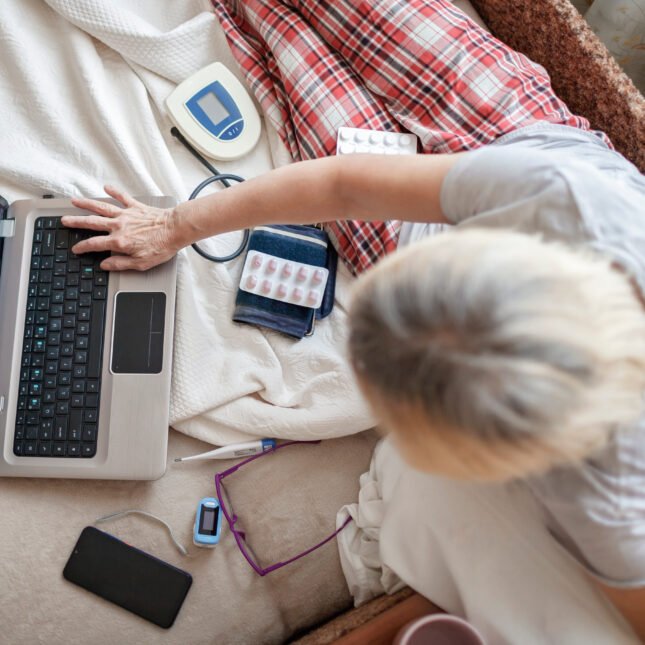
STAT+: UnitedHealth, CVS push back on Medicare plan to curb remote patient monitoring

Mario covers technology in health care, including FDA regulation of artificial intelligence; how Medicare pays for health tech; the use of AI in clinical care; mental health chatbots; and consumer wearables. He’s also the co-author of the free, twice weekly STAT Health Tech newsletter. You can reach Mario on Signal at mariojoze.13.
Major insurers are pushing back on a Medicare proposal that would significantly disrupt how many doctors bill for tracking the health of patients using devices like connected blood pressure cuffs, scales, and blood glucose meters. These remote monitoring services help patients manage a range of medical conditions, including hypertension, diabetes, and heart failure.
UnitedHealth Group, CVS Health, and Kaiser Permanente all wrote letters to the Centers for Medicare and Medicaid Services opposing a proposal that would require that remote patient monitoring care be delivered by direct employees of the practice that is billing for them — effectively banning providers from using contractors for the care. All of these groups operate both insurers and care organizations.
The opposition from UnitedHealth Group is notable in particular because the company’s insurance subsidiary, UnitedHealthcare, recently attempted to stop paying for most remote patient monitoring “due to insufficient evidence of efficacy.”
STAT+ Exclusive Story
Already have an account? Log in
This article is exclusive to STAT+ subscribers
Unlock this article — and get additional analysis of the technologies disrupting health care — by subscribing to STAT+.
Already have an account? Log in
To read the rest of this story subscribe to STAT+.
-
Why linking data effectively is crucial for analysing clinical trial outcomes
Professor Matthew Sydes, Head of Data-Driven Clinical Trials and Cohorts at NHS England is co-author of new research, which finds that ensuring researchers can analyse data as though it were held in a single location is a key step to faster and more efficient clinical trials. He explains why it is important for the NHS Research Secure Data Environment Network to work towards the expansion of innovative techniques and technologies.
-
How we’re protecting the NHS from cyber threats 24/7
James Hutton explains how we protect critical NHS services by monitoring for cyber threats 24 hours a day, 7 days a week.
Every day, cyber criminals are targeting NHS systems that hold some of our most sensitive data – patient records, medical histories, and critical care systems. That’s why the Cyber Security Operations Centre (CSOC) runs protective monitoring across the NHS around the clock, watching for threats that could put patient care at risk.
We see the CSOC as the digital shield to national services. We protect more than 37 million NHS App users and safeguard the integrity of around 60,000 NHS 111 calls every day, ensuring trust, resilience, and uninterrupted care at national scale.
-
Protecting the NHS from cyber threats: Intelligence at the frontline
Dan Taylor explores our vital role in protecting healthcare services from increasingly sophisticated cyber threats.
In the digital landscape of modern healthcare, cyber criminals lurk in the shadows, waiting to strike at the heart of our most vital services. As someone who leads the fight against these threats from within NHS England’s Cyber Security Operations Centre (CSOC), I’ve seen first-hand how cyber threats have evolved – and why every single person working in the NHS has become both a potential target and our greatest defence.
-
A new chapter for the Advisory Group for Data
Dr Jon Fistein reflects on the current position and future direction of NHS England’s Advisory Group for Data.
Having been appointed Chair of NHS England’s Advisory Group for Data (AGD) earlier this year, and now beginning to settle into the role, this feels like the right moment to set out where we are and where I think we need to be. AGD provides NHS England with expert advice and assurance on how patient data is accessed and used. We exist because the public expects, and deserves, careful and visible scrutiny of how that is done.