Author: admin

  • Major Climate Initiative in the Northeastern U.S. Benefits Children’s Health

    Major Climate Initiative in the Northeastern U.S. Benefits Children’s Health

    A new study by researchers from the Columbia Center for Children’s Environmental Health (CCCEH) at Columbia University Mailman School of Public Health reports that the Regional Greenhouse Gas Initiative (RGGI) has been successful in reducing fine particulate matter (PM2.5) emissions and substantially improving children’s health, both major co-benefits of this climate policy. Among the benefits between 2009-2014 were an estimated 537 avoided cases of childhood asthma, 112 preterm births, 98 cases of autism spectrum disorder (ASD), and 56 cases of term low birthweight. The associated economic savings were estimated at $191 to $350 million over the years. These findings are published today in Environmental Health Perspectives.

    Initiated in 2009, RGGI is the country’s first regional cap- and- trade program designed to limit carbon dioxide (CO2) emissions from the power sector. Under the agreement, nine participating northeastern states—including New York— were required to limit emissions from fossil fuel power plants with a capacity of 25 megawatts or greater. Regulated power plants must obtain annual CO2 allowances which are auctioned quarterly and may be traded between plants or offset. Although RGGI is focused on reducing GHG emissions, it has also lowered emissions of other pollutants, including PM2.5., nitrogen oxides (NOx) and sulfur dioxide (SO2).

    The researchers estimated the health benefits to children and associated economic savings using the Environmental Benefits Mapping and Analysis Program (BenMAP) tool, a computer program supported by the U.S. Environmental Protection Agency. For the first time, the researchers incorporated additional health outcomes, not previously included in BenMAP, that are associated with prenatal and childhood exposure to PM2.5.

    “As impressive as they are, these estimated benefits for children do not take into account their potential life-long consequences, so they are likely underestimates of the true benefits of this policy,” says lead author Frederica Perera, PhD, DrPH, professor of environmental health sciences at Columbia Mailman School and director of translational research at CCCEH. “These results should spur more such initiatives to address climate change and improve the health of our children.”

    Additional authors include David Cooley at Abt Associates, Alique Berberian at the Columbia Center for Children’s Environmental Health, David Mills at Peak to Peak Economics, and Patrick Kinney at Boston University’s School of Public Health.

    This research was supported by the Environmental Protection Agency (RD83615401) and National Institute of Environmental Health Sciences (P50ES09600), the John Merck Fund, the John and Wendy Neu Family Foundation, and an anonymous donor.

  • Higher BPA Levels Linked to More Asthma Symptoms in Children

    Children in low-income neighborhoods in Baltimore tended to have more asthma symptoms when levels of the synthetic chemical BPA (Bisphenol A) in their urine were elevated, according to a study from researchers at the Johns Hopkins Bloomberg School of Public Health and School of Medicine.

  • Study: Novel PFAS Comprise 24% of Those Measured in Blood of Wilmington, N.C. Residents

    Study: Novel PFAS Comprise 24% of Those Measured in Blood of Wilmington, N.C. Residents

    In a new paper detailing findings from North Carolina State University’s GenX Exposure Study, researchers detected novel per- and polyfluoroalkyl substances (PFAS) called “fluoroethers” in blood from residents of Wilmington, North Carolina. The fluoroethers – Nafion byproduct 2, PFO4DA and PFO5DoA – represented 24% of the total PFAS detected in the blood of Wilmington residents and appear to leave the body faster than legacy PFAS. These are the first measurements of these chemicals in humans.

    The GenX Exposure Study began in 2017 after NC State researchers found a chemical called GenX in Wilmington residents’ drinking water. An upstream chemical facility had been releasing several PFAS (including GenX) into the Cape Fear River, the city’s primary drinking water source, since 1980. The study aimed to answer community questions about GenX and other PFAS, including whether the chemicals were detectable in residents’ blood.

    NC State and East Carolina University researchers collected blood samples from 344 Wilmington residents (289 adults and 55 children) across two sampling efforts in November 2017 and May 2018. Additionally, 44 of the November participants had a second blood sample collected in May 2018, six months after their first one. All blood samples were collected after the chemical facility stopped releasing GenX into the Cape Fear River.

    The first sample determined which PFAS were present and the second sample was used to see how the levels changed in six months. The study looked for 10 PFAS unique to the chemical facility (called “fluoroethers”), and 10 legacy PFAS (such as PFOA and PFOS), in the samples.

    Ten PFAS were found in most of the blood samples. Three of these were the fluoroethers Nafion byproduct 2, PFO4DA and PFO5DoA, all of which were detected in over 85% of samples. Two other fluoroethers, PFO3OA and NVHOS, were infrequently detected. Nearly all samples had at least one fluoroether present, but GenX was not found in any samples.

    In total, 24% of the measured PFAS in blood samples came from these novel fluoroethers. In participants with repeated samples, the median decrease in fluoroether levels ranged from 28% for PFO5DoA to 65% for PFO4DA in six months once exposure to contaminants in drinking water ceased.

    Four legacy PFAS (PFHxS, PFOA, PFOS, PFNA) were detected in most (97% or greater) participants. The levels of legacy PFAS in the participants’ blood were higher than U.S. national levels for the 2015-2016 National Health and Nutrition Examination Survey and did not change in the repeated samples.

    “Accurately measuring the levels of PFAS in blood is the first step toward understanding what effects these novel chemicals may have on human health,” says Jane Hoppin, professor of biological sciences, deputy director of NC State’s Center for Human Health and the Environment (CHHE), and corresponding author of the paper describing the work.

    The study appears in Environmental Health Perspectives and is supported by the National Institute of Environmental Health Sciences (1R21ES029353), NC State’s Center for Human Health and the Environment (P30ES025128), and the NC Policy Collaboratory. Partners include East Carolina University, the Environmental Protection Agency, New Hanover County Health Department and Cape Fear River Watch.

    -peake-

    Note to editors: An abstract follows.

    “Measurement of novel, drinking water-associated PFAS in blood from adults and children in Wilmington, North Carolina”

    DOI: 10.1289/EHP6837

    Authors: Nadine Kotlarz, Katlyn May, Robert Smart, Detlef Knappe, Jane Hoppin; North Carolina State University; James McCord, Mark Strynar, Andrew Lindstrom, U.S. Environmental Protection Agency; David Collier, Suzanne Lea, Jamie DeWitt, East Carolina University; Adrien A. Wilkie, Jessica Y. Islam, UNC Chapel Hill; Katelyn Matney, Phillip Tarte, New Hanover County Health Department; M.E. Polera, Kemp Burdette, Cape Fear River Watch
    Published: Online in Environmental Health Perspectives

    Abstract:
    BACKGROUND: From 1980 to 2017, a fluorochemical manufacturing facility discharged wastewater containing poorly understood per- and polyfluoroalkyl substances (PFAS) to the Cape Fear River, the primary drinking water source for Wilmington, North Carolina (NC), residents. Those PFAS included several fluoroethers including HFPO-DA or “GenX”. Little is known about the bioaccumulation potential of these fluoroethers.
    OBJECTIVE: To determine levels of fluoroethers and legacy PFAS in serum from Wilmington, NC, residents.
    METHODS: In November 2017 and May 2018, we enrolled 344 Wilmington, NC, residents aged 6 years and older into the GenX Exposure Study, and collected blood samples. Repeated blood samples were collected from 44 participants six months after enrollment. We analyzed serum for 10 fluoroethers and 10 legacy PFAS using liquid chromatography-high resolution mass spectrometry.
    RESULTS: Participants’ ages ranged from 6 to 86 years; they lived in the lower Cape Fear region for 20 years on average (standard deviation: 16 years). Six fluoroethers were detected in serum; Nafion byproduct 2, PFO4DA, and PFO5DoA were detected in >85% of participants. PFO3OA and NVHOS were infrequently detected. Hydro-EVE was present in a subset of samples but we could not quantify it. GenX was not detected above our analytical method reporting limit (2 ng/mL). In participants with repeated samples, the median decrease in fluoroether levels ranged from 28% for PFO5DoA to 65% for PFO4DA in six months due to wastewater discharge control. Four legacy PFAS (PFHxS, PFOA, PFOS, PFNA) were detected in most (≥ 97%) participants; these levels were higher than U.S. national levels for 2015-2016 National Health and Nutrition Examination Survey. The sum concentration of fluoroethers contributed 24% to participants’ total serum PFAS (median: 25.3 ng/mL).
    CONCLUSION: Poorly understood fluoroethers released into the Cape Fear River by a fluorochemical manufacturing facility were detected in blood from Wilmington, NC, residents. Health implications of exposure to these novel PFAS have not been well characterized.

  • Jet Aircraft Exhaust Linked to Preterm Births

    Jet Aircraft Exhaust Linked to Preterm Births

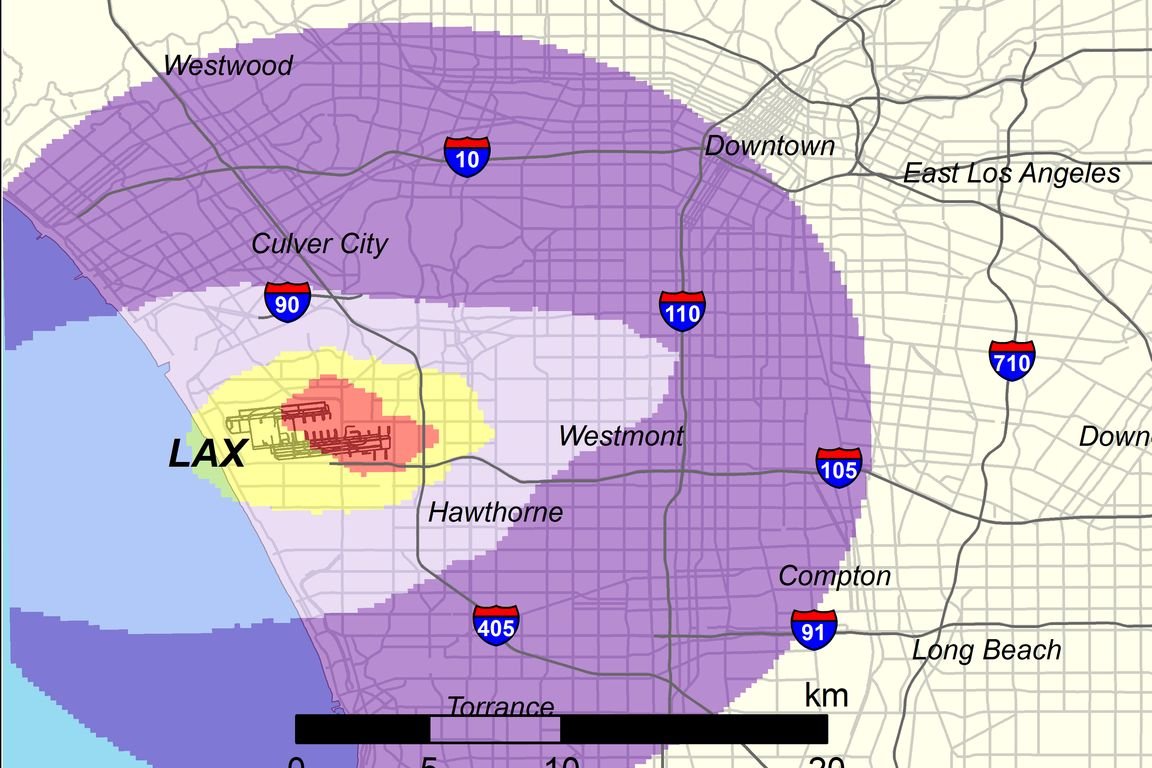
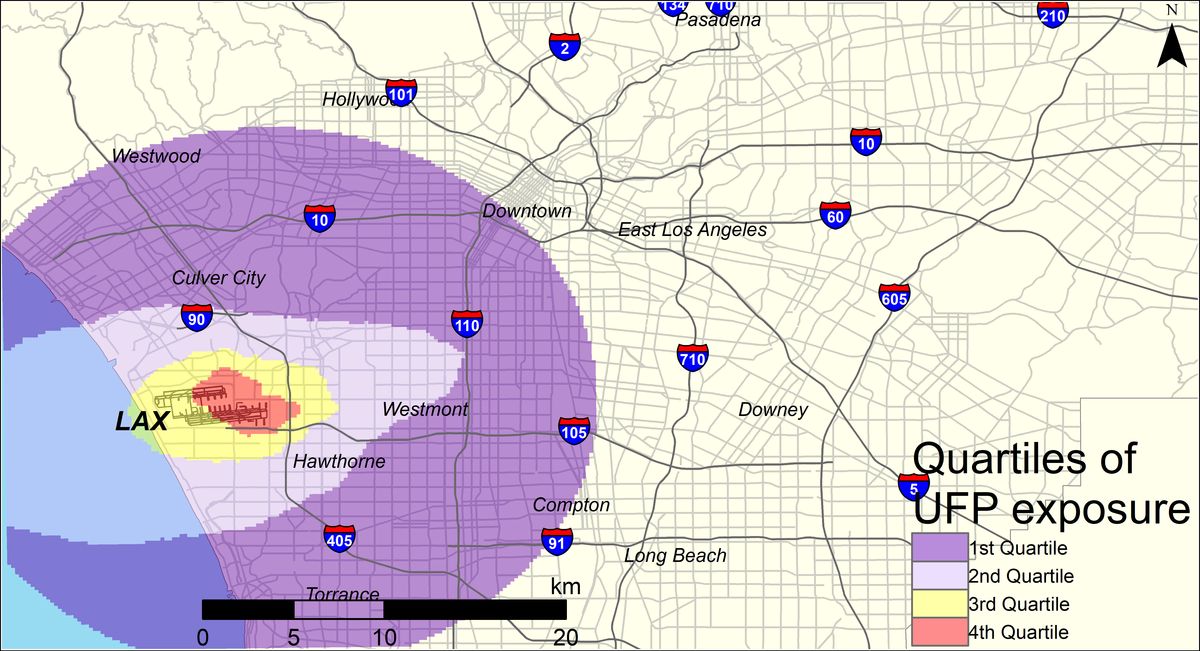
    Map showing levels of pollution from jet exhaust

    UCLA Fielding School of Public Health

    UCLA researchers found that mothers who lived within the red area adjacent to LAX were 14% more likely to have a pregnancy that ended in a preterm birth. Those in the yellow area were 8% percent more likely than those in areas farther from the airport.

    A study from the UCLA Fielding School of Public Health has found that pregnant women exposed to high levels of ultrafine particles from jet airplane exhaust are 14% more likely to have a preterm birth than those exposed to lower levels.

    The researchers examined exposure among women living near Los Angeles International Airport, in an area that includes neighborhoods in Los Angeles, El Segundo, Hawthorne, Inglewood and several other communities inland from the airport.

    “The data suggest that airplane pollution contributes to preterm births above and beyond the main source of air pollution in this area, which is traffic,” said Dr. Beate Ritz, a professor in the departments of epidemiology and environmental health sciences at the Fielding School.

    Preterm birth is associated with complications such as immature lungs, difficulty regulating body temperature, poor feeding and slow weight gain.

    The research team, co-led by Ritz and Scott Fruin of the Keck School of Medicine at the University of Southern California, examined records for all births — a total of 174,186 —between 2008 and 2016 to mothers living within 9 miles (15 km) of LAX. They divided the overall area into four sections based on the amount of ultrafine particle, or UFP, pollution from jet exhaust, with the section nearest the airport experiencing the highest exposure.

    After adjusting for traffic-related air pollution and other variables that may affect the risk of preterm birth, including airport-related noise and the mother’s age, education level and race, they found that expectant mothers in the quarter with the highest average ultrafine particle exposure had 14% higher odds of a preterm birth than mothers in the quarter with the lowest exposure.

    “Nearly 2 million people live within a 10–mile radius of LAX, many of whom are exposed to elevated levels of aircraft-origin UFPs,” said Sam Wing, a scholar at the Fielding School who also worked on the study.

    The research is summarized in an article published July 22 in the journal Environmental Health Perspectives and is based on a lengthy study from the spring 2020 edition of the journal. Other authors include Timothy Larson and Sarunporn Boonyarattaphan of the University of Washington and Neelakshi Hudda of Tufts University.

    This research was supported by grants from the National Institute of Environmental Health Sciences, part of the National Institutes of Health.

  • Living Near Natural Gas Flaring Poses Health Risks for Pregnant Women and Babies

    Living Near Natural Gas Flaring Poses Health Risks for Pregnant Women and Babies

    Natural gas flares can burn for weeks at a time. (Photo/iStock)

    Natural gas flares can burn for weeks at a time. (Photo/iStock)

    Health

    USC researchers found that exposure to flaring was associated with 50% higher odds of preterm birth.

    July 15, 2020 Leigh Hopper

    Researchers from USC and UCLA have found that women living near natural gas and oil wells that use flaring to burn off excess gas face a 50% greater risk of premature birth than women with no exposure.

    “Our study finds that living near flaring is harmful to pregnant women and babies,” said Jill Johnston, an environmental health scientist at the Keck School of Medicine of USC. “We have seen a sharp increase in flaring in Texas’ Eagle Ford Shale, and this is the first study to explore the potential health impacts.”

    Flares, which can burn for weeks at a time, release harmful chemicals such as benzene as well as fine particle pollution, carbon monoxide, nitrogen oxides, heavy metals and black carbon. Several of these combustion-related pollutants are linked to a higher risk of preterm birth and reduced birth weight in other contexts.

    The research appears today in the journal Environmental Health Perspectives.

    Exposure to natural gas flaring associated with preterm birth

    The study examined 23,487 live births to women living within the Eagle Ford region between 2012 to 2015. The Eagle Ford Shale geological formation, measuring 50 miles wide and 400 miles long, is one of the most productive oil and gas regions in the country due to hydraulic fracturing, or “fracking.” In a previous study, the research team estimated the area was subject to more than 43,000 flaring events between 2012 and 2016.

    The preterm birth rate was 14% among pregnant women exposed to a high number of flares, researchers found. Babies born prematurely — before the 37th completed week of pregnancy — may suffer complications such as immature lungs, difficulty regulating body temperature, poor feeding and slow weight gain.

    Our study finds that living near flaring is harmful to pregnant women and babies.

    Jill Johnston

    The researchers used satellite observations to measure flaring activity because systemic reporting is lacking. They adjusted for other known risk factors for preterm birth in their analysis — including age, smoking, insurance status and access to prenatal care — and concluded that exposure to a high amount of flaring was associated with 50% higher odds of preterm birth compared with no exposure. A high amount of flaring was defined as 10 or more nightly flare events within 3 miles of the pregnant woman’s home.

    “Women who identified as Latina or Hispanic in our study were exposed to more flaring and more likely to see an increased risk of preterm birth, raising environmental justice concerns about the oil and gas boom in south Texas,” said Lara Cushing, an environmental health scientist with the UCLA Fielding School of Public Health who co-led the study with Johnston. “Our study adds to the evidence that oil and gas development is negatively impacting birth outcomes and suggests stricter regulation of the industry is needed.”

    Exposure to wells, race also contribute to higher odds of preterm birth

    Women who lived within 3 miles of a high number of oil and gas wells also had higher odds of preterm birth than mothers who did not live near wells. Their babies were also born weighing 19.4 grams, or seven ounces, lighter on average. This suggests that, in addition to flaring, other exposures related to oil and gas wells may also be adversely impacting pregnancy, the researchers said.

    The majority (55%) of the women in the study population identified as Latina or Hispanic, and the odds of preterm birth among Hispanic women exposed to high levels of flaring was greater than the corresponding odds among non-Hispanic White women, who made up 37% of the study population. Nearly 60% of women in the study were on public health insurance (Medicaid) and 17% were foreign born.

    Amid an oil boom in recent years, the United States has been responsible for the highest number of flares of any country, flaring an estimated 14.1 billion square meters of natural gas in 2018. Eighty percent of flaring is occurring in Texas and in North Dakota shale plays, where much of the U.S. fracking occurs. That said, according to researchers, flaring largely remains underreported and unregulated.


    In addition to Johnston and Cushing, other authors of the study include Kate Vavra-Musser, Khang Chau and Meredith Franklin, all of USC.

    The study was supported by a grant from the U.S. National Institutes of Health/National Institute of Environmental Health Sciences.

  • Bed Bugs Modify Microbiome of Homes They Infest

    Bed Bugs Modify Microbiome of Homes They Infest

    Homes infested by bed bugs appear to have different bacterial communities – often referred to as microbiomes – than homes without bed bugs, according to a first-of-its-kind study from North Carolina State University. In addition, once bed bug infestations were eradicated, home microbiomes became more similar to those in homes that didn’t have bed bugs. The findings could be an important step in lifting the veil on the factors involved in indoor environmental quality and how to improve it.

    Microbes can affect indoor air quality. So NC State entomologists Coby Schal and Madhavi Kakumanu wanted to learn more about the microbiomes of bed bugs, whether bed bugs can shape the microbial community in homes they infest, and whether eliminating bed bugs changes the microbiome of homes that were once infested.

    The study, held in an apartment complex in Raleigh, compared the microbiomes of bed bugs with the microbiomes in the household dust of infested homes as well as the microbiomes in apartments that had no bed bugs. Nineteen infested homes were studied over the course of four months; seven were treated with heat to eliminate bed bugs after the initial sample was taken, while 12 infested homes were treated after one month. These homes were compared with 11 homes that had no bed bugs.

    The results showed similarities between the microbiomes of bed bugs and the dust-associated microbiomes of infested homes, mostly through the presence of Wolbachia, a symbiotic bacterium that comprises the majority of the bacterial abundance in bed bugs. Bed bug and infested home microbiomes differed significantly from the microbial communities of uninfested homes.

    “There is a link between the microbiome of bed bugs and the microbiome of household dust in bed bug infested homes,” said Schal, the Blanton J. Whitmire Distinguished Professor of Entomology at NC State and co-corresponding author of the paper. “No previous study has reported the impact of chronic pest infestations on indoor microbial diversity.”

    The study also showed that, after bed bugs were eliminated, infested home microbiomes gradually became more like those in homes without bed bugs.

    “The elimination of the bed bugs resulted in gradual shifts in the home microbial communities toward those of uninfested homes,” Kakumanu, an NC State research scholar in Schal’s lab and co-corresponding author of the study, said. “This paper is the first experimental demonstration that eliminating an indoor pest alters the indoor microbiome toward that of uninfested homes.”

    “Bed bug infestations are problematic in many homes in both developed and developing countries,” Schal said. “There is a critical need to investigate infestations from the perspective of indoor environmental quality, and this paper represents a first step toward this end.” 

    The study appears in Science of the Total Environment. Funding for the work came from NC State’s Blanton J. Whitmire endowment, as well as the U.S. Department of Housing and Urban Development Healthy Homes program (NCHHU0017-13, NCHHU0053-19), the Alfred P. Sloan Foundation (2013-5-35 MBE) and the National Science Foundation (DEB-1754190). Seed funds came from NC State’s Center for Human Health and the Environment (CHHE, P30ES025128), funded by the National Institute of Environmental Health Sciences.

    -kulikowski-

    Note to editors: An abstract of the paper follows.

    “Bed bugs shape the indoor microbial community composition of infested homes”
    Authors: Madhavi L. Kakumanu, Alexis M. Barbarin, Richard G. Santangelo and Coby Schal, North Carolina State University: Zachary C. DeVries, University of Kentucky

    Published: July 7, 2020 in Science of the Total Environment

    DOI: 10.1016/j.scitotenv.2020.140704

    Abstract: Indoor pests, and the allergens they produce, adversely affect human health. Surprisingly, however, their effects on indoor microbial communities have not been assessed. Bed bug (Cimex lectularius) infestations pose severe challenges in elderly and low-income housing. They void large amounts of liquid feces into the home environment, which might alter the indoor microbial community composition. In this study, using bed bug-infested and uninfested homes, we showed a strong impact of bed bug infestations on the indoor microbial diversity. Floor dust samples were collected from uninfested and bed bug-infested homes and their microbiomes were analyzed before and after heat interventions that eliminated bed bugs. The microbial communities of bed bug-infested homes were radically different from those of uninfested homes, and the bed bug endosymbiont Wolbachia was the major driver of this difference. After bed bugs were eliminated, the microbial community gradually shifted toward the community composition of uninfested homes, strongly implicating bed bugs in shaping the dust-associated environmental microbiome. Further studies are needed to understand the viability of these microbial communities and the potential risks that bed bug-associated microbes and their metabolites pose to human health.

  • Childhood Obesity Linked to Multiple Environmental Factors in First-of-its-kind Study

    Childhood Obesity Linked to Multiple Environmental Factors in First-of-its-kind Study

    Childhood obesity is a health threat that is becoming more and more common worldwide. It increases risk later on for a variety of life-threatening challenges, including type 2 diabetes, cancer, heart disease and even mental health problems.

    A new study led by scientists at USC and the Barcelona Institute for Global Health (ISGlobal) is the first to comprehensively profile environmental factors linked to childhood obesity. The research showed that a higher body mass index (BMI), an estimate of body fat, during childhood is associated with exposure to smoking — both in the womb and while growing up — as well as air pollution and certain characteristics seen in some urban areas. Differences in socioeconomic status did not explain these results.

    The findings were just published in the journal Environmental Health Perspectives.

    “People are not exposed to only one chemical during their lives,” said Leda Chatzi, MD, PhD, associate professor of preventive medicine at the Keck School of Medicine of USC and the senior author of the study. “They are exposed to multiple chemicals. With that in mind, we try to understand the totality of environmental exposures.”

    Dr. Chatzi and her colleagues are exploring the exposome, an endeavor meant to complement investigations into the genome. Just as many studies of the genome attempt to clarify how the content of genes affect health, studies such as this one attempt to clarify how health is affected by every environmental influence from conception onward. This new approach contrasts with a traditional method for probing population health, zeroing in on one or two environmental factors in a given investigation.

    All told, the paper examined 173 factors — 77 during pregnancy and 96 during childhood. These included air pollutants, families’ human-made surroundings and access to green space, tobacco smoke and chemical pollutants such as heavy metals and pesticides.

    The researchers studied a group of about 1,300 children aged 6 to 11 years from six European countries: France, Greece, Lithuania, Norway, Spain and the United Kingdom. Data about the women and their children have been gathered, starting at pregnancy, through a collaborative longitudinal research project known as the Human Early Life Exposome (HELIX) study.

    Smoking exposure, air pollution and lack of exercise

    Mothers’ smoking during pregnancy was the most prominent association with high BMI among children, and the only prenatal factor with a significant association. Additionally, high BMI was associated with exposure to secondhand smoke, as measured through levels of a certain chemical in childrens’ urine samples. Taken together, these findings suggest that kicking the habit — or never picking it up — is one way that parents can safeguard the long-term health of their offspring.

    “This is quite an important message,” Dr. Chatzi said. “Maternal smoking during pregnancy and exposures to secondhand smoke are quite prevalent worldwide.”

    Exposure to air pollution, both indoors and out, was another factor linked to higher BMI. Specific pollutants were nitrogen dioxide — a component of automobile exhaust and other gases released when fossil fuels burn — as well as particles in the atmosphere.

    Certain attributes of the areas where children live also showed a strong correlation with BMI. BMI was higher for children who live in densely populated areas. But BMI was lower for those who went to school in areas that are denser in facilities such as businesses, community services, educational institutions, restaurants and shopping — a proxy for a neighborhood’s walkability.

    “With more facilities, children can walk, ride their bikes, go play sports,” Dr. Chatzi said. “You can contrast this with what are described as food deserts, or areas with fewer facilities.”

    The researchers note that better understanding of the impact of environmental exposure could create opportunities to take action that reverses the trend of increasing childhood obesity, ultimately mitigating its long-term dangers.

    “These findings provide further evidence that modifying environmental exposures early in life can limit the risk of obesity and associated complications,” said first author Martine Vrijheid, research professor at ISGlobal and principal investigator of the HELIX project. “The implications for public health are important since these results may help to identify obesity-related exposures that could be targeted for prevention and intervention early in life.”

    About this study                                                 

    In addition to Dr. Chatzi and Vrijheid, the studies’ co-authors are Serena Fossati, Léa Maitre, Sandra Márquez, Maribel Casas, Montserrat de Castro,  David Donaire-Gonzalez, Oliver Robinson, Jordi Sunyer, Ibon Tamayo-Uria, Jose Urquiza, Antonia Valentin, Charline Warembourg, Mark J. Nieuwenhuijsen and Xavier Basagaña from the the ISGlobal Institute, Barcelona, Spain; Theano Roumeliotaki and Marina Vafeiadi from the Department of Social Medicine, Faculty of Medicine, University of Crete, Heraklion, Crete, Greece; Lydiane Agier, Solène Cadiou and Valerie Siroux from the Team of Environmental Epidemiology Applied to Reproduction and Respiratory Health, INSERM, CNRS, University Grenoble Alpes, Institute for Advanced Biosciences (IAB), U1209 Joint Research Center, Grenoble, France; Sandra Andrusaityte, Audrius Dedele and Regina Grazuleviciene from the Department of Environmental Sciences, Vytautas Magnus University, Kaunas, Lithuania; Line S. Haug, Helle Margrete Meltzer, Eleni Papadopouplou, Amrit K. Sakhi, Per E. Schwarze and Cathrine Thomsen from the Norwegian Institute of Public Health, Oslo, Norway; and Rosemary McEachan and  John Wright from the Bradford Institute for Health Research, Bradford Teaching Hospitals NHS Foundation Trust, Bradford, UK.

    This study was supported by the European Community Seventh Framework Program (Human Early Life Exposome Project, grant ID: 308333) and by the National Institute of Environmental Health Sciences (R21ES029681).

    — by Wayne Lewis
  • NIH Announces New Transformative Research Award Program for ALS

    NIH Announces New Transformative Research Award Program for ALS

    Wednesday, June 17, 2020

    NIH announces new Transformative Research Award program for ALS

    The National Institutes of Health plans to invest $25 million over five years in a new program to spur innovative research on amyotrophic lateral sclerosis (ALS), a progressive and fatal neurological disease that weakens and eventually paralyzes voluntary muscles. Accelerating Leading-edge Science in ALS (ALS2) aims to answer critical questions about this disease.

    “Over the past few decades, there has been significant progress in our understanding of ALS, but we still do not have any breakthrough treatments for this terrible disease,” said NIH Director Francis S. Collins, M.D., Ph.D. “We hope this program will inject new ideas to the field to push us rapidly toward effective therapies.”

    Sometimes known as Lou Gehrig’s disease, ALS is a neurodegenerative disease that affects motor neurons in the spinal cord that control voluntary muscles. For reasons that are currently unknown, the motor neurons die off, resulting in progressive muscle weakness that usually leads to respiratory failure. ALS is virtually always fatal, and many people die within three to five years of developing symptoms.

    There is no cure for ALS. The U.S. Food and Drug Administration-approved drugs riluzole and edaravone can prolong life by a few months but do not improve symptoms. Ongoing clinical trials are looking at a range of therapeutic strategies including new drug candidates, devices to improve quality of life, and stem cell therapies. Genetic research has recently provided clues to understanding the disease, but it will take a focused investment in research from a range of scientific disciplines in order to capitalize on these insights.

    ALS2 will be part of the NIH Common Fund’s High-Risk, High-Reward (HRHR) research program. The four initiatives of the HRHR program are a time-tested, powerful approach to sparking innovation. They support exceptionally creative research, which is inherently riskier, but has the potential to transform biomedical science. NIH will apply this potential to ALS2 through the HRHR program’s Transformative Research Award initiative. The Transformative Research Award is particularly well-suited to interdisciplinary teams of scientists looking to combine their expertise and pursue new ideas with the potential to transform ALS research.

    ALS2 will take a three-pronged approach to improve understanding of ALS:

    • Adapt emerging tools and technologies from neuroscience and cell biology to identify what causes ALS at the molecular level, and how the disease progresses, leading to new therapeutic strategies.
    • Attract new talent from a range of scientific disciplines, including neuroscience, cell biology, bioengineering, genomics, chemistry, biophysics, environmental health sciences, and computational science.
    • Examine biological similarities between ALS and motor neuron disease in other neurodegenerative disorders, including frontotemporal dementia, chronic traumatic encephalopathy, Kennedy’s disease, spinal muscular atrophy, and primary lateral sclerosis.

    Information on a Notice of Special Interest to accompany the Transformative Research Award funding opportunity will be posted here: https://commonfund.nih.gov/tra/grants.

    This initiative is managed collaboratively by the NIH Common Fund, the National Institute of Neurological Disorders and Stroke, the National Institute on Aging, the National Institute of Environmental Health Sciences, and the National Institute of General Medical Sciences.

    About the National Institutes of Health (NIH): NIH, the nation’s medical research agency, includes 27 Institutes and Centers and is a component of the U.S. Department of Health and Human Services. NIH is the primary federal agency conducting and supporting basic, clinical, and translational medical research, and is investigating the causes, treatments, and cures for both common and rare diseases. For more information about NIH and its programs, visit www.nih.gov.

    NIH…Turning Discovery Into Health®

    https://commonfund.nih.gov/highrisk/tra/als2

    https://www.ninds.nih.gov/Disorders/All-Disorders/Amyotrophic-Lateral-Sclerosis-ALS-Information-Page

    Institute/Center

    Contact

  • NIH Names Rick Woychik Director of the National Institute of Environmental Health Sciences

    NIH Names Rick Woychik Director of the National Institute of Environmental Health Sciences

    National Institutes of Health Director Francis S. Collins, M.D., Ph.D., has appointed Richard (Rick) P. Woychik, Ph.D., as director of NIH’s National Institute of Environmental Health Sciences (NIEHS), Research Triangle Park, North Carolina. Dr. Woychik served as acting director of the NIEHS since October 2019 and officially began his new role as the NIEHS director on June 7, 2020. NIEHS conducts and supports environmental health sciences in alignment with real-world public health needs and translates scientific findings into knowledge that can inform real-life individual and public health outcomes.

    “Innovation has been a hallmark of Rick’s scientific career and it’s at the center of his vision for leading NIEHS,” said Dr. Collins. “He will be working to support new technologies and scientific approaches throughout the field of environmental health sciences – applying his proven skills in scientific excellence, creativity, and rigor to improving public health.”

    Woychik is highly respected for a long list of accomplishments in mammalian genetics and environmental epigenetics. His laboratory was the first to identify a gene associated with polycystic kidney disease, the first to connect a protocadherin gene ultimately linked to hearing loss in Cushing’s disease patients, and the first to clone an obesity-related gene called agouti. Dr. Woychik says his passion for epigenetics and environmental health sciences started when his research group discovered that the obesity trait associated with one of the agouti mutant mouse lines was influenced by the epigenome during embryonic development.

    “Individuals, with their unique biological make-up, respond to the environment in different ways. Our current research strategies mostly employ a ‘one size fits all’ approach that does not factor in this critically important variable,” Dr. Woychik explained. “My vision is to deal with the individual genetic, epigenetic and biological variability in the establishment of research strategies for studying public health and environmental toxicology.”

    Addressing environmental and genetic factors that contribute to health of the individual is generally referred to as precision medicine. This is a major focus at NIH, especially through the All of Us Research Program. Dr. Woychik will work closely with the All of Us leadership to contribute NIEHS research on environmental exposures toward this landmark program.

    Dr. Woychik earned his Ph.D. in molecular biology in 1984 from Case Western Reserve University in Cleveland. He moved into the field of molecular genetics during his postdoctoral training in Philip Leder’s laboratory in the Department of Genetics at Harvard Medical School, Boston.

    Woychik initially joined NIEHS in 2011 as deputy director. He successfully led the institute’s strategic planning exercises and guided implementation of the plans across a broad range of scientific disciplines. While his own expertise is as a basic scientist conducting genetic and epigenetic experiments to study the influence of the environment, as deputy director and acting director of the institute he interacted with investigators conducting a broad range of environmental health science research. With this experience, he brings a wealth of in-depth knowledge relating to the many disciplines of science that are necessary to lead environmental health science research. Prior to NIEHS, Woychik served nearly 10 years as the President and CEO of The Jackson Laboratory, Bar Harbor, Maine, where he oversaw seven major building projects in Maine and California, enhanced the organization’s focus on basic mechanistic research in model organisms with a focus on translation to human health and disease, established the Genetics Resource Science division, and oversaw a major realignment of the nonprofit business unit to substantially improve efficiency and outreach to the global biomedical community.

    “I’ve always conducted my research in a highly collaborative manner, and I’ve reached out to investigators with expertise different and complementary to my own,” Dr. Woychik said. “This is a paradigm that I have also embraced as a science administrator and I plan to do the same as director of NIEHS.”

    As NIEHS director, Woychik also inherits the additional responsibility as director of the National Toxicology Program (NTP). The NTP is a federal, inter-agency program that reports directly into the U.S. Department of Health and Human Services. Three federal agencies comprise NTP including the National Institute of Environmental Health Sciences, part of NIH, the National Center for Toxicological Research, part of the U.S. Food and Drug Administration, and the National Institute for Occupational Safety and Health, part of the Centers for Disease Control and Prevention.

    Press Resources:

  • Living Near Oil and Gas Wells Tied to Low Birth Weights in Infants

    Living Near Oil and Gas Wells Tied to Low Birth Weights in Infants

    Study of nearly 3 million California births links proximity to active oil and gas well sites with adverse birth outcomes for rural residents

    By Kara Manke

    June 3, 2020

    a hazy field of oil pumps that stretch as far the eye can see

    Pump jacks operating at the Kern River Oil Field in Bakersfield, Calif. A new UC Berkeley study adds to mounting evidence linking proximity to oil wells to adverse birth outcomes. (AP photo by Jae C. Hong)

    Living near active oil and gas wells may put pregnant people at higher risk of having low birth weight babies, especially in rural areas, finds a new study of birth outcomes in California.

    The study, funded by the California Air Resources Board, is one of the largest of its kind and the first in the state. It analyzed the records of nearly 3 million births to people living within 6.2 miles (10 kilometers) of at least one oil or gas well between 2006 and 2015. Unlike previous studies, it examined births in both rural and urban areas, and people living near both active and inactive oil and gas sites.

    The study found that, in rural areas, pregnant people who lived within 0.62 miles (1 kilometer) of the highest producing wells were 40% more likely to have low birth weight babies and 20% more likely to have babies who were small for their gestational age compared to people living farther away from wells or near inactive wells only. Among term births, babies were 1.3 ounces (36 grams) smaller, on average, than those of their counterparts.

    People living near active wells in urban areas also had slightly increased odds of having small for gestational age babies than their counterparts. The study did not find a significant relationship between proximity to oil and gas wells and premature births.

    “Being born of low birth weight or small for gestational age can affect the development of newborns and increase their risk of health problems in early childhood and even into adulthood,” said Rachel Morello-Frosch, a professor of public health and of environmental science, policy and management at the University of California, Berkeley, and senior author of the paper. “When you see a shift of over 30 grams of birth weight among term infants, from an individual clinical perspective, it may not seem like a lot. But when you see that kind of large population shift in birth weight — that can have significant population level implications for infant and children’s health.”

    The findings, published June 3 in the journal Environmental Health Perspectives, add to a growing body of evidence linking proximity to oil and gas wells to a variety of adverse birth outcomes, including premature birth, heart defects and low birth weight.

    Oil production in California has generally declined over the past three decades, and Gov. Gavin Newsom last year issued stricter regulations on new fracking permits in the state. However, the state issued 24 new fracking permits in early April, and another 282 are awaiting review.

    “This study is the first to characterize the implications for perinatal health of active oil and gas production in the state, and I think the results can inform decision-making in regulatory enforcement and permitting activities.” Morello-Frosch said. “Results from health studies such as ours support recent efforts to increase buffers between active well activities and where people live, go to school and play. This scientific evidence of adverse health effects facing vulnerable populations, including pregnant women, should be taken into account as Californians debate the extent to which we to want to expand oil and gas drilling in our state.”

    A long history of oil production

    Previous research linking oil and gas production to adverse birth outcomes has examined people living near fracking sites in Colorado, Pennsylvania, Oklahoma and Texas. Oil production in California differs from some of these other regions because the infrastructure is generally much older, and the state has a high number of inactive wells.

    In addition, because of the geology of the region, many of the sites use enhancement techniques, including fracking and steam and water injection, to access oil reserves, said study lead author Kathy Tran, a graduate student in environmental health sciences at UC Berkeley,

    “Even though the California oil and gas industry dates back to the early 1900s, there hasn’t been any analysis looking at potential health effects related to oil and gas exposure,” Tran said.

    Both active and inactive oil and gas sites create a myriad of environmental hazards that have the potential to impact perinatal health, including air and water pollutants, noise and excessive lighting. However, with limited access to the production sites themselves, it can be hard for researchers to pinpoint precisely what factors might be contributing to adverse birth outcomes.

    “A lot of the equipment that’s being operated on site is a contributor to air pollution, but how much air pollution is an unknown because the inventory industry reports are estimated based on emissions factors, as opposed to measured emissions levels.” Tran said. “We assume that with greater production volume, the equipment is being used more intensively. And for that reason, that may be a significant contributor to why we see some impacts related to adverse birth outcomes.”

    The study corrected for a variety of demographic factors that might also impact birth outcomes, including race, ethnicity, socioeconomic status, maternal education, and other neighborhood-level factors, including other sources of air pollution.

    While it’s unclear why the differences in birth weight were more pronounced in rural areas than in urban areas, the researchers hypothesize that other factors — such as differences in indoor air quality, maternal occupation or housing conditions — may have impacted the results.

    In the future, Tran hopes that measurements of people’s actual exposure to potentially toxic pollutants from oil and gas sites will help pinpoint the culprits behind these findings.

    “Because researchers don’t have direct access to the actual oil and gas sites, it’s hard to get a good estimate of what people actually experience,” Tran said. “Obviously, things like wind direction and water movement and other environmental conditions factor into personal exposure, as well. And for that reason, the more in-depth exposure assessment we can get, the more we can really understand why we are seeing the effects that we see.”

    Co-authors of the study include Joan A. Casey of Columbia University and Lara J. Cushing of San Francisco State University.

    The California Air Resources Board (CARB) provided primary funding for this study (grant #18RD018) as part of its overall approach to determine the impacts of oil and gas operations on public health in California. Additional funding support was provided by the 11th Hour Project, the National Institute of Environmental Health Sciences grant K99/R00 ES027023, the UC Berkeley SAGE IGERT Fellowship and National Science Foundation grant #1144885.

    RELATED INFORMATION