Reference #18.4b593a17.1791846229.1727af0a
https://errors.edgesuite.net/18.4b593a17.1791846229.1727af0a
Reference #18.4b593a17.1791846229.1727af0a
https://errors.edgesuite.net/18.4b593a17.1791846229.1727af0a

Additional authors include: ShihMing Huang, Frederick Lurmann, Nathan Pavlovic, Shih Ying Chang, and Anondo Mukherjee, from Sonoma Technology, Inc.; Dana E. Goin, Rachel Sklar, and Amy Padula, UCSF.
Funding was provided by the United States National Institute of Environmental Health Sciences.
Exposure to wildfire smoke during pregnancy increases risk of preterm birth © 2024 by UC Berkeley School of Public Health is licensed under CC BY-NC-ND 4.0
CC BY-NC-ND 4.0
Creative Commons Attribution-NonCommercial-NoDerivatives 4.0 International
You are free to:
Under the following terms:
Learn more:
To address plastics and other problems that could affect human health, NIH and the U.S. National Science Foundation (NSF) are jointly funding four new Centers for Oceans and Human Health and renewing two centers as part of a marine-related health research program. Each Center will focus on a different aspect of the interplay between environmental science, climate change, and human health in the ocean or Great Lakes. Together the two agencies plan to invest more than $42 million over five years for the centers program, continuing a two-decade long collaboration. The National Institute of Environmental Health Sciences (NIEHS) administers the centers at the National Institutes of Health (NIH) and supports individual research projects that focus on the ocean and the Great Lakes and their impact on human health.
Millions of tons of small pieces of plastic, referred to as microplastics are finding their way into the world’s oceans. These microplastics, ranging from the size of a width of a pencil to smaller than a sesame seed, often get eaten by fish and shellfish and are passed to humans through seafood consumption. They also act as microscopic sponges, attracting, concentrating, and carrying pollutants into new environments. These plastic particles and other factors, including a warming climate and more extreme weather events, are affecting the health of our waterways, and, in turn, the health of our citizens.
“We know very little about what these microplastics or even smaller pieces of plastics, known as nanoplastics, can do to human health in the short-or long-term, or even what they can do to the health of the sea turtles and other animals that live in the ocean,” said Anika Dzierlenga, Ph.D., program lead at the NIEHS.
Nanoplastics measure under one micrometer in length, the width of a spider web or virus, making it very easy for them to enter the human body through eating, breathing, and absorption through the skin. Once inside the body, they may leach harmful chemicals that may impact development, reproduction, and immune system responses.
“The connection among ocean pollution, climate change, and human health are problems that we are only beginning to understand,” said Dzierlenga. “People rely on oceans and lakes for jobs, food, tourism, recreation. These centers will help bring researchers and community groups together to study and take action to protect public health in coastal regions and around the Great Lakes.”
“We’re excited to continue this long-standing partnership with NIEHS. Bringing geoscientists, health scientists, and community partners together to address these important questions has far-ranging impacts beyond what either agency can support alone,” said Henrietta Edmonds, Ph.D., a program manager in NSF’s Division of Ocean Sciences.
The centers foster interdisciplinary collaborations among biomedical researchers, physical and oceanographic scientists, and community partners. The following institutions, listed alphabetically along with the project name, lead researcher, and brief description of project, are newly funded.
North Carolina Center for Coastal Algae, People, and Environment (NC C-CAPE)
Principal Investigator: Astrid Schnetzer
This center, which was awarded at the end of February, will help lay the groundwork for how cyanobacterial (blue-green algae) blooms in estuaries or coastal waters impact seafood safety and public health. This research will help inform guidelines for the safe consumption of water and seafood. NC C-CAPE will also actively engage with community experts and stakeholders to guide the translation and application of research findings.
Scripps Center for Oceans and Human Health: Advancing the Science of Marine Contaminants and Seafood Safety
Principal Investigator: Bradley Moore
The Scripps Center for Oceans and Human Health will evaluate the factors contributing to seafood safety concerns including impact from climate and weather, distribution of toxic chemicals across the aquatic food source chain, the role of the marine microbiome in toxin metabolism, and animal and human response to toxic chemicals. The grantees will consider both risks and benefits to seafood consumption and will help to develop messaging to seafood consumers.
Lake Ontario Center for Microplastics and Human Health in a Changing Environment
Principal Investigators: Katrina Smith Korfmacher (University of Rochester) and Christy Tyler (Rochester Institute of Technology)
This new center will be the first center within the Oceans and Human health Centers to focus solely on plastic pollution and microplastics. The Research organizations will collaborate to study the life cycle of plastic in Lake Ontario as it pertains to ecological and human health. The aim is to engage diverse local partners to prevent negative health effects of microplastics in the context of climate change in the Great Lakes region. The Great Lakes are the largest surface freshwater system in the world and are a critical resource for more than 30 million people.
Woods Hole Center for Oceans and Human Health
Principal Investigator: Dennis McGillicuddy
Funding for this center has been renewed in 2024 and will build off its prior research to address how a changing climate could influence harmful algal bloom (HAB) dynamics and human exposure to HAB toxins, a serious and global human health threat. The center will also work to improve awareness of emerging HAB issues for the public health community and develop new educational materials and interactive activities for K-12 classrooms, and for health care providers.
NIEHS and NSF expect to make two additional awards soon.
About the National Science Foundation (NSF): The U.S. National Science Foundation propels the nation forward by advancing fundamental research in all fields of science and engineering. NSF supports research and people by providing facilities, instruments and funding to support their ingenuity and sustain the U.S. as a global leader in research and innovation. With a fiscal year 2024 budget of $9.06 billion, NSF funds reach all 50 states through grants to nearly 2,000 colleges, universities and institutions. Each year, NSF receives more than 40,000 competitive proposals and makes about 11,000 new awards. Those awards include support for cooperative research with industry, Arctic and Antarctic research and operations, and U.S. participation in international scientific efforts.

Researchers from the Zuckerman College of Public Health, working with fire service partners, will explore the health effects of fire exposure in the unique burn space of the wildland-urban interface.
Researchers at the University of Arizona Mel and Enid Zuckerman College of Public Health will work in close collaboration with fire departments and firefighters to measure the exposure risk of wildland-urban fires and evaluate interventions to improve firefighter health, thanks to a $3.8 million grant from the National Institute of Environmental Health Sciences.
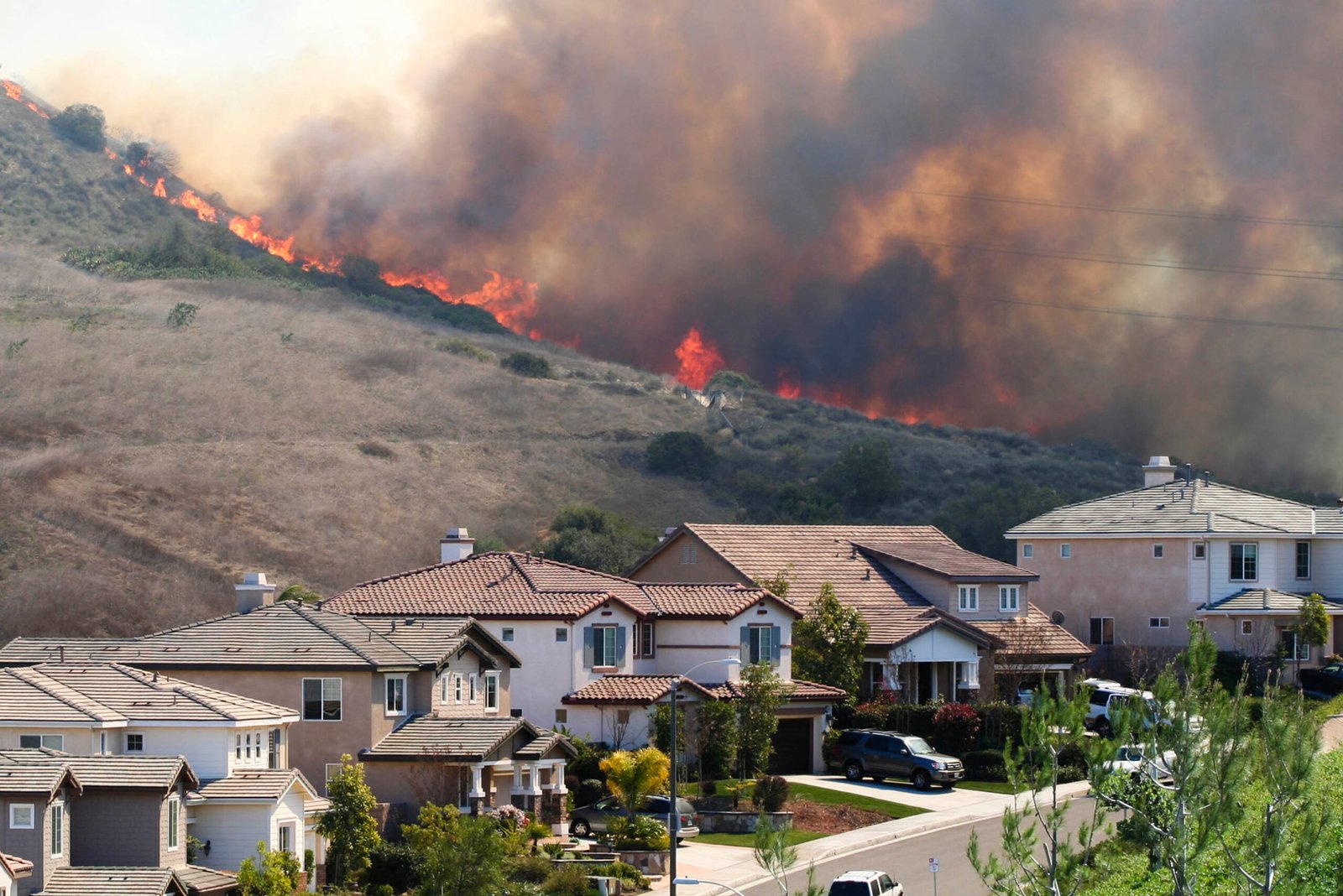
Wildfires are increasingly extending into the wildland-urban interface, where developed and undeveloped lands meet. The burning of a mixture of vegetation, structures and vehicles at the wildland-urban interface results in greater smoke complexity and potential toxicity for firefighters, who are already at increased risk for health issues and cancers.
Jeff Burgess, MD, MS, MPH, is a professor and director of the Center for Firefighter Health Collaborative Research at the Mel and Enid Zuckerman College of Public Health. His research focuses on improving occupational and environmental health and safety, working in partnership with firefighters and other public safety personnel, miners and Indigenous communities.
“With more firefighters battling fires in the wildland-urban interface due to new construction and climate change, we need to better understand their exposures and health effects so we can reduce risk as much as possible and keep our firefighters healthy,” said Jeff Burgess, MD, MS, MPH, professor of public health and director of the Center for Firefighter Health Collaborative Research, who will lead the study, “Wildland-Urban Interface Fire Exposures, Effects, and Interventions: A Collaborative Research-to-Action Partnership with Firefighters.”
Wood and biomass smoke contains known and suspect carcinogens, and smoke exposure is associated with increased cancer incidence in animal and human studies. Climate change is increasing wildfire risk in the United States. Since 2000, an average of 70,685 wildfires have burned an average of 7.1 million acres each year.
Prior studies about firefighters who respond to wildland-urban interface fires found prolonged dermal exposure and limited personal protective equipment, but there is a marked research gap regarding exposures, toxic effects and effective ways of reducing exposure.
Burgess and the research team will work with Los Angeles County Fire Department and Orange County Fire Authority firefighters who are enrolled in the Fire Fighter Cancer Cohort Study.
During the study, researchers will use silicone wristbands, pre- and post-exposure urinalysis, and changes in DNA to measure firefighter chemical exposures during wildland-urban interface responses and the toxic effects of those exposures. Exposure-reduction interventions selected by the fire service will also be evaluated, including more rapid reporting of exposure data, improved personal protective equipment and dermal decontamination, and administrative controls.
Participants in the Fire Fighter Cancer Cohort Study requested the research. Burgess, who is a member of the BIO5 Institute and the University of Arizona Cancer Center, says community-engaged research is essential to protecting firefighters because they know what is feasible, they are trusted by their fellow firefighters and communicate risks to them, they have the knowledge to identify and test interventions, and they can lead changes.
The community-engaged research should provide a more complete measure of the impact of wildland-urban interface fires directly benefit firefighters and inform overall public health responses.
“Dr. Burgess’ innovation and leadership in health research for firefighters has benefitted firefighters all over the world,” said Iman Hakim, MD, PhD, MPH, dean of the UArizona Zuckerman College of Public Health. “This research-to-action approach builds data that guides interventions to keep firefighters safer. It will make a big difference in health outcomes for these men and women who put their lives on the line to keep the rest of us safe from wildfires, and it is a great example of public health in action.”
The study will be conducted in partnership with firefighter research liaisons Derek Urwin, PhD, of UCLA and formerly of the Los Angeles County Fire Department; Capt. Jamie Gabriel of the Los Angeles County Fire Department; retired Capt. Jeff Hughes of the Orange County Professional Firefighters; and Capt. Derek Biering of the Orange County Fire Authority. Melissa Furlong, PhD, and Yiwen Liu, PhD, of the Zuckerman College of Public Health are co-investigators for the study. Additional university research partners include Jackie Goodrich, PhD, of the University of Michigan and Heather Stapleton, PhD, of Duke University.
This research is supported by the National Institute of Environmental Health Sciences, a division of the National Institutes of Health, under award number R01ES035965.
A community-led water-testing project made up of households that rely on private well water with high arsenic levels saw on average a 47 percent drop in participants’ urinary arsenic levels after filters were installed and a digital health program was implemented, according to a new study led by researchers at the Johns Hopkins Bloomberg School of Public Health.


ATLANTA — Trees and bushes planted near highways do more than improve the scenery. A new Georgia State University study finds they significantly reduce air pollution caused by motor vehicles, which has been linked to a host of illnesses.
Over two three-month periods, researchers sampled air quality at five sites along metro Atlanta interstates and highways. When compared to similar sites without vegetation, the researchers found a 37 percent reduction in soot and a 7 percent reduction in ultrafine particles at sites with natural or ornamental vegetation. The findings appear in the journal PLoS One.
“Trees and bushes near roadways don’t solve the problem of air pollution caused by motor vehicles, but they can help reduce the severity of the problem,” said lead author Roby Greenwald, associate professor in the GSU School of Public Health.
A growing body of evidence has linked motor vehicle pollution to conditions such as asthma, chronic bronchitis, lung cancer and heart attacks. Solutions to the problem of elevated pollution levels near roadways are urgently needed, Greenwald and his colleagues noted, because 45 million people in the United States live, work or attend school within 300 feet of a major highway.
Roadside vegetation reduces air pollution through several mechanisms, including by creating a large surface area onto which small particles adhere. The new study builds on previous research into the role that vegetation can play in reducing air pollution by sampling at several sites over an extended period and incorporating a model that allowed the researchers to account for factors such as wind direction, traffic volume and distance to the highway.
Greenwald emphasized that while roadside vegetation can significantly reduce particulate air pollution, it doesn’t reduce carbon dioxide emissions or ozone pollution. He said that to achieve a more comprehensive reduction in the health hazards associated with highways, municipalities can improve air quality by making it safe, pleasant and convenient for people to get where they need to go without a motor vehicle. Changes could include expanding public transportation and developing and improving bicycle and pedestrian infrastructure, for example.
“We should plant more trees along roadways because they provide benefits that go beyond aesthetics,” Greenwald said. “But I don’t want to give anyone the impression that we can solve all of the problems associated with motor vehicle emissions simply by planting trees.”
In addition to Greenwald, co-authors on the study are Jeremy Sarnat, associate professor at the Emory University Rollins School of Public Health, and Christina Fuller, associate professor at the University of Georgia College of Engineering.
Research in this news release was supported by the National Institute of Environmental Health Sciences of the National Institutes of Health under award number R21ES029252. The content is solely the responsibility of the authors and does not necessarily represent the official views of the National Institutes of Health.
– Story by Sam Fahmy, photo by Meg Buscema

An Emory University study published Feb. 15 in Nature Mental Health shows wildfires lead to an increase of anxiety-related emergency department visits in the western United States, amplifying the concerning parallel trajectory of two escalating public health crises — mental health and climate change.
The National Institutes of Health-funded study — conducted by researchers at Emory’s Rollins School of Public Health — is among the largest and most comprehensive research ever undertaken on the association between wildfire-related exposures and anxiety disorders.
Analyzing satellite-driven data and nearly 1.9 million emergency department visits across five states (California, Arizona, Nevada, Oregon and Utah) from 2007-18, the researchers showed wildfire smoke events — which is when wildfires become the main source of ambient pollution within a ZIP code — were associated with a 6.3% increase in mental health-related emergency department visits.
In addition to this startling data, the study shows:
“The scary thing about climate change is it doesn’t have a clear boundary; you fear a lot about the unknown. Now we can use the knowledge we’ve gained to tell people there is no need to panic. When you receive a wildfire smoke alert, close your windows, limit your outdoor activities and don’t panic. Those sorts of preventative measures can potentially benefit the entire population,” says study co-author Yang Liu, PhD, chair and Gangarosa Distinguished Professor in the Gangarosa Department of Environmental Health at Rollins.
“Mental health is one of the most prevalent health conditions in the U.S. and our study found multiple pathways between wildfires and an association with severe anxiety disorders. Many people are already dealing with some mild or moderate mental health symptoms. Now imagine they wake up and see the sky covered in smoke, they’re likely going to feel even more anxious,” says the study’s lead author Qingyang Zhu, PhD, a postdoctoral fellow in the Gangarosa Department of Environmental Health.
This research was supported by the National Institute of Environmental Health Sciences of the NIH (ES034175 and ES027892). The NIH has established an NIH Climate Change and Health Initiative to reduce health threats from climate change, including mental health.

![]()
An official website of the United States government
PubMed® comprises more than 40 million citations for biomedical literature from MEDLINE, life science journals, and online books. Citations may include links to full text content from PubMed Central and publisher web sites.
Feature updates and other PubMed highlights
September 29, 2026
There will be no change to the PubMed DTD for 2027. There are two upcoming changes to PubMed data that will take effect when the 2027 PubMed baseline is published.
September 24, 2026
Linked Discoveries™ is an experimental pilot resource developed by the National Library of Medicine (NLM) that helps users explore how articles with PubMed® abstracts connect to the surrounding literature.
April 16, 2026
PubMed’s New & Noteworthy RSS feed provides another way to stay up to date with the latest news published in the NLM Technical Bulletin for PubMed.
March 31, 2026
The article type filters in PubMed have been updated to reflect Annual MeSH Processing (AMP) updates to Publication Types, including discontinued publication types from the past several years.
The University of North Carolina at Chapel Hill utilizes numerous security controls. One of these security controls has flagged your request as malicious activity.
If you believe this is an error or would like additional information, contact the ITS Service Desk by reporting the issue on the Help Portal or calling them at 919-962-HELP. Provide the information below and ask that your request be directed to the ITS Digital Services group.

Researchers have linked a decade-long decline in the blood lead levels of American Indian adults to long-term cardiovascular health benefits, including reduced blood pressure levels and a reduction in a marker associated with hypertrophic cardiomyopathy and heart failure. The research team, supported by the National Institutes of Health, found that adults who had the greatest reductions in blood lead levels saw their systolic blood pressure fall by about 7 mm Hg, an amount comparable to the effects of blood pressure-lowering medication. Lead exposure is known to harm the health of children by damaging the brain and nervous system and slowing growth and development. It has also been associated with increased risks for heart disease in adults. The findings published in the Journal of the American Heart Association.
“This is a huge win for public health, especially since many American Indians can face higher risks for elevated lead levels,” said Anne E. Nigra, Ph.D., the senior study author and an assistant professor of environmental health sciences at Columbia University Mailman School of Public Health, New York City. “Compared to the general U.S. population, American Indian communities experience both a higher burden of cardiovascular disease and elevated metal exposure. We saw that even small decreases in a person’s blood lead levels can have meaningful health outcomes.”
Investigators partnered with 285 American Indian adults in the Strong Heart Family Study, an extension of the Strong Heart Study, the largest and longest study of cardiovascular health outcomes and risk factors among American Indian adults. Participants lived in one of four tribal communities in Arizona, Oklahoma, North Dakota, or South Dakota. The authors explained that features of the built environment can lead to elevated lead exposure in tribal communities. This includes being exposed to lead through well water, local waterways, foods, including canned goods, herbs, and spices, as well as paint and dust.
For this retrospective review, the researchers looked at blood lead levels and blood pressure readings over time. Lead was first measured in blood collected during a 1997-1999 study visit and again in blood collected during a follow-up visit between 2006-2009. During these visits, participants had their blood pressure taken and participated in medical exams that included echocardiographs, a test to assess the heart’s structure and function. To support equal comparisons among participants, researchers controlled for multiple factors, including social variables, including education and income, cardiovascular disease risks, and medical history.
At the start of the study, the average blood lead level was 2.04 µg/dL. Throughout the study, the average blood lead level fell by 0.67 µg/dL, or 33%. The most significant changes occurred in participants with average starting blood lead levels of 3.21 µg/dL and who experienced reductions of about 1.78 µg/dL, or 55%. This drop was linked to a 7 mm Hg reduction in systolic blood pressure.
Nigra and the study authors credit these improvements in large part to public health policies and efforts implemented in recent decades to reduced lead exposure through paint, gasoline, water, plumbing, and canned items. The decline in blood lead levels observed in the study are similar to those seen in the general U.S. population in recent years, but exposure to elevated levels of lead and other metals have been disproportionately higher among American Indians.
“This is a sign that policies and awareness and education campaigns in these communities to reduce blood lead levels are working,” said Mona Puggal, M.P.H., an epidemiologist in the Division of Cardiovascular Sciences at the National Heart, Lung, and Blood Institute (NHLBI). “The reductions in blood pressure are comparable to improvements one sees with lifestyle changes, such as getting 30 minutes of daily exercise, reducing salt intake, or losing weight.”
The investigators noted the importance of also conducting this research in other communities, especially for populations with elevated risks for lead exposure and cardiovascular disease.
“More research needs to be done to determine how environmental agents exacerbate cardiovascular and other diseases, and more needs to be done to improve the environmental health of American Indians,” said Lindsey A. Martin, Ph.D., a health science administrator at the National Institute of Environmental Health Sciences (NIEHS), also part of NIH.
This research was funded by NIEHS and NHLBI.
Study: Lieberman-Cribbin W, Li Z, Lewin M, Ruiz P, Jarrett JM, Cole SA, Kupsco A, O’Leary M, Pichler G, Shimbo D, Devereux RB, Umans JG, Navas-Acien A, Nigra AE. 2024. The contribution of declines in blood lead levels to reductions in blood pressure levels: longitudinal evidence in the Strong Heart Family Study. J Am Heart Assoc. doi: 10.1161/JAHA.123.031256. [Full Text]
About the National Heart, Lung, and Blood Institute (NHLBI): NHLBI is the global leader in conducting and supporting research in heart, lung, and blood diseases and sleep disorders that advances scientific knowledge, improves public health, and saves lives. For more information, visit www.nhlbi.nih.gov.