Author: admin

  • Design for understanding: Lessons from the NHS Healthy Choices Quiz

    Adeline describes the lessons learned from the design process of the NHS Healthy Choices Quiz.

    As part of the NHS 10 Year Health Plan, greater emphasis is being placed on prevention and helping people feel more able to improve their own health. Supporting people to build healthier habits in their daily lives could reduce preventable ill health and, over time, ease demand on NHS services.

    The NHS Healthy Choices Quiz is a web-based tool that helps people reflect on 6 areas of their lifestyle: eating, drinking, physical activity, smoking or vaping, mental health and sleep. It provides a personalised score, tailored advice and links to relevant NHS apps, tools and resources, helping people identify a realistic next step towards healthier habits.

    The challenge was not simply a lack of knowledge. Most people already understand what healthier choices look like, yet 83% of adults aged 40 to 60 in 2014 had at least one of 3 major lifestyle risk factors: drinking above recommended guidelines, physical activity, or being overweight or obese. Research with the target audience suggested that healthier living can feel overwhelming or out of reach, and that some people are sceptical about whether digital tools can help someone like them. The opportunity was therefore to create a simple, personalised first step that made healthier change feel achievable.

  • STAT+: AI doomerism: Here’s how to make sense of it

    STAT+: AI doomerism: Here’s how to make sense of it

    This is the web edition of STAT’s AI Prognosis newsletter, our guide to artificial intelligence in health care and medicine. Sign up to get it delivered in your inbox every Wednesday. 

    *Bernie Sanders voice* I am once again asking you to … forward this email to a friend! Non-subscribers can now sign up to get (a truncated version of) AI Prognosis. Tell ya buddies and coworkers!

    Also, tell your buddies about this essay from our new trust-in-science reporter, Nick Florko. Faced with health problems, he’s tried diets, supplements, and peptides — he understands the allure of non-scientifically backed treatments, and wants to listen to skeptics as he writes about doubt, misinformation, and distrust.

    Making sense of AI doomerism

    Over the last couple weeks, the fervor about whether AI will kill us all and needs to be slowed has continued on at a rolling boil.

    At STAT, we’ve discussed whether we need to write about it. But I have qualms: Firstly, the kind of nefarious AI that could potentially lead to human extinction is so far removed from still-error-prone health care AI that it’s almost impossible to talk about both at the same time.

    Then: Is this all marketing, as Anthropic and OpenAI prepare to go public? Are all of the recently disclosed AI safety incidents actually just examples of AI companies’ basic incompetence at cybersecurity and infrastructure skills, packaged to make the AI look impossibly smart?

    And then there’s the matter of finding someone who knows enough about AI to talk about it knowledgeably, but who also doesn’t have any incentive to frame it one way or another. (More on that in the next section.)

    In today’s issue, I’ll refer you to a few good reads in a few different areas (general AI, health care, and biology) to help make sense of this.

    STAT+ Exclusive Story

    Already have an account? Log in

    STAT+

    STAT+

    This article is exclusive to STAT+ subscribers

    Unlock this article — plus in-depth analysis, newsletters, premium events, and news alerts.

    Already have an account? Log in

    View All Plans

    To read the rest of this story subscribe to STAT+.

    Subscribe

  • STAT+: UnitedHealth, CVS push back on Medicare plan to curb remote patient monitoring

    STAT+: UnitedHealth, CVS push back on Medicare plan to curb remote patient monitoring

    Mario covers technology in health care, including FDA regulation of artificial intelligence; how Medicare pays for health tech; the use of AI in clinical care; mental health chatbots; and consumer wearables. He’s also the co-author of the free, twice weekly STAT Health Tech newsletter. You can reach Mario on Signal at mariojoze.13.

    Major insurers are pushing back on a Medicare proposal that would significantly disrupt how many doctors bill for tracking the health of patients using devices like connected blood pressure cuffs, scales, and blood glucose meters. These remote monitoring services help patients manage a range of medical conditions, including hypertension, diabetes, and heart failure.

    UnitedHealth Group, CVS Health, and Kaiser Permanente all wrote letters to the Centers for Medicare and Medicaid Services opposing a proposal that would require that remote patient monitoring care be delivered by direct employees of the practice that is billing for them — effectively banning providers from using contractors for the care. All of these groups operate both insurers and care organizations.

    The opposition from UnitedHealth Group is notable in particular because the company’s insurance subsidiary, UnitedHealthcare, recently attempted to stop paying for most remote patient monitoring “due to insufficient evidence of efficacy.”

    STAT+ Exclusive Story

    Already have an account? Log in

    STAT+

    STAT+

    This article is exclusive to STAT+ subscribers

    Unlock this article — and get additional analysis of the technologies disrupting health care — by subscribing to STAT+.

    Already have an account? Log in

    View All Plans

    To read the rest of this story subscribe to STAT+.

    Subscribe

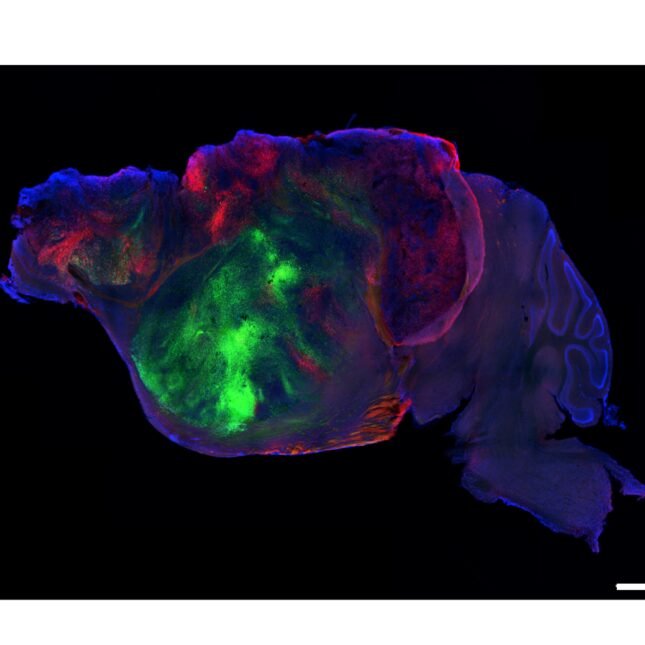
  • STAT+: Scientists made mice with half a brain. Then they filled them with human organoids

    STAT+: Scientists made mice with half a brain. Then they filled them with human organoids

    For the last decade, scientists have been steadily getting better at growing “cerebral organoids,”  miniature, three-dimensional brain-like structures, from human stem cells in the lab. Now, a group from Stanford University has found a way to advance their usefulness for studying brain development and disease — by instead growing them inside mice that have had large parts of their own brains genetically removed. 

    Neuroscientists say these “neuro-chimeric” mice, whose brains are half-human — by volume, not by number of neurons — are an important innovation for a field hampered by longstanding challenges in accessing human brain tissue for research. But such models also raise a host of ethical questions that will get thornier the more advanced they become. 

    In a study published Wednesday in Nature, the Stanford team reported finding types of human cells inside the brains of 3-month-old chimeric mouse pups that are very hard to obtain in a dish. They included pyramidal projection neurons that had wound their way into some of the animals’ spinal cords. The scientists also found evidence of specialized, super-sized neurons involved in social cognition only found in large-brain mammals like elephants, whales, and primates, including humans. 

    STAT+ Exclusive Story

    Already have an account? Log in

    STAT+

    STAT+

    This article is exclusive to STAT+ subscribers

    Unlock this article — plus in-depth analysis, newsletters, premium events, and news alerts.

    Already have an account? Log in

    View All Plans

    To read the rest of this story subscribe to STAT+.

    Subscribe

  • NLM Launches Semantic Precision for AI Retrieval of Knowledge (SPARK) Challenges

    NLM Launches Semantic Precision for AI Retrieval of Knowledge (SPARK) Challenges

    The National Library of Medicine (NLM) is pleased to announce the launch of the Semantic Precision for AI Retrieval of Knowledge (SPARK) Challenges. Engineers, data scientists, researchers, startups, and non-profits are invited to build AI systems that improve biomedical literature and clinical research data discovery across PubMed/PMC (35 million-plus citations) and dbGaP.

    The SPARK challenge spans four tracks and is open to the public, industry, and academia. NLM is offering a combined $500,000 prize pool across both competitions.

    Learn more about the dbGaP and PubMed/PMC challenges.

    [Editor’s note: Added hyperlinks to the individual challenge webpages.]

  • Judge blocks Trump administration plans to limit visa length for grad students, postdocs

    Judge blocks Trump administration plans to limit visa length for grad students, postdocs

    A federal judge on Monday issued a preliminary injunction blocking the Trump administration from upending a long-standing policy that allows foreign students and scholars to stay in the U.S. for the duration of their training, a decision that suggests that plaintiffs opposed to the policy change are likely to ultimately succeed.

    The ruling halts plans by the Department of Homeland Security to place a four-year cap on the kinds of visas used by graduate students and postdoctoral researchers while a judge hears full arguments in a lawsuit over the new policy. Experts warn the outcome of the case could have a dramatic impact on the nation’s biomedical preeminence given that international researchers make up a large share of the U.S. life science workforce. The new policy had been set to take effect on Tuesday. 

    In his ruling, Judge F. Dennis Saylor IV of the U.S. District Court for the District of Massachusetts wrote that “the promulgation of the rule clearly failed to comply with the [Administrative Procedure Act].” Saylor added that the administration’s argument that the new visa policy is needed to safeguard national security was weak and “raises legitimate questions as to whether its real purpose is not to safeguard national security and protect our borders, but to achieve other, undisclosed, goals — such as, for example, asserting greater government control over academic institutions.” 

    While Saylor said that the plaintiffs have a “substantial likelihood of success” in the case, he declined to issue a summary judgment definitively striking down the DHS rule.

    In a Sept. 3 hearing, an attorney for the coalition of academic groups that challenged the visa restrictions, Paul Hughes from the firm McDermott, Will & Schulte, argued the government did not conduct a sufficient analysis of the fallout of the new policy. Without a delay in its implementation or throwing out the change, he said schools would experience “irreparable harm.” 

    Michael Celone, a Department of Justice lawyer, in turn, argued that the government had done its due diligence and that the plaintiffs had not demonstrated tangible harm that would result from the policy. Celone said students who are impacted by the policy could either apply for extensions or easily apply elsewhere, comparing students choosing schools to taking a book out of the library. 

    Saylor seemed skeptical of the government’s reasoning, questioning how the policy would diminish any national security risks posed by international students. “I am struggling to see any real, rational connection between national security issues identified, which is not even half of a dozen incidents over 50 years, and this change,” he said to Celone during the hearing. 

    The judge also took issue with the relatively short time the policy was open for public comments: “Can I say it’s illegal? Probably not. But it is part of the mix here to what extent the government was taking its duty seriously in weighing costs and benefits.”

    Academic groups, including the nonprofit NAFSA: Association of International Educators and the Presidents’ Alliance on Higher Education and Immigration, have joined the suit. DHS; Markwayne Mullin, secretary of the department; U.S. Immigration and Customs Enforcement; and David Venturella, acting director of ICE, are named as defendants.

    The case centers around a long-standing policy known as duration of status, which for more than 40 years has allowed international students and scholars to remain in the U.S. for however long it took them to complete their training. 

    The federal government implemented the policy in 1979 to streamline international students’ admission into the country. But the Trump administration has argued duration of status has led to the creation of “forever students,” whom they allege cheat the system by perpetually enrolling in courses to avoid leaving the U.S.

    In mid-July, DHS announced that, going forward, foreign students and postdocs won’t be allowed to stay in the U.S. for more than four years on nonimmigrant visas unless they apply for and receive an extension. Students and postdocs already in the U.S. wouldn’t need to apply for extensions if their training will end before September 2030.

    But in a suit filed in mid-August, the academic groups alleged that the new rules violate the Administrative Procedure Act, a law that governs how agencies implement new regulations. The plaintiffs alleged that DHS didn’t give interested parties enough time to comment on the new rule, didn’t respond substantively to comments, and hasn’t clearly explained why the new policy is a rational and necessary response to alleged visa fraud.

    The academic coalition warned in the suit that uncertainty around whether foreign researchers will be able to stay in the U.S. for the length of their training could prevent them from coming here in the first place. A NAFSA poll of more than 1,000 current students and postdocs found that nearly half of them would not have come to the U.S. under a fixed period of admission.

    In its response, the Trump administration dismissed the findings of the poll as “uncertain and speculative.” The government also argued that the new rule was necessary to safeguard national security and would have minimal downside, and that if international enrollment does decline, it could be for reasons unrelated to the end of duration of status.

    International researchers make up nearly a quarter of life science Ph.D. graduates and around 60% of postdoctoral researchers. The new policy would mean many of them would need to apply for a visa extension; the average biomedical Ph.D. takes five to six years to complete, and National Science Foundation data indicate that about a fifth of postdocs have worked in that role for more than six years.

    STAT’s coverage of the federal government’s impact on the biomedical workforce is supported by a grant from the Dana Foundation and the Boston Foundation. Our financial supporters are not involved in any decisions about our journalism.

  • Platinum-based chemotherapy in childhood causes mutations that age the liver

    Platinum-based chemotherapy in childhood causes mutations that age the liver

    Platinum-based chemotherapy — in particular cisplatin and carboplatin — are a lifeline for children with certain cancers. These treatments, for instance, transformed the prognosis of hepatoblastoma, a rare cancer of the liver that is the most commonly diagnosed in childhood, from a five-year survival rate of 20% to more than 80% for localized tumors. 

    However, these medications work by damaging the DNA of cancer cells, and they are also known to cause mutations in the DNA of healthy cells, potentially raising the risk of new cancers later in life. The mutations have been documented in adults, but the picture is less clear when it comes to children. A new study published Thursday in Science sought a clearer understanding of the long-term impact of platinum agents in children treated for hepatoblastoma. 

    The study looked at children who had received platinum therapy followed by surgery to remove the tumor. The researchers sampled tissues from the liver — both healthy and cancerous — and the patient’s blood, analyzing them through a sophisticated DNA sequencing technique called NanoSeq. 

    They then compared the sequencing results to those from children who had been treated with different drugs, or had not been treated prior to surgery, as well as to fetal liver tissue. They found that being exposed to platinum agents led to hundreds of mutations in genes (on average 2,200 per liver sample), a burden of mutation usually found in adult livers. In other words, platinum aged the liver cells of treated children, making them look more like adult liver cells.

    Mutation load also increased proportionally to platinum exposure: children who received only cisplatin had a smaller number of mutations than those who received both cisplatin and carboplatin. These mutations could increase the likelihood of liver pathologies, or the emergence of secondary tumors, the authors said. 

    “We found lots of cancer genes but also genes associated with long-term changes in liver metabolism,” said Foad Rouhani, one of the authors of the paper and a professor at King’s College in London. However, he stressed that “by no means does that mean that these cells will definitely become cancerous in time. All we talk about is there was evidence for potential for these cells to eventually cause problems further down the line.” 

    Liver cells showed many more mutations than blood cells, even though chemotherapy is a systemic treatment. “The platinum is doing something differently to liver cells than other cells. Either it’s been metabolized differently or the liver cells are repairing differently, we don’t really know yet,” said Rouhani. This could mean that the liver was more susceptible to the effects of platinum, or it could be the other way around: The extent of the mutations may explain why that liver got sick in the first place. 

    In a perspective article, Sanjeev Vasudevan and Donald Williams Parsons, both professors at Baylor College of Medicine in Houston, wrote that the findings “provide strong evidence for conducting survivorship studies of children that have undergone treatment for liver cancer beyond their third decade of life.”

    For the study authors, its primary contribution lies in establishing that the damage occurs, so clinicians can monitor these patients more closely during their lifetimes, said Rouhani, and identify issues at an earlier stage. 

    But there could be a prospective impact on treatment. “If we understand the mechanism, can we then eventually be able to design next-generation chemotherapies which are highly effective at treating the cancer but actually leave the background tissue largely untouched?” said Rouhani.

  • Why linking data effectively is crucial for analysing clinical trial outcomes

    Professor Matthew Sydes, Head of Data-Driven Clinical Trials and Cohorts at NHS England is co-author of new research, which finds that ensuring researchers can analyse data as though it were held in a single location is a key step to faster and more efficient clinical trials. He explains why it is important for the NHS Research Secure Data Environment Network to work towards the expansion of innovative techniques and technologies.

  • How we’re protecting the NHS from cyber threats 24/7

    James Hutton explains how we protect critical NHS services by monitoring for cyber threats 24 hours a day, 7 days a week.

    Every day, cyber criminals are targeting NHS systems that hold some of our most sensitive data – patient records, medical histories, and critical care systems. That’s why the Cyber Security Operations Centre (CSOC) runs protective monitoring across the NHS around the clock, watching for threats that could put patient care at risk.

    We see the CSOC as the digital shield to national services. We protect more than 37 million NHS App users and safeguard the integrity of around 60,000 NHS 111 calls every day, ensuring trust, resilience, and uninterrupted care at national scale.

  • Protecting the NHS from cyber threats: Intelligence at the frontline

    Dan Taylor explores our vital role in protecting healthcare services from increasingly sophisticated cyber threats.

    In the digital landscape of modern healthcare, cyber criminals lurk in the shadows, waiting to strike at the heart of our most vital services. As someone who leads the fight against these threats from within NHS England’s Cyber Security Operations Centre (CSOC), I’ve seen first-hand how cyber threats have evolved – and why every single person working in the NHS has become both a potential target and our greatest defence.