Health systems are under pressure to improve patient outcomes while managing staffing shortages and rising costs. Healthleap, a clinical AI platform which works within the EHR to screen hospitalized patients for conditions that might otherwise go undiagnosed and untreated – such as malnutrition – is supporting hospitals in finding at-risk patients sooner.
The San Francisco-based company announced last week that it has secured $38 million in combined seed and Series A funding from Sequoia Capital, First Round Capital, and Hummingbird Ventures. The company plans to use the funds to expand its screening technology to more conditions, including congestive heart failure, aspiration pneumonia, delirium, pressure ulcers, and certain hospital-acquired infections.
“Every week, millions of patients leave hospitals with unresolved health conditions that will erode their health and cost up to 10x more to treat late,” said Healthleap CEO Josiah Meyer in a news release. “Finding them now is prevention, and it’s a win for everyone. Patients get treated before they get sicker.”
Healthleap’s platform is currently used by more than 50 hospitals, including Penn Medicine, Houston Methodist, Cedars-Sinai, Emory and UMass Memorial. Its current focus is malnutrition, which can often go unnoticed and worsen patient outcomes.
“The model uses weight, body mass index, lab results, diagnoses, medications, intake and output, nutrition orders, and vitals,” said co-founder and clinician Jemima Meyer in an email. “The AI system combines all of these signals into one priority score from 0 to 10 for each patient. A second column shows whether the patient’s risk changed since the last assessment. Dietitians see both columns in their existing EHR worklist every morning. The dietitians sort the list and start with the highest-risk patients.”
Healthleap’s technology screens every adult inpatient daily. Typical malnutrition screening relies on a manual process conducted by the admitting nurse or an in-hospital dietitian. Patients who are confused, intubated, or critically ill are often unable to answer, putting them at particular risk for being missed. The company’s website claims that its model showed 88% higher sensitivity than the nursing screening, linking to a peer-reviewed study which backs that number. Each severe malnutrition diagnosis and treatment supports improved patient outcomes and, according to Healthleap, allows hospitals to claim around $11,000 in reimbursement. Each patient flagged had a 1.6-day shorter average hospital stay, according to Jemima Meyer.
As Healthleap expands into screening for additional conditions, each must first undergo further clinical validation, with a focus on smoothly integrating into provider workflows.
“Every condition runs on the same nightly chart review and the same EHR connection”, she said. “Healthleap does not send interruptive alerts. Physicians and nurses see no pop-ups. The score appears as a column in a worklist that the care team already uses.”
Healthleap wants to turn earlier risk detection into better patient care – their next challenge is expanding the results achieved with their malnutrition screening platform across a broader range of conditions.
Imagine an agentic AI solution that plans and executes multi-step tasks like triaging referrals, drafting notes, flagging deteriorating patients, and surfacing care recommendations. After the flawless demo, the committee approves what is supposed to be the answer to operational inefficiencies in healthcare. Fast forward six months: the system formally operates, but it no longer influences any real clinical decisions.
Many hospitals are now trying to use AI to automate processes and free up staff time, running simultaneous pilots to perform as many tasks as possible. This quickly leads to pilot sprawl — a state where organizations can no longer even say which agents are still in active use.
As one widely cited MIT analysis has shown, 95% of enterprise AI pilots fail to deliver measurable ROI, and I would add that they fail predictably. From my experience, I would distinguish the four most common scenarios:
The Big Bang: an attempt at a long, all-department transformation, so by the time anything goes live, the requirements have already changed, and the budget was spent before a single user has seen value.
Pilot Purgatory: a project that looks impressive in a controlled environment (demo) but cannot pass the reality check, working with human users, actual workflows, and unexpected interruptions.
Technology-First: the platform gets built before the problem it should solve is clearly defined, so the team ends up searching for at least some use case after the investment is already made.
Governance Paralysis: long months spent designing the perfect oversight model while the initiative quietly loses momentum, ownership, and executive support.
In fact, all four scenarios share the same fundamental mistake: the system is designed to look intelligent, convincing, even flashy, but not as one you can trust in a real healthcare workflow.
What especially shines in a demo often arrives as opaque in practice. Each new agent and each additional step creates another space where something can go wrong.
An annoying glitch in a consumer app translates to delayed critical care or missed clinical alerts in a hospital. The human is never genuinely in the loop, so staff make the safest and most obvious decision and stop using the system they cannot fully rely on.
Even if the model is robust, an agent operating outside the chart creates too much friction for daily use. Recently, Jonathan Bush argued in MedCity News that orchestration layers must be built above the EHR. While his diagnosis of EHR limitations is spot on, the proposed solution misses the reality of clinical workflows. An agent must live directly inside the patient chart via standard integrations. If it exists as a separate overlay, it will simply be abandoned.
After a decade of working on EHR and HL7 FHIR integration projects, I see this exact friction more often than almost any model problem. For example, the clinician has to leave the record, open a second tool, and then come back just to act on the recommendation. A strong triage engine can be abandoned for exactly that reason.
How do we handle all these issues? The fix is not a better model, but the right sequence. First comes assessment, then the pilot, then change management, and only then scaling. Between these phases there must be a real decision gate, and you should be ready to stop if there is no good reason to go further.
Assessment: The assessment should be brief — about four weeks. We need it to reduce risks before building anything. The potential use cases must be evaluated based on such criteria as value, feasibility, and personal relevance. Value shows the return you get. Feasibility shows whether it is achievable with the available data and infrastructure. And personal relevance is about whether the solution is useful to a particular person in their daily work. If the assessment is honest, the result is a readiness scorecard and a go/no-go call before the money is spent.
Pilot: It is not just a slideshow, but a real demonstrator that works with real users and real data in production, typically over twelve weeks. To pass the reality check and avoid getting lost in pilot purgatory, it must do one clearly defined and practical thing. If you cannot explain to a floor nurse in one sentence what exactly this AI agent does, you do not have one project but several. And this agent must surface in the chart clinicians already work in, not in a separate tool they have to open and use on its own. The system’s rationale must be clear — the specialist using it must understand why a particular case or patient surfaced. And of course, the human must be in the loop, not for show. The system can work and make sense only when the agent surfaces recommendations while a specialist makes the final clinical decision. On one documentation project built this way, follow-up documentation time fell by about a third and compliance with scheduled check-ins doubled. This aligns with broader industry validation; for instance, the AHA Market Scan noted a comparable 27% reduction in documentation time at Intermountain Health.
Change Management : Change management is probably the most underrated step that many teams skip. If no one wants to use the agent, it doesn’t matter how technically excellent it is. So, before you scale, you need not only to train the team how to use the solution, but also build it into daily processes and see whether it has actually caught on. You can see it in very simple signals — how often a nurse accepts or declines a suggestion and what share of recommendations she opens versus ignores. Those metrics are both proof of adoption and a map of what still needs improvement.
Scale: Finally, it makes sense to talk about scaling. And not because “everyone liked the pilot,” but because it met specific predefined criteria and showed real results, such as time saved per shift, error rate, and task compliance. If something is still missing in the pilot, you iterate or stop. If the demonstrator clears the bar, you earn a slightly broader next scope, one use case at a time. That’s how you can see value by week twelve, rather than postponing it for a year and a half. Evidence first, hype never. Federal transparency rules, such as the HTI-1 final rule, are already moving this way by demanding strict algorithm transparency in certified health IT.
In healthcare, the systems that scale are not the most ambitious ones, but the ones that are easiest to trust, govern, and use in real workflows.
The agents that succeed tend to do one narrow task clearly, visibly, and with a human still making the decision.
And the hospitals that will pull ahead over the next couple of years are not the ones running the most impressive pilots. They are the ones running the fewest — and finishing them.
Mykhailo Hentosh is Head of Engineering and Solutions at Binariks, where he sets the technical direction for complex software programs in healthcare and AI. A software architect and solution designer with nearly two decades in the field, he is a core member of the company’s AI Center of Excellence. Much of his career has been spent on enterprise healthcare platforms, EHR and HL7 FHIR interoperability, and AI deployments that have to hold up in real clinical workflows. He is known for cutting through hype toward systems that make a measurable difference, and for challenging conventional thinking when the evidence does not support it.
This post appears through the MedCity Influencers program. Anyone can publish their perspective on business and innovation in healthcare on MedCity News through MedCity Influencers. Click here to find out how.
The pitch behind California’s billionaire tax proposal is simple: Tax the richest residents in the nation’s wealthiest state to offset steep federal cuts to healthcare, food assistance, and education.
But if approved by voters in November, it’s unclear how much money the ballot initiative would raise, how quickly the funding would become available, and how lawmakers would spend it.
The measure would steer proceeds from a first-in-the-nation wealth tax to a state healthcare fund, giving the governor and lawmakers the power to decide how to spend what California’s nonpartisan legislative analyst estimated would be “tens of billions of dollars.” Backers say it could raise up to $100 billion over five years to keep hospitals and emergency rooms open and preserve insurance coverage for millions of Californians. Yet, community health centers, doctors, and other healthcare entities that might benefit from such a cash infusion argue that the union spearheading the measure has readied a blank check for politicians.
“I’m not sure that you can say, with full security, that this will stop clinics from being closed or healthcare workers from being laid off, or people from losing their healthcare,” said Chris Hoene, executive director of the California Budget & Policy Center, a left-leaning nonprofit.
Taxing the Ultrarich
Put on the ballot by one of California’s largest healthcare unions, Proposition 40 would impose a one-time 5% tax on roughly 200 Californians with a net worth of at least $1 billion, including most of their stock holdings, yachts, and artwork. It would apply to those who were residents of California on Jan. 1, 2026. Real estate, pensions, and retirement accounts would generally be exempt.
The revenue raised is intended to offset the roughly $30 billion a year in anticipated losses to the Golden State from congressional Republicans’ One Big Beautiful Bill Act. Over the next four years, state and federal funding cuts are projected to nearly double California’s uninsured population, which stands at about 2.4 million people, according to the University of California-Berkeley Labor Center.
Securing additional tax revenue is essential because state lawmakers have yet to come up with a way to pay for healthcare services that will be affected by the cuts, said Dave Regan, president of Service Employees International Union-United Healthcare Workers West, which represents hospital workers and got the wealth tax on the ballot. It would earmark 90% of the tax revenue for healthcare, while the remaining 10% would be split between food assistance and education at lawmakers’ discretion. Regan said such broad categories would give politicians flexibility to be more responsive to the looming cuts.
“Figuring out or predicting exactly what the fallout will be, of where reductions and cuts get made, in a complicated healthcare system, it’s just too difficult to predict,” Regan said.
Among the choices the next governor and lawmakers will face are whether to provide healthcare to people cut off by the new federal Medicaid work requirements, reverse state rollbacks limiting coverage for immigrants with legal status, or raise the low physician reimbursement rates that make some providers reluctant to accept patients enrolled in Medi-Cal, the state’s version of Medicaid.
Lawmakers could also shore up subsidies on Covered California, the state’s health insurance marketplace, whose enrollees have seen their premiums skyrocket after losing millions in federal assistance after Congress last year let enhanced subsides expire.
Most of the money must be spent on health, but healthcare experts said the measure’s ambiguous language could allow lawmakers to use the new billionaire health fund to replace existing state dollars, contrary to the text of the proposition.
“A lot of times these propositions are written in a way to get attention and get support,” said Glenn Melnick, a healthcare economist at the University of Southern California. “But in fact, they can be used for other things later.”
Instead, the healthcare industry is pushing for a long-term funding plan. René Bravo, a pediatrician in San Luis Obispo County and the president of the California Medical Association, worries that a one-time infusion of tax dollars “is going to run out.”
“We need to work on a more sustainable, durable funding mechanism for the Medi-Cal system,” he said.
At the same time, doctors are asking him what will happen when the biggest Medi-Cal eligibility cuts begin to take effect next year. Even if voters approve the ballot measure, the money wouldn’t be available for at least a few months while the state collects the tax. And billionaires could spread their payments over five years.
Californians Divided
Pasadena resident Lynne Wines, a 72-year-old retired banker, knows the state needs the money. But she worries that wealthy investors will see the measure as a precedent and flee the state. Even though the ballot measure is clear that it’s a one-time tax, Wines said it’s a slippery slope.
“Taxes have a way of being needed over and over, and politicians have a way of finding those needs,” Wines said. “So, I don’t really feel secure that this is just a one-time thing.”
She noted that Google co-founder and billionaire Sergey Brin bought a home in Nevada and moved some of his businesses to the Silver State late last year. He is backing ad campaigns opposing the measure. Brin has given more than $100 million to a nonprofit promoting two competing measures, Propositions 41 and 42, designed to blunt or block it, according to contributions filed with the secretary of state’s office. One would count some new state taxes toward California’s overall spending limit and require the state auditor to review new state tax proposals before voters weigh in. The other would prohibit new state taxes on personal property, intellectual property, retirement accounts, and other assets.
GOP gubernatorial candidate Steve Hilton, who has been endorsed by President Donald Trump, warned on CNN in June that just the threat of the tax “has sent trillions of dollars, by some estimates, of wealth leaving the state.” A March study by the conservative Hoover Institution at Stanford University projected that the billionaire tax would cost California $25 billion, citing, in part, the lost revenue from billionaires who have already left the state.
California voters appear torn over departing billionaires. Two independent September polls suggested voter support for Proposition 40 varied from a low of 45% to a high of 52%.
Pasadena resident Steve Erler, 74, works full-time as a building manager because he can’t afford to retire. He worries that federal cuts will hurt children and seniors.
Steve Erler of Pasadena, California, works full-time as a building manager because he can’t afford to retire. He worries that federal cuts will hurt children and seniors, and he supports a California ballot measure that would tax billionaires. (Jackie Fortiér/KFF Health News)
“These people who are making all this money, they can never spend it all. What are they going to do, buy another house in the Hamptons, buy another jet? They don’t need that,” Erler said while out walking his dog in August. “They need to be able to say when they go to bed at night, ‘I helped a child with healthcare. I helped a senior get fed.’ That’s what’s important,” he said.
Democrats are divided — one of many ideological fights playing out nationwide this election cycle as progressives take on more centrist candidates. U.S. Sen. Bernie Sanders (I-Vt.) and the California Democratic Party have endorsed Proposition 40, while Gov. Gavin Newsom, who is exploring a presidential bid, and Democratic gubernatorial nominee Xavier Becerra oppose it while saying that ultrawealthy or high-earning people should pay more. “It’s time for an economic reset, a true minimum tax on billionaires that, well, ensures the people at the very top pay at least the tax rate their own workers pay,” said Newsom, who supports a federal wealth tax, although legislation for a federal wealth tax in Congress has stalled.
If voters approve the ballot measure, political analysts said, it could show other states that taxing the wealthy may help close budget gaps and pay for essential services. Already several Democratic states, including Hawai‘i, Maine, Massachusetts, and Rhode Island, have approved millionaire taxes, but those have been limited to income, not overall wealth. Voters in Washington state will decide this fall whether to keep their millionaire tax.
“I do think this is just the beginning of these proposals nationwide,” said Melnick, the USC healthcare economist.
Influential lobbying groups for doctors and hospitals, a health insurer, technology companies, and representatives from state governments met behind closed doors in Washington, D.C., in early October to develop guidelines for how to regulate artificial intelligence in the practice of medicine.
Executives from the American Medical Association, American Hospital Association, artificial intelligence giant Anthropic, and insurer Elevance Health are part of a 22 member AI workgroup convened by the Federation of State Medical Boards, or FSMB, a national organization that advocates for state boards. A spokesman said the workgroup “was built to balance expertise across medical regulation, AI development, care delivery, academic medicine, state AI policy, and patient safety,” and that its recommendations would be open for feedback before being formally adopted.
The discussions within workgroup meetings are being kept confidential, but the goal is to draft guidelines to aid local medical boards, with “particular attention … to AI tools that perform clinical functions with limited or no direct physician supervision,” Humayun Chaudhry, the FSMB’s president and CEO, told STAT. A draft of the recommendations could be made public in “weeks to months,” said Chaudhry. They could ultimately form the basis of legislation in states, which individually regulate medical licensure and the practice of medicine.
The career of Anthony Philippakis has tracked with the evolution of molecular medicine. The cardiologist started medical school in 2001, one year after the first draft of the human genome was published. As a PhD student, he studied human genetics. At GV, where Philippakis is currently a general partner, he played a key role in the firm’s investment in Foundation Medicine, a precision medicine company that provides cancer tests and analyzes tumor samples, identifying genetic mutations that inform treatment decisions.
“My professional career has been following the genome wherever it leads,” he said.
Philippakis’s journey in genetics has reached its next stop. He’s the co-founder and CEO of Arboretum LifeSciences, a startup firmly planted in both diagnostics and drug development. The company is now out of stealth with a handful of partnerships and the ambition to leverage its genomic analyses into alliances with pharmaceutical companies, each side of its business working toward the shared goal of developing new medicines for common diseases. The Cambridge, Massachusetts-based company has raised $30 million in new funding to execute that mission.
Arboretum is a molecular information company, a concept that Philippakis said goes back to an idea from Foundation Medicine. While a molecular diagnostics company only does diagnostics, a molecular information company does diagnostics and then uses the data generated from those tests to develop therapies, he explained. This concept first took root in cancer, where it’s easier to identify a particular genetic mutation as the driver of the disease — matching a drug to that genetic signature is fairly straightforward. But in a more common conditions like heart disease, there’s usually no single disease driver. To address such diseases, scientists need genetic approaches that define patients based on many variants rather than a single one.
Arboretum supplies whole genome sequencing tests that support precision medicine programs at health systems. The company then analyzes data from those tests, using the analyses to guide drug development. The startup’s business model would not have been possible years ago, said Clare Bernard, Arboretum’s president. Alongside the rise of AI capabilities, the cost of genome sequencing has come down, making it easier to sequence larger numbers of patients, she explained. There’s also a growing number of indications where genetic testing is clinically indicated and payer reimbursed.
Arboretum’s analysis yields a risk score indicating genetic predisposition to a particular disease. Bernard said these scores allow the company to identify disease targets as well as patients who could be a match to a clinical trial. These data can also help Arboretum design a clinical trial or match patients to a trial. These data can become the basis of partnerships with pharmaceutical companies, guiding their drug research. In these instances, Arboretum is not acting as a technology vendor. Philippakis said these deals involve risk sharing where the startup gets some of the financial upside if its analysis leads to a successful drug.
“When we find one of those opportunities, either we approach a pharmaceutical company and say, ‘You’re developing a drug, we have insight on how to run a smarter trial,’ and do a partnership,” Philippakis said. “Alternatively, there might be an early-stage molecule somewhere in the world where we say, oh, let’s go in-license it because we have a differentiated insight on the development.”
Arboretum aims to form startups around in-licensed assets. These startups would incubate within Arboretum. Philippakis said his company has “a number of active discussions” and he expects to have more to share in 2027.
The alliances that are public are with health systems. Advocate Health, Geisinger, Providence Healthcare, and Cardiovascular Associates of America are all partners with Arboretum, using the startup’s genetic tests and creating longitudinal molecular registries. The startup also recently started sequencing its first patients in the United Kingdom, and Philippakis said the company aims to grow internationally.
From the patient perspective, the patient’s doctor would order the Arboretum test, Bernard said. That could be an oncologist or a cardiologist. In some cases, it’s a primary care physician. The test is a simple cheek swab that can be done at a clinical site. Alternatively, a kit can be sent to the patient’s home. After the test, patients may consent to have their data included in a research biobank to be part of Arboretum’s research.
“If they’re part of the research study, they can get additional results returned,” Bernard said. “That also gives them the opportunity to participate in clinical trials and gives us greater consent to match them to clinical trials in the future.”
Arboretum started with $5 million in seed financing from GV and F-Prime. The new financing is a Series A round led by GV, F-Prime, .406 Ventures, Hims & Hers, Amgen and other unnamed healthcare investors. Philippakis estimates the capital will last at least three years. In that time, he aims for Arboretum to blossom to half a million people sequenced and several opportunities in drug development, either startups spun out of the company or partnerships with big pharma.
The concept of Arboretum started taking shape during the Covid-19 pandemic, when Philippakis and Bernard both worked at the Broad Institute. During long outdoor walks, Philippakis said they talked about the confluence of automation, diagnostics, and biotechnology, as well as the shift of these disciplines to more capital-efficient approaches. The startup’s name is a reference to the Arnold Arboretum, which is near Bernard’s home and where the pair took those walks.
“We like the metaphor an arboretum grows trees, we’re growing biotech companies,” Bernard said.
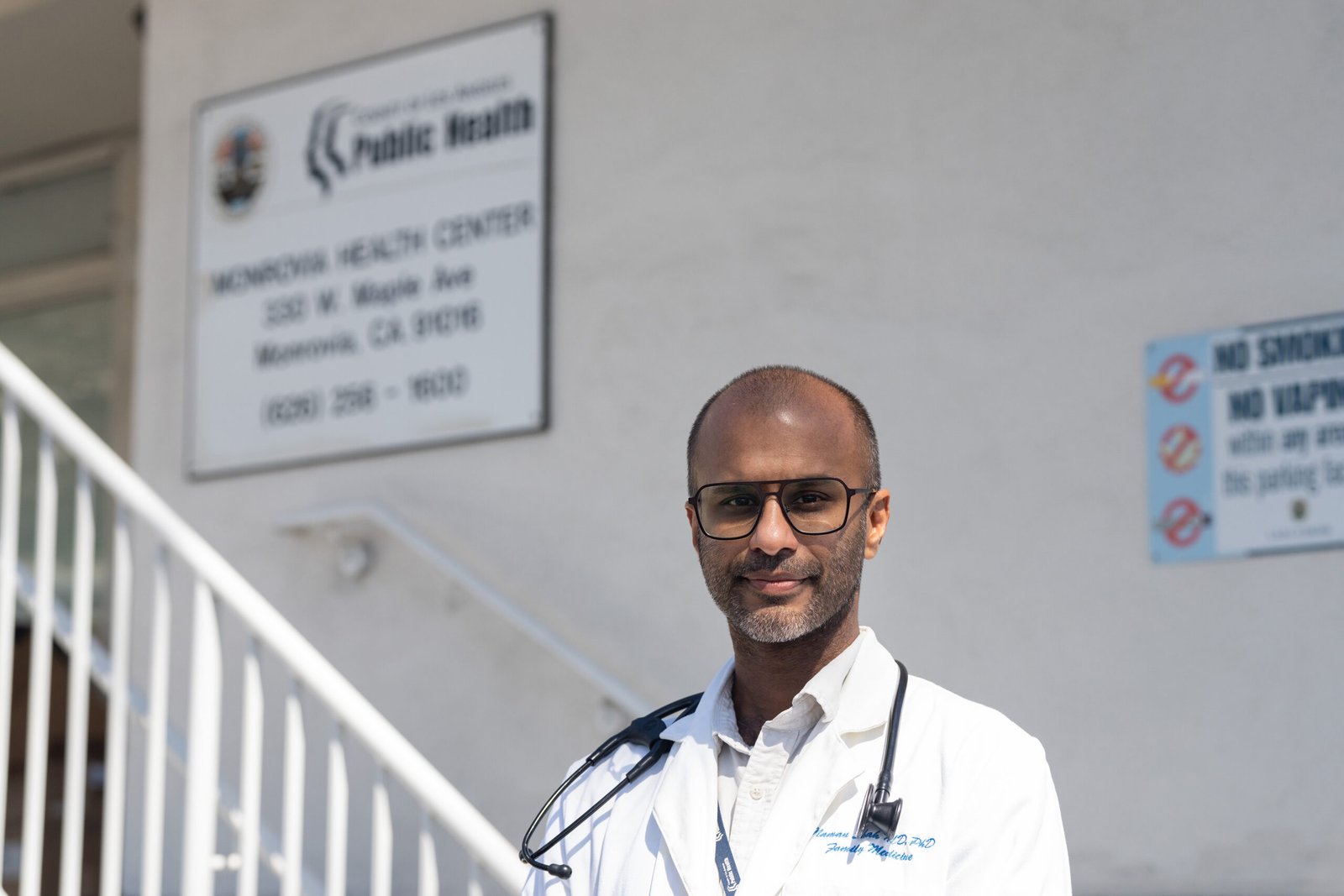
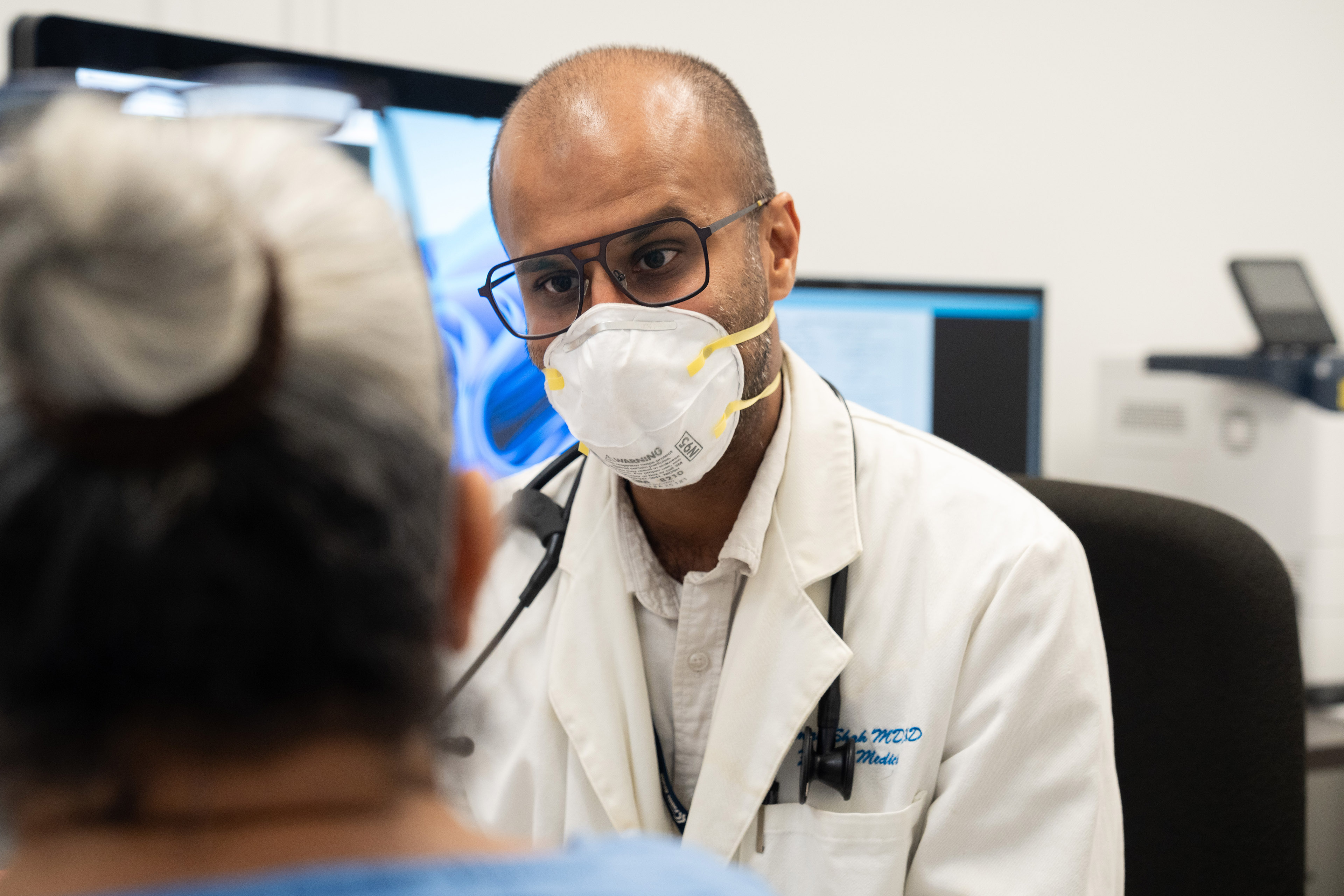
LOS ANGELES — Every Tuesday, Naman Shah sees tuberculosis patients at a small public clinic in Los Angeles’ San Fernando Valley. Shah, a physician and epidemiologist at the Los Angeles County Department of Public Health, pores over images of battered lungs, listens to labored breathing, and checks medications.
It’s part of an initiative dating to the early 20th century to control infections so tuberculosis doesn’t spread. “We like doing things upstream,” Shah said, “meaning before they happen, not after the damage is done.”
Today, Shah and his colleagues are applying the same principle to medical debt. A key part of that effort is a new system to allow every hospital in Los Angeles County to easily screen patients for financial aid. The goal: to stop low-income families from getting a bill that buries them in debt.
Shah estimates this system could prevent several hundred million dollars of medical debt every year.
Vicious Cycle
Nationwide, an estimated 100 million adults have some form of healthcare debt. In Los Angeles County, the nation’s most populous, public health officials calculate that about 800,000 residents have medical bills they can’t pay.
“The impacts of medical debt were staggering,” said Shah, who used to staff a rural health clinic in India and, since 2023, has led a county initiative in Los Angeles to tackle the debt problem.
“People end up with credit card debt and then a vicious cycle of high interest rates and poverty,” he said. “People forgo their prescriptions. People forgo appointments. And then you get into worse health.”
Hospitals typically offer financial aid to patients with low incomes. But information about assistance is often hard for patients to get. Applying can be cumbersome. And many eligible patients never seek aid, research shows.
“Most people walk into the hospital and walk out without any knowledge of financial assistance,” said Jared Walker, founder of Dollar For, a nonprofit that helps patients nationwide apply for aid, often called charity care.
That’s fueling debt. It’s also driving costly collection efforts that even hospital officials acknowledge pointlessly target low-income patients who are unlikely to be able to pay.
“They’re turning their wheels trying to collect on debt that isn’t collectable,” said Adena Tessler, regional vice president for the Hospital Association of Southern California.
Naman Shah examines a patient at Monrovia Health Center, a Los Angeles County public health clinic in Monrovia, California. Shah says reducing medical debt in the community will depend on effective prevention strategies, just as stopping the spread of infectious disease does. (Lauren Justice for KFF Health News and Tradeoffs)
Presumptive Eligibility
One potential solution is a system that automatically screens and qualifies low-income patients for financial aid without requiring an application. This is called presumptive eligibility.
Some hospitals already use such systems, which rely on software that checks patient eligibility based on publicly available information such as credit history.
The strategy can be very effective. Shah said hospitals that have deployed presumptive eligibility systems have reported as much as a 50% increase in the amount of financial aid they give patients.
Under a state law passed last year, all California hospitals will have to start doing presumptive eligibility screening by next July.
But the systems can be expensive and difficult for smaller hospitals to implement. Only about 1 in 5 hospitals in Los Angeles County currently use them, Shah said.
Public health officials wondered if they could help more hospitals set them up.
The county, which, like many local governments, faces major fiscal challenges, couldn’t pay for this, Shah said. But the public health department could bring together healthcare and hospital officials in the county to figure out another solution.
“The beauty of government is not when it always has to do the work,” Shah said. “We have the ability to make sure that people cooperate.”
The Hospital Association of Southern California, initially wary of the county initiative, came to see improving hospital financial aid programs as beneficial to hospitals, many of which were wasting money on collections. “The billing process is cumbersome and costly,” said Paul Young, a senior vice president with the association.
The association agreed to procure a presumptive eligibility system and make it available to its members. This bulk-purchasing approach, which Young compared to “a Costco model,” would lower the cost for individual hospitals, he said.
At the same time, L.A. Care, a nonprofit health plan that administers Medicaid coverage for more than 2.5 million low-income county residents, committed $2 million to set up the system.
The investment reflected the safety net insurer’s mission to make medical care accessible to more people, said Melanie Fontes Rainer, who leads strategic planning for L.A. Care. “It’s going to make Los Angeles County better,” she said.
Making It Work
Getting the new system up and running by January, as the partners hope, faces challenges.
Hospital officials are figuring out how the system will be funded in the long term. And it’s unclear how many of the county’s 88 acute care hospitals will ultimately use it, even if it’s cheaper and easier to access.
The partners are also working to improve data that the system relies on to screen patients. One goal is to link the system to tax records maintained by the state of California. This would provide hospitals with more accurate information on patients’ income than current systems, which often rely on estimated income.
Walker, the patient advocate at Dollar For, said he’s heartened by the county’s effort. “I’m optimistic that we can make a better charity care system,” he said. “And the fact that hospitals in Los Angeles County are willing to be innovative and creative about ways we can do that is super encouraging.”
For his part, Shah said county public health officials recognize that a better screening system at hospitals won’t by itself eliminate medical debt. But he said the public health department couldn’t ignore a problem that affects more county residents than asthma or tobacco use.
“Prevention is our bread and butter,” he said.
“The impacts of medical debt were staggering,” says Naman Shah, who since 2023 has led a Los Angeles County initiative to tackle the debt problem. (Lauren Justice for KFF Health News and Tradeoffs)
This article is part of “Hidden Help,” an investigative series from Tradeoffs and KFF Health News about how hospitals can protect their patients from the life-altering harms of medical debt.
Mulligan is the chief economist and chief regulatory officer at HHS.
Some Medicare patients owe more in coinsurance than the hospital paid for their drug. That arithmetic sounds impossible. It is a consequence of the 340B drug discount program and Medicare’s payment formula. Now the Department of Health and Human Services, where I work, is proposing to narrow that gap.
Congress created the 340B drug discount program in 1992 to financially support safety net hospitals that serve low-income patients. Drug manufacturers must give them steep discounts. But Medicare, Medicaid, and commercial insurers generally reimburse them at the full amount, allowing these hospitals to keep the spread above the discounted purchasing costs.
A new report from the Department of Health and Human Services shows other unintended consequences of this well-intended program. The spread grows with the price of the drug. It therefore rewards hospitals for using more and costlier drugs and makes physician practices and infusion clinics more valuable after a 340B hospital acquires them. The patient’s treatment needn’t change. The owner and billing site do.
The 340B program has exploded: Eligible drug purchases rose from $12 billion in 2015 to $81 billion in 2024, mostly at hospitals, as shown in the report. Those purchases are now larger than net Medicare Part B and Medicaid drug spending overall and, among public prescription drug programs, are smaller only than Medicare Part D.
A 340B hospital that buys another hospital or a physician practice can register more off-campus clinics and contract pharmacies and capture more spread. Hospital off-campus clinic sites grew from about 7,000 in 2013 to more than 34,000 in 2023, often in neighborhoods that are wealthier and better-insured than that of the parent hospital. Contract pharmacies grew from roughly 1,300 in 2010 to more than 31,000 by mid-2026, dominated by the largest chains.
With greater bargaining power after acquisitions, hospital systems can negotiate higher commercial prices for health care services, which can in turn raise premiums. Newly acquired hospital outpatient sites can also add facility fees to non-drug services. The effects of 340B show up as larger, more expensive hospital systems and a bigger bill for patients, employers, and taxpayers. The program’s ripple effects contribute to the broader problems facing the U.S. health care system.
Medicare payment for Part B drugs is typically based on average sales price (ASP). Beginning in 2018, the first Trump administration narrowed the spread in Medicare by paying hospitals for 340B drugs’ ASP minus 22.5% rather than the usual statutory standard of ASP plus 6%, based on an earlier estimate of their average minimum discount.
Overall outpatient drug payments rose nearly 15% a year from 2015 through 2017. Once the lower rate was fully in effect, inflation-adjusted payments largely plateaued. Payments for the affected 340B drugs held near $7 billion from 2019 through 2021. It is clear that Medicare payment policy influences outpatient drug spending.
The Supreme Court ruled in 2022 that HHS couldn’t vary payment rates by hospital group without first conducting the acquisition-cost survey required by statute. The court didn’t find that hospitals were economically entitled to the markup. It found that HHS lacked a procedural prerequisite. After the lower rate ended and ASP plus 6% returned for these drugs, annual payments for the affected drugs rose from $7.1 billion in 2021 to $10.7 billion in 2023 — a $3.6 billion increase. Overall outpatient drug payments rose from $14.3 billion in 2021 to $17.6 billion in 2023.
Restoring the higher rate meant paying hospitals more for the same drugs. The $3.6 billion increase combines that direct payment effect with induced changes in hospitals’ dispensing quantities and drug manufacturers’ underlying prices. The larger spread also strengthens hospitals’ incentive to choose costlier drugs and move treatment into 340B billing sites.
Off-campus hospital departments benefited too. From 2021 to 2023, payments for their affected 340B drugs rose about $800 million even as claims fell and the number of beneficiaries remained similar. Although these amounts do not tell us how many practices hospitals acquired because of the markup, they indicate the additional financial incentives for acquisitions.
On April 18, 2025, President Trump directed HHS to obtain the cost information the statute requires. CMS surveyed hospitals from January through April 2026 and has proposed paying for affected 340B drugs at ASP minus 33.4% in 2027. CMS estimates that Medicare drug payments would fall by $4.55 billion in the first year and beneficiary drug copayments by $1.15 billion.
For a drug with an ASP of $1,000, a beneficiary’s standard 20% coinsurance would fall from $212 to $133.20. The prescription hasn’t changed. The patient’s share of the hospital’s bill has. Narrowing the spread also weakens the incentive to steer patients toward costlier drugs and to acquire physician practices and infusion clinics — the very behaviors that have made care more expensive.
There’s an important lesson here. A small, well-intended discount for safety net hospitals became a large institutional subsidy with expensive unintended consequences. Under the proposed rule, hospitals would still receive their 340B drug discounts. What would change is Medicare’s payment for those drugs at affected hospitals. Congress provided for a survey of hospitals’ acquisition costs, and CMS says its proposed rate would “more accurately align Medicare payments with hospital drug acquisition costs.”
Medicare patients should not pay coinsurance as though the discount did not exist.
Casey B. Mulligan is the chief economist and chief regulatory officer at HHS.
SoloVitals, which captures patients’ heart rate and respiratory rate using only the camera on their device, will be available for private preview with select customers, with wider availability expected in December. The New York-based telemedicine company did not identify those customers. SoloScribe, an ambient, EHR-integrated documentation tool, is now generally available.
Both tools integrate with the already-established Solo virtual care platform, so that the more than 15,000 global customers can smoothly integrate the new capabilities without the need to add new technology, according to the company’s news release. SoloVitals and SoloScribe aim to support patient care operations and reduce technology fragmentation across health systems so that providers can keep their focus where it’s truly needed – on the patient.
“SoloVitals addresses a common gap many hospital virtual care teams experience, where they cannot collect real-time physiologic data from patients during a virtual visit,” said Joby McKenzie, general manager of North American health systems at Teladoc Health.
Danny Sanchez, vice president of technology and innovation at Teladoc Health, explained how SoloVitals collects patient vital signs contactlessly.
“During intake for a virtual visit, the patient uses the camera on their own device to capture supported vital signs of heart rate and respiration rate,” Sanchez said. “It uses remote photoplethysmography (“rPPG”) to detect very small changes in the color of the skin caused by blood flow. This data is combined with a computer vision assessment of patients’ fine movements and is then evaluated by sophisticated algorithms to return multiple physiologic measurements.”
Results are then available for the provider before or during the virtual visit, offering real-time physiologic data which can help to inform care decisions. Sanchez noted that patients do not need to download a separate app, and that the process is guided by on-screen prompts to facilitate a smooth user experience.
SoloScribe offers ambient AI documentation – that alone is not unique, but what makes SoloScribe stand out is simple: it doesn’t require hospital systems to apply new technology. It works within the Solo platform that’s already integrated into the EHR – be it Epic or Oracle Health.
“Most ambient scribe tools on the market ask hospitals to buy, install and manage one more piece of technology,” said Sanchez. “Our clients keep telling us they want the opposite: new capabilities built into the products and workflows they already know and use.”
This goes to the heart of one of the biggest challenges health systems face today, that McKenzie identified as “technology fragmentation.”
She added that “each new capability comes with another vendor, another login, another device, or another workflow. The larger opportunity of integration is to help health systems move from a collection of disconnected tools to a more unified care environment.”
A webinar moderated by MedCity News Editor-in-Chief Arundhati Parmar delved into findings of the recently published Healthcare AI Readiness Index. Panelists discussed how best to balance AI adoption, governance, how to scale AI at healthcare institutions and best practices for doing so. Sponsored by Cotiviti, the webinar included perspectives from Cotiviti CIO Sean Warren and Thomasina Anane, Associate Vice President, Enterprise Analytics, with the Alliance of Community Health Plans.
Cotiviti turns fragmented data into actionable insights. It helps healthcare organizations reduce waste, fraud, and abuse, and works with them to simplify their operations.
“In many ways, what we’ve become is the connective tissue that helps healthcare work more efficiently across all of the payers, providers, and other stakeholders,“ Warren said.
Anane referenced a recent annual meeting of ACHP, which included a candid discussion on AI governance.
“One theme that really came through clearly is that AI governance has to start well before deployment and evolve along the use case. Many of our health plans are grappling with issues like: What is my state saying about AI use? What does that look like federally and what does that look like as a health plan?….What data are actually involved? What decision is being influenced? What happens when the output is wrong?”
The biggest challenge with AI governance in a clinical and payer setting is the need for constant vigilance, a point made by both Anane and Warren.
“Deployment is really not the finish line,” Warren said. “It’s constant follow-up, constant security checks, and we have a lot of human-in-the-loop and human oversight with observability. It’s ten times more important when we add AI to the mix to be able to know what that AI is doing. Do you have the guardrails around what the AI is doing in your environment? Do you have the ability to undo it? Do you have the ability to follow and trace every transaction?”
The webinar discussion also touched on other issues such as:
What should leaders assess before moving an AI use case from pilot to enterprise deployment?
Are traditional vendor questionnaires and point-in-time assessments still sufficient?
What is driving shadow AI use?
Important considerations for Chinese AI models and frontier AI models.
Why might traditional cybersecurity controls be necessary, but insufficient in the new threat environment healthcare organizations face?
To access a recording of the webinar, fill in the form below:
John writes about the politics of health care, and he is the author of the twice-weekly D.C. Diagnosis newsletter. You can reach John on Signal at John_Wilkerson.07.
You’re reading the web edition of D.C. Diagnosis, STAT’s twice-weekly newsletter about the politics and policy of health and medicine. Sign up here to receive it in your inbox on Tuesdays and Thursdays.
Celebrity doctor Mike Varshavski has been contacted by The Bachelor for its 30th season. Send news tips and hot physicians to [email protected] or John_Wilkerson.07 on Signal.
A lame lame-duck
On Friday, President Trump said he will give $90 to more than 20 million seniors to help pay for Medicare premiums.
John writes about the politics of health care, and he is the author of the twice-weekly D.C. Diagnosis newsletter. You can reach John on Signal at John_Wilkerson.07.