Tag: Health Tech

  • HealthTap Introduces Virtual Primary Care Program for DME Suppliers

    HealthTap Introduces Virtual Primary Care Program for DME Suppliers

    telehealth virtual care

    HealthTap, a virtual primary care company, launched a new program on Monday to support sleep and respiratory durable medical equipment (DME) suppliers.

    Sunnyvale, California-based HealthTap provides primary care across all 50 states in partnership with payers, pharmacies, providers, cost-sharing organizations and more.

    The new program helps DME suppliers connect patients with sleep disorders to physicians for clinical evaluations, documentation or orders. Patients may need these services before insurers or suppliers can proceed with therapy or provide supplies. The program supports positive airway pressure (PAP) therapy from initial evaluation and treatment orders through compliance, resupply and device replacement.

    After the physician visit, chart notes and orders are sent to the supplier. HealthTap also sends updates to suppliers when patients book, complete, cancel, miss or reschedule appointments.

    “Physicians review relevant records and device data, evaluate the patient, and return completed notes and clinically appropriate orders through integrated workflows,” said Sean Mehra, HealthTap CEO. “Suppliers get real-time visit and documentation updates instead of chasing paperwork.”

    Mehra added that DME suppliers often work hard to keep patients on therapy, but accessing physicians can be difficult.

    “Delays in appointments, prescriptions, or required documentation can hold up orders, disrupt patient care, and delay reimbursement,” he said. “We launched this program to help DME suppliers overcome these challenges by giving them fast, reliable access to physicians, integrated clinical workflows, and timely documentation—so they can reduce administrative burden, keep patients on therapy, and keep their operations moving.”

    Currently, about 30 million adults in the U.S. have obstructive sleep apnea. And for those using positive airway pressure therapy, physician involvement is very important. Under Medicare, continued coverage for certain PAP devices requires a treating practitioner to reevaluate the patient between days 31 and 91 after therapy begins and document its benefits and the patient’s adherence.

    Ultimately, HealthTap aims to help patients easily get on and stay on therapy, Mehra said.

    “Someone needing a follow-up evaluation or an updated prescription should have an easy way to see a physician and understand the next steps,” he said. “For DME suppliers, the goal is to remove uncertainty from helping that patient. Their teams spend significant time calling physician offices, checking if a visit occurred, and waiting for documentation before they can move forward. Through integrated workflows, completed visit notes and medically appropriate signed orders reach suppliers immediately after the visit. This gives their teams a clearer path forward and helps patients avoid further waiting.”

    Photo: elenabs, Getty Images

  • How consumer tech company Whoop is building for Medicare patients

    How consumer tech company Whoop is building for Medicare patients

    Whoop has never been known for marketing to an older population. Performance athletes headline ads for the wearable company, which aims to turn continuous streams of physiological data into useful insights for behavior change — mostly, for a young, fit customer base.

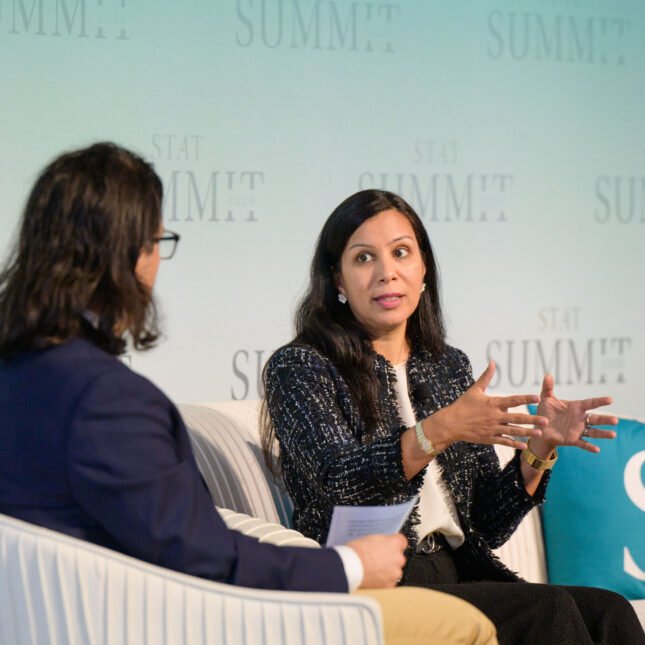
    But this year, Whoop became one of the first consumer wearable companies to be accepted into Medicare’s ACCESS program, making it available at no cost to many traditional Medicare patients ages 65 and up. On Wednesday, at the STAT Summit in Boston, Whoop’s newly appointed chief medical officer Ami Bhatt spoke about how the company is moving to build experiences — and demonstrate outcomes — for a very different population.

    “Number one on our roadmap — and I think I’m allowed to say this, if I’m not, I’m saying it — is simplification of the app,” said Bhatt, who previously chaired the Food and Drug Administration’s digital health advisory committee and served as the American College of Cardiology’s chief innovation officer. Surveys suggest, said Bhatt, that even members of the Silent Generation, who are older than 80 today, trust their clinicians with their data. “It’s not that they’re averse to giving data,” she said. “It’s how easy can we make it for that population to be able to share their data.” 

    Bhatt said that Whoop, which recently raised $575 million from investors including Mayo Clinic and the sovereign wealth fund of Qatar, is working with the National Council on Aging and AARP to think about how to personalize the product to older adults’ individual priorities. “For each of us, how we feel, how we perform, how we age, we have our own goals,” said Bhatt. “The thing is, we don’t want to decide for you what that is.”  

    The goals are less diffuse for the 10-year pilot ACCESS program, which published a directory of initial participants last month. Through those 55 companies, Medicare patients can access chronic condition management for little or no cost — Whoop serves patients with high blood pressure, high cholesterol, obesity, and prediabetes — and Medicare will pay the companies based on their health outcomes. Whoop will provide patients with a wearable, a 12-month subscription to its app, and access to clinicians who can help them make sense of their data and offer advice.

    “The goal is, how do we bring technology closer to the patient, but not put the cost on the patient — rather, put the demand on the company,” said Bhatt. “Whoop takes responsibility for, in 12 months, I am going to make these people better. I’m going to show you outcomes in the Medicare population who have these risk factors to demonstrate that my technology can help them engage in their own health.” To receive full payment under the ACCESS model, Whoop will be required to show that it improved or controlled measures tied to its patients’ chronic conditions, including blood pressure, hemoglobin A1C, and low-density lipoprotein cholesterol.

    Bhatt said it was her role to help the company — which until recently focused on selling a product intentionally binned in the wellness category — develop and demonstrate those kinds of outcomes that bring them closer to clinical practice. The company just this year announced the ability for users to discuss their wearable data with clinicians, shortly before the FDA closed its warning letter that had initially said Whoop’s blood pressure-estimating feature qualified as a medical device — not a wellness feature. 

    While Whoop demonstrates good patient engagement, said Bhatt — users check the app eight times a day, on average — research into the original “wearable” for diabetes, continuous glucose monitors, suggests that engagement doesn’t necessarily translate to better health outcomes. 

    “In order to actually create personalized health at a population level, you need to start thinking about outcomes,” said Bhatt. “Can we show that we decrease blood pressure by five millimeters of mercury in individuals on Whoop — which, by the way, we have shown — so that we can say, hey, the outcome of cardiovascular disease and stroke, we know that outcome is better.” 

    At the same time, Bhatt said, the utility of continuous data is limited within the traditional health care system. As a practicing physician, “I had some really great patients who would print out binders of their wearable data,” she said. “This is me: I love this data. And I’d be like, ‘Oh, God.’” Despite her interest and the patient’s engagement, it was impossible to handle in a 20-minute visit.

    Ultimately, Bhatt imagines Whoop could help solve that problem, perhaps by delivering contextualized reports to clinicians that summarize a patient’s continuous data along with key points from their own journaling entries and interactions with their Whoop app coach. “When you put that together and you actually have a comprehensive report you can give to a clinician, now your clinician says, ‘Oh, that’s what I needed.’” 

  • STAT+: The startup chasing ‘general biological intelligence’

    STAT+: The startup chasing ‘general biological intelligence’

    Brittany Trang, Ph.D., covers AI in health and medicine: Does it actually work? Who benefits, or might be harmed? She writes the weekly AI Prognosis newsletter. Follow her on Threads, Mastodon, and Bluesky. You can reach Brittany on Signal at btrang.01.

    This is the web edition of STAT’s AI Prognosis newsletter, our guide to artificial intelligence in health care and medicine. Sign up to get it delivered in your inbox every Wednesday. 

    Today is the first day of the STAT Summit in Boston! If you’re not attending in person (tickets for tomorrow are still available!), you can tune in virtually. Subscribers get a 40% discount on both virtual and in-person tickets.

    I’m looking forward to “When the Promise of AI Doesn’t Pan Out,” which is scheduled for just after noon ET today, and STAT executive editor Rick Berke’s interview with Katelyn Jetelina, better known as “Your Local Epidemiologist,” whom I’m still starstruck by. 

    STAT+ Exclusive Story

    Already have an account? Log in

    STAT+

    STAT+

    This article is exclusive to STAT+ subscribers

    Unlock this article — plus in-depth analysis, newsletters, premium events, and news alerts.

    Already have an account? Log in

    View All Plans

    To read the rest of this story subscribe to STAT+.

    Subscribe

  • STAT+: Lobbyists and trade groups fight to shape how states regulate medical AI

    STAT+: Lobbyists and trade groups fight to shape how states regulate medical AI

    Influential lobbying groups for doctors and hospitals, a health insurer, technology companies, and representatives from state governments met behind closed doors in Washington, D.C., in early October to develop guidelines for how to regulate artificial intelligence in the practice of medicine.

    Executives from the American Medical Association, American Hospital Association, artificial intelligence giant Anthropic, and insurer Elevance Health are part of a 22 member AI workgroup convened by the Federation of State Medical Boards, or FSMB, a national organization that advocates for state boards. A spokesman said the workgroup “was built to balance expertise across medical regulation, AI development, care delivery, academic medicine, state AI policy, and patient safety,” and that its recommendations would be open for feedback before being formally adopted.

    The discussions within workgroup meetings are being kept confidential, but the goal is to draft guidelines to aid local medical boards, with “particular attention … to AI tools that perform clinical functions with limited or no direct physician supervision,” Humayun Chaudhry, the FSMB’s president and CEO, told STAT. A draft of the recommendations could be made public in “weeks to months,” said Chaudhry. They could ultimately form the basis of legislation in states, which individually regulate medical licensure and the practice of medicine.

    STAT+ Exclusive Story

    Already have an account? Log in

    STAT+

    STAT+

    This article is exclusive to STAT+ subscribers

    Unlock this article — and get additional analysis of the technologies disrupting health care — by subscribing to STAT+.

    Already have an account? Log in

    View All Plans

    To read the rest of this story subscribe to STAT+.

    Subscribe

  • STAT+: Takeaways from an evaluation of Google’s diagnostic chatbot, AMIE

    STAT+: Takeaways from an evaluation of Google’s diagnostic chatbot, AMIE

    You’re reading the web edition of STAT’s Health Tech newsletter

    Adobe

    Mario covers technology in health care, including FDA regulation of artificial intelligence; how Medicare pays for health tech; the use of AI in clinical care; mental health chatbots; and consumer wearables. He’s also the co-author of the free, twice weekly STAT Health Tech newsletter. You can reach Mario on Signal at mariojoze.13.

    You’re reading the web edition of STAT’s Health Tech newsletter, our guide to how technology is transforming the life sciences. Sign up to get it delivered in your inbox every Tuesday and Thursday.

    Good morning health tech readers!

    I’m getting on a train to Boston in couple of hours for STAT Summit. See some of you soon.

    STAT+ Exclusive Story

    Already have an account? Log in

    STAT+

    STAT+

    This article is exclusive to STAT+ subscribers

    Unlock this article — plus in-depth analysis, newsletters, premium events, and news alerts.

    Already have an account? Log in

    View All Plans

    To read the rest of this story subscribe to STAT+.

    Subscribe

    1. Health Tech Correspondent

      Mario covers technology in health care, including FDA regulation of artificial intelligence; how Medicare pays for health tech; the use of AI in clinical care; mental health chatbots; and consumer wearables. He’s also the co-author of the free, twice weekly STAT Health Tech newsletter. You can reach Mario on Signal at mariojoze.13.

  • Outro Raises $7M To Support Safe Deprescribing

    Outro Raises $7M To Support Safe Deprescribing

    drugs prescriptions medications

    Outro, a neuroscience-based platform, announced last week that it raised $7 million in pre-seed and seed funding.

    The New York-based company helps patients discontinue psychiatric medications. Patients visit with clinicians trained in safe deprescribing and receive access to personalized tapering plans. They also gain access to compounded medication doses.

    “Roughly 1 in 6 Americans take antidepressants. There are tens of millions of people on these drugs, yet no science-based way to get off safely. … Outro is the off-ramp that should have been built from the beginning. We want getting off a medication to be as supported as getting on it – arguably even more,” said Brandon Goode, co-founder and CEO of Outro.

    Outro’s funding included participation from Listen Ventures, Cake Ventures, Jason Calicanis’s LAUNCH, Actions Capital, Hannah Grey Ventures, SemperVirens, Brock Recovery Group and Pave Health Ventures.

    According to Listen Ventures, Outro is filling a gap in the healthcare system.

    “Outro is building the infrastructure, therapeutic options, and support for deprescribing, starting with antidepressants — a model we believe will become a standard part of modern healthcare,” said Ellen Wilcox, partner at Listen Ventures, in a statement.

    With the financing, Outro will expand its network of deprescribing-trained clinicians and create AI clinical decision support for deprescribing, Goode said. It will also expand beyond antidepressants into other areas. Several other drug classes require safe off-ramps, such as benzodiazepines, gabapentinoids and GLP-1s, Goode noted.

    Research from Outro’s co-founder, Dr. Mark Horowitz, shows that four in five long-term antidepressant users were unable to stop their medications due to withdrawal symptoms. Horowitz helped create the hyperbolic tapering method that the company’s platform is based on. Hyperbolic tapering is a method of gradually reducing a medication dose by smaller and smaller amounts as the dose gets lower, rather than reducing it by equal increments.

    “Deprescribing guidance has existed in countries like the U.K. for years,” Horowitz said in a statement. “Yet in America, where antidepressant use is widespread, tapering support is very hard to come by, so millions of patients are left without support when they are ready to come off. As someone personally impacted by a lack of tapering guidance, I am proud to be building a service to bridge this gap.”

    Ultimately, Outro aims to make deprescribing a normal part of healthcare, Goode said.

    “More than that, we want to empower patients with a fair opportunity to safely and sustainably transition to a life free from medication, if that’s what they want,” he said.

    Photo: Stas_V, Getty Images

  • Join Us at INVEST Digital Health for a Conversation on Consumer-Centered Care across the Healthcare Ecosystem

    Join Us at INVEST Digital Health for a Conversation on Consumer-Centered Care across the Healthcare Ecosystem

    The annual INVEST Digital Health conference is coming up! Scheduled for October 29 in Dallas at Pegasus Park, in collaboration with Health Wildcatters, consumer influence in healthcare is the theme this year. Consumers are ordering their own diagnostics, tracking their health with wearables, accessing care directly and expecting healthcare to work more like the other services they use every day. The conference will explore how the consumer experience is impacting visits to clinicians, self-insured employers, GLP-1 drug developers and more.

    In a preview of the conference, we’ve included an updated list of the speakers and the agenda. In addition to the panel discussions, attendees will also be offered a tour of BioLabs, a state-of-the-art incubator lab and office space for emerging life sciences startups. They will also get the chance to view Bridge Labs, a purpose-built, institutional-quality life sciences building, providing flexible lab and office spaces. An innovation showcase will spotlight health tech companies The conference will conclude in a networking reception in Health Wildcatters offices.

    To register for INVEST Digital Health, click here.

    How Convenience Is Reshaping Clinical Strategy

    Patients’ evolving preferences and expectations have forced health systems and digital health companies to rethink how care is delivered. This panel will dive into how providers are offering patients the level of consumer-centric convenience they’ve become accustomed to in other areas of their life — and how this shift can lead to improved loyalty, adherence and outcomes.

    Hubert Zajicek, CEO Health Wildcatters (moderator)

    Angeline Chen, Founding Director of Product, Novellia 

    Arpan Parikh, CEO, Kin Health 

    Travis Rush, CEO, Reperio Health 

    Adam Weinstein, Chief Product Officer, Teladoc

    The Rise of Consumer Diagnostics

    From gut health analysis to STI check-ups to whole-body biomarker testing, patients are increasingly turning to direct-to-consumer diagnostics platforms for answers about their health. In this session, healthcare experts in this space will talk about the level of personalization, clinical rigor and consumer engagement needed in order for people to navigate this type of personal health data.

    Marissa Plescia, Reporter, MedCity News (moderator)

    Leo Grady, CEO, Jona 

    Rachel Miller, PA, MBA, Head of Product & Growth, Labcorp

    Kelly Lacob, CEO, Xella Health 

    Manish Arora, CEO, LinusBio 

    Pita Navarro, Chief Scientific Officer, Evvy

    The New Age of Consumer Drug Platforms

    Consumers want healthcare to work like retail, with transparent pricing, home delivery, intuitive digital experiences and on-demand access. In response, drugmakers are reshaping how patients access and purchase medications by launching direct-to-consumer platforms, which could bring pharma closer to the patient than ever before. How are consumer-facing models challenging traditional healthcare distribution channels? Can these new platforms improve affordability and adherence?

    Shelley Bailey, Strategic Initiatives at the Independent Pharmacy Cooperative (IPC) (moderator)

    Bethanie Baynes, Director of Payer Relations & Business Development, Amazon Pharmacy • Michelle Davey, CEO, Wheel 

    Thorsten Wirkes, Managing Director, Bertelsmann Healthcare Investments 

    Jessin Joseph, Vice President, PBA Markets, Judi Health

    The Payer’s Role in the Consumer Health Era

    As healthcare becomes more and more consumer-driven, how are payers fitting into the equation? From covering direct-to-consumer digital health tools to integrating members’ wearable data to deploying voice AI for navigation and member support, payers are being pushed to go beyond traditional benefit design.

    Brian Whorley, CEO, Paytient (moderator)

    Magda Lenartowicz, Chief Medical & Innovation Officer, Clever Care 

    Michelle Wang, Investor, Wavemaker 360

    Erica Murdock, Managing Partner, Unseen Capital by Seae Ventures

    Rosemary Gammon, Principal Consultant, CMR Healthcare Consultants

    How Are Wearables Changing Health Behavior?

    Listen to industry leaders discuss how they’re working to validate wearable data and integrate it into care delivery, as well as what they see coming down the pipeline in terms of reimbursement and regulatory pathways for wearable-driven care.

    Ken Nelson, Partner, Nelson Jennings Ventures (moderator)

    Tanvi Jayaraman, Clinical Lead for Health AI, ŌURA

    Peter Micca, Managing Partner, Caduceus Capital Partners 

    Patrick Sheehan, VP of Value-Based Care, Withings 

    Ben Green, Chief Clinical Officer, AliveCor

    When Consumer Brands Enter Employers’ Benefits Stack

    The line between healthcare, consumer technology and employee benefits is blurring. More and more employers are partnering with consumer brands to deliver health services that feel more like retail experiences than traditional insurance offerings. Hear benefits leaders discuss how this trend is changing access and engagement.

    Jack Stockert, Managing Director, Health2047 (moderator)

    Ali Diab, CEO, Collective Health 

    Dana Lujan, CEO, Wellthlinks 

    Jason Tibbels, Chief Medical Officer, Lantern

    Joanna Balogh-Reynolds, Senior Vice President of Strategic Partnerships, Progyny

    Building the DTC Weight Loss Economy, One GLP-1 Script at a Time

    GLP-1 drugs are one of the fastest-growing segments in digital health.This panel will explore how weight loss startups are structuring their businesses and engaging their patients to achieve health goals, as well as how they’re managing drug supply
    constraints and evolving beyond prescriptions into complete metabolic health offerings.

    Arundhati Parmar, Editor-in-Chief, MedCity News (moderator)

    Adam Johnson, CSO, Twin Health

    Alexander Fabry, SVP of Product, Noom

    Laura Walmsley, Chief Commercial Officer, Virta Health

     Wei-Li Shao, President & Incoming CEO, Omada Health

    To register for INVEST Digital Health, click here.

    Photo: kasto80, Getty Images

  • The fall of Roe dramatically changed abortion access. This researcher used Reddit to capture how

    The fall of Roe dramatically changed abortion access. This researcher used Reddit to capture how

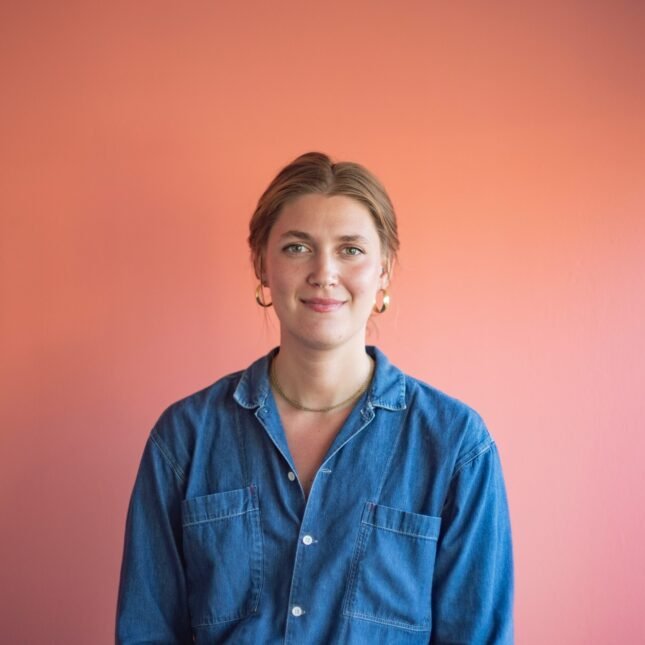
    Betsy Pleasants was studying one historic disruption to abortion access when a more seismic one emerged.

    In spring 2022, as a graduate student at UC Berkeley School of Public Health, Pleasants was researching the effects of the Covid-19 pandemic on abortion services when a leaked draft opinion indicated that the U.S. Supreme Court would overturn Roe v. Wade. The court finalized its decision that June, ending the nearly 50-year-old constitutional right to abortion and ushering in an era of rapid change and increased state restrictions.

    Working with her thesis committee, Pleasants, who is interested in expanding access to abortion and other reproductive health care, adapted her dissertation to study conversations on the social network Reddit. Her new focus was tracking emerging barriers to abortion access in real time and examining the role of online resources in connecting people with evidence-based health information and services.

    “When it became clear that Roe v. Wade was going to be overturned, we all agreed that we had to shift the project,” said Pleasants, now a postdoctoral research associate at the Center for Women’s Health Research at the University of North Carolina. The Supreme Court decision “is something that required a response, and this project was positioned to offer timely insights into what this policy change means in people’s lives.”

    Pleasants and her colleagues plumbed thousands of posts from the Reddit forum r/abortion using natural language processing (NLP) — a type of computational analysis used to identify patterns in human language — alongside a qualitative close reading of a subset of posts. Through this dual approach, grounded in safeguards for user privacy, Pleasants is defining a framework for using artificial intelligence tools without losing sight of the context, complexity, and people behind the data.

    “We are in a complex policy moment for reproductive health,” said Pleasants, who was recently named a STAT Wunderkind. This type of research “is an act of documenting in an effort to work towards evidence-based policy change over time, and to advocate for the change that’s needed to promote access to reproductive health care.”

    Findings by Pleasants and her colleagues reaffirmed well-established barriers to access, including high costs and limited appointment availability, while also revealing lesser-known challenges, such as delays in receiving abortion medications by mail, low credibility of online ordering platforms, and concerns about the legal risks of seeking abortion or related medical care.

    “Embracing this opportunity and new methods was visionary,” said Ushma Upadhyay, professor in the Department of Obstetrics, Gynecology, & Reproductive Sciences at the University of California San Francisco, who mentored Pleasants during her doctoral research. “At the time, I didn’t know of any other studies using NLP to study online discourse on abortion. Most researchers will just take a random sample of a manageable number that they can analyze, and so this approach was really great because Betsy was able to get a more complete picture.”

    For scientists like Pleasants, the value of NLP goes beyond making large-scale research more efficient. It offers a broader view of how people communicate and behave at a scale that would otherwise be difficult to capture.

    “Computational research is like a stepping stool over a tall fence that lets you look at the other side and see everything that’s around you,” said Danny Valdez, associate professor of public health at the Indiana School of Public Health-Bloomington, who has employed NLP to study vaccine misinformation, addiction and recovery, and cancer care. “NLP, machine learning, and, increasingly, AI methods give you a 1,000-foot overview of how people communicate when they need help. You can learn a lot about the pulse of the nation, which helps us understand and inform where future policy could be headed.”

    A new model for studying online discourse

    Growing up in North Carolina, Pleasants got her first window into how people access health information, sparking an interest that would eventually shape her career. Even in Durham, a liberal core city of North Carolina’s Research Triangle, she recalled receiving abstinence-only sex education from a gym teacher. The contrast between the information she received at school and at home made her aware of how unevenly health knowledge and resources could be distributed.

    “I saw peers and other people in the community navigating not having good sex education, not having access to desired health services, and stigma,” said Pleasants. “All of these things really shaped the capacity they had to make decisions for themselves about their reproductive health.”

    Those early observations would become a throughline in Pleasants’ career, from earning her undergraduate degree at the University of North Carolina to completing her master’s and doctorate at UC Berkeley, and ultimately returning to UNC for her postdoctoral research.

    Pleasants entered college with an eye on becoming a physician, but was instead drawn to medical anthropology and broader discussions of how history, politics, and culture have shaped, and continue to shape, the U.S. health care system.

    “A big question that came up for me was: ‘Do I want to work within that system or do I want to critically engage with it?’” said Pleasants. “So, I ended up on this trajectory of research with an interest in asking questions of how we offer health services, particularly for women, and seeking to understand how we can make that better for all people as much as possible.”

    Analyzing r/abortion while at Berkeley allowed Pleasants to capture perspectives often overlooked by conventional research methods. The platform’s relative anonymity gave people space to speak candidly about personal experiences they might hesitate to share elsewhere. And because most community members had not interacted with the health care system, their experiences would often be missed by practice-based analysis.

    “Following the reversal of Roe v. Wade, a lot of people were turning to Reddit for support,” said Upadhyay.

    Pleasants and her collaborators used NLP to analyze more than 7,000 posts from the months before, during, and after the leak of the Supreme Court’s draft decision, identifying 55 distinct topics. Human oversight was integral throughout, both to validate the computational approach and to guide deeper qualitative analysis. The team closely examined posts within the identified topics to understand not only what people were discussing, but how they were navigating their experiences.

    The research revealed a wide range of barriers to abortion care, from state bans, high costs, and long travel distances to stigma and lack of social support. It also surfaced emerging challenges, including delays receiving abortion medications by mail, uncertainty about the legitimacy of online services, and concerns about potential legal risks. The qualitative analysis provided further insight into the impacts of these barriers, including anxiety and isolation and, in some cases, the need to self-manage abortions.

    The emphasis on human supervision also extended to protecting the privacy of Reddit users. As NLP and AI tools become more widely integrated into public health research, their use has fueled broader discussion, both within the research community and among the public, about the ethical use of online data. Pleasants said the stakes are particularly high in reproductive health research.

    “We are studying issues that are, at minimum, sensitive and stigmatized, and in some cases even pose risks for prosecution,” she said. “This becomes even more complex when you’re working with publicly available data where people may not be aware that their posts could be used for research.”

    To protect Reddit users, the team employed a “heavy disguise” process, replacing potentially identifiable posts with composite quotations that combined and rephrased similar experiences. The researchers then tested these composites using online searches and plagiarism-detection tools to help ensure they could not be traced back to their original sources.

    Together, these practices have established a model for studying sensitive online discourse at scale.

    “As this technology keeps getting faster and faster and faster, you do have very talented and forward-thinking researchers like Betsy, who are slowing things down and looking at how to make this as rigorous and concrete as possible through a very firm qualitative lens,” said Valdez, who was not involved in Pleasants’ research, though both have received funding from the Society of Family Planning. “We need work like Betsy’s that’s already acknowledged the difficulties of social media mining … and to show very high regard for the content that people are leaving on social media.”

    Today, Pleasants said her research, which has now expanded to include contraception and misinformation online, has taken on greater urgency as shifting policies increasingly constrain access to reproductive health care. She noted that researchers, advocates, and clinicians in the field have long worked amid scrutiny and uncertainty.

    “The importance of the research doesn’t lessen just because policies make the work harder. Rather, the opposite seems true right now,” she said.

  • Vitalize Secures $31M To Help Hospitals Manage Labor, Capacity

    Vitalize Secures $31M To Help Hospitals Manage Labor, Capacity

    money growth fundraise

    Vitalize, an AI platform that helps hospitals manage labor and capacity, announced Tuesday that it raised $31 million in Series A funding.

    The platform functions like an “air-traffic control” system for the healthcare workforce, according to Veeraj Shah, co-founder and CEO of Vitalize. It coordinates scheduling, staffing and patient capacity. It supports processes across inpatient, ancillary and ambulatory care settings.

    “Labor accounts for 50-60% of hospital operating costs, yet many health systems still manage staffing and capacity through manual, disconnected processes,” Shah told MedCity News. “Vitalize is helping move these operations from manual and reactive to automated and predictive, reducing administrative burden and unnecessary labor costs while improving patient flow.”

    The Series A round was led by Oak HC/FT, with participation from Norwest, .406 Ventures, Constellation Ventures, Y Combinator, Rock Health Capital and MemorialCare Innovation Fund.  Vitalize declined to share its total funding to date.

    “Labor is a nearly trillion-dollar line item for U.S. health systems, making it one of the largest and most underpenetrated software markets in healthcare,” said Vig Chandramouli, partner at Oak HC/FT, in a statement. “What sets Vitalize apart is that it doesn’t just surface insight – it drives action, and the ROI shows up fast. We’re thrilled to back co-founders Veeraj Shah and Sanketh Andhavarapu, and a founding team with the clinical, operational, and technical depth to capture a market this size.”

    The financing will be used to build Vitalize’s growth and deployment teams, as well as to invest in their AI models, Shah said.

    The company’s platform is achieving results, according to some clients. St. Luke’s Chief Information Officer David Pereles said the company saw a 54% reduction in premium labor spend across overtime and agency costs in just 12 weeks. Rochester Regional Health Chief Nurse Executive Dan Ireland said its clinical leaders are spending 50% less time on manual staffing and scheduling.

    Shah said the company’s ultimate goal is to “unlock healthcare’s full capacity.”

    “Our thesis is that the workforce is the key to unlocking the hardest operational challenges in healthcare delivery and enabling our system to see more patients,” he said. “After labor operations, Vitalize will move to capacity management and supply chain optimization to serve as an intelligence layer for healthcare operations.”

    Photo: Richard Drury, Getty Images

  • STAT+: AI for breast cancer risk prediction goes DTC, regulatory cloud over Utah sandbox, and AI psychosis

    STAT+: AI for breast cancer risk prediction goes DTC, regulatory cloud over Utah sandbox, and AI psychosis

    You’re reading the web edition of STAT’s Health Tech newsletter

    Damian Dovarganes/AP

    Mario covers technology in health care, including FDA regulation of artificial intelligence; how Medicare pays for health tech; the use of AI in clinical care; mental health chatbots; and consumer wearables. He’s also the co-author of the free, twice weekly STAT Health Tech newsletter. You can reach Mario on Signal at mariojoze.13.

    You’re reading the web edition of STAT’s Health Tech newsletter, our guide to how technology is transforming the life sciences. Sign up to get it delivered in your inbox every Tuesday and Thursday.

    Good morning health tech readers!

    I had the pleasure of profiling Yasha Ektefaie, a fellow at the Broad Institute, who is newly announced STAT Wunderkind. Check out our annual list of promising young researchers here.

    STAT+ Exclusive Story

    Already have an account? Log in

    STAT+

    STAT+

    This article is exclusive to STAT+ subscribers

    Unlock this article — plus in-depth analysis, newsletters, premium events, and news alerts.

    Already have an account? Log in

    View All Plans

    To read the rest of this story subscribe to STAT+.

    Subscribe

    1. Health Tech Correspondent

      Mario covers technology in health care, including FDA regulation of artificial intelligence; how Medicare pays for health tech; the use of AI in clinical care; mental health chatbots; and consumer wearables. He’s also the co-author of the free, twice weekly STAT Health Tech newsletter. You can reach Mario on Signal at mariojoze.13.