Category: Hospitals

  • The Role of Hospital Stewardship to Improve Outcomes and Manage Costs

    The Role of Hospital Stewardship to Improve Outcomes and Manage Costs

    In a MedCity News webinar for Pharmacy Week 2026, pharmacy experts will explain why stewardship should be part of the conversation about hospital cost containment and long-term sustainability.

    Among the factors providers consider for antibiotics and opioids are: the type of infection, risk factors, and duration of therapy.

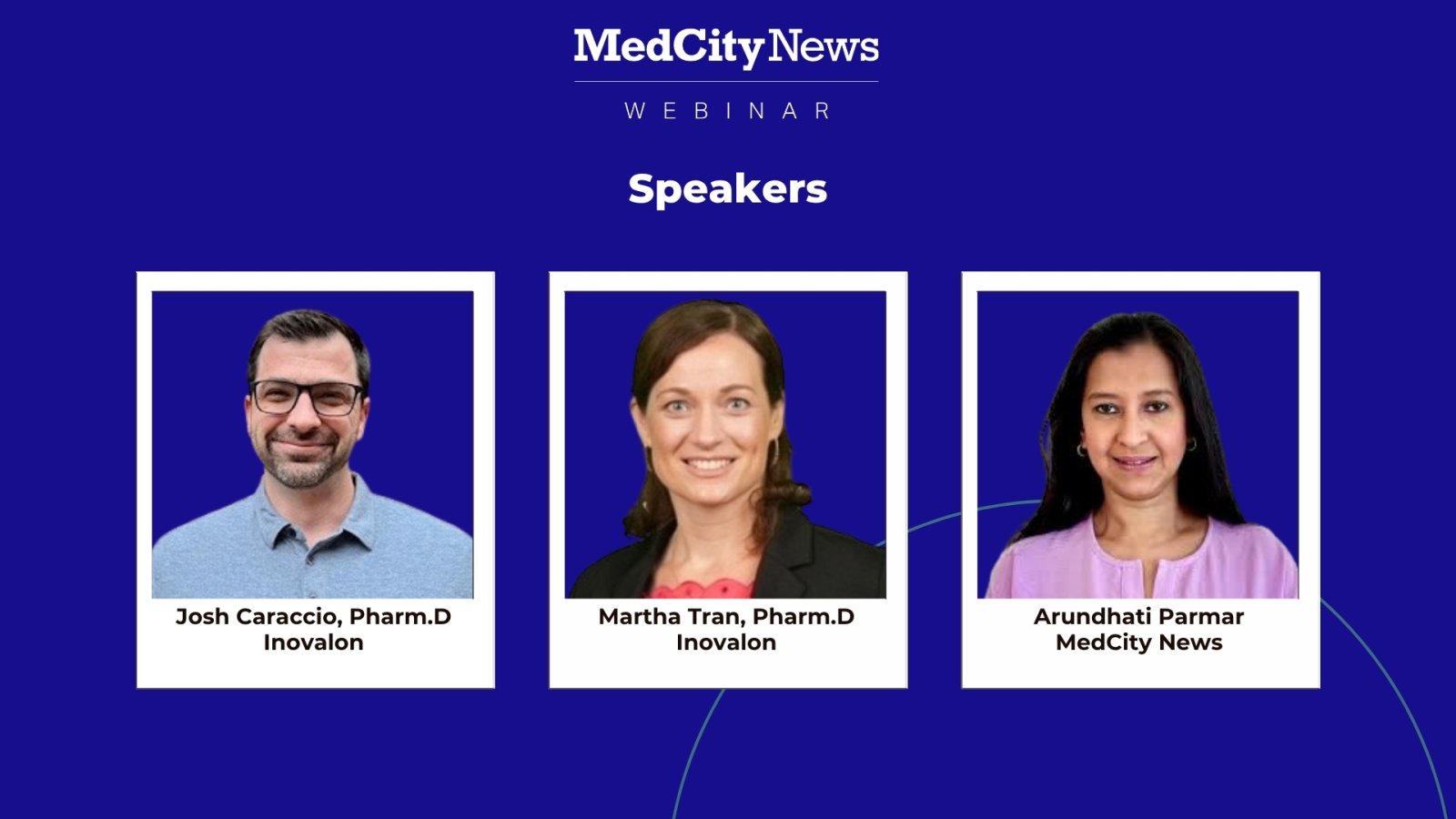
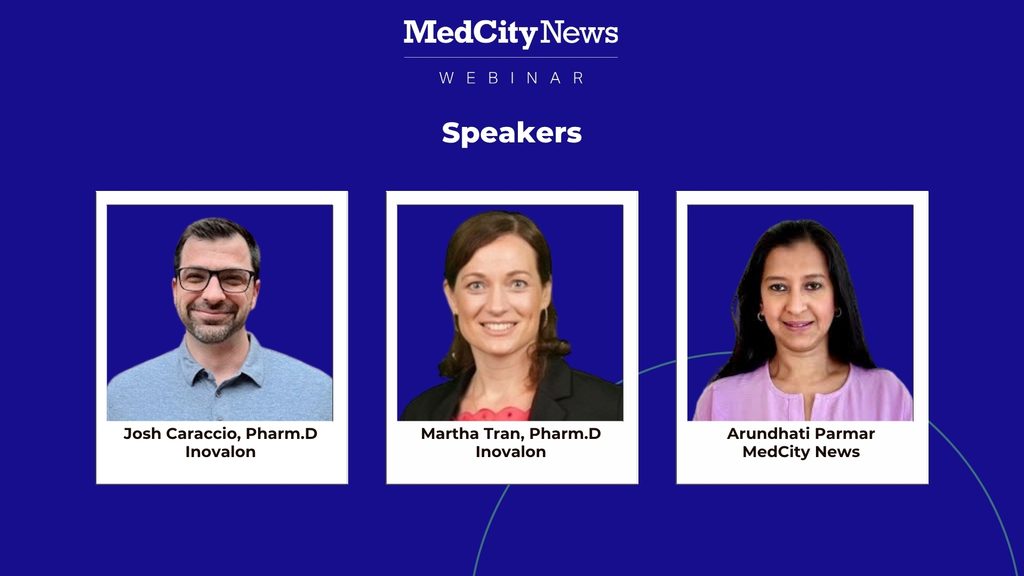
    Panelists include Martha Tran, Pharm.D., Senior Director of Customer Operations at Inovalon, and Josh Caraccio, Pharm.D., BCPS, BCIDP, Principal Implementation Engineer at Inovalon. Arundhati Parmar, Editor-in-Chief of MedCity News, will moderate.

    Panelists will also explore how near real-time surveillance, smart risk prioritization, and closed-loop intervention are shifting stewardship programs to proactive, technology-enabled decision-making that lets pharmacists work at the top of their license.

    They will also discuss what it means to be a responsible steward of opioids and other strong medications at a hospital in the current healthcare climate.

    Among the takeaways from the webinar are:

    ∎ Explain how stewardship programs contribute to cost containment and health-system resilience.
    ∎ Identify the technology shift underway in stewardship programs from retrospective, dashboard-driven review to near real-time surveillance, smart risk prioritization, and closed-loop action.
    ∎ Recognize the shared playbook between antibiotic and opioid stewardship, and evaluate how surveillance, prioritization, and intervention workflows can be applied across both programs to reduce manual burden and free up pharmacist time.

    To register for this webinar, fill in the form below:

  • What Texas Reveals About the Obstacles to Getting Hospital Financial Aid

    What Texas Reveals About the Obstacles to Getting Hospital Financial Aid

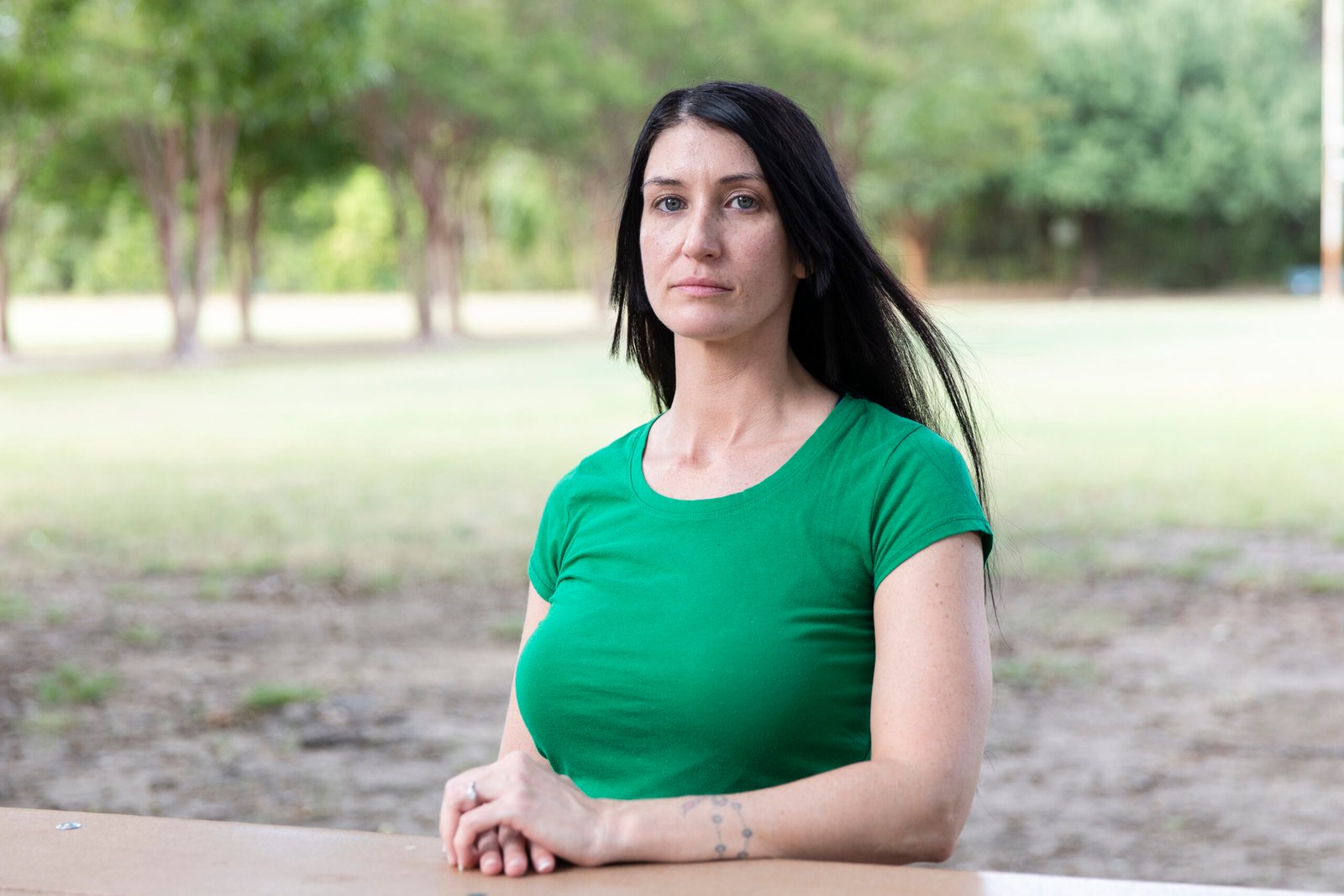
    Aimee Carlock needed surgery in August 2025 to treat severe pain and bleeding from her uterus. But first, she needed to come up with $5,500.

    Texas Health Resources, one of the state’s largest nonprofit hospital systems, told her it wouldn’t schedule the procedure unless she paid up front, Carlock said. The self-employed house cleaner didn’t have the money.

    “I panicked because I live paycheck to paycheck,” she said. “I have no extra money whatsoever.”

    Carlock borrowed cash from her best friend and parents. Her father offered money he inherited when Carlock’s grandfather died a few years ago.

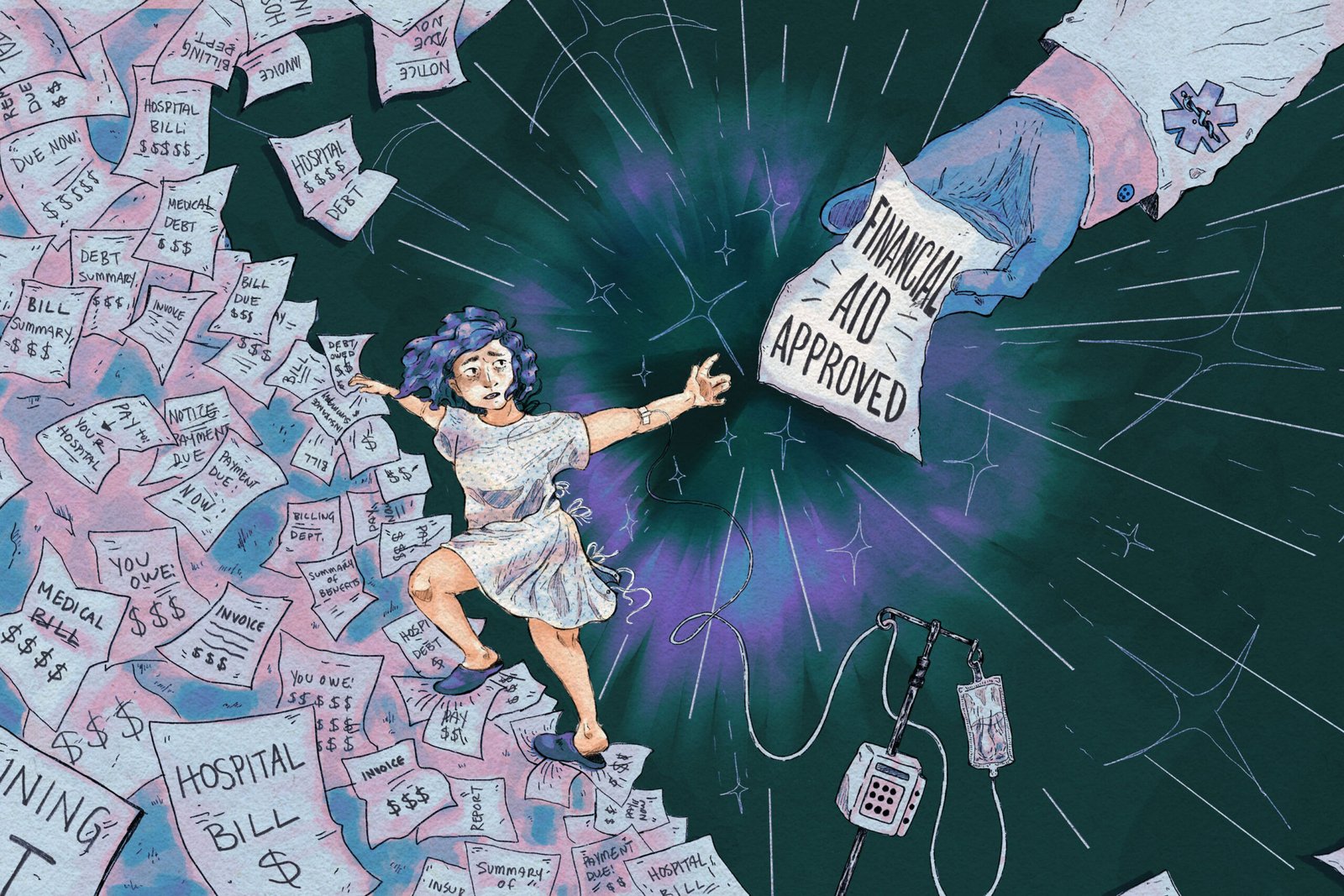
    Only after the surgery did Carlock, 35, learn she qualified for hospital financial aid. Her care should have been free, but the system doesn’t give full refunds. The $5,500 was gone.

    Carlock’s poor health has kept her out of work most of this year. She took out loans for groceries and utilities and applied for food stamps. It will take years, she said, to chip away at what she owes.

    “I’m just trying to pick myself back up,” Carlock said. “But it’s really hard.”

    Hospitals have a tool to automatically screen people like Carlock for financial aid and grant them relief — a process known as presumptive eligibility. But if, when, and how hospitals deploy this tool is largely up to them; there are few state or federal requirements.

    A Tradeoffs investigation found that in Texas nearly half of nonprofit hospitals say they will bill patients before screening them for financial aid. And most hospitals will not offer refunds to patients who pay and are eventually found to qualify for free care.

    Many patients are unaware that hospitals offer financial help, often known as charity care. Others are stymied by onerous applications that require people to turn over financial information, such as bank statements, car notes, pay stubs, retirement accounts, and even divorce records.

    “It’s like going through a tax audit,” said Stanford University health economist Neale Mahoney, who studies medical debt. “The current system is broken.”

    An estimated 100 million adults in the U.S. have healthcare debt, according to a KFF Health News analysis. That includes amounts people owe to hospitals and doctors, as well as loved ones, credit card companies, and banks. This debt can be life-altering, forcing people to take on additional jobs, push off retirement, or cut back on essentials like groceries and medical care.

    Tradeoffs analyzed the financial assistance policies of all 166 nonprofit general hospitals and children’s hospitals in Texas, which has higher rates of people in medical debt than most states.

    The analysis is believed to be the first detailed look at presumptive eligibility policies of nonprofit hospitals, which typically don’t pay income, sales, and property taxes. They get these tax breaks in exchange for providing community benefits, such as financial assistance. Lawmakers and regulators in recent decades have questioned whether nonprofits do enough to earn those tax breaks.

    Since 2020, a wave of states, including Texas, have debated or adopted requirements for hospitals to use presumptive eligibility in financial assistance to protect patients from avoidable debt.

    “This is clearly an industry that is not policing itself very well,” said Tom Oliverson, a physician and Texas lawmaker who has proposed legislation to require hospitals to screen patients before sending a bill.

    Automatic screening is a good option to help some patients, said Anna Stelter, vice president of policy at the Texas Hospital Association. But often, she said, there are other payment options, such as insurance, which hospitals need to pursue first. “Charity care is the relief of last resort,” she said.

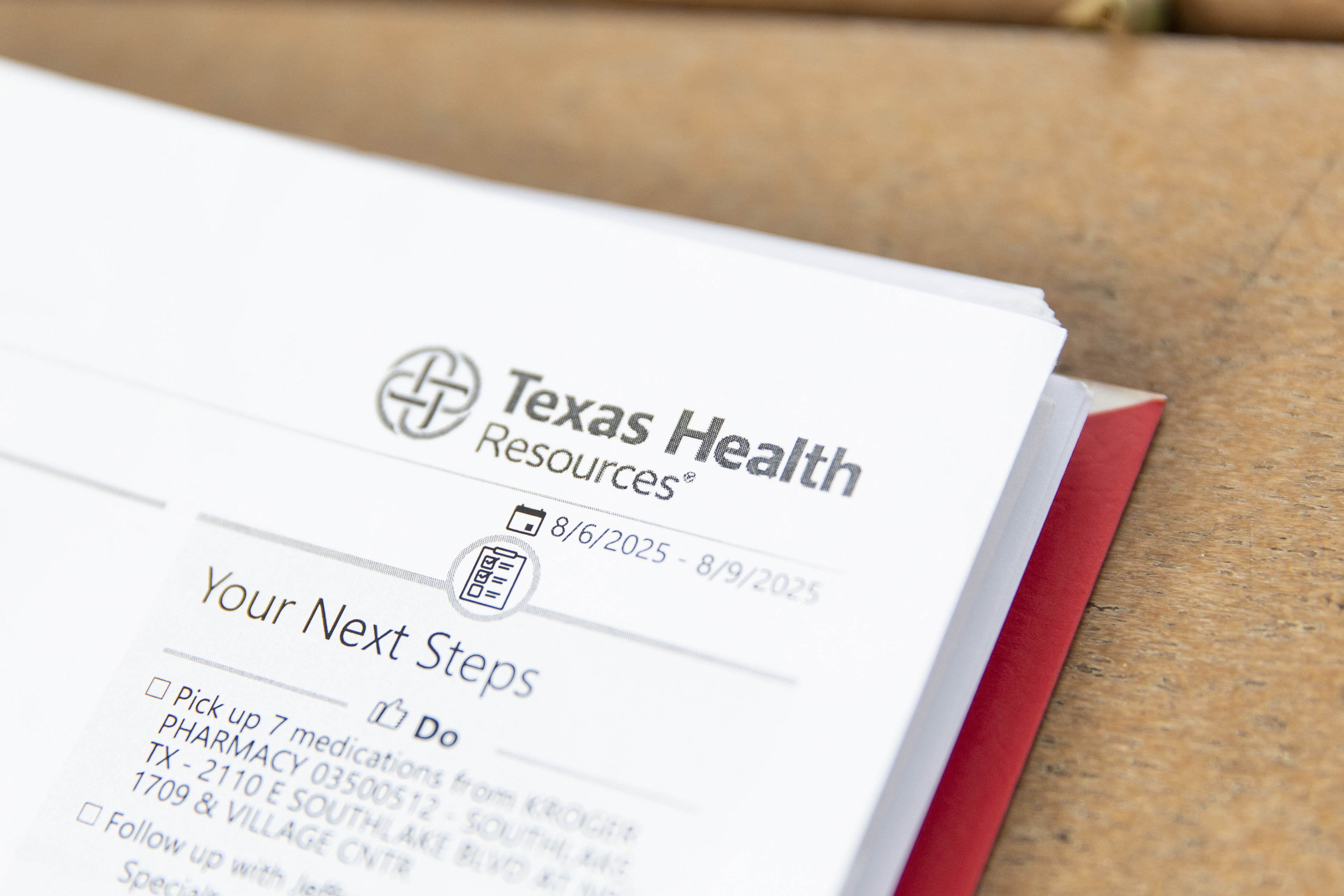
    The corner of paperwork is shown with the words
    “I’m just trying to pick myself back up, but it’s really hard,” says Aimee Carlock, who had to borrow money to prepay $5,500 for uterine surgery — money the hospital system, Texas Health Resources, held on to even after wiping out the rest of her bill under its financial aid policy. (Laura Buckman for KFF Health News and Tradeoffs)

    Most Texas Hospitals Can Automatically Give Help

    To identify nonprofit hospitals in Texas, Tradeoffs consulted state and federal records and a list of hospital policies maintained by Dollar For, a group that helps patients apply for financial assistance. To verify policies were up to date, Tradeoffs scoured websites, often clicking through multiple links to find policies. When policies were missing, Tradeoffs reached out directly to hospitals and filed public records requests with the state, which requires hospitals to submit policies annually.

    Tradeoffs’ analysis found that nearly every Texas nonprofit hospital can screen and proactively reduce bills when patients are found eligible for help.

    Nationally, around 90% of nonprofit hospitals reported the same in 2022, according to an analysis of federal data for Tradeoffs by the independent research institute RTI International. That’s up from 72% six years earlier.

    Hospitals’ use of automatic financial aid can be traced, in part, to the Affordable Care Act, which added protections for patients. The law created stiff penalties for hospitals that aggressively go after payment without trying to identify whether patients need help. Presumptive eligibility is one way to comply with the law.

    Covenant Health, a five-hospital system based in Lubbock, was the only system in Texas to say it does not automatically grant financial aid, though its policy allows it.

    Covenant doesn’t use the option “due to the regulatory requirements and administrative complexities,” said Ainsley Nelson, the system’s spokesperson. “Our focus continues to be ensuring compassionate access to care and helping patients navigate the financial assistance options available to them.”

    A man with gray hair and glasses looks at the camera while posing for a portrait
    Tom Oliverson, a physician and Texas state representative, is pushing legislation that would require nonprofit hospitals in the state to screen low-income patients for financial aid and automatically discount or write off patient costs before sending bills. (Danielle Villasana for KFF Health News and Tradeoffs)

    Bill First or Screen First?

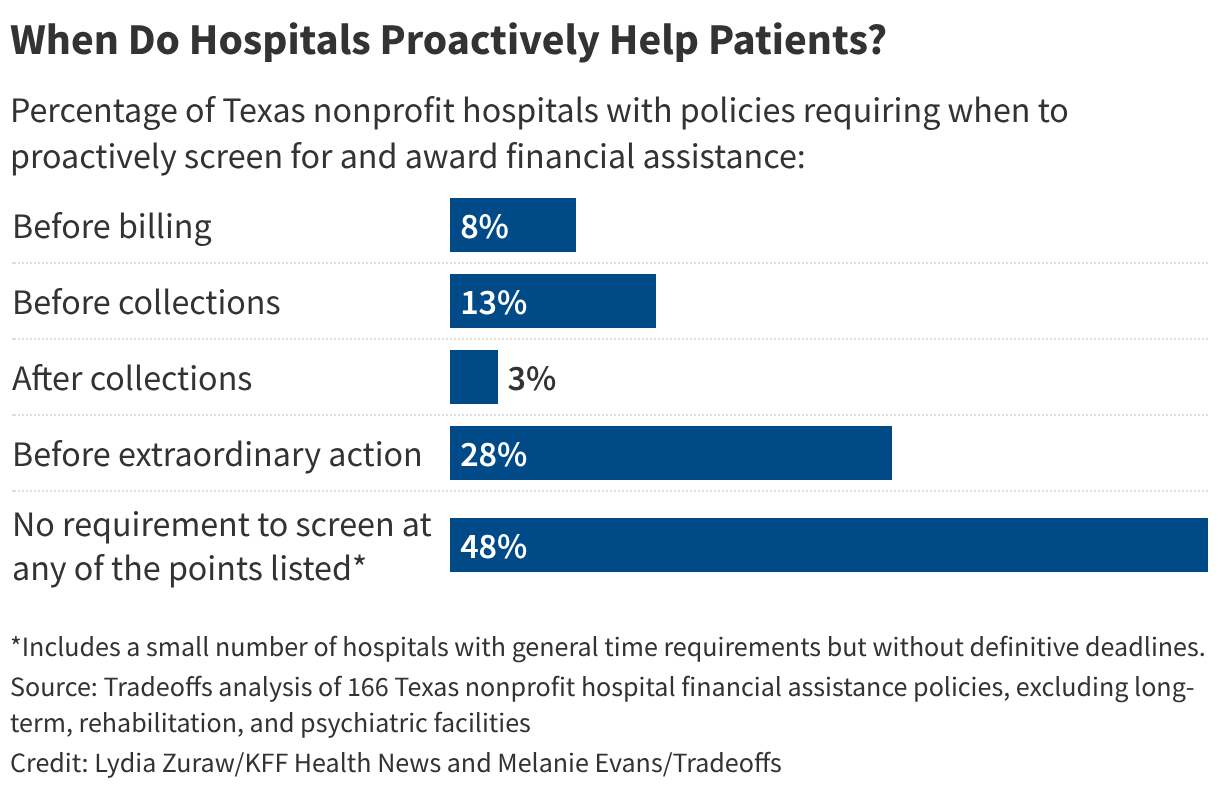
    About 8% of hospitals in Tradeoffs’ analysis have policies that require screening patients for charity care before sending a bill.

    Far more, 41%, say they screen patients before turning unpaid bills over to debt collectors or taking more aggressive actions, such as garnishing wages, placing a lien on property, or denying further care without payment.

    When Do Hospitals Proactively Help Patients? (Bar Chart)

    Southeastern Texas hospitals owned by CommonSpirit Health, for example, will automatically wipe out bills only “after all other eligibility and payment sources have been exhausted,” according to its Texas financial assistance policy.

    CommonSpirit declined an interview request.

    Research shows the sooner patients get financial aid, the better it is for their health.

    One study found that people were more likely to be diagnosed and treated for conditions like depression and diabetes and make follow-up appointments when they received financial aid within weeks of receiving care. A separate study of people who had medical debts wiped out after months or years found no health benefit from the relief.

    The signal is clear, said Ray Kluender, an associate professor at Harvard University, who worked on both studies. “The timing of when financial assistance is provided by a hospital is just extraordinarily important.”

    Some hospitals told Tradeoffs that what they do isn’t always written in policy. For example, spokespeople for AdventHealth and Houston Methodist say their systems screen some patients before sending bills — though their policies include no requirement to do so.

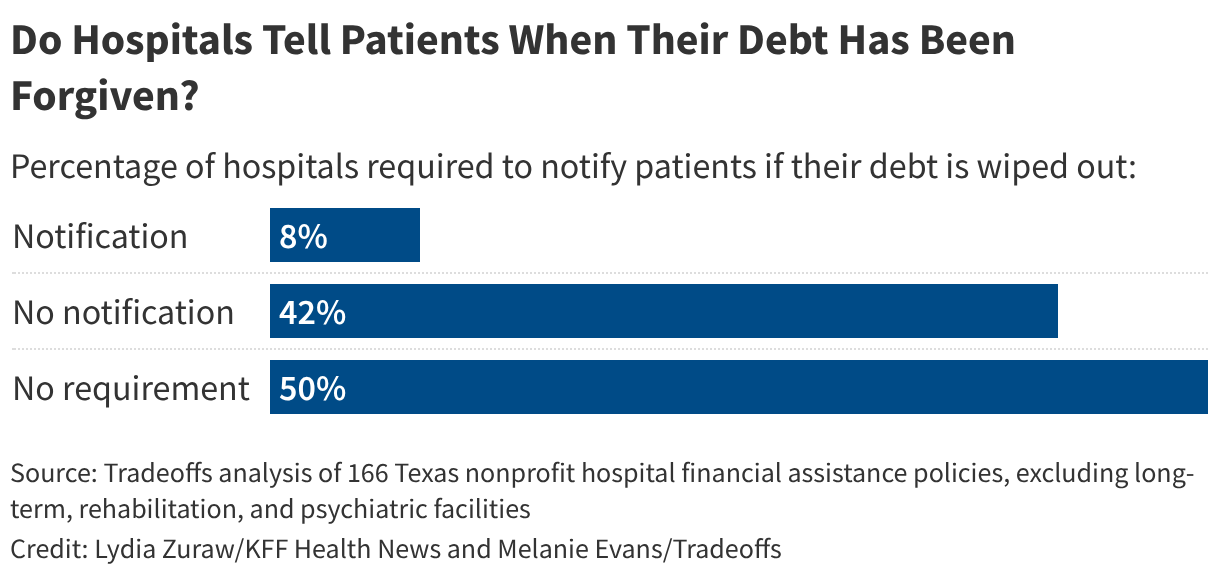
    When hospitals do wipe out patient costs after sending bills, about 40% say they will not inform patients their balance has been cleared. Just 8% require notification, and the rest say nothing about it in their policies.

    “Patients will not be notified to inform them of this decision,” reads CommonSpirit’s policy.

    Do Hospitals Tell Patients When Their Debt Has Been Forgiven? (Bar Chart)

    Stelter, with the Texas Hospital Association, said many hospitals have limited staff in their billing departments and would likely prioritize helping patients apply over notifying those who already got help.

    “It’s cruel to not notify someone,” said Erin Fuse Brown, a Brown University professor who studies medical debt. “Not to give them the closure to say you can spend that money elsewhere. You can buy your groceries this month. You can fill your prescription because you don’t have to budget for this.”

    People with medical debt are three to four times as likely to delay future physical and mental healthcare as people without medical debt, a recent study found.

    Hospitals Want To Help Patients — And Get Paid

    Texas has for decades required nonprofit hospitals to meet one of a few targets for how much help they give patients — one of which is spending at least 4% of their annual patient revenue on charity care.

    Research has found such spending targets have had mixed results. Some hospitals helped more patients, and others scaled back charity care spending or spent less on other community benefits, including training doctors and subsidizing money-losing but essential services.

    The Texas Hospital Association touts that almost every hospital in the state offers presumptive eligibility, but Stelter said screening tools can be unreliable.

    Before they grant aid, hospitals want to know if a patient might be among the narrow population of adults who qualify for Medicaid in Texas or if a grant might cover their bills — a determination that can require additional time and information.

    Stelter also said that providing aid before sending bills could let insurers off the hook. Patients with insurance typically must spend some money before insurers pitch in, known as a deductible. Insurers can hold down consumers’ monthly premiums by raising deductibles, which have climbed to an average of about $2,100 per person for job-based coverage and $3,700 per person for people on marketplace plans.

    If they know hospitals will pick up the tab, “what incentive does an insurer have to lower a deductible?” Stelter said.

    Hospitals nationwide are expected to come under increasing financial strain since Congress reduced subsidies for many people buying health insurance through the Affordable Care Act, and new federal Medicaid cuts are expected to push millions of low-income Americans off the rolls.

    That policy shift leaves hospitals to pick up more of the safety net, which they can’t afford, said Jill Horwitz, a Northwestern University health policy professor.

    “It would be wonderful if nonprofit hospitals could solve the problem of Americans being uninsured or underinsured by paying for the free care,” Horwitz said. “But nonprofit hospitals do not have the money to solve what is ultimately a major federal problem.”

    ‘You Had To Pay It’

    Becca Wahl said she knew nothing about financial assistance when she landed in Memorial Hermann Katy Hospital last October with a concussion after fainting in a Walmart.

    “I just thought you had a bill and you had to pay it,” said the 33-year-old uninsured yoga instructor.

    So when Wahl saw the $38,000 tab for her emergency room visit, she panicked. The bill was more than she makes in a year.

    “I thought, ‘I’m doomed,’” Wahl said. “I just went out to get a birthday card and fell over. And now I have $38,000 of debt.”

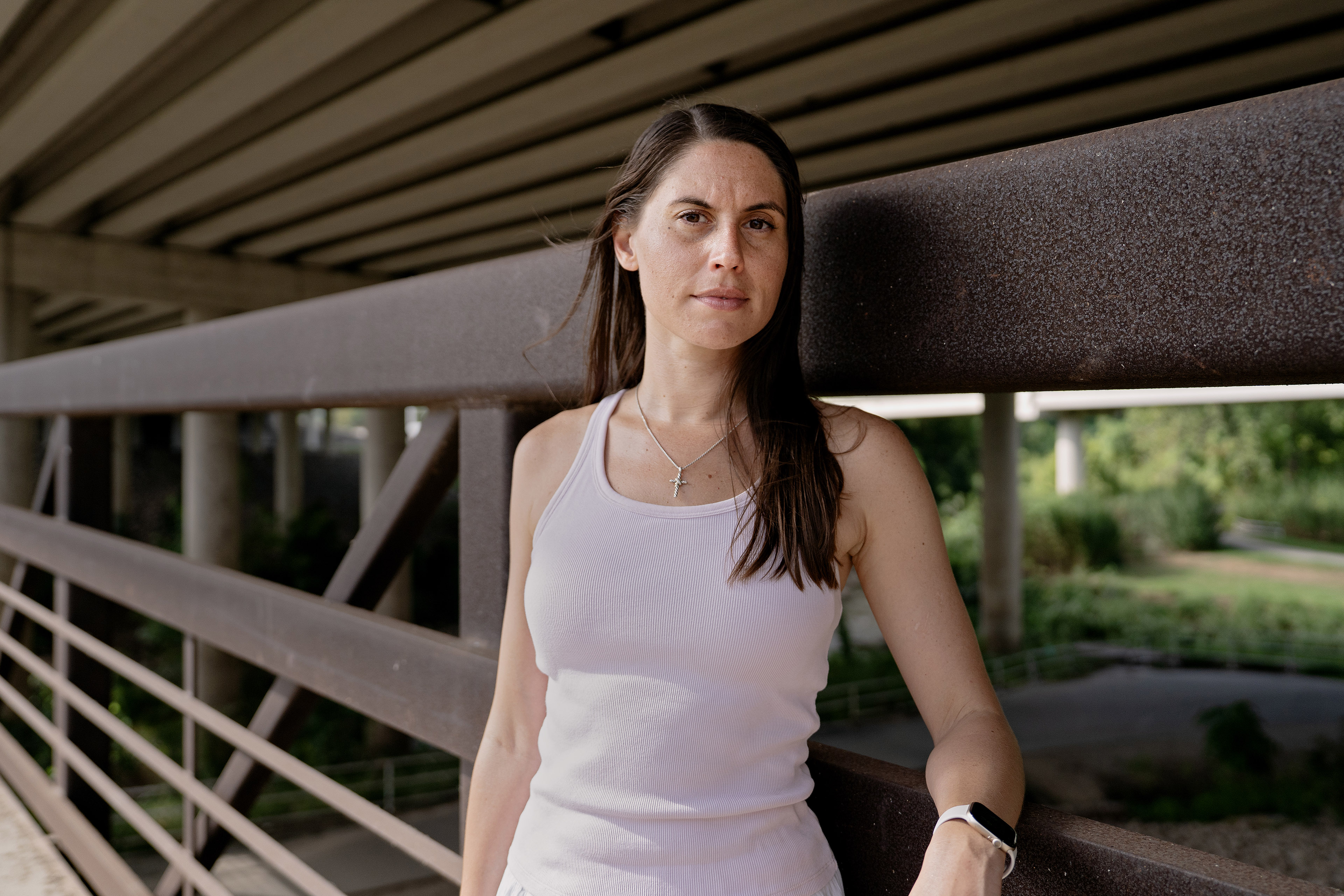
    A woman with brown hair, wearing a white tank top, stands on a bridge
    Becca Wahl received a $38,000 emergency room bill from Memorial Hermann Katy Hospital after getting a concussion from fainting. According to the hospital’s own policy, Wahl qualified for financial aid and should have never received a bill. (Danielle Villasana for KFF Health News and Tradeoffs)

    Shortly afterward, the hospital called and revised her bill, offering its price for patients who pay cash, she said. That left Wahl with $11,000 in debt and a $1,000-a-month payment plan — better than $38,000, but still out of reach.

    Desperate, Wahl went online and found Dollar For, which helps patients apply for financial aid. One week after Dollar For submitted Wahl’s application, Memorial Hermann wiped out her bill.

    Memorial Hermann’s policy says its hospitals should screen patients for financial assistance before sending a bill.

    Wahl agreed to waive her patient privacy rights so Memorial Hermann could talk about her case. But the hospital declined an interview request. A spokesperson told Tradeoffs that Memorial Hermann is “dedicated to ensuring that every patient has access to clear information about the expected costs of services, and available coverage options and our financial assistance program.”

    Wahl is just glad that she doesn’t have to put her life on hold while she pays off that debt.

    “The amount of stress that was lifted off of my shoulders by finding out that this medical debt was forgiven was huge,” she said.

    A hand holds a piece of paper with lab results
    Becca Wahl had no idea she qualified for hospital financial assistance when she received a $38,000 emergency room bill for treating a concussion. “I thought, ‘I’m doomed,’” recalls Wahl, an uninsured yoga instructor. “I just thought you had a bill and you had to pay it.” (Danielle Villasana for KFF Health News and Tradeoffs)

    Few Hospitals Give Refunds

    Some patients who pay down their bills before hospitals wipe them out never get their money back, Tradeoffs found.

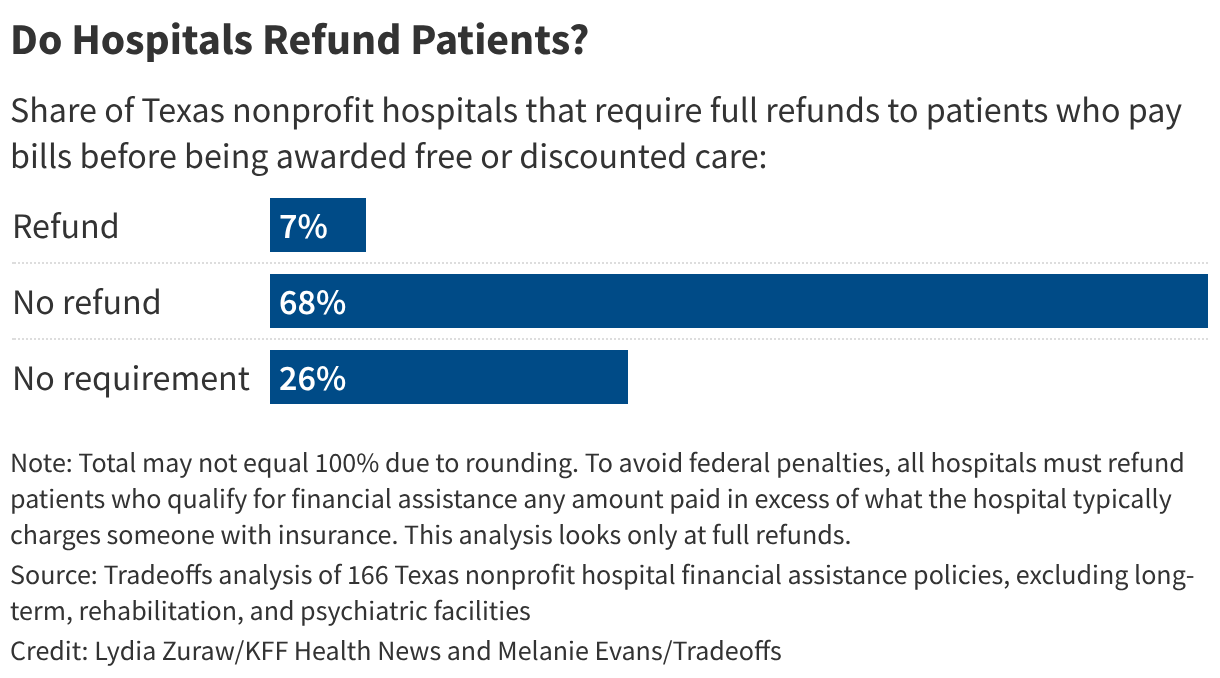
    Roughly 2 in 3 nonprofit hospitals in Texas have policies that say patients won’t receive full refunds.

    Do Hospitals Refund Patients? (Bar Chart)

    CommonSpirit’s policy has no requirement to refund patients who get automatic financial aid. Felicity Simmons, a system spokesperson, said in an email clarifying its policy that “refunds are case specific.”

    A few hospitals say they will return amounts that exceed what the hospital would typically charge someone with insurance — a federal requirement for all facilities. That is the case at Texas Health, where Carlock paid $5,500 up front for her uterine surgery, before the hospital wrote off the rest of her bill.

    Carlock’s $5,500 stayed with the hospital.

    Carlock agreed to give Texas Health permission to speak with Tradeoffs about her bill. Texas Health didn’t respond.

    Stelter with the Texas Hospital Association said hospitals follow federal regulations for refunding patients. Those regulations require hospitals to fully refund some patients who submit an application. The rules don’t apply to those who got help through presumptive eligibility, experts on the regulation told Tradeoffs.

    States Seek Standards

    By July 2027, six states will require hospitals to use presumptive eligibility for certain patients: California, Delaware, Illinois, Maryland, North Carolina, and Oregon.

    Oregon has arguably one of the most aggressive approaches. Starting in July 2024, hospitals had to screen anyone who owes more than $500 and every patient who is on Medicaid or uninsured — before they send a bill. Lawmakers raised the threshold to $1,500 in 2026 amid concerns over imperfect screening tools and the law’s impact on hospital finances.

    Hospitals in Oregon more than doubled the amount of charity care they provided, on average, during their first full year under the law, Tradeoffs found. That’s based on an analysis of available Medicare data from roughly two-thirds of hospitals. At OHSU Hospital in Portland, one of the state’s largest, the percentage of patients receiving financial aid jumped from 12% before the law to 64%.

    In Texas, state representative Oliverson, a Republican, hopes his state will go even further than Oregon. He proposed legislation in 2025 that would require nonprofit hospitals to screen patients and provide aid before sending bills. Those that don’t would face penalties.

    The legislation failed, but Oliverson said he plans to reintroduce it in 2027. The lawmaker said nonprofits are falling short of their obligations.

    “If you’re sending bills to people that you know when you finally get around to screening them for charity they’re not going to be obligated to pay,” he said, “that should be grounds for losing your tax-exempt status.”

    Oliverson said hospitals that already care for a higher share of low-income patients would be exempt from his proposed requirements. But he’s adamant that most nonprofit hospitals should be doing more to protect patients from unnecessary debt.

    “If you’re advertising that you’re willing to accept uninsured patients and that you have a charity program,” Oliverson said, “you got to deliver on that.”

    This story is part of Hidden Help, an investigative series from Tradeoffs and KFF Health News about how hospitals can protect their patients from the life-altering harms of medical debt. Read our full data analysis methodology.

    Melanie Evans is a reporter for Tradeoffs, a nonprofit newsroom reporting on healthcare’s toughest choices. Sign up for the weekly newsletter to get the latest stories every Thursday morning.

    Tradeoffs’ reporting for this series was supported, in part, by the California Health Care Foundation, the National Institute for Health Care Management Foundation, and the Solutions Journalism Network.

  • 7 Takeaways From an Investigation Into Financial Aid at Texas Hospitals

    7 Takeaways From an Investigation Into Financial Aid at Texas Hospitals

    Most hospitals offer financial assistance to patients who struggle to afford their bills, often referred to as charity care. But many people are stymied by cumbersome aid applications. Others don’t even know help exists.

    Hospitals have the ability to proactively screen patients to see if they’re eligible for aid and, if so, automatically wipe out or reduce their bills — a process known as presumptive eligibility.

    A growing number of state policymakers and researchers believe requiring hospitals to use presumptive eligibility would protect low-income Americans from falling into medical debt, especially with federal funding cuts expected to increase the number of people without health insurance.

    Data shows that Texas has among the highest state rates of people in medical debt, and policymakers in Texas are considering legislation that would require nonprofit hospitals to use presumptive eligibility before sending patients a bill.

    In a first-of-its-kind analysis, Tradeoffs examined the presumptive eligibility policies of 166 nonprofit general and children’s hospitals in Texas. The goal was to shed light on how easy or difficult hospitals make it for low-income people to get financial aid without an application.

    Scroll to the bottom of the page to explore a searchable table with all 166 hospitals’ policies.

    Here’s what we found:

    1. Nearly half of nonprofit hospitals in Texas (44%) say they will bill patients before screening them for free or discounted care.

    Some hospitals screen patients after sending a single bill. Others may send multiple bills and hire collection agencies to chase after debts before they check whether a patient is eligible for help.

    The most common approach is for hospitals to say they will screen patients before taking “extraordinary collection actions,” which include garnishing their wages, selling the debt to a debt collector, or denying further care until outstanding bills are paid.

    Anna Stelter, vice president of policy for the Texas Hospital Association, said hospitals want to investigate other options for payment — like Medicaid or county safety net programs — before they offer financial assistance.

    “We do want to make sure that whoever is financially responsible for that care is identified and pays,” Stelter said. “Charity care is the relief of last resort.”

    When Do Hospitals Proactively Help Patients? (Bar Chart)

    Just one nonprofit in Texas, Memorial Hermann Health System, has a written policy that requires its hospitals to check and proactively reduce or wipe out what patients owe before sending bills.

    Research shows that when patients receive financial aid makes a difference.

    A 2022 study found that patients who received hospital financial aid within weeks of care were much more likely to return to the doctor and get treatment for conditions like diabetes and depression. Conversely, a landmark study published in 2024 found that wiping out people’s medical debt years later had no effect on their mental and physical health, healthcare use, or financial situation.

    2. Most hospitals say they do not reimburse patients who qualify for financial aid for money they have already paid.

    Do Hospitals Refund Patients? (Bar Chart)

    Hospitals often put patients on payment plans to chip away at bills they can’t afford. But only 10 of 166 nonprofit hospitals in Texas guarantee a full refund to patients found to be eligible for financial aid. Most others say they won’t return money that patients paid before being screened.

    Surveys show patients take out loans and rack up credit card debt to cover what they owe. In one recent survey, one-third of Americans without health insurance said they had borrowed money for medical care in the previous year.

    “It is very frustrating,” said Aimee Carlock, who was required to pay $5,500 to Texas Health Resources to schedule uterus surgery. She later qualified for free care, and the hospital wiped out her remaining $16,000 bill. But the $5,500 was gone. “That’s a lot of money to me,” said Carlock, a self-employed housecleaner who was recently approved for food stamps.

    Texas Health’s policy offers refunds only in the amount a patient has paid in excess of what the hospital typically charges someone with insurance. All hospitals must offer refunds to patients who qualify for financial aid in these situations to avoid federal penalties.

    Texas Health didn’t respond to an interview request after Carlock agreed to grant the system permission to speak about her experience.

    In some cases, patients must fill out extensive applications to recoup their money. The application for Abilene-based Hendrick Health instructs patients to “completely and precisely” fill in financial and personal details, describing their savings and listing Social Security numbers for family members they live with who might help with the bills. Patients must submit two current pay stubs, a tax return, two months of bank statements, and a justification of why they need help.

    “Explain circumstances in which paying this hospital bill would create a hardship,” the application says.

    Hendrick Health didn’t respond to questions about its policy.

    3. Many hospitals never tell patients that their debt has been forgiven.

    Do Hospitals Tell Patients When Their Debt Has Been Forgiven? (Bar Chart)

    Some of the largest nonprofit hospital systems in Texas don’t notify patients when their bill has automatically been wiped out. That includes Christus Health, Texas Health Resources, and Texas hospitals owned by CommonSpirit Health, one of the nation’s largest Catholic health systems.

    Research shows patients who don’t know their debt has been forgiven may skip needed care. A 2026 study found that people with medical debt were three to four times as likely to delay future physical and mental healthcare as people without medical debt.

    “If the patient doesn’t get some sort of notice,” said Erin Fuse Brown, a health policy researcher at Brown University, the possibility that they could be billed “hangs like a sword over their neck.”

    Stelter, with the Texas Hospital Association, said many hospitals have limited staff in their billing departments. “Notifying patients whose bill was completely forgiven that they were presumptively eligible is probably lower on the totem pole than helping somebody who’s trying to complete an application,” she said.

    If hospitals offer someone less than the maximum discount available, federal law requires the hospital to notify the patient, in case they want to appeal for a full write-off.

    Texas Health and Christus Health didn’t respond to interview requests about their policies. A CommonSpirit spokesperson declined an interview.

    4. Some hospitals say their financial assistance policies don’t reflect how they actually operate. These discrepancies can work to patients’ advantage — or detriment.

    AdventHealth says some of its Texas patients get screened for financial assistance before getting bills, a consumer-friendly practice. The system’s policy, however, has no requirement for when hospitals must screen patients.

    “We want patients to understand and have access to available financial assistance before receiving a bill whenever possible,” said Tim Reiner, senior vice president for revenue cycle for the system, which owns and operates four hospitals in Texas.

    Houston Methodist also screens patients for help before sending bills, if they are uninsured, a spokesperson said. There is no requirement for its eight hospitals to do so under the system’s policy.

    According to its policy, Covenant Health, a five-hospital system based in Lubbock, must screen patients before sending bills to collection agencies and lists detailed criteria for who is eligible to have bills proactively wiped out.

    But in 2019, the system decided not to use presumptive eligibility “due to the regulatory requirements and administrative complexities,” said spokesperson Ainsley Nelson. “Our focus continues to be ensuring compassionate access to care and helping patients navigate the financial assistance options available to them.”

    Covenant is owned by Providence, a multistate Catholic health system based in Renton, Washington, which agreed to refund or erase more than $150 million in patient bills after investigations charged that the system failed to inform patients of charity care.

    Providence said the system fixed the problem identified by investigators, refunded patients, and now coaches its employees to communicate “with compassion and respect.”

    5. Who qualifies for presumptive eligibility varies significantly from one hospital to another.

    Hospitals in Texas get to decide who is eligible to be automatically screened for and enrolled in financial assistance.

    Presumptive eligibility policies often apply to people who are homeless, deceased, or already enrolled in state or federal programs to help low-income households with medical care, housing, food, or prescriptions. Some hospitals have additional criteria, including writing off bills for anyone in a religious order who took a vow of poverty.

    Some hospitals share little to no public information about who they will proactively screen. Thirteen hospitals owned by Ascension, one of the nation’s largest Catholic health systems, say only that it may screen patients “with a sufficient unpaid balance.”

    Ascension didn’t respond to questions about its eligibility criteria.

    This variation means that a patient’s ability to access free care depends greatly on where they go.

    6. Some hospitals provide less generous charity care to patients who receive it automatically instead of submitting an application.

    At CommonSpirit’s hospitals across southeastern Texas, patients who are auto-enrolled get help with debt from the prior 12 months. Patients who submit an application get the same help with prior bills, plus free or discounted treatment for the next six months.

    North Texas Medical Center limits financial assistance for auto-enrolled patients to individual visits. Applicants may be eligible going back 12 months before approval.

    North Texas Medical Center didn’t respond to additional questions about its policy.

    7. Policies that are supposed to be easily accessible to patients are often difficult to find.

    Hospital financial assistance policies are intended to be transparent to patients and the public. For more than a decade, federal law has required nonprofit hospitals to widely publish their policies.

    In practice, finding these policies and deciphering them is often hard.

    To find the policies of all nonprofit hospitals in Texas, Tradeoffs started with a list of hospital financial assistance policy websites maintained by the nonprofit Dollar For. To verify websites were up to date and fill in missing policies, Tradeoffs scoured hospital websites, often clicking through multiple links to locate policies.

    In cases in which hospitals did not publish full policies online, Tradeoffs requested copies from hospitals and filed a public records request with the state of Texas, which requires hospitals to submit charity policies annually.

    “You would have to know what you’re looking for before you went looking for it, or you’re never going to find it,” said Ray Kluender, an associate professor at Harvard University, who has had to hunt for hospital policies as part of his research on medical debt.

    This article is part of Hidden Help, an investigative series from Tradeoffs and KFF Health News about how hospitals can protect their patients from the life-altering harms of medical debt.

    Tradeoffs is a nonprofit newsroom reporting on healthcare’s toughest choices. Sign up for the weekly newsletter to get the latest stories every Thursday morning.

    Tradeoffs’ reporting for this series was supported, in part, by the California Health Care Foundation, the National Institute for Health Care Management Foundation, and the Solutions Journalism Network.

  • Opinion: MyChart said I could opt out of sharing my health data. Figuring out how was maddening

    Opinion: MyChart said I could opt out of sharing my health data. Figuring out how was maddening

    STAT is co-publishing this investigation by CalMatters/The Markup.

    Shira Fischer, a physician who works in health policy in Boston, sought a speech pathologist for her child in 2022, when virtual appointments became the norm because of Covid-19.

    “I read their consent and they said they were going to record and use [our appointment] for training,” she said. “And I said, no, my kid has a lisp. The last thing she wants is videos of her lisping to be used for training for who knows how long and who knows what database.”

    Fischer said the clinic wouldn’t change the consent, and wouldn’t proceed with the appointment if she didn’t sign it. Eventually, she found a different speech pathologist. “It ended up being better. But what is that, that they require you to allow them to record for their training?”

    Every day, doctor’s offices across the country tell patients that if they want to see the doctor, they must allow their health data to be accessible by tens of thousands of hospitals and clinics. Often, doctors give out overly broad consent forms, asking patients to agree to anything from hospitals using patient files for training doctors to using patient data for training artificial intelligence.

    Practically speaking, when a patient doesn’t agree, doctors can turn them away.

    Other times, doctors’ offices tell patients they can opt out of sharing their data later — by contacting an email address or mailing a physical letter — but in reality, opting out can be so difficult and confusing that it isn’t really a choice at all.

    When I was pregnant with my child, I wondered why my gynecologists’ forms asked me to let another company, Phreesia, mine my health data for marketing. The authorization form was labeled “Required” even though it legally must be optional. I systematically opted out and kept my own records of this, but when I tried to confirm my opt outs with Phreesia, it said I did consent. After 81 days of back and forth, Phreesia admitted I had never authorized them to use my data. But it continued to use the misleading “Required” label on the authorization form. Months later, after complaining to the Department of Health and Human Services, and an episode of “The Indicator from Planet Money” on NPR, Phreesia changed how it labeled its forms. I found the process galling, but it spurred my curiosity, and I’ve been researching how opt outs work ever since.

    In the last year, I registered as a patient at 25 clinics and hospitals across seven states and spent hundreds of hours reviewing consent forms, privacy policies, and marketing forms to see whether I could actually opt out of sharing my data.

    For one hospital in Ohio, it took me 26 steps, a notary, and a flight to Las Vegas to learn how to opt out of the hospital’s many uses of my patient records. Despite my best efforts, the hospital will not follow its own policy, which ostensibly allows patients to refuse to allow the hospital to take and own photos and recordings of them.


    It started last January, when I sought a second opinion on a personal health issue with a specialist at University Hospitals in Westlake, Ohio. University Hospitals is a large, nonprofit hospital system that manages its electronic health records through MyChart, a widely used patient portal. MyChart is made by Epic Systems, a health care software company in Verona, Wis., that says it has more than 305 million patient charts, coming from patients in every state and more than a dozen countries.

    As I prepared for my appointment, the hospital asked me to sign its registration forms and to sign up for MyChart. In the dense terms of service, I spotted three different ways that as a patient, my data was about to be used, accessed, or shared:

    1. The hospital will share my health data through Epic’s proprietary health information platform, Care Everywhere.
    2. The hospital will share my data with CliniSync, an Ohio-based nonprofit health information exchange that facilitates the exchange of patients’ information, like lab results, across institutions.
    3. The hospital will own any photos, audio, or video they take of me and may use them for any lawful purpose.

    In each case, I was told that I could opt out or refuse, but the process felt like it was designed to keep me from doing so. Forms and websites lacked basic contact information; customer service didn’t respond; patients were required to find a notary, and hospital staff directly contradicted their own written policies and told me I wasn’t allowed to opt out.

    So I set out to see what it would truly take to say no to sharing my data, starting with Epic.

    There’s no button to revoke authorization everywhere

    Once a hospital makes a patient’s records available through Epic’s Care Everywhere, many clinicians who work with Epic across the country can pull up those records, with some exceptions.

    The most common way doctors use health exchanges is to get up to speed on a patient who is coming to see them. Sharing patient health records through exchanges has decreased duplicative tests on patients. It also allows emergency room doctors who have never seen a patient before to immediately get their health history and allergies, which can save a patient’s life, said Saurabh Rahurkar, a former assistant professor at Ohio State University College of Medicine.

    Individual hospitals can also restrict which doctors can see a patient’s files, such as by physical distance, or by adding an extra confirmation step before doctors can see the files of patients who have received psychological services.

    “If you say to your new doctor, ‘Please go get my records at this place that’s 3,000 miles away,’ Care Everywhere can do that, but not if the system has the settings to only look for records within a 50-mile radius,” said Lucia Savage, former chief privacy officer at the federal health IT office.

    But there are clear reasons why some patients don’t want their data to show up in these searches, and hospital protections, if they exist at all, are not always effective.

    For example, a patient who crosses state lines to seek an abortion treatment may not want her records to be searchable by her providers in her home state where that treatment is criminalized.

    “People who have had bad experiences with unauthorized access to their information and people who have sensitive health conditions and diagnoses, for very good reasons, are just mistrusting of the health care system,” said Julia Adler-Milstein, a leading researcher in health IT policy and a professor of medicine at the University of California San Francisco. They “don’t feel like the health care system has been a good steward of them and their information.”

    For example, researchers reviewing 1,138 breach cases found that almost 10% of patient health data breaches come from unauthorized access by health care employees who forward personally identifying information to personal accounts.

    Nichole Sweeney, who was recently the chief privacy officer and general counsel at CRISP Shared Services, which provides technology infrastructure to support health exchanges in more than 10 states, said she often encountered providers snooping in patient records in her job as a privacy officer: “Somebody, a provider in an office, looks up an ex, and we find that because we have monitoring software, and I have to call them and tell them not to do that anymore. They get fired sometimes.”

    Cason Schmit, a health law and policy professor at Texas A&M University, warned, “We’re at a place in time where data that are being collected to help people are now being used in ways that could actively and specifically harm them.” He pointed to Immigration and Customs Enforcement use of health data for immigration enforcement. Schmit has written about the role of state policy in fostering health information exchange and its benefits to the public, such as tracking measles outbreaks.

    In my attempt to opt out of Epic’s Care Everywhere, I first looked for a way to do it with MyChart. I navigated through 40-plus menu items, including the “Sharing Hub,” where I watched videos on Care Everywhere that explained its benefits but not how to restrict its uses. In the end, I found one section under “Authorize Sharing” that said I could “request that your information no longer be shared” by sending a message to customer service. I tried that. I got no response.

    Then I tried emailing and calling the hospital system’s ethics and compliance department to opt out of Care Everywhere. Crickets.

    After weeks of dead ends, I found something that worked. When I called MyChart’s patient support number, the representative said I could opt out by contacting the hospital’s medical records department. I called medical records, and they called back that day and confirmed I was opted out of Care Everywhere.

    But how are patients supposed to know about this process? I couldn’t find “contact medical records” described anywhere in MyChart or on the hospital’s website.

    I asked Epic for an interview, and they agreed to let me speak with Matt Doyle, who leads software development for Care Everywhere. Turns out, both of us were about to be in Las Vegas, for one of the largest health care tradeshow conferences in the country. I arrived early at the Epic booth, which was well-appointed among its peers in the exhibition hall with carpets and a private meeting room. Posters proudly announced that health providers exchange approximately 22 million patient records each day through Care Everywhere.

    Doyle walked over from a hub of Epic employees clicking through MyChart screens with conference attendees, and led me to the meeting room along with a colleague from public relations.

    “So when you check in for your appointment, the de facto position is you’re part of Care Everywhere,” Doyle confirmed, “unless you explicitly opt out.”

    I recounted for him everything I tried, and how there was nothing I could click in MyChart to opt out.

    “It’s not in the MyChart enrollment process,” Doyle clarified, “but as soon as your MyChart account is set up, you can immediately go opt out.”

    Doyle explained that there are two levels of opting out.

    “One is, ‘Revoke authorization, but I still want to be discoverable,’” he said. “And what that would mean is, let’s say today you’re in a car accident. You go to the emergency department. Your doctor’s office back in Ohio doesn’t have your authorization on file, but you’re discoverable.” Meaning, a doctor could see that a specific patient has a health record, and can ask the patient for his or her consent to access that record.

    The second level of opting out is to be completely undiscoverable through Care Everywhere. In this case, doctors who work in other hospital systems can’t see any record of the patient in Care Everywhere. It’s a choice only 112 patients have made since they rolled out the ability to opt out this way in August 2025, Doyle said.

    There’s one extra twist. Doyle confirmed that there isn’t a single place to revoke authorization everywhere. “You have to go to each custodian of your medical records,” he clarified. A patient would revoke access to Care Everywhere “with each place that you receive care.”

    “Can you show me how to opt out?” I asked.

    Doyle brought me back out to Epic’s booth, where employees have demos of MyChart on multiple screens. Doyle tried to find a demo where he could show me a new, patient-facing feature to revoke authorizations for data sharing. But the patient in the demo product had not signed any authorizations, so there was no way to show me how to revoke them.

    I asked the next public relations representative who joined us if I could see it on her MyChart. She pulled it up on her phone, went to the “Sharing Hub” menu options, but we didn’t see the “Revoke authorization” button. We looked at Doyle, who then explained that only organizations that have updated their Epic software would have the opt-out methods that he described. He offered to show me on a video call the following week.

    Until a patient’s health care provider updates their software from Epic, Doyle confirmed that a patient’s only option is to call the medical records department and tell them “I would like to opt out of Care Everywhere.”

    A week later, three Epic representatives joined my meeting with Doyle to show me how to opt out in the Sharing Hub section of MyChart. 

    “There’s two different places,” explained Sean Bina, vice president of access and patient experience at Epic, as he showed me the buttons in MyChart. “One is ‘managing my record authorizations.’ And then the second is how I can prevent other organizations from requesting a record.”

    After months of trying, I finally got to see actual buttons inside of MyChart that would let me opt out.

    After this interview, Epic did not respond to further questions from CalMatters and The Markup about Care Everywhere, including how many current patients have the ability to see the opt out buttons inside of MyChart.


    A prime example of using health data for profit involves companies that use what expecting parents search for or watch online and what they’ve shopped for to target them with baby ads.

    Mary Ebeling, a sociologist at Drexel University who wrote the book “Healthcare and Big Data,” had just learned in March 2011 that her doctor could no longer detect a heartbeat in her 11th or 12th week of pregnancy.

    “After learning that I lost the pregnancy, literally, I came home, and my mail carrier delivered the first issue of a year’s subscription [of the now-defunct magazine American Baby] for free,” she recalled. “I had not signed up for it — to American Baby. And I was like ‘I’m getting angry right now about it.’”

    The unsolicited baby-themed marketing continued, and she eventually discovered that the data broker Experian was selling her information in a database of “new parents.”

    Commercially gathered data, such as Ebeling’s online search or purchasing history, doesn’t have the same legal protections as health records at health care facilities, which are covered by HIPAA. But that protection isn’t bulletproof. Past Markup investigations have found that HIPAA-covered hospitals were sending sensitive patient data to Facebook through Meta’s tracking pixel.

    Federal law also allows confidential substance use disorder treatment records to be shared in certain circumstances, such as with probation officers.

    As a part of her work, Jacqueline Seitz, deputy director of health privacy at the Legal Action Center, frequently speaks with patients who use drugs, are in recovery, are living with HIV, or are in treatment for substance use disorders. She also regularly speaks with the health providers who treat them.

    “When I talk to providers and I ask them what they tell patients, they say, ‘We tell patients everything is confidential.’ And that is not the right thing to say. That is not true,” Seitz said.

    For patients who are mandated into treatment in order to maintain their employment, custody access, or probation, when asked, their medical records must be shared with probation officers or other legal authorities, Seitz explained. It’s why she increasingly sees electronic health records as a rap sheet.

    “I don’t think people are trying to trick patients,” she said, but she regularly sees examples of health care workers not fully understanding confidentiality rules in these cases.

    Opting out of CliniSync, Ohio’s statewide nonprofit health information exchange

    In addition to being asked to sign up for MyChart when I registered for my appointment at the University Hospitals, I was also asked to acknowledge my participation in CliniSync.

    CliniSync, Ohio’s statewide nonprofit health information exchange, facilitates the exchange of patients’ information, like lab results, across institutions. CliniSync is operated by the Ohio Health Information Partnership, an independent private nonprofit founded in 2009. Ohio’s governor designated the partnership to develop the statewide exchange.

    The hospital system posts many of its forms online, so I had time to research the general consent to treatment form in advance. That alerted me to how patients are defaulted into sharing their data with CliniSync.

    A quick online search for “UH privacy policy” (UH stands for University Hospitals) brought me to the hospital system’s HIPAA Notice of Privacy Practices. It said I can opt out of CliniSync if I contact their privacy officer over the phone, and it gave me an email and phone number. I emailed right away. I didn’t hear back before my appointment four days later.

    I also knew that CliniSync likely has its own policy, separate from the hospital system’s, so I also searched for its opt-out policy online. The instructions are simple but surprised me: CliniSync asks patients to notarize its opt-out form.

    “It’s a big time suck for people. They’re going to have to spend a lot of time finding a notary. They’re going to have to pay that notary, almost certainly, unless they happen to have a friend or family member who’s a notary public,” said Lior Strahilevitz, a legal scholar at the University of Chicago who writes about privacy and teaches health law. Not only is requiring a notary burdensome, it’s also legally questionable. General guidance from the federal government states that HIPAA authorizations do not need to be notarized.

    Still, I paid the $15 at UPS to get the form notarized and mailed it out.

    The Ohio Health Information Partnership, which operates CliniSync, declined to respond to questions about why it requires patients to get their opt-out requests notarized.

    Finally, on the day of my appointment, I tried what should have been the easiest method for patients: Asking the hospital to opt me out in-person.

    When I asked the receptionist at my appointment how I could opt out of CliniSync, she said she didn’t know, but she’d run my request up the chain while I was with the doctor. When I came back, she had an answer: Patients can’t opt out. A colleague at the hospital told her through email that CliniSync “ensures that providers across various hospital organizations are able to request and access patient medical records, as it relates to medical need and treatment. This is not feasible to be ‘removed’ from clinisync.”

    CliniSync does, in fact, have a form to let patients opt out. And clinic staff can sign the form so that patients don’t have to find a notary instead. It says so right on the CliniSync opt-out form.

    But in my research into how difficult it is for patients to opt out of processes like this, multiple hospital staff have given me inaccurate information. I wasn’t surprised.

    Strahilevitz described this as a common problem in any bureaucracy, a phenomenon known as “desk clerk law.”

    “Basically, there’s what the law is, and then there’s what the person at the DMV who’s actually interfacing with the consumer thinks the law is or what the person at the Secretary of State’s office is,” Strahilevitz said. “And so I would regard your experience with the receptionist as a classic instance of ‘desk clerk law.’”

    University Hospitals declined to respond to questions about whether its patients can opt out of CliniSync, and said it did not have an expert available for an interview.

    After my appointment, I called the hospital’s compliance office and a few days later, I got a voicemail asking for more information over email, or for me to call them back. Since I know that Ohio law requires requests to opt out be written, I emailed the hospital with what they ask for. When no one responded, I called and emailed again.

    Soon after my appointment, I got a hand addressed letter from CliniSync confirming my opt out and saying they processed it shortly after they received my notarized letter. I was pleasantly surprised, because I’ve followed many opt-out processes in the last year, and it’s uncommon to get verification like this.

    Two weeks after I saw the doctor, the hospital’s compliance office confirmed my opt out from CliniSync over email.

    Because CliniSync records a patient’s opt out centrally, one request blocks other providers from seeing a patient’s records through CliniSync’s network, but for many health exchanges, including Epic’s Care Everywhere, patients would have to discover and follow an opt-out process at each new provider.

    Sweeney, who was the chief privacy officer and general counsel at a company that supported health exchanges in more than 10 states, estimated that a typical patient might have to opt out of data-sharing at as many as 10 different places — wherever they seek care — for their opt out to be meaningful.

    In most states, she said, “the place to cut off the data exchange is at the provider because that’s where it starts.”

    In some rare cases, patients do not need to go through this complicated opt-out process, because their clinic refuses to share any patient data with health databases or platforms, simply because patients haven’t explicitly consented.

    Keith Smith runs the Surgery Center of Oklahoma, which markets transparent pricing and cash payment. The center does not accept insurance or Medicare, and it has tried to refuse government agencies’ requests for patient data, such as from the state health department.

    “There’s no shortage of people that will claim that they have a legal right to see how many patients operated on at Surgery Center of Oklahoma had breast cancer or had inguinal hernia repairs,” he said. “And the patients haven’t consented to the release of their records.”

    Because Smith’s surgery center does not accept federal dollars, he isn’t obligated to report as much information to the government. “We treat patients here as individuals. And I don’t think it’s right to violate the rights of an individual for the greater good,” he said. “All the individual cares about is that their rights have been violated.”

    Refusing to let the hospital own my photos, videos, or recordings

    In addition to asking me to share my patient records with multiple health exchanges in order to see my doctor, University Hospitals also required me to give it complete ownership over any photos, audio, or videos it takes of me. Its consent form states, “UH may, unless otherwise refused, photograph and/or audio or video record me or the Services I receive, including those in which I am identifiable. UH will own such images or recordings and may use them for any lawful purpose.”

    I have rarely pondered the possibilities: If the doctor takes a picture of a rash on my child’s body for diagnostic purposes, would I want the hospital to claim ownership over or have broad rights to use that photo?

    The consent form says I can refuse, but when I asked the hospital’s compliance and ethics office, they wouldn’t let me. “We are not able to accept modifications or partial withdrawals of specific provisions within the General Consent for Treatment itself,” said the hospital’s email. “This includes provisions related to incidental recording that may occur as part of delivering or documenting care.”

    That surprised me. In hospital systems, the compliance office is usually where staff have privacy expertise. The hospital refused to follow its own policy.

    University Hospitals declined to respond to questions about whether its patients can refuse giving the hospital ownership over images and recordings it takes of patients.

    “It’s misrepresentation,” said Strahilevitz, the University of Chicago expert. “So I think that’s just fraud to tell you you have a right and then telling you, ‘No, we were wrong. You don’t, in fact, have that right. And now your photograph and/or audio and/or video is going to be used.’”

    Fischer, who refused to see a speech pathologist because the doctor’s office insisted on a right to record her child’s lisp treatment, said she sees health providers requiring parents to agree to clauses like this all the time.

    “I can’t get a link to telehealth appointments for my kids without signing agreements that include things like ‘authorize the use of photos, videos, and/or recordings’ and ‘give permission for staff (including students) to participate and/or watch for training purposes’ or other things I don’t want to agree to,” she said. “But there is no option to not sign.”

    Experts say there are practical design and regulatory solutions

    Colin Gray, an assistant professor at Indiana University Bloomington and a leading expert on manipulative design said, “You start from the position of defeat rather than starting from the position where you’re making a rational choice … the attitude is, ‘Well, if you really cared about your data, then you would go through the extra steps to turn it off.’ And in this case, it’s like, ‘That’s an hour of my time or 26 steps or whatever it is that I don’t have.’ And so it looks so onerous from the beginning, like, why would you even try?”

    Experts like Stacey Tovino, a professor who teaches HIPAA privacy law at the University of Oklahoma College of Law, say there’s a clear and practical solution: “Amend these [federal] regulations to say covered entities shall not impose an undue burden on people trying to opt out.” Tovino suggested that when patients see that they can opt out in a form, the next sentence should include a link to do so.

    Some states have laws that require this type of solution. Under New York law, for example, providers need explicit consent from patients to access their data from health information exchanges. I saw it firsthand when I registered my son for an appointment in upstate New York. The check-in screens showed me a form labelled “Health Exchange,” and asked for my consent for the physician group to access all of the patient’s medical records through Healthix, a health exchange. When I clicked “No,” the next form showed the detailed consent form with “I DENY CONSENT” selected as one of my two choices. But when a provider in Virginia, which doesn’t have a state law with explicit opt-in or opt-out requirements, informed me I had the choice to opt out, it refused to let me. My only option was to click “I accept” and to follow an opt-out process after the fact.

    According to Seitz, the health privacy director who works with patients going through mandated treatment, one major challenge in privacy law is that it’s difficult to put a dollar amount on the type of harm people experience, such as when intimate details about their lives are stored in recorded therapy sessions on an unsecured database, like Confidant Health did in 2024. Individuals can’t file a civil lawsuit or sue their doctor for violating HIPAA, which means that only the federal government or state attorneys general can enforce it. As a result, Seitz said that the attitude in health care around data breaches is: “Yeah, I’m breaking the law. What are you going to do about it?”

    To make privacy violations actionable, Seitz said, “I would want statutory damages. Like, every corporate defense attorney’s nightmare where it says, ‘Every breach equals $2,000,’ and then all the client has to do is show the breach, and then it’s money.”

    At the end of the day, experts said one of the most important parts of the health data ecosystem is trust.

    “Every single health data custodian that exists should be doing everything that we can to nurture and protect and foster the trust of those whose data we protect,” said Schmit, the health law and policy professor who wrote about how health exchanges can benefit the public. “And one thing that will absolutely undermine that trust are structures and processes that are opaque and difficult to follow, that make patients feel like they aren’t cared for.”

    Alex Rosenbat is the director of sociotechnical research at CalMatters and The Markup. As a researcher and reporter, she writes about dark patterns, privacy, and product design in U.S. health care.  She is the author of “Uberland: How Algorithms Are Rewriting the Rules of Work.” Read her tips for opting out of sharing your health data.
  • Healthleap Raises $38M to Expand AI Screening for Overlooked Conditions in Hospitalized Patients

    Healthleap Raises $38M to Expand AI Screening for Overlooked Conditions in Hospitalized Patients

    Jet trail creating dollar sign in blue sky with clouds startup capital

    Health systems are under pressure to improve patient outcomes while managing staffing shortages and rising costs. Healthleap, a clinical AI platform which works within the EHR to screen hospitalized patients for conditions that might otherwise go undiagnosed and untreated – such as malnutrition – is supporting hospitals in finding at-risk patients sooner. 

    The San Francisco-based company announced last week that it has secured $38 million in combined seed and Series A funding from Sequoia Capital, First Round Capital, and Hummingbird Ventures. The company plans to use the funds to expand its screening technology to more conditions, including congestive heart failure, aspiration pneumonia, delirium, pressure ulcers, and certain hospital-acquired infections.

    “Every week, millions of patients leave hospitals with unresolved health conditions that will erode their health and cost up to 10x more to treat late,” said Healthleap CEO Josiah Meyer in a news release. “Finding them now is prevention, and it’s a win for everyone. Patients get treated before they get sicker.”

    Healthleap’s platform is currently used by more than 50 hospitals, including Penn Medicine, Houston Methodist, Cedars-Sinai, Emory and UMass Memorial. Its current focus is malnutrition, which can often go unnoticed and worsen patient outcomes.  

    “The model uses weight, body mass index, lab results, diagnoses, medications, intake and output, nutrition orders, and vitals,” said co-founder and clinician Jemima Meyer in an email. “The AI system combines all of these signals into one priority score from 0 to 10 for each patient. A second column shows whether the patient’s risk changed since the last assessment. Dietitians see both columns in their existing EHR worklist every morning. The dietitians sort the list and start with the highest-risk patients.”

    Healthleap’s technology screens every adult inpatient daily. Typical malnutrition screening relies on a manual process conducted by the admitting nurse or an in-hospital dietitian. Patients who are confused, intubated, or critically ill are often unable to answer, putting them at particular risk for being missed. The company’s website claims that its model showed 88% higher sensitivity than the nursing screening, linking to a peer-reviewed study which backs that number. Each severe malnutrition diagnosis and treatment supports improved patient outcomes and, according to Healthleap, allows hospitals to claim around $11,000 in reimbursement. Each patient flagged had a 1.6-day shorter average hospital stay, according to Jemima Meyer.

    As Healthleap expands into screening for additional conditions, each must first undergo further clinical validation, with a focus on smoothly integrating into provider workflows. 

    “Every condition runs on the same nightly chart review and the same EHR connection”, she said. “Healthleap does not send interruptive alerts. Physicians and nurses see no pop-ups. The score appears as a column in a worklist that the care team already uses.”

    Healthleap wants to turn earlier risk detection into better patient care – their next challenge is expanding the results achieved with their malnutrition screening platform across a broader range of conditions.

    Photo: John Lund, Getty Images

  • Why Agentic AI Works in Hospitals When You Strip It Down

    Why Agentic AI Works in Hospitals When You Strip It Down

    A digitally generated image featuring an old-style computer monitor displaying the letters “AI” with neon business crowd. The scene blends retro computing with modern business aesthetics, symbolizing the journey of artificial intelligence from its early beginnings to its growing role in today’s corporate world. Ideal for illustrating themes of digital evolution, business transformation, AI adoption, and technology-driven innovation.

    Imagine an agentic AI solution that plans and executes multi-step tasks like triaging referrals, drafting notes, flagging deteriorating patients, and surfacing care recommendations. After the flawless demo, the committee approves what is supposed to be the answer to operational inefficiencies in healthcare. Fast forward six months: the system formally operates, but it no longer influences any real clinical decisions.

    Many hospitals are now trying to use AI to automate processes and free up staff time, running simultaneous pilots to perform as many tasks as possible. This quickly leads to pilot sprawl — a state where organizations can no longer even say which agents are still in active use.

    As one widely cited MIT analysis has shown, 95% of enterprise AI pilots fail to deliver measurable ROI, and I would add that they fail predictably. From my experience, I would distinguish the four most common scenarios:

    • The Big Bang: an attempt at a long, all-department transformation, so by the time anything goes live, the requirements have already changed, and the budget was spent before a single user has seen value.
    • Pilot Purgatory: a project that looks impressive in a controlled environment (demo) but cannot pass the reality check, working with human users, actual workflows, and unexpected interruptions.
    • Technology-First: the platform gets built before the problem it should solve is clearly defined, so the team ends up searching for at least some use case after the investment is already made.
    • Governance Paralysis: long months spent designing the perfect oversight model while the initiative quietly loses momentum, ownership, and executive support.

    In fact, all four scenarios share the same fundamental mistake: the system is designed to look intelligent, convincing, even flashy, but not as one you can trust in a real healthcare workflow.

    What especially shines in a demo often arrives as opaque in practice. Each new agent and each additional step creates another space where something can go wrong.

    An annoying glitch in a consumer app translates to delayed critical care or missed clinical alerts in a hospital. The human is never genuinely in the loop, so staff make the safest and most obvious decision and stop using the system they cannot fully rely on.

    Even if the model is robust, an agent operating outside the chart creates too much friction for daily use. Recently, Jonathan Bush argued in MedCity News that orchestration layers must be built above the EHR. While his diagnosis of EHR limitations is spot on, the proposed solution misses the reality of clinical workflows. An agent must live directly inside the patient chart via standard integrations. If it exists as a separate overlay, it will simply be abandoned.

    After a decade of working on EHR and HL7 FHIR integration projects, I see this exact friction more often than almost any model problem. For example, the clinician has to leave the record, open a second tool, and then come back just to act on the recommendation. A strong triage engine can be abandoned for exactly that reason.

    How do we handle all these issues? The fix is not a better model, but the right sequence. First comes assessment, then the pilot, then change management, and only then scaling. Between these phases there must be a real decision gate, and you should be ready to stop if there is no good reason to go further.

    • Assessment: The assessment should be brief — about four weeks. We need it to reduce risks before building anything. The potential use cases must be evaluated based on such criteria as value, feasibility, and personal relevance. Value shows the return you get. Feasibility shows whether it is achievable with the available data and infrastructure. And personal relevance is about whether the solution is useful to a particular person in their daily work. If the assessment is honest, the result is a readiness scorecard and a go/no-go call before the money is spent.
    • Pilot: It is not just a slideshow, but a real demonstrator that works with real users and real data in production, typically over twelve weeks. To pass the reality check and avoid getting lost in pilot purgatory, it must do one clearly defined and practical thing. If you cannot explain to a floor nurse in one sentence what exactly this AI agent does, you do not have one project but several. And this agent must surface in the chart clinicians already work in, not in a separate tool they have to open and use on its own. The system’s rationale must be clear — the specialist using it must understand why a particular case or patient surfaced. And of course, the human must be in the loop, not for show. The system can work and make sense only when the agent surfaces recommendations while a specialist makes the final clinical decision. On one documentation project built this way, follow-up documentation time fell by about a third and compliance with scheduled check-ins doubled. This aligns with broader industry validation; for instance, the AHA Market Scan noted a comparable 27% reduction in documentation time at Intermountain Health.
    • Change Management : Change management is probably the most underrated step that many teams skip. If no one wants to use the agent, it doesn’t matter how technically excellent it is. So, before you scale, you need not only to train the team how to use the solution, but also build it into daily processes and see whether it has actually caught on. You can see it in very simple signals — how often a nurse accepts or declines a suggestion and what share of recommendations she opens versus ignores. Those metrics are both proof of adoption and a map of what still needs improvement.
    • Scale: Finally, it makes sense to talk about scaling. And not because “everyone liked the pilot,” but because it met specific predefined criteria and showed real results, such as time saved per shift, error rate, and task compliance. If something is still missing in the pilot, you iterate or stop. If the demonstrator clears the bar, you earn a slightly broader next scope, one use case at a time. That’s how you can see value by week twelve, rather than postponing it for a year and a half. Evidence first, hype never. Federal transparency rules, such as the HTI-1 final rule, are already moving this way by demanding strict algorithm transparency in certified health IT.  

    In healthcare, the systems that scale are not the most ambitious ones, but the ones that are easiest to trust, govern, and use in real workflows. 

    The agents that succeed tend to do one narrow task clearly, visibly, and with a human still making the decision.

    And the hospitals that will pull ahead over the next couple of years are not the ones running the most impressive pilots. They are the ones running the fewest — and finishing them.

    Photo: akinbostanci, Getty Images

    Mykhailo Hentosh

    Mykhailo Hentosh is Head of Engineering and Solutions at Binariks, where he sets the technical direction for complex software programs in healthcare and AI. A software architect and solution designer with nearly two decades in the field, he is a core member of the company’s AI Center of Excellence. Much of his career has been spent on enterprise healthcare platforms, EHR and HL7 FHIR interoperability, and AI deployments that have to hold up in real clinical workflows. He is known for cutting through hype toward systems that make a measurable difference, and for challenging conventional thinking when the evidence does not support it.

    This post appears through the MedCity Influencers program. Anyone can publish their perspective on business and innovation in healthcare on MedCity News through MedCity Influencers. Click here to find out how.

  • California’s Billionaire Tax Promises Healthcare Relief. The Fine Print Is Murkier.

    California’s Billionaire Tax Promises Healthcare Relief. The Fine Print Is Murkier.

    The pitch behind California’s billionaire tax proposal is simple: Tax the richest residents in the nation’s wealthiest state to offset steep federal cuts to healthcare, food assistance, and education.

    But if approved by voters in November, it’s unclear how much money the ballot initiative would raise, how quickly the funding would become available, and how lawmakers would spend it.

    The measure would steer proceeds from a first-in-the-nation wealth tax to a state healthcare fund, giving the governor and lawmakers the power to decide how to spend what California’s nonpartisan legislative analyst estimated would be “tens of billions of dollars.” Backers say it could raise up to $100 billion over five years to keep hospitals and emergency rooms open and preserve insurance coverage for millions of Californians. Yet, community health centers, doctors, and other healthcare entities that might benefit from such a cash infusion argue that the union spearheading the measure has readied a blank check for politicians.

    “I’m not sure that you can say, with full security, that this will stop clinics from being closed or healthcare workers from being laid off, or people from losing their healthcare,” said Chris Hoene, executive director of the California Budget & Policy Center, a left-leaning nonprofit.

    Taxing the Ultrarich

    Put on the ballot by one of California’s largest healthcare unions, Proposition 40 would impose a one-time 5% tax on roughly 200 Californians with a net worth of at least $1 billion, including most of their stock holdings, yachts, and artwork. It would apply to those who were residents of California on Jan. 1, 2026. Real estate, pensions, and retirement accounts would generally be exempt.

    The revenue raised is intended to offset the roughly $30 billion a year in anticipated losses to the Golden State from congressional Republicans’ One Big Beautiful Bill Act. Over the next four years, state and federal funding cuts are projected to nearly double California’s uninsured population, which stands at about 2.4 million people, according to the University of California-Berkeley Labor Center.

    Securing additional tax revenue is essential because state lawmakers have yet to come up with a way to pay for healthcare services that will be affected by the cuts, said Dave Regan, president of Service Employees International Union-United Healthcare Workers West, which represents hospital workers and got the wealth tax on the ballot. It would earmark 90% of the tax revenue for healthcare, while the remaining 10% would be split between food assistance and education at lawmakers’ discretion. Regan said such broad categories would give politicians flexibility to be more responsive to the looming cuts.

    “Figuring out or predicting exactly what the fallout will be, of where reductions and cuts get made, in a complicated healthcare system, it’s just too difficult to predict,” Regan said.

    Among the choices the next governor and lawmakers will face are whether to provide healthcare to people cut off by the new federal Medicaid work requirements, reverse state rollbacks limiting coverage for immigrants with legal status, or raise the low physician reimbursement rates that make some providers reluctant to accept patients enrolled in Medi-Cal, the state’s version of Medicaid.

    Lawmakers could also shore up subsidies on Covered California, the state’s health insurance marketplace, whose enrollees have seen their premiums skyrocket after losing millions in federal assistance after Congress last year let enhanced subsides expire.

    Most of the money must be spent on health, but healthcare experts said the measure’s ambiguous language could allow lawmakers to use the new billionaire health fund to replace existing state dollars, contrary to the text of the proposition.

    “A lot of times these propositions are written in a way to get attention and get support,” said Glenn Melnick, a healthcare economist at the University of Southern California. “But in fact, they can be used for other things later.”

    Instead, the healthcare industry is pushing for a long-term funding plan. René Bravo, a pediatrician in San Luis Obispo County and the president of the California Medical Association, worries that a one-time infusion of tax dollars “is going to run out.”

    “We need to work on a more sustainable, durable funding mechanism for the Medi-Cal system,” he said.

    At the same time, doctors are asking him what will happen when the biggest Medi-Cal eligibility cuts begin to take effect next year. Even if voters approve the ballot measure, the money wouldn’t be available for at least a few months while the state collects the tax. And billionaires could spread their payments over five years.

    Californians Divided

    Pasadena resident Lynne Wines, a 72-year-old retired banker, knows the state needs the money. But she worries that wealthy investors will see the measure as a precedent and flee the state. Even though the ballot measure is clear that it’s a one-time tax, Wines said it’s a slippery slope.

    “Taxes have a way of being needed over and over, and politicians have a way of finding those needs,” Wines said. “So, I don’t really feel secure that this is just a one-time thing.”

    She noted that Google co-founder and billionaire Sergey Brin bought a home in Nevada and moved some of his businesses to the Silver State late last year. He is backing ad campaigns opposing the measure. Brin has given more than $100 million to a nonprofit promoting two competing measures, Propositions 41 and 42, designed to blunt or block it, according to contributions filed with the secretary of state’s office. One would count some new state taxes toward California’s overall spending limit and require the state auditor to review new state tax proposals before voters weigh in. The other would prohibit new state taxes on personal property, intellectual property, retirement accounts, and other assets.

    GOP gubernatorial candidate Steve Hilton, who has been endorsed by President Donald Trump, warned on CNN in June that just the threat of the tax “has sent trillions of dollars, by some estimates, of wealth leaving the state.” A March study by the conservative Hoover Institution at Stanford University projected that the billionaire tax would cost California $25 billion, citing, in part, the lost revenue from billionaires who have already left the state.

    California voters appear torn over departing billionaires. Two independent September polls suggested voter support for Proposition 40 varied from a low of 45% to a high of 52%.

    Pasadena resident Steve Erler, 74, works full-time as a building manager because he can’t afford to retire. He worries that federal cuts will hurt children and seniors.

    A middle-aged man kneels on lush green grass with his medium-sized dog on a leash beside him.
    Steve Erler of Pasadena, California, works full-time as a building manager because he can’t afford to retire. He worries that federal cuts will hurt children and seniors, and he supports a California ballot measure that would tax billionaires. (Jackie Fortiér/KFF Health News)

    “These people who are making all this money, they can never spend it all. What are they going to do, buy another house in the Hamptons, buy another jet? They don’t need that,” Erler said while out walking his dog in August. “They need to be able to say when they go to bed at night, ‘I helped a child with healthcare. I helped a senior get fed.’ That’s what’s important,” he said.

    Democrats are divided — one of many ideological fights playing out nationwide this election cycle as progressives take on more centrist candidates. U.S. Sen. Bernie Sanders (I-Vt.) and the California Democratic Party have endorsed Proposition 40, while Gov. Gavin Newsom, who is exploring a presidential bid, and Democratic gubernatorial nominee Xavier Becerra oppose it while saying that ultrawealthy or high-earning people should pay more. “It’s time for an economic reset, a true minimum tax on billionaires that, well, ensures the people at the very top pay at least the tax rate their own workers pay,” said Newsom, who supports a federal wealth tax, although legislation for a federal wealth tax in Congress has stalled.

    If voters approve the ballot measure, political analysts said, it could show other states that taxing the wealthy may help close budget gaps and pay for essential services. Already several Democratic states, including Hawai‘i, Maine, Massachusetts, and Rhode Island, have approved millionaire taxes, but those have been limited to income, not overall wealth. Voters in Washington state will decide this fall whether to keep their millionaire tax.

    “I do think this is just the beginning of these proposals nationwide,” said Melnick, the USC healthcare economist.

  • STAT+: Lobbyists and trade groups fight to shape how states regulate medical AI

    STAT+: Lobbyists and trade groups fight to shape how states regulate medical AI

    Influential lobbying groups for doctors and hospitals, a health insurer, technology companies, and representatives from state governments met behind closed doors in Washington, D.C., in early October to develop guidelines for how to regulate artificial intelligence in the practice of medicine.

    Executives from the American Medical Association, American Hospital Association, artificial intelligence giant Anthropic, and insurer Elevance Health are part of a 22 member AI workgroup convened by the Federation of State Medical Boards, or FSMB, a national organization that advocates for state boards. A spokesman said the workgroup “was built to balance expertise across medical regulation, AI development, care delivery, academic medicine, state AI policy, and patient safety,” and that its recommendations would be open for feedback before being formally adopted.

    The discussions within workgroup meetings are being kept confidential, but the goal is to draft guidelines to aid local medical boards, with “particular attention … to AI tools that perform clinical functions with limited or no direct physician supervision,” Humayun Chaudhry, the FSMB’s president and CEO, told STAT. A draft of the recommendations could be made public in “weeks to months,” said Chaudhry. They could ultimately form the basis of legislation in states, which individually regulate medical licensure and the practice of medicine.

    STAT+ Exclusive Story

    Already have an account? Log in

    STAT+

    STAT+

    This article is exclusive to STAT+ subscribers

    Unlock this article — and get additional analysis of the technologies disrupting health care — by subscribing to STAT+.

    Already have an account? Log in

    View All Plans

    To read the rest of this story subscribe to STAT+.

    Subscribe

  • Hospitals sue over revamped 340B rebate pilot

    Hospitals sue over revamped 340B rebate pilot

    It’s the second time the HHS has tried to kickstart a 340B rebate program — and the second time hospitals have sued to block it, alleging rebates will threaten their financial viability.

  • Startup Arboretum Sprouts, Bringing a Precision Medicine Approach to Common Diseases

    Startup Arboretum Sprouts, Bringing a Precision Medicine Approach to Common Diseases

    The career of Anthony Philippakis has tracked with the evolution of molecular medicine. The cardiologist started medical school in 2001, one year after the first draft of the human genome was published. As a PhD student, he studied human genetics. At GV, where Philippakis is currently a general partner, he played a key role in the firm’s investment in Foundation Medicine, a precision medicine company that provides cancer tests and analyzes tumor samples, identifying genetic mutations that inform treatment decisions.

    “My professional career has been following the genome wherever it leads,” he said.

    Philippakis’s journey in genetics has reached its next stop. He’s the co-founder and CEO of Arboretum LifeSciences, a startup firmly planted in both diagnostics and drug development. The company is now out of stealth with a handful of partnerships and the ambition to leverage its genomic analyses into alliances with pharmaceutical companies, each side of its business working toward the shared goal of developing new medicines for common diseases. The Cambridge, Massachusetts-based company has raised $30 million in new funding to execute that mission.

    Arboretum is a molecular information company, a concept that Philippakis said goes back to an idea from Foundation Medicine. While a molecular diagnostics company only does diagnostics, a molecular information company does diagnostics and then uses the data generated from those tests to develop therapies, he explained. This concept first took root in cancer, where it’s easier to identify a particular genetic mutation as the driver of the disease — matching a drug to that genetic signature is fairly straightforward. But in a more common conditions like heart disease, there’s usually no single disease driver. To address such diseases, scientists need genetic approaches that define patients based on many variants rather than a single one.

    Arboretum supplies whole genome sequencing tests that support precision medicine programs at health systems. The company then analyzes data from those tests, using the analyses to guide drug development. The startup’s business model would not have been possible years ago, said Clare Bernard, Arboretum’s president. Alongside the rise of AI capabilities, the cost of genome sequencing has come down, making it easier to sequence larger numbers of patients, she explained. There’s also a growing number of indications where genetic testing is clinically indicated and payer reimbursed.

    Arboretum’s analysis yields a risk score indicating genetic predisposition to a particular disease. Bernard said these scores allow the company to identify disease targets as well as patients who could be a match to a clinical trial. These data can also help Arboretum design a clinical trial or match patients to a trial. These data can become the basis of partnerships with pharmaceutical companies, guiding their drug research. In these instances, Arboretum is not acting as a technology vendor. Philippakis said these deals involve risk sharing where the startup gets some of the financial upside if its analysis leads to a successful drug.

    “When we find one of those opportunities, either we approach a pharmaceutical company and say, ‘You’re developing a drug, we have insight on how to run a smarter trial,’ and do a partnership,” Philippakis said. “Alternatively, there might be an early-stage molecule somewhere in the world where we say, oh, let’s go in-license it because we have a differentiated insight on the development.”

    Arboretum aims to form startups around in-licensed assets. These startups would incubate within Arboretum. Philippakis said his company has “a number of active discussions” and he expects to have more to share in 2027.

    The alliances that are public are with health systems. Advocate Health, Geisinger, Providence Healthcare, and Cardiovascular Associates of America are all partners with Arboretum, using the startup’s genetic tests and creating longitudinal molecular registries. The startup also recently started sequencing its first patients in the United Kingdom, and Philippakis said the company aims to grow internationally.

    From the patient perspective, the patient’s doctor would order the Arboretum test, Bernard said. That could be an oncologist or a cardiologist. In some cases, it’s a primary care physician. The test is a simple cheek swab that can be done at a clinical site. Alternatively, a kit can be sent to the patient’s home. After the test, patients may consent to have their data included in a research biobank to be part of Arboretum’s research.

    “If they’re part of the research study, they can get additional results returned,” Bernard said. “That also gives them the opportunity to participate in clinical trials and gives us greater consent to match them to clinical trials in the future.”

    Arboretum started with $5 million in seed financing from GV and F-Prime. The new financing is a Series A round led by GV, F-Prime, .406 Ventures, Hims & Hers, Amgen and other unnamed healthcare investors. Philippakis estimates the capital will last at least three years. In that time, he aims for Arboretum to blossom to half a million people sequenced and several opportunities in drug development, either startups spun out of the company or partnerships with big pharma.

    The concept of Arboretum started taking shape during the Covid-19 pandemic, when Philippakis and Bernard both worked at the Broad Institute. During long outdoor walks, Philippakis said they talked about the confluence of automation, diagnostics, and biotechnology, as well as the shift of these disciplines to more capital-efficient approaches. The startup’s name is a reference to the Arnold Arboretum, which is near Bernard’s home and where the pair took those walks.

    “We like the metaphor an arboretum grows trees, we’re growing biotech companies,” Bernard said.

    Photo by Flickr user Jason Baker via a Creative Commons license