Tag: research

  • STAT+: Nobel-winning optogenetics research has led to experimental treatments for blindness and Alzheimer’s

    STAT+: Nobel-winning optogenetics research has led to experimental treatments for blindness and Alzheimer’s

    Annalisa (Nalis) Merelli is focused on boys’ and men’s health: She looks into reproductive health, trending treatments, screening approaches, mental health, and everything in between.

    It is probably impossible to overstate how complex a brain is: A network of billions of intertwined neurons forming an intricate anatomy, capable of working on the millisecond scale to perceive reality, detect sensations, create plans, and take actions. 

    “All of this is incredibly complicated, and so of course the challenge that we face as neuroscientists and as physicians treating brain disorders is how can we hope to make headway without tools that match the complexity and the precision of the brain?” said Karl Deisseroth, a Stanford University and Howard Hughes Medical Institute researcher who on Monday won the 2026 Nobel Prize for Medicine, alongside German colleagues Peter Hegemann and Georg Nagel, for work developing such tools. 

    “Our perception of reality and all our inner subjective states come from cells, and so the appropriate tool that would be matched to how the brain works would be something that was fast and could be targeted to individual cells or individual types of cells,” he said in an interview after the announcement. 

    STAT+ Exclusive Story

    Already have an account? Log in

    STAT+

    STAT+

    This article is exclusive to STAT+ subscribers

    Unlock this article — plus in-depth analysis, newsletters, premium events, and news alerts.

    Already have an account? Log in

    View All Plans

    To read the rest of this story subscribe to STAT+.

    Subscribe

  • 2026 Nobel Prize in Medicine awarded for brain research tool called optogenetics

    2026 Nobel Prize in Medicine awarded for brain research tool called optogenetics

    Karl Deisseroth, Peter Hegemann, and Georg Nagel are the joint recipients of the 2026 Nobel Prize in Physiology or Medicine “for their discoveries concerning light-gated ion channels and optogenetics,” the Karolinska Institutet in Stockholm, Sweden announced on Monday. 

    Deisseroth, 55, a professor at the Howard Hughes Medical Institute and Stanford University; Hegemann, 72, a professor at Humboldt University in Berlin; and Nagel, 73, a professor at the University of Würzburg, Germany, developed a method that uses light, combined with genetic modifications of neurons, to switch on or off individual cells in a living brain. This makes it possible to show how nerve cells shape memories, feelings and behavior in the brain, and is being studied as a treatment for disease. 

    The work started in the early 1990s at the Max Planck Institute, when Hegemann wondered how a single-cell green alga called Chlamydomonas could swim toward light. Teaming up with Nagel, they discovered the answer: a protein called channelrhodopsin, a light-sensitive ion channel in the cell membrane that rapidly opened when exposed to light. They found that this protein worked in any cell they injected it in.

    Deisseroth then introduced the gene for the protein into nerve cells from rats, making it possible to trigger a nerve signal in the living brain with blue light and enabling scientists to identify what cells are responsible for what functions, and which are connected to one another. 

    “Optogenetics provides opportunities for mapping the brain in a way that we could once only dream of,” said Per Svenningsson, chair of the Nobel Committee for Physiology or Medicine. 

    Deisseroth spoke with STAT shortly after the announcement. “When you think about light in science or light in medicine, you think of it as an observational tool. It’s a way to collect information. But with optogenetics, it’s the complete opposite of that,” he said. “We’re not using light to collect information, we’re using light to cause things to happen … it’s using light to turn cells on or off with that millisecond precision and the cellular resolution that is essential to brain function.”

    The committee was able to reach all three winners. “It was after midnight, and I was just drifting off to sleep. It was a very unexpected, but of course very delightful call,” said Deisseroth, who was the first of the three recipients to be notified of the award. He said he hasn’t yet had a chance to speak with the others, though he “really look forward to seeing my co-laureates and talking with them.”

    When informed of the shared award, “all three said the same thing, that they thought it was absolutely wonderful to receive the prize with the other two; they called them ‘my friends,’” said Thomas Perlmann, secretary for the Nobel Committee for Physiology or Medicine. 

    “These are two people who have been frequent collaborators of mine,” Deisseroth said. “We’ve written multiple papers together, and sort of shared this journey of discovery over many years. We met at conferences, met each other’s families, shared beers at meetings and talked — as scientists do — about the things that interest them, the things that are surprising, big picture details and everything in between. I couldn’t be happier than to share this with these two friends.”

    As often happens in science, others contributed to the creation of optogenetics, though were not named by the committee.The Nobel rules limit the award to no more than three collaborators. Deisseroth nodded to the community of scientists who worked with him and his co-laureates to make their advances possible. “We have so many collaborators, colleagues, and students and postdoctoral fellows in the lab over the years,” said Deisseroth. “It’s been a very broad community, and so many things had to be solved to make everything work and to make the discoveries happen.”

    On social media, many commentators noted Ed Boyden, who was the first author on Deisseroth’s landmark 2005 paper and a Ph.D. student in his lab, should not have been excluded. Boyden, now at MIT, didn’t respond to requests for comment. The Nobel committee mentioned several other researchers in its background information, including Austrian neurophysiologist Gero Miesenböck, who achieved the first genetic sensitization to light of nonphotoreceptive neurons in 2002, and Zhuo-Hua Pan a vision scientist at Wayne State University in Detroit, who in 2004 successfully tried channelrhodopsin in ganglion cells, which became responsive to the light. 

    His work was recognized through a $300,000 grant from the National Institutes of Health, with the comment that it was a “quite an unprecedented, highly innovative proposal, bordering on the unknown.”  But a paper showing the outcome of his research, initially submitted by the end of  2004, didn’t find a publication until 2006, when Deisseroth and Boyden’s paper had already made waves.  

    The committee chair declined to comment on the reasons behind selecting the winners. 

    Jeremy Berg, former editor-in-chief of the journal Science and a former NIH institute director, told STAT, “I have followed Karl Deisseroth’s career since he received an NIH Director’s Pioneer Award as an assistant professor in 2005. He proposed a vision for optogenetics that was quite compelling and he has developed his ideas remarkably ever since. His work displays the power of engineering approaches with a deep knowledge of human physiology.”

    Berg added, “I am not at all surprised that his work has ended up with a Nobel Prize. That seemed plausible even during his Pioneer interview in 2005.” 

    Don Hilgemann, a biophysicist at the UT Southwestern, mentored Nagel in 1991 and 1992. “Georg showed real pioneer spirit in applying the methods I had developed. He was an extremely adventurous experimenter who could quickly master difficult, technically challenging methods,” he said in a note to STAT.

    There have been 235 award winners since the first medicine prize was awarded in 1901, of which 14 have been women. The youngest recipient was 31, the oldest 87. 

    The award has been given 117 times: 40 times to a single individual, and has been shared among two winners 36 times, and among three (the maximum allowed by the Nobel statute) 41 times.

    The winners will receive 12 million Swedish Kronor (SEK), or roughly $1.2 million.  

    This story has been updated with comments from Karl Deisseroth.

  • Opinion: Will Claude ever win a Nobel Prize for medicine?

    Opinion: Will Claude ever win a Nobel Prize for medicine?

    On Monday morning, the Nobel Prize for medicine was announced. This year, I wonder: Will Claude or a future artificial intelligence agent ever win the most prestigious award for medical discovery?

    Imagine a future AI agent responding to a scientist’s insightful prompt by successfully identifying a completely novel approach to curing cancer, along with a detailed and actionable plan for implementing it. Given the toll of cancer on our species, I suspect few today would consider that a bad outcome.

    But as a former medical school dean who was regularly called upon to adjudicate complex issues of credit, I’m uncertain how credit for such a future world-changing discovery would or should be assigned. Until today, human scientists have been the agents responsible for discovering cancer cures, and for doing so they (and key associates) have been showered with academic credit and awards, perhaps even a Nobel Prize. Are we now entering a world in which some (or all) Nobels will be awarded to Claude, ChatGPT, or their AI successors, rather than human scientists? And if so, would it matter?

    The Nobel statutes don’t mention “human” but refer instead to “persons.” In 2024, two of the three winners of the Nobel Prize in chemistry were given credit for their work on the AlphaFold model at DeepMind — even though many more were involved. So without changes to the rules, a future prize for a discovery made by AI would most likely go to some “persons” given credit for making the AI possible — at least at first. But the committee may elect to change the rules or interpret them differently. The Nobel Peace Prize, for instance, has gone to organizations rather than persons.

    Today, credit for discovery plays a central role in the reward structure of science. As “the currency of the realm,” credit powerfully influences the norms and practices of the research ecosystem. It’s required for scientists to secure appointments, promotions, funding, access to students, and other necessities. It’s also a mechanism for evaluating research impact and providing accountability for research claims.

    It didn’t always work this way. The current credit ecosystem arose in the mid-19th century, as science emerged as a profession alongside the rise of the modern scientific journal. It’s been further modified by many factors, from today’s online publishing platforms to new means for assessing and quantifying scientific impact, and the increasingly interdisciplinary and team-based nature of research.

    As we begin to acknowledge AI as a generator of scientific discovery, will the approach to scientific credit be transformed as well? Current and future scientists would certainly like to know.

    Despite many unknowns, it’s hard to imagine the status quo holding. In perhaps the most likely outcome, humans will continue to be responsible for many discoveries, often aided by AI along the way. The credit ecosystem will continue to recognize these human achievements, while finding ways to appropriately recognize the contributions of their AI collaborators.

    But if AI itself is recognized as the responsible agent for some discoveries — even profoundly important ones, such as a cancer cure mentioned above — how would credit be handled? Would assignment of credit as we know it today even matter?

    In that world, humans might retain (for a while) a desire to acknowledge the role of AI in those discoveries, even bestowing previously human-only awards upon the responsible AI agents. Perhaps some credit would also go to their human creators, those putting forth insightful prompts, and those creatively implementing the work.

    But in a world of predominantly AI-driven discovery, the current role of credit as an incentive for the human research ecosystem would dramatically change.

    In considering this future, we must consider another role that credit plays. Beyond serving as an incentive and accountability mechanism in the human academic research ecosystem, there are commercial incentives for discovery, and credit plays a different role in that setting. A major commercial incentive for biomedical research involves the awarding of patents for discovery, and today only humans are eligible to be named discoverers. If future laws change to allow recognition of AI agents and/or their human creators as discoverers (with or without human collaborators), how might this affect accountability, ownership, and the ability to profit from discoveries?

    For research conducted today in both academic organizations and for-profit companies, ownership of intellectual property is generally held by these organizations rather than the human discoverers now named in patents. Patent law might evolve to allow organizations to name AI agents — even proprietary AI versions — as discoverers. But assigning credit would remain complicated to the extent humans will likely play creative roles in successfully implementing AI-generated ideas, though efforts are underway to create AI-automated research systems.

    Today, the science community is composed of humans who seek and often compete with others for discovery as well as credit, and this feature of scientific culture is believed to play an important role in the success of the enterprise. As AI becomes a key enabler and even primary driver of discovery, the current culture of credit will evolve to accommodate that reality. Changes to the credit economy may be among the many trade-offs we accept to realize the benefits of AI-driven discovery, in biomedical research and other domains of human activity.

    Whether an AI agent will ever receive a Nobel laureate is, at least in part, a question about what jobs we want credit to perform. If it’s mainly an incentive for human scientists and the overall enterprise, its role will change as machines play a greater role in discovery. If credit continues to influence allocation of trust, resources, and responsibility, those needs will persist, necessitating decisions on how best to manage them in an AI dominated research ecosystem. This may be further complicated by recent debates about whether AI agents may evolve into moral agents whose status would justify their receiving credit for “their work.” 

    I don’t know how these questions will ultimately be resolved. And I suspect the answers will differ across diverse domains related to research: human scientific careers, journals, funders, universities, biopharmaceutical companies, patent offices, and yes, prize committees. The current system was designed for a world of human discoverers. Though that day may never be fully behind us, we must begin serious conversations about what changes the age of AI science will bring to scientific credit.

    Jeffrey S. Flier is a Harvard University distinguished service professor and the former dean of Harvard Medical School.

  • NIH rolling out streamlined website to help public find information more easily

    NIH rolling out streamlined website to help public find information more easily

    Finding information from the National Institutes of Health about human health, disease, and biomedical research is about to look a lot different. On Monday, the NIH will unveil a new version of its website that shifts attention away from individual institutes and centers and towards eight thematic hubs focused on health, research, data, clinical studies, rare diseases, technology, cancer, and grants.

    Agency officials say the redesign — which is part of an ambitious project to consolidate the NIH’s digital footprint — is intended to streamline what was a sprawling and fractured information ecosystem, requiring users to understand the NIH’s organizational structure, into an intuitive experience that more closely reflects what type of information people seek out most often. 

    The goal, said Amanda Fine, NIH deputy director for public affairs, is “to make trusted NIH information across the agency easier and faster to find.”

    The beta version, which was soft-launched this week, is still under development and will continue to evolve in the coming months, NIH officials told STAT. Some functions, including search, do not yet appear to be operational. During this transition period, NIH’s existing websites will remain available. They will be sunset on a rolling basis “as critical and mandated content is verified and redirects are put in place,” Fine told STAT.

    Researchers who study science communication and science misinformation say the overhaul is a welcome development. “It was badly needed,”said Kathleen Hall Jamieson, a professor of communication and former director of the Annenberg Public Policy Center at the University of Pennsylvania. “Trying to find something on the old website required the skills of an Egyptologist.”

    Over the past few decades, the NIH’s digital footprint had ballooned to include more than 700 separate websites — often with different, non-connecting backend architectures and hosting platforms — stretching across millions of webpages. Information was duplicated across five or six locations, sometimes appearing in slightly different configurations. Its potential for creating confusion became apparent during the Covid-19 pandemic, when the public turned to the NIH and other federal science agencies for guidance and information about the fast-moving public health crisis. 

    “It became a dramatic illustration of a dysfunctional website whose dysfunction wasn’t evident pre-Covid,” said Hall Jamieson. 

    Spurred by the pandemic, the NIH began to develop its first-ever five-year strategic communications plan in 2022 under President Biden. Working groups made up of more than 70 staffers from communications offices spread across NIH’s 27 institutes and centers came up with a plan to streamline the hundreds of NIH-owned websites to just one per institute. This massive undertaking was set to be phased over five years, starting in 2025. 

    That plan, which was never published but which was obtained by STAT, was scrapped when the Trump administration came in and fired hundreds of communications staffers as part of a government-wide reduction in the federal workforce. As a result of the layoffs and mass cancellation of contracts in early 2025, millions of NIH websites have been effectively frozen for nearly 18 months. That created a sense of urgency for the remaining dozen or so communications employees tasked with pushing forward website consolidation under the new administration.

    Fine said her team worked to develop a data-driven process to better understand the path people take to NIH websites and how they navigated them once there. That helped them identify where people were getting stuck and the most highly sought after and frequently accessed information. The content on the new site is taken directly from health information from existing NIH websites, Fine said.

    The consolidation, once complete, will reduce the number of NIH-owned websites from more than 700 to a single, fully connected web environment.

  • What it’s like to wait for the call from the Nobel Prize committee

    What it’s like to wait for the call from the Nobel Prize committee

    Some 20 years ago, Mary-Claire King was asked to hold a seminar at the Karolinska Institutet in Stockholm. 

    The invite, the geneticist soon learned, was code for: You are being considered for a Nobel Prize. She traveled to Sweden, held the seminar, then spoke about her work with interested experts who she later understood to be the prize committee. 

    She couldn’t have been too surprised: Her work has saved hundreds of thousands of lives, and changed cancer therapy. 

    In 1994 and 1995, King, then a professor at the University of California, Berkeley, showed that breast and ovarian cancer could be hereditary, and identified that mutations in the BRCA1 and BRCA2 genes dramatically increased the risk of developing breast and ovarian cancer. 

    There is actionable power in this knowledge: Women who test positive for the mutations can have preventive mastectomies, or get their ovaries and fallopian tubes removed. Many have decided to do so, and preventive surgeries have reduced cancer mortality for thousands of women. 

    Naturally, when Nobel Prize predictions are made, King’s name is often on the list. Ahead of this year’s announcements, starting with the medicine and physiology prize on Monday, STAT spoke to her about what it feels like to be a finalist of sorts in the highest-profile intellectual competition in the world. Now 80 and at the University of Washington, she also talked about her work, her advice to young women scientists, and her favorite mantra — which she invented. 

    This interview has been edited for clarity and length.

    So, the Nobel announcement is next week.

    Oh, my God, it’s next week already. I can’t believe it. 

    Your name has been among the possible winners for many years. Do you have a routine? Do you set an alarm to check the winner? 

    I think if it were at any time other than truly the middle of the night, I might. But I’m on the Pacific Coast, so it is the middle of the night. 

    It’s not worth setting an alarm for 2 a.m. in the morning?

    It’s not that it’s not worth it! It’s just that it’ll still be there, and the chances of any one year are extremely low. 

    Still, it’s hard to predict.

    That’s true. The year that Katalin Karikó won [with Drew Weissman for work that led to the mRNA Covid vaccines], I think, was the most predictable. I mean, she saved the planet, it’s hard to argue that anything else could have surpassed that. It was the world’s largest experiment. But my guess would be GLP-1 this year. 

    It must be an interesting process. It’s certainly a tiny filter, and there’s a lot of stochastic features involved. 

    Do you remember the first time that you heard your name among the possible winners?

    It was when they invited me to the Karolinska Institutet to give a seminar. They were very open about saying that they do this with people who are under consideration, and that anyone in this position should bear in mind that these things take years to sort through, and they just want to have the information and be able to talk to us personally. 

    I had a lovely time. I gave a seminar. I interviewed with what I’ve now recognized in retrospect are the members of the committee, and it was fine. There was no feedback.

    That was the first time I realized that it was even a possibility.

    What were the discussions like?

    It varies a lot within the course of the visit. I think it’s largely about the personality of the individual and their belief in the work and their knowledge about the work. In my case, the individual discussions ranged from totally fascinating with someone who totally understood the work … and then another person who was very open about being skeptical about how genetics could possibly solve such a problem. He was extremely polite, absolutely delightful, and charming — but very skeptical. 

    In a way it’s like going for any other interview: You just have to be prepared for a variety of levels of skepticism and questioning. It was an interesting experience. 

    What does it feel like to know your work is so impactful that not only does it get noticed by the Nobel Committee, but becomes common knowledge? 

    I don’t think that scientists are necessarily aware of how important the positive impact that we have on other people is. It just boosts you. It just makes you feel so much stronger and so much more confident and so much more able to continue in rough patches, of which there are of course many. 

    It’s been a half-century now that I’ve been working on this, and I think when it comes up it’s more like a secret handshake. Thousands of women, or their husbands, fathers, brothers write to me for clarification, for information. It’s a huge network of women all over the world, multiple languages which I don’t speak, and we work together on this. 

    I got a letter a few years ago, which I’ll treasure forever, from a woman. It was a physical letter, just a note on a little piece of paper and with a photograph of her and her daughter. She said, “My mother died of breast cancer when I was 14. It was way before testing. I’ve since discovered I have a mutation in BRCA1. I’ve had the necessary surgeries. I have not had breast or ovarian cancer. As you see, my daughter just graduated from high school: I thought you’d like to know.” What can you say? I was in tears. I’m in tears telling you about it. 

    So that’s it, it’s a secret handshake, and we all know what it means, and we can help each other out. 

    You went into a line of work that didn’t have many women in it, and did work that benefited, first and foremost, women. You encouraged female scientists, and advocated for greater diversity in the field. What do you think of the state of women in research now?

    An enormous amount has changed for the better. We are a far greater proportion of the research pool. We’re a far greater proportion of senior faculty. We’re a far greater proportion of policymakers in the health arena. 

    What hasn’t changed is that the time of a woman’s life when she has small children is the same as the time of her life when her career is getting off the ground, and until we accept that responsibility as a society and have structured high-quality subsidized childcare, it’s not gonna be equal. It’s simply not. 

    But over the years, generation after generation, what I tell younger women is that careers are long, and children grow up quickly. So it’ll be OK if you just do what you can now. But as one physician-scientist said to me, “All that’s true, but while they’re growing up, there’s a lot going on [in the lab].”

    What is your advice for young scientists — perhaps women — looking to make a big discovery, something that can change the course of medicine, as you did?  

    What’s most important is picking problems that are important to you. That will, for many of us, be problems that are important to many people — but they have to be important to you, they have to involve ways of thinking and experiment approaches that appeal to you, that you like doing every day. 

    I think that’s the way to go because these things have a way of growing. What begins as a small problem becomes a larger problem and a larger problem and a larger problem, and if you still like it, and if it still seems plausible, stick with it and and accept the encouragement from people who care, both people who might be affected by it and, especially at the beginning, people that you see every day, that are right there in the lab with you. 

    When did you start realizing how major your discovery was going to be for medicine? 

    It was quite abrupt, because the whole time I was working on the problem, it was a 17-year period. I came out of evolutionary biology and genetics, and then when it was clear that that way of thinking applied just fine to proving that breast cancer was inherited, and furthermore there was a gene, and furthermore, here’s where it was — that was a huge creative leap. And as soon as that happened, all sorts of people who cared about breast cancer from a medical perspective as well as genetics realized its importance. And that’s when I did too.

    You have done a lot of work since the BRCA discoveries. What is it like, emotionally and intellectually, to continue doing research after you’ve found something this big? 

    It’s something I think about a lot. One can apply the same way of thinking with new tools to problems that are as old as people but haven’t been tackleable before. My favorite mantra — which I confess to having invented — is, genetics is a way of thinking, genomics is a set of tools, so then problems that one can tackle are ever more challenging. The kinds of approaches that we can use now are just fabulous. We can ask genetic questions that we could not have asked even a decade ago, or three years ago. 

    And then, within the area of inherited predisposition to cancer, where do I see myself having a long-term niche? I think that’s in two ways. One is a kind of public-facing way. But the other is in what I’m really good at, which is figuring out how to use genetics in really tricky areas, and we still do that a lot.

    When this [the BRCA discovery] clearly became a major issue in medicine, and far greater than I would have ever guessed, Bernie Fisher, who was the father of modern breast cancer treatment, said to me: “You’re not going to be able to control this. You need to, on the one hand, let it go, but on the other hand, be there for people when they have questions.” 

    What are you working on now in your lab? 

    I have a nice group, and we’re all all involved in all our projects. We’re working on de novo mutations in schizophrenia, we’re working on expanding repeats in bipolar disorder, we’re working on cryptic mutations, structural variations leading to inherited predisposition to breast and other cancers. We’re working on congenital abnormalities. 

    It’s a wide swath.
  • STAT+: NIH awarded all its grant funding, but delayed and opaque decisions stymied researchers

    STAT+: NIH awarded all its grant funding, but delayed and opaque decisions stymied researchers

    A STAT analysis of National Institutes of Health spending shows that in the 2026 fiscal year, which ended Wednesday, the agency continued reducing grant awards involving health disparities, race, and ethnicity but made little progress toward other Trump administration priorities, including disbursing funds more evenly across the country and expanding support for early-career scientists.

    While the agency, like last year, spent its entire external grants budget of roughly $34 billion after a slow start, the manner in which it did so is sowing deep uncertainty among researchers. In a survey and interviews, they said delays in the grant review process are slowing down the pace of their work, and making it difficult for them to propose and conduct the sort of innovative, impactful science that the NIH exists to support.

    Overall, the agency funded around 58,000 projects, a slight drop from the 61,000 awarded during the 2025 fiscal year and well below the roughly 63,700 grants awarded annually in the years before the second Trump administration. Though this number may increase somewhat in the coming weeks because of reporting lags in the NIH grants database, the smaller number of grants potentially resulted from the White House’s push to fully fund more multiyear grants in advance, which meant that there was less funding on hand to issue new awards. 

    STAT+ Exclusive Story

    Already have an account? Log in

    STAT+

    STAT+

    This article is exclusive to STAT+ subscribers

    Unlock this article — plus in-depth analysis, newsletters, premium events, and news alerts.

    Already have an account? Log in

    View All Plans

    To read the rest of this story subscribe to STAT+.

    Subscribe

  • Top journal’s special issue on women’s health casts spotlight on menopause and pain

    Top journal’s special issue on women’s health casts spotlight on menopause and pain

    Ovulation. Endometriosis. And especially: menopause. These once taboo words — among others — have become part of our daily vocabulary and conversations, a sign of greater interest in, and knowledge of, women’s health. 

    Yet even as women’s health has been receiving more attention than perhaps ever before, women remain poorly represented in clinical trials, and female health poorly understood compared to male health. Much of the attention remains focused on the reproductive aspects of women’s health.

    This led the journal Science to plan a special issue dedicated to women’s health, published Thursday. “Biomedical science has come a long way over the years, and it has become increasingly clear that there are sex-dependent differences in many diseases that do not involve reproduction and that occur at all ages,” according to the introduction. 

    The issue was edited by an all-female team (Yevgeniya Nusinovich, Sacha Vignieri, Joana Osório, and Sarah Ross), which named political attacks on women’s rights and health care, as well as funding cuts affecting research in this area, as urgent motives behind their planning.

    “The importance of doing clinical trials specifically in women has gained recognition over the years, and it’s something that should continue to be elevated, including as research funding cuts are targeted at this and other women-specific research, threatening the quality of women’s future healthcare,” they said. 

    Beyond reproductive health

    The issue features reviews of research that aim to highlight recent findings on the impact of sex-dependent biological differences beyond reproduction, as well as deep dives into the latest discoveries about menopause and the pregnant body.

    Women experience functional pain at about twice the rate of men, with persistent pain in the pelvic area often becoming a debilitating factor in their daily lives. The issue takes stock of recent research that identified sex-specific mechanisms of pain. The review highlights the impact of sex hormones, immune-neural interactions, the gut microbiome, and the role of ovarian hormones in pain, though it also highlights the deficit in efforts to understand female pain.

    “Women are desperately waiting for concrete answers that might help eliminate the common ‘all in your head’ approach to their illnesses,” the authors of the review wrote. 

    Another review focuses on the impact of XX and XY chromosomes on aging and disease, making the argument that their impact is so significant that sex chromosomes should always be considered when developing precision medicine strategies. 

    Other contributions do take on issues of reproductive health. They call for a rethinking of menopause research and treatment, with an approach more tailored to the individual; investigating the immune system’s role in preparing for and carrying out a pregnancy; and considering the role of the ovary’s postmenopausal function.

    Nusinovich, a senior editor at Science, said she considers research on post-reproductive health to be different from reproductive investigations “because the focus here is not on improving reproductive success but on considerations for a woman’s own health.” She said she considered including other medical conditions unrelated to reproduction in which sex differences play a role, such as cardiovascular and metabolic disease, “but it didn’t seem like there would be enough new biological insights (with mechanisms, not just clinical observations) for entire coherent review articles.” 

    The dearth of this research highlights the existing gaps. “We tend to focus on women in their reproductive years, and a lot of that I do think is driven by what institutions are willing to fund,” said Tiarney Ritchwood, a professor in the department of public health at Wake Forest University School of Medicine who focuses on health equity. “But I do think that the greater discussion on women outside of the reproductive years is really important.”

    For other experts, however, including a strong focus on reproductive health is inevitable. 

    “There is still so much we don’t know about women’s health simply because sex is often considered an extraneous variable,” said Nicole Woitowich, executive director of the Northwestern University Clinical and Translational Sciences Institute who did not take part in the issue. “For many years, women’s health was synonymous with reproductive health. I’m glad we’ve broadened this perspective to consider the influence of sex across human physiology. Yet, pregnancy and menopause, for example, remain unique aspects of women’s health and we are just beginning to understand how these events can shape our long-term health and well-being.” Woitowich recently researched the reporting of sex differences in NIH-funded papers. 

    The attention to menopause is especially welcome, said Omisade Burney-Scott, a menopause justice advocate pushing to make menopause care inclusive through her platform, the Black Girl’s Guide to Surviving Menopause. Still, Burney-Scott said, the journal article is lacking some perspectives — including discussion of early menopause due to gender-affirming care, or a medical intervention — that shows the limitations of current research. “We must take into account the significant impact of environmental factors, such as systemic oppression (racism, classism, homophobia, transphobia, carcerality) on menopause health outcomes,” said Burney-Scott, who was not involved in the issue. 

    Women’s health needs funding, not just attention

    For the editors, the value of the issue also resides in showing how much there is to learn about women’s health. “Out of all the special issues I’ve encountered, this one stood out to me as highlighting a ton of open questions and things that are just beginning to be studied, especially in the article on chronic pain, pointing to many opportunities for future productive research,” said Nusinovich.

    The experts STAT spoke with agreed that a high-profile journal such as Science dedicating an issue to women’s health sends a strong signal to the scientific community. “It will contribute to increased awareness and even potentially increase research in this area, hopefully in the years beyond the reproductive ones,” said Ritchwood, “but none of this goes anywhere if there’s no funding dedicated to it.”

    Unless there is a broader dissemination of these findings — and, just as importantly, a clear call to fund women’s health research — the impact will remain limited, she said. “The public is not reading Science, so it can’t just be something that we just communicate to ourselves. … Are we going to see it in Vogue, or something that the public is actually looking at?” she said.

    Paula Schneider, the CEO of the Institute Advancing Women’s Health, a global nonprofit that focuses on improving women’s clinical care in midlife and after, noted that there is a lag in adopting new knowledge in clinical practice.

    “Research is only half the equation. Even the evidence we already have on women’s midlife health too often doesn’t make it into clinical practice,” she said. “We need to close the gap between what’s known and what’s done, so that as discoveries like these arrive, women know what to ask, doctors know how to answer, and the system knows what to do next.”

  • STAT+: HHS announces new efforts to speed up, expand clinical trials with AI

    STAT+: HHS announces new efforts to speed up, expand clinical trials with AI

    WASHINGTON — The Department of Health and Human Services announced a set of new initiatives aimed at speeding up clinical trials by incorporating more artificial intelligence and computational models and moving away from sharply delineated trial phases. 

    The centerpiece five-year program, dubbed SURPASS — “Simulation-augmented, Real-time Platform Adaptive Seamless Trials” — will kick off later this fall by accepting “ground-breaking ideas from cross-disciplinary teams in statistics, AI, and clinical trial design, operations, and regulation,” reads a website about the program. 

    HHS is launching the program through the Advanced Research Projects Agency for Health. The initial announcement did not note how much funding was designated for the new initiatives, nor did it provide details on whether participants would be offered more flexibility or resources.  

    STAT+ Exclusive Story

    Already have an account? Log in

    STAT+

    STAT+

    This article is exclusive to STAT+ subscribers

    Unlock this article — plus daily coverage and analysis of the biotech sector — by subscribing to STAT+.

    Already have an account? Log in

    View All Plans

    To read the rest of this story subscribe to STAT+.

    Subscribe

  • Why MAHA wants to make health data much more accessible

    Why MAHA wants to make health data much more accessible

    WASHINGTON — The Make America Healthy Again movement wants your health data.

    The MAHA Institute, a think tank formed by allies of Robert F. Kennedy Jr. after his appointment as health secretary, held an event on Monday that emphasized the benefits of opening up health data sharing in the United States. In particular, the event highlighted how sharing patients’ health records with federal researchers could benefit the study of the origins of chronic diseases.

    In a speech at the event, Kennedy said that user agreements restrict access to data, giving “institutions that control important health data the power to decide who can study it and what questions they’re allowed to ask, and that creates protectionism in science and it leads to the politicization of science.”

    “A qualified researcher with legitimate hypotheses should not need permission from a gatekeeper to test it, particularly from an industry gatekeeper,” he said in his remarks, which began and ended with a standing ovation.

    The idea of using data from health information exchanges for research is controversial because of privacy concerns.

    Speakers throughout the day brought up the state of Nebraska’s partnership with the federal government. As reported earlier this year by KFF Health News, Nebraska’s health information exchange network, called CyncHealth, is sharing patient data with the federal government to enable studies on vaccines and autism. 

    Kennedy said Monday he wants to aggregate “immunization records, clinical data, laboratory results, pharmacy information, and claims to create a more complete picture of a patient’s health over a long period of time.” That data would come from state health information exchanges, EHRs, laboratories, Medicare, Medicaid, and commercial health data platforms like HealthVerity. 

    “We’re already using all these data to answer some of our most important questions. Too much remains fragmented, vulcanized, difficult to link, and inaccessible to researchers,” he said, citing a desire to aggregate the data and make it available to all researchers.

    While KFF reported Nebraska’s partnership was with the Centers for Disease Control and Prevention and focused on vaccines and autism, MAHA Institute President Mark Gorton said a partnership between Nebraska and the National Institutes of Health “has successfully produced data for the study of chronic disease and serves as a proof of concept for the state-federal hybrid model.” Neither partnership seems to have been publicly announced, though the NIH has already stood up an effort to build Medicare and Medicaid databases within the NIH in an effort to better understand autism.

    Nebraska’s CyncHealth was, until the end of last year, led by Jamie Bland, who became chief data strategist of the MAHA Institute in April.

    At the time of KFF’s reporting, leaders of other state health information exchanges decided not to share information with the government. Using such data for research could run into patient privacy, ethics, and legal issues.

    For example, Jonathan Ketcham, who was chief health care economist at the White House until earlier this year, when he moved back to his economics professorship at Arizona State University, said on Monday that Arizona’s health information exchange data “cannot be used, even de-identified, for researcher grants without individual consent” from providers.

    “The issue is not a technical limitation,” Andrew Kress, CEO and founder of data company HealthVerity, told STAT last year. “It’s really been more around data governance, data ownership, data privacy. Those are the reasons that these things have not worked, more so than you can’t find the right data to do it.” Hospitals, for example, sometimes sell their patients’ de-identified data, or carefully grant access under data use agreements that spell out what purpose the data can be used for. Patients also normally have to consent to their information being used for research.

    Gorton said that the partnership with Nebraska has only worked “because of the investments that Nebraska has made in data governance.” “If this model is going to expand, we will need to see other states make similar investments in the mundane yet crucial function of data governance,” he said.

    The administration has sought to give patients more control over their own data through initiatives like the CMS Health Tech Ecosystem. “Liberate patient records,” said top HHS official Chris Klomp at a STAT event in March. “Let us be very clear on CMS’ official position on this: The record belongs to the patient. It goes everywhere the patient needs to go. We’re serious about this.” 

    But the improved health data infrastructure from these and other Trump administration efforts would help standardize health data, making it ripe for helping answer research questions.

    “We’ve had a lot of public controversy about vaccine safety,” said Donald Rucker, chief strategy officer at 1upHealth and national coordinator for health IT during the first Trump administration. “Many of the [health information exchanges] could answer these questions right now if the immunization registries weren’t actually unlinked to the HIEs,” he said.

    Gorton said at the event that the partnership with Nebraska is a model for state-federal cooperation on health data, and that all 50 states will try different approaches to “growing America’s health data infrastructure.”

    “With these successes, residents will experience health data record portability and a better healthcare experience. Once citizens experience what is possible in one state, other states will rush to follow,” said Gorton. “This pilot is just one small step on a long journey, and we are excited to be part of this adventure.”

  • Risk from toxic metals can persist months after wildfires, Maui study finds

    Risk from toxic metals can persist months after wildfires, Maui study finds

    Metal mixtures found in the leftover smoke, ash and debris from the deadly 2023 Maui wildfires were harmful to the lung health of people living nearby long after the burning ended, a new study says.

    The work shows that major wildfires, which are worsening with the planet’s warming, could have lasting effects beyond immediate exposure.

    Post-wildfire air quality needs to be monitored longer term, the research suggests, and recovery efforts need to consider what might remain in contaminated soot, residue and dirt well after burning stops.

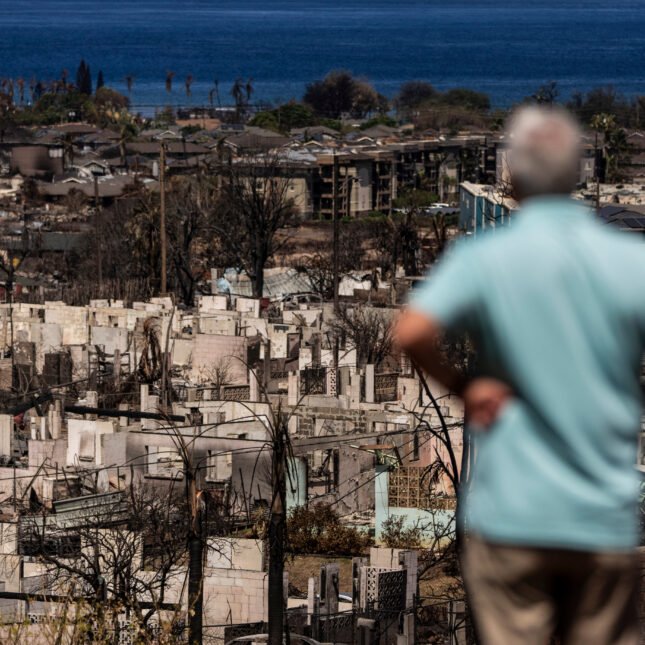
    The wildfires, caused by wind spreading a brushfire spurred by downed power lines, burned on the Hawaiian island of Maui in August 2023, destroyed the town of Lāhainā and killed more than 100 people. They were among the deadliest in U.S. history.

    New research published in the journal Proceedings of the National Academy of Sciences on Monday found higher metal levels, associated with respiratory harm, in nearby residents up to a year and a half after the fires.

    As part of the Maui Wildfire Exposure Study, one of the largest postfire investigations in the country, University of Hawai‘i researchers studied the urine of 1,400 adults. They found substantially elevated concentrations of metals such as arsenic, cadmium, copper and antimony.

    Chemicals from burned buildings and electronics

    These metals could be the result of burned buildings, vehicles, electronics and other materials lost in the wildfires, the researchers say. They can cause a different human impact than simply the burned vegetation that is typically studied after fires of this magnitude.

    “What we’re dealing with, especially in the aftermath of what we experienced in Lāhainā, is a much more complicated mixture of these chemical exposures,” said Alika Maunakea, co-principal investigator of MauiWES and an anatomy, biochemistry, and physiology professor at the University of Hawai‘i, Mānoa.

    Alika Maunakea: Consequences of fire “can unfold over many years.”
    Crystal Milner/STAT

    The researchers found antimony nearly 40 times higher in the Maui participants than U.S. biomonitoring data. They found manganese 3.8 times higher, barium 2.3 times and arsenic 2.2 times.

    Having more metals in the body was more likely to result in abnormal lung function, such as having less breathing capacity and difficulty moving air in and out of one’s lungs, during standard breathing tests, the study found.

    Those lung effects aligned with the geographic distribution of smoke and ash; those nearest to Lāhainā, and Wailuku and Kahului, experienced a different impact than in those near Kula.

    “It’s really important to identify potential sources of these exposures and to mitigate and reduce potential risks for re-exposures that might be contributing to these effects,” Maunakea said. “What happens to the land and environment can shape what people breathe, take into their bodies, and develop over time. The consequences of that can unfold over many years.”

    Warming planet can worsen wildfires

    Wildfires are getting larger, more intense, faster-moving and more frequent in certain parts of the globe, experts say, in part due to the warming and drier weather associated with climate change. Human-caused climate change has upped the likelihood of many major fires around the world in recent years and led to fires in regions that typically do not see them as often.

    The researchers did note a limitation of the study in that it cannot assess exactly how much of the impact came directly from the wildfires versus chronic or other exposures — such as Hawai‘i’s geology, diet, historic agricultural and industrial activity and environmental sources — given there is no comparable data from before August 2023.

    However, previous studies have also found significant long-term human impacts from wildfires and other environmental crises. The impacts have included lung issues and mental health issues such as depression.

    “This is bigger than wildfires. These climate-related disasters can change the environment in ways that continue after the immediate emergency is over,” said Ruben Juarez, co-principal investigator of MauiWES and professor of health economics at the university. “Floods, hurricanes, fires, and other disasters definitely can disturb soil, debris, buildings, and legacy contaminants that we have in Hawai‘i, creating these pathways for exposure. … Disaster response should not stop when visible danger is gone.”

    Kekoa Taparra, a physician and assistant professor who studies chronic diseases at the University of California, Los Angeles, said the research expands our understanding of the health burden of the fires, particularly over an extended period.

    “This type of work echoes that climate-related disasters affect human health well beyond the immediate injuries and deaths we see during the event itself,” said Taparra, who was not involved in the study released Monday but has studied the health impacts of disasters. “Historic wildfires in Lāhainā  and even Los Angeles have highlighted how these disasters can produce longer-lasting consequences through displacement, disruption of healthcare and social networks, environmental exposures, and potentially increased mortality.

    “As these events become more frequent and severe, understanding and measuring their full health impact will be essential to building more resilient communities and health systems.” — Alexa St. John