Tag: Public Health

  • People Say These Peptides Hurt Them. Their Stories Are Muffled in MAHA’s Push for Medical Freedom.

    People Say These Peptides Hurt Them. Their Stories Are Muffled in MAHA’s Push for Medical Freedom.

    After the third day of squirting an experimental drug up his nose, Dylan Meetze felt horrible.

    “It was like I was underwater, like it took the most to do anything,” he said.

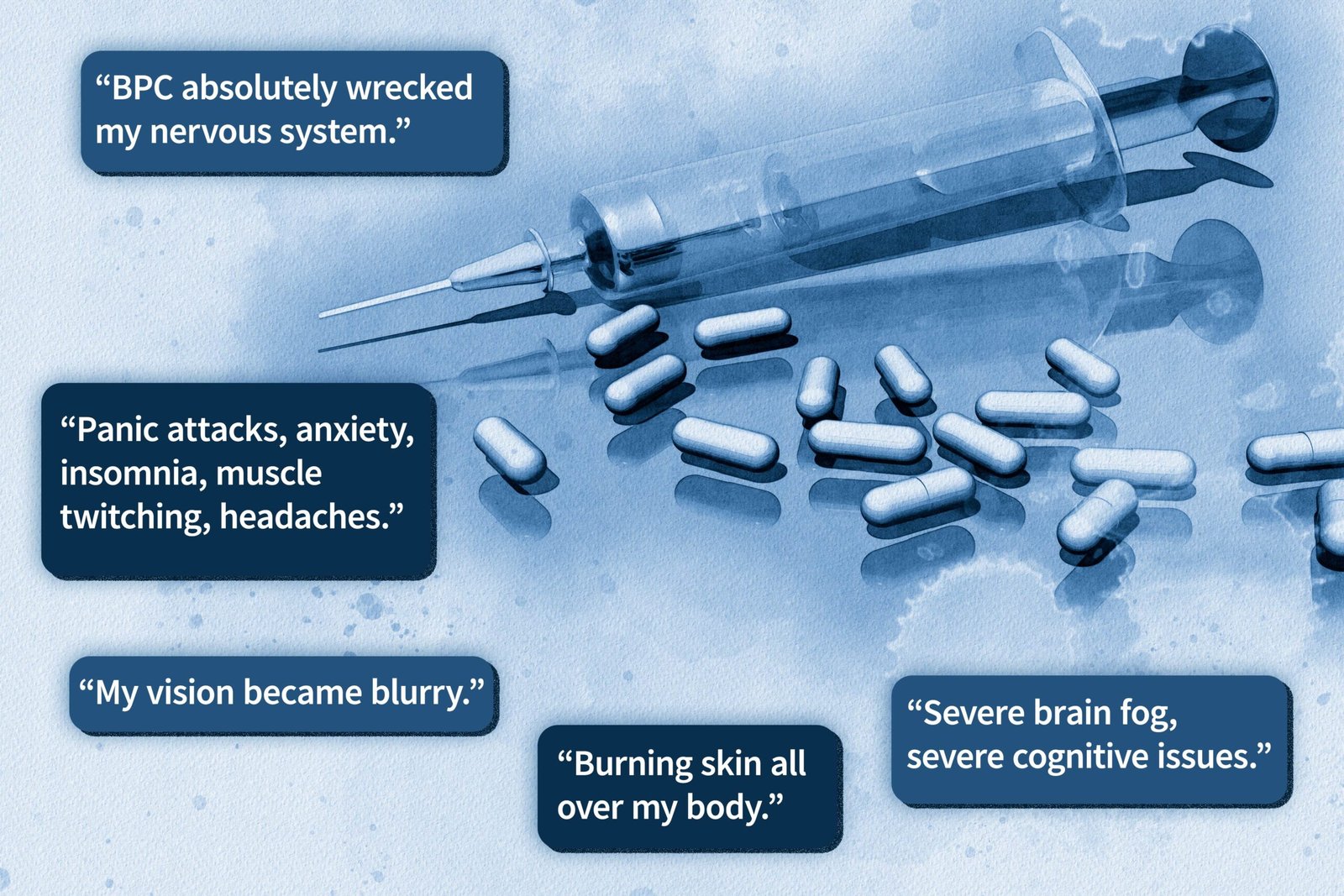
    Meetze stopped taking the drug but endured fatigue and anxiety for months afterward, and his eyes and muscles twitched, he said.

    He had taken BPC-157, a peptide drug popularized by podcasts about wellness, longevity, and what’s called “body optimization.” “Peptide” is a general term for substances that are smaller than proteins but composed of the same building blocks. Dozens of peptide drugs, including insulin and GLP-1 weight loss medicines, have garnered approval by the Food and Drug Administration. But BPC-157 and many others have not because they haven’t undergone clinical trials.

    This fact hasn’t stopped online influencers from promoting them as remedies for muscle injuries, gut issues, covid, and more. Use of BPC-157 is growing in the U.S., particularly among white males, according to a new analysis of millions of de-identified electronic health records. Since 2020, the analysis, which hasn’t yet been published in a peer-reviewed journal, found that more than 1,000 people told doctors they had used the drug.

    Meetze said he decided to take BPC-157 after listening to Andrew Huberman, a Stanford neuroscientist with more than 16 million followers on YouTube, Instagram, and TikTok, who talks up peptides frequently on his podcasts. Studies in mice suggest that BPC-157 helps muscles heal and has “very high safety profiles,” Huberman has said, “at least, with respect to the lethal dosing.” His guest on one episode, Craig Koniver, a doctor who sells peptides through his wellness clinic, called BPC-157 “super safe” and recommended it for “anyone who’s working out on a regular basis.” Koniver did not respond to requests for comment.

    Huberman didn’t respond to multiple queries from KFF Health News, but an automatic reply linked to a disclaimer on his Huberman Lab website that says the podcast doesn’t constitute medical advice: “Any reliance on information provided through the podcast is solely at the user’s own risk.”

    Hoping BPC-157 might help him advance as a weightlifter, Meetze said he bought the drug last year from an online vendor, Researchem. A chemical supply company with that name sells experimental peptides through its website, warning that the substances are “solely for laboratory research” and are “not intended for human consumption.” (It lists an address in Hillsboro, Oregon, that corresponds to a shared office space. A receptionist at the space said Researchem wasn’t registered there, and multiple queries from KFF Health News to the email address listed on the website went unanswered.)

    Companies are required to warn that experimental peptides, which haven’t been approved by the FDA, are for research use only. But many companies may soon be permitted to drop the warning because of a push by health secretary Robert F. Kennedy Jr. to lower barriers to their use. He and other leaders of the Make America Healthy Again movement have promoted peptides as a way to improve the country’s health.

    On the social media platform X, before he took the helm at the Department of Health and Human Services, Kennedy vowed to end the “aggressive suppression” of “peptides, stem cells, raw milk” and “anything else that advances human health and can’t be patented by Pharma.” (In fact, peptides are heavily patented.)

    He has repeated the pledge since taking office. On Joe Rogan’s podcast early this year, Kennedy said he was a “big fan” of peptides and wanted to make many of them “more accessible.” On a podcast with the co-chair of the MAHA Action committee, Gary Brecka, Kennedy said the FDA’s role should be to assess science, “but not tell people and not tell physicians what they can and cannot prescribe.”

    “If you want to take an experimental drug,” he added, “you ought to be able to do that.”

    Health secretary Robert F. Kennedy Jr. spoke on the Joe Rogan Experience podcast in February, saying he’s a fan of peptides and has used them “on a couple of injuries.” (Clip from YouTube video)

    This summer, Kennedy’s health department appointed doctors with financial stakes in the peptide industry to a panel that advises the FDA. At an FDA meeting in July, the new appointees voted to ease restrictions on six experimental peptides, including the trendy compounds BPC-157, TB-500, and MOTS-c. Specifically, they advised adding these peptides to a list, called 503A, that would allow specialized pharmacies to make the drugs for human use, even though the FDA hasn’t approved them.

    In an email, HHS spokesperson Emily Hilliard wrote that every committee member satisfies the FDA’s ethics requirements. “FDA — not podcasts or politics — determines which substances qualify for inclusion on the 503A Bulks List,” she wrote. The FDA has yet to issue a final decision.

    The vote went against FDA scientists who presented research on the six peptides, concluding there wasn’t enough evidence to show they improved any condition. Furthermore, the scientists highlighted a potential for liver damage, allergic reactions, or other serious consequences.

    “People are saying this is about medical freedom — putting decisions back in the hands of patients,” said Reshma Ramachandran, a regulatory science researcher at Yale School of Medicine. “But what we see in practice is that incentives aren’t actually centered around patients. They’re centered around selling products.”

    Scientists also warned that drugmakers would be reluctant to invest millions of dollars into clinical trials on peptides if they could be sold without FDA approval.

    “The chances of clinical trials getting done now are diminished,” said Eric Topol, executive vice president of Scripps Research, a biomedical science institute in San Diego. “We will have more people who are prey to predators that will sell, sell, sell.”

    A lack of data leaves consumers in the dark.

    Meetze sought help on Reddit, where people post about pain, headaches, vision problems, and a lack of motivation after taking experimental peptides. Peptide enthusiasts often comment on these posts with skepticism, attributing a person’s problems to contaminated products, preexisting conditions, or misuse of the drugs. The online vitriol in the Reddit conversations can be intense, so Meetze welcomed an invitation to join a private group on the social platform Discord in which people with BPC-157 side effects tried to figure out what happened to them and how to fix it.

    “There are millions of success stories with these peptides,” Meetze said, “but no one wants to believe that this wrecks some of our lives.”
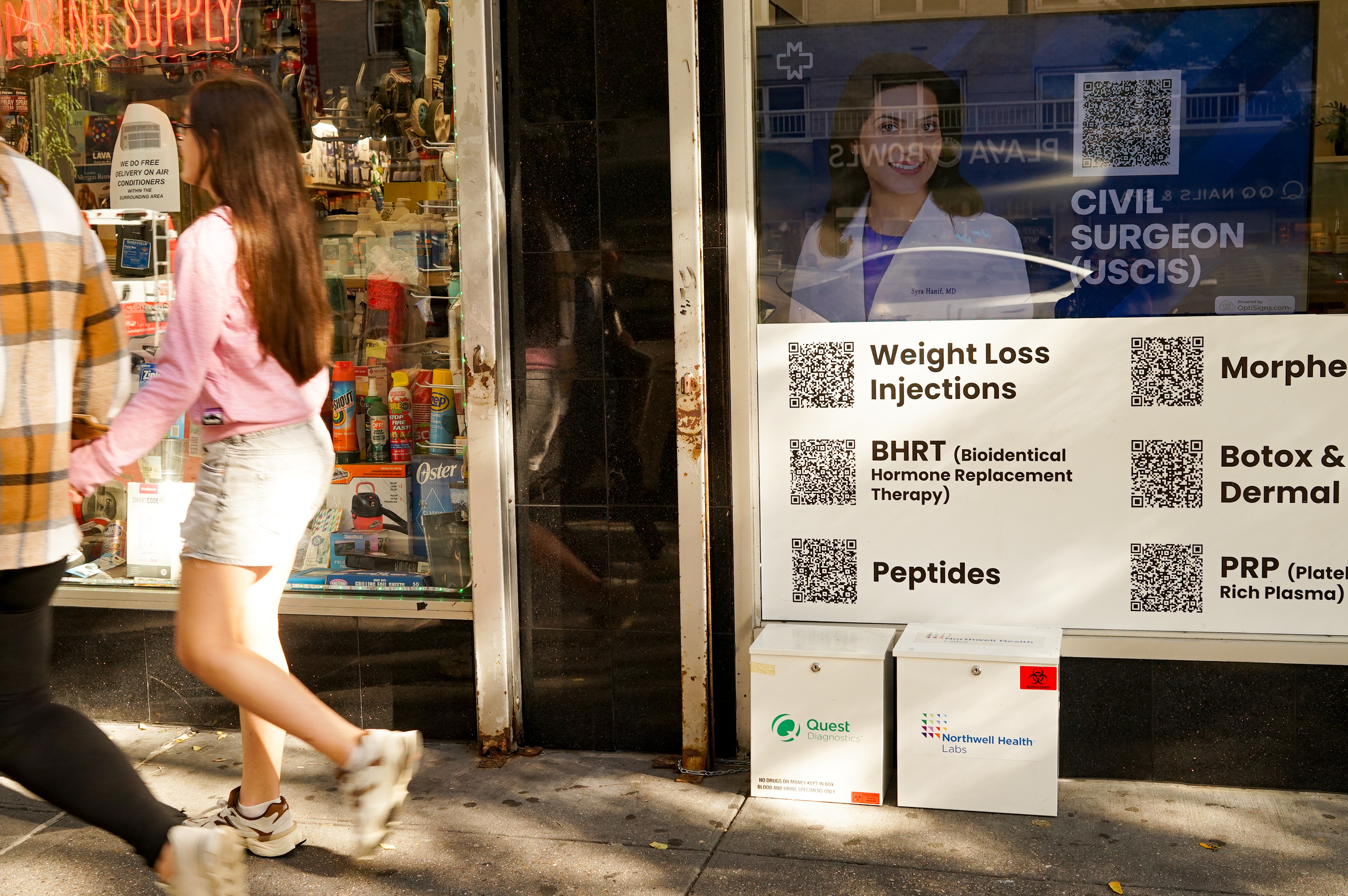
    Two passersby walk past a wellness clinic. It has a sign that advertises peptides alongside weight-loss injections, bioidentical hormone replacement therapy, and botox.
    Experimental peptides are often sold at longevity, wellness, and “performance medicine” clinics — even though they haven’t been proved safe and effective in clinical trials. (Amy Maxmen/KFF Health News)

    Wolverines and Migraines

    One member of the private side-effects group, a 46-year-old software engineer named Dominik E., said he got an excruciating migraine within days of taking BPC-157 with TB-4, another unapproved peptide — a combination called the “Wolverine Stack” because of its purported ability to heal wounds rapidly, like its namesake Marvel superhero.

    “My left eye started throbbing really badly, and the left side of my face became numb,” he told KFF Health News, which agreed to only partially identify him and others interviewed for this article who were concerned about divulging sensitive health information.

    After two months of migraines, Dominik said, the pain eased, but his face felt inflamed. “It is a total nightmare,” he said.

    “I’m afraid how people will judge me,” said Lois S., a woman who works at a Michigan elementary school. She hoped BPC-157 and another unapproved peptide, retatrutide, would help with weight loss, but she stopped taking the treatment when she felt pain.

    “I sought out this substance from a lab that clearly labeled it not for human use, purchased a syringe, and injected this in my kitchen,” she said. “That belies all logic about what a normal person would do.”

    Peptide proponents argue that shoddy manufacturing — not the peptides — causes harm. Therefore, they say, the FDA must protect the public by allowing doctors to prescribe peptides made for human use by pharmacies that specialize in compounding medicines. Typically, compounding pharmacies manufacture alternatives to FDA-approved drugs so a patient can, say, get a liquid version of a drug that the original manufacturer makes only as pills.

    Adding unapproved peptides to the FDA’s list of compoundable drugs would mark a departure from the list’s purpose, said Peter Lurie, a former FDA official who now directs the advocacy group Center for Science in the Public Interest. He noted that federal and state oversight for compounding pharmacies is often lax, and they’ve been cited for contamination.

    Furthermore, he added, the move would mislead consumers into thinking they’re buying drugs backed by clinical trials. People promoting peptides often point to promising laboratory research as evidence. Rats with spinal injuries regained tail mobility after BPC-157 injections, for example, and old mice given the experimental peptide MOTS-c could run longer. On average, however, fewer than 10% of substances that show promise in animal studies prove effective in clinical trials.

    “A lot of this pseudoscience stuff sounds deeply impressive — inflammation this and telomere that — but at the end of the day, none of it really matters,” Lurie said. “You’ve got to show clinical benefit in humans: Does it work?”

    Peptide promoters lean on anecdotes, often without verifiable numbers. In a podcast recorded at the White House, the MAHA influencer Brecka said: “Twenty million people have been prescribed these things without adverse events.” His guest on the episode, Brigham Buhler — who is the co-author of The Peptide Revolution and owner of a compounding pharmacy that sells peptides and a clinic, Ways2Well, that prescribes them — told Brecka that none of its 75,000-plus patients had reported adverse events from peptides.

    Buhler cited even higher numbers in the movie MAHA Uncensored, a documentary featuring Kennedy and other leaders of the MAHA movement and that bears the MAHA trademark. In the segment on peptides, Buhler said: “Having treated literally hundreds of thousands of people through our compounding pharmacy, we’ve never had a major adverse event.”

    Topol asks why those boasting success haven’t conducted clinical studies. “If influencers and companies really believe these peptides are helping people,” Topol said, “then they should put their profits back into rigorous research.”

    Chris Woodward, a spokesperson for Brecka and his company, the Ultimate Human, said in an email that the health and wellness issues discussed on Brecka’s podcast do not constitute medical advice. “Mr. Brecka consistently advises his audience to consult a licensed physician,” Woodward wrote. Buhler did not respond to requests for comment.

    On an episode of his Ultimate Human podcast recorded in the White House, Gary Brecka, a co-chair of the MAHA Action committee, promoted peptides that haven’t been approved for safety and effectiveness by the FDA.

    Not all anecdotes are rosy. At an antiaging conference last summer in Las Vegas, two women were rushed to the hospital and intubated after being injected with experimental peptides and vitamins, according to citations that Nevada’s state pharmacy board issued against the doctor running the booth and his colleagues for prescribing and administering drugs without a state medical license.

    An FDA database for adverse events contains concerning reports. Although the database can’t prove that a drug, vaccine, or medical device caused harm — the reports are brief, unverified, and voluntary — it signals issues worth exploring. A 36-year-old woman was hospitalized in December after taking the experimental peptide BPC-157 for weight control and a skin disorder, for example, and a 48-year-old man was hospitalized with a “life-threatening” condition after taking the peptide.

    FDA scientists presented some of these reports at the July meeting and flagged worrisome outcomes in animal experiments, such as a 2020 study revealing signs of liver toxicity in rats and dogs injected with BPC-157.

    Brian Lee, a liver disease specialist at the University of Southern California, was among the panel’s minority who voted against easing restrictions. Without clinical studies, he said, afflictions that take time to develop, like liver damage and cancer, might not be spotted for years: “I think this endorsement can be potentially harmful, and I cannot in good conscience vote ‘yes.’”

    The panel’s newcomers disagreed. “I do not believe the FDA made a good case on issues with safety with BPC,” said Kris Wusterhausen, founder of an antiaging company in Texas, the Resurge Clinic, which sells a BPC-157 product for $149.

    “Once you’ve seen the effects of BPC,” he said, “you can’t unsee it.”

    At an FDA meeting in July, Brian Lee, a liver disease specialist at the University of Southern California, voted against easing restrictions on the experimental peptide BPC-157, citing safety concerns.

    Awaiting Trial

    Deepak Srivastava, president of the Gladstone Institutes in San Francisco, designed a clinical trial two decades ago to see if a peptide he studies, TB-4, could repair tissue after a heart attack. Before enrollment, people volunteering for the study would be screened for early signs of cancer because TB-4 triggers vessel growth and cell migration, which might exacerbate malignant growths. He worries about the FDA panel’s vote to ease restrictions on a derivative of TB-4, before such trials have been completed, saying, “You need to have a healthy respect for the fact that drugs can be harmful.”

    Pinchas Cohen, a peptide researcher at the University of Southern California, was less cautious, saying the FDA buzz might drive investors to fund trials. He’s seeking support to bring a peptide his lab identified, MOTS-c, to market. It’s “un-ideal” for people to take unproven drugs, Cohen said, but that’s what’s happening: “The world is changing and people like me need to accept that this is the new reality and find ways to make it as safe as possible.”

    In the meantime, people like Meetze resort to podcasts and online forums for advice. His symptoms faded after a year, but he still had spells of feeling “zero emotions.”

    Peptide users describe this condition as anhedonia. It’s come up on Huberman’s podcasts.

    Huberman occasionally mentions other potential peptide risks, like cancer, sprinkling them into advice on how to take them. Take a 2024 episode with 1.2 million views: “I do not think that BPC-157 is not without its quote-unquote ‘side effects,’” Huberman says. “If you’re going to go down this path of taking BPC-157, I would encourage you to take the minimal effective dose, to not simply do it every day, and certainly to not do it continuously, and of course to monitor your other health metrics for anything that could potentially resemble cancer or tumor growth, because obviously stimulating angiogenesis for wound repair sounds like a great thing, recovering and being able to do your workouts or play your sport, or move about more comfortably, of course, a wonderfully attractive thing to do.”

    “Isn’t that what we all want? But obviously not with the trade-off of growing a tumor,” he said, before interrupting the discussion to advertise a supplement company sponsoring the show.
  • Americans trust science more than peers around the world, survey shows

    Americans trust science more than peers around the world, survey shows

    Americans have more trust in science than most of the rest of the world, according to a new survey of people in 140 countries, a finding that may seem difficult to explain in a country deeply divided by issues such as the benefits and harms of vaccines. 

    According to the newest edition of the Wellcome Global Monitor, 52 percent of Americans report having “a lot” of trust in science. Across the globe, that number is a mere 26 percent. 

    Americans, in aggregate, are also more eager to get vaccines compared to peer nations; 45 percent of Americans say they would want to get vaccines recommended by a nurse or doctor “right away.” In Germany only 28 percent say the same. 

    And while the share of people globally who agree that science benefits most people in their society has dropped from 42 percent in 2018 to 37 percent in 2025, the share of Americans who agree with that statement has actually increased from 48 percent to 57 percent. 

    But the aggregate statistics don’t tell the whole story. STAT’s analysis of the Wellcome data demonstrates that while America may, in general, appreciate and trust science, it is also far more divided than peer nations. 

    Take the religious divide: According to STAT’s analysis there was, on average, a 5 percentage point gap between the percentage of religious  and non-religious people in high-income nations who said science benefits most people in their country. In the United States that gap was 24 percentage points.

    A similar divide — 19 percentage points — separates urban and rural Americans on the question of science’s benefits. The divide across other high-income nations is just three points. Education level divides Americans as well — just 47 percent of Americans without  four-year degrees reported believing  that science benefits most people, compared to 71 percent of college grads. 

    Wellcome, a British foundation focused on scientific research, funded the survey in 2018, 2020 and 2025. The most recent version was administered as part of the Gallup World Poll through a combination of in-person, telephone and online surveys of more than 140,000 adults. The global findings were weighted “to ensure that global estimates accurately reflect the relative populations of countries in the survey.” 

    The survey does not offer an explanation for why the United States appears to be outpacing its peers on trust. But at least some of Americans’ seeming polarization may be explained by Americans’ tendency toward extremes. 

    Americans are “more extreme responders to public opinion surveys,” said Matthew Motta, an associate professor at Boston University School of Public Health who is an expert on public opinion research. 

    For example, a smaller proportion of Germans than Americans said they would “not get vaccines at all.” Only 8 percent of Germans were completely anti-vaccine, compared to 13 percent of Americans. Instead, the vast majority of Germans said they would “prefer to think about it for some time.”  

    The survey also showed that Americans who historically have been less trusting are not necessarily souring on science and its benefits. STAT’s analysis finds that the proportion of Americans who identify as religious and who believe science benefits most people increased by four percentage points, from 46 percent in 2018 to 50 percent in 2025. Self-reported religious Americans are also more likely to report an eagerness to be vaccinated when compared to peer countries.

    A similar pattern plays out with Americans without  four-year degrees. The percentage of non-college grads who say science benefits most people increased by three percentage points over that seven-year period, and they too are more likely than residents of peer nations with similar education to want vaccines right away. 

    So  what is causing America’s growing divide over trust in science? The poll shows it is growing enthusiasm for science among highly educated, secular Americans. Both reported substantial increases in their appreciation of the benefits of science: 13 percentage points for college grads, and 15 percentage points for secular Americans over seven years, the Wellcome survey found. 

    In short, America is divided not because certain groups are souring on science, but because others are becoming more appreciative of its benefits. 

    That might seem like good news. But the divide nonetheless underscores that the benefits of science are not reaching a large swath of Americans in ways they can see and feel.

     “People are feeling left behind, they are not understanding how this benefits me,” said Brian Castrucci, president and CEO of the de Beaumont Foundation, which focuses on strengthening public health. 

    Some divisions facing Americans will be difficult to combat in a country as large and diverse as the United States. City dwellers with cancer who can access care at a top-rated university medical center will inevitably see science’s impact on their lives more than people in a rural area who might have to travel a great distance for even the most basic hospital care.  

    Wellcome found that trust in science is closely associated with confidence in a nation’s health care systems, which presents a problem for the United States as well. Just 40 percent of Americans reported a lot of confidence in U.S. hospitals and health clinics, the same proportion  as in Portugal and Uruguay. 

    Anti-science sentiment coming from America’s top political officials is likely playing a role too, several experts said. Diverging views on science among America’s political parties became apparent during the Tea Party movement of the 2010s and was amplified during Trump’s presidency, said Yotam Ophir, an associate professor of communication at the University at Buffalo. 

    But experts STAT spoke to underscored that this new data doesn’t just indicate the need for the sorts of systemic changes that can take decades to fulfill. Scientists need to hone their ability to discuss the benefits of science in people’s everyday lives, and to stop expecting the public to blindly trust them, several experts told STAT.  

    “What we need to do is be better communicators, not better debaters. We are not going to be able to lecture people into trusting us,” Castrucci said.

    Mark Henderson, Wellcome’s executive director of corporate affairs and engagement, said scientists who wish to take steps based on the report’s findings should “meet people where they are.”

    “Approach people on a level with understanding and engagement and respect, and you’re going to get a better outcome,” Henderson added. “It’s not rocket science, but it often surprises me how hard people in the scientific community find it to do that.”

  • These 100 Nursing Homes Face Perilous Flood Risk. Minnesota Shows What Can Happen.

    These 100 Nursing Homes Face Perilous Flood Risk. Minnesota Shows What Can Happen.

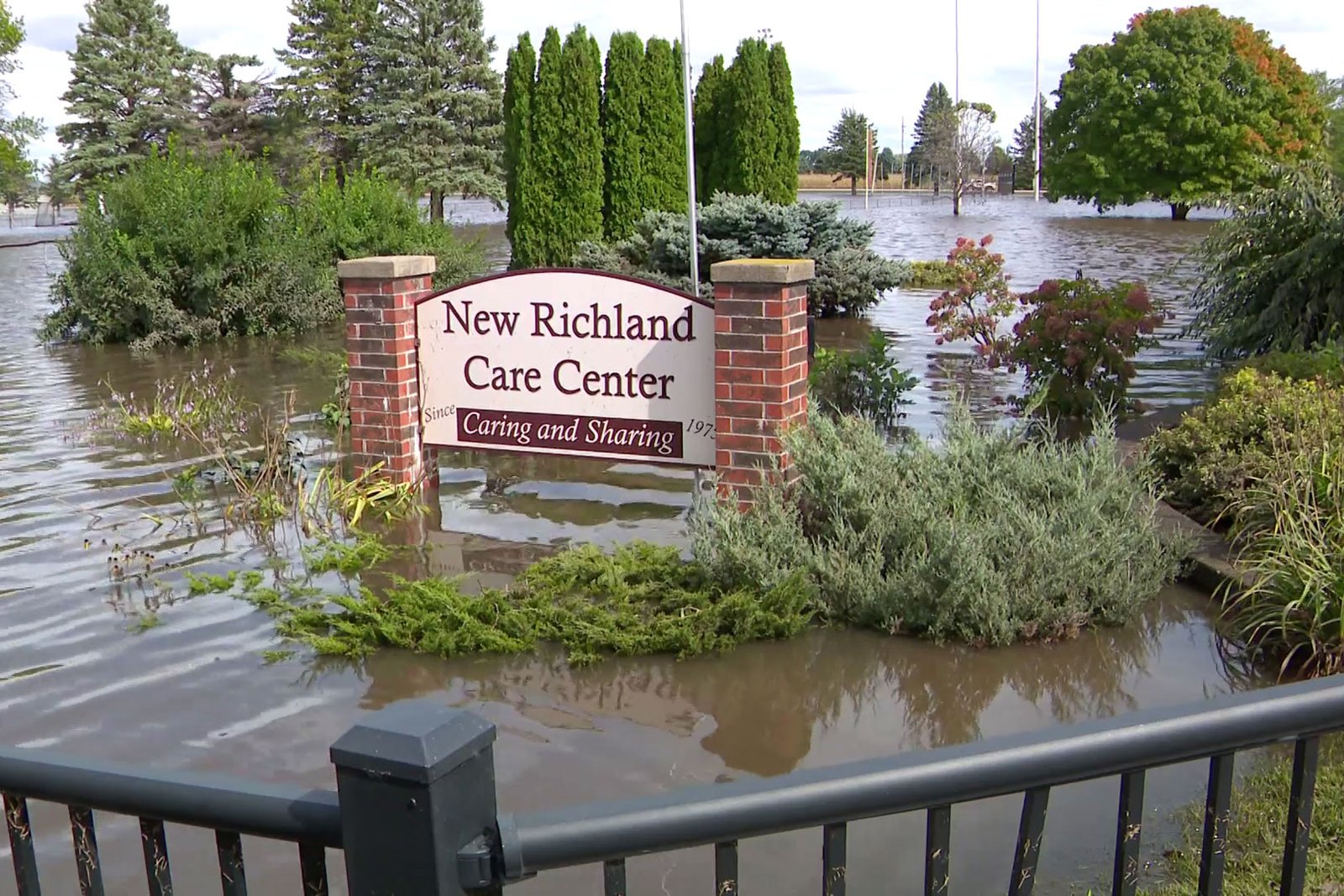
    NEW RICHLAND, Minn. — Floodwater seeped through the nursing home’s front door just before sunrise.

    Inside the New Richland Care Center, staff members rushed to move 36 residents out of the building on Sept. 19 while they still could. They pushed elderly residents in wheelchairs through 4-inch-deep water to buses waiting in the parking lot, said nursing home administrator Robert Johannsen.

    Inches turned to feet as the last three residents were wheeled out on hospital beds, lifted “as high as they can go” to escape the rising water, Johannsen said. Firefighters and volunteers from a high school football team pushed the beds to safety across the street, he said.

    “It’s pretty devastating,” Johannsen said of the now-shuttered nursing home. “There was at least 2½ feet of water flowing down the hallways.”

    The small-town, government-run nursing home is about 100 yards from a drainage ditch in southern Minnesota. It has flooded three times in 16 years, including during the September storm that was large but far from historic, according to the National Weather Service.

    New Richland is one of 100 U.S. nursing homes that face some of the nation’s worst flood risk — where at least 2 feet of water during a big storm could endanger residents — according to a KFF Health News analysis of peer-reviewed flood hazard mapping provided by Fathom, a United Kingdom-based company considered a leader in flood simulation.

    The KFF Health News analysis builds upon a 2025 investigation that used Fathom’s mapping to identify at least 170 U.S. hospitals at risk of significant flooding. Fathom’s estimates are generally seen as more modern than official flood maps released by the Federal Emergency Management Agency, which are often out of date and don’t account for the changing climate.

    “Every community across the United States carries some level of flood risk,” said Oliver Wing, the chief scientific officer at Fathom. “There is this idea that unless you can either see the ocean or the Mississippi from your front room, then you’re not at risk of flooding — when the reality is that anywhere rain can fall, it can flood.”

    The U.S. has nearly 15,000 nursing homes housing more than 1.2 million people. In floods and other disasters, the residents are especially vulnerable because many are medically frail, cognitively impaired, or immobile. Some require daily care that can’t be reliably provided during a disaster, yet they are also so fragile that relocation could send them to the emergency room.

    Additionally, many nursing homes were built near coastlines or waterways in the 1970s, before widespread concern about climate change, to keep residents cool and content, said David Dosa, the head of geriatrics at the UMass Chan Medical School.

    “It’s a lot more comfortable than being in an urban jungle,” Dosa said. “Obviously, now you’re in places that are a little more at risk.”

    Dosa has studied nursing home evacuations since Hurricane Katrina flooded the New Orleans area in 2005. Dozens of people were killed in facilities that tried to ride out the storm and flooded after the levees broke.

    After Katrina, the nursing home industry pivoted toward evacuations, although some of those decisions also led to deaths, Dosa said.

    In preparation for the next three Gulf hurricanes, more than 270 nursing home evacuations were recorded, according to a peer-reviewed study Dosa co-wrote in 2011. Within the 30 days that followed each storm, the regions hit saw a cumulative total of 277 more nursing home resident deaths than expected, suggesting a “significant increase in mortality and morbidity associated with evacuation,” according to the study.

    “It’s Russian roulette. You’re damned if you do. You are damned if you don’t,” Dosa said of evacuations. “Older adults and disasters don’t mix.”

    A similar study published in 2024 found a 16% greater chance of ER visits among residents of Florida assisted living facilities who were evacuated before Hurricane Irma in 2017. People in assisted living facilities generally need less care than those in nursing homes.

    “Assisted living residents are quite frail in their own right,” said Cassandra Hua, an assistant professor at UMass Lowell, who led that study. “But nursing home residents are usually at higher risk. So anything you see in assisted living might be multiplied in a nursing home setting.”

    Even a few inches of flooding can interrupt nursing home care and force an evacuation. For each of the 100 nursing homes identified by the KFF Health News analysis, Fathom’s data predicted a 100-year flood event could bring at least 2 feet of water to the buildings.

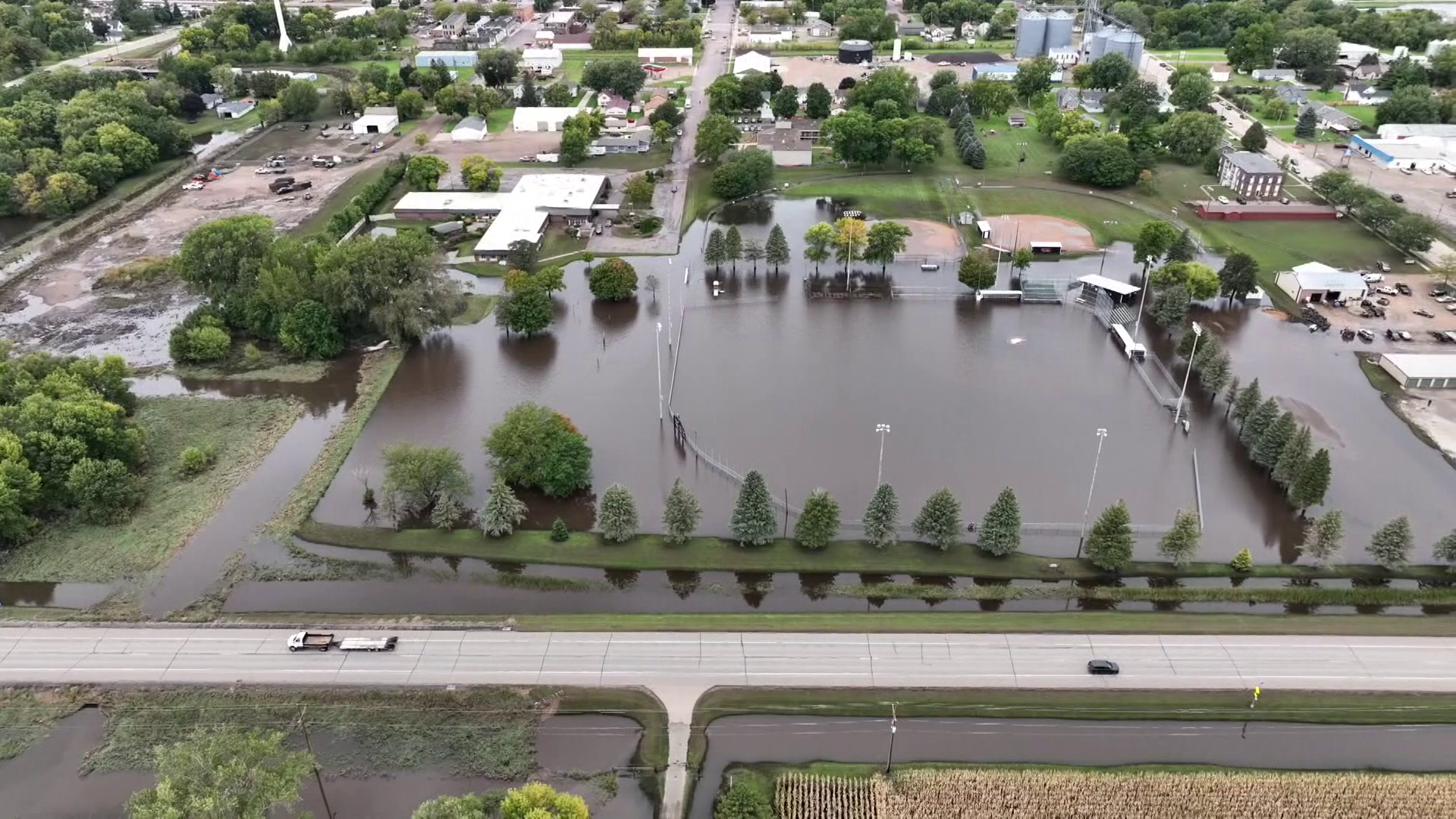
    In an aerial image, a baseball field beside a road is flooded with water. The road is dry.
    Aerial footage shows lingering floodwater in New Richland, Minnesota. The white-roofed New Richland Care Center can be seen along the upper-left edge of the ponding water. (WCCO/CBS Minnesota)

    A 100-year flood is an intense weather event with a 1% chance of occurring in any given year, but it can happen more often. Climate scientists largely agree that extreme weather is worsening as the planet warms, which allows the atmosphere to hold more moisture and causes sea levels to rise.

    And storms are drenching regions once considered at lower risk for flooding, where essential facilities and entire communities might be less prepared, said Drew Gronewold, a University of Michigan climate scientist. In other regions, storms are now less frequent but becoming “off-the-charts” powerful, he said.

    “Storm tracks are changing their trajectory,” Gronewold said. “These types of, in air quotes, ‘unanticipated events’ are going to be part of our future.”

    Some of the nursing homes KFF Health News has identified as at risk have flooded in the past five years, including facilities in Florida, Kentucky, Texas, and Washington.

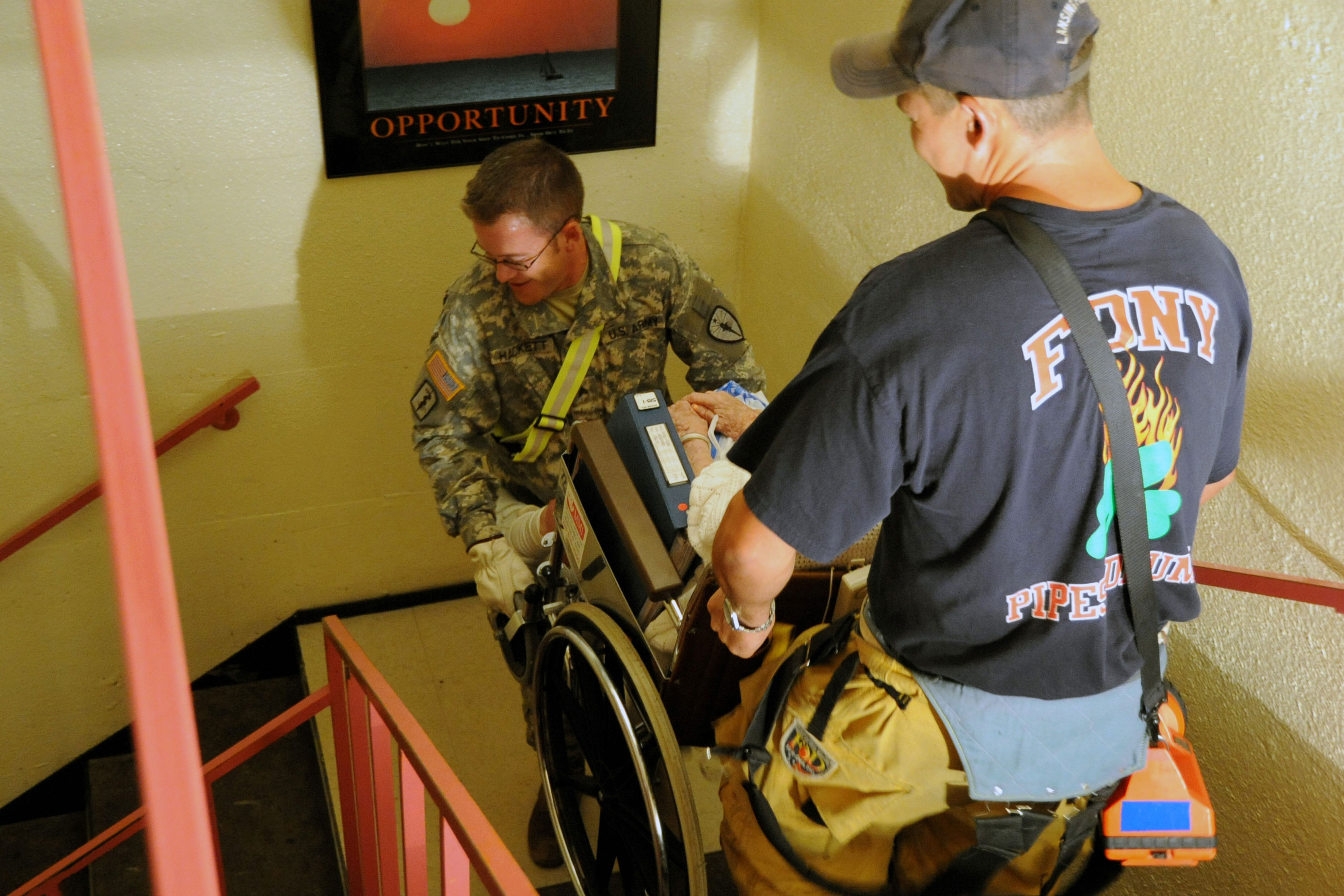
    Five of the facilities flooded in 2012 as Superstorm Sandy clobbered New York, according to a report from the Natural Resources Defense Council, while a sixth, the elevated Seagate Rehabilitation and Nursing Center, narrowly rode out the storm. In Indiana, more than 150 people were evacuated from the five-story Munster Med Inn during Hurricane Ike in 2008. Members of the National Guard carried some residents down flights of stairs in the dark.

    A photograph from above of two men carrying a person in a wheelchair down a flight of stairs.
    Rescuers from the Indiana National Guard and the Munster Fire Department evacuate a resident of the Munster Med Inn in Indiana, in the wake of Hurricane Ike in 2008. More than 150 residents were evacuated, according to a U.S. Army news release. (Michael B. Krieg/Indiana National Guard)

    Then there is the New Richland Care Center. Local media reports show it was evacuated due to flooding in 2010 and 2016, then partially surrounded by floodwater in 2023, before the Sept. 19 evacuation.

    Storms dropped 4 to 8 inches of rain on much of southeastern Minnesota the day before, setting off widespread flooding, said National Weather Service meteorologist Brennan Dettmann. The rainfall was heavy for September but would not have been out of place in July, he said.

    It was too much for New Richland. Storm runoff from nearby farms pooled in a low-lying baseball diamond at the edge of town before swamping nearby streets. Johannsen, the nursing home administrator, said maintenance workers who were trying to fix sewer drains called him in the middle of the night to warn about flooding in the park across the street.

    “They said, ‘You need to come in. The water is rising,’” Johannsen said. “At that point, I think the water was a good 30 feet away from the building. I wasn’t really concerned.”

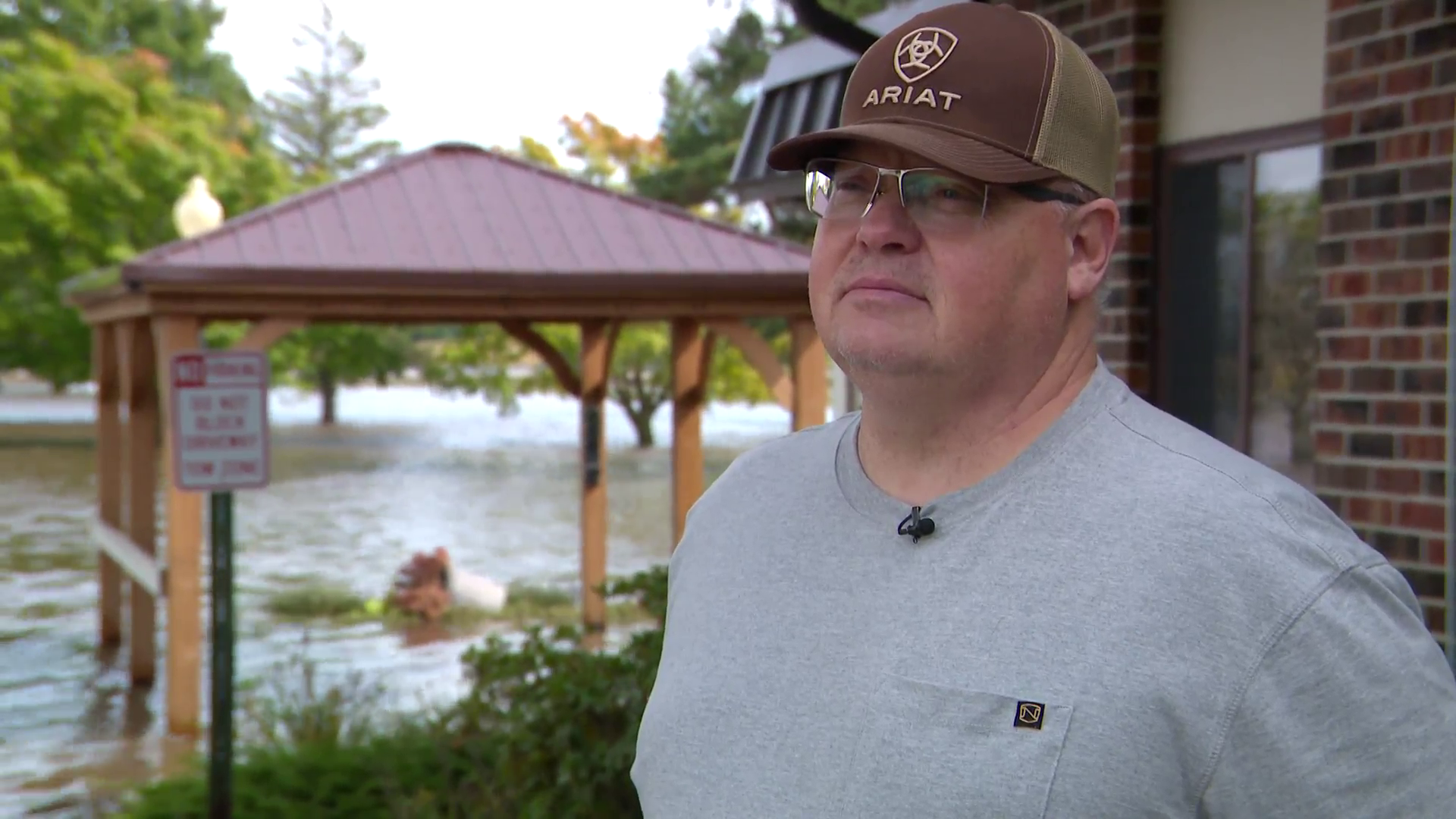
    A man stands in front of a building and the area next to the building behind him is flooded with water.
    The New Richland Care Center in southeastern Minnesota flooded on Sept. 19, forcing the evacuation of 36 residents. Some residents were pushed on hospital beds through feet of floodwater to escape the facility, administrator Robert Johannsen says. (WCCO/CBS Minnesota)

    Wing, the Fathom scientist, said the danger should have been obvious. Although Minnesota’s natural landscape once would have absorbed heavy rains, the farmland around New Richland funnels runoff into creeks and ditches that lead to a low-lying bowl near the nursing home. It’s almost as if the location is designed to flood, Wing said.

    “The choice has been made that we don’t want water in our crop fields. We want it in the nursing homes of vulnerable people,” Wing said. “That’s the choice that has been made, politically, in that part of Minnesota.”

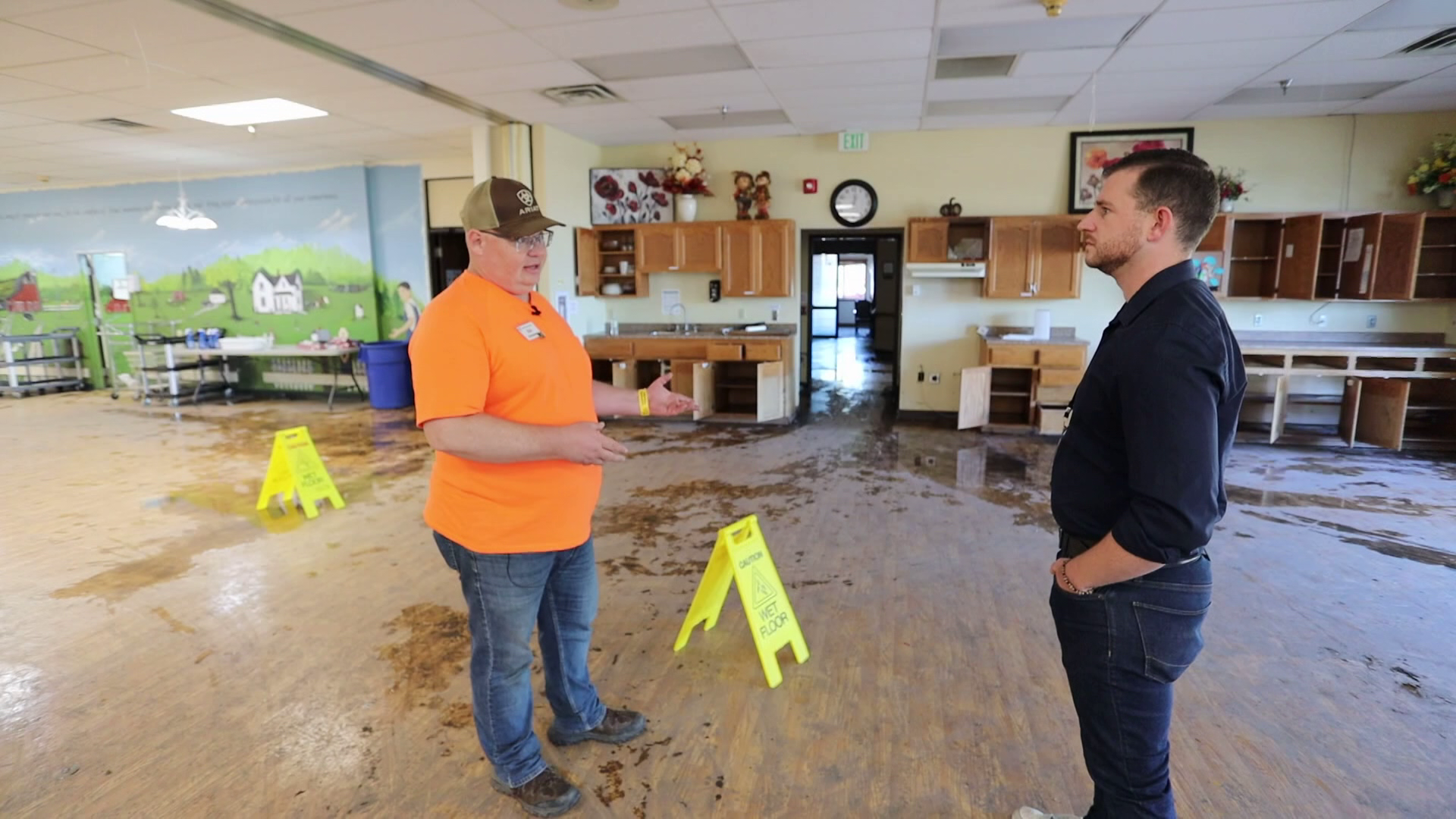
    Inside the ruined nursing home, receding floodwaters left behind knee-high watermarks, mud-smeared floors, and a lingering smell that Johannsen said reminded him of growing up on a farm. Water destroyed treasured photo albums left behind in a low cabinet, he said.

    Johannsen said the nursing home — which, with 85 employees, is one of the largest employers in town — will be closed for five months to a year for repairs. He said all its residents were moved into a school gymnasium and have been resettled across about nine area nursing homes.

    “It was an awful experience that I hope nobody ever has to go through. Because these people lost homes,” Johannsen said. “My staff is losing their jobs. And I don’t know what to do.”

    Two people stand inside a large room and talk. Areas of the floor have standing water and two
    New Richland Care Center administrator Robert Johannsen (left) examines the damaged nursing home in the wake of a Sept. 19 flood that forced the evacuation of 36 residents. Johannsen says the facility will be closed for months for repairs. (WCCO/CBS Minnesota)

    Methodology

    For this analysis, we used data from Fathom, a United Kingdom-based company that specializes in flood-risk modeling worldwide. To assess the United States’ vulnerability, Fathom uses sophisticated computer simulations and detailed terrain data covering the country. It accounts for environmental factors such as climate change, soil conditions, and many rivers and creeks not mapped by other sources. Fathom’s modeling has been peer-reviewed and used by insurance companies, the World Bank Group, the Nature Conservancy, and government agencies in Florida, Texas, and elsewhere. The Iowa Flood Center has validated Fathom’s U.S. data.

    Through a data use agreement, Fathom shared U.S. mapping data that predicts areas with at least a 1% chance of flooding in any given year. Fathom’s data estimates the effects of coastal, fluvial, and pluvial flooding and accounts for dams, reservoirs, and other structures that defend against floods.

    To identify at-risk nursing homes, we used a Centers for Medicare & Medicaid Services database to map more than 14,000 nursing homes. With GPS coordinates as the center point, we created a circle with a 100-yard radius around each nursing home, which in most cases captured the building and nearby grounds. We then mapped Fathom’s flood-risk data to see where it overlapped with these circles. We started by looking for nursing homes where at least 20% of the circle’s area had a predicted flood depth of at least 1 foot. That gave us an initial list of more than 750 nursing homes.

    Then we visually inspected those facilities using mapping software and Google Maps to confirm that floodwaters were predicted to reach or surround the buildings. We trimmed our list to the 100 nursing homes where the most flooding was predicted, with additional weight given to deeper water.

    Our analysis does not account for how flooding beyond a nursing home’s footprint could still affect employees or patients. And it does not assess what steps facilities may have already taken to prepare for severe weather events.

    Fathom provided guidance and feedback as we developed our analysis.

  • Risk from toxic metals can persist months after wildfires, Maui study finds

    Risk from toxic metals can persist months after wildfires, Maui study finds

    Metal mixtures found in the leftover smoke, ash and debris from the deadly 2023 Maui wildfires were harmful to the lung health of people living nearby long after the burning ended, a new study says.

    The work shows that major wildfires, which are worsening with the planet’s warming, could have lasting effects beyond immediate exposure.

    Post-wildfire air quality needs to be monitored longer term, the research suggests, and recovery efforts need to consider what might remain in contaminated soot, residue and dirt well after burning stops.

    The wildfires, caused by wind spreading a brushfire spurred by downed power lines, burned on the Hawaiian island of Maui in August 2023, destroyed the town of Lāhainā and killed more than 100 people. They were among the deadliest in U.S. history.

    New research published in the journal Proceedings of the National Academy of Sciences on Monday found higher metal levels, associated with respiratory harm, in nearby residents up to a year and a half after the fires.

    As part of the Maui Wildfire Exposure Study, one of the largest postfire investigations in the country, University of Hawai‘i researchers studied the urine of 1,400 adults. They found substantially elevated concentrations of metals such as arsenic, cadmium, copper and antimony.

    Chemicals from burned buildings and electronics

    These metals could be the result of burned buildings, vehicles, electronics and other materials lost in the wildfires, the researchers say. They can cause a different human impact than simply the burned vegetation that is typically studied after fires of this magnitude.

    “What we’re dealing with, especially in the aftermath of what we experienced in Lāhainā, is a much more complicated mixture of these chemical exposures,” said Alika Maunakea, co-principal investigator of MauiWES and an anatomy, biochemistry, and physiology professor at the University of Hawai‘i, Mānoa.

    Alika Maunakea: Consequences of fire “can unfold over many years.”
    Crystal Milner/STAT

    The researchers found antimony nearly 40 times higher in the Maui participants than U.S. biomonitoring data. They found manganese 3.8 times higher, barium 2.3 times and arsenic 2.2 times.

    Having more metals in the body was more likely to result in abnormal lung function, such as having less breathing capacity and difficulty moving air in and out of one’s lungs, during standard breathing tests, the study found.

    Those lung effects aligned with the geographic distribution of smoke and ash; those nearest to Lāhainā, and Wailuku and Kahului, experienced a different impact than in those near Kula.

    “It’s really important to identify potential sources of these exposures and to mitigate and reduce potential risks for re-exposures that might be contributing to these effects,” Maunakea said. “What happens to the land and environment can shape what people breathe, take into their bodies, and develop over time. The consequences of that can unfold over many years.”

    Warming planet can worsen wildfires

    Wildfires are getting larger, more intense, faster-moving and more frequent in certain parts of the globe, experts say, in part due to the warming and drier weather associated with climate change. Human-caused climate change has upped the likelihood of many major fires around the world in recent years and led to fires in regions that typically do not see them as often.

    The researchers did note a limitation of the study in that it cannot assess exactly how much of the impact came directly from the wildfires versus chronic or other exposures — such as Hawai‘i’s geology, diet, historic agricultural and industrial activity and environmental sources — given there is no comparable data from before August 2023.

    However, previous studies have also found significant long-term human impacts from wildfires and other environmental crises. The impacts have included lung issues and mental health issues such as depression.

    “This is bigger than wildfires. These climate-related disasters can change the environment in ways that continue after the immediate emergency is over,” said Ruben Juarez, co-principal investigator of MauiWES and professor of health economics at the university. “Floods, hurricanes, fires, and other disasters definitely can disturb soil, debris, buildings, and legacy contaminants that we have in Hawai‘i, creating these pathways for exposure. … Disaster response should not stop when visible danger is gone.”

    Kekoa Taparra, a physician and assistant professor who studies chronic diseases at the University of California, Los Angeles, said the research expands our understanding of the health burden of the fires, particularly over an extended period.

    “This type of work echoes that climate-related disasters affect human health well beyond the immediate injuries and deaths we see during the event itself,” said Taparra, who was not involved in the study released Monday but has studied the health impacts of disasters. “Historic wildfires in Lāhainā  and even Los Angeles have highlighted how these disasters can produce longer-lasting consequences through displacement, disruption of healthcare and social networks, environmental exposures, and potentially increased mortality.

    “As these events become more frequent and severe, understanding and measuring their full health impact will be essential to building more resilient communities and health systems.” — Alexa St. John

  • Keeping research data safe: safe people and safe organisations

    Sally Stewart, Programme Director, North West Secure Data Environment, reflects on the importance of public trust when health data is used for research, and how a focus on security and transparency shapes the work of the NHS Research Secure Data Environment Network, including its newly launched Registration Service.