Tag: pharmaceuticals

  • STAT+: Roche inks drug discovery deal with Chinese biotech, focused on molecular glue medicines

    STAT+: Roche inks drug discovery deal with Chinese biotech, focused on molecular glue medicines

    Allison covers what hot startups are getting up to, and who’s financing them. She is also co-host of the weekly biotech podcast, “The Readout Loud.” You can reach Allison on Signal at AllisonDeAngelis.01.

    Roche is digging deeper into the biotech industry in China, striking a new partnership with a drug startup there. But rather than licensing the startup’s clinical-stage medicines, Roche is enlisting it to discover new ones, signaling a potential shift in global drug development. 

    Chinese startup Defand Therapeutics said Thursday that it had signed a collaboration deal with Roche to develop molecular glue medicines. Under the deal, Defand will discover and develop multiple drugs for cancer and immune-driven diseases. The financial terms were not disclosed, but a source with knowledge of the agreement said it could be worth close to $1 billion between the upfront fee and payments Defand could get if it meets various preclinical, clinical, and regulatory goals. 

    Molecular glue therapies are a buzzy new area of drug development, designed to create a sticky, more effective connection onto problematic proteins to destroy them. Development of these drugs has just begun to accelerate, thanks in large part to the data from Revolution Medicines, showing its molecular glue treatment Rasonque nearly doubled the survival rate of patients with pancreatic cancer. 

    STAT+ Exclusive Story

    Already have an account? Log in

    STAT+

    STAT+

    This article is exclusive to STAT+ subscribers

    Unlock this article — plus daily coverage and analysis of the pharma industry — by subscribing to STAT+.

    Already have an account? Log in

    View All Plans

    To read the rest of this story subscribe to STAT+.

    Subscribe

  • STAT+: Biotech companies are struggling to navigate Trump’s new tariffs

    STAT+: Biotech companies are struggling to navigate Trump’s new tariffs

    WASHINGTON — A broad tariff on imported pharmaceuticals took effect at the end of September, and some biopharma companies and the industry group that represents them say many are being left in the dark on how to get exemptions. 

    The Trump administration announced a 100% section 232 tariff in April, impacting imports of patented drugs and their active ingredients. At the time, the White House offered a number of pathways for companies to reduce their tariff burden, including striking a most-favored nation deal to sell drugs in the U.S. at similar prices to other wealthy countries or agreeing to bring production to the U.S.

    Companies that made MFN agreements would have had start paying tariff costs in July, but now aren’t on the hook for payment until early 2029, per their agreements. That exempts many of the biggest U.S. drugmakers, while leaving smaller biotech firms to face the levies.

    STAT+ Exclusive Story

    Already have an account? Log in

    STAT+

    STAT+

    This article is exclusive to STAT+ subscribers

    Unlock this article — plus daily coverage and analysis of the biotech sector — by subscribing to STAT+.

    Already have an account? Log in

    View All Plans

    To read the rest of this story subscribe to STAT+.

    Subscribe

  • Opinion: How CMS plans to fix a major flaw in the 340B drug discount program

    Opinion: How CMS plans to fix a major flaw in the 340B drug discount program

    By Casey B. Mulligan

    Oct. 8, 2026

    Mulligan is the chief economist and chief regulatory officer at HHS.

    Some Medicare patients owe more in coinsurance than the hospital paid for their drug. That arithmetic sounds impossible. It is a consequence of the 340B drug discount program and Medicare’s payment formula. Now the Department of Health and Human Services, where I work, is proposing to narrow that gap.

    Congress created the 340B drug discount program in 1992 to financially support safety net hospitals that serve low-income patients. Drug manufacturers must give them steep discounts. But Medicare, Medicaid, and commercial insurers generally reimburse them at the full amount, allowing these hospitals to keep the spread above the discounted purchasing costs.

    A new report from the Department of Health and Human Services shows other unintended consequences of this well-intended program. The spread grows with the price of the drug. It therefore rewards hospitals for using more and costlier drugs and makes physician practices and infusion clinics more valuable after a 340B hospital acquires them. The patient’s treatment needn’t change. The owner and billing site do.

    The 340B program has exploded: Eligible drug purchases rose from $12 billion in 2015 to $81 billion in 2024, mostly at hospitals, as shown in the report. Those purchases are now larger than net Medicare Part B and Medicaid drug spending overall and, among public prescription drug programs, are smaller only than Medicare Part D.

    A 340B hospital that buys another hospital or a physician practice can register more off-campus clinics and contract pharmacies and capture more spread. Hospital off-campus clinic sites grew from about 7,000 in 2013 to more than 34,000 in 2023, often in neighborhoods that are wealthier and better-insured than that of the parent hospital. Contract pharmacies grew from roughly 1,300 in 2010 to more than 31,000 by mid-2026, dominated by the largest chains.

    With greater bargaining power after acquisitions, hospital systems can negotiate higher commercial prices for health care services, which can in turn raise premiums. Newly acquired hospital outpatient sites can also add facility fees to non-drug services. The effects of 340B show up as larger, more expensive hospital systems and a bigger bill for patients, employers, and taxpayers. The program’s ripple effects contribute to the broader problems facing the U.S. health care system.

    Medicare payment for Part B drugs is typically based on average sales price (ASP). Beginning in 2018, the first Trump administration narrowed the spread in Medicare by paying hospitals for 340B drugs’ ASP minus 22.5% rather than the usual statutory standard of ASP plus 6%, based on an earlier estimate of their average minimum discount.

    Overall outpatient drug payments rose nearly 15% a year from 2015 through 2017. Once the lower rate was fully in effect, inflation-adjusted payments largely plateaued. Payments for the affected 340B drugs held near $7 billion from 2019 through 2021. It is clear that Medicare payment policy influences outpatient drug spending.

    The Supreme Court ruled in 2022 that HHS couldn’t vary payment rates by hospital group without first conducting the acquisition-cost survey required by statute. The court didn’t find that hospitals were economically entitled to the markup. It found that HHS lacked a procedural prerequisite. After the lower rate ended and ASP plus 6% returned for these drugs, annual payments for the affected drugs rose from $7.1 billion in 2021 to $10.7 billion in 2023 — a $3.6 billion increase. Overall outpatient drug payments rose from $14.3 billion in 2021 to $17.6 billion in 2023.

    Restoring the higher rate meant paying hospitals more for the same drugs. The $3.6 billion increase combines that direct payment effect with induced changes in hospitals’ dispensing quantities and drug manufacturers’ underlying prices. The larger spread also strengthens hospitals’ incentive to choose costlier drugs and move treatment into 340B billing sites.

    Off-campus hospital departments benefited too. From 2021 to 2023, payments for their affected 340B drugs rose about $800 million even as claims fell and the number of beneficiaries remained similar. Although these amounts do not tell us how many practices hospitals acquired because of the markup, they indicate the additional financial incentives for acquisitions.

    On April 18, 2025, President Trump directed HHS to obtain the cost information the statute requires. CMS surveyed hospitals from January through April 2026 and has proposed paying for affected 340B drugs at ASP minus 33.4% in 2027. CMS estimates that Medicare drug payments would fall by $4.55 billion in the first year and beneficiary drug copayments by $1.15 billion.

    For a drug with an ASP of $1,000, a beneficiary’s standard 20% coinsurance would fall from $212 to $133.20. The prescription hasn’t changed. The patient’s share of the hospital’s bill has. Narrowing the spread also weakens the incentive to steer patients toward costlier drugs and to acquire physician practices and infusion clinics — the very behaviors that have made care more expensive.

    There’s an important lesson here. A small, well-intended discount for safety net hospitals became a large institutional subsidy with expensive unintended consequences. Under the proposed rule, hospitals would still receive their 340B drug discounts. What would change is Medicare’s payment for those drugs at affected hospitals. Congress provided for a survey of hospitals’ acquisition costs, and CMS says its proposed rate would “more accurately align Medicare payments with hospital drug acquisition costs.”

    Medicare patients should not pay coinsurance as though the discount did not exist.

    Casey B. Mulligan is the chief economist and chief regulatory officer at HHS.

  • STAT+: PhRMA sues over Trump policy mandating lower drug prices in Medicare

    STAT+: PhRMA sues over Trump policy mandating lower drug prices in Medicare

    Pilot program known as GLOBE is intended to test ‘most-favored nation’ policy

    Close up stock news photo of medicare advantage membership cards
    Jenny Kane/AP

    By John Wilkerson

    Oct. 7, 2026

    John Wilkerson, a Washington correspondent, is the author of D.C. Diagnosis, a twice-weekly newsletter about the politics and policy of health and medicine.

    John writes about the politics of health care, and he is the author of the twice-weekly D.C. Diagnosis newsletter. You can reach John on Signal at John_Wilkerson.07.

    WASHINGTON — The brand drug industry’s main trade group is suing the Trump administration over a pilot program tying Medicare drug prices to those in peer countries.

    The Pharmaceutical Research and Manufacturers of America said Wednesday that it had filed a complaint in the U.S. District Court for the District of Columbia asserting that the “most-favored nation” pilot in Medicare Part B exceeds Medicare’s statutory authority. 

    The pilot, called GLOBE, is not expected to have much impact because the administration exempted all but a handful of companies in return for their agreement to voluntary deals to charge Medicaid MFN prices. 

    STAT+ Exclusive Story

    Already have an account? Log in

    STAT+

    STAT+

    This article is exclusive to STAT+ subscribers

    Unlock this article — plus daily coverage and analysis of the pharma industry — by subscribing to STAT+.

    Already have an account? Log in

    View All Plans

    To read the rest of this story subscribe to STAT+.

    Subscribe

    1. John writes about the politics of health care, and he is the author of the twice-weekly D.C. Diagnosis newsletter. You can reach John on Signal at John_Wilkerson.07.

  • STAT+: Merck suffers a setback in Europe over its new Keytruda formulation

    STAT+: Merck suffers a setback in Europe over its new Keytruda formulation

    By Ed Silverman

    Oct. 7, 2026

    Pharmalot Columnist, Senior Writer

    Ed’s stories explore prescription drug pricing, affordability and access, as well issues surrounding patents, litigation, and legislation. He is also the author of the morning Pharmalittle newsletter and the afternoon Pharmalot newsletter.

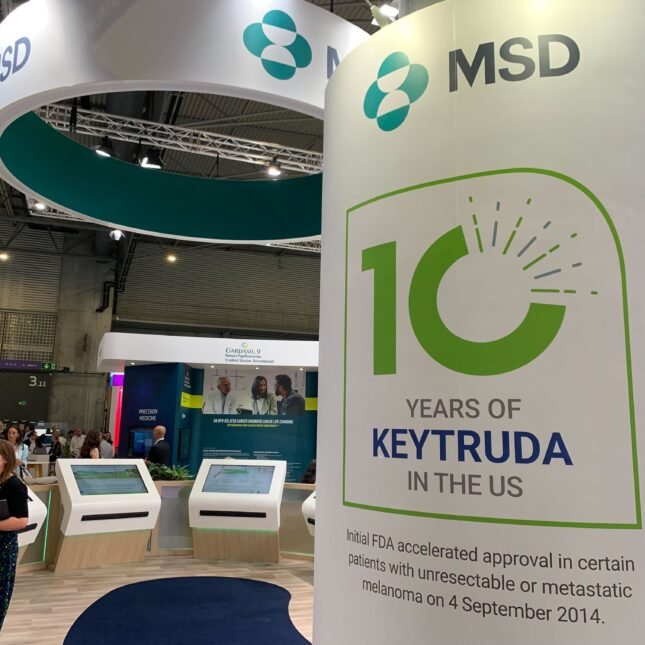
    In a setback for Merck, a Dutch court ruled that the company infringed on a patent pertaining to a subcutaneous formulation of its Keytruda cancer treatment and was ordered to halt manufacturing and marketing of the medication in several European countries, including France, Italy, Sweden, Switzerland, and the Netherlands.

    The ruling came as part of a widening patent infringement dispute with Halozyme Therapeutics over the best-selling cancer treatment. Patients requiring Keytruda will still have access to the existing intravenous version, which is not affected by the patent dispute or court order.

    In a statement, Merck said it “strongly” disagreed with the court’s decision.

    STAT+ Exclusive Story

    Already have an account? Log in

    STAT+

    STAT+

    This article is exclusive to STAT+ subscribers

    Unlock this article — plus in-depth analysis, newsletters, premium events, and news alerts.

    Already have an account? Log in

    View All Plans

    To read the rest of this story subscribe to STAT+.

    Subscribe

  • From Distributor to Disruptor: Amazon’s Healthcare Flex

    From Distributor to Disruptor: Amazon’s Healthcare Flex

    Could this be Big Tech’s ultimate healthcare flex? For years, Amazon’s ambitions in this $4 trillion market were focused on distribution: acquire a pharmacy here, a primary care network there, and offer convenience.

    But more recently, rather than deploying capital to expand its fulfillment engine, Amazon exercised its cloud and AI muscle to launch tools that enable it to be a “front door” for consumers and patients. From the looks of it, the e-commerce giant has shifted, from competing for a piece of the healthcare journey to collapsing the entire journey into one company.

    In any case, pharma commercialization teams may need to think about Amazon less as a new distributor and more as a disruptor of how patients, prescribers, and payers connect.

    Analyzing the moves

    Big Tech has upended many industries, but the highly regulated and complex healthcare industry has seemed impervious to their influence. Judging by Amazon’s most recent forays, however, this sector may not represent an innovator’s “white whale” for much longer.

    Amazon has closed the “last mile” between writing a prescription and filling it. At One Medical clinics (Amazon’s primary care venture), pharmacy kiosks now let a patient walk out of an appointment with medication in hand, filled by the same company that just diagnosed them. Its oral GLP-1 management program, a recently introduced offering, takes this even further. 

    This year, One Medical also launched an AI-enabled assistant, with access to test results, medical history, and more. The AI agent, dubbed Health AI, can help book medical appointments or provide medical information, such as an explanation of lab results. This clearly strengthens One Medical’s abilities as a provider and can help in enhancing the patient experience all the way through drug dispensing.

    More critically to pharma, Amazon’s Health AI also automatically applies manufacturer coupons and copay assistance programs for eligible patients. On the HCP side, Amazon’s integration with DoseSpot and eNavvi places patient net out-of-pocket at the point of prescribing.

    Health AI subsequently moved beyond the One Medical app, embedding directly into Amazon.com and its mobile app, marking the first time the tool has been available at scale to general consumers, and further enmeshing the patient experience into the overall Amazon environment. These offerings are available to anyone, regardless of being a One Medical member.

    4 potential shake-ups

    The result: Screening, prescribing, fulfillment, and ongoing renewal all happen inside one Amazon-run loop. No outside touchpoint is required.

    That loop doesn’t just change where a patient enters the system and picks up a prescription. It changes the nature of a healthcare “provider,” how care is delivered (including drug fulfillment), and who sees the full picture of a patient’s care. 

    In other words, this shift isn’t just a single disruption; it’s four separate ones. Here’s the “where” and “how” of those potential shake-ups:

    • The HCP relationship: Who manages a condition over time, not just who writes the first script?
    • Channel and patient experience: Who owns the point of fill, and how seamless is the drug-fulfillment experience?
    • Price transparency and patient OOP: How much of a role does real-world price play, for both prescribers and patients, and how do coupon and copay assistance programs need to adapt?
    • Data visibility: Does the full patient journey, from diagnosis to refill, sit outside the purview of traditional pharma data sources, or is it somehow still captured? 

    The four categories aren’t equally mature. And that has real implications for where pharma commercialization teams focus first. 

    Where pharma should focus

    The first two of the above categories are already live with the GLP-1 program. That is, ongoing management of a chronic condition now sits inside Amazon’s own clinical protocol, not a patient’s existing PCP or specialist. And prescribing, fulfillment, and refill take place in a channel pharma doesn’t traditionally call upon.

    GLP-1 is a favorable starting point for this model because it’s heavily consumer-driven and manageable in primary care, so the loop doesn’t need specialist judgment to run. And the GLP-1 cash-pay models give Amazon room to control pricing directly. Moreover, weight-loss management is a long-term, recurring relationship, which is exactly the kind of retention Amazon’s model is built for. 

    Beyond the cash market, Amazon’s ability to automatically apply coupons and copay assistance offers the opportunity for accelerated product uptake, accompanied by significant downside risks to product gross-to-net.  

    If your brand touches a condition that could be managed this way, GLP-1 isn’t a case study to read with curiosity. It’s a preview. Teams should be asking if and how this loop affects prescribing and fulfillment for their therapeutic area; that’s the immediate gap to close. 

    Conditions that depend on specialist diagnosis, complex or in-clinic administration, or those with reimbursement complexity, are a much harder fit for this model (at least for now). The therapeutic areas to watch first are protocol-friendly, primary-care-managed, chronic, and with a cash-pay market underneath.

    Payers and data

    Amazon’s impact on the payer space is at an earlier stage, but the signals are worth tracking closely. Amazon has already become the exclusive home delivery pharmacy for select PBM partners, including its own employee health plan. While that’s a narrow footprint today, whether it stays narrow or expands to further erode the traditional PBM mail-order business is the open question. Every new deal is a data point worth logging.

    Data visibility is the slowest mover of the four categories, and possibly the hardest to predict. Cash-pay markets already have data holes. Adherence and outcomes in these markets have always been harder to capture, since the transaction doesn’t run through the claims and pharmacy systems pharma is used to watching. 

    The bigger exposure is what happens if this extends into broader chronic disease management. Even losing part of a patient’s journey, say the fulfillment and refill half, is enough to break the continuity pharma relies on for adherence programs and tracking the various outcome measures of marketed treatments. 

    Other industries offer a useful, if uncomfortable, reference point. Retail went through its own version of this: Vertically integrated fulfillment that started as a convenience play eventually became infrastructure that competitors couldn’t easily match on price or speed. 

    That pattern is worth keeping in mind, not as a prediction of exactly how this plays out in life sciences, but as a reminder that the “early and narrow” phase doesn’t stay that way indefinitely.

    None of this is a call to panic. It’s a case for watching the right signals. The clearest one: which therapeutic area Amazon’s loop expands into next.

    Photo: undefined undefined, Getty Images

    Adrienne Lovink

    As CEO, Adrienne Lovink is leading Beghou’s next phase of growth and building on its reputation as a trusted commercialization partner in life sciences. She is focused on expanding into new areas of client demand; advancing the firm’s data, AI, analytics, and technology innovation; and investing in its people and culture. Adrienne has over 25 years of experience partnering with pharmaceutical and medical device companies to advance commercialization, market access, forecasting, digital health, real-world data, and advanced analytics, including as a Partner at Trinity Life Sciences and Global Head of Real-World Data and Advanced Analytics at DRG / Clarivate.

    This post appears through the MedCity Influencers program. Anyone can publish their perspective on business and innovation in healthcare on MedCity News through MedCity Influencers. Click here to find out how.

  • STAT+: Justice Department targets drugmakers in new directive on combating white-collar fraud

    STAT+: Justice Department targets drugmakers in new directive on combating white-collar fraud

    By Ed Silverman

    Oct. 7, 2026

    Pharmalot Columnist, Senior Writer

    Ed’s stories explore prescription drug pricing, affordability and access, as well issues surrounding patents, litigation, and legislation. He is also the author of the morning Pharmalittle newsletter and the afternoon Pharmalot newsletter.

    In a warning to life sciences companies, the Department of Justice last week issued a new directive for combating fraud that made a point of noting the agency will pursue violations of a federal law that tightly regulates the pharmaceutical industry.

    Typically, the agency has pursued health fraud cases centered on providers, clinics, home health agencies, and hospices. By expressly including the Federal Food, Drug, and Cosmetic Act in the directive, the National Fraud Enforcement Division appears to be placing drug and device makers, among others, more clearly in its crosshairs.

    “This is a subtle but significant expansion of their jurisdiction,” said Kevin Lowell, a member of the Miller & Chevalier law firm, who spent a decade at the DOJ, where he most recently had been a deputy chief in the National Fraud Enforcement Division’s health care fraud section.

    STAT+ Exclusive Story

    Already have an account? Log in

    STAT+

    STAT+

    This article is exclusive to STAT+ subscribers

    Unlock this article — plus in-depth analysis, newsletters, premium events, and news alerts.

    Already have an account? Log in

    View All Plans

    To read the rest of this story subscribe to STAT+.

    Subscribe

  • STAT+: AstraZeneca opens new Boston site 

    STAT+: AstraZeneca opens new Boston site 

    Utah pilots AI service to prescribe acne treatment, drug price disclosures are coming, and more biotech news

    HECTOR RETAMAL/AFP via Getty Images

    Elaine’s stories explore the boom in new obesity treatments, new drug payment models, the ways companies are affected by FDA changes, and the emerging psychedelics drug sector. She co-writes The Readout newsletter, and co-hosts STAT’s weekly biotech podcast, The Readout Loud. You can reach Elaine on Signal at elaineywchen.70.

    Allison covers what hot startups are getting up to, and who’s financing them. She is also co-host of the weekly biotech podcast, “The Readout Loud.” You can reach Allison on Signal at AllisonDeAngelis.01.

    Want to stay on top of the science and politics driving biotech today? Sign up to get our biotech newsletter in your inbox.

    Good morning. From DC to Boston to Utah, we’ve got news from all over today.

    The need-to-know this morning

    • BridgeBio said the FDA granted priority review to its oral treatment for children with achondroplasia, a common form of dwarfism. An approval decision on the drug, called infigratinib, is expected by Feb. 4, 2027. 
    • Japan’s Shionogi has acquired for $2 billion the U.S.-based biotech IntraBio, the maker of an approved drug that treats the neurological symptoms of two rare diseases. 
    • Arrivent Biopharma said its experimental treatment for exon 20-mutated lung cancer failed to delay tumor progression in a Phase 3 study.

    Trump admin says drug price disclosures are coming

    Trump administration officials said yesterday they will start developing a system for health insurers to disclose prescription drug prices, and a “hopeful” final plan will come out by next May.

    STAT+ Exclusive Story

    Already have an account? Log in

    STAT+

    STAT+

    This article is exclusive to STAT+ subscribers

    Unlock this article — plus in-depth analysis, newsletters, premium events, and news alerts.

    Already have an account? Log in

    View All Plans

    To read the rest of this story subscribe to STAT+.

    Subscribe

    1. National Biotech Reporter

      Elaine’s stories explore the boom in new obesity treatments, new drug payment models, the ways companies are affected by FDA changes, and the emerging psychedelics drug sector. She co-writes The Readout newsletter, and co-hosts STAT’s weekly biotech podcast, The Readout Loud. You can reach Elaine on Signal at elaineywchen.70.

    2. Biotech Startups and Venture Capital Reporter

      Allison covers what hot startups are getting up to, and who’s financing them. She is also co-host of the weekly biotech podcast, “The Readout Loud.” You can reach Allison on Signal at AllisonDeAngelis.01.

  • STAT+: New Trump regulations would clean up health care pricing disclosures

    STAT+: New Trump regulations would clean up health care pricing disclosures

    Public drug price information is now coming next year, Trump officials say

    Mehmet Oz at a federal event on Monday in Washington announcing new health care price transparency rules.Finn Gomez/Getty Images

    By Bob Herman

    Oct. 5, 2026

    Bob Herman is the author of Health Care Inc., an award-winning weekly newsletter about the business of health and medicine.

    Bob covers the money in health care, focusing on health insurance and hospitals. His stories delve into Medicare Advantage, opaque prescription drug benefits, and how much executives actually make. He is also the author of the Health Care Inc. newsletter. You can reach Bob on Signal at bobjherman.09.

    The Trump administration released new regulations Monday that will force health insurance companies to publish cleaned-up spreadsheets of the prices that they pay hospitals and doctors, while stripping out meaningless data that clogged up the files.

    Trump officials also said they will start developing the system for disclosing prescription drug prices next month. A “hopeful” final plan for drug pricing data will come out by next May, said Mehmet Oz, the head of Medicare and Medicaid, at an event Monday. The government will enforce those requirements by the end of 2027. 

    Last year, the Trump administration punted on finalizing drug price disclosure rules, in a victory for drug companies and pharmacy benefit managers that have fiercely guarded their prices. 

    STAT+ Exclusive Story

    Already have an account? Log in

    STAT+

    STAT+

    This article is exclusive to STAT+ subscribers

    Unlock this article — plus daily intelligence on Capitol Hill and the life sciences industry — by subscribing to STAT+.

    Already have an account? Log in

    View All Plans

    To read the rest of this story subscribe to STAT+.

    Subscribe

    1. Business of Health Care Reporter

      Bob covers the money in health care, focusing on health insurance and hospitals. His stories delve into Medicare Advantage, opaque prescription drug benefits, and how much executives actually make. He is also the author of the Health Care Inc. newsletter. You can reach Bob on Signal at bobjherman.09.

  • STAT+: Utah plows ahead with more health AI pilots for prescriptions, women’s health

    STAT+: Utah plows ahead with more health AI pilots for prescriptions, women’s health

    Mario covers technology in health care, including FDA regulation of artificial intelligence; how Medicare pays for health tech; the use of AI in clinical care; mental health chatbots; and consumer wearables. He’s also the co-author of the free, twice weekly STAT Health Tech newsletter. You can reach Mario on Signal at mariojoze.13.

    Utah regulators on Monday announced a plan to allow an artificial intelligence product to evaluate patients for acne treatment and write new drug prescriptions without prior human review. 

    A startup called Nolla Health will launch an AI-powered service in the state that will assess a patient for mild-to-moderate acne treatment using a structured intake and by analyzing photos of their skin. The product may determine whether one of a list of low-risk drugs is appropriate. In the first stages of the pilot, the decisions of the AI will be reviewed by a licensed clinician who will sign off on prescriptions, but Nolla may eventually be allowed to prescribe drugs without this review. The company last year announced it raised $4.5 million from investors including General Catalyst, and Nolla aspires to direct treatment for a host of conditions using AI.

    The new pilot is part of a significant expansion of a closely watched “AI sandbox” program that allows Utah’s Office of Artificial Intelligence Policy, or OAIP, to waive regulations, including around the practice of medicine, for companies that want to test AI products under state supervision. 

    STAT+ Exclusive Story

    Already have an account? Log in

    STAT+

    STAT+

    This article is exclusive to STAT+ subscribers

    Unlock this article — and get additional analysis of the technologies disrupting health care — by subscribing to STAT+.

    Already have an account? Log in

    View All Plans

    To read the rest of this story subscribe to STAT+.

    Subscribe