Tag: NIH

  • As White House shifts focus toward AI and tech, U.S. science leaders defend role of the American university

    As White House shifts focus toward AI and tech, U.S. science leaders defend role of the American university

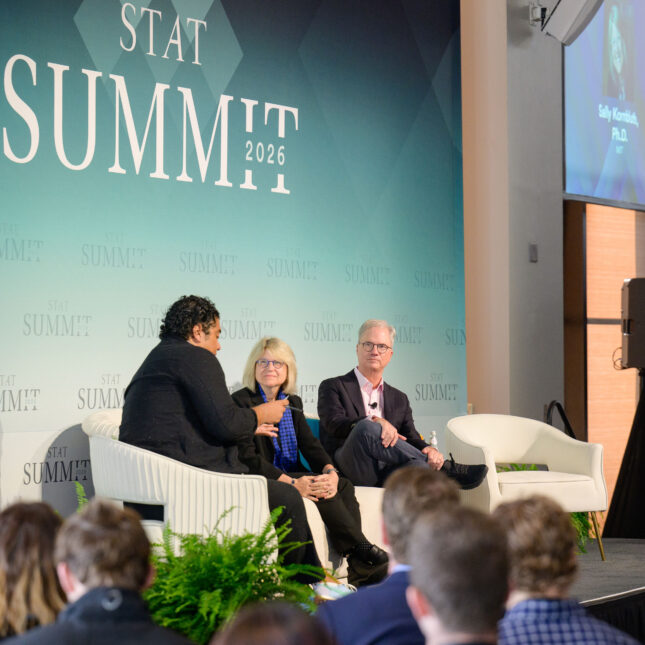
    BOSTON — This fall, the Massachusetts Institute of Technology, where 95% of students are STEM majors, enrolled nearly 500 fewer graduate students — a 20% drop compared to 2024. The reduction is a direct result of a $100 million cut in federal research awards to the institution in that same timespan, MIT President Sally Kornbluth said at the STAT Summit Wednesday in Boston. 

    Graduate students are largely supported with these grants, and “if we admit someone, we don’t want them to be partway through their Ph.D. and run out of funding, so we tend to be conservative on the front end,” Kornbluth said. “I wish I had a crystal ball and knew when things were going to turn around, but for now we’re just being cautious.”

    It’s not just MIT. Universities across the country have suspended or shrunk admissions to graduate programs in response to a tumultuous 18 months that have included unprecedented grant terminations, funding delays, and policy changes to how science is supported at the federal level. Even if the upcoming midterms usher in a power shift in Congress, it will do little to change the uncertainty faced by academic institutions regarding the reliability of the U.S. government as a science funding partner, particularly in light of a recently revealed plan for political appointees to gain more control over National Institutes of Health grantmaking decisions.

    “We will go toe-to-toe with the best of them based on merit. If there are other elements that lead to being funded or not, we don’t have control of that and that concerns me,” Kornbluth said. “I think we just have to do our very best science and feel like that in the end will win the day, and the country needs that.”

    Kornbluth was joined by Holden Thorp, editor-in-chief of the Science family of journals, to argue for the model of American research that for the last 80 years propelled the U.S. to global dominance in science, technology, and medicine. First articulated by Vannevar Bush in his 1945 report “The Endless Frontier,” it involved sustained public funding of science at research universities and federal laboratories and a commitment to open inquiry.

    While that model was showing signs of stagnation before the second Trump presidency, the last 18 months have shredded the social compact at its foundation. In its place, the administration has proposed a new blueprint for American innovation — one that is focused more narrowly on national priorities and a smaller role for the federal government in science funding. 

    At the White House’s Science: A New Golden Age summit last week, the Trump administration announced $6 billion in new national research investments, including support for the buildout of advanced computing facilities and autonomous laboratories, the development of nuclear powered spacecraft and next-generation quantum computers, and the creation of accelerated training programs in artificial intelligence and engineering. White House Office of Science and Technology Policy Director Michael Kratsios described the funding announcement as “the most transformative day for the American scientific enterprise since the reshaping of the federal research ecosystem following World War II.” 

    The investments mark the administration’s first steps to implement its vision for advancing U.S. innovation. Laid out in an OSTP report over the summer, it calls for a dramatic shift of hundreds of billions of research dollars from universities to industry — primarily AI and technology companies. 

    While there are roles for commercial entities as well as national labs to play in propelling science and innovation, Kornbluth said, what has very uniquely flourished at universities is the very basic end of the pipeline — the unpressured curiosity-driven research that has led to revolutionary discoveries including CRISPR gene editing, microRNA, and this year’s Nobel-winning work underlying the exploding field of optogenetics. “I worry that all of these moves, while they’ll have short term gains, are going to result in a serious drought in the pipeline … for us maybe five, 10 years down the line, but certainly for our children and their children’s children,” Kornbluth said. 

    It’s too soon to see the effects of these shifting priorities in research output indicators like top-tier journal publications, Thorp said. But he doubts the Trump administration’s push will do much to reverse the ongoing trend of the U.S. falling further behind its geopolitical rivals. 

    Even before the last 18 months of disruptions and delays to government investment, the U.S. was on its way to losing its place of prominence as the world’s largest public funder of science. Forecasts have put China on track to surpass the U.S. on research spending in the next two to three years. On the ground, that means buildings going up, more people going to graduate school, and a tangible sense of momentum. 

    “The atmosphere is just so much more pro-science there than it is here,” Thorp said, recounting a recent trip to China in which he sat down with presidents of several universities. 

    It’s getting results. Nine out of the top 10 academic research institutions are now in China, according to the latest data from the Nature Index, with Harvard University as the lone U.S. representative. A decade ago, American universities held half of the top 10 spots. 

    “Submissions from China continue to increase, not just in number but in quality,” Thorp said of the Science family of journals. To the point that, Science Advances, an open-access journal that is slightly less competitive than the flagship, is now publishing an equal number of papers from the U.S. and China. He expects the same to be true for Science within the next four to five years. “That’s the competitive effect that I don’t think the administration has very good answers for,” Thorp said. “At least when I write to them and ask them if they want to comment about it in my column, they never respond to me.”

    How these dueling visions of research in America play out will in some ways be shaped by the outcomes of the next few elections. But science happens on a longer time scale, and both Thorp and Kornbluth pointed to the need of scientists and academics everywhere, regardless of who holds power in Washington, to confront the underlying political reality of rising populism and cratering trust in institutions. 

    Kornbluth highlighted a new initiative launched this month — MIT for America — which sends students and alumni out across the country to help under-resourced high schools teach math, computer science, and other STEM classes often required for admission into the kinds of college programs required to move ahead in the increasingly AI-centric U.S. economy.  “We want to both meet people where they are, give their kids the opportunity, and also make them understand us as people who care about their communities,” she said.

    Thorp urged universities to follow MIT’s lead on getting rid of legacy admissions policies that give children of alumni an edge (which the university did decades ago). “It’s a huge part of why people are suspicious of higher education,” Thorp said. But he acknowledged that there’s only so much that institutions of all types can do to reverse the tide of populism, which has been growing for close to a century. 

    “My view is we have to accept the fact of what modernity has given us,” Thorp said. “Some people come to me as the editor of Science and think I have a big platform, and I’m sure they go to STAT and think STAT has a big platform, but compared to Mr. Beast, we’re off by three orders of magnitude. I can put all the cool videos and explainers and everything I want to on the Science social media accounts, which are the largest in academic publishing, and it’s not going to move the needle.”
  • NIH rolling out streamlined website to help public find information more easily

    NIH rolling out streamlined website to help public find information more easily

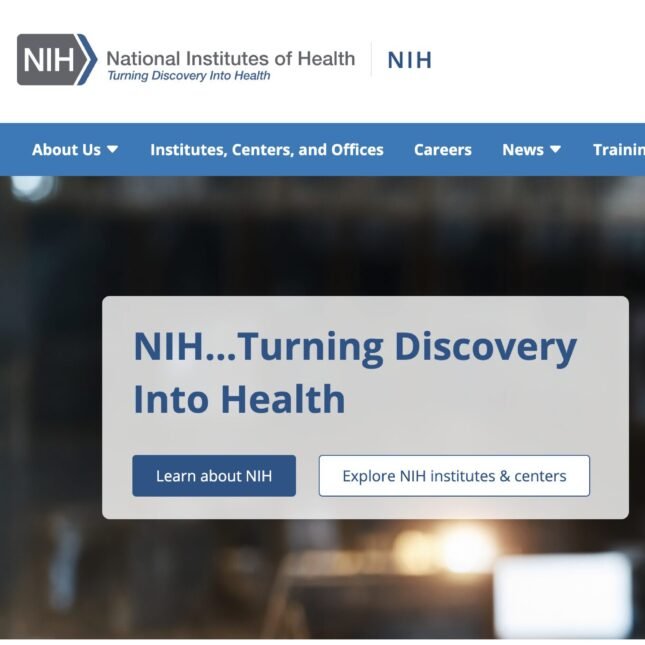
    Finding information from the National Institutes of Health about human health, disease, and biomedical research is about to look a lot different. On Monday, the NIH will unveil a new version of its website that shifts attention away from individual institutes and centers and towards eight thematic hubs focused on health, research, data, clinical studies, rare diseases, technology, cancer, and grants.

    Agency officials say the redesign — which is part of an ambitious project to consolidate the NIH’s digital footprint — is intended to streamline what was a sprawling and fractured information ecosystem, requiring users to understand the NIH’s organizational structure, into an intuitive experience that more closely reflects what type of information people seek out most often. 

    The goal, said Amanda Fine, NIH deputy director for public affairs, is “to make trusted NIH information across the agency easier and faster to find.”

    The beta version, which was soft-launched this week, is still under development and will continue to evolve in the coming months, NIH officials told STAT. Some functions, including search, do not yet appear to be operational. During this transition period, NIH’s existing websites will remain available. They will be sunset on a rolling basis “as critical and mandated content is verified and redirects are put in place,” Fine told STAT.

    Researchers who study science communication and science misinformation say the overhaul is a welcome development. “It was badly needed,”said Kathleen Hall Jamieson, a professor of communication and former director of the Annenberg Public Policy Center at the University of Pennsylvania. “Trying to find something on the old website required the skills of an Egyptologist.”

    Over the past few decades, the NIH’s digital footprint had ballooned to include more than 700 separate websites — often with different, non-connecting backend architectures and hosting platforms — stretching across millions of webpages. Information was duplicated across five or six locations, sometimes appearing in slightly different configurations. Its potential for creating confusion became apparent during the Covid-19 pandemic, when the public turned to the NIH and other federal science agencies for guidance and information about the fast-moving public health crisis. 

    “It became a dramatic illustration of a dysfunctional website whose dysfunction wasn’t evident pre-Covid,” said Hall Jamieson. 

    Spurred by the pandemic, the NIH began to develop its first-ever five-year strategic communications plan in 2022 under President Biden. Working groups made up of more than 70 staffers from communications offices spread across NIH’s 27 institutes and centers came up with a plan to streamline the hundreds of NIH-owned websites to just one per institute. This massive undertaking was set to be phased over five years, starting in 2025. 

    That plan, which was never published but which was obtained by STAT, was scrapped when the Trump administration came in and fired hundreds of communications staffers as part of a government-wide reduction in the federal workforce. As a result of the layoffs and mass cancellation of contracts in early 2025, millions of NIH websites have been effectively frozen for nearly 18 months. That created a sense of urgency for the remaining dozen or so communications employees tasked with pushing forward website consolidation under the new administration.

    Fine said her team worked to develop a data-driven process to better understand the path people take to NIH websites and how they navigated them once there. That helped them identify where people were getting stuck and the most highly sought after and frequently accessed information. The content on the new site is taken directly from health information from existing NIH websites, Fine said.

    The consolidation, once complete, will reduce the number of NIH-owned websites from more than 700 to a single, fully connected web environment.

  • STAT+: NIH awarded all its grant funding, but delayed and opaque decisions stymied researchers

    STAT+: NIH awarded all its grant funding, but delayed and opaque decisions stymied researchers

    A STAT analysis of National Institutes of Health spending shows that in the 2026 fiscal year, which ended Wednesday, the agency continued reducing grant awards involving health disparities, race, and ethnicity but made little progress toward other Trump administration priorities, including disbursing funds more evenly across the country and expanding support for early-career scientists.

    While the agency, like last year, spent its entire external grants budget of roughly $34 billion after a slow start, the manner in which it did so is sowing deep uncertainty among researchers. In a survey and interviews, they said delays in the grant review process are slowing down the pace of their work, and making it difficult for them to propose and conduct the sort of innovative, impactful science that the NIH exists to support.

    Overall, the agency funded around 58,000 projects, a slight drop from the 61,000 awarded during the 2025 fiscal year and well below the roughly 63,700 grants awarded annually in the years before the second Trump administration. Though this number may increase somewhat in the coming weeks because of reporting lags in the NIH grants database, the smaller number of grants potentially resulted from the White House’s push to fully fund more multiyear grants in advance, which meant that there was less funding on hand to issue new awards. 

    STAT+ Exclusive Story

    Already have an account? Log in

    STAT+

    STAT+

    This article is exclusive to STAT+ subscribers

    Unlock this article — plus in-depth analysis, newsletters, premium events, and news alerts.

    Already have an account? Log in

    View All Plans

    To read the rest of this story subscribe to STAT+.

    Subscribe

  • STAT+: NIH proposal to cap research grants draws mixed reception, agency says

    STAT+: NIH proposal to cap research grants draws mixed reception, agency says

    By Anil Oza

    Sept. 1, 2026

    General Assignment Reporter

    Under the Trump administration, competition for government funding for biomedical research has reached new heights. In June, the National Institutes of Health proposed one solution: limiting the number of grants each individual scientist can have at a given moment. 

    The agency recently released the anonymized 3,307 responses to its call for feedback, and it appears the proposal has drawn more mixed reactions than earlier such proposals. The NIH estimates that 40% of the responses opposed the proposal, 27% supported the idea of a cap, and 32% were mixed. 

    In a post on its site, the agency said it hopes a cap could “contribute to a more balanced research portfolio, advancing stewardship, workforce sustainability, and the goals of the NIH Unified Funding Strategy.” But even some experts who agree with the spirit of the proposal worry that it could be another source of disruption for researchers in what has been a tumultuous time; some also argue that a straight cap on the number of grants may be too simplistic. 

    STAT+ Exclusive Story

    Already have an account? Log in

    STAT+

    STAT+

    This article is exclusive to STAT+ subscribers

    Unlock this article — plus in-depth analysis, newsletters, premium events, and news alerts.

    Already have an account? Log in

    View All Plans

    To read the rest of this story subscribe to STAT+.

    Subscribe