Karl Deisseroth, Peter Hegemann, and Georg Nagel are the joint recipients of the 2026 Nobel Prize in Physiology or Medicine “for their discoveries concerning light-gated ion channels and optogenetics,” the Karolinska Institutet in Stockholm, Sweden announced on Monday.
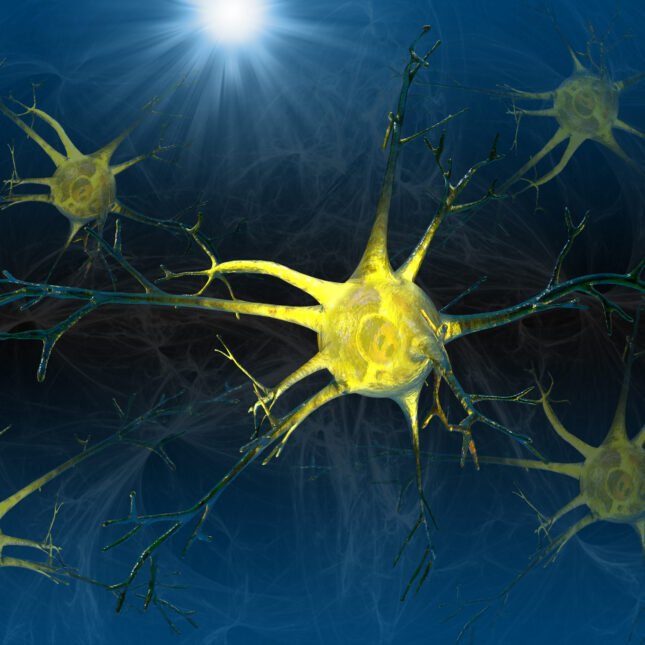
Deisseroth, 55, a professor at the Howard Hughes Medical Institute and Stanford University; Hegemann, 72, a professor at Humboldt University in Berlin; and Nagel, 73, a professor at the University of Würzburg, Germany, developed a method that uses light, combined with genetic modifications of neurons, to switch on or off individual cells in a living brain. This makes it possible to show how nerve cells shape memories, feelings and behavior in the brain, and is being studied as a treatment for disease.
The work started in the early 1990s at the Max Planck Institute, when Hegemann wondered how a single-cell green alga called Chlamydomonas could swim toward light. Teaming up with Nagel, they discovered the answer: a protein called channelrhodopsin, a light-sensitive ion channel in the cell membrane that rapidly opened when exposed to light. They found that this protein worked in any cell they injected it in.
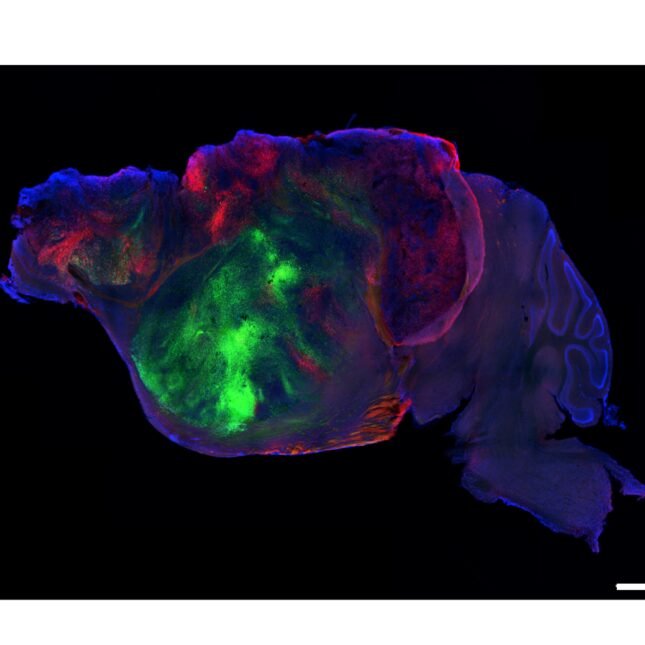
Deisseroth then introduced the gene for the protein into nerve cells from rats, making it possible to trigger a nerve signal in the living brain with blue light and enabling scientists to identify what cells are responsible for what functions, and which are connected to one another.
“Optogenetics provides opportunities for mapping the brain in a way that we could once only dream of,” said Per Svenningsson, chair of the Nobel Committee for Physiology or Medicine.
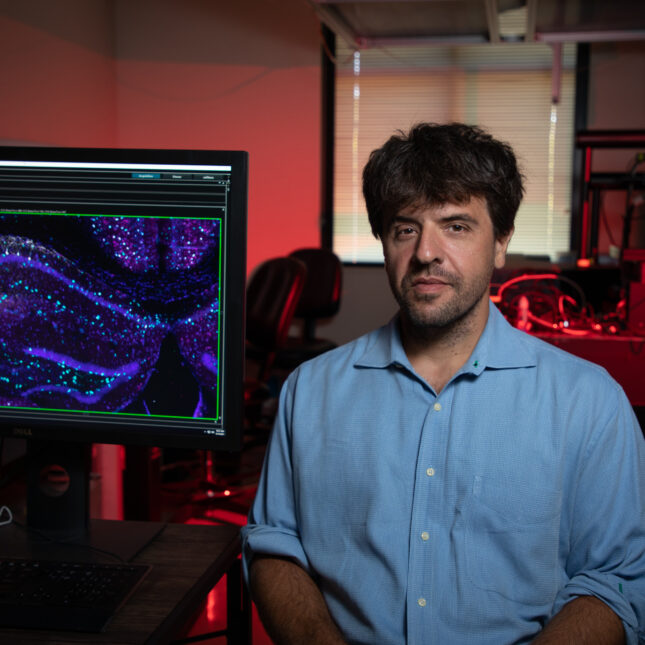
Deisseroth spoke with STAT shortly after the announcement. “When you think about light in science or light in medicine, you think of it as an observational tool. It’s a way to collect information. But with optogenetics, it’s the complete opposite of that,” he said. “We’re not using light to collect information, we’re using light to cause things to happen … it’s using light to turn cells on or off with that millisecond precision and the cellular resolution that is essential to brain function.”
The committee was able to reach all three winners. “It was after midnight, and I was just drifting off to sleep. It was a very unexpected, but of course very delightful call,” said Deisseroth, who was the first of the three recipients to be notified of the award. He said he hasn’t yet had a chance to speak with the others, though he “really look forward to seeing my co-laureates and talking with them.”
When informed of the shared award, “all three said the same thing, that they thought it was absolutely wonderful to receive the prize with the other two; they called them ‘my friends,’” said Thomas Perlmann, secretary for the Nobel Committee for Physiology or Medicine.
“These are two people who have been frequent collaborators of mine,” Deisseroth said. “We’ve written multiple papers together, and sort of shared this journey of discovery over many years. We met at conferences, met each other’s families, shared beers at meetings and talked — as scientists do — about the things that interest them, the things that are surprising, big picture details and everything in between. I couldn’t be happier than to share this with these two friends.”
As often happens in science, others contributed to the creation of optogenetics, though were not named by the committee.The Nobel rules limit the award to no more than three collaborators. Deisseroth nodded to the community of scientists who worked with him and his co-laureates to make their advances possible. “We have so many collaborators, colleagues, and students and postdoctoral fellows in the lab over the years,” said Deisseroth. “It’s been a very broad community, and so many things had to be solved to make everything work and to make the discoveries happen.”
On social media, many commentators noted Ed Boyden, who was the first author on Deisseroth’s landmark 2005 paper and a Ph.D. student in his lab, should not have been excluded. Boyden, now at MIT, didn’t respond to requests for comment. The Nobel committee mentioned several other researchers in its background information, including Austrian neurophysiologist Gero Miesenböck, who achieved the first genetic sensitization to light of nonphotoreceptive neurons in 2002, and Zhuo-Hua Pan a vision scientist at Wayne State University in Detroit, who in 2004 successfully tried channelrhodopsin in ganglion cells, which became responsive to the light.
His work was recognized through a $300,000 grant from the National Institutes of Health, with the comment that it was a “quite an unprecedented, highly innovative proposal, bordering on the unknown.” But a paper showing the outcome of his research, initially submitted by the end of 2004, didn’t find a publication until 2006, when Deisseroth and Boyden’s paper had already made waves.
The committee chair declined to comment on the reasons behind selecting the winners.
Jeremy Berg, former editor-in-chief of the journal Science and a former NIH institute director, told STAT, “I have followed Karl Deisseroth’s career since he received an NIH Director’s Pioneer Award as an assistant professor in 2005. He proposed a vision for optogenetics that was quite compelling and he has developed his ideas remarkably ever since. His work displays the power of engineering approaches with a deep knowledge of human physiology.”
Berg added, “I am not at all surprised that his work has ended up with a Nobel Prize. That seemed plausible even during his Pioneer interview in 2005.”
Don Hilgemann, a biophysicist at the UT Southwestern, mentored Nagel in 1991 and 1992. “Georg showed real pioneer spirit in applying the methods I had developed. He was an extremely adventurous experimenter who could quickly master difficult, technically challenging methods,” he said in a note to STAT.
There have been 235 award winners since the first medicine prize was awarded in 1901, of which 14 have been women. The youngest recipient was 31, the oldest 87.
The award has been given 117 times: 40 times to a single individual, and has been shared among two winners 36 times, and among three (the maximum allowed by the Nobel statute) 41 times.
The winners will receive 12 million Swedish Kronor (SEK), or roughly $1.2 million.
This story has been updated with comments from Karl Deisseroth.