Tag: immunology

  • TRrexBio’s IPO Bags $116M to Bring the Immune System Back Into Balance

    TRrexBio’s IPO Bags $116M to Bring the Immune System Back Into Balance

    Immunology research continues to draw investment for new ways to suppress excessive immune responses. TRexBio takes a different approach, tapping into the body’s built-in way of keeping the immune system in balance. A TRex-discovered molecule is progressing in the clinic in the hands of partner Eli Lilly. Now the biotech has $116.7 million in IPO cash to support clinical development of its wholly owned assets.

    Late Thursday, TRex priced 8.33 million shares at $14 each, which was the low end of the preliminary price range it had set earlier in the week. Those shares began trading on the Nasdaq Friday under the stock symbol “TRXB.”

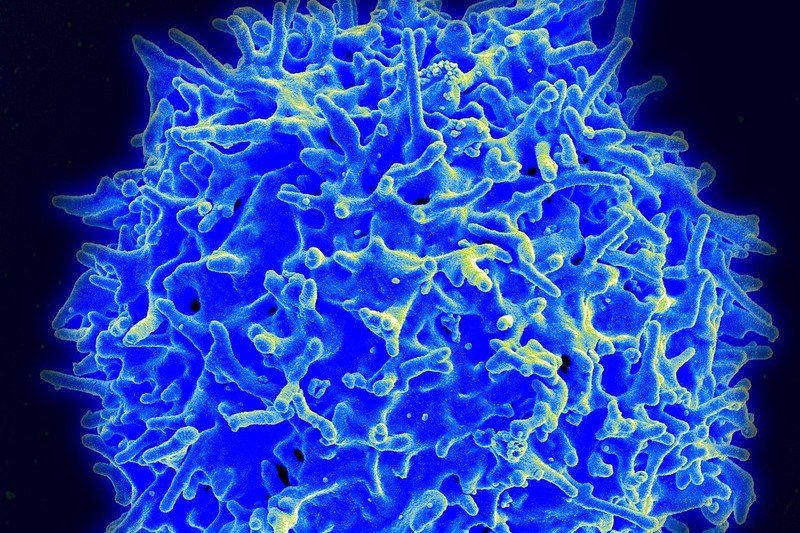
    The research of South San Francisco-based TRex focuses on regulatory T cells, or Tregs. While the activity of immune cells leads to inflammation, the body counterbalances that with Tregs, which tamp down excessive immune responses and stop the immune system from attacking healthy tissue.

    There are some biotech companies developing Treg cell therapies made by harvesting and engineering a patient’s own Tregs or working with Tregs sourced from healthy donors. While there’s evidence that these approaches can work, the commercialization of T cell therapies for cancer shows the logistical hurdles of engineering cells into living medicines. There’s one FDA-approved Treg so far, a blood cancer treatment developed by Orca Bio. It’s made by shipping a sample of patient blood to an Orca facility that isolates Tregs. Those cells are then shipped back for infusion into the patient. The complexity, cost, and time for manufacturing Treg cell therapies likely limits its use in large autoimmune disease populations, TRex said in its IPO filing.

    Rather than working with directly with Tregs, TRex aims to leverage Tregs already in the patient’s body. Its drugs are fusion proteins designed to activate and expand Tregs that are in inflamed tissue as a way of restoring immune balance. The company says its drugs can do so selectively, without also activating proinflammatory immune cells. These drugs come from a TRex platform technology that gleans immunology insights by analyzing a database of healthy and diseased tissue samples.

    “Our approach is designed to address disease at its source — in the tissue — by developing medicines focused on tissue immune homeostasis that we believe have the potential to provide a durable clinical benefit,” TRex said in the filing.

    TRex formed in 2018. In 2021, Lilly participated in the biotech’s Series A financing. Two years later, the pharma company paid $55 million up front to begin a research collaboration. The alliance produced TRB-051, which is designed to modulate immune effector cells. In June, TRex said Lilly plans to advance TRB-051 to Phase 2a testing in lupus with cutaneous involvement.

    TRex’s most advanced wholly owned program is TRB-061, which is designed to activate tumor necrosis factor receptor 2 (TNFR2), expanding and activating Tregs in inflamed tissues. In August, TRex reported Phase 1a results showing activation and expansion of Tregs in the tissue of healthy volunteers. The study drug was also well tolerated and no serious adverse events were reported. The results supported dose selection for a Phase 1b test in patients with moderate-to-severe atopic dermatitis; preliminary data are expected in mid-2027. TRex also describes alopecia areata as a “priority indication,” pointing to published studies supporting the role of Tregs in mediating the hair follicle cycle and hair regrowth.

    A second TRex drug candidate, TRB-071, is designed to activate the protein CD30 to augment tissue Tregs and block immune system inflammatory signaling. In the filing, TRex points to genetic studies supporting the involvement of CD30 and its ligand in inflammatory bowel disease. The company plans to start a Phase 1 test in the first half of next year.

    In its history as a private company, TRex said it had raised about $220 million. Lilly paid TRex a $15 million milestone payment in 2024 and the biotech is eligible to receive up to $577.5 million more in additional milestone payments, according to the filing. TRex last raised money early this year, a $50 million financing.

    A 2021 collaboration agreement with a Johnson & Johnson affiliate was terminated last year, according to the filing. But the document also shows Johnson & Johnson Innovation—JJDC owns a 4.6% post-IPO stake. Lilly is TRex’s largest shareholder with a 16.8% stake after the IPO, followed by the 14.1% owned by SV Health Investors. TRex said Lilly has expressed an interest in purchasing additional shares at the IPO price in an amount not to exceed 19.9% of the company, but there is no binding commitment for the stock purchase.

    As of the end of the second quarter of this year, TRex reported its cash position was $90.9 million. Combined with the IPO proceeds, TRex plans to spend about $90 million to bring TRB-016 through the readout of topline Phase 2 data in atopic dermatitis and alopecia areata and $10 million for the start and completion of TRB-071’s Phase 1 test in healthy volunteers. The company estimates its capital will last into the second half of 2029.

    Retension Pharma Reels In $45M for Next-Gen Hypertension Drug

    Retension Pharmaceuticals joined the public markets with an IPO that raised $45 million for a drug in clinical development for uncontrolled hypertension.

    Retension’s RTN-001 is a small molecule inhibitor of an enzyme called PDE-5. In its IPO filing, the company notes that first-generation PDE-5 inhibitors, such as the sexual dysfunction drug Viagra, were initially studied in cardiovascular indications such as hypertension and angina. Retension contends these drugs did not offer adequate bioavailability and tissue penetration to address cardiac tissue, leading to their failure as blood pressure medications.

    Falls Church, Virginia-based Retension describes RTN-001 as a next-generation PDE-5 inhibitor engineered for better bioavailability and increased distribution to places such as the aorta and its branches. In two Phase 2 pilot trials, the company said the once-daily pill led to clinically meaningful placebo-adjusted reductions in blood pressure.

    “We believe RTN-001 has the potential to be an effective treatment for hypertension with a favorable safety profile and thus be part of an anti-hypertensive treatment approach,” Retension said in its IPO filing.

    The molecule that is now RTN-001 was originally developed by a company called Surface Logix. It has changed hands several times; in 2023, Retension licensed all rights to the molecule from Redux Therapeutics. As of the end of June, Retension reported its cash position was about $13.5 million. That capital along with the IPO proceeds will go toward clinical development of RTN-001, Retension’s only drug candidate.

    The company plans to spend about $18 million to complete an ongoing Phase 2b test of RTN-001 in uncontrolled hypertension. Preliminary data are expected in the first half of 2027. Another $10 million is budgeted for preparing for a planned Phase 3 test in this indication.

    Retension offered 3.75 million shares priced at $12 each, which was the midpoint of the price range the biotech set in preliminary financial terms earlier in the week. Those shares began trading on the Nasdaq Friday under the stock symbol “RTSN.”

    Public domain image by Flickr user NIH Image Gallery
  • Immunology Startup ai3Bio Aims to Redefine What It Means to Reset the Immune System

    Immunology Startup ai3Bio Aims to Redefine What It Means to Reset the Immune System

    Immune reset has become a particularly active area of immunology R&D as companies develop therapies intended to eliminate disease-driving immune cells, enabling the immune system to start anew with cells that don’t attack the body. This growing field is still taking shape, but many of the approaches involve reprogramming one type of immune cell to pursue and deplete a different type of immune cell that’s driving autoimmune disease.

    Startup ai3Bio has a more straightforward strategy: tap into a built-in cellular pathway that leads pathogenic cells to self-destruct. The Watertown, Massachusetts-based company is now out of stealth, revealing its science along with $48 million in financing to support a pipeline that could start its first tests in humans next year.

    Immune reset is like a blank slate — give the immune system the opportunity for a fresh start with new cells that have no memory of attacking healthy tissue. But this approach also means eliminating protective antibodies built up over a patient’s lifetime, everything from childhood polio vaccination to this season’s flu shot. Ai3Bio aims for a more precise approach that doesn’t sacrifice a patient’s existing protections.

    “This strategy does not eliminate your pre-existing memory T cells that would be specific for [cytomegalovirus], flu, and all the other things that you want to maintain defense against,” said Jonathan Kagan, ai3Bio’s’s scientific co-founder. “We’d like to position ourselves as a very nice example of something that folks often champion but rarely achieve, and that is precision therapies.”

    The startup’s first target is Th17 cells, a type of helper T cell that fights infections. While Th17 cells are key for immune responses, excessive activity of these cells leads to autoimmune disease. Medicines are already available to address IL-17, a signaling protein secreted by Th17 cells. Novartis’s Cosentyx, Eli Lilly’s Taltz, and Bimzelx from UCB are all blockbuster-selling IL-17 inhibitors approved for several immunological indications. These monoclonal antibodies block the signaling protein but they don’t stop immune cells from churning out more of it, so the therapies must be taken chronically. Ai3Bio’s approach could offer the advantage of stopping IL-17 at the protein’s source, said CEO Steven Altschuler.

    Ai3Bio’s therapy consists of a lipid nanoparticle (LNP) that delivers messenger RNA with instructions that trigger cell death. This therapy finds its way to pathogenic Th17 cells with the guidance of a targeting antibody designed to bind to CD161, a protein overexpressed on these cells. When the therapy reaches its destination, mRNA activates an immunological pathway called cGAS-STING. For nearly 20 years, drug hunters have been researching ways to hit this pathway. So far, there are no FDA-approved drugs that target it.

    [The following two paragraphs updated to clarify the origins of ai3bio.] Ai3Bio’s name references three disciplines: advanced immunology, autoimmunity, and artificial intelligence. The company itself is the combination of technologies from two startups, Corner Therapeutics and Novasenta. Kagan, who holds positions at Harvard Medical School and Boston Children’s Hospital, was the scientific co-founder of Corner, a developer of immunotherapies for cancer and infectious diseases. Novasenta was a drug discovery startup launched by UPMC in 2021.

    Corner remains a standalone company; its autoimmune technology, including its experience with LNPs, was combined with Novasenta. Additional research showed that targeting the STING pathway in T cells would lead to cell death. Novasenta’s AI technology platform for identifying druggable targets led to the development of the CD161-targeting antibody that ai3Bio is using to go after Th17 cells.

    “We’re not delivering a grenade into the cell,” Kagan said. “We are effectively delivering instructions to the cell to kill itself or self-destruct.”

    Ai3Bio’s approach offers a potential safety edge compared to other immune reset strategies. Companies such as Cabaletta Bio and Kyverna Therapeutics are in the camp approaching autoimmune diseases with CAR T-cell therapies made by the ex vivo engineering of a patient’s T cells. Pharmaceutical companies are joining the immune reset chase with business deals. Over the summer, Johnson & Johnson began a partnership on a Sail Biomedicines therapeutic candidate that reprograms T cells in vivo, getting them to target pathogenic B cells. Other big pharma companies that have struck deals for in vivo cell therapies include AbbVie, Bristol Myers Squibb, Gilead Sciences, and Eli Lilly.

    Whether a cell therapy is produced in a lab or in the patient’s body, one known complication is an excessive immune response called cytokine release syndrome (CRS). Cell therapies eliminate disease-driving cells by breaking them open. The resulting release of cellular contents can trigger immune responses, such as CRS.

    Kagan said ai3Bio’s approach is naturally immunosuppressive, eliminating the bad-acting cells in a way that does not come with the risk of CRS. There are also manufacturing and logistical advantages. Engineering cell therapies from a patient’s own immune cells involves multiple steps. Furthermore, patients must undergo a preconditioning drug regimen to prepare for the therapy — a step that wipes out the immune system’s memory of its past protections. Altschuler said ai3Bio’s drug can treat patients in in a single step. Without the need for any preconditioning, infusion of the startup’s LNP-delivered therapy leads to self-destruction of the pathogenic cells.

    Eliminating T cells from diseased tissue typically leads to rapid replenishment of those cells. In ai3Bio’s animal testing, data indicate its therapy depleted inflammatory T cells, Kagan said. He added that ai3Bio’s approach also starts a process that prevents helper T cells from differentiating into Th17 cells, which goes further to achieving the immune reset goal. There’s more. Results from tests in monkeys indicate the therapy goes beyond the blood, leading to deep depletion in places such as the spleen and lymph nodes. That’s important because these are regions of the body that are difficult to manipulate immunologically, Kagan said.

    Immune reset is hoped to provide patients with a long-lasting, perhaps even a one-time treatment. Kagan said the durability of ai3Bio’s approach still needs to be shown in humans. Ai3Bio aims to pursue clinical testing in several immunological disorders starting with autoimmune diseases of the liver, Altschuler said. He noted that infiltration of Th17 cells into the liver drives primary sclerosing cholangitis, primary biliary cirrhosis, and autoimmune chronic active hepatitis — all indications with limited treatment options.

    The new funding behind ai3Bio, a Series A financing, was led by founding investors Ziff Capital Partners, which was an investor in Corner, and UPMC Enterprises, the investment arm of UPMC that was a financial backer of Novasenta. The new round also includes support from Cockrell Interests and Tanis Ventures.

    With ai3Bio now out of stealth, the startup will look to bring multiple programs to the clinic in the next two years, Altschuler said. He estimates the current financing will last into the second quarter of 2027, so ai3Bio will need more money. While the surge in immunology research and dealmaking makes immune reset competitive, Altschuler pointed out that nearly all of these deals involve B cell-focused therapies. Ai3Bio’s approach could also apply to B cells, but Altschuler said that for now, the startup aims to stand apart from the crowd.

    “While there are many strategies out there to treat autoimmune diseases, we would be one of the only that are in the business of actually resetting the T cell repertoire,” Altschuler said.

    Image by Flickr user NIAID via a Creative Commons license