Tag: Health Disparities

  • Americans trust science more than peers around the world, survey shows

    Americans trust science more than peers around the world, survey shows

    Americans have more trust in science than most of the rest of the world, according to a new survey of people in 140 countries, a finding that may seem difficult to explain in a country deeply divided by issues such as the benefits and harms of vaccines. 

    According to the newest edition of the Wellcome Global Monitor, 52 percent of Americans report having “a lot” of trust in science. Across the globe, that number is a mere 26 percent. 

    Americans, in aggregate, are also more eager to get vaccines compared to peer nations; 45 percent of Americans say they would want to get vaccines recommended by a nurse or doctor “right away.” In Germany only 28 percent say the same. 

    And while the share of people globally who agree that science benefits most people in their society has dropped from 42 percent in 2018 to 37 percent in 2025, the share of Americans who agree with that statement has actually increased from 48 percent to 57 percent. 

    But the aggregate statistics don’t tell the whole story. STAT’s analysis of the Wellcome data demonstrates that while America may, in general, appreciate and trust science, it is also far more divided than peer nations. 

    Take the religious divide: According to STAT’s analysis there was, on average, a 5 percentage point gap between the percentage of religious  and non-religious people in high-income nations who said science benefits most people in their country. In the United States that gap was 24 percentage points.

    A similar divide — 19 percentage points — separates urban and rural Americans on the question of science’s benefits. The divide across other high-income nations is just three points. Education level divides Americans as well — just 47 percent of Americans without  four-year degrees reported believing  that science benefits most people, compared to 71 percent of college grads. 

    Wellcome, a British foundation focused on scientific research, funded the survey in 2018, 2020 and 2025. The most recent version was administered as part of the Gallup World Poll through a combination of in-person, telephone and online surveys of more than 140,000 adults. The global findings were weighted “to ensure that global estimates accurately reflect the relative populations of countries in the survey.” 

    The survey does not offer an explanation for why the United States appears to be outpacing its peers on trust. But at least some of Americans’ seeming polarization may be explained by Americans’ tendency toward extremes. 

    Americans are “more extreme responders to public opinion surveys,” said Matthew Motta, an associate professor at Boston University School of Public Health who is an expert on public opinion research. 

    For example, a smaller proportion of Germans than Americans said they would “not get vaccines at all.” Only 8 percent of Germans were completely anti-vaccine, compared to 13 percent of Americans. Instead, the vast majority of Germans said they would “prefer to think about it for some time.”  

    The survey also showed that Americans who historically have been less trusting are not necessarily souring on science and its benefits. STAT’s analysis finds that the proportion of Americans who identify as religious and who believe science benefits most people increased by four percentage points, from 46 percent in 2018 to 50 percent in 2025. Self-reported religious Americans are also more likely to report an eagerness to be vaccinated when compared to peer countries.

    A similar pattern plays out with Americans without  four-year degrees. The percentage of non-college grads who say science benefits most people increased by three percentage points over that seven-year period, and they too are more likely than residents of peer nations with similar education to want vaccines right away. 

    So  what is causing America’s growing divide over trust in science? The poll shows it is growing enthusiasm for science among highly educated, secular Americans. Both reported substantial increases in their appreciation of the benefits of science: 13 percentage points for college grads, and 15 percentage points for secular Americans over seven years, the Wellcome survey found. 

    In short, America is divided not because certain groups are souring on science, but because others are becoming more appreciative of its benefits. 

    That might seem like good news. But the divide nonetheless underscores that the benefits of science are not reaching a large swath of Americans in ways they can see and feel.

     “People are feeling left behind, they are not understanding how this benefits me,” said Brian Castrucci, president and CEO of the de Beaumont Foundation, which focuses on strengthening public health. 

    Some divisions facing Americans will be difficult to combat in a country as large and diverse as the United States. City dwellers with cancer who can access care at a top-rated university medical center will inevitably see science’s impact on their lives more than people in a rural area who might have to travel a great distance for even the most basic hospital care.  

    Wellcome found that trust in science is closely associated with confidence in a nation’s health care systems, which presents a problem for the United States as well. Just 40 percent of Americans reported a lot of confidence in U.S. hospitals and health clinics, the same proportion  as in Portugal and Uruguay. 

    Anti-science sentiment coming from America’s top political officials is likely playing a role too, several experts said. Diverging views on science among America’s political parties became apparent during the Tea Party movement of the 2010s and was amplified during Trump’s presidency, said Yotam Ophir, an associate professor of communication at the University at Buffalo. 

    But experts STAT spoke to underscored that this new data doesn’t just indicate the need for the sorts of systemic changes that can take decades to fulfill. Scientists need to hone their ability to discuss the benefits of science in people’s everyday lives, and to stop expecting the public to blindly trust them, several experts told STAT.  

    “What we need to do is be better communicators, not better debaters. We are not going to be able to lecture people into trusting us,” Castrucci said.

    Mark Henderson, Wellcome’s executive director of corporate affairs and engagement, said scientists who wish to take steps based on the report’s findings should “meet people where they are.”

    “Approach people on a level with understanding and engagement and respect, and you’re going to get a better outcome,” Henderson added. “It’s not rocket science, but it often surprises me how hard people in the scientific community find it to do that.”

  • STAT+: NIH awarded all its grant funding, but delayed and opaque decisions stymied researchers

    STAT+: NIH awarded all its grant funding, but delayed and opaque decisions stymied researchers

    A STAT analysis of National Institutes of Health spending shows that in the 2026 fiscal year, which ended Wednesday, the agency continued reducing grant awards involving health disparities, race, and ethnicity but made little progress toward other Trump administration priorities, including disbursing funds more evenly across the country and expanding support for early-career scientists.

    While the agency, like last year, spent its entire external grants budget of roughly $34 billion after a slow start, the manner in which it did so is sowing deep uncertainty among researchers. In a survey and interviews, they said delays in the grant review process are slowing down the pace of their work, and making it difficult for them to propose and conduct the sort of innovative, impactful science that the NIH exists to support.

    Overall, the agency funded around 58,000 projects, a slight drop from the 61,000 awarded during the 2025 fiscal year and well below the roughly 63,700 grants awarded annually in the years before the second Trump administration. Though this number may increase somewhat in the coming weeks because of reporting lags in the NIH grants database, the smaller number of grants potentially resulted from the White House’s push to fully fund more multiyear grants in advance, which meant that there was less funding on hand to issue new awards. 

    STAT+ Exclusive Story

    Already have an account? Log in

    STAT+

    STAT+

    This article is exclusive to STAT+ subscribers

    Unlock this article — plus in-depth analysis, newsletters, premium events, and news alerts.

    Already have an account? Log in

    View All Plans

    To read the rest of this story subscribe to STAT+.

    Subscribe

  • Top journal’s special issue on women’s health casts spotlight on menopause and pain

    Top journal’s special issue on women’s health casts spotlight on menopause and pain

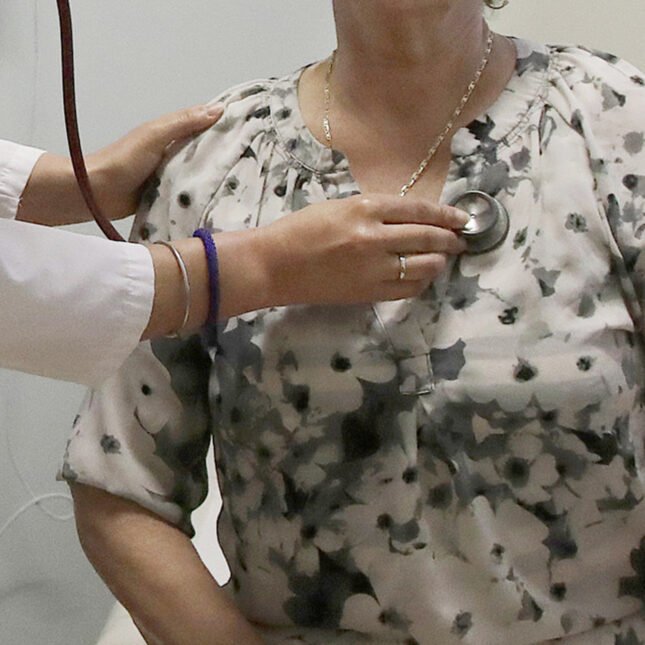
    Ovulation. Endometriosis. And especially: menopause. These once taboo words — among others — have become part of our daily vocabulary and conversations, a sign of greater interest in, and knowledge of, women’s health. 

    Yet even as women’s health has been receiving more attention than perhaps ever before, women remain poorly represented in clinical trials, and female health poorly understood compared to male health. Much of the attention remains focused on the reproductive aspects of women’s health.

    This led the journal Science to plan a special issue dedicated to women’s health, published Thursday. “Biomedical science has come a long way over the years, and it has become increasingly clear that there are sex-dependent differences in many diseases that do not involve reproduction and that occur at all ages,” according to the introduction. 

    The issue was edited by an all-female team (Yevgeniya Nusinovich, Sacha Vignieri, Joana Osório, and Sarah Ross), which named political attacks on women’s rights and health care, as well as funding cuts affecting research in this area, as urgent motives behind their planning.

    “The importance of doing clinical trials specifically in women has gained recognition over the years, and it’s something that should continue to be elevated, including as research funding cuts are targeted at this and other women-specific research, threatening the quality of women’s future healthcare,” they said. 

    Beyond reproductive health

    The issue features reviews of research that aim to highlight recent findings on the impact of sex-dependent biological differences beyond reproduction, as well as deep dives into the latest discoveries about menopause and the pregnant body.

    Women experience functional pain at about twice the rate of men, with persistent pain in the pelvic area often becoming a debilitating factor in their daily lives. The issue takes stock of recent research that identified sex-specific mechanisms of pain. The review highlights the impact of sex hormones, immune-neural interactions, the gut microbiome, and the role of ovarian hormones in pain, though it also highlights the deficit in efforts to understand female pain.

    “Women are desperately waiting for concrete answers that might help eliminate the common ‘all in your head’ approach to their illnesses,” the authors of the review wrote. 

    Another review focuses on the impact of XX and XY chromosomes on aging and disease, making the argument that their impact is so significant that sex chromosomes should always be considered when developing precision medicine strategies. 

    Other contributions do take on issues of reproductive health. They call for a rethinking of menopause research and treatment, with an approach more tailored to the individual; investigating the immune system’s role in preparing for and carrying out a pregnancy; and considering the role of the ovary’s postmenopausal function.

    Nusinovich, a senior editor at Science, said she considers research on post-reproductive health to be different from reproductive investigations “because the focus here is not on improving reproductive success but on considerations for a woman’s own health.” She said she considered including other medical conditions unrelated to reproduction in which sex differences play a role, such as cardiovascular and metabolic disease, “but it didn’t seem like there would be enough new biological insights (with mechanisms, not just clinical observations) for entire coherent review articles.” 

    The dearth of this research highlights the existing gaps. “We tend to focus on women in their reproductive years, and a lot of that I do think is driven by what institutions are willing to fund,” said Tiarney Ritchwood, a professor in the department of public health at Wake Forest University School of Medicine who focuses on health equity. “But I do think that the greater discussion on women outside of the reproductive years is really important.”

    For other experts, however, including a strong focus on reproductive health is inevitable. 

    “There is still so much we don’t know about women’s health simply because sex is often considered an extraneous variable,” said Nicole Woitowich, executive director of the Northwestern University Clinical and Translational Sciences Institute who did not take part in the issue. “For many years, women’s health was synonymous with reproductive health. I’m glad we’ve broadened this perspective to consider the influence of sex across human physiology. Yet, pregnancy and menopause, for example, remain unique aspects of women’s health and we are just beginning to understand how these events can shape our long-term health and well-being.” Woitowich recently researched the reporting of sex differences in NIH-funded papers. 

    The attention to menopause is especially welcome, said Omisade Burney-Scott, a menopause justice advocate pushing to make menopause care inclusive through her platform, the Black Girl’s Guide to Surviving Menopause. Still, Burney-Scott said, the journal article is lacking some perspectives — including discussion of early menopause due to gender-affirming care, or a medical intervention — that shows the limitations of current research. “We must take into account the significant impact of environmental factors, such as systemic oppression (racism, classism, homophobia, transphobia, carcerality) on menopause health outcomes,” said Burney-Scott, who was not involved in the issue. 

    Women’s health needs funding, not just attention

    For the editors, the value of the issue also resides in showing how much there is to learn about women’s health. “Out of all the special issues I’ve encountered, this one stood out to me as highlighting a ton of open questions and things that are just beginning to be studied, especially in the article on chronic pain, pointing to many opportunities for future productive research,” said Nusinovich.

    The experts STAT spoke with agreed that a high-profile journal such as Science dedicating an issue to women’s health sends a strong signal to the scientific community. “It will contribute to increased awareness and even potentially increase research in this area, hopefully in the years beyond the reproductive ones,” said Ritchwood, “but none of this goes anywhere if there’s no funding dedicated to it.”

    Unless there is a broader dissemination of these findings — and, just as importantly, a clear call to fund women’s health research — the impact will remain limited, she said. “The public is not reading Science, so it can’t just be something that we just communicate to ourselves. … Are we going to see it in Vogue, or something that the public is actually looking at?” she said.

    Paula Schneider, the CEO of the Institute Advancing Women’s Health, a global nonprofit that focuses on improving women’s clinical care in midlife and after, noted that there is a lag in adopting new knowledge in clinical practice.

    “Research is only half the equation. Even the evidence we already have on women’s midlife health too often doesn’t make it into clinical practice,” she said. “We need to close the gap between what’s known and what’s done, so that as discoveries like these arrive, women know what to ask, doctors know how to answer, and the system knows what to do next.”