
MU scientists find BPA alternative, bisphenol S, could negatively affect both a mother’s placenta and potentially a developing baby’s brain.
Feb. 18, 2020
Contact: Eric Stann, 573-882-3346, StannE@missouri.edu
Using “BPA-free” plastic products could be as harmful to human health — including a developing brain — as those products that contain the controversial chemical, suggest scientists in a new study led by the University of Missouri and published in the Proceedings of the National Academy of Sciences.
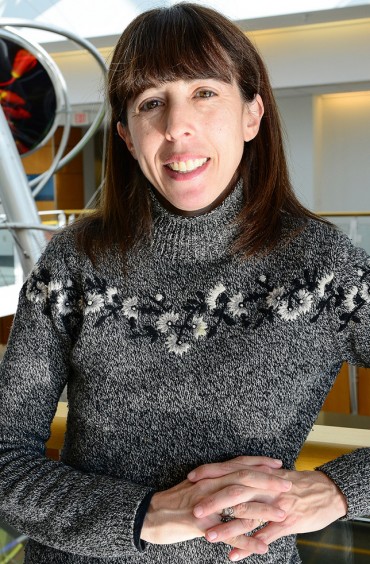
For decades, scientists have studied BPA extensively in animal models with results indicating the chemical plays a role in early pregnancy loss, placental diseases and various negative health outcomes after birth. As these adverse health effects have become more widely known, companies have turned to using alternative chemicals to develop plastic products — namely water bottles and food containers — and often labeling them “BPA-free.” However, MU scientist Cheryl Rosenfeld warns these chemical alternatives, such as bisphenol S (BPS), still aren’t safe for people to use.

In the study, Rosenfeld and her colleagues focused on examining the effects of BPS on a mouse’s placenta. She said the placenta serves as a historical record of what an unborn child faces while in the womb; the placenta also can transfer whatever the mother might be exposed to in her blood, such as harmful chemicals, into the developing child.
“Synthetic chemicals like BPS can penetrate through the maternal placenta, so whatever is circulating in the mother’s blood can easily be transferred to the developing child,” said Rosenfeld, a professor of biomedical sciences in the College of Veterinary Medicine, investigator in the Bond Life Sciences Center, and research faculty member for the Thompson Center for Autism and Neurobehavioral Disorders at MU. “This mouse model is the best model we have now to simulate the possible effects of BPS during human pregnancy, because the placenta has a similar structure in both mice and humans.”
Rosenfeld adds that the placenta serves as a primary source of serotonin for fetal brain development in both mice and humans. Serotonin, while commonly associated with the feeling of happiness, is a natural chemical that can impact a person’s functions, including their emotions and physical activities such as sleeping, eating and digesting food.
“The placenta responds to both natural chemicals as well as synthetic chemicals that the body misinterprets as natural chemicals, but the body doesn’t have the ability to mitigate the detrimental effects of such industrial-made chemicals,” Rosenfeld said. “More importantly, these chemicals have the ability to lower the placenta’s serotonin production. Lower levels of serotonin can compromise fetal brain development because during this critical time in development the brain relies on the placenta to produce serotonin. Thus, developmental exposure to BPA or even its substitute, BPS, can lead to longstanding health consequences.”
Rosenfeld’s research is an example of an early step in translational medicine, or research that aims to improve human health by determining the relevance of animal science discoveries to people. This research can provide the foundation for precision medicine, or personalized human health care. Precision medicine will be a key component of the NextGen Precision Health Initiative — the University of Missouri System’s top priority — by helping to accelerate medical breakthroughs for both patients in Missouri and beyond.
The study, “Bisphenol A and bisphenol S disruptions of the mouse placenta and potential effects on the placenta-brain axis,” was published in the journal Proceedings of the National Academy of Sciences. Co-corresponding authors include R. Michael Roberts at MU and Geetu Tuteja at Iowa State University. Other authors include Jiude Mao, Saurav Sarma, Barbara Sumner, Zhentian Lei, Lloyd Sumner and Nathan Bivens at MU; Ashish Jain at Iowa State University; and Nancy Denslow, Mohammad Zaman Nouri, Sixue Chen, Tingting Wang, Ning Zhu and Jin Koh at University of Florida.
Funding was provided by grants from the National Institutes of Health, National Institute of Environmental Health Sciences and the Eunice Kennedy Shriver National Institute of Child Health and Human Development. The content is solely the responsibility of the authors and does not necessarily represent the official views of the funding agencies.

Oct. 14, 2026
Mizzou astronomer leads global team on NASA mission to create unprecedented view of the early universe
The international team of 130 researchers will be among the first to use NASA’s Nancy Grace Roman Space Telescope, capturing one of the deepest and widest views of the early universe ever made.
Oct. 13, 2026
MURR announces availability of Terbium-161

Oct. 11, 2026
CAFNR celebrates state-of-the-art facilities to benefit Missouri agriculture
The four projects resulted from strong collaborations and investment in Missouri agriculture across agronomy, beef production, meat science and vinology.
Oct. 6, 2026
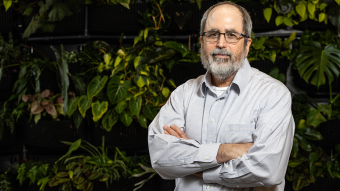
At Mizzou, a scientist is rewriting the rules for how researchers study plant stress
Rather than isolating individual factors one at a time, Ron Mittler studies how organisms respond to multiple stressors simultaneously, paving the way for better crops and potentially better medical treatments.
Stay up-to-date with the latest news by subscribing to the Show Me Mizzou newsletter.