Category: STAT+

  • How consumer tech company Whoop is building for Medicare patients

    How consumer tech company Whoop is building for Medicare patients

    Whoop has never been known for marketing to an older population. Performance athletes headline ads for the wearable company, which aims to turn continuous streams of physiological data into useful insights for behavior change — mostly, for a young, fit customer base.

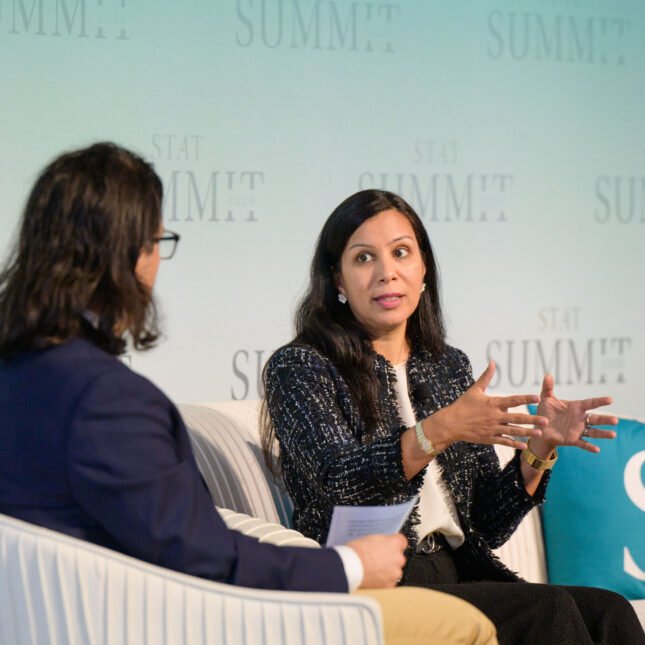
    But this year, Whoop became one of the first consumer wearable companies to be accepted into Medicare’s ACCESS program, making it available at no cost to many traditional Medicare patients ages 65 and up. On Wednesday, at the STAT Summit in Boston, Whoop’s newly appointed chief medical officer Ami Bhatt spoke about how the company is moving to build experiences — and demonstrate outcomes — for a very different population.

    “Number one on our roadmap — and I think I’m allowed to say this, if I’m not, I’m saying it — is simplification of the app,” said Bhatt, who previously chaired the Food and Drug Administration’s digital health advisory committee and served as the American College of Cardiology’s chief innovation officer. Surveys suggest, said Bhatt, that even members of the Silent Generation, who are older than 80 today, trust their clinicians with their data. “It’s not that they’re averse to giving data,” she said. “It’s how easy can we make it for that population to be able to share their data.” 

    Bhatt said that Whoop, which recently raised $575 million from investors including Mayo Clinic and the sovereign wealth fund of Qatar, is working with the National Council on Aging and AARP to think about how to personalize the product to older adults’ individual priorities. “For each of us, how we feel, how we perform, how we age, we have our own goals,” said Bhatt. “The thing is, we don’t want to decide for you what that is.”  

    The goals are less diffuse for the 10-year pilot ACCESS program, which published a directory of initial participants last month. Through those 55 companies, Medicare patients can access chronic condition management for little or no cost — Whoop serves patients with high blood pressure, high cholesterol, obesity, and prediabetes — and Medicare will pay the companies based on their health outcomes. Whoop will provide patients with a wearable, a 12-month subscription to its app, and access to clinicians who can help them make sense of their data and offer advice.

    “The goal is, how do we bring technology closer to the patient, but not put the cost on the patient — rather, put the demand on the company,” said Bhatt. “Whoop takes responsibility for, in 12 months, I am going to make these people better. I’m going to show you outcomes in the Medicare population who have these risk factors to demonstrate that my technology can help them engage in their own health.” To receive full payment under the ACCESS model, Whoop will be required to show that it improved or controlled measures tied to its patients’ chronic conditions, including blood pressure, hemoglobin A1C, and low-density lipoprotein cholesterol.

    Bhatt said it was her role to help the company — which until recently focused on selling a product intentionally binned in the wellness category — develop and demonstrate those kinds of outcomes that bring them closer to clinical practice. The company just this year announced the ability for users to discuss their wearable data with clinicians, shortly before the FDA closed its warning letter that had initially said Whoop’s blood pressure-estimating feature qualified as a medical device — not a wellness feature. 

    While Whoop demonstrates good patient engagement, said Bhatt — users check the app eight times a day, on average — research into the original “wearable” for diabetes, continuous glucose monitors, suggests that engagement doesn’t necessarily translate to better health outcomes. 

    “In order to actually create personalized health at a population level, you need to start thinking about outcomes,” said Bhatt. “Can we show that we decrease blood pressure by five millimeters of mercury in individuals on Whoop — which, by the way, we have shown — so that we can say, hey, the outcome of cardiovascular disease and stroke, we know that outcome is better.” 

    At the same time, Bhatt said, the utility of continuous data is limited within the traditional health care system. As a practicing physician, “I had some really great patients who would print out binders of their wearable data,” she said. “This is me: I love this data. And I’d be like, ‘Oh, God.’” Despite her interest and the patient’s engagement, it was impossible to handle in a 20-minute visit.

    Ultimately, Bhatt imagines Whoop could help solve that problem, perhaps by delivering contextualized reports to clinicians that summarize a patient’s continuous data along with key points from their own journaling entries and interactions with their Whoop app coach. “When you put that together and you actually have a comprehensive report you can give to a clinician, now your clinician says, ‘Oh, that’s what I needed.’” 

  • STAT+: Pharmalittle: We’re reading about Sanofi settling an EU antitrust probe, ‘pharma bro’ Shkreli, and more

    STAT+: Pharmalittle: We’re reading about Sanofi settling an EU antitrust probe, ‘pharma bro’ Shkreli, and more

    By Ed Silverman

    Oct. 14, 2026

    Pharmalot Columnist, Senior Writer

    Good morning, everyone, and welcome to the middle of the week. Congratulations on making it this far, and remember there are only a few more days until the weekend arrives. So keep plugging away. After all, what are the alternatives? While you ponder the possibilities, we invite you to join us for a needed cup of stimulation, which we hope to find shortly since we are on the road. Perhaps we can meet? Meanwhile, here is the latest menu of tidbits to help you on your way. We hope you conquer the world and have a wonderful day. And as always, please do stay in touch. We appreciate feedback, tips, and criticism. …

    Martin Shkreli is back, but the U.S. Federal Trade Commission is not happy, STAT says. The agency and seven states asked a U.S. court to hold Shkreli in contempt for “flagrantly and repeatedly” violating a court order banning him from working in the pharmaceutical industry. Shkreli, known as “pharma bro” for imperiously defending his decision to raise the price of a drug by 5,000%, was sentenced to seven years in prison for defrauding investors in 2018. Before his release in 2022, a court banned him from ever working in the industry again, saying he illegally tried to prevent generic competition to the drug. Since then, he became a prolific trader in pharma stocks, broadcasting his analysis in posts and livestreams on X and other platforms.

    European Union antitrust regulators accepted concessions from Sanofi to settle an investigation into an allegedly “misleading” campaign that disparaged the only rival flu vaccine recommended for vulnerable patients at risk for developing the illness, STAT tells us. In doing so, the company avoided being fined. The European Commission had suggested that Sanofi portrayed the Fluad vaccine marketed by CSL Seqirus as inferior to its own Efluelda vaccine in a communication campaign that primarily targeted health care professionals in Germany and France. Sanofi holds a dominant position in both countries, according to the EC.

    STAT+ Exclusive Story

    Already have an account? Log in

    STAT+

    STAT+

    This article is exclusive to STAT+ subscribers

    Unlock this article — plus in-depth analysis, newsletters, premium events, and news alerts.

    Already have an account? Log in

    View All Plans

    To read the rest of this story subscribe to STAT+.

    Subscribe

  • STAT+: The startup chasing ‘general biological intelligence’

    STAT+: The startup chasing ‘general biological intelligence’

    Brittany Trang, Ph.D., covers AI in health and medicine: Does it actually work? Who benefits, or might be harmed? She writes the weekly AI Prognosis newsletter. Follow her on Threads, Mastodon, and Bluesky. You can reach Brittany on Signal at btrang.01.

    This is the web edition of STAT’s AI Prognosis newsletter, our guide to artificial intelligence in health care and medicine. Sign up to get it delivered in your inbox every Wednesday. 

    Today is the first day of the STAT Summit in Boston! If you’re not attending in person (tickets for tomorrow are still available!), you can tune in virtually. Subscribers get a 40% discount on both virtual and in-person tickets.

    I’m looking forward to “When the Promise of AI Doesn’t Pan Out,” which is scheduled for just after noon ET today, and STAT executive editor Rick Berke’s interview with Katelyn Jetelina, better known as “Your Local Epidemiologist,” whom I’m still starstruck by. 

    STAT+ Exclusive Story

    Already have an account? Log in

    STAT+

    STAT+

    This article is exclusive to STAT+ subscribers

    Unlock this article — plus in-depth analysis, newsletters, premium events, and news alerts.

    Already have an account? Log in

    View All Plans

    To read the rest of this story subscribe to STAT+.

    Subscribe

  • STAT+: Sanofi avoids fine as EU accepts offer to end antitrust probe over disparaging rival vaccine

    STAT+: Sanofi avoids fine as EU accepts offer to end antitrust probe over disparaging rival vaccine

    By Ed Silverman

    Oct. 14, 2026

    Pharmalot Columnist, Senior Writer

    Ed’s stories explore prescription drug pricing, affordability and access, as well issues surrounding patents, litigation, and legislation. He is also the author of the morning Pharmalittle newsletter and the afternoon Pharmalot newsletter.

    European Union antitrust regulators accepted concessions from Sanofi to settle an investigation into an allegedly “misleading” campaign that disparaged the only rival flu vaccine recommended for vulnerable patients at risk for developing the illness. In doing so, the company avoided being fined.

    The European Commission had suggested that Sanofi portrayed the Fluad vaccine marketed by CSL Seqirus as inferior to its own Efluelda vaccine in a communication campaign that primarily targeted health care professionals in Germany and France. Sanofi holds a dominant position in both countries, according to the EC.

    To resolve the probe, Sanofi committed to a corrective communication campaign rectifying its “possible disparaging behavior” and to refrain from such behavior in the future, according to Teresa Riberta, the European Commission executive vice president for Clean, Just and Competitive Transition. The agreement is legally binding.

    STAT+ Exclusive Story

    Already have an account? Log in

    STAT+

    STAT+

    This article is exclusive to STAT+ subscribers

    Unlock this article — plus in-depth analysis, newsletters, premium events, and news alerts.

    Already have an account? Log in

    View All Plans

    To read the rest of this story subscribe to STAT+.

    Subscribe

  • STAT+: Lobbyists and trade groups fight to shape how states regulate medical AI

    STAT+: Lobbyists and trade groups fight to shape how states regulate medical AI

    Influential lobbying groups for doctors and hospitals, a health insurer, technology companies, and representatives from state governments met behind closed doors in Washington, D.C., in early October to develop guidelines for how to regulate artificial intelligence in the practice of medicine.

    Executives from the American Medical Association, American Hospital Association, artificial intelligence giant Anthropic, and insurer Elevance Health are part of a 22 member AI workgroup convened by the Federation of State Medical Boards, or FSMB, a national organization that advocates for state boards. A spokesman said the workgroup “was built to balance expertise across medical regulation, AI development, care delivery, academic medicine, state AI policy, and patient safety,” and that its recommendations would be open for feedback before being formally adopted.

    The discussions within workgroup meetings are being kept confidential, but the goal is to draft guidelines to aid local medical boards, with “particular attention … to AI tools that perform clinical functions with limited or no direct physician supervision,” Humayun Chaudhry, the FSMB’s president and CEO, told STAT. A draft of the recommendations could be made public in “weeks to months,” said Chaudhry. They could ultimately form the basis of legislation in states, which individually regulate medical licensure and the practice of medicine.

    STAT+ Exclusive Story

    Already have an account? Log in

    STAT+

    STAT+

    This article is exclusive to STAT+ subscribers

    Unlock this article — and get additional analysis of the technologies disrupting health care — by subscribing to STAT+.

    Already have an account? Log in

    View All Plans

    To read the rest of this story subscribe to STAT+.

    Subscribe

  • STAT+: Many patient, consumer reps on FDA advisory panels have ties to groups funded by pharma, analysis finds

    STAT+: Many patient, consumer reps on FDA advisory panels have ties to groups funded by pharma, analysis finds

    By Ed Silverman

    Oct. 13, 2026

    Pharmalot Columnist, Senior Writer

    Ed’s stories explore prescription drug pricing, affordability and access, as well issues surrounding patents, litigation, and legislation. He is also the author of the morning Pharmalittle newsletter and the afternoon Pharmalot newsletter.

    Nearly 40% of Food and Drug Administration advisory committee meetings held over a recent 20-year period included either a patient or consumer representative with active ties to an advocacy group funded by pharmaceutical companies, according to a new analysis. And for several committees, the number of such reps exceeded 50%.

    In addition, more than one in 10 advisory committee meetings included a rep who was affiliated with an organization that received funding from the drugmaker whose medicine was being reviewed by the committees. Yet most of these organizational ties were not disclosed at the meetings, raising questions about voting behavior.

    The analysis, which was published in Health Affairs Scholar, noted the FDA has well-established conflict-of-interest policies for its scientific advisory committee members, but policies concerning patient and consumer reps are not as well developed, especially concerning industry funding of advocacy groups whose members appear on committees.

    STAT+ Exclusive Story

    Already have an account? Log in

    STAT+

    STAT+

    This article is exclusive to STAT+ subscribers

    Unlock this article — plus in-depth analysis, newsletters, premium events, and news alerts.

    Already have an account? Log in

    View All Plans

    To read the rest of this story subscribe to STAT+.

    Subscribe

  • STAT+: FTC demands Martin Shkreli divest his pharma stocks

    STAT+: FTC demands Martin Shkreli divest his pharma stocks

    Federal agency and seven states accuse ‘pharma bro’ of ‘flagrantly’ violating a court order

    Martin ShkreliDrew Angerer/Getty Images

    By Jason Mast

    Oct. 13, 2026

    General Assignment Reporter

    Jason is a general assignment reporter, with particular focus on genetic medicine and rare disease. Confidential tips can be sent on Signal at JasonMast.77.

    Martin Shkreli is back. The Federal Trade Commission isn’t happy. 

    The FTC and seven states on Tuesday asked a federal court to hold Shkreli in contempt for “flagrantly and repeatedly” violating a court order banning him from working in the pharmaceutical industry. 

    Shkreli, who became known nationwide as “pharma bro” in the 2010s for imperiously defending his decision to raise the price of an anti-parasitic drug called daraprim by 5,000%, was sentenced to seven years in prison for defrauding investors in 2018. Before he was released in 2022, a court banned him from ever working in the drug industry again, saying he illegally tried to prevent generic competition to daraprim.

    STAT+ Exclusive Story

    Already have an account? Log in

    STAT+

    STAT+

    This article is exclusive to STAT+ subscribers

    Unlock this article — plus daily coverage and analysis of the pharma industry — by subscribing to STAT+.

    Already have an account? Log in

    View All Plans

    To read the rest of this story subscribe to STAT+.

    Subscribe

    1. General Assignment Reporter

      Jason is a general assignment reporter, with particular focus on genetic medicine and rare disease. Confidential tips can be sent on Signal at JasonMast.77.

  • STAT+: Pharmalittle: We’re reading about concerns over a rare disease drug, pharma payments to docs, and more

    STAT+: Pharmalittle: We’re reading about concerns over a rare disease drug, pharma payments to docs, and more

    By Ed Silverman

    Oct. 13, 2026

    Pharmalot Columnist, Senior Writer

    Rise and shine, everyone, another busy day is on the way. And it is getting off to a pleasant start here on the Pharmalot campus, where clear blue skies and comfy breezes are greeting us. As for the official mascots, they are happily snoozing in their respective corners. As for us, we are firing up the trusty kettle for another cup of stimulation. Our choice today is butter pecan. Of course, you are invited to join us. For the full experience, we are now hawking replicas — take a look. Meanwhile, here are a few items of interest. As always, do keep in touch. We appreciate feedback, criticism, and tips. …

    Two months after the release of an open letter on potential safety issues tied to a rare disease drug sold by Neurocrine Biosciences, patient advocates and some experts are expressing growing alarm over the perceived risks of the therapy, STAT reports. The drug, approved to treat Prader-Willi syndrome, which can cause an insatiable feeling of hunger, has been linked to the deaths of seven people and the  hospitalization of nearly 100 others — all since the treatment, called Vykat XR, was approved 18 months ago. Case reports on those deaths and hospitalizations that were submitted to regulators do not prove causality; many of the Vykat cases involved complex medical issues and multiple medications. But some experts say the evidence is sufficient to conclude Vykat is causing unacceptable harm.

    The gifts and payments that doctors receive from drugmakers increased inappropriate prescribing and the number of prescriptions written, likely leading to rising health care costs, STAT writes, citing a Cochrane review of dozens of previous studies that have explored the influence the pharmaceutical industry has on medical practice. In addition, pharmaceutical advertising or education aimed at doctors may also increase inappropriate prescribing, probably increases the number of prescriptions written, and may increase the costs of prescriptions. But conflict-of-interest policies that restrict or manage interactions between companies and doctors probably improved prescribing practices.

    STAT+ Exclusive Story

    Already have an account? Log in

    STAT+

    STAT+

    This article is exclusive to STAT+ subscribers

    Unlock this article — plus in-depth analysis, newsletters, premium events, and news alerts.

    Already have an account? Log in

    View All Plans

    To read the rest of this story subscribe to STAT+.

    Subscribe

  • STAT+: Takeaways from an evaluation of Google’s diagnostic chatbot, AMIE

    STAT+: Takeaways from an evaluation of Google’s diagnostic chatbot, AMIE

    You’re reading the web edition of STAT’s Health Tech newsletter

    Adobe

    Mario covers technology in health care, including FDA regulation of artificial intelligence; how Medicare pays for health tech; the use of AI in clinical care; mental health chatbots; and consumer wearables. He’s also the co-author of the free, twice weekly STAT Health Tech newsletter. You can reach Mario on Signal at mariojoze.13.

    You’re reading the web edition of STAT’s Health Tech newsletter, our guide to how technology is transforming the life sciences. Sign up to get it delivered in your inbox every Tuesday and Thursday.

    Good morning health tech readers!

    I’m getting on a train to Boston in couple of hours for STAT Summit. See some of you soon.

    STAT+ Exclusive Story

    Already have an account? Log in

    STAT+

    STAT+

    This article is exclusive to STAT+ subscribers

    Unlock this article — plus in-depth analysis, newsletters, premium events, and news alerts.

    Already have an account? Log in

    View All Plans

    To read the rest of this story subscribe to STAT+.

    Subscribe

    1. Health Tech Correspondent

      Mario covers technology in health care, including FDA regulation of artificial intelligence; how Medicare pays for health tech; the use of AI in clinical care; mental health chatbots; and consumer wearables. He’s also the co-author of the free, twice weekly STAT Health Tech newsletter. You can reach Mario on Signal at mariojoze.13.

  • STAT+: Pharma’s free lunches for doctors boost inappropriate prescribing, analysis finds

    STAT+: Pharma’s free lunches for doctors boost inappropriate prescribing, analysis finds

    By Ed Silverman

    Oct. 9, 2026

    Pharmalot Columnist, Senior Writer

    Ed’s stories explore prescription drug pricing, affordability and access, as well issues surrounding patents, litigation, and legislation. He is also the author of the morning Pharmalittle newsletter and the afternoon Pharmalot newsletter.

    The gifts and payments that doctors receive from drugmakers increased inappropriate prescribing and the number of prescriptions written, likely leading to rising health care costs, according to a Cochrane review of dozens of previous studies that have explored the influence the pharmaceutical industry has on medical practice.

    In addition, pharmaceutical advertising or education aimed at doctors may also increase inappropriate prescribing, probably increases the number of prescriptions written, and may increase the costs of prescriptions. But conflict-of-interest policies that restrict or manage interactions between companies and doctors probably improved prescribing practices, the analysis found.

    However, there was not enough evidence to draw clear conclusions on whether free drug samples and other promotions affect decisions to place specific drugs on hospital formularies. These are the list of medicines approved for use and routinely stocked in a hospital or health system.

    STAT+ Exclusive Story

    Already have an account? Log in

    STAT+

    STAT+

    This article is exclusive to STAT+ subscribers

    Unlock this article — plus in-depth analysis, newsletters, premium events, and news alerts.

    Already have an account? Log in

    View All Plans

    To read the rest of this story subscribe to STAT+.

    Subscribe