Category: Southern Bureau

  • Before Saying Yes to the Medical Test, Know the Risks and Benefits

    Before Saying Yes to the Medical Test, Know the Risks and Benefits

    (Maria Fabrizio for WPLN and KFF Health News)

    When Lori Baute first learned about precautionary full-body MRI scans, she dismissed the idea.

    “ I heard Kim Kardashian got one, and some other wealthy people,” Baute said. But at 59, she was worried about her long-term health. She has a family history of cancer, and she’s a critical caregiver for her aging mom and her adult brother with special needs.

    After a close friend was diagnosed with bladder cancer, Baute decided to make an appointment with a clinic that offers full-body scans near where she lives in Ocala, Florida. Her results came back a week later. One major finding: She has lesions on her pancreas. “When I got that, I was really petrified,” she said.

    Worried about pancreatic cancer, Baute shared the results with her gastroenterologist, who ordered a targeted MRI scan as a follow-up. That test showed the lesions were benign cysts.

    Baute’s experience is becoming more common as companies pitch body scans directly to consumers as a way to detect cancer and other diseases early. But no major medical association — including the American Cancer Society and the American College of Radiology — recommends these scans for people without a very high risk of certain cancers.

    And even medical screenings that doctors do recommend can carry some of the same reasons for caution.

    The QTip:

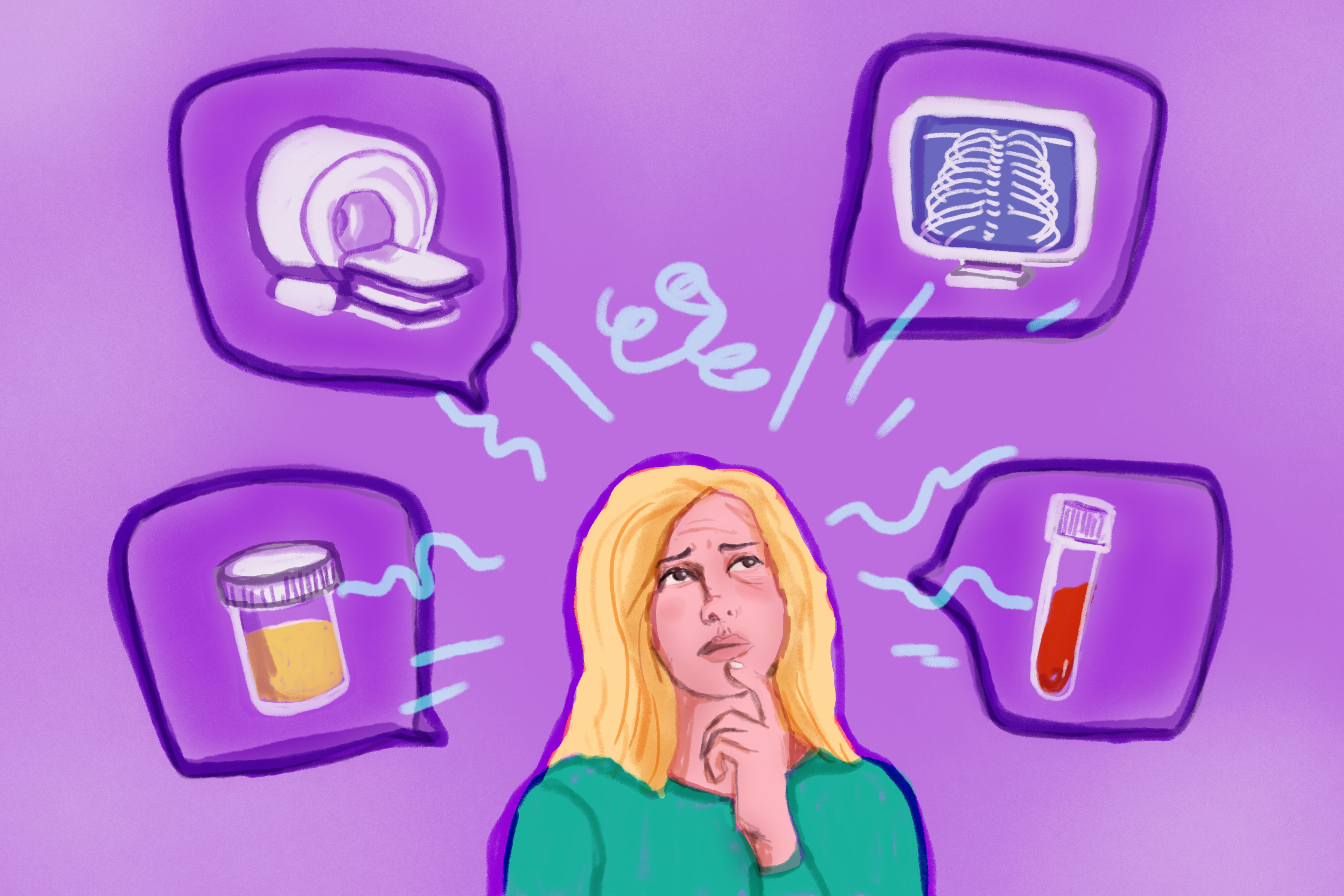
    Before saying yes to the test, ask about the risks and benefits — even if your doctor recommends it.

    Here’s what to know:

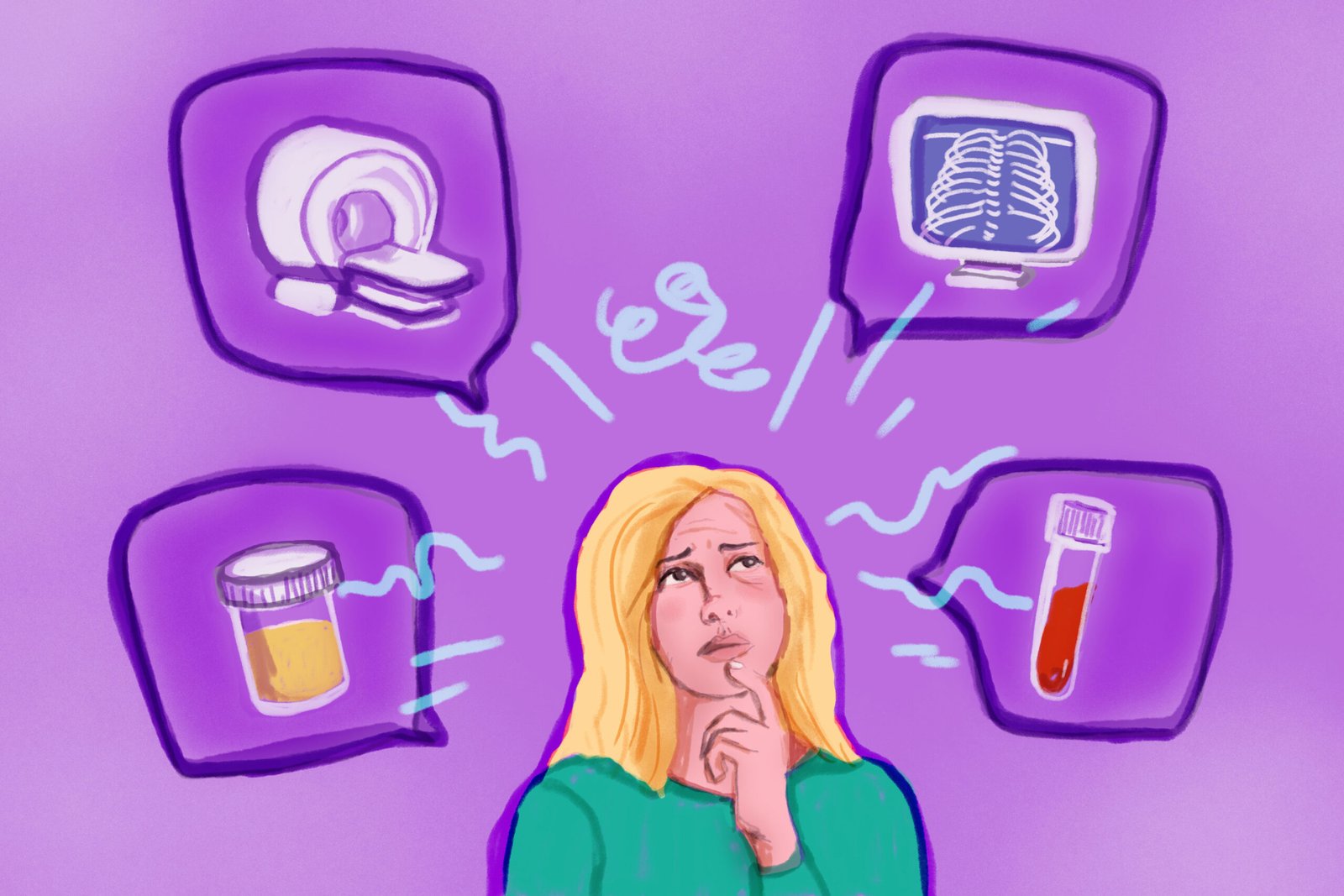
    Every Test Comes With Costs and Risks

    At a minimum, a medical test will cost you time — and could mean a hefty medical bill. Many tests marketed directly to consumers, like full-body scans and at-home blood screening kits, are not covered by insurance, and some tests can cost several thousand dollars.

    Some laboratory tests might involve only the discomfort of a blood draw or the awkwardness of collecting a urine or stool sample, but others carry the possibility of physical harm. For example, a small percentage of people who get CT scans each year will develop cancer because of the radiation exposure from the tests, according to estimates from the National Institutes of Health. Relatively simple procedures like a biopsy or an endoscopy come with the risks of pain, infections, tearing, a reaction to anesthesia, or further serious complications.

    Plus, testing can cause anxiety and stress — as patients wait for results and if the results are inconclusive. “I see patients every week in my office who are tortured by the results of tests that they really didn’t need to ever have,” said Rita Redberg, a University of California-San Francisco professor and cardiologist and an advocate for less medical testing. For example, if you discover a cyst, then “you’re living for the next year, two years, three years getting repeated tests to figure out whether it’s benign or a cancer,” Redberg said. She cautions patients against testing unless they have specific symptoms.

    Testing Often Leads to More Testing — And More Risk

    A reality of getting a medical test is that the results often lead to additional, and potentially more invasive, testing. Doctors call this “diagnostic cascade.”

    Baute, for example, plans to continue monitoring her pancreas with annual scans. To her, she said, the financial cost and anxiety are worth it if she can feel “like I’m in control of my health and I have knowledge.”

    But Redberg points to a worst-case scenario, documented by JAMA Internal Medicine in 2011: After starting an exercise program, a 52-year-old woman experienced chest pain and went to see her doctor. Her exam suggested that her pain was muscular and she had a low risk for heart disease. Still, her doctor ordered a scan of her heart to reassure her. The results led her doctor to order another test, during which her artery was ripped. She had emergency bypass surgery, experienced complications, and ultimately, Redberg said, “she ended up with a heart transplant — all from this unnecessary scan just to reassure her.”

    A Few Simple Questions Can Help You Decide

    Before saying yes to the test, it’s important to know about the risks and benefits — even if your doctor recommends it, Redberg said. She suggests asking a medical provider and yourself questions like:

    • What am I going to learn from this test?
    • How is this test going to help in my care?
    • Could I improve my health without doing this test?

    She said many test results, especially in her field of cardiology, end up pointing patients back to the basics of a healthy lifestyle, like eating well, exercising, and not smoking. And those, she said, could be advised without a test.

    People and Policy

    If your health insurance covers a medical test, that means the test has most likely met vetted, scientific standards that demonstrate benefits to patients. Insurers must cover evidence-based services that have a rating of A or B from the U.S. Preventive Services Task Force. Private insurers, as well as Medicaid and Medicare plans, must cover the full cost of recommended preventive screenings. Many medical tests marketed directly to consumers are not covered by insurance.


    Emily Siner at Nashville Public Radio contributed to this report.


    HealthQ is a health series from reporters Cara Anthony and Blake Farmer, approachable guides to an unapproachable healthcare system. It’s a collaboration between Nashville Public Radio and KFF Health News.

  • Witnessing the Failed Execution of Christa Pike: ‘We Could All Hear Her Breathing’

    Witnessing the Failed Execution of Christa Pike: ‘We Could All Hear Her Breathing’

    On Sept. 30, I was one of the seven media witnesses who observed Tennessee fail to execute convicted murderer Christa Pike, the first woman to face the death penalty in the state in almost 200 years.

    From our previous reporting, each of us had an inkling that the lethal injection process might not go according to plan. Pike’s attorneys had asked the Tennessee Supreme Court to allow her to be hanged instead, citing concerns that a platelet disorder and small veins would make the actual injection not only painful but ineffective.

    And Tennessee had already botched an execution attempt in May, when healthcare workers failed to establish complete IV access into Tony Carruthers, who was sentenced to death after being convicted for his involvement in the kidnapping and murders of three people in 1994.

    Tennessee Gov. Bill Lee said after the failed execution of Carruthers, who has maintained he is innocent, that the state wouldn’t try again to kill him for at least a year. After Pike left the execution chamber in an ambulance on Sept. 30, Lee announced he would suspend lethal injections for the rest of the year.

    The morning of Pike’s scheduled execution, I and the other media witnesses arrived at the Riverbend Maximum Security Institution in Nashville by 8:30 a.m. and waited to be ushered into the prison with nothing but our driver’s licenses in hand. The plan was to wait inside until Pike began her journey to the death chamber at 10 a.m.

    But we didn’t make it that far.

    Before the Department of Correction’s staffers began moving us away from the outdoor media tent and our belongings, the reporters’ phones all went off. A federal circuit court had stayed the execution. This was my fifth stint as a media witness to an execution, and I’d never seen a stay issued. We didn’t know what that would mean.

    It turned out to mean waiting for nine hours at the prison, barred from leaving the grounds. We spent most of it in the boardroom where parole hearings take place.

    Hours of Waiting. Then, ‘It’s a Go.’

    Throughout the wait, the victim’s family often came up in conversation. In 1995, Pike, then 18 years old, killed Colleen Slemmer, who was 19. Slemmer’s family in Florida traveled to Tennessee for the execution with money raised through crowdfunding. It’s unclear where they waited while the last-minute legal wrangling played out.

    Sometime around 6 p.m., the prison system’s communications director, Dorinda Carter, told us: “It’s a go.”

    Tennessee had asked the U.S. Supreme Court to lift the stay, and it did. Carter read the ruling aloud to us.

    For unknown reasons, it took another hour or so for the security team to usher us into the witness bay, an all-white cinder block room with black pleather chairs in two rows and a big window overlooking the death chamber. A loudspeaker pipes sound into the room from the chamber when the microphones are on.

    A black curtain hangs in front of the window inside the death chamber. Department of Correction workers open it once IV lines are inserted into the condemned prisoner.

    The curtain is there to obscure the workers who place the IVs, in order to shield their identities as required by state law. That process is enshrined in the “Lethal Injection Execution Protocol,” which is the guidebook the Department of Correction writes for itself. There is no other regulation over executions in the state.

    My employer, the Nashville public radio station WPLN, is a party in a lawsuit challenging the state’s concealment of the IV insertion. When executions are botched, it’s often due to something going wrong while IVs are placed — or with the subsequent step if IVs fail, placing a central line in a deeper vein through the chest, neck, or groin.

    A lower court ruled in favor of WPLN and other media plaintiffs in January, but the state appealed the order, and it has been halted while higher courts consider the case.

    The Death Chamber

    The American Medical Association officially bars doctors from participating in executions, and many other health professionals also consider assisting an execution to be unethical.

    Outside of prison staffers and the execution team, only the prisoner’s spiritual adviser and attorney are allowed in the room with the prisoner while the IVs are inserted. So generally, attorneys’ descriptions are the only account of the procedure.

    Under normal circumstances, witnesses sit in the bay for 10 or 15 minutes with the curtain closed. That’s how long it tends to take for the IV team to place a line and start running saline, to prepare for the 5 grams of the sedative pentobarbital that will be pumped in to kill the prisoner.

    Once the lines are set, the execution team enters an adjacent, concealed room. The IV lines run through the wall into that hidden chamber, from which the drugs are administered.

    But at Pike’s execution, we sat in the bay for 45 minutes with the curtain closed and the microphone turned off.

    Until Carruthers’ failed execution, the Department of Correction kept the lights off in the witness bay during the wait. Witnesses at his execution said they sat in a dark room for an hour and a half as the execution team tried and failed to place an IV line. This time, the prison kept the lights on.

    The clock we use to give a minute-by-minute account is in the death chamber, so we can’t see it with the curtain closed. John North, a reporter with the television station WBIR in Knoxville, was the only witness wearing a watch. The rest of us asked him over and over what time it was.

    After half an hour, it was clear the IV team must have been struggling.

    We wondered whether Pike’s execution would unfold similarly to Carruthers’. That time, the governor called and ordered the execution halted before the curtain ever opened.

    But at 7:27 p.m., we heard the curtain being drawn away.

    We saw Pike in profile, lying on the gurney, facing the window for the other bay, where the victim’s family and prosecutors sit.

    We saw Pike’s spiritual adviser, Mikey Noechel, who wore a wine-red sash over his suit. Together, they sang and talked about Buddhist teachings. 

    Under the state’s protocol, the spiritual adviser is allowed in the death chamber as the pentobarbital flow begins, though the attorneys are not.

    There is no signal when the lethal drugs start flowing, but it’s assumed to begin after the prisoner delivers her final words. It’s typical for the spiritual adviser to offer prayers and other support, and for there to be a back-and-forth between the two.

    Pike spoke.

    “I just want to say that I’m going to leave this world the way I’ve spent most of my life, and that is with love,” she said.

    She said that she had love for those who hate her, and that she was at peace with her death.

    Moments later, Pike told Noechel her arm was burning. She said it was in one specific spot and asked corrections staff in the room whether that was normal.

    Pentobarbital is alkaline, so it burns like drain cleaner if it touches skin. If the IV is administered correctly, that is unlikely to happen.

    But Pike and Noechel chatted for what seemed a shocking amount of time. Prisoners tend to show signs of being sedated a few minutes in. Pike didn’t.

    Something Is Wrong

    The Tennessee Department of Correction uses an odd practice to announce the drugs have been fully administered. There’s a small, hinged door built into the wall between the concealed drug management room and the death chamber, with a platform beneath it. Once the drugs have completely flowed through the IV, the door is opened and a rock is placed on the platform. That initiates a five-minute waiting period, after which the curtain closes again to obscure a doctor, who enters the death chamber, checks the prisoner’s pulse, and certifies the death.

    In each of the executions I’ve witnessed, the prisoners look unconscious long before the rock comes out, and in the minutes following they’re presumed dead.

    The rock came out at 7:41 p.m. At 7:44 p.m., Pike was still speaking quietly to Noechel.

    My jaw dropped. It was clear to me then that something was very wrong.

    Once the five minutes are up and the curtain closes to conceal the doctor, who confirms the time of death, the spiritual adviser moves into the witness bay and stays there until everyone leaves the facility.

    But after Noechel entered the witness bay, staff came in and ordered him back into the death chamber. There was only one reason to do so: They were trying again.

    The curtain reopened.

    The state’s protocol dictates that, as a backup plan, prison staff can run a second round of pentobarbital. According to a statement from the Death Penalty Information Center, which tracks execution attempts and their outcomes, Pike is “the first person to survive after being injected with lethal doses of execution drugs.”

    Eventually, Pike stopped talking. She started snoring.

    She continued to snore after the rock was put out the second time and the curtain closed again. We continued to hear her snore over the loudspeaker.

    The state’s protocol does not contemplate a second round of drugs failing to kill the prisoner, so there are essentially no rules for the situation the Department of Correction found itself in with Pike.

    It’s unclear what was happening behind the curtain. Her lawyers later said they weren’t allowed in the death chamber.

    The curtain closed at 8:16 p.m., and we listened to Pike’s snoring for nearly 40 minutes.

    Tensions rose between the media witnesses and Carter, the Department of Correction’s communications director. I asked her: “Do they do a third round? Are you going to resuscitate her?” Carter didn’t have an answer. Another witness, Steven Hale of the Nashville Banner, asked why the curtain was closed. The doctor wasn’t certifying Pike’s death. We could all hear her breathing.

    At 8:53 p.m., the prison warden, Kenneth Nelsen, came over the loudspeaker and said, “Media witnesses, please exit the area.”

    ‘Intubated, on a Ventilator’

    We went out to the news conference, which the Department of Correction usually requires media witnesses to participate in. While one of us was speaking, several emergency vehicles arrived. We saw the caravan leave with its sirens on. That was our only insight into whether Pike was alive.

    Pike’s attorneys later confirmed she was hospitalized. As of Oct. 1 she remained in critical condition at an undisclosed Nashville hospital, according to her attorneys.

    Her lawyers, in an emergency filing with the Davidson County Chancery Court on Oct. 2, alleged that the execution team apparently didn’t “realize that the IV lines were not correctly placed or that the veins had blown” and that pentobarbital had “in whole or in part” entered her body instead of her veins.

    Pike arrived at the hospital with both of her arms “swollen, burned, and blistered,” they wrote. “She is intubated, on a ventilator, and remains unconscious.”

    Pike’s future, as well as that of lethal injection in Tennessee, is uncertain.

    Lee, the Republican governor who has paused executions for the rest of the year, leaves office in January. The front-runner in the Nov. 3 election to replace him, U.S. Sen. Marsha Blackburn, has been a vocal supporter of the death penalty. After Pike’s failed execution, the Republican candidate posted her solution to X.

    “Bring back the electric chair and deliver justice for these victims swiftly,” she wrote. “As your governor, I will do just that.”

    The electric chair was last used in the U.S. in Nashville when Tennessee executed Nicholas Sutton in 2020. He was one of five prisoners who chose the electric chair over lethal injection in the state from 2018 to 2020.

    This article is from a partnership that includes WPLN, NPR, and KFF Health News.
  • Patient Dies by Suicide After ‘Insurance Issue’ Delayed Medicine for Lung Disease Flare-Ups

    Patient Dies by Suicide After ‘Insurance Issue’ Delayed Medicine for Lung Disease Flare-Ups

    If you or someone you know may be experiencing a mental health crisis, contact the 988 Suicide & Crisis Lifeline by dialing or texting “988.”

    KYLE, Texas — Kenney Blewett was diagnosed with lung disease more than a decade ago but started experiencing flare-ups this year that made him feel like he couldn’t breathe.

    Blewett described those flare-ups as “the scariest thing in the world,” said his wife, Cindy, adding that while the episodes typically lasted no more than a few minutes, they had become more frequent.

    On top of that, simple tasks, like taking out the trash, left Blewett winded. He rarely left the house and had recently lost 45 pounds. “That sounds like cancer,” Cindy remembered one of his doctors said. It was clear, she said, that her husband’s poor health, tied to decades of smoking, was getting worse.

    That’s why, on June 2, Blewett’s pulmonologist wrote him a prescription for a new medication to improve the terrifying breathing issues caused by chronic obstructive pulmonary disease, or COPD. But the prescription wasn’t immediately filled. Two days after that doctor appointment, Blewett received an email from Walgreens explaining that, “due to an insurance issue that we’re working to resolve,” the medication was delayed.

    “He was hopeful that it would work,” Cindy said of the drug, two months after her husband’s death. “I wish we had the chance to find out.”

    Insurance delays and denials have become an infamous feature of the American healthcare system, with nearly 7 in 10 adults calling them “a major problem,” in a January KFF Health Tracking Poll.

    In June 2025, six months after UnitedHealthcare’s CEO was shot in New York, the Trump administration announced a highly publicized industry pledge, signed by dozens of major health insurers, to remove some of the barriers that block or delay patients from accessing doctor-recommended care. And yet that pledge was voluntary, and it carries no penalties if companies fail to comply. Indeed, a report published by KFF Health News in July found that some insurers that signed the pledge would not implement all the promised initiatives as originally outlined.

    Insurers Hedge on Trump-Backed Pledge To Improve Denials Process

    Last year, the Trump administration announced a voluntary pledge by dozens of insurers to improve prior authorization, which often requires patients to seek approval before treatments. But prior authorization remains commonplace, and there’s no evidence the government is trying to hold insurers to account.

    In recent years, lawmakers in most states, including Texas, have attempted to address delays and denials by regulating the insurance industry in the absence of substantial federal reform. But most health insurance plans, including traditional Medicare policies and employer-sponsored offerings, which together cover more than half of all Americans, typically aren’t under state jurisdiction.

    Even some medical office staff and pharmacy employees find the patchwork of state and federal insurance rules and regulations confusing, a problem that is poised to become more complicated as artificial intelligence plays a larger role in approving and processing claims.

    “It’s just gotten completely out of hand,” said Matt Toresco, CEO of Archō, a patient advocacy and consulting company. He argued that patients need more assistance facing insurance hurdles.

    The Blewetts’ story illustrates how navigating these complexities remains a herculean task for patients and their caregivers.

    Cindy has sought answers from Medicare; Kenney’s private Part D drug plan; his pulmonologist’s office; and Walgreens. She still has questions about who was responsible for the medication delay and how the holdup could have been prevented.

    If the COPD flare-up Blewett experienced on the afternoon of Sunday, June 7, could have been avoided, she wondered, would he still have chosen to die by suicide that night?

    A photo of a man standing in the woods seen on a laptop.
    Kenney Blewett, who was diagnosed with lung disease more than a decade ago, died by suicide in June. The Blewetts celebrated their 60th wedding anniversary earlier this year. (Callie Richmond for KFF Health News)

    ‘Complex and Convoluted’

    During that first week of June, Cindy said her husband repeatedly asked if his prescription — a liquid medication meant to be inhaled through the nebulizer machine Kenney owned — was ready to be picked up from Walgreens.

    Cindy said she wasn’t initially surprised or worried by the delay. Since its acquisition by a private equity firm last year, Walgreens has cut thousands of jobs across the country, according to the Private Equity Stakeholder Project. Cindy said in August that their Walgreens pharmacy in Kyle seemed to her to have been understaffed for months, and that prescriptions were being filled more slowly.

    When Cindy called the pharmacy a few days after Kenney’s appointment to find out more about the insurance delay, she said, a Walgreens employee told her the prescription required prior authorization. Also called preapproval or precertification, prior authorization is a practice widely used by health insurers that requires medical providers to seek permission before their patients may receive covered treatment.

    But Cindy didn’t know which of Kenney’s insurers required prior authorization for this medication.

    For years, she had helped manage multiple policies on behalf of her husband. Kenney was insured by Medicare parts A and B, the federal health insurance program for people 65 and older or with disabilities. But he also had a private Part D plan to cover drug costs through Wellcare Value Script, as well as a Medicare supplement plan through Blue Cross and Blue Shield of Texas — also called a “Medigap” plan — that paid for other out-of-pocket costs.

    Initially, Cindy assumed that Kenney’s Part D plan had invoked prior authorization for his new medication. But because it was a liquid that is inhaled through a nebulizer machine, this drug was one of relatively few covered by Medicare Part B’s durable medical equipment benefit, not Part D.

    The federal government had no record showing that this prescription had been billed to Kenney’s Part B policy, the Medicare agency told Cindy over the phone, she said.

    Sarah Tanner and Myriea Amaya, spokespeople for Centene, Wellcare Value Script’s parent company, would not answer questions for this article.

    After Kenney’s death, when Blewett sought clarification at the Walgreens pharmacy, she said the employee “kept saying different things.” She recalled his explaining that the prescription was submitted to Medicare Part B but without a necessary diagnostic code that the doctor should have included.

    Carmen Lopez, a spokesperson for Walgreens, told KFF Health News in late September that the company “cannot comment on matters involving specific individuals.”

    Subsequently, Cindy said, a district pharmacy supervisor for Walgreens reached out by phone, and told her the pharmacy tried to process the prescription through Part B on June 2, the same day as the pulmonologist appointment, but that the prescription was missing a diagnostic code from the physician. The supervisor said Walgreens sent a request for that code to the pulmonologist’s office later that day, Cindy recalled.

    Kenney’s pulmonologist — Rajesh Shetty of LungDocs — did not respond to phone or email messages from KFF Health News. But Cindy said an employee at the practice told her they did not see a fax from Walgreens asking for a diagnostic code for the prescription.

    Meanwhile, it couldn’t have been an issue with Kenney’s Medigap plan, since those policies don’t require prior authorization.

    “Short of getting attorneys involved,” Cindy said, “I’m not sure how to find out what really happened.”

    Cindy Blewett stands on her porch in front of her home. Foliage and plants from her garden on seen to the left.
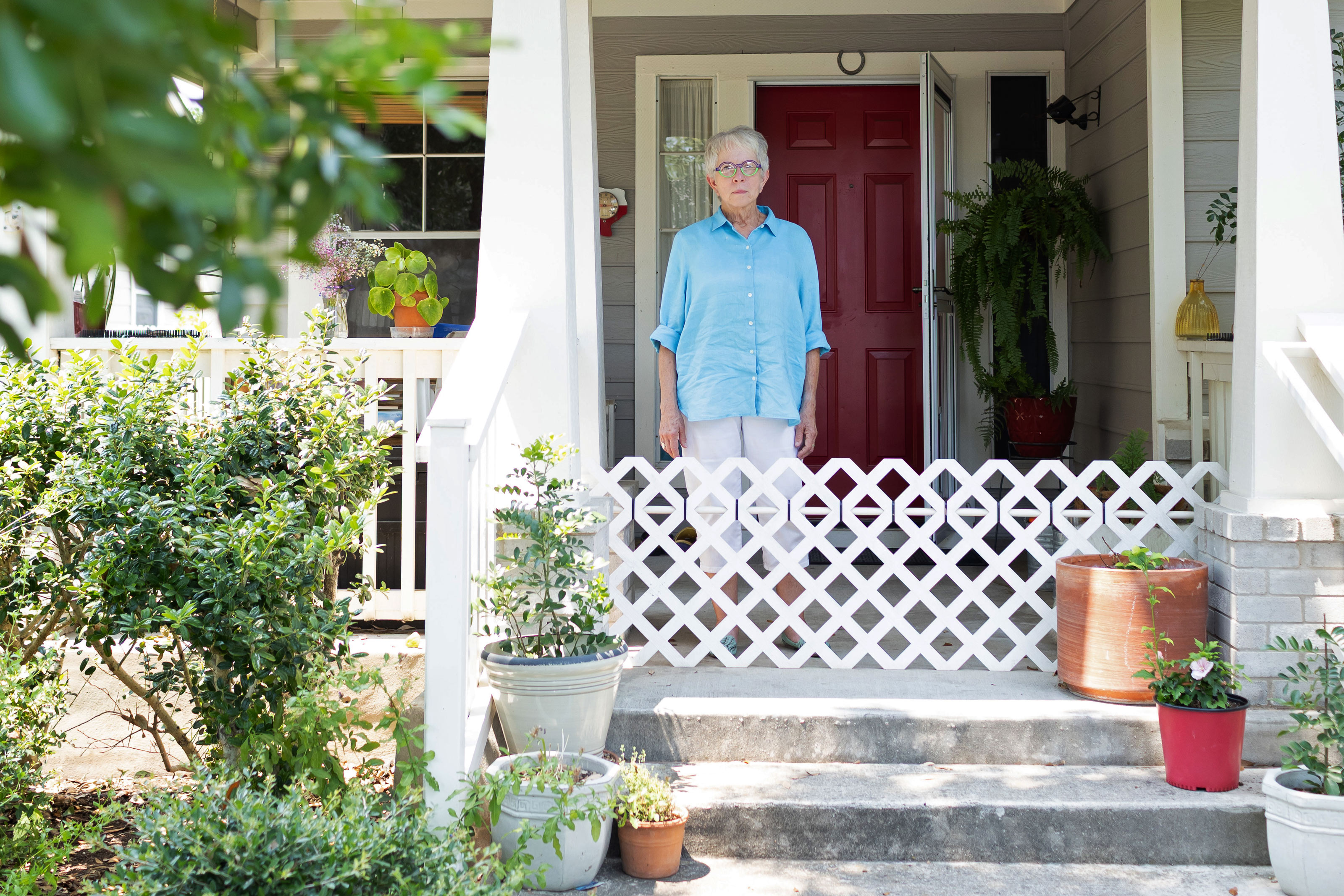
    Cindy Blewett tried to figure out which of her husband’s insurers required prior authorization for his medication. (Callie Richmond for KFF Health News)

    More Red Tape Ahead

    Confusion surrounding these Part B and Part D distinctions is common, said Mike Hess, senior director of advocacy and regulatory affairs at the nonprofit COPD Foundation. “Medicare has gotten to be so complex and convoluted over the years,” he said, that even medical office staff and pharmacy employees often misunderstand the nuances.

    And with the introduction of AI to the preapproval process, navigating insurance hurdles will likely get more complex for Medicare beneficiaries, doctors say.

    Historically, traditional Medicare, unlike Medicare Advantage, used prior authorization sparingly. But in January, Medicare launched a pilot program in six states — Arizona, New Jersey, Ohio, Oklahoma, Texas, and Washington — testing the use of AI to preapprove some healthcare services.

    It is intended to “root out waste in Original Medicare,” CMS Administrator Mehmet Oz has said, but physicians and patients say the program is creating more red tape for Medicare beneficiaries and leading to inappropriate denials. The pilot program does not currently impose prior authorization requirements on COPD medications, but industry experts expect the scope of the initiative will grow to include more services and states.

    On the night of June 7, hours after her husband’s last COPD flare-up, Cindy Blewett was sitting on their back porch when she heard a loud noise. She assumed a picture had fallen off the wall in the living room. In fact, it was a gunshot. She discovered Kenney’s body in their bedroom.

    “I can’t tell you how horrible it was,” Cindy said.

    She said her husband had struggled with his mental health for a long time and had attempted suicide once before, years ago. His deteriorating health only made things worse, she said.

    Kenney confirmed that much in a note he left. He told Cindy that she was a wonderful wife, mother, and grandmother but that his health was too poor to continue living.

    A photo of a dark blue urn on a black table. A glass goblet is seen behind the urn.
    Cindy Blewett keeps an urn of her husband’s ashes. (Callie Richmond for KFF Health News)

    A second COPD medication, which his pulmonologist ordered directly from the drug manufacturer during the June 2 appointment, arrived several weeks after Kenney’s suicide, she said.

    “Perhaps, just perhaps,” Cindy said, “if he had received both medications in a timely manner, he would be here today, and we would have had many more years together.”

    Do you have an experience with prior authorization you’d like to share? Click here to tell KFF Health News your story.

    [Correction: This article was revised at 11 a.m. ET on Oct. 2, 2026, to correct the description of Mike Hess’ role at the COPD Foundation.]

  • Hospitals Have a Little-Known Tool To Prevent Medical Debt. Here’s How It Works.

    Hospitals Have a Little-Known Tool To Prevent Medical Debt. Here’s How It Works.

    If you have medical debt, there’s a good chance you owe money to a hospital.

    One way patients can avoid medical debt is through hospital financial assistance, also known as charity care. Most of the nation’s hospitals offer free or discounted medical care to patients with very high medical debt or low incomes.

    Getting financial assistance, however, can be challenging. Many patients don’t know that hospitals offer financial help, surveys show, and complex application forms leave others stymied.

    Hospitals often demand that applicants turn over bank statements, pay stubs, tax returns, divorce filings, or other materials, and submit their applications in person, by mail, or by fax.

    “They don’t make it easy,” said Neale Mahoney, a Stanford University economist who studies medical debt.

    Such hurdles leave many patients with unpaid bills they should never have had to pay in the first place. In a single year, hospitals and health systems billed patients for at least $2 billion that they likely didn’t owe, one analysis found.

    As healthcare costs climb and more people lose their coverage, states and hospitals are testing an emerging approach to fix this problem: automatically screening patients to see if they qualify for assistance and proactively wiping out debt when they do. This is known as “presumptive eligibility.”

    Under this approach, patients may have the cost of their care wiped out before they see any bills — but not always. Hospitals differ on when, how, and for whom they use auto-enrollment, potentially impinging on patients’ finances.

    Here’s what you need to know about how auto-enrollment works.

    What is hospital financial assistance?

    In many states, hospitals set their own criteria for whom they provide financial aid. Eligibility is typically based on income for the patient’s entire household. The closer patients are to poverty, the less they have to pay. Patients with middle incomes and insurance are sometimes eligible for discounts, especially if their bills would gobble up a big chunk of what they earn.

    At least 11 states require hospitals to wipe out bills for low-income patients, though income cutoffs vary. Georgia, for example, mandates free care for anyone with income slightly above the federal threshold for poverty. In several states — including Oregon, North Carolina, and Maryland — patients can earn double that amount and still get free care.

    But in most states, many patients must complete applications to receive assistance.

    Several states in recent years have launched investigations and passed legislation designed to make it easier for people to get help. Research into medical debt, however, suggests gaps persist.

    How many hospitals use auto-enrollment?

    Nearly all nonprofit hospitals say they screen and automatically reduce bills for certain patients.

    Under the Affordable Care Act, nonprofit hospitals must make reasonable efforts to find people who are eligible for help before they take patients to court, sell their debt to collection agencies, or ding their credit over bills. Presumptive eligibility is one way hospitals can comply with the regulation, which took effect in 2016.

    In the first year under the new rules, about 70% of tax-exempt hospitals nationwide said they screened patients and proactively reduced bills, according to an analysis of federal data for Tradeoffs by the independent research institute RTI International. As of 2022, that figure was nearly 90%.

    The federal law doesn’t apply to for-profit and public hospitals, which don’t have to report the actions they take before going after patients for unpaid bills.

    In six states, policymakers require hospitals to use presumptive eligibility and skip applications for certain patients. Those states are California, Delaware, Illinois, Maryland, North Carolina, and Oregon.

    Who is eligible to be automatically enrolled in financial assistance?

    In most states, hospitals decide which patients can skip the application.

    Common groups automatically screened include people who are homeless, deceased, or already enrolled in state or federal programs to help low-income households with housing, food, or prescriptions. Other hospitals have more unique criteria, like Christus Health, which will write off bills for anyone in a religious order who took a vow of poverty.

    Eligibility criteria are often buried in official policies and hard to find or decipher. Some hospitals share little to no public information about whom they will proactively screen. Thirteen hospitals owned by Ascension, one of the nation’s largest Catholic health systems, state only that they may screen patients “with a sufficient unpaid balance.”

    Across the half-dozen states with presumptive eligibility mandates, eligibility rules vary. Maryland, for example, requires hospitals to proactively wipe out bills only for patients who already get government help for food or utilities but are ineligible for Medicaid. In Illinois, lawmakers created less-stringent requirements for rural hospitals compared with urban facilities.

    In Oregon, starting in 2024, hospitals had to screen anyone who owed more than $500 and every patient on Medicaid or who is uninsured. In 2025, roughly 80% of Oregon patients who got financial help with bills never filled out an application, based on data shared publicly by the first 26 hospitals to do so. The state’s legislature this year raised the screening threshold to include patients who owe at least $1,500 for a single visit.

    Without an application, how do hospitals figure out who gets help?

    Hospitals have several ways to find patients eligible for financial assistance.

    Typically, hospitals turn to public records, any information patients have previously volunteered, or tools from consumer credit companies to estimate whether patients qualify to have bills reduced.

    For example, if a hospital sees that a patient lives in a high-poverty ZIP code or has no address listed, that could be enough to deem them eligible. Many pay companies to run employment and credit checks on patients to determine whether they qualify for free care.

    Hospitals may also consider how likely patients are to pay bills, regardless of how much they earn. This is called “propensity to pay.” California and Oregon prohibit its use, concerned that hospitals may try to collect more often from people who dutifully pay their bills even though their incomes qualify them for financial assistance.

    When do hospitals screen patients for financial aid?

    It depends.

    Illinois, North Carolina, and Oregon require hospitals to screen certain patients before they send any bills. California hospitals will have to do the same starting in 2027.

    Some hospitals voluntarily screen patients before sending bills; others try to collect money from patients first. As long as they screen patients before suing them for very overdue bills, hospitals can stay within the letter of the federal law that pushed many of them to embrace presumptive eligibility.

    For example, the policy of Christus Health is to screen patients only “after all other eligibility and payment sources have been exhausted.”

    Anna Stelter, vice president of policy for the Texas Hospital Association, said hospitals want to investigate other options for payment — like Medicaid or county safety net programs — before they give out financial assistance.

    “We do want to make sure that whoever is financially responsible for that care is identified and pays,” Stelter said. “Charity care is the relief of last resort.”

    Hospitals’ publicly posted policies may also be fuzzy about when they will screen for patients likely eligible for help. For example, Cook Children’s Health Care System in Fort Worth, Texas, says its goal is to determine a patient’s eligibility “as soon as sufficient information is available.”

    Who pays the bills when patients get free care?

    In one sense, we all do. Taxpayers cover some or all of the cost of financial assistance, though the amount varies by hospital.

    About half the nation’s hospitals are nonprofit and legally get a pass on paying most taxes. KFF estimates that nonprofit hospitals pocketed $24 billion in 2020 that they would otherwise have paid as income, sales, or property taxes.

    Government-owned and for-profit hospitals have their own sets of tax benefits to help offset costs for low-income patients. Government hospitals often get additional taxpayer support, and for-profit hospitals generally receive smaller government subsidies, like additional payments for caring for high numbers of uninsured and Medicaid patients.

    Whether taxpayer dollars fully cover hospitals’ costs for financial assistance depends on the amount of government support they receive — information often not publicly available. It also hinges on how many patients need help, how many meet hospitals’ criteria for assistance, and how many get through an application. Research shows hospitals spend widely different amounts on financial assistance, from less than 1% of yearly expenses to more than 7%.

    Philanthropy and hospitals’ income cover costs not absorbed by tax dollars.

    This article is part of “Hidden Help,” an investigative series from Tradeoffs and KFF Health News about how hospitals can protect their patients from the life-altering harms of medical debt.

    Melanie Evans is a reporter for Tradeoffs, a nonprofit newsroom reporting on healthcare’s toughest choices. Sign up for the weekly newsletter to get the latest stories every Thursday morning.

    Tradeoffs’ reporting for this series was supported, in part, by the California Health Care Foundation, the National Institute for Health Care Management Foundation, and the Solutions Journalism Network.

  • Rural MAHA Followers Say Trump Health Policies Haven’t Reached Their Communities

    Rural MAHA Followers Say Trump Health Policies Haven’t Reached Their Communities

    About half of rural voters identify with Make America Healthy Again, a sprawling political movement championed by the Trump administration, but most said President Donald Trump’s healthcare policies have not benefited their communities, according to a new poll from The Associated Press in partnership with KFF.

    About 8 in 10 rural voters — an important voting bloc for Trump and fellow Republicans in recent elections — said the Trump administration’s policies have had a negative effect or no impact on the health of people where they live. Most MAHA supporters, 68%, also feel this way, according to the national survey of more than 2,000 rural registered voters.

    The findings signal an apparent disconnect between the Trump administration’s MAHA-branded policy priorities and rural America’s perception of their reach and effectiveness.

    Iowa pastor Mike Jager, 58, is a registered Republican and considers himself part of the MAHA movement. The Trump administration’s health policies have had “minimal” impact on the health of his community, Jager said, but he added that Trump’s health secretary, Robert F. Kennedy Jr., is moving the needle “in the right direction.”

    “It’s a beginning,” Jager said. “It’s a big ship to try and turn around and course-correct.”

    Kennedy has used the MAHA label to support various agendas, including abandoning long-standing vaccine guidance, researching ultraprocessed foods, and investing in regenerative agriculture.

    Jager lives in Sumner, Iowa, “less than a quarter mile from where the corn ends and the city begins.” He’s seen family members and neighbors develop diseases that he believes resulted in part from exposure to agricultural chemicals and consumption of unhealthy, processed foods.

    In the June Republican primary for governor, Jager voted for Zach Lahn, a businessman and farmer, who ran on a MAHA platform and beat out Trump-backed U.S. Rep. Randy Feenstra. He plans to vote for him again in November.

    A photo of Mike Jager standing in front of an altar inside of a church.
    Jager said that President Donald Trump’s health secretary, Robert F. Kennedy Jr., is moving the needle “in the right direction.” (Miriam Alarcón Avila for KFF Health News)

    Many Rural Voters Are Prioritizing Health Issues

    About two-thirds of rural voters who support MAHA said it’s “extremely” or “very” important to them to vote for a candidate who does, too, while only 4 in 10 rural voters overall said the same.

    Trump sought to seize on MAHA support during his campaign for another term two years ago. Now, amid tight midterm races, Kennedy has campaigned to galvanize the movement’s support. In May, he attended a MAHA bill signing with Iowa Republican Gov. Kim Reynolds, and in August, he went fishing with Lahn, posting about it on social media.

    Yet the survey indicates voters are noticing “this weird split in the Trump administration” between what Kennedy messages and what Trump says and does, said David Peterson, a political science professor at Iowa State University.

    “It’s this mix of things coming out of D.C., out of different pieces of the administration, that’s confusing people,” Peterson said.

    In Iowa, concerns about what’s causing rising cancer rates are “a big deal,” he said. For many people who identify with MAHA, being healthy includes taking on corporate agriculture and pharmaceutical companies that they think cause cancer, he added.

    “The sort of populist messaging around that is appealing right now,” Peterson said.

    In the poll, views on healthcare access and costs largely diverged along party lines. Most Democratic and independent voters said the Trump administration’s healthcare policies have had a negative impact on their healthcare costs and the health and well-being of people in their communities. Republicans were likelier to say there hasn’t been an impact.

    Talking on the phone from her 200-acre farm in Carroll County, Iowa, 71-year-old Donna Klocke said that her husband had died from cancer and that she has neighbors who also have cancer.

    “It’s just very prevalent,” Klocke said. “We’re in a farming community. We use chemicals and pesticides and all kinds of things that aren’t necessarily good for us.”

    Klocke, a Democrat, said the MAHA movement is a good idea because she cares about being healthy, but she does not consider herself part of it and will not be voting for a candidate who represents the movement.

    Kennedy, who was an anti-vaccine activist before entering politics and has sent mixed messages to Americans about getting the measles vaccine, scares her.

    “Measles are coming back and polio,” Klocke said. “It’s the measles that really gets me. It’s like, do you not understand how dangerous it is?”

    A photo of Donna Klocke standing in front of a cornfield in Iowa.
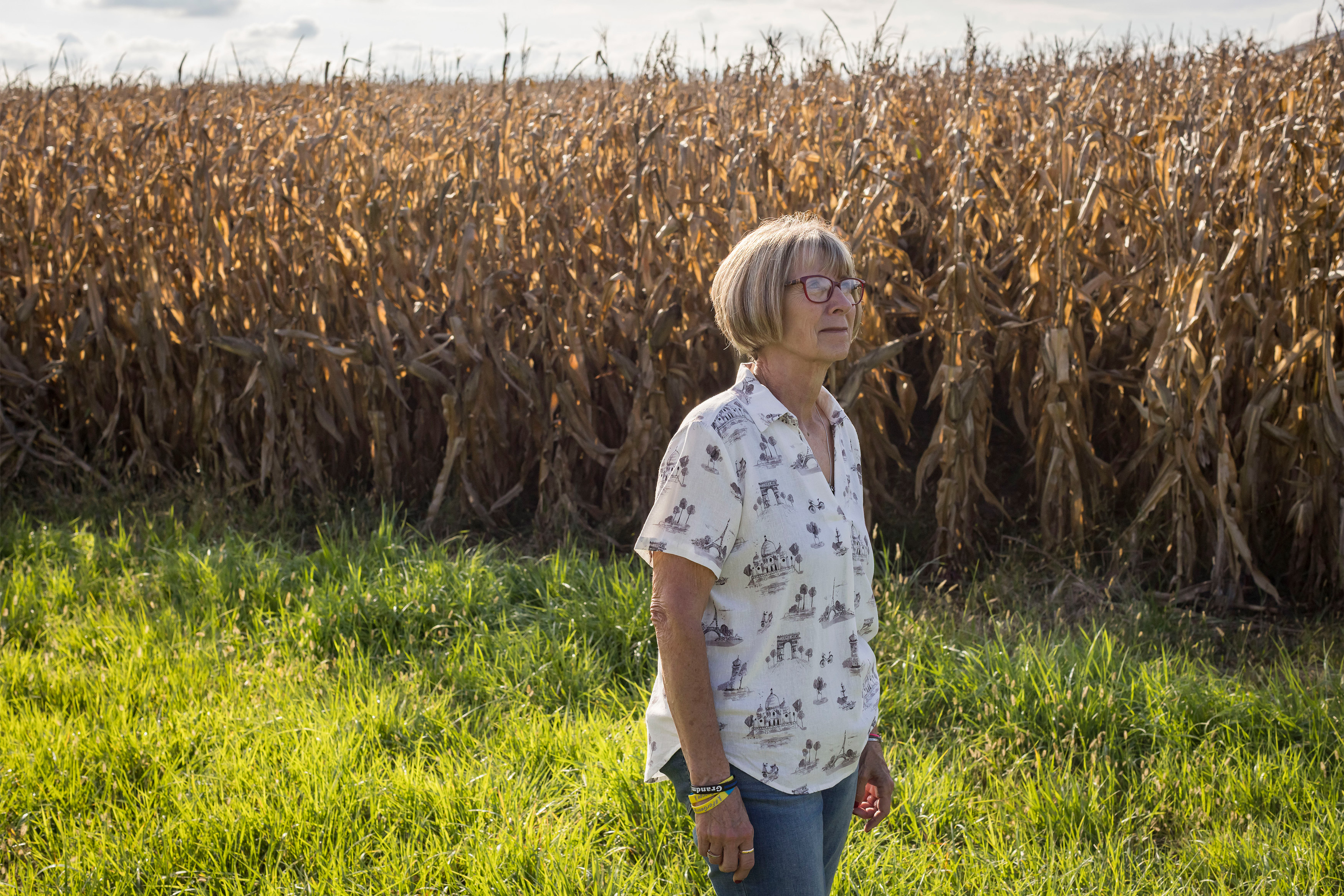
    Donna Klocke cares about being healthy but does not consider herself part of the Make America Healthy Again movement. Her husband died from cancer after a life spent farming the family’s 200 acres in Carroll County, Iowa. (Kathyrn Gamble for KFF Health News)

    Survey Reflects Angst Over Healthcare

    About half of rural voters said their communities don’t have enough doctors or other healthcare providers, and even more said there aren’t enough mental health workers specifically. The share of rural voters who said their community does not have enough hospitals increased to 35% from 21% in a similar question asked in a KFF-Washington Post survey in 2017.

    And as with the general population, healthcare, gas, and grocery costs are top pain points. More than 6 in 10 rural voters said they were worried about healthcare costs.

    The level of worry varied based on coverage, with rural voters enrolled in employer plans or Medicare less likely to be worried. The survey found that 80% of working-age rural voters on Medicaid were very or somewhat worried about healthcare costs. Last year, Republicans passed a tax and spending bill that cut over $900 billion in projected Medicaid spending over a decade and mandated new eligibility requirements.

    Among rural voters who purchase their own insurance, such as the individual coverage plans available on Affordable Care Act marketplaces, 77% said they were worried.

    In the tiny community of Lipan, Texas, west of Dallas, Kim Solis and her husband have a handyman-and-home-remodel business and get their insurance on the marketplace. Since Trump was elected again, their premium payment jumped from zero to $166 a month. Their copays went up, and their deductibles each increased by $2,000.

    Solis, 62, said she worries what will happen if they get a big medical bill.

    “Certainly, we’d be in a world of hurt trying to take money out of savings or getting it out of our 401(k) just to be able to do something about it,” she said.

    Most MAHA Voters Are Also MAGA — But Not All

    Like the general population, rural voters said they trust their own doctors and healthcare providers for health information over government agencies or officials, according to the poll.

    Trust in Kennedy and Trump fell largely along partisan lines. About 10% of rural Democratic voters reported having a “great deal” or “fair amount” of trust in Kennedy, compared with 74% of rural Republican voters. About 5% of rural Democrats and 69% of rural Republicans said they trust Trump a “great deal” or “fair amount” for reliable health information.

    While Make America Great Again and MAHA identities are “linked in a lot of ways,” the rising costs of healthcare and groceries pose a challenge for those committed to the MAHA principles that Kennedy promotes, said Peterson, the Iowa State professor.

    Buying healthy food “becomes, ‘I can’t afford to do that because of Trump’s policies,’” he said.

    In Stamping Ground, Kentucky, Alma Johnson, 65, works as night security at a horse farm. Johnson said gas had gone up but her overall cost of living had decreased since Trump took office.

    Johnson voted for Trump in 2016, 2020, and 2024 and said she “pretty much” likes how Trump is running the country. But she said she is not a MAGA devotee, preferring to “think for myself.”

    MAHA, however, is an easy sell for Johnson because, she said, she doesn’t think people should be able to buy junk food through the Supplemental Nutrition Assistance Program, or SNAP.

    Still, she said she hasn’t seen much impact from the Trump administration’s healthcare policies, including the new food pyramid.

    “It takes a long time to change people, their habits, their thoughts, or the things they do,” Johnson said.

    About the Poll

    The KFF-AP Rural Voters Survey was conducted online and by telephone Aug. 12-24, 2026, among 2,241 registered voters living in rural areas, defined as census tracts that fall within codes 5-10 of the U.S. Department of Agriculture’s 2020 Rural-Urban Commuting Area codes. Voters were reached through a combination of the probability-based SSRS Opinion Panel and a registration-based sample from the L2 voter file. Overall results have a margin of sampling error of plus or minus 3 percentage points, including design effects due to weighting. Error margins are larger for subgroups. In collaboration with the AP, KFF researchers worked to design the survey sample and questionnaire and analyze and report findings.

    This report is from a collaboration between KFF Health News and The Associated Press.

  • These 100 Nursing Homes Face Perilous Flood Risk. Minnesota Shows What Can Happen.

    These 100 Nursing Homes Face Perilous Flood Risk. Minnesota Shows What Can Happen.

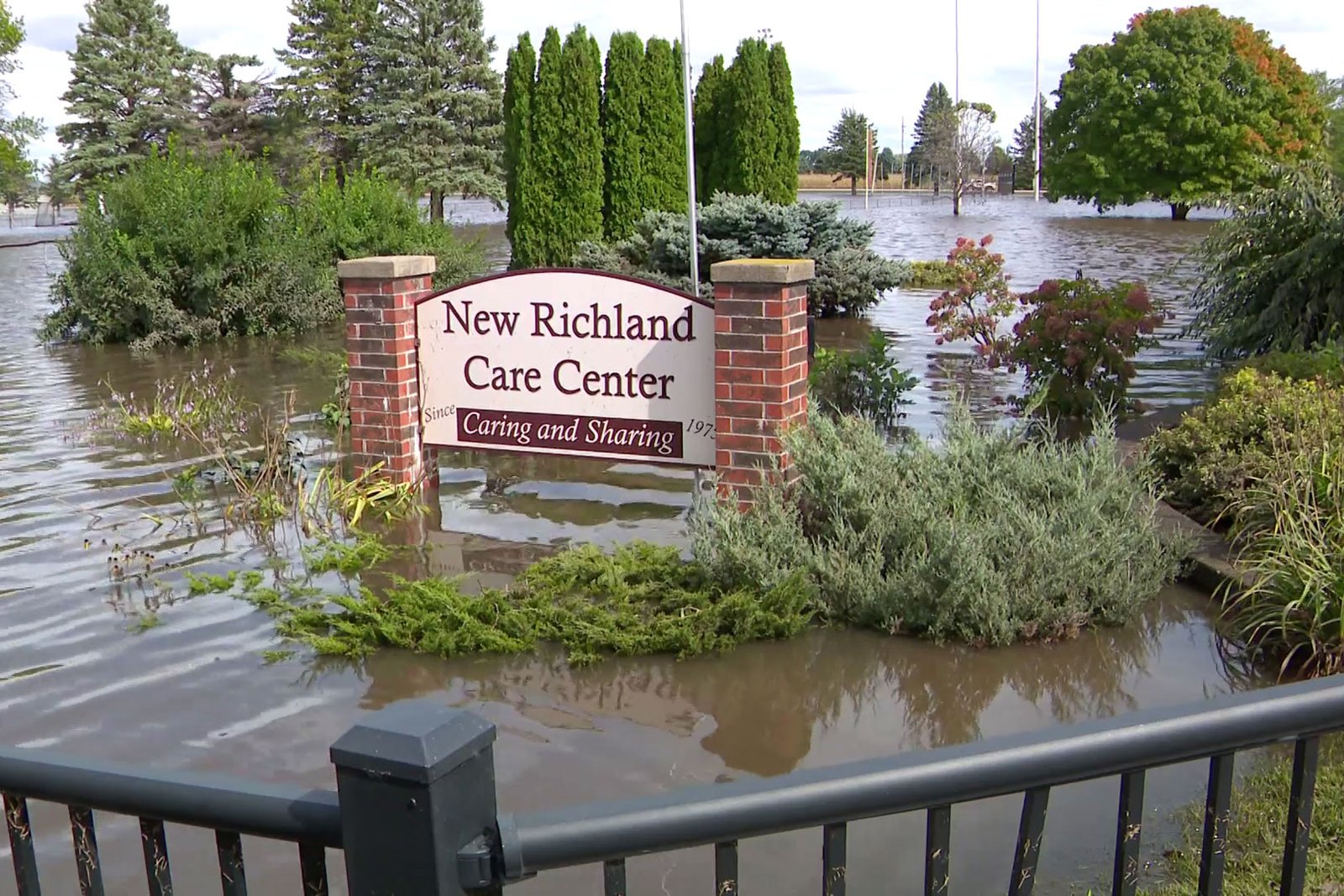
    NEW RICHLAND, Minn. — Floodwater seeped through the nursing home’s front door just before sunrise.

    Inside the New Richland Care Center, staff members rushed to move 36 residents out of the building on Sept. 19 while they still could. They pushed elderly residents in wheelchairs through 4-inch-deep water to buses waiting in the parking lot, said nursing home administrator Robert Johannsen.

    Inches turned to feet as the last three residents were wheeled out on hospital beds, lifted “as high as they can go” to escape the rising water, Johannsen said. Firefighters and volunteers from a high school football team pushed the beds to safety across the street, he said.

    “It’s pretty devastating,” Johannsen said of the now-shuttered nursing home. “There was at least 2½ feet of water flowing down the hallways.”

    The small-town, government-run nursing home is about 100 yards from a drainage ditch in southern Minnesota. It has flooded three times in 16 years, including during the September storm that was large but far from historic, according to the National Weather Service.

    New Richland is one of 100 U.S. nursing homes that face some of the nation’s worst flood risk — where at least 2 feet of water during a big storm could endanger residents — according to a KFF Health News analysis of peer-reviewed flood hazard mapping provided by Fathom, a United Kingdom-based company considered a leader in flood simulation.

    The KFF Health News analysis builds upon a 2025 investigation that used Fathom’s mapping to identify at least 170 U.S. hospitals at risk of significant flooding. Fathom’s estimates are generally seen as more modern than official flood maps released by the Federal Emergency Management Agency, which are often out of date and don’t account for the changing climate.

    “Every community across the United States carries some level of flood risk,” said Oliver Wing, the chief scientific officer at Fathom. “There is this idea that unless you can either see the ocean or the Mississippi from your front room, then you’re not at risk of flooding — when the reality is that anywhere rain can fall, it can flood.”

    The U.S. has nearly 15,000 nursing homes housing more than 1.2 million people. In floods and other disasters, the residents are especially vulnerable because many are medically frail, cognitively impaired, or immobile. Some require daily care that can’t be reliably provided during a disaster, yet they are also so fragile that relocation could send them to the emergency room.

    Additionally, many nursing homes were built near coastlines or waterways in the 1970s, before widespread concern about climate change, to keep residents cool and content, said David Dosa, the head of geriatrics at the UMass Chan Medical School.

    “It’s a lot more comfortable than being in an urban jungle,” Dosa said. “Obviously, now you’re in places that are a little more at risk.”

    Dosa has studied nursing home evacuations since Hurricane Katrina flooded the New Orleans area in 2005. Dozens of people were killed in facilities that tried to ride out the storm and flooded after the levees broke.

    After Katrina, the nursing home industry pivoted toward evacuations, although some of those decisions also led to deaths, Dosa said.

    In preparation for the next three Gulf hurricanes, more than 270 nursing home evacuations were recorded, according to a peer-reviewed study Dosa co-wrote in 2011. Within the 30 days that followed each storm, the regions hit saw a cumulative total of 277 more nursing home resident deaths than expected, suggesting a “significant increase in mortality and morbidity associated with evacuation,” according to the study.

    “It’s Russian roulette. You’re damned if you do. You are damned if you don’t,” Dosa said of evacuations. “Older adults and disasters don’t mix.”

    A similar study published in 2024 found a 16% greater chance of ER visits among residents of Florida assisted living facilities who were evacuated before Hurricane Irma in 2017. People in assisted living facilities generally need less care than those in nursing homes.

    “Assisted living residents are quite frail in their own right,” said Cassandra Hua, an assistant professor at UMass Lowell, who led that study. “But nursing home residents are usually at higher risk. So anything you see in assisted living might be multiplied in a nursing home setting.”

    Even a few inches of flooding can interrupt nursing home care and force an evacuation. For each of the 100 nursing homes identified by the KFF Health News analysis, Fathom’s data predicted a 100-year flood event could bring at least 2 feet of water to the buildings.

    In an aerial image, a baseball field beside a road is flooded with water. The road is dry.
    Aerial footage shows lingering floodwater in New Richland, Minnesota. The white-roofed New Richland Care Center can be seen along the upper-left edge of the ponding water. (WCCO/CBS Minnesota)

    A 100-year flood is an intense weather event with a 1% chance of occurring in any given year, but it can happen more often. Climate scientists largely agree that extreme weather is worsening as the planet warms, which allows the atmosphere to hold more moisture and causes sea levels to rise.

    And storms are drenching regions once considered at lower risk for flooding, where essential facilities and entire communities might be less prepared, said Drew Gronewold, a University of Michigan climate scientist. In other regions, storms are now less frequent but becoming “off-the-charts” powerful, he said.

    “Storm tracks are changing their trajectory,” Gronewold said. “These types of, in air quotes, ‘unanticipated events’ are going to be part of our future.”

    Some of the nursing homes KFF Health News has identified as at risk have flooded in the past five years, including facilities in Florida, Kentucky, Texas, and Washington.

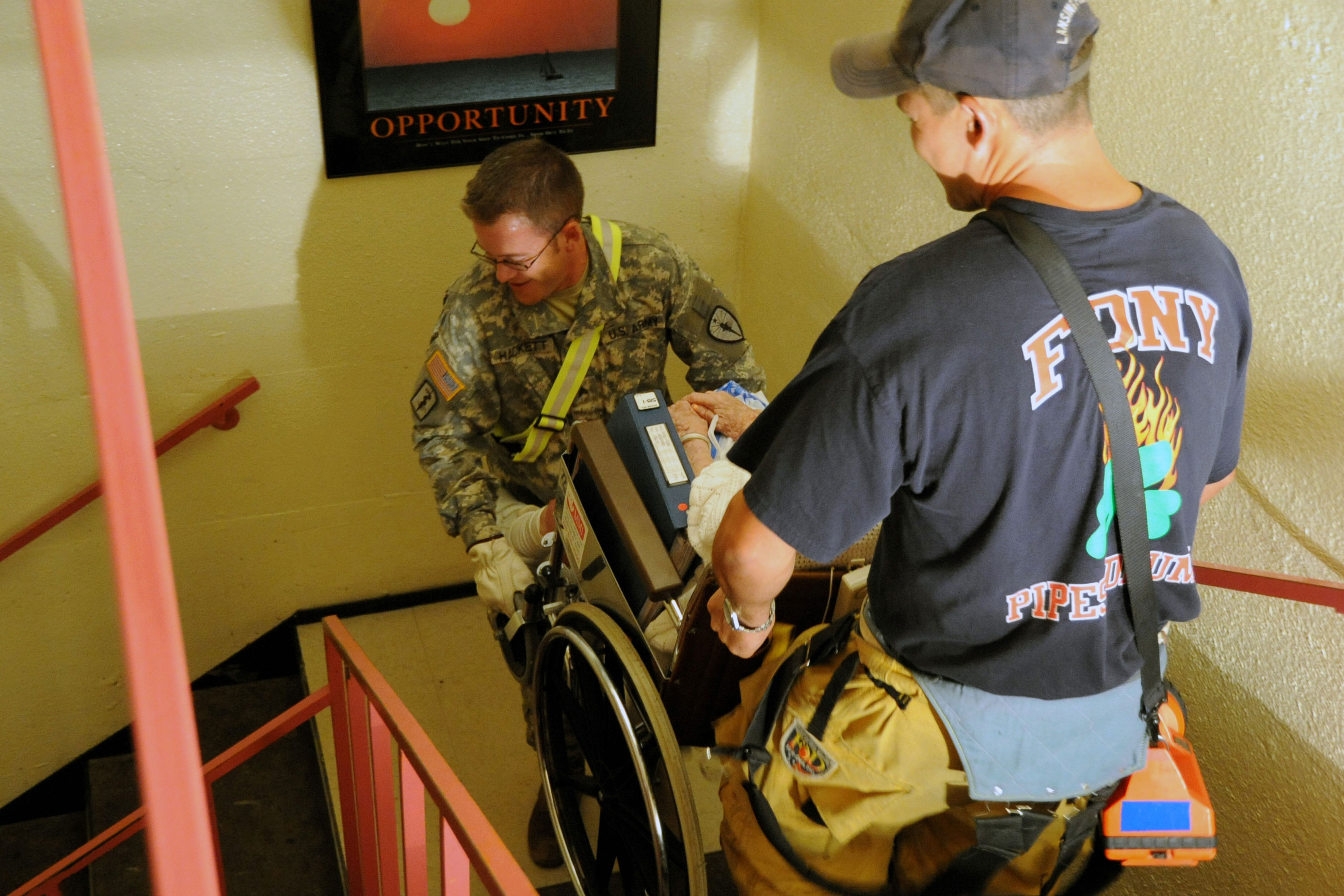
    Five of the facilities flooded in 2012 as Superstorm Sandy clobbered New York, according to a report from the Natural Resources Defense Council, while a sixth, the elevated Seagate Rehabilitation and Nursing Center, narrowly rode out the storm. In Indiana, more than 150 people were evacuated from the five-story Munster Med Inn during Hurricane Ike in 2008. Members of the National Guard carried some residents down flights of stairs in the dark.

    A photograph from above of two men carrying a person in a wheelchair down a flight of stairs.
    Rescuers from the Indiana National Guard and the Munster Fire Department evacuate a resident of the Munster Med Inn in Indiana, in the wake of Hurricane Ike in 2008. More than 150 residents were evacuated, according to a U.S. Army news release. (Michael B. Krieg/Indiana National Guard)

    Then there is the New Richland Care Center. Local media reports show it was evacuated due to flooding in 2010 and 2016, then partially surrounded by floodwater in 2023, before the Sept. 19 evacuation.

    Storms dropped 4 to 8 inches of rain on much of southeastern Minnesota the day before, setting off widespread flooding, said National Weather Service meteorologist Brennan Dettmann. The rainfall was heavy for September but would not have been out of place in July, he said.

    It was too much for New Richland. Storm runoff from nearby farms pooled in a low-lying baseball diamond at the edge of town before swamping nearby streets. Johannsen, the nursing home administrator, said maintenance workers who were trying to fix sewer drains called him in the middle of the night to warn about flooding in the park across the street.

    “They said, ‘You need to come in. The water is rising,’” Johannsen said. “At that point, I think the water was a good 30 feet away from the building. I wasn’t really concerned.”

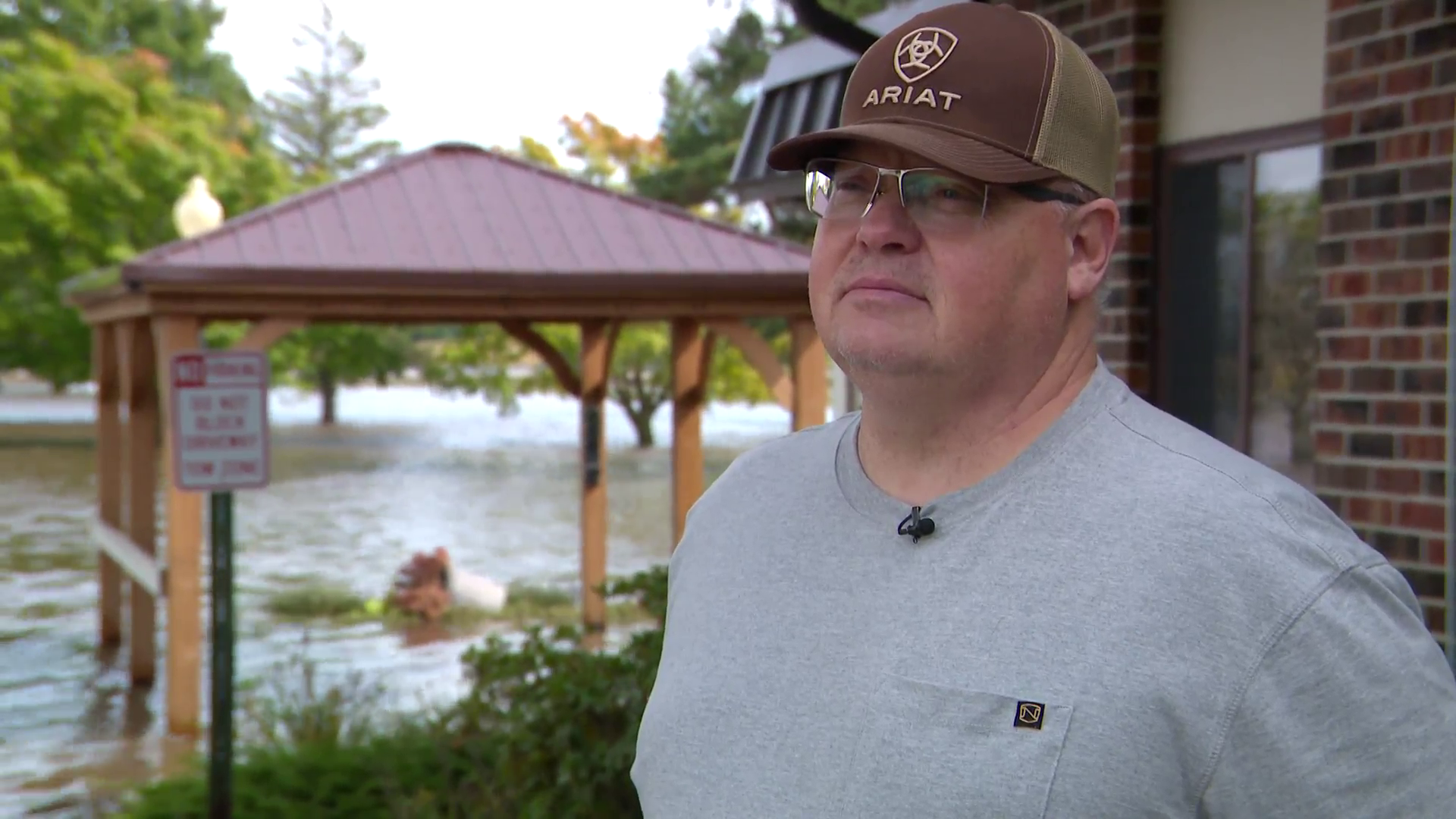
    A man stands in front of a building and the area next to the building behind him is flooded with water.
    The New Richland Care Center in southeastern Minnesota flooded on Sept. 19, forcing the evacuation of 36 residents. Some residents were pushed on hospital beds through feet of floodwater to escape the facility, administrator Robert Johannsen says. (WCCO/CBS Minnesota)

    Wing, the Fathom scientist, said the danger should have been obvious. Although Minnesota’s natural landscape once would have absorbed heavy rains, the farmland around New Richland funnels runoff into creeks and ditches that lead to a low-lying bowl near the nursing home. It’s almost as if the location is designed to flood, Wing said.

    “The choice has been made that we don’t want water in our crop fields. We want it in the nursing homes of vulnerable people,” Wing said. “That’s the choice that has been made, politically, in that part of Minnesota.”

    Inside the ruined nursing home, receding floodwaters left behind knee-high watermarks, mud-smeared floors, and a lingering smell that Johannsen said reminded him of growing up on a farm. Water destroyed treasured photo albums left behind in a low cabinet, he said.

    Johannsen said the nursing home — which, with 85 employees, is one of the largest employers in town — will be closed for five months to a year for repairs. He said all its residents were moved into a school gymnasium and have been resettled across about nine area nursing homes.

    “It was an awful experience that I hope nobody ever has to go through. Because these people lost homes,” Johannsen said. “My staff is losing their jobs. And I don’t know what to do.”

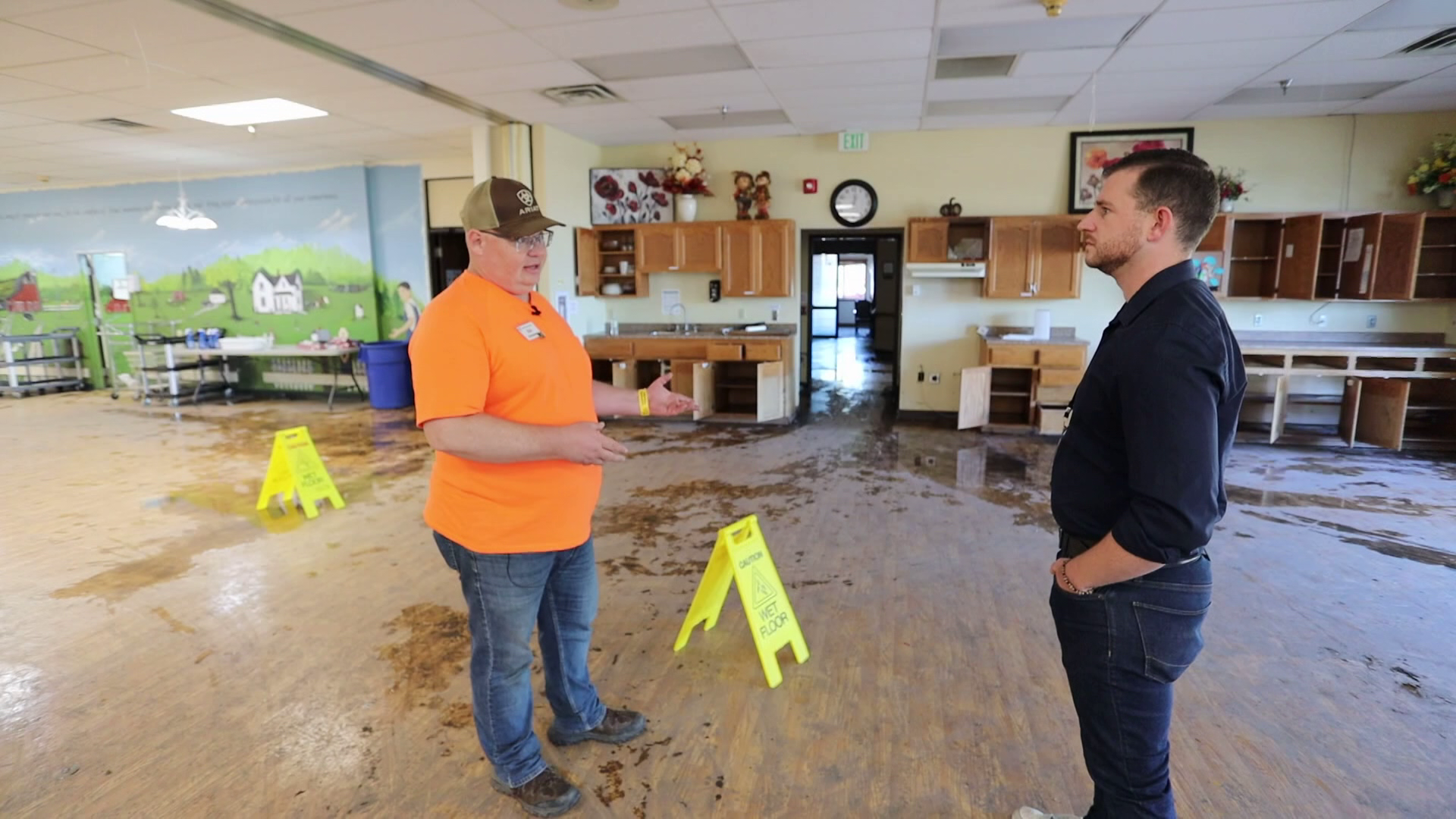
    Two people stand inside a large room and talk. Areas of the floor have standing water and two
    New Richland Care Center administrator Robert Johannsen (left) examines the damaged nursing home in the wake of a Sept. 19 flood that forced the evacuation of 36 residents. Johannsen says the facility will be closed for months for repairs. (WCCO/CBS Minnesota)

    Methodology

    For this analysis, we used data from Fathom, a United Kingdom-based company that specializes in flood-risk modeling worldwide. To assess the United States’ vulnerability, Fathom uses sophisticated computer simulations and detailed terrain data covering the country. It accounts for environmental factors such as climate change, soil conditions, and many rivers and creeks not mapped by other sources. Fathom’s modeling has been peer-reviewed and used by insurance companies, the World Bank Group, the Nature Conservancy, and government agencies in Florida, Texas, and elsewhere. The Iowa Flood Center has validated Fathom’s U.S. data.

    Through a data use agreement, Fathom shared U.S. mapping data that predicts areas with at least a 1% chance of flooding in any given year. Fathom’s data estimates the effects of coastal, fluvial, and pluvial flooding and accounts for dams, reservoirs, and other structures that defend against floods.

    To identify at-risk nursing homes, we used a Centers for Medicare & Medicaid Services database to map more than 14,000 nursing homes. With GPS coordinates as the center point, we created a circle with a 100-yard radius around each nursing home, which in most cases captured the building and nearby grounds. We then mapped Fathom’s flood-risk data to see where it overlapped with these circles. We started by looking for nursing homes where at least 20% of the circle’s area had a predicted flood depth of at least 1 foot. That gave us an initial list of more than 750 nursing homes.

    Then we visually inspected those facilities using mapping software and Google Maps to confirm that floodwaters were predicted to reach or surround the buildings. We trimmed our list to the 100 nursing homes where the most flooding was predicted, with additional weight given to deeper water.

    Our analysis does not account for how flooding beyond a nursing home’s footprint could still affect employees or patients. And it does not assess what steps facilities may have already taken to prepare for severe weather events.

    Fathom provided guidance and feedback as we developed our analysis.