Category: pollution

  • Air pollution link to GI cancers under scrutiny as Delhi sees patients as young as 15

    Air pollution link to GI cancers under scrutiny as Delhi sees patients as young as 15

    Anuja Jaiswal

    New Delhi: Patients as young as 15 are being seen at a Delhi hospital with gastrointestinal (GI) cancer, prompting experts to call for closer investigation into environmental exposures, including air pollution, alongside established risk factors such as diet, lifestyle and genetic susceptibility.

    Experts highlighted the concern at a two-day international conference on colorectal and other GI cancers, being held on Oct 10 and 11 and organised by Sir Ganga Ram Hospital in collaboration with The Christie NHS Foundation Trust, UK.

    They discussed emerging evidence linking air pollution to cancer risk, while stressing the need for India-specific research to determine whether pollutants contribute to GI cancers.

    “In our OPD we are now seeing new GI cancer patients as young as 15, which was uncommon five years ago,” said Dr Shyam Aggarwal, chairperson of medical oncology at Sir Ganga Ram Hospital and organising chairperson of the conference.

    A 2026 review of 70 studies on air pollution and gastrointestinal diseases found that long-term exposure to fine particulate matter (PM2.5) was associated with higher mortality from GI cancers, with a notable association involving colorectal cancer.

    A separate study published in Nature Health examined links between long-term exposure to PM2.5, nitrogen dioxide and ozone, and overall cancer risk. These findings indicate associations, not proof that the pollutants directly cause GI cancers.

    The Indian picture also calls for closer investigation. An analysis of trends in England and India cited an early-onset colorectal cancer rate of 8.4 per 1 lakh among people under 50 in England in 2023, compared with 3.5 per 1 lakh among Indians aged 25-49. Indian urban cancer registries have shown a steady increase in colorectal cancer, while hospital studies have reported younger patients being diagnosed at advanced stages.

    Dr Saumitra Rawat, chairperson of surgical gastroenterology and GI and HPB onco-surgery at Sir Ganga Ram Hospital, said younger GI cancer patients should be assessed for multiple possible contributors, including family history, genetic susceptibility, diet, lifestyle, infections and environmental exposures.

    Experts called for stronger air-quality monitoring, improved cancer registries and long-term Indian studies examining the link between pollution exposure and clinical outcomes. They also stressed the need for timely medical consultation for persistent digestive symptoms, along with established cancer-prevention measures, appropriate screening and early diagnosis.

    Join the community of 2M+ industry professionals.

    Subscribe to Newsletter to get latest insights & analysis in your inbox.

    All about ETHealthworld industry right on your smartphone!

  • Air Pollution May Increase Risk for Dementia

    Air Pollution May Increase Risk for Dementia

    Meta-analysis strengthens prior evidence of link between air pollutants, particularly PM2.5, and clinical dementia


    For immediate release: Wednesday, April 5, 2023

    Boston, MA—Exposure to fine particulate air pollutants (PM2.5) may increase the risk of developing dementia, according to a new meta-analysis from Harvard T.H. Chan School of Public Health.

    “This is a big step in providing actionable data for regulatory agencies and clinicians in terms of making sense of the state of the literature on this hugely important health topic. The results can be used by organizations like the Environmental Protection Agency, which is currently considering strengthening limits on PM2.5 exposure,” said lead author Marc Weisskopf, Cecil K. and Philip Drinker Professor of Environmental Epidemiology and Physiology. “Our findings support the public health importance of such a measure.”

    The study is the first systematic review and meta-analysis to use the new Risk of Bias In Non-Randomized Studies of Exposure (ROBINS-E) tool, which addresses bias in environmental studies in greater detail than other assessment approaches. It also is the first to include newer studies that used “active case ascertainment,” a method that involved screening of entire study populations followed by in-person evaluation for dementia among individuals who did not have dementia at baseline.

    The study was published online April 5, 2023, in The BMJ.

    More than 57 million people worldwide are currently living with dementia, and estimates suggest that number will increase to 153 million by 2050. Up to 40% of these cases are thought to be linked to potentially modifiable risk factors, such as exposure to air pollutants.

    Weisskopf and his co-authors, Elissa Wilker, researcher in the Harvard Chan-NIEHS Center for Environmental Health, and Marwa Osman, a doctoral student in the Biological Science in Public Health program, scanned more than 2,000 studies and identified 51 that evaluated an association between ambient air pollution and clinical dementia, all published within the last 10 years. Those studies were assessed for bias using ROBINS-E, and 16 of them met the criteria for the meta-analysis. The majority of the research was about PM2.5, with nitrogen dioxide and nitrogen oxide being the next most common pollutants studied. Of the studies used in the meta-analysis, nine used active case ascertainment.

    The researchers found consistent evidence of an association between PM2.5 and dementia, even when annual exposure was less than the current EPA annual standard of 12 micrograms per cubic meter of air (μg/m3). In particular, among the studies using active case ascertainment, the researchers found a 17% increase in risk for developing dementia for every 2 μg/m3 increase in average annual exposure to PM2.5. They also found evidence suggesting associations between dementia and nitrogen oxide (5% increase in risk for every 10 μg/m3 increase in annual exposure) and nitrogen dioxide (2% increase in risk for every 10 μg/m3 increase in annual exposure), though the data was more limited.

    The researchers noted that air pollution’s estimated association with risk of dementia is smaller than that of other risk factors, such as education and smoking. However, because of the number of people exposed to air pollution, the population-level health implications could be substantial.

    “Given the massive numbers of dementia cases, identifying actionable modifiable risk factors to reduce the burden of disease would have tremendous personal and societal impact,” Weisskopf said. “Exposure to PM2.5 and other air pollutants is modifiable to some extent by personal behaviors—but more importantly through regulation.”

    Funding for the study came from Biogen and from National Institutes of Health grants P30 ES000002 and T32 HL007118.

    “Ambient air pollution and clinical dementia: systematic review and meta-analysis,” Elissa H. Wilker, Marwa Osman, Marc G. Weisskopf, The BMJ, online April 5, 2023, doi: 10.1136/bmj-2022-071620

    Visit the Harvard Chan School website for the latest news, press releases, and multimedia offerings.

    photo: iStock/ONiONAstudio

    For more information:

    Maya Brownstein
    mbrownstein@hsph.harvard.edu

    ###

    Harvard T.H. Chan School of Public Health brings together dedicated experts from many disciplines to educate new generations of global health leaders and produce powerful ideas that improve the lives and health of people everywhere. As a community of leading scientists, educators, and students, we work together to take innovative ideas from the laboratory to people’s lives—not only making scientific breakthroughs, but also working to change individual behaviors, public policies, and health care practices. Each year, more than 400 faculty members at Harvard Chan School teach 1,000-plus full-time students from around the world and train thousands more through online and executive education courses. Founded in 1913 as the Harvard-MIT School of Health Officers, the School is recognized as America’s oldest professional training program in public health.


    Last Updated

  • Air Pollution Heightened COVID Risk in Low-Income Pregnant New Yorkers

    Air Pollution Heightened COVID Risk in Low-Income Pregnant New Yorkers

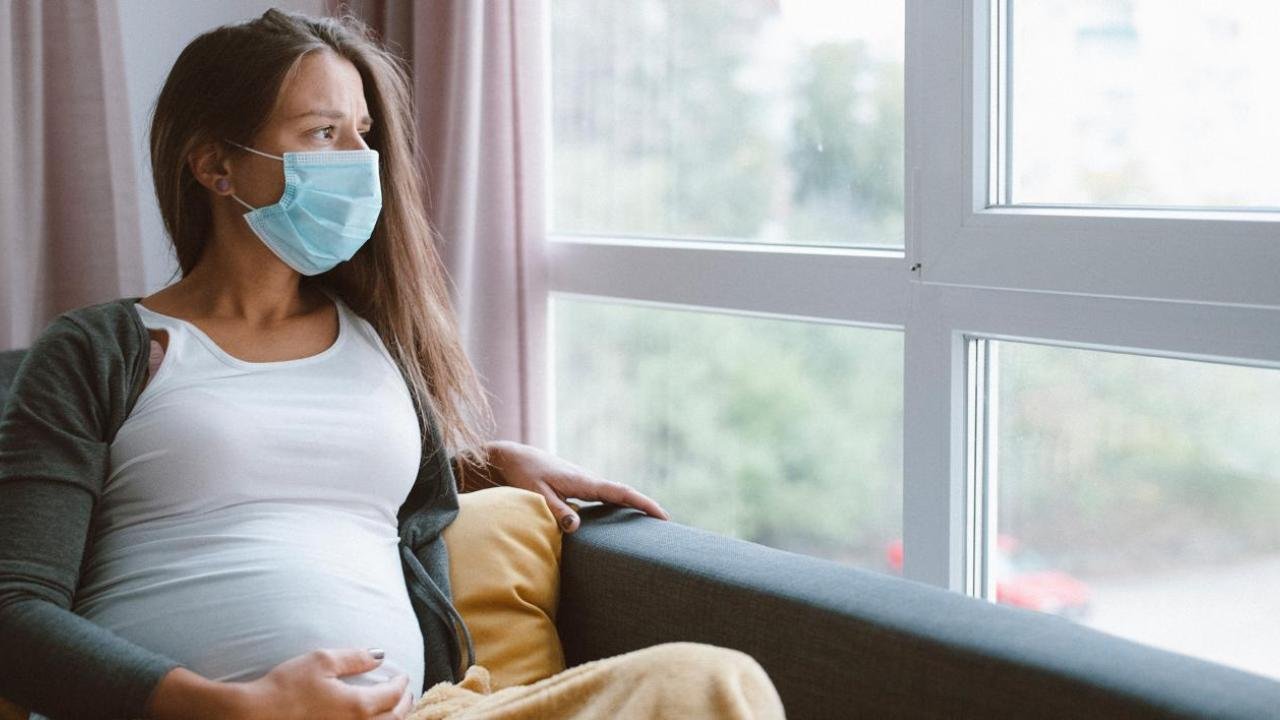
    Pregnant, low-income New Yorkers living in neighborhoods with higher levels of air pollution were 60 percent more likely to test positive for COVID-19, according to a new study led by scientists at Columbia University Mailman School of Public Health. Study results appear in the American Journal of Epidemiology.

    The researchers examined the relationship between 3,318 pregnant individuals’ COVID-19 test results and their long-term exposure to fine particulate matter (PM2.5). COVID testing was done for everyone at the time of delivery at Columbia University Irving Medical Center, March–December 2020. Exposure estimates were based on location-specific air pollution data between 2018 and 2019 at participant residences. Results were adjusted to account for individual- and neighborhood-level socioeconomic status.

    They found no association between PM2.5 and ever testing positive for COVID-19 for everyone in the study group. However, odds of testing positive were 60 percent higher for each 1 μg/m3 increase in long-term PM2.5 among those using Medicaid health coverage for low-income Americans. While only 22 percent of those testing positive reported symptoms, 69 percent of symptomatic individuals used Medicaid.

    Pregnant persons with COVID-19 are more likely to experience significant respiratory morbidity and more likely to die than non-pregnant persons with COVID-19. Pregnant persons with COVID-19 are also more likely to experience adverse pregnancy outcomes, including preterm delivery, preeclampsia, and possibly stillbirth. Exposure to PM2.5 during pregnancy has been shown to increase risk of preterm birth, as well as delivery of a low-birth-weight neonate.

    Large-scale epidemiologic studies reveal consistent associations between higher long-term PM2.5 concentrations and increased risk of acute respiratory infection in the general population.

    “COVID-19 has exposed and exacerbated existing health disparities. Low-income pregnant people may have been more likely to test positive for the virus and be symptomatic due to more exposure on the job or inability to isolate, as well as heightened exposure to a range of environmental pollutants,” says first author Joan Casey, PhD, assistant professor of environmental health sciences at Columbia Mailman School of Public Health.

    Study co-authors include Marianthi-Anna Kioumourtzoglou, Jeffrey Shaman, Sasikiran Kandula of Columbia Mailman; Andreas Neophytou of Colorado State University; Elizabeth L. Ogburn, Kristin C. Darwin, and Jeanne S. Sheffield of Johns Hopkins University; and Cynthia Gyamfi-Bannerman, University of California San Diego School of Medicine.

    The research was supported by the National Institute of Environmental Health Sciences (grants ES027023 and ES009089).

  • Air Pollution and Stress Alter Brains and Social Behavior of Male Mice

    Air Pollution and Stress Alter Brains and Social Behavior of Male Mice

    Naval oceanographer Carina Block had a hunch that the jet exhaust fumes she and her fellow female sailors were regularly exposed to, combined with unavoidable job stress, was leading to adverse health outcomes for their children. A new study in mice backs up Block’s suspicion, finding that air pollution along with housing insecurity while pregnant leads to autism-like social behavior and differently wired brains in male, but not female, pups. The immune system seems to be at fault.

    “I was pregnant, stressed, and worked near planes,” Block recalled. “I walked past jet fuel exhaust every day. And my child ended up developing a neurodevelopmental disorder, hydrocephalus.”

    Block’s daughter is now thriving, as is Block, who is now Dr. Block after earning her doctorate degree at Duke University in the labs of psychology and neuroscience professor Staci Bilbo, PhD and cell biology professor Cagla Eroglu, PhD. However, Block’s new publication in the August, 2nd edition of Cell Reports provides convincing evidence that had she been gestating a son, he may have been born with autism.

    Air pollution, such as exhaust emitted by diesel engines in trucks, is linked to increased rates of neurodevelopmental disorders, such as schizophrenia and autism. While 99% of people across the globe live in cities with unhealthy air, only one in every 44 children are diagnosed with autism (and four times more boys than girls).

    Why doesn’t everyone develop autism then?

    “Environmental toxins are worse for some people than for others and it’s always the most vulnerable populations that are affected,” Bilbo said. In the case of autism and air pollution, Bilbo thinks the missing link is maternal stress stemming from poverty and housing insecurity.

    “It’s not that wealthy people aren’t stressed,” Bilbo said. “But it’s different when you have to worry about where you’re going to live and whether you’re safe in your home.”

    While there are convincing data in humans supporting Bilbo’s claim, it’s impossible (and unethical) to directly test these ideas in pregnant women in order to uncover the biological mechanism by which air pollution and stress may conspire to rewire the brains of developing children.

    To fill this gap, Block and her team exposed pregnant mice to the poor housing and air quality conditions that many people endure every day and looked at how their offspring fared.

    As a proxy for air pollution, mice moms were exposed to diesel exhaust particles, the invisible yet pernicious pollutant semi-trucks and construction machinery regularly spew. Towards the end of their pregnancy, mice moms were dealt another stressor: insufficient housing. Pregnant mice were allotted less building materials than usual to construct their nests with for their pups.

    Despite all this, stressed moms were still stellar parents – they nursed and groomed their pups just as much as those who were spared from prenatal stressors. But while their daughters grew up as expected, their sons misread social cues throughout life. As teenagers, males born by stress and smog exposed moms preferred hanging out with a yellow rubber duck rather than a nearby mouse (mice usually prefer the company of one of their own rather than a bath toy).

    Next, Block and her team did what any card-carrying neuroscientist would do: she looked at whether the brains had been rewired early on, leading to shyer male teens. Specifically, the research team wondered if male brains didn’t get their necessary refinement early in development.

    Early in life, all animals are born with an overabundance of brain cell connections, called synapses, that need to get pared down as we grow up. The synapses leading to successful tasks, like picking up a glass, are maintained and strengthened, whereas the connections that lead to failed attempts get removed.

    Stressed moms who had inhaled diesel fumes gave rise to males who, as toddlers, missed their scheduled synapse-shaving in the anterior cingulate cortex (ACC), a brain region important for perceiving and producing social cues. Male’s overabundance of synapses in this region seemed to explain their shy social tendencies as teenagers, but it left open the question of how a double-hit of smog and stress during gestation halts typical brain sculpting.

    To get at that question, Block and her team looked at the immune system, specifically at immune cells in the brain called microglia.

    Aside from monitoring for bacteria and viruses, microglia are also on alert for weak or dead synapses, which they readily slurp up to help tidy up the brain. Block reasoned that if there are more synapses than usual, perhaps there aren’t as many microglia in the brains of affected males.

    To her surprise, Block found that adolescent males from stressed moms had just as many microglia in the ACC as did their peers from non-stressed moms. However, smog and housing stress lead to microglia having less of the protein that stimulates their appetite for synapses, which likely explains the observed overgrowth.

    By adulthood, everything got flipped around. Males from smog and stress exposed moms now had fewer synapses in their ACC and were more gregarious than their unexposed peers. This atypical tendency to be more outgoing rather than reserved mirrored the behavior and brain activity of mice with autism-linked genes recently described by Block’s collaborator and co-author, Duke neurobiology professor and psychiatrist Kafui Dzirasa, MD, PhD.

    People with autism are often mistakenly assumed to be less social, but Block shared that, “If you’ve met one person with autism, then you’ve met one person with autism.”

    Dzirasa adds that many of his patients with autism would fail the standard lab tests used to diagnose mice, which essentially pigeon-holes rodents as autism-like if they have less inclination to socialize. Instead, Dzirasa and Block say that for people with autism, it’s more of a misunderstanding of social cues and conventions rather than being inherently introverted. 

    Block and Bilbo suggest this work provides a clear mechanism in mice that may explain why high levels of air pollution increases the likelihood a child will develop autism only if they’re born in a poor neighborhood. It might also lead to drugs to help prevent microglia from being manipulated by environmental stressors since diesel exhaust and housing stress triggers a similar immune response when pregnant women catch the flu.

    For now, Bilbo and her team hope that this unequivocal evidence about the impact of stress and air pollution during pregnancy pushes policymakers to promote legislation supporting clean air initiatives and social services, such as improved and expanded public housing.

    “You can’t ignore this study’s mechanistic findings,” Bilbo said. “This is happening, and this is how.”

    Support for the research came from the US National Institutes of Health (R01ES025549, R01MH120158, 1R01EB026937, F32ES029912, F32HD104430), the US National Sciences Foundation (DGE 1644868), the WM Keck Foundation, the Howard Hughes Medical Institute, and the Robert and Donna E. Landreth Family Fund, Duke University (Trinity College of Arts & Sciences, a Dean’s Graduate Fellowship via the Graduate School, and a Summer Undergraduate Research Fellowships via the depart of cell biology).

    CITATION: “Prenatal Environmental Stressors Impair Postnatal Microglia Function And Adult Behavior In Males,” Carina L. Block, Oznur Eroglu, Stephen D. Mague, Caroline J. Smith, Alexis M. Ceasrine, Chaichontat Sriworarat, Cameron Blount, Kathleen A. Beben, Karen E. Malacon, Nkemdilim Ndubuizu, Austin Talbot, Neil M. Gallagher, Young Chan Jo, Timothy Nyangacha, David E. Carlson, Kafui Dzirasa, Cagla Eroglu, Staci D. Bilbo. Cell Reports, August, 2, 2022. DOI: 10.1016/j.celrep.2022.111161