Category: Pharma

  • Immunology Startup ai3Bio Aims to Redefine What It Means to Reset the Immune System

    Immunology Startup ai3Bio Aims to Redefine What It Means to Reset the Immune System

    Immune reset has become a particularly active area of immunology R&D as companies develop therapies intended to eliminate disease-driving immune cells, enabling the immune system to start anew with cells that don’t attack the body. This growing field is still taking shape, but many of the approaches involve reprogramming one type of immune cell to pursue and deplete a different type of immune cell that’s driving autoimmune disease.

    Startup ai3Bio has a more straightforward strategy: tap into a built-in cellular pathway that leads pathogenic cells to self-destruct. The Watertown, Massachusetts-based company is now out of stealth, revealing its science along with $48 million in financing to support a pipeline that could start its first tests in humans next year.

    Immune reset is like a blank slate — give the immune system the opportunity for a fresh start with new cells that have no memory of attacking healthy tissue. But this approach also means eliminating protective antibodies built up over a patient’s lifetime, everything from childhood polio vaccination to this season’s flu shot. Ai3Bio aims for a more precise approach that doesn’t sacrifice a patient’s existing protections.

    “This strategy does not eliminate your pre-existing memory T cells that would be specific for [cytomegalovirus], flu, and all the other things that you want to maintain defense against,” said Jonathan Kagan, ai3Bio’s’s scientific co-founder. “We’d like to position ourselves as a very nice example of something that folks often champion but rarely achieve, and that is precision therapies.”

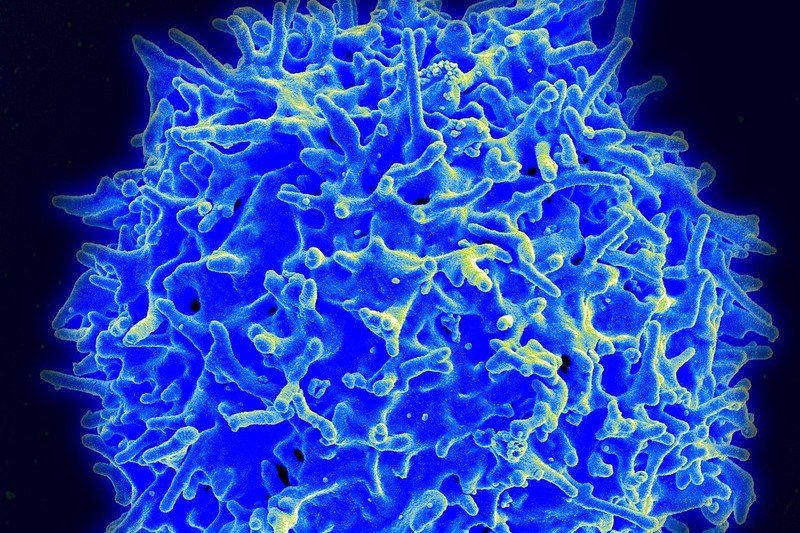
    The startup’s first target is Th17 cells, a type of helper T cell that fights infections. While Th17 cells are key for immune responses, excessive activity of these cells leads to autoimmune disease. Medicines are already available to address IL-17, a signaling protein secreted by Th17 cells. Novartis’s Cosentyx, Eli Lilly’s Taltz, and Bimzelx from UCB are all blockbuster-selling IL-17 inhibitors approved for several immunological indications. These monoclonal antibodies block the signaling protein but they don’t stop immune cells from churning out more of it, so the therapies must be taken chronically. Ai3Bio’s approach could offer the advantage of stopping IL-17 at the protein’s source, said CEO Steven Altschuler.

    Ai3Bio’s therapy consists of a lipid nanoparticle (LNP) that delivers messenger RNA with instructions that trigger cell death. This therapy finds its way to pathogenic Th17 cells with the guidance of a targeting antibody designed to bind to CD161, a protein overexpressed on these cells. When the therapy reaches its destination, mRNA activates an immunological pathway called cGAS-STING. For nearly 20 years, drug hunters have been researching ways to hit this pathway. So far, there are no FDA-approved drugs that target it.

    [The following two paragraphs updated to clarify the origins of ai3bio.] Ai3Bio’s name references three disciplines: advanced immunology, autoimmunity, and artificial intelligence. The company itself is the combination of technologies from two startups, Corner Therapeutics and Novasenta. Kagan, who holds positions at Harvard Medical School and Boston Children’s Hospital, was the scientific co-founder of Corner, a developer of immunotherapies for cancer and infectious diseases. Novasenta was a drug discovery startup launched by UPMC in 2021.

    Corner remains a standalone company; its autoimmune technology, including its experience with LNPs, was combined with Novasenta. Additional research showed that targeting the STING pathway in T cells would lead to cell death. Novasenta’s AI technology platform for identifying druggable targets led to the development of the CD161-targeting antibody that ai3Bio is using to go after Th17 cells.

    “We’re not delivering a grenade into the cell,” Kagan said. “We are effectively delivering instructions to the cell to kill itself or self-destruct.”

    Ai3Bio’s approach offers a potential safety edge compared to other immune reset strategies. Companies such as Cabaletta Bio and Kyverna Therapeutics are in the camp approaching autoimmune diseases with CAR T-cell therapies made by the ex vivo engineering of a patient’s T cells. Pharmaceutical companies are joining the immune reset chase with business deals. Over the summer, Johnson & Johnson began a partnership on a Sail Biomedicines therapeutic candidate that reprograms T cells in vivo, getting them to target pathogenic B cells. Other big pharma companies that have struck deals for in vivo cell therapies include AbbVie, Bristol Myers Squibb, Gilead Sciences, and Eli Lilly.

    Whether a cell therapy is produced in a lab or in the patient’s body, one known complication is an excessive immune response called cytokine release syndrome (CRS). Cell therapies eliminate disease-driving cells by breaking them open. The resulting release of cellular contents can trigger immune responses, such as CRS.

    Kagan said ai3Bio’s approach is naturally immunosuppressive, eliminating the bad-acting cells in a way that does not come with the risk of CRS. There are also manufacturing and logistical advantages. Engineering cell therapies from a patient’s own immune cells involves multiple steps. Furthermore, patients must undergo a preconditioning drug regimen to prepare for the therapy — a step that wipes out the immune system’s memory of its past protections. Altschuler said ai3Bio’s drug can treat patients in in a single step. Without the need for any preconditioning, infusion of the startup’s LNP-delivered therapy leads to self-destruction of the pathogenic cells.

    Eliminating T cells from diseased tissue typically leads to rapid replenishment of those cells. In ai3Bio’s animal testing, data indicate its therapy depleted inflammatory T cells, Kagan said. He added that ai3Bio’s approach also starts a process that prevents helper T cells from differentiating into Th17 cells, which goes further to achieving the immune reset goal. There’s more. Results from tests in monkeys indicate the therapy goes beyond the blood, leading to deep depletion in places such as the spleen and lymph nodes. That’s important because these are regions of the body that are difficult to manipulate immunologically, Kagan said.

    Immune reset is hoped to provide patients with a long-lasting, perhaps even a one-time treatment. Kagan said the durability of ai3Bio’s approach still needs to be shown in humans. Ai3Bio aims to pursue clinical testing in several immunological disorders starting with autoimmune diseases of the liver, Altschuler said. He noted that infiltration of Th17 cells into the liver drives primary sclerosing cholangitis, primary biliary cirrhosis, and autoimmune chronic active hepatitis — all indications with limited treatment options.

    The new funding behind ai3Bio, a Series A financing, was led by founding investors Ziff Capital Partners, which was an investor in Corner, and UPMC Enterprises, the investment arm of UPMC that was a financial backer of Novasenta. The new round also includes support from Cockrell Interests and Tanis Ventures.

    With ai3Bio now out of stealth, the startup will look to bring multiple programs to the clinic in the next two years, Altschuler said. He estimates the current financing will last into the second quarter of 2027, so ai3Bio will need more money. While the surge in immunology research and dealmaking makes immune reset competitive, Altschuler pointed out that nearly all of these deals involve B cell-focused therapies. Ai3Bio’s approach could also apply to B cells, but Altschuler said that for now, the startup aims to stand apart from the crowd.

    “While there are many strategies out there to treat autoimmune diseases, we would be one of the only that are in the business of actually resetting the T cell repertoire,” Altschuler said.

    Image by Flickr user NIAID via a Creative Commons license

  • STAT+: HHS announces new efforts to speed up, expand clinical trials with AI

    STAT+: HHS announces new efforts to speed up, expand clinical trials with AI

    WASHINGTON — The Department of Health and Human Services announced a set of new initiatives aimed at speeding up clinical trials by incorporating more artificial intelligence and computational models and moving away from sharply delineated trial phases. 

    The centerpiece five-year program, dubbed SURPASS — “Simulation-augmented, Real-time Platform Adaptive Seamless Trials” — will kick off later this fall by accepting “ground-breaking ideas from cross-disciplinary teams in statistics, AI, and clinical trial design, operations, and regulation,” reads a website about the program. 

    HHS is launching the program through the Advanced Research Projects Agency for Health. The initial announcement did not note how much funding was designated for the new initiatives, nor did it provide details on whether participants would be offered more flexibility or resources.  

    STAT+ Exclusive Story

    Already have an account? Log in

    STAT+

    STAT+

    This article is exclusive to STAT+ subscribers

    Unlock this article — plus daily coverage and analysis of the biotech sector — by subscribing to STAT+.

    Already have an account? Log in

    View All Plans

    To read the rest of this story subscribe to STAT+.

    Subscribe

  • STAT+: Will House delay Trump plan to politicize NIH grants? 

    STAT+: Will House delay Trump plan to politicize NIH grants? 

    You’re reading the web edition of D.C. Diagnosis, STAT’s twice-weekly newsletter about the politics and policy of health and medicine. Sign up here to receive it in your inbox on Tuesdays and Thursdays.

    A New York bar sells a spritz in a Hermès-esque glass purse, while in Baltimore you can get a spritz made with Miller High Life beer. Way to keep it real, guys. Send news tips and your favorite cocktail of the Deadliest Drug to [email protected] or John_Wilkerson.07 on Signal.

    The need-to-know this week

    • The House returns for one week and will vote on the Senate’s stopgap funding bill that temporarily blocks the White House’s proposal to give political appointees control over federal research grants. The House will use a fast-track process that requires two-thirds support for passage, signaling that House GOP leadership believes the Senate bill will pass. The House vote is expected Tuesday evening, according to Punchbowl News. Were it to fail, lawmakers would have to wait until the Senate returns on Sept. 14 to work out differences between the two chambers’ bills.
    • Congressional Medicare advisers kick off their annual public meeting cycle on Thursday. This cycle, the Medicare Payment Advisory Commission will analyze the Part D benefit redesign. The redesign reduced cost sharing for beneficiaries and gave insurers more reason to manage costs, but it has probably also contributed to more spending. MedPAC also will study clinician quality measurements, and commissioners will continue their work on Medicare Advantage.

    Nine, or 10, more MFN deals

    President Trump announced nine more deals to set drug prices in Medicaid on par with prices available in peer countries, Daniel Payne and Elaine Chen report. But it seems they missed one.

    STAT+ Exclusive Story

    Already have an account? Log in

    STAT+

    STAT+

    This article is exclusive to STAT+ subscribers

    Unlock this article — plus in-depth analysis, newsletters, premium events, and news alerts.

    Already have an account? Log in

    View All Plans

    To read the rest of this story subscribe to STAT+.

    Subscribe

  • 4 dead in gas leak at pharma firm

    4 dead in gas leak at pharma firm

    • Published On Aug 23, 2025 at 11:44 AM IST
    • Read by 100 Professionals

    Mumbai: Four workers were killed and two others hospitalised after inhalation of nitrogen gas that leaked at a pharmaceutical company in Tarapur MIDC of Maharashtra’s Palghar district on Thursday, officials said.

    The incident occurred in the afternoon at Medley Pharma located in the industrial area of Boisar, around 130 km from here, they said.

    Chief of Palghar district disaster management cell, Vivekanand Kadam, said that between 2.30 pm and 3 pm, gas leaked from the nitrogen reaction tank at the pharma company, seriously affecting six persons working there.

    “The six workers were rushed to a hospital, where four of them died around 6.15 pm,” he said.

    Two others are currently undergoing treatment in the intensive care unit (ICU) at the hospital, he added. The deceased were identified as Kalpesh Raut, Bangali Thakur, Dheeraj Prajapati and Kamlesh Yadav, while Rohan Shinde and Nilesh Hadal are undergoing treatment, officials said.

    • Published On Aug 23, 2025 at 11:44 AM IST

    Join the community of 2M+ industry professionals.

    Subscribe to Newsletter to get latest insights & analysis in your inbox.

    All about ETHealthworld industry right on your smartphone!

  • Pharma companies must file compliance strategy

    Pharma companies must file compliance strategy

    Teena Thacker

    New Delhi: Drugmakers that want to extend the timeline for implementation of Schedule M must carry out a gap analysis and file an application with the drug regulator, detailing their strategy to comply with the revised manufacturing standards.

    Small and medium manufacturers with turnover of less than ₹250 crore may seek extension of the timeline by submitting a plan of upgradation within three months from now, the drug regulatory authority said in a notification issued on Tuesday.

    “These companies will have to comply with the revised Schedule M requirements as per the plan submitted by them,” a senior official told ET.

    As per the notification, a company’s director, proprietor or partner will have to submit a gap analysis and give an undertaking to initiate upgradation within three months from the date of the application. The submission should also justify the time period they seek to comply with the requirements.

    As reported by ET, Tuesday’s notification gave small drug companies time until December 31 this year to adhere to the revised Schedule M. The application should be submitted to the Central Licence Approving Authority online, it said.

    The drug rules will be amended to provide the extension of time for another year.

    The revised Schedule M-which outlines tighter quality norms for manufacturing-was notified in January last year. While units with annual turnover of more than ₹250 crore had to comply from July 1, 2023, the implementation date for MSMEs was January 1 this year.

    However, MSMEs sought more time to make the necessary changes in their manufacturing processes.

    The ministry then issued a draft notification, proposing to extend the deadline for the MSMEs. In this regard, it had invited public comments by January 11.

    “The feedback was compiled, and the final draft was sent to the legal affairs department for vetting,” a person cited above told ET.

    The country’s pharma lobby groups had been seeking a two-year extension to the deadline, saying much time is needed for improving infrastructure, increasing manpower and training.

    Federation of Pharma Entrepreneurs (FOPE) wrote to the drug controller, seeking an extension of the notification implementation.

    Join the community of 2M+ industry professionals.

    Subscribe to Newsletter to get latest insights & analysis in your inbox.

    All about ETHealthworld industry right on your smartphone!