Category: Nursing Homes

  • Aging Life Care Managers Can Be a ‘Godsend’ for Families

    Aging Life Care Managers Can Be a ‘Godsend’ for Families

    Kristin Martinelli began her workday at 7:30 a.m. on a recent Monday, completing an online Medicaid recertification form for a client in a nursing home in Austin, Texas.

    Next, she drove to meet an 85-year-old and her daughter, who had come in from out of town. The older woman had “pretty advanced dementia” and was scheduled to move into the secure memory care unit of a senior living facility that day, said Martinelli, who works as an aging life care manager with Mir Care Consultants in Central Texas. The three of them had a 9 a.m. meeting with the primary care doctor who would complete the paperwork for the move.

    At the meeting, Martinelli explained the situation, and the doctor said he’d fill in the patient’s forms that afternoon. But later in the day, she got a call from a colleague saying that the doctor wouldn’t be able to complete the forms that day after all. That created a scramble because the woman wasn’t safe alone in her house. Martinelli ended up calling a home care agency she trusted. “I begged them to provide me with a caregiver in the next four hours,” she said.

    If a combination of appointments, bureaucracy, vigilance, and worry about a vulnerable older person — often interspersed with medical emergencies — sounds familiar, it might help to know about a service its providers ruefully call the best-kept secret in eldercare.

    Independent certified professionals like Martinelli used to be known as geriatric care managers. That’s what I called the people who helped my 88-year-old father make the 125-mile move from his apartment to a continuing care community near me, and later helped my disabled sister transition from her home to an assisted living facility.

    I also used words like “godsend” and “indispensable.” After the moves, the care managers kept tabs on both my father and sister monthly and eased my fears that something urgent might strike the moment I left on a vacation or a work trip.

    About a decade ago, these experts rebranded themselves as aging life care managers. It usually takes a couple of years to become one. Most enter the profession as nurses or social workers; some are physical or occupational therapists or gerontologists. They must attain a required combination of advanced education and supervised experience before they can take the certification exam.

    The Aging Life Care Association, the nonprofit that represents these professionals, was founded in the 1980s and has grown to more than 2,000 members, but care managers still have a persistent public awareness problem.

    “When we talk to someone, they say, ‘I wish I could have called you six months ago, but I didn’t know you existed,’” said Susy Elder Murphy, who owns Aging Well Eldercare, a large practice serving Washington, D.C., and its Maryland suburbs.

    The caller is typically an adult child, the Aging Life Care Association has reported. Martinelli described a common scenario: “Mom is in the hospital, or the children went to visit and hadn’t realized she was so sick. They’re in a crisis.”

    Enter the aging life care manager. What distinguishes her (it is usually a woman) from people with confusingly similar names — senior care advisers, patient advocates, care navigators — is her independence.

    Aging life care managers work for the client and the family paying them, not for hospitals or insurance companies. Moreover, the association’s extensive code of ethics specifically prohibits “accepting or giving referral fees, fee splitting, kickbacks or other similar arrangements in exchange for client referrals.”

    Contrast that with companies that promise free advice on senior living, like A Place for Mom. Care facilities pay A Place for Mom fees for steering new residents their way, as the organization discloses on its website. Advisers for companies that receive fees may be unlikely to recommend places that don’t pay, or to recommend home care, unless the company also contracts with local agencies.

    “They’re really marketers, salespeople,” Julie Wagner, chief executive of the Aging Life Care Association, said about the referral companies. Some companies are more transparent than others about these financial incentives.

    “If you want to buy a car and you go to the Ford dealer, they will not say, ‘I really see you in a Subaru,’” Murphy said. “You should be talking to someone who’s objective, neutral, and experienced.”

    Care managers don’t come cheap. Wagner said association members’ hourly rates range from $150 to $350, with big geographic variations. In Texas, Mir’s standard rate is $185 an hour, billed in 15-minute increments. In Washington, Murphy’s practice charges $210 an hour. Sometimes families share the cost, as my sister and I did. And in some cities, social service agencies provide these specialists on a sliding scale.

    Aging life care managers serve as coordinators, not hands-on caregivers, and the range of services they provide is quite broad.

    They can, for example: Arrange and oversee a move to or within a senior living facility. Deal with insurers, including Medicare and Medicaid. Drive a client to the dentist. Recommend not only local residential communities and home care agencies but elder law lawyers, medical specialists, therapists, senior move managers, and hospice organizations. Visit weekly or monthly to see that everything is going smoothly. Alert family members if it isn’t.

    “A part of our job is mediating between family members, acting as a sounding board,” Martinelli said.

    In fact, care managers like Murphy find their clients often seem more willing to listen to them than to their adult children — even if the advice is the same. “Your mom didn’t change our diapers or teach us to talk,” she said. “It’s a different relationship.”

    In a 2025 survey of clients and families commissioned by the Aging Life Care Association, “the responses were overwhelmingly positive,” said Jullie Gray, a co-author of the study who teaches at the University of Washington School of Social Work.

    The nearly 200 respondents did not constitute a representative national sample, Gray said. But 93% said the benefits of hiring an aging life care manager outweighed the costs, and 99% said they would recommend such a manager to someone else. The survey’s findings were presented at the 2025 meeting of the Gerontological Society of America.

    Jeffrey Bernstein, an engineer in Middleton, Massachusetts, has for years relied on Aging Well Eldercare for help with his parents, two older siblings, and an aunt, all in Maryland. Like many people who eventually learn about care managers, “I had no idea such a person existed,” he said, until his wife read about them in a magazine.

    Bernstein, 65, was unable to relocate to care for his family directly. But with care managers, “when something came up, they were there, they stepped up,” he said. “More importantly, they knew what to do when I wouldn’t have. It was tremendously helpful for my peace of mind.”

    The same was true with Martinelli’s 85-year-old client in Austin. She spent the night with temporary caregivers and moved into her new home in the memory care unit that Tuesday, after her doctor finally produced the necessary documentation. “She went in just before noon,” Martinelli reported. “She had lunch.”

    How was the new resident adjusting? “It’s been OK,” Martinelli said, sounding relieved. “So far, so good.”

    The New Old Age is produced through a partnership with The New York Times.
  • These 100 Nursing Homes Face Perilous Flood Risk. Minnesota Shows What Can Happen.

    These 100 Nursing Homes Face Perilous Flood Risk. Minnesota Shows What Can Happen.

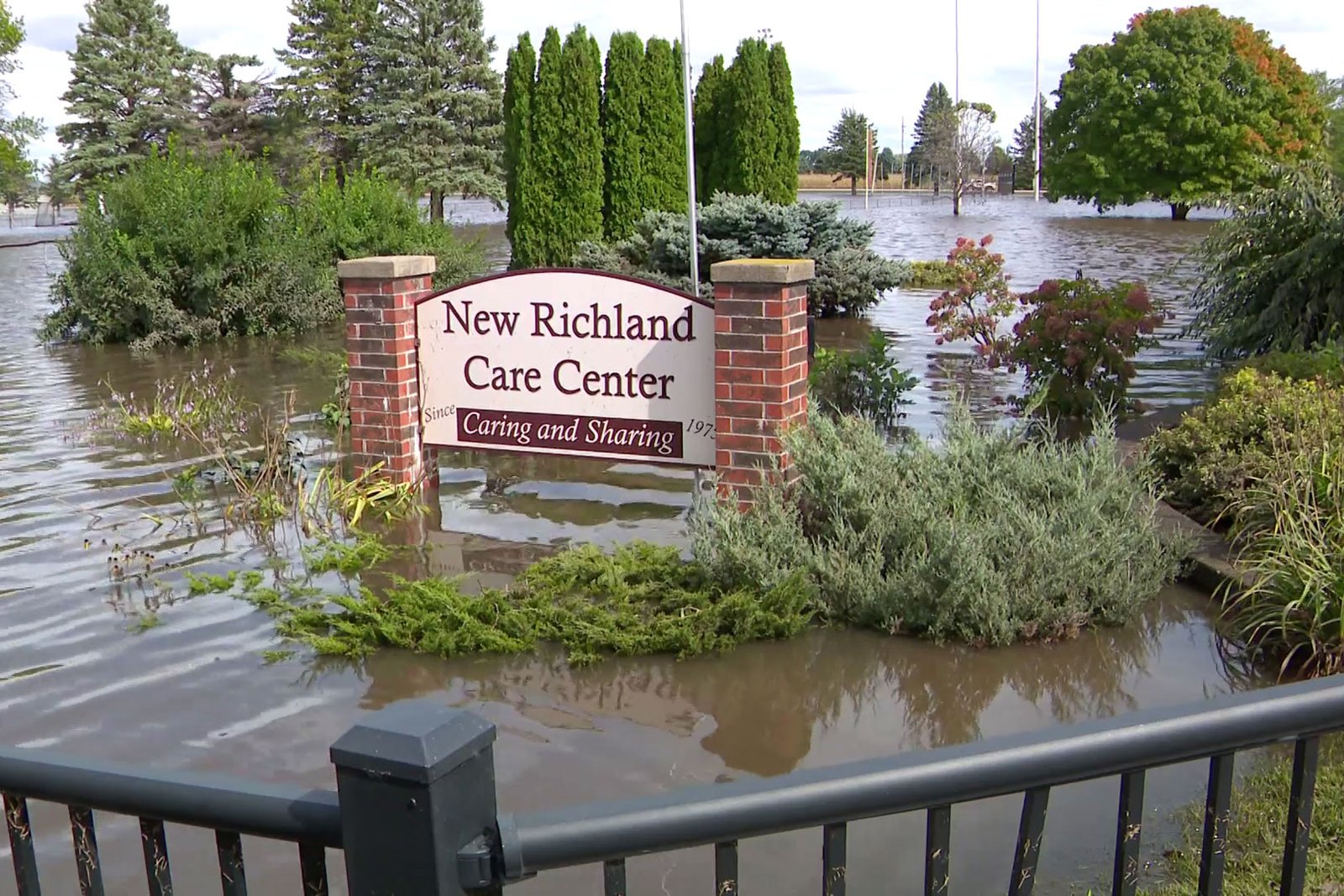
    NEW RICHLAND, Minn. — Floodwater seeped through the nursing home’s front door just before sunrise.

    Inside the New Richland Care Center, staff members rushed to move 36 residents out of the building on Sept. 19 while they still could. They pushed elderly residents in wheelchairs through 4-inch-deep water to buses waiting in the parking lot, said nursing home administrator Robert Johannsen.

    Inches turned to feet as the last three residents were wheeled out on hospital beds, lifted “as high as they can go” to escape the rising water, Johannsen said. Firefighters and volunteers from a high school football team pushed the beds to safety across the street, he said.

    “It’s pretty devastating,” Johannsen said of the now-shuttered nursing home. “There was at least 2½ feet of water flowing down the hallways.”

    The small-town, government-run nursing home is about 100 yards from a drainage ditch in southern Minnesota. It has flooded three times in 16 years, including during the September storm that was large but far from historic, according to the National Weather Service.

    New Richland is one of 100 U.S. nursing homes that face some of the nation’s worst flood risk — where at least 2 feet of water during a big storm could endanger residents — according to a KFF Health News analysis of peer-reviewed flood hazard mapping provided by Fathom, a United Kingdom-based company considered a leader in flood simulation.

    The KFF Health News analysis builds upon a 2025 investigation that used Fathom’s mapping to identify at least 170 U.S. hospitals at risk of significant flooding. Fathom’s estimates are generally seen as more modern than official flood maps released by the Federal Emergency Management Agency, which are often out of date and don’t account for the changing climate.

    “Every community across the United States carries some level of flood risk,” said Oliver Wing, the chief scientific officer at Fathom. “There is this idea that unless you can either see the ocean or the Mississippi from your front room, then you’re not at risk of flooding — when the reality is that anywhere rain can fall, it can flood.”

    The U.S. has nearly 15,000 nursing homes housing more than 1.2 million people. In floods and other disasters, the residents are especially vulnerable because many are medically frail, cognitively impaired, or immobile. Some require daily care that can’t be reliably provided during a disaster, yet they are also so fragile that relocation could send them to the emergency room.

    Additionally, many nursing homes were built near coastlines or waterways in the 1970s, before widespread concern about climate change, to keep residents cool and content, said David Dosa, the head of geriatrics at the UMass Chan Medical School.

    “It’s a lot more comfortable than being in an urban jungle,” Dosa said. “Obviously, now you’re in places that are a little more at risk.”

    Dosa has studied nursing home evacuations since Hurricane Katrina flooded the New Orleans area in 2005. Dozens of people were killed in facilities that tried to ride out the storm and flooded after the levees broke.

    After Katrina, the nursing home industry pivoted toward evacuations, although some of those decisions also led to deaths, Dosa said.

    In preparation for the next three Gulf hurricanes, more than 270 nursing home evacuations were recorded, according to a peer-reviewed study Dosa co-wrote in 2011. Within the 30 days that followed each storm, the regions hit saw a cumulative total of 277 more nursing home resident deaths than expected, suggesting a “significant increase in mortality and morbidity associated with evacuation,” according to the study.

    “It’s Russian roulette. You’re damned if you do. You are damned if you don’t,” Dosa said of evacuations. “Older adults and disasters don’t mix.”

    A similar study published in 2024 found a 16% greater chance of ER visits among residents of Florida assisted living facilities who were evacuated before Hurricane Irma in 2017. People in assisted living facilities generally need less care than those in nursing homes.

    “Assisted living residents are quite frail in their own right,” said Cassandra Hua, an assistant professor at UMass Lowell, who led that study. “But nursing home residents are usually at higher risk. So anything you see in assisted living might be multiplied in a nursing home setting.”

    Even a few inches of flooding can interrupt nursing home care and force an evacuation. For each of the 100 nursing homes identified by the KFF Health News analysis, Fathom’s data predicted a 100-year flood event could bring at least 2 feet of water to the buildings.

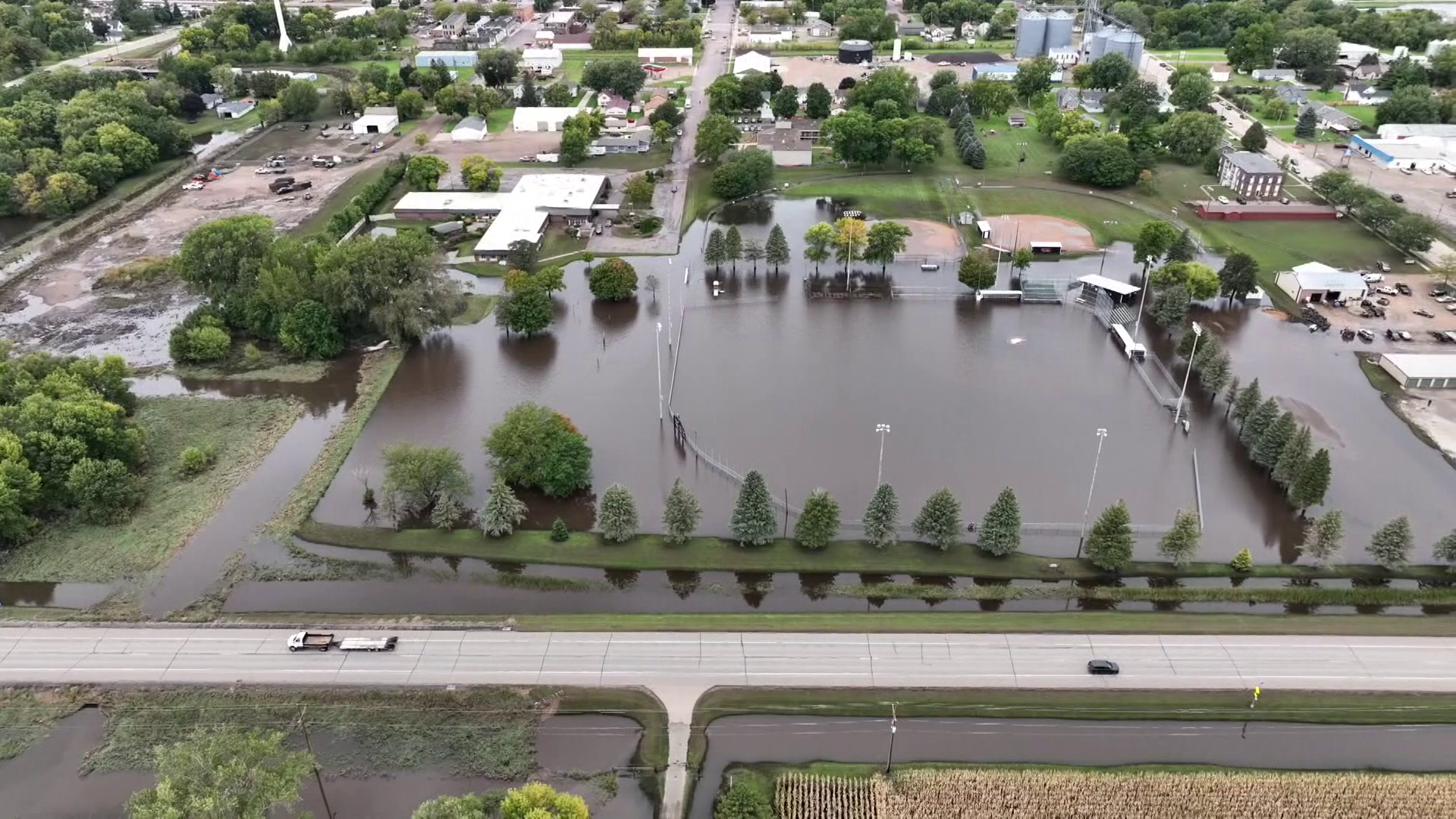
    In an aerial image, a baseball field beside a road is flooded with water. The road is dry.
    Aerial footage shows lingering floodwater in New Richland, Minnesota. The white-roofed New Richland Care Center can be seen along the upper-left edge of the ponding water. (WCCO/CBS Minnesota)

    A 100-year flood is an intense weather event with a 1% chance of occurring in any given year, but it can happen more often. Climate scientists largely agree that extreme weather is worsening as the planet warms, which allows the atmosphere to hold more moisture and causes sea levels to rise.

    And storms are drenching regions once considered at lower risk for flooding, where essential facilities and entire communities might be less prepared, said Drew Gronewold, a University of Michigan climate scientist. In other regions, storms are now less frequent but becoming “off-the-charts” powerful, he said.

    “Storm tracks are changing their trajectory,” Gronewold said. “These types of, in air quotes, ‘unanticipated events’ are going to be part of our future.”

    Some of the nursing homes KFF Health News has identified as at risk have flooded in the past five years, including facilities in Florida, Kentucky, Texas, and Washington.

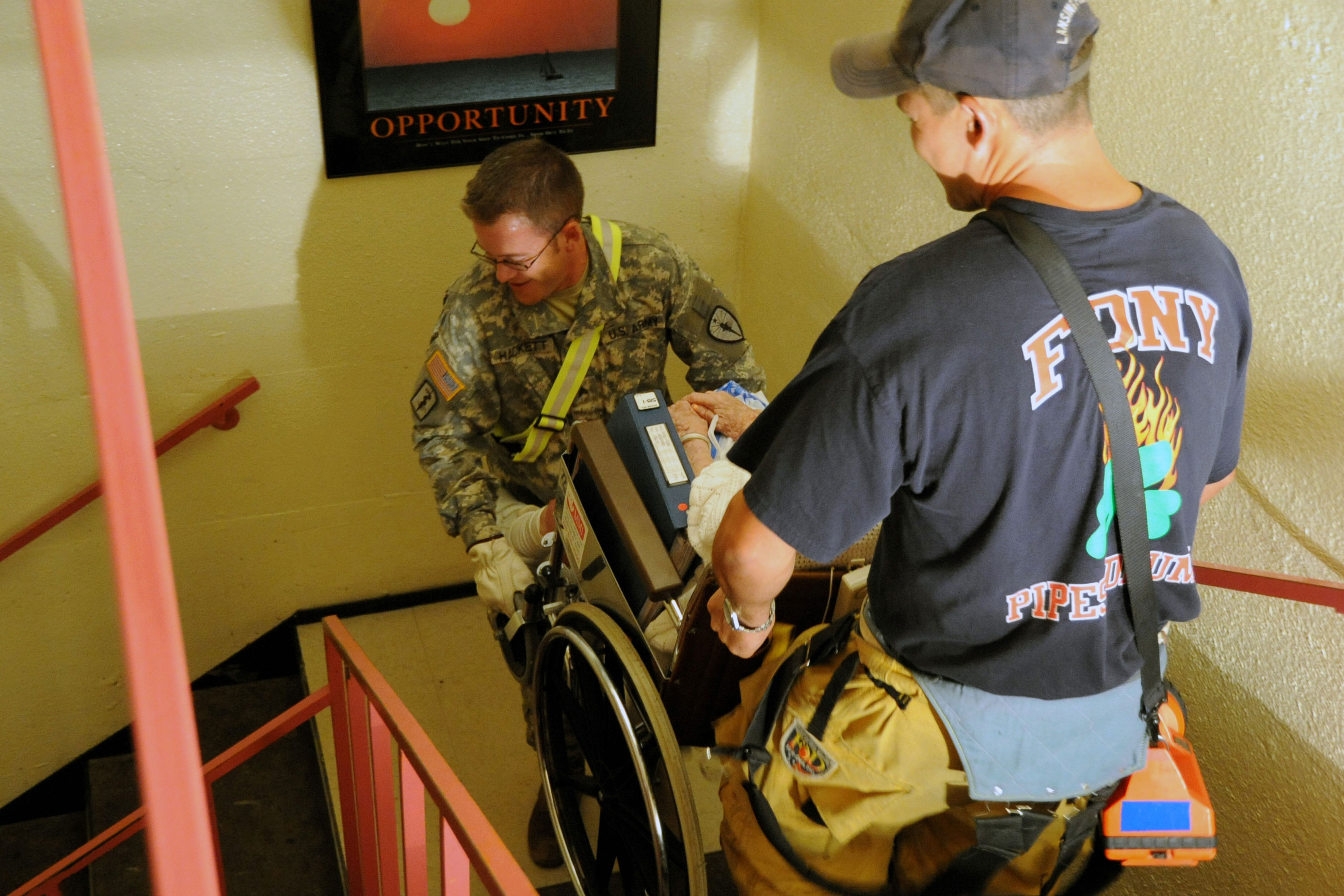
    Five of the facilities flooded in 2012 as Superstorm Sandy clobbered New York, according to a report from the Natural Resources Defense Council, while a sixth, the elevated Seagate Rehabilitation and Nursing Center, narrowly rode out the storm. In Indiana, more than 150 people were evacuated from the five-story Munster Med Inn during Hurricane Ike in 2008. Members of the National Guard carried some residents down flights of stairs in the dark.

    A photograph from above of two men carrying a person in a wheelchair down a flight of stairs.
    Rescuers from the Indiana National Guard and the Munster Fire Department evacuate a resident of the Munster Med Inn in Indiana, in the wake of Hurricane Ike in 2008. More than 150 residents were evacuated, according to a U.S. Army news release. (Michael B. Krieg/Indiana National Guard)

    Then there is the New Richland Care Center. Local media reports show it was evacuated due to flooding in 2010 and 2016, then partially surrounded by floodwater in 2023, before the Sept. 19 evacuation.

    Storms dropped 4 to 8 inches of rain on much of southeastern Minnesota the day before, setting off widespread flooding, said National Weather Service meteorologist Brennan Dettmann. The rainfall was heavy for September but would not have been out of place in July, he said.

    It was too much for New Richland. Storm runoff from nearby farms pooled in a low-lying baseball diamond at the edge of town before swamping nearby streets. Johannsen, the nursing home administrator, said maintenance workers who were trying to fix sewer drains called him in the middle of the night to warn about flooding in the park across the street.

    “They said, ‘You need to come in. The water is rising,’” Johannsen said. “At that point, I think the water was a good 30 feet away from the building. I wasn’t really concerned.”

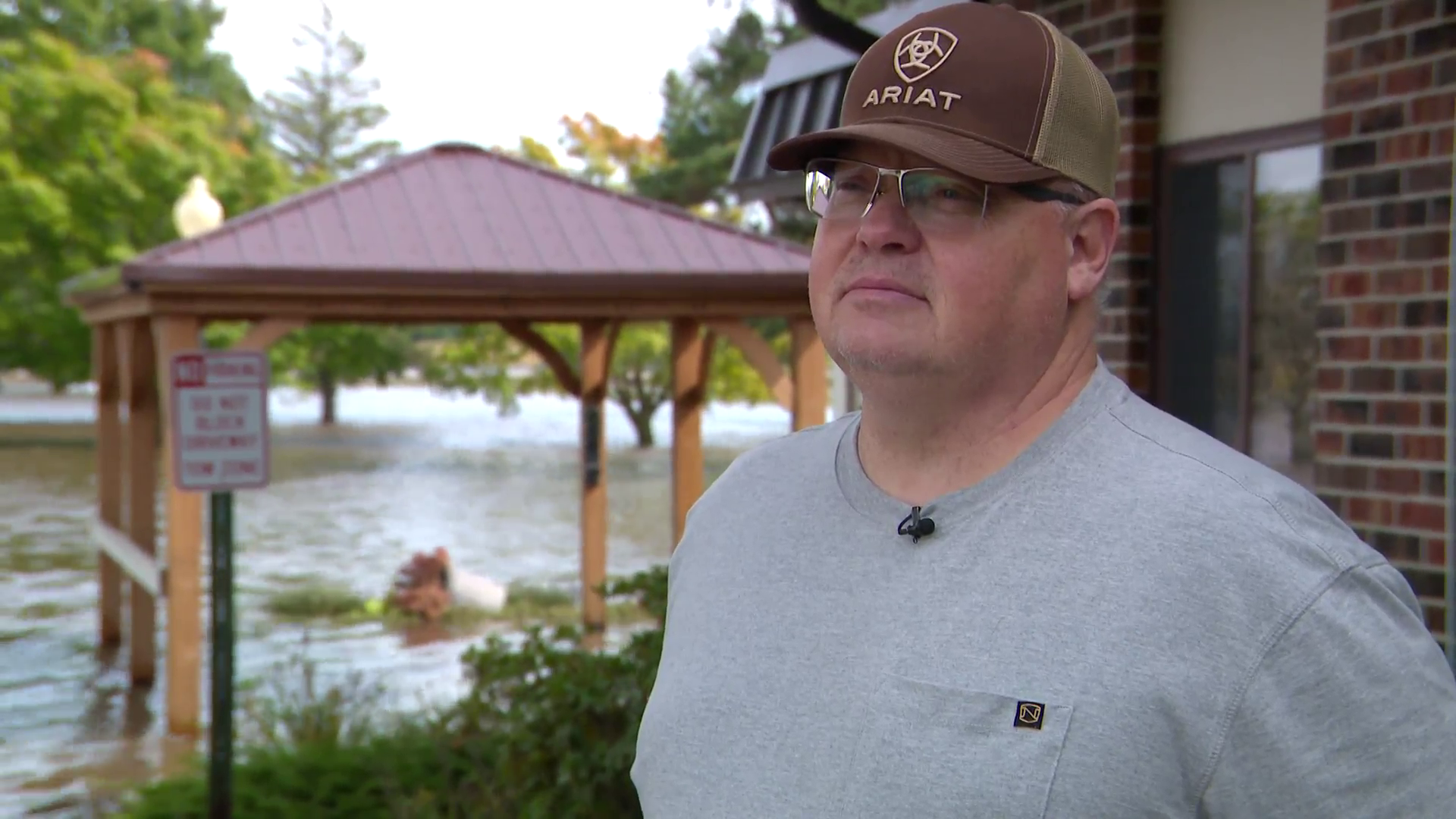
    A man stands in front of a building and the area next to the building behind him is flooded with water.
    The New Richland Care Center in southeastern Minnesota flooded on Sept. 19, forcing the evacuation of 36 residents. Some residents were pushed on hospital beds through feet of floodwater to escape the facility, administrator Robert Johannsen says. (WCCO/CBS Minnesota)

    Wing, the Fathom scientist, said the danger should have been obvious. Although Minnesota’s natural landscape once would have absorbed heavy rains, the farmland around New Richland funnels runoff into creeks and ditches that lead to a low-lying bowl near the nursing home. It’s almost as if the location is designed to flood, Wing said.

    “The choice has been made that we don’t want water in our crop fields. We want it in the nursing homes of vulnerable people,” Wing said. “That’s the choice that has been made, politically, in that part of Minnesota.”

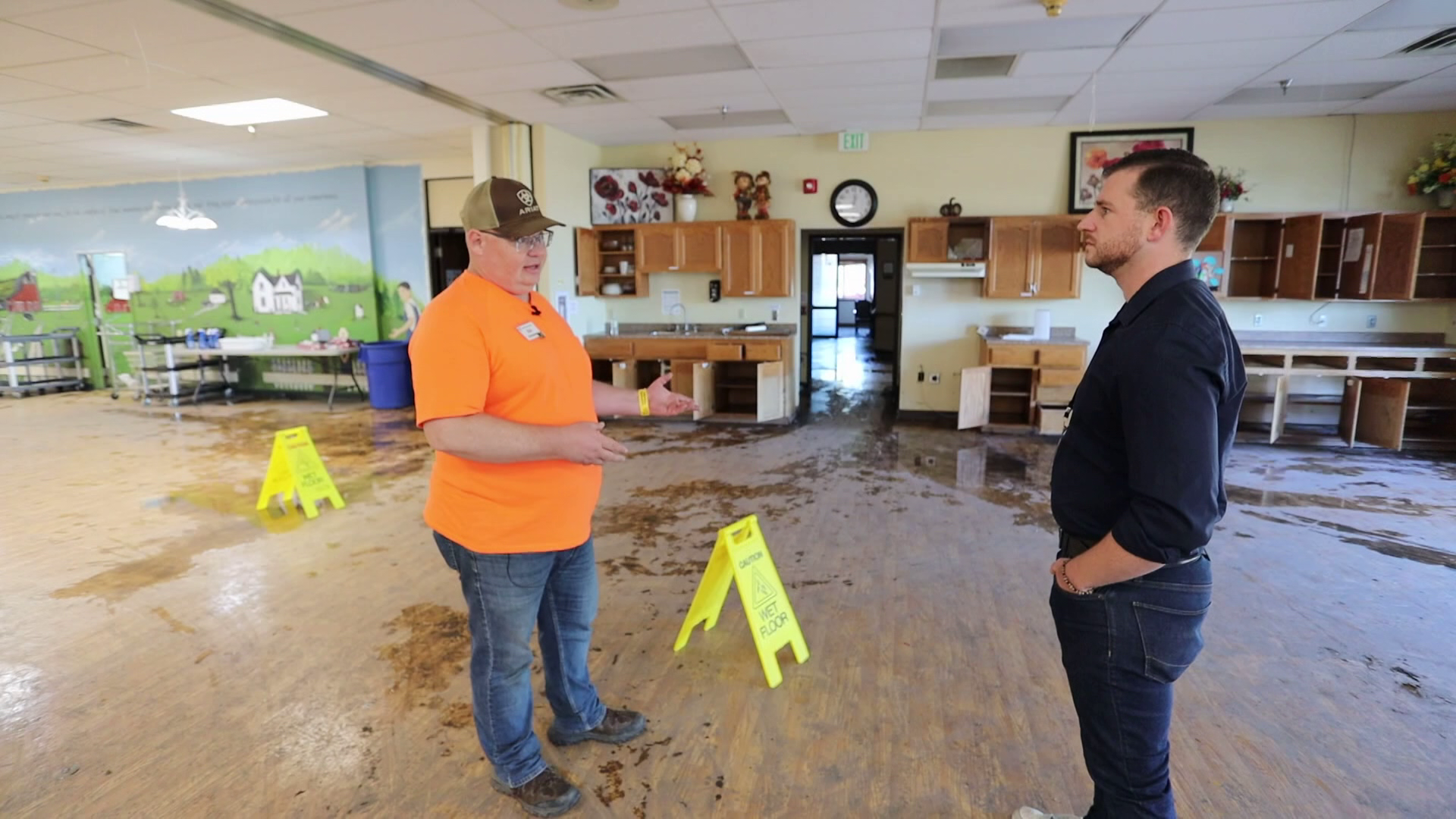
    Inside the ruined nursing home, receding floodwaters left behind knee-high watermarks, mud-smeared floors, and a lingering smell that Johannsen said reminded him of growing up on a farm. Water destroyed treasured photo albums left behind in a low cabinet, he said.

    Johannsen said the nursing home — which, with 85 employees, is one of the largest employers in town — will be closed for five months to a year for repairs. He said all its residents were moved into a school gymnasium and have been resettled across about nine area nursing homes.

    “It was an awful experience that I hope nobody ever has to go through. Because these people lost homes,” Johannsen said. “My staff is losing their jobs. And I don’t know what to do.”

    Two people stand inside a large room and talk. Areas of the floor have standing water and two
    New Richland Care Center administrator Robert Johannsen (left) examines the damaged nursing home in the wake of a Sept. 19 flood that forced the evacuation of 36 residents. Johannsen says the facility will be closed for months for repairs. (WCCO/CBS Minnesota)

    Methodology

    For this analysis, we used data from Fathom, a United Kingdom-based company that specializes in flood-risk modeling worldwide. To assess the United States’ vulnerability, Fathom uses sophisticated computer simulations and detailed terrain data covering the country. It accounts for environmental factors such as climate change, soil conditions, and many rivers and creeks not mapped by other sources. Fathom’s modeling has been peer-reviewed and used by insurance companies, the World Bank Group, the Nature Conservancy, and government agencies in Florida, Texas, and elsewhere. The Iowa Flood Center has validated Fathom’s U.S. data.

    Through a data use agreement, Fathom shared U.S. mapping data that predicts areas with at least a 1% chance of flooding in any given year. Fathom’s data estimates the effects of coastal, fluvial, and pluvial flooding and accounts for dams, reservoirs, and other structures that defend against floods.

    To identify at-risk nursing homes, we used a Centers for Medicare & Medicaid Services database to map more than 14,000 nursing homes. With GPS coordinates as the center point, we created a circle with a 100-yard radius around each nursing home, which in most cases captured the building and nearby grounds. We then mapped Fathom’s flood-risk data to see where it overlapped with these circles. We started by looking for nursing homes where at least 20% of the circle’s area had a predicted flood depth of at least 1 foot. That gave us an initial list of more than 750 nursing homes.

    Then we visually inspected those facilities using mapping software and Google Maps to confirm that floodwaters were predicted to reach or surround the buildings. We trimmed our list to the 100 nursing homes where the most flooding was predicted, with additional weight given to deeper water.

    Our analysis does not account for how flooding beyond a nursing home’s footprint could still affect employees or patients. And it does not assess what steps facilities may have already taken to prepare for severe weather events.

    Fathom provided guidance and feedback as we developed our analysis.