Category: Levels

  • High Levels of Particulate Air Pollution Associated With Increased Breast Cancer Incidence

    High Levels of Particulate Air Pollution Associated With Increased Breast Cancer Incidence

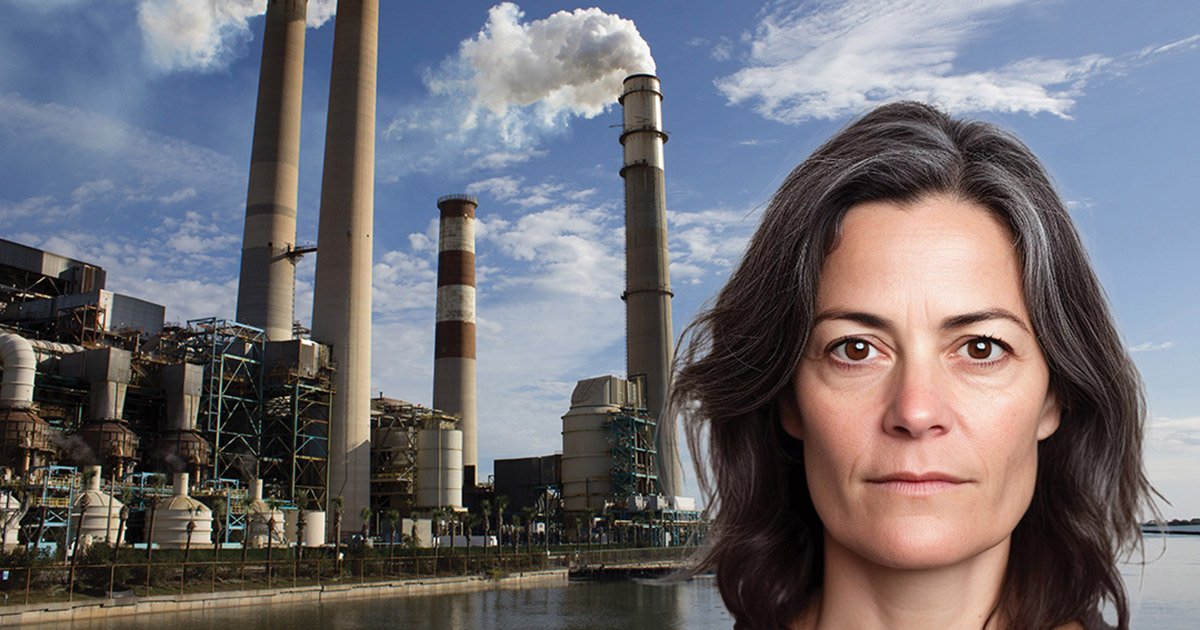
    Researchers at the National Institutes of Health found that living in an area with high levels of particulate air pollution was associated with an increased incidence of breast cancer. The study, published in the Journal of the National Cancer Institute, is one of the largest studies to date looking at the relationship between outdoor air pollution, specifically fine particulate matter, and breast cancer incidence. The research was done by scientists at the National Institute of Environmental Health Sciences (NIEHS) and the National Cancer Institute (NCI), both part of NIH.

    The researchers saw that the largest increases in breast cancer incidence was among women who on average had higher particulate matter levels (PM2.5) near their home prior to enrolling in the study, compared to those who lived in areas with lower levels of PM2.5. Particulate matter is a mixture of solid particles and liquid droplets found in the air. It comes from numerous sources, such as motor vehicle exhaust, combustion processes (e.g., oil, coal), wood smoke/vegetation burning, and industrial emissions. The particulate matter pollution measured in this study was 2.5 microns in diameter or smaller (PM2.5), meaning the particles are small enough to be inhaled deep into the lungs. The Environmental Protection Agency has a website known as Air Now where residents can enter their zip code and get the air quality information, including PM2.5 levels, for their area.

    “We observed an 8% increase in breast cancer incidence for living in areas with higher PM2.5 exposure. Although this is a relatively modest increase, these findings are significant given that air pollution is a ubiquitous exposure that impacts almost everyone,” said Alexandra White, Ph.D., lead author and head of the Environment and Cancer Epidemiology Group at NIEHS. “These findings add to a growing body of literature suggesting that air pollution is related to breast cancer.”

    The study was conducted using information from the NIH-AARP Diet and Health Study, which enrolled more than 500,000 men and women between 1995-96 in six states (California, Florida, Pennsylvania, New Jersey, North Carolina, and Louisiana) and in two metropolitan areas (Atlanta and Detroit). The women in the cohort were on average about 62 years of age and most identified as being non-Hispanic white. They were followed for approximately 20 years, during which 15,870 breast cancer cases were identified.

    The researchers estimated annual average historical PM2.5 concentrations for each participant’s residence. They were particularly interested in air pollution exposures during a period of 10-15 years prior to enrollment in the study, given the length of time it takes for some cancers to develop. Most previous studies have assessed breast cancer risk in relation to air pollution around the time of study enrollment and did not consider past exposures.

    “The ability to consider historic air pollution levels is an important strength of this research,” said Rena Jones, Ph.D., senior author and principal investigator of the study at NCI. “It can take many years for breast cancer to develop and, in the past, air pollution levels tended to be higher, which may make previous exposure levels particularly relevant for cancer development.”

    To consider how the relationship between air pollution and breast cancer varied by the type of tumor, the researchers evaluated estrogen receptor-positive (ER+) and -negative (ER-) tumors separately. They found that PM2.5 was associated with a higher incidence of ER+ breast cancer, but not ER-, tumors. This suggests that PM2.5 may affect breast cancer through an underlying biologic pathway of endocrine disruption. ER+ tumors are the most common tumors diagnosed among women in the United States.

    The authors note that the study was limited in its ability to explore any differences in the relationship between air pollution and breast cancer across the different study areas. They suggest future work should explore how the regional differences in air pollution, including the various types of PM2.5 women that women are exposed to, could impact a woman’s risk of developing breast cancer.

    Grants: This research was funded by the NIEHS and NCI Intramural Program, 1ZIAES103332 and 1Z01CP010125.


    Reference: White AJ, Fisher JA, Sweeney MR, Freedman ND, Kaufman JD, Silverman DT, Jones RR. 2023. Ambient fine particulate matter and breast cancer incidence in a large prospective US cohort. Journal of the National Cancer Institute. [Full Text White AJ, Fisher JA, Sweeney MR, Freedman ND, Kaufman JD, Silverman DT, Jones RR. 2023. Ambient fine particulate matter and breast cancer incidence in a large prospective US cohort. Journal of the National Cancer Institute.] 


  • PFAS Levels Lower in Buildings With Healthier Furnishings

    PFAS Levels Lower in Buildings With Healthier Furnishings

    For immediate release: November 7, 2022

    Boston, MA – Buildings renovated with healthier furnishings had significantly lower levels of the entire group of per- and polyfluoralkyl substances (PFAS)—toxic chemicals linked with many negative health effects—than buildings with conventional furnishings, according to a new study led by Harvard T.H. Chan School of Public Health.

    The study was published online Nov. 4, 2022 in Environmental Science & Technology.

    “We have decades of research showing that PFAS are concerning for human health and the environment. Our findings provide desperately needed scientific evidence for the success of healthier materials—which don’t have to be more expensive or perform less well—as a real-world solution to reduce indoor exposure to forever chemicals as a whole,” said Anna Young, research associate in the Department of Environmental Health, associate director of the Healthy Buildings program, and lead author of the study.

    PFAS—dubbed “forever chemicals” because of their extreme persistence in the environment due to their characteristic fluorine-carbon backbone—are artificial compounds widely used for their stain-resistant and water-resistant properties. There are at least 12,000 different types of PFAS, and they are found in products such as furniture, carpet, textiles, food packaging, nonstick cookware, cosmetics, firefighter gear, and firefighting foam. PFAS have been detected in the blood of over 98% of Americans. Health problems linked with PFAS exposure include thyroid disease, stunted development, weakened immune system, high cholesterol, testicular cancer, obesity, and diabetes. However, there is very little published research on the effectiveness of actionable solutions to reduce indoor exposure to forever chemicals.

    To assess indoor PFAS levels, Young and her colleagues analyzed dust in buildings on a university campus. In previous research, they’d found that levels of 15 types of PFAS were lower in buildings with healthier materials. But in the new study, they wanted a way to measure all types of PFAS, because the vast majority of the thousands of PFAS in use are unknown or cannot be measured using traditional lab techniques. As a novel surrogate to measure PFAS, they used organic fluorine, which is found in all PFAS.

    Comparing 12 indoor spaces with healthier carpet and furniture to another 12 spaces with conventional furnishings, the researchers found that PFAS concentrations in dust were 66% lower in the 12 rooms with healthier materials compared to the 12 rooms furnished without particular attention to PFAS. Organic fluorine levels were also lower in the healthier spaces, showing that renovating spaces with healthier furnishings succeeded in not only lowering the 15 PFAS traditionally investigated, but the entire class of forever chemicals.

    The 15 types of PFAS that researchers could measure in the lab were significantly correlated with organic fluorine concentrations, but only accounted for up to 9% of it—suggesting the likely presence of many unidentified PFAS in the dust.

    The researchers stressed that it’s important for manufacturers to eliminate entire groups of unnecessary toxic chemicals such as PFAS from furnishings, and to make healthier furniture and carpet materials the norm. Manufacturers should also provide fully disclosed third-party-verified chemical ingredient lists for these “healthier” materials, the authors said.

    “This study addresses a key question: If we demand products without any forever chemicals, do we see a reduction in total PFAS beyond the usual 15 measured in a lab?” said Joseph Allen, associate professor of exposure assessment science, director of the Healthy Buildings program, and senior author of the study. “The answer is unequivocally, yes.”

    Other Harvard co-authors of the study included Heidi Pickard and Elsie Sunderland.

    The research was supported by National Institute of Environmental Health Sciences (NIEHS) Grant T32 ES007069, National Institute for Occupational Safety and Health (NIOSH) Grant T42 OH008416, National Institutes of Health (NIH) Grant P30ES000002, and the Harvard Campus Sustainability Innovation Fund.

    “Organic fluorine as an indicator of per- and polyfluoroalkul substances in dust from buildings with healthier versus conventional materials,” Anna S. Young, Heidi M. Pickard, Elsie M. Sunderland, Joseph G. Allen, Environmental Science & Technology, online Nov. 4, 2022, doi: 10.1021/acs.est.2c05198

    Visit the Harvard Chan School website for the latest news, press releases, and multimedia offerings.

    For more information:

    Todd Datz
    tdatz@hsph.harvard.edu
    617.432.8413

    ###

    Harvard T.H. Chan School of Public Health brings together dedicated experts from many disciplines to educate new generations of global health leaders and produce powerful ideas that improve the lives and health of people everywhere. As a community of leading scientists, educators, and students, we work together to take innovative ideas from the laboratory to people’s lives—not only making scientific breakthroughs, but also working to change individual behaviors, public policies, and health care practices. Each year, more than 400 faculty members at Harvard Chan School teach 1,000-plus full-time students from around the world and train thousands more through online and executive education courses. Founded in 1913 as the Harvard-MIT School of Health Officers, the School is recognized as America’s oldest professional training program in public health.


    Last Updated