
Category: legal

  • Ultragenyx Rare Disease Voucher Sales Secure $413M for More Potential Pipeline Building

    Ultragenyx Rare Disease Voucher Sales Secure $413M for More Potential Pipeline Building

    Ultragenyx recently received two separate FDA approvals for gene therapies in the span of a month, each regulatory nod accompanied by a voucher the company could use to speed up the future review of another rare disease drug. In the past week, Ultragenyx has reached separate deals to sell each regulatory fast pass.

    The Novato, California-based biotech announced Wednesday a definitive agreement to sell a voucher for $203 million, following a deal last week to sell a voucher for $210 million. The identities of both voucher buyers were undisclosed and the purchases still need to meet closing conditions. But the deals put Ultragenyx in line for non-dilutive capital that the rare disease specialist can use to bolster its drug pipeline.

    Congress created the voucher program to incentivize drug development in rare diseases. Companies awarded a regulatory approval in a rare pediatric disease can receive one of these vouchers, which cuts the standard review time of 10 months down to six. These vouchers may be sold, and many voucher recipients opt to sell them to big pharmaceutical companies. Demand for these regulatory fast passes has pushed prices higher; most of the vouchers sold this year fetched prices of $200 million or more.

    Ultragenyx received a voucher alongside the late August approval of Gengylcos, a gene therapy for a rare inherited enzyme deficiency called glycogen storage disease type Ia. Another voucher came from the mid-September FDA nod for Fayuvi, a gene therapy for a different rare inherited enzyme deficiency called Sanfilippo syndrome Type A. Each product is the first approved therapy for its respective ultra-rare indication.

    While the Ultragenyx gene therapies carry multi-million-dollar price tags, neither product is expected to become a big revenue driver. Much of the company’s future financial expectations had rested on apazunersen, which was in development for Angelman syndrome, a rare genetic neurological disorder with no FDA-approved therapies. Last month, Ultragenyx reported this antisense oligonucleotide drug failed its Phase 3 test. The company said the disappointing trial outcome would lead to a corporate restructuring and expense reductions.

    The Angelman drug came from an acquisition. Ultragenyx’s two gene therapies also came from business deals. The capital from the voucher sales could be applied toward another deal for a different rare disease therapeutic candidate. While the company made clear its intent to sell both vouchers, it has not said how it will use the proceeds. As of the end of June, Ultragenyx reported its cash position was $436 million. The company is expected to report third quarter 2026 financial results in November.

    Ultragenyx previously received vouchers for rare disease drug approvals in 2017 and 2018. In a prepared statement, Chief Financial Officer Howard Horn noted that the Sanfilippo gene therapy benefited from capital generated by a previous voucher sale, “demonstrating the important role the [priority review voucher] program plays in helping companies develop transformative therapies for rare disease patients.”

    In a Wednesday research note, William Blair analyst Lachlan Hanbury-Brown said that even though Ultragenyx is launching two new gene therapies, the company’s pipeline lacks any clinical catalysts to drive value for the company’s stock in the next year. But the sale of the two vouchers significantly bolsters the biotech’s balance sheet with non-dilutive capital.

    “We look forward to hearing how management plans to strategically deploy this additional capital, as well as details on the company’s expense reductions plans, which we believe will help achieve [generally accepted accounting principles] profitability in 2027,” Hanbury-Brown said.

    Photo: CaptureTheWorld, Getty Images
  • STAT+: FTC demands Martin Shkreli divest his pharma stocks

    STAT+: FTC demands Martin Shkreli divest his pharma stocks

    Federal agency and seven states accuse ‘pharma bro’ of ‘flagrantly’ violating a court order

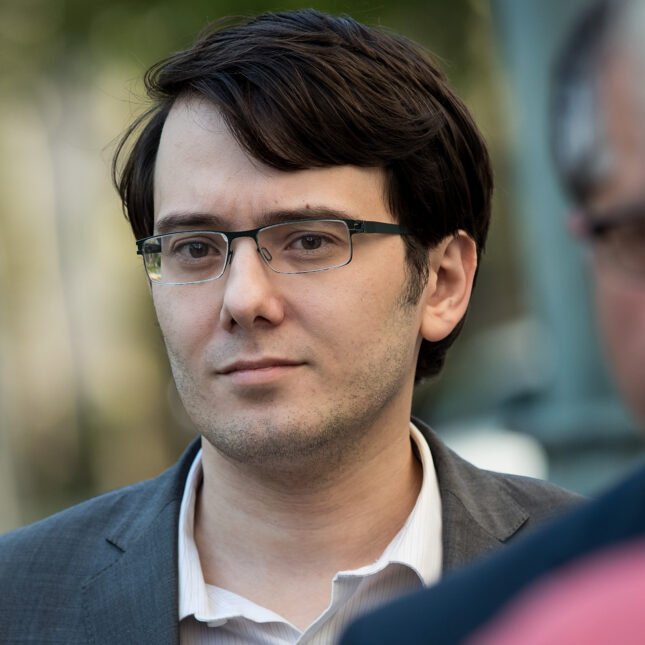
    Martin ShkreliDrew Angerer/Getty Images

    By Jason Mast

    Oct. 13, 2026

    General Assignment Reporter

    Jason is a general assignment reporter, with particular focus on genetic medicine and rare disease. Confidential tips can be sent on Signal at JasonMast.77.

    Martin Shkreli is back. The Federal Trade Commission isn’t happy. 

    The FTC and seven states on Tuesday asked a federal court to hold Shkreli in contempt for “flagrantly and repeatedly” violating a court order banning him from working in the pharmaceutical industry. 

    Shkreli, who became known nationwide as “pharma bro” in the 2010s for imperiously defending his decision to raise the price of an anti-parasitic drug called daraprim by 5,000%, was sentenced to seven years in prison for defrauding investors in 2018. Before he was released in 2022, a court banned him from ever working in the drug industry again, saying he illegally tried to prevent generic competition to daraprim.

    STAT+ Exclusive Story

    Already have an account? Log in

    STAT+

    STAT+

    This article is exclusive to STAT+ subscribers

    Unlock this article — plus daily coverage and analysis of the pharma industry — by subscribing to STAT+.

    Already have an account? Log in

    View All Plans

    To read the rest of this story subscribe to STAT+.

    Subscribe

    1. General Assignment Reporter

      Jason is a general assignment reporter, with particular focus on genetic medicine and rare disease. Confidential tips can be sent on Signal at JasonMast.77.

  • Asahi Kasei Acquisition Pays Off With FDA Approval for Novel Herpes Drug

    Asahi Kasei Acquisition Pays Off With FDA Approval for Novel Herpes Drug

    Patients with lesions caused by herpes simplex virus have a new FDA-approved treatment option, an oral antiviral drug from Asahi Kasei.

    The late Friday regulatory decision covers the treatment of adults whose lesions do not respond to the three oral antivirals that make up the current standard of case. Asahi Kasei’s once-daily pill, known in development as pritelivir, will be commercialized under the brand name Hovilpri.

    In people with healthy immune systems, herpes simplex virus (HSV) infection is often asymptomatic or causes mild disease. But in people with weakened immune symptoms — those who have undergone a transplant procedure, or patients with HIV, cancer, or autoimmune disorders — HSV infection can occur more frequently and with greater severity. While oral antivirals are available to treat HSV, viral mutations can lead to resistance to these older drugs. There are alternative treatment options, but they require intravenous dosing.

    Hovilpri gives patients the choice of an oral drug with a different mechanism of action. This small molecule is designed to inhibit a complex of enzymes key to the synthesis of viral DNA. The drug was developed to treat both types of HSV, HSV-1 and HSV-2.

    The regulatory submission for Hovilpri was based on the results of a Phase 3 study that showed statistically significant superiority in lesion healing up to day 28 compared to the physician’s choice of treatment. The most common adverse reaction reported for the study drug was headache.

    “Today’s approval delivers the first FDA-approved treatment for refractory mucocutaneous HSV lesions with a novel mechanism of action in nearly 30 years and marks an important advancement for immunocompromised adults,” Stacy Wheeler, CEO of Asahi Kasei Therapeutics in the U.S. and Europe, said in a prepared statement. “Hovilpri offers a new oral treatment option for adult patients with a persistent, difficult-to-treat disease.”

    Hovilpri was originally developed by AiCuris Anti-Infective Cures, a Germany-based biopharmaceutical company acquired by Asahi Kasei for €780 million (about $919 million). In the February acquisition announcement, Tokyo-based Asahi Kasei said the deal strengthens the company’s presence in severe infectious disease. It added that HSV patients addressed by Hovilpri are commonly seen in transplant centers and specialized hospital settings where the company has established commercial relationships and infrastructure.

    Asahi Kasei has been expanding its portfolio and pipeline via business deals. In 2020, the company closed the 8.3 billion Danish krone (about $1.3 billion) acquisition of Veloxis Pharmaceuticals, a company that develops and sells therapies for organ transplant patients. The Japanese company’s 11.8 billion Swedish krona (about $1.18 billion) acquisition of Calliditas Pharmaceuticals in 2024 brought a portfolio that includes Tarpeyo, which has FDA approval for treating the rare kidney disorder immunoglobulin A nephropathy.

    The Aicuris acquisition brought more than Hovilpri. Asahi Kasei gains royalty income from Prevymis, a cytomegalovirus drug whose global rights Aicuris had licensed to Merck. The Japanese company also gets an experimental antisense oligonucleotide that Aicuris has advanced to Phase 1 testing as a treatment for BK virus infection in kidney transplant patients.

    Photo by Asahi Kasei

  • STAT+: PhRMA sues over Trump policy mandating lower drug prices in Medicare

    STAT+: PhRMA sues over Trump policy mandating lower drug prices in Medicare

    Pilot program known as GLOBE is intended to test ‘most-favored nation’ policy

    Close up stock news photo of medicare advantage membership cards
    Jenny Kane/AP

    By John Wilkerson

    Oct. 7, 2026

    John Wilkerson, a Washington correspondent, is the author of D.C. Diagnosis, a twice-weekly newsletter about the politics and policy of health and medicine.

    John writes about the politics of health care, and he is the author of the twice-weekly D.C. Diagnosis newsletter. You can reach John on Signal at John_Wilkerson.07.

    WASHINGTON — The brand drug industry’s main trade group is suing the Trump administration over a pilot program tying Medicare drug prices to those in peer countries.

    The Pharmaceutical Research and Manufacturers of America said Wednesday that it had filed a complaint in the U.S. District Court for the District of Columbia asserting that the “most-favored nation” pilot in Medicare Part B exceeds Medicare’s statutory authority. 

    The pilot, called GLOBE, is not expected to have much impact because the administration exempted all but a handful of companies in return for their agreement to voluntary deals to charge Medicaid MFN prices. 

    STAT+ Exclusive Story

    Already have an account? Log in

    STAT+

    STAT+

    This article is exclusive to STAT+ subscribers

    Unlock this article — plus daily coverage and analysis of the pharma industry — by subscribing to STAT+.

    Already have an account? Log in

    View All Plans

    To read the rest of this story subscribe to STAT+.

    Subscribe

    1. John writes about the politics of health care, and he is the author of the twice-weekly D.C. Diagnosis newsletter. You can reach John on Signal at John_Wilkerson.07.

  • STAT+: Justice Department targets drugmakers in new directive on combating white-collar fraud

    STAT+: Justice Department targets drugmakers in new directive on combating white-collar fraud

    By Ed Silverman

    Oct. 7, 2026

    Pharmalot Columnist, Senior Writer

    Ed’s stories explore prescription drug pricing, affordability and access, as well issues surrounding patents, litigation, and legislation. He is also the author of the morning Pharmalittle newsletter and the afternoon Pharmalot newsletter.

    In a warning to life sciences companies, the Department of Justice last week issued a new directive for combating fraud that made a point of noting the agency will pursue violations of a federal law that tightly regulates the pharmaceutical industry.

    Typically, the agency has pursued health fraud cases centered on providers, clinics, home health agencies, and hospices. By expressly including the Federal Food, Drug, and Cosmetic Act in the directive, the National Fraud Enforcement Division appears to be placing drug and device makers, among others, more clearly in its crosshairs.

    “This is a subtle but significant expansion of their jurisdiction,” said Kevin Lowell, a member of the Miller & Chevalier law firm, who spent a decade at the DOJ, where he most recently had been a deputy chief in the National Fraud Enforcement Division’s health care fraud section.

    STAT+ Exclusive Story

    Already have an account? Log in

    STAT+

    STAT+

    This article is exclusive to STAT+ subscribers

    Unlock this article — plus in-depth analysis, newsletters, premium events, and news alerts.

    Already have an account? Log in

    View All Plans

    To read the rest of this story subscribe to STAT+.

    Subscribe

  • Judge blocks Trump administration plans to limit visa length for grad students, postdocs

    Judge blocks Trump administration plans to limit visa length for grad students, postdocs

    A federal judge on Monday issued a preliminary injunction blocking the Trump administration from upending a long-standing policy that allows foreign students and scholars to stay in the U.S. for the duration of their training, a decision that suggests that plaintiffs opposed to the policy change are likely to ultimately succeed.

    The ruling halts plans by the Department of Homeland Security to place a four-year cap on the kinds of visas used by graduate students and postdoctoral researchers while a judge hears full arguments in a lawsuit over the new policy. Experts warn the outcome of the case could have a dramatic impact on the nation’s biomedical preeminence given that international researchers make up a large share of the U.S. life science workforce. The new policy had been set to take effect on Tuesday. 

    In his ruling, Judge F. Dennis Saylor IV of the U.S. District Court for the District of Massachusetts wrote that “the promulgation of the rule clearly failed to comply with the [Administrative Procedure Act].” Saylor added that the administration’s argument that the new visa policy is needed to safeguard national security was weak and “raises legitimate questions as to whether its real purpose is not to safeguard national security and protect our borders, but to achieve other, undisclosed, goals — such as, for example, asserting greater government control over academic institutions.” 

    While Saylor said that the plaintiffs have a “substantial likelihood of success” in the case, he declined to issue a summary judgment definitively striking down the DHS rule.

    In a Sept. 3 hearing, an attorney for the coalition of academic groups that challenged the visa restrictions, Paul Hughes from the firm McDermott, Will & Schulte, argued the government did not conduct a sufficient analysis of the fallout of the new policy. Without a delay in its implementation or throwing out the change, he said schools would experience “irreparable harm.” 

    Michael Celone, a Department of Justice lawyer, in turn, argued that the government had done its due diligence and that the plaintiffs had not demonstrated tangible harm that would result from the policy. Celone said students who are impacted by the policy could either apply for extensions or easily apply elsewhere, comparing students choosing schools to taking a book out of the library. 

    Saylor seemed skeptical of the government’s reasoning, questioning how the policy would diminish any national security risks posed by international students. “I am struggling to see any real, rational connection between national security issues identified, which is not even half of a dozen incidents over 50 years, and this change,” he said to Celone during the hearing. 

    The judge also took issue with the relatively short time the policy was open for public comments: “Can I say it’s illegal? Probably not. But it is part of the mix here to what extent the government was taking its duty seriously in weighing costs and benefits.”

    Academic groups, including the nonprofit NAFSA: Association of International Educators and the Presidents’ Alliance on Higher Education and Immigration, have joined the suit. DHS; Markwayne Mullin, secretary of the department; U.S. Immigration and Customs Enforcement; and David Venturella, acting director of ICE, are named as defendants.

    The case centers around a long-standing policy known as duration of status, which for more than 40 years has allowed international students and scholars to remain in the U.S. for however long it took them to complete their training. 

    The federal government implemented the policy in 1979 to streamline international students’ admission into the country. But the Trump administration has argued duration of status has led to the creation of “forever students,” whom they allege cheat the system by perpetually enrolling in courses to avoid leaving the U.S.

    In mid-July, DHS announced that, going forward, foreign students and postdocs won’t be allowed to stay in the U.S. for more than four years on nonimmigrant visas unless they apply for and receive an extension. Students and postdocs already in the U.S. wouldn’t need to apply for extensions if their training will end before September 2030.

    But in a suit filed in mid-August, the academic groups alleged that the new rules violate the Administrative Procedure Act, a law that governs how agencies implement new regulations. The plaintiffs alleged that DHS didn’t give interested parties enough time to comment on the new rule, didn’t respond substantively to comments, and hasn’t clearly explained why the new policy is a rational and necessary response to alleged visa fraud.

    The academic coalition warned in the suit that uncertainty around whether foreign researchers will be able to stay in the U.S. for the length of their training could prevent them from coming here in the first place. A NAFSA poll of more than 1,000 current students and postdocs found that nearly half of them would not have come to the U.S. under a fixed period of admission.

    In its response, the Trump administration dismissed the findings of the poll as “uncertain and speculative.” The government also argued that the new rule was necessary to safeguard national security and would have minimal downside, and that if international enrollment does decline, it could be for reasons unrelated to the end of duration of status.

    International researchers make up nearly a quarter of life science Ph.D. graduates and around 60% of postdoctoral researchers. The new policy would mean many of them would need to apply for a visa extension; the average biomedical Ph.D. takes five to six years to complete, and National Science Foundation data indicate that about a fifth of postdocs have worked in that role for more than six years.

    STAT’s coverage of the federal government’s impact on the biomedical workforce is supported by a grant from the Dana Foundation and the Boston Foundation. Our financial supporters are not involved in any decisions about our journalism.