Category: In the Lab

  • STAT+: NIH awarded all its grant funding, but delayed and opaque decisions stymied researchers

    STAT+: NIH awarded all its grant funding, but delayed and opaque decisions stymied researchers

    A STAT analysis of National Institutes of Health spending shows that in the 2026 fiscal year, which ended Wednesday, the agency continued reducing grant awards involving health disparities, race, and ethnicity but made little progress toward other Trump administration priorities, including disbursing funds more evenly across the country and expanding support for early-career scientists.

    While the agency, like last year, spent its entire external grants budget of roughly $34 billion after a slow start, the manner in which it did so is sowing deep uncertainty among researchers. In a survey and interviews, they said delays in the grant review process are slowing down the pace of their work, and making it difficult for them to propose and conduct the sort of innovative, impactful science that the NIH exists to support.

    Overall, the agency funded around 58,000 projects, a slight drop from the 61,000 awarded during the 2025 fiscal year and well below the roughly 63,700 grants awarded annually in the years before the second Trump administration. Though this number may increase somewhat in the coming weeks because of reporting lags in the NIH grants database, the smaller number of grants potentially resulted from the White House’s push to fully fund more multiyear grants in advance, which meant that there was less funding on hand to issue new awards. 

    STAT+ Exclusive Story

    Already have an account? Log in

    STAT+

    STAT+

    This article is exclusive to STAT+ subscribers

    Unlock this article — plus in-depth analysis, newsletters, premium events, and news alerts.

    Already have an account? Log in

    View All Plans

    To read the rest of this story subscribe to STAT+.

    Subscribe

  • Top journal’s special issue on women’s health casts spotlight on menopause and pain

    Top journal’s special issue on women’s health casts spotlight on menopause and pain

    Ovulation. Endometriosis. And especially: menopause. These once taboo words — among others — have become part of our daily vocabulary and conversations, a sign of greater interest in, and knowledge of, women’s health. 

    Yet even as women’s health has been receiving more attention than perhaps ever before, women remain poorly represented in clinical trials, and female health poorly understood compared to male health. Much of the attention remains focused on the reproductive aspects of women’s health.

    This led the journal Science to plan a special issue dedicated to women’s health, published Thursday. “Biomedical science has come a long way over the years, and it has become increasingly clear that there are sex-dependent differences in many diseases that do not involve reproduction and that occur at all ages,” according to the introduction. 

    The issue was edited by an all-female team (Yevgeniya Nusinovich, Sacha Vignieri, Joana Osório, and Sarah Ross), which named political attacks on women’s rights and health care, as well as funding cuts affecting research in this area, as urgent motives behind their planning.

    “The importance of doing clinical trials specifically in women has gained recognition over the years, and it’s something that should continue to be elevated, including as research funding cuts are targeted at this and other women-specific research, threatening the quality of women’s future healthcare,” they said. 

    Beyond reproductive health

    The issue features reviews of research that aim to highlight recent findings on the impact of sex-dependent biological differences beyond reproduction, as well as deep dives into the latest discoveries about menopause and the pregnant body.

    Women experience functional pain at about twice the rate of men, with persistent pain in the pelvic area often becoming a debilitating factor in their daily lives. The issue takes stock of recent research that identified sex-specific mechanisms of pain. The review highlights the impact of sex hormones, immune-neural interactions, the gut microbiome, and the role of ovarian hormones in pain, though it also highlights the deficit in efforts to understand female pain.

    “Women are desperately waiting for concrete answers that might help eliminate the common ‘all in your head’ approach to their illnesses,” the authors of the review wrote. 

    Another review focuses on the impact of XX and XY chromosomes on aging and disease, making the argument that their impact is so significant that sex chromosomes should always be considered when developing precision medicine strategies. 

    Other contributions do take on issues of reproductive health. They call for a rethinking of menopause research and treatment, with an approach more tailored to the individual; investigating the immune system’s role in preparing for and carrying out a pregnancy; and considering the role of the ovary’s postmenopausal function.

    Nusinovich, a senior editor at Science, said she considers research on post-reproductive health to be different from reproductive investigations “because the focus here is not on improving reproductive success but on considerations for a woman’s own health.” She said she considered including other medical conditions unrelated to reproduction in which sex differences play a role, such as cardiovascular and metabolic disease, “but it didn’t seem like there would be enough new biological insights (with mechanisms, not just clinical observations) for entire coherent review articles.” 

    The dearth of this research highlights the existing gaps. “We tend to focus on women in their reproductive years, and a lot of that I do think is driven by what institutions are willing to fund,” said Tiarney Ritchwood, a professor in the department of public health at Wake Forest University School of Medicine who focuses on health equity. “But I do think that the greater discussion on women outside of the reproductive years is really important.”

    For other experts, however, including a strong focus on reproductive health is inevitable. 

    “There is still so much we don’t know about women’s health simply because sex is often considered an extraneous variable,” said Nicole Woitowich, executive director of the Northwestern University Clinical and Translational Sciences Institute who did not take part in the issue. “For many years, women’s health was synonymous with reproductive health. I’m glad we’ve broadened this perspective to consider the influence of sex across human physiology. Yet, pregnancy and menopause, for example, remain unique aspects of women’s health and we are just beginning to understand how these events can shape our long-term health and well-being.” Woitowich recently researched the reporting of sex differences in NIH-funded papers. 

    The attention to menopause is especially welcome, said Omisade Burney-Scott, a menopause justice advocate pushing to make menopause care inclusive through her platform, the Black Girl’s Guide to Surviving Menopause. Still, Burney-Scott said, the journal article is lacking some perspectives — including discussion of early menopause due to gender-affirming care, or a medical intervention — that shows the limitations of current research. “We must take into account the significant impact of environmental factors, such as systemic oppression (racism, classism, homophobia, transphobia, carcerality) on menopause health outcomes,” said Burney-Scott, who was not involved in the issue. 

    Women’s health needs funding, not just attention

    For the editors, the value of the issue also resides in showing how much there is to learn about women’s health. “Out of all the special issues I’ve encountered, this one stood out to me as highlighting a ton of open questions and things that are just beginning to be studied, especially in the article on chronic pain, pointing to many opportunities for future productive research,” said Nusinovich.

    The experts STAT spoke with agreed that a high-profile journal such as Science dedicating an issue to women’s health sends a strong signal to the scientific community. “It will contribute to increased awareness and even potentially increase research in this area, hopefully in the years beyond the reproductive ones,” said Ritchwood, “but none of this goes anywhere if there’s no funding dedicated to it.”

    Unless there is a broader dissemination of these findings — and, just as importantly, a clear call to fund women’s health research — the impact will remain limited, she said. “The public is not reading Science, so it can’t just be something that we just communicate to ourselves. … Are we going to see it in Vogue, or something that the public is actually looking at?” she said.

    Paula Schneider, the CEO of the Institute Advancing Women’s Health, a global nonprofit that focuses on improving women’s clinical care in midlife and after, noted that there is a lag in adopting new knowledge in clinical practice.

    “Research is only half the equation. Even the evidence we already have on women’s midlife health too often doesn’t make it into clinical practice,” she said. “We need to close the gap between what’s known and what’s done, so that as discoveries like these arrive, women know what to ask, doctors know how to answer, and the system knows what to do next.”

  • Risk from toxic metals can persist months after wildfires, Maui study finds

    Risk from toxic metals can persist months after wildfires, Maui study finds

    Metal mixtures found in the leftover smoke, ash and debris from the deadly 2023 Maui wildfires were harmful to the lung health of people living nearby long after the burning ended, a new study says.

    The work shows that major wildfires, which are worsening with the planet’s warming, could have lasting effects beyond immediate exposure.

    Post-wildfire air quality needs to be monitored longer term, the research suggests, and recovery efforts need to consider what might remain in contaminated soot, residue and dirt well after burning stops.

    The wildfires, caused by wind spreading a brushfire spurred by downed power lines, burned on the Hawaiian island of Maui in August 2023, destroyed the town of Lāhainā and killed more than 100 people. They were among the deadliest in U.S. history.

    New research published in the journal Proceedings of the National Academy of Sciences on Monday found higher metal levels, associated with respiratory harm, in nearby residents up to a year and a half after the fires.

    As part of the Maui Wildfire Exposure Study, one of the largest postfire investigations in the country, University of Hawai‘i researchers studied the urine of 1,400 adults. They found substantially elevated concentrations of metals such as arsenic, cadmium, copper and antimony.

    Chemicals from burned buildings and electronics

    These metals could be the result of burned buildings, vehicles, electronics and other materials lost in the wildfires, the researchers say. They can cause a different human impact than simply the burned vegetation that is typically studied after fires of this magnitude.

    “What we’re dealing with, especially in the aftermath of what we experienced in Lāhainā, is a much more complicated mixture of these chemical exposures,” said Alika Maunakea, co-principal investigator of MauiWES and an anatomy, biochemistry, and physiology professor at the University of Hawai‘i, Mānoa.

    Alika Maunakea: Consequences of fire “can unfold over many years.”
    Crystal Milner/STAT

    The researchers found antimony nearly 40 times higher in the Maui participants than U.S. biomonitoring data. They found manganese 3.8 times higher, barium 2.3 times and arsenic 2.2 times.

    Having more metals in the body was more likely to result in abnormal lung function, such as having less breathing capacity and difficulty moving air in and out of one’s lungs, during standard breathing tests, the study found.

    Those lung effects aligned with the geographic distribution of smoke and ash; those nearest to Lāhainā, and Wailuku and Kahului, experienced a different impact than in those near Kula.

    “It’s really important to identify potential sources of these exposures and to mitigate and reduce potential risks for re-exposures that might be contributing to these effects,” Maunakea said. “What happens to the land and environment can shape what people breathe, take into their bodies, and develop over time. The consequences of that can unfold over many years.”

    Warming planet can worsen wildfires

    Wildfires are getting larger, more intense, faster-moving and more frequent in certain parts of the globe, experts say, in part due to the warming and drier weather associated with climate change. Human-caused climate change has upped the likelihood of many major fires around the world in recent years and led to fires in regions that typically do not see them as often.

    The researchers did note a limitation of the study in that it cannot assess exactly how much of the impact came directly from the wildfires versus chronic or other exposures — such as Hawai‘i’s geology, diet, historic agricultural and industrial activity and environmental sources — given there is no comparable data from before August 2023.

    However, previous studies have also found significant long-term human impacts from wildfires and other environmental crises. The impacts have included lung issues and mental health issues such as depression.

    “This is bigger than wildfires. These climate-related disasters can change the environment in ways that continue after the immediate emergency is over,” said Ruben Juarez, co-principal investigator of MauiWES and professor of health economics at the university. “Floods, hurricanes, fires, and other disasters definitely can disturb soil, debris, buildings, and legacy contaminants that we have in Hawai‘i, creating these pathways for exposure. … Disaster response should not stop when visible danger is gone.”

    Kekoa Taparra, a physician and assistant professor who studies chronic diseases at the University of California, Los Angeles, said the research expands our understanding of the health burden of the fires, particularly over an extended period.

    “This type of work echoes that climate-related disasters affect human health well beyond the immediate injuries and deaths we see during the event itself,” said Taparra, who was not involved in the study released Monday but has studied the health impacts of disasters. “Historic wildfires in Lāhainā  and even Los Angeles have highlighted how these disasters can produce longer-lasting consequences through displacement, disruption of healthcare and social networks, environmental exposures, and potentially increased mortality.

    “As these events become more frequent and severe, understanding and measuring their full health impact will be essential to building more resilient communities and health systems.” — Alexa St. John

  • STAT+: Scientists made mice with half a brain. Then they filled them with human organoids

    STAT+: Scientists made mice with half a brain. Then they filled them with human organoids

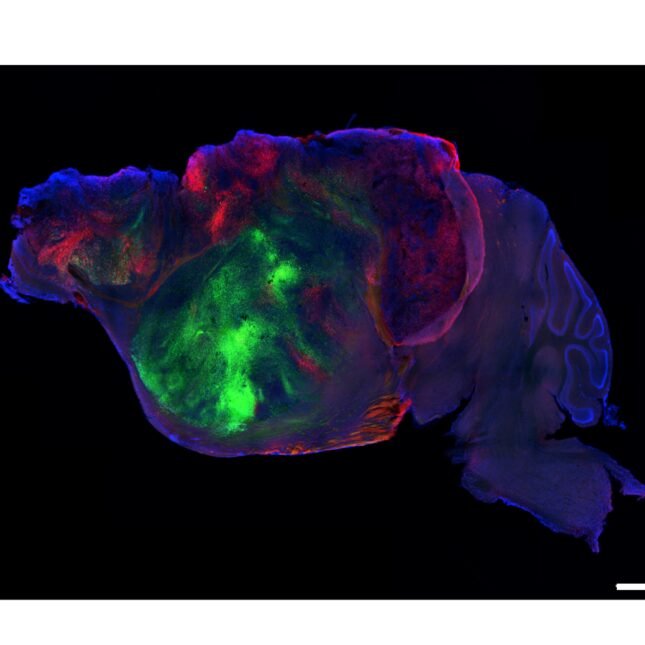
    For the last decade, scientists have been steadily getting better at growing “cerebral organoids,”  miniature, three-dimensional brain-like structures, from human stem cells in the lab. Now, a group from Stanford University has found a way to advance their usefulness for studying brain development and disease — by instead growing them inside mice that have had large parts of their own brains genetically removed. 

    Neuroscientists say these “neuro-chimeric” mice, whose brains are half-human — by volume, not by number of neurons — are an important innovation for a field hampered by longstanding challenges in accessing human brain tissue for research. But such models also raise a host of ethical questions that will get thornier the more advanced they become. 

    In a study published Wednesday in Nature, the Stanford team reported finding types of human cells inside the brains of 3-month-old chimeric mouse pups that are very hard to obtain in a dish. They included pyramidal projection neurons that had wound their way into some of the animals’ spinal cords. The scientists also found evidence of specialized, super-sized neurons involved in social cognition only found in large-brain mammals like elephants, whales, and primates, including humans. 

    STAT+ Exclusive Story

    Already have an account? Log in

    STAT+

    STAT+

    This article is exclusive to STAT+ subscribers

    Unlock this article — plus in-depth analysis, newsletters, premium events, and news alerts.

    Already have an account? Log in

    View All Plans

    To read the rest of this story subscribe to STAT+.

    Subscribe

  • Judge blocks Trump administration plans to limit visa length for grad students, postdocs

    Judge blocks Trump administration plans to limit visa length for grad students, postdocs

    A federal judge on Monday issued a preliminary injunction blocking the Trump administration from upending a long-standing policy that allows foreign students and scholars to stay in the U.S. for the duration of their training, a decision that suggests that plaintiffs opposed to the policy change are likely to ultimately succeed.

    The ruling halts plans by the Department of Homeland Security to place a four-year cap on the kinds of visas used by graduate students and postdoctoral researchers while a judge hears full arguments in a lawsuit over the new policy. Experts warn the outcome of the case could have a dramatic impact on the nation’s biomedical preeminence given that international researchers make up a large share of the U.S. life science workforce. The new policy had been set to take effect on Tuesday. 

    In his ruling, Judge F. Dennis Saylor IV of the U.S. District Court for the District of Massachusetts wrote that “the promulgation of the rule clearly failed to comply with the [Administrative Procedure Act].” Saylor added that the administration’s argument that the new visa policy is needed to safeguard national security was weak and “raises legitimate questions as to whether its real purpose is not to safeguard national security and protect our borders, but to achieve other, undisclosed, goals — such as, for example, asserting greater government control over academic institutions.” 

    While Saylor said that the plaintiffs have a “substantial likelihood of success” in the case, he declined to issue a summary judgment definitively striking down the DHS rule.

    In a Sept. 3 hearing, an attorney for the coalition of academic groups that challenged the visa restrictions, Paul Hughes from the firm McDermott, Will & Schulte, argued the government did not conduct a sufficient analysis of the fallout of the new policy. Without a delay in its implementation or throwing out the change, he said schools would experience “irreparable harm.” 

    Michael Celone, a Department of Justice lawyer, in turn, argued that the government had done its due diligence and that the plaintiffs had not demonstrated tangible harm that would result from the policy. Celone said students who are impacted by the policy could either apply for extensions or easily apply elsewhere, comparing students choosing schools to taking a book out of the library. 

    Saylor seemed skeptical of the government’s reasoning, questioning how the policy would diminish any national security risks posed by international students. “I am struggling to see any real, rational connection between national security issues identified, which is not even half of a dozen incidents over 50 years, and this change,” he said to Celone during the hearing. 

    The judge also took issue with the relatively short time the policy was open for public comments: “Can I say it’s illegal? Probably not. But it is part of the mix here to what extent the government was taking its duty seriously in weighing costs and benefits.”

    Academic groups, including the nonprofit NAFSA: Association of International Educators and the Presidents’ Alliance on Higher Education and Immigration, have joined the suit. DHS; Markwayne Mullin, secretary of the department; U.S. Immigration and Customs Enforcement; and David Venturella, acting director of ICE, are named as defendants.

    The case centers around a long-standing policy known as duration of status, which for more than 40 years has allowed international students and scholars to remain in the U.S. for however long it took them to complete their training. 

    The federal government implemented the policy in 1979 to streamline international students’ admission into the country. But the Trump administration has argued duration of status has led to the creation of “forever students,” whom they allege cheat the system by perpetually enrolling in courses to avoid leaving the U.S.

    In mid-July, DHS announced that, going forward, foreign students and postdocs won’t be allowed to stay in the U.S. for more than four years on nonimmigrant visas unless they apply for and receive an extension. Students and postdocs already in the U.S. wouldn’t need to apply for extensions if their training will end before September 2030.

    But in a suit filed in mid-August, the academic groups alleged that the new rules violate the Administrative Procedure Act, a law that governs how agencies implement new regulations. The plaintiffs alleged that DHS didn’t give interested parties enough time to comment on the new rule, didn’t respond substantively to comments, and hasn’t clearly explained why the new policy is a rational and necessary response to alleged visa fraud.

    The academic coalition warned in the suit that uncertainty around whether foreign researchers will be able to stay in the U.S. for the length of their training could prevent them from coming here in the first place. A NAFSA poll of more than 1,000 current students and postdocs found that nearly half of them would not have come to the U.S. under a fixed period of admission.

    In its response, the Trump administration dismissed the findings of the poll as “uncertain and speculative.” The government also argued that the new rule was necessary to safeguard national security and would have minimal downside, and that if international enrollment does decline, it could be for reasons unrelated to the end of duration of status.

    International researchers make up nearly a quarter of life science Ph.D. graduates and around 60% of postdoctoral researchers. The new policy would mean many of them would need to apply for a visa extension; the average biomedical Ph.D. takes five to six years to complete, and National Science Foundation data indicate that about a fifth of postdocs have worked in that role for more than six years.

    STAT’s coverage of the federal government’s impact on the biomedical workforce is supported by a grant from the Dana Foundation and the Boston Foundation. Our financial supporters are not involved in any decisions about our journalism.

  • Platinum-based chemotherapy in childhood causes mutations that age the liver

    Platinum-based chemotherapy in childhood causes mutations that age the liver

    Platinum-based chemotherapy — in particular cisplatin and carboplatin — are a lifeline for children with certain cancers. These treatments, for instance, transformed the prognosis of hepatoblastoma, a rare cancer of the liver that is the most commonly diagnosed in childhood, from a five-year survival rate of 20% to more than 80% for localized tumors. 

    However, these medications work by damaging the DNA of cancer cells, and they are also known to cause mutations in the DNA of healthy cells, potentially raising the risk of new cancers later in life. The mutations have been documented in adults, but the picture is less clear when it comes to children. A new study published Thursday in Science sought a clearer understanding of the long-term impact of platinum agents in children treated for hepatoblastoma. 

    The study looked at children who had received platinum therapy followed by surgery to remove the tumor. The researchers sampled tissues from the liver — both healthy and cancerous — and the patient’s blood, analyzing them through a sophisticated DNA sequencing technique called NanoSeq. 

    They then compared the sequencing results to those from children who had been treated with different drugs, or had not been treated prior to surgery, as well as to fetal liver tissue. They found that being exposed to platinum agents led to hundreds of mutations in genes (on average 2,200 per liver sample), a burden of mutation usually found in adult livers. In other words, platinum aged the liver cells of treated children, making them look more like adult liver cells.

    Mutation load also increased proportionally to platinum exposure: children who received only cisplatin had a smaller number of mutations than those who received both cisplatin and carboplatin. These mutations could increase the likelihood of liver pathologies, or the emergence of secondary tumors, the authors said. 

    “We found lots of cancer genes but also genes associated with long-term changes in liver metabolism,” said Foad Rouhani, one of the authors of the paper and a professor at King’s College in London. However, he stressed that “by no means does that mean that these cells will definitely become cancerous in time. All we talk about is there was evidence for potential for these cells to eventually cause problems further down the line.” 

    Liver cells showed many more mutations than blood cells, even though chemotherapy is a systemic treatment. “The platinum is doing something differently to liver cells than other cells. Either it’s been metabolized differently or the liver cells are repairing differently, we don’t really know yet,” said Rouhani. This could mean that the liver was more susceptible to the effects of platinum, or it could be the other way around: The extent of the mutations may explain why that liver got sick in the first place. 

    In a perspective article, Sanjeev Vasudevan and Donald Williams Parsons, both professors at Baylor College of Medicine in Houston, wrote that the findings “provide strong evidence for conducting survivorship studies of children that have undergone treatment for liver cancer beyond their third decade of life.”

    For the study authors, its primary contribution lies in establishing that the damage occurs, so clinicians can monitor these patients more closely during their lifetimes, said Rouhani, and identify issues at an earlier stage. 

    But there could be a prospective impact on treatment. “If we understand the mechanism, can we then eventually be able to design next-generation chemotherapies which are highly effective at treating the cancer but actually leave the background tissue largely untouched?” said Rouhani.

  • STAT+: The Ig Nobel Prizes, long held in the U.S., head to Europe due to Trump policies

    STAT+: The Ig Nobel Prizes, long held in the U.S., head to Europe due to Trump policies

    By Allyson Chiu — Boston Globe

    Sept. 2, 2026

    It usually takes 10 minutes for Marc Abrahams, founder of the Ig Nobel Prizes, to walk from his home in Cambridge, Mass., to the annual award ceremony — a world-renowned spectacle celebrating quirky scientific achievements.

    But this year, Abrahams’s trip involves an international flight.

    For the first time since the awards — a satirical version of the Nobel prizes — were created in 1991, the ceremony, which takes place Thursday and draws hundreds of scientists and journalists from around the world, is not being held in Cambridge or Boston. Organizers said they decided to move the event to Zurich, Switzerland, due to concerns that many international participants, including award winners, would not feel comfortable or be able to come to the United States amid the Trump administration’s immigration crackdown and upending of science.

    STAT+ Exclusive Story

    Already have an account? Log in

    STAT+

    STAT+

    This article is exclusive to STAT+ subscribers

    Unlock this article — plus in-depth analysis, newsletters, premium events, and news alerts.

    Already have an account? Log in

    View All Plans

    To read the rest of this story subscribe to STAT+.

    Subscribe

  • STAT+: House votes to temporarily block Trump plan to politicize federal grants

    STAT+: House votes to temporarily block Trump plan to politicize federal grants

    Research policy was included in must-pass government funding bill

    Samuel Corum/Getty Images

    John writes about the politics of health care, and he is the author of the twice-weekly D.C. Diagnosis newsletter. You can reach John on Signal at John_Wilkerson.07.

    Anil Oza is a general assignment reporter at STAT focused on the NIH and health equity. You can reach him on Signal at aniloza.16.

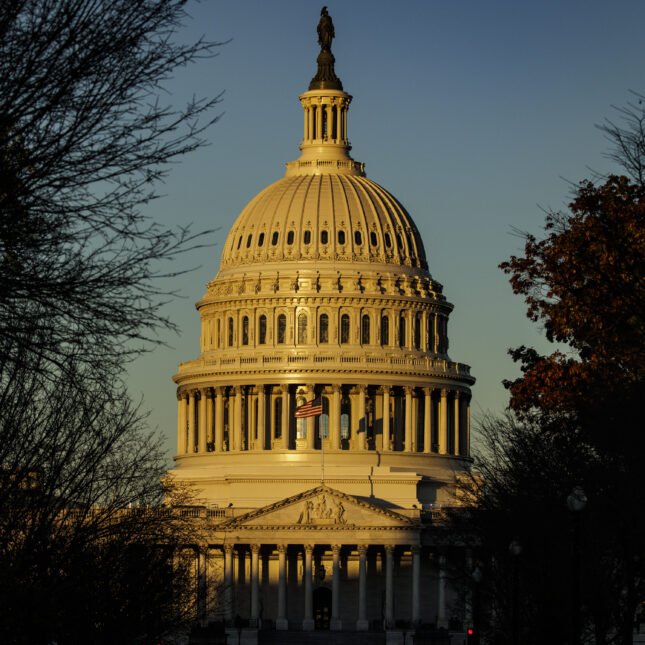
    WASHINGTON — The House voted Tuesday to pass a stopgap government-funding bill that temporarily blocks the White House’s proposal to give political appointees more control over federal research grants.

    The vote was 370-48 in favor. The Senate passed the same bill a month ago, so it now goes to the president for his signature. 

    The reprieve is brief. The bill funds the government until Dec. 11 to get past the midterm elections without a government shutdown, and the ban on the research-funding policy expires at the same time.

    STAT+ Exclusive Story

    Already have an account? Log in

    STAT+

    STAT+

    This article is exclusive to STAT+ subscribers

    Unlock this article — plus in-depth analysis, newsletters, premium events, and news alerts.

    Already have an account? Log in

    View All Plans

    To read the rest of this story subscribe to STAT+.

    Subscribe

    1. John writes about the politics of health care, and he is the author of the twice-weekly D.C. Diagnosis newsletter. You can reach John on Signal at John_Wilkerson.07.

    2. General Assignment Reporter

      Anil Oza is a general assignment reporter at STAT focused on the NIH and health equity. You can reach him on Signal at aniloza.16.

  • STAT+: Will House delay Trump plan to politicize NIH grants? 

    STAT+: Will House delay Trump plan to politicize NIH grants? 

    You’re reading the web edition of D.C. Diagnosis, STAT’s twice-weekly newsletter about the politics and policy of health and medicine. Sign up here to receive it in your inbox on Tuesdays and Thursdays.

    A New York bar sells a spritz in a Hermès-esque glass purse, while in Baltimore you can get a spritz made with Miller High Life beer. Way to keep it real, guys. Send news tips and your favorite cocktail of the Deadliest Drug to [email protected] or John_Wilkerson.07 on Signal.

    The need-to-know this week

    • The House returns for one week and will vote on the Senate’s stopgap funding bill that temporarily blocks the White House’s proposal to give political appointees control over federal research grants. The House will use a fast-track process that requires two-thirds support for passage, signaling that House GOP leadership believes the Senate bill will pass. The House vote is expected Tuesday evening, according to Punchbowl News. Were it to fail, lawmakers would have to wait until the Senate returns on Sept. 14 to work out differences between the two chambers’ bills.
    • Congressional Medicare advisers kick off their annual public meeting cycle on Thursday. This cycle, the Medicare Payment Advisory Commission will analyze the Part D benefit redesign. The redesign reduced cost sharing for beneficiaries and gave insurers more reason to manage costs, but it has probably also contributed to more spending. MedPAC also will study clinician quality measurements, and commissioners will continue their work on Medicare Advantage.

    Nine, or 10, more MFN deals

    President Trump announced nine more deals to set drug prices in Medicaid on par with prices available in peer countries, Daniel Payne and Elaine Chen report. But it seems they missed one.

    STAT+ Exclusive Story

    Already have an account? Log in

    STAT+

    STAT+

    This article is exclusive to STAT+ subscribers

    Unlock this article — plus in-depth analysis, newsletters, premium events, and news alerts.

    Already have an account? Log in

    View All Plans

    To read the rest of this story subscribe to STAT+.

    Subscribe

  • STAT+: NIH proposal to cap research grants draws mixed reception, agency says

    STAT+: NIH proposal to cap research grants draws mixed reception, agency says

    By Anil Oza

    Sept. 1, 2026

    General Assignment Reporter

    Under the Trump administration, competition for government funding for biomedical research has reached new heights. In June, the National Institutes of Health proposed one solution: limiting the number of grants each individual scientist can have at a given moment. 

    The agency recently released the anonymized 3,307 responses to its call for feedback, and it appears the proposal has drawn more mixed reactions than earlier such proposals. The NIH estimates that 40% of the responses opposed the proposal, 27% supported the idea of a cap, and 32% were mixed. 

    In a post on its site, the agency said it hopes a cap could “contribute to a more balanced research portfolio, advancing stewardship, workforce sustainability, and the goals of the NIH Unified Funding Strategy.” But even some experts who agree with the spirit of the proposal worry that it could be another source of disruption for researchers in what has been a tumultuous time; some also argue that a straight cap on the number of grants may be too simplistic. 

    STAT+ Exclusive Story

    Already have an account? Log in

    STAT+

    STAT+

    This article is exclusive to STAT+ subscribers

    Unlock this article — plus in-depth analysis, newsletters, premium events, and news alerts.

    Already have an account? Log in

    View All Plans

    To read the rest of this story subscribe to STAT+.

    Subscribe