The combination establishes one of the largest value-based care platforms in the United States dedicated to underserved communities, entering 2027 with nearly 500,000 attributed Medicaid and Medicare lives and $3 billion in managed medical spend across nine states.
The 500k-Member Cohort, Embedded Community Teams, and AI-Driven Care Plans
The merger of Diverge Health and Medical Home Network brings together complementary operational, technical, and clinical models tailored to safety-net healthcare:
Unifying FQHC Networks and Independent Primary Care: Bridges two distinct provider segments that historically operated in silos. While MHN brings more than 15 years of experience managing FQHC networks—having launched one of the nation’s earliest and most successful community health center Medicaid ACOs—Diverge Health brings a proven track record partnering with independent primary care physicians. Entering 2027, the combined entity connects nearly 100 FQHCs and more than 300 independent practices, supported by over 20 payer contracts across nine states.
Demonstrated Actuarial and Engagement Outcomes: Backed by real-world performance metrics. In commercial payer deployments, Diverge’s model delivered a 2% net reduction in population-level Medical Loss Ratio (MLR) alongside a 6% increase in patient primary care visits in 2025, proving that proactive field outreach directly improves quality metrics and keeps patients anchored in primary care rather than emergency rooms.
Embedded Field Teams for Whole-Person Care: Solves the staffing bottleneck that constrains community clinics. Rather than demanding that clinic doctors manage non-clinical social needs, the platform embeds multidisciplinary community health teams directly alongside partner practices. These teams address behavioral health barriers, arrange transportation, coordinate social services, and engage disconnected patients in their homes and neighborhoods.
Proprietary Risk Modeling and Automated Care Planning: Modernizes the data input layer for complex patient populations. Diverge’s machine learning infrastructure ingests multi-source data—including clinical EHR records, Medicaid encounter data, and community social vulnerability indices—to identify “rising-risk” patients before an acute crisis occurs. The system automatically drafts customized, actionable care plans, placing them directly into the hands of local care coordinators to streamline field interventions.
Executive Leadership
Binoy Bhansali leads the combined organization as CEO of Diverge Health, with Cheryl Lulias serving as Co-Founder and President of MHN PBC. The platform is backed by prominent healthcare venture capital and growth equity firms, with Oak HC/FT joining the board of directors alongside Triple Aim Partners and GV (Google Ventures).
“Value-based care is notoriously hard, especially in Medicaid, but strengthening our country’s primary care backbone and supporting their patients to live their healthiest lives is a moral imperative,” said Binoy Bhansali, CEO and Co-Founder of Diverge Health. “Together, we are proving that succeeding in value-based care is very much possible if you support these practices with the right infrastructure, community health teams, and data.”
Jay Anders, MD, Chief Medical Officer at Medicomp Systems
Healthcare software colleagues of mine often describe a recurring discussion they have with their outsourced development teams. They recount that when they try to explain the difference between a billing diagnosis and a clinical diagnosis, the engineers on the other end deliver a common platitude: “a diagnosis is a diagnosis.”
That answer is defensible in ordinary English. In healthcare data, however, it is wrong in a way every team that accepts it inherits. The formal name of the “diagnosis” system is the International Statistical Classification of Diseases and Related Health Problems, Tenth Revision (ICD-10). Statisticians created it in 1893 to count causes of death, and around 1938, leaders suggested that the codes might be useful to health insurers. Medicare then tied hospital reimbursement to those codes in 1983, and the rest is history.
Accordingly, I have started referring to ICD-10 as a billing category rather than a diagnosis code. Colleagues tell me the phrasing sounds pedantic, but we have all witnessed what has happened due to this lack of differentiation. Software analysts carry the loose usage into product requirements documents, data dictionaries and integration specifications. Developers then build software that treats a category as though it were a clinical finding. We are all suffering the consequences of asking a statistical instrument to carry the complexity and nuance within clinical meaning.
Grouper or Splitter?
The vocabulary distinction reminds me of when clinical informaticists once asked each other whether they were groupers or splitters. Groupers gather related conditions under a shared heading, while splitters separate them down to the specific entity. The people who built the ICD chose grouping because a statistical classification exists to produce comparable counts across whole populations. Grouping is what makes an epidemiological instrument work, but a clinical one fail.
Conversely, clinical care has continued to split because treatment now turns on distinctions a single code cannot carry. One example is ICD-10 code G60.0, hereditary motor and sensory neuropathy. Coders assign that single category to Charcot-Marie-Tooth disease (CMT) and to its near relatives alike. Yet researchers have now linked more than 100 genes to CMT alone, and dozens of clinically distinct diseases are filed under that heading, each with its own inheritance pattern and treatment path. A claim clears on G60.0 without difficulty, while a physician reading G60.0 learns almost nothing.
Maintainers cannot resolve this by adding codes. They added 487 new diagnosis codes in the fiscal year 2026 update, which all offer important detail. Even so, a larger classification system is still a classification system rather than a clinical vocabulary.
Where Therapy Already Split
Pharmaceutical manufacturers have already committed to the splitter’s position, a decision their product names record. Anyone watching evening television will hear a run of medications ending in -mab or -nib. Chemists apply the first stem to a monoclonal antibody engineered against a single protein, the second to a small molecule built to inhibit a specific kinase.
Eventually, however, even these naming conventions were not specific enough. In October 2021, the World Health Organization retired the -mab stem and replaced it with four stems because manufacturers had exhausted the available names. Concurrently, the FDA endorsed greater specificity through new drug approvals. Personalized medicines accounted for roughly 36% of new therapeutic molecular entities in 2025, the sixth consecutive year they exceeded a third of new approvals. Therapy is now chosen at the level of a protein, while the diagnosis pointing toward it is still recorded as a bucket.
Compiling the Confusion
AI-software vendors have supercharged the vocabulary problem operationally through ambient documentation. These solutions listen to a visit, infer a diagnosis and produce an ICD-10 code. That code is then treated as the diagnosis because that is the word everyone uses. Independent testers have measured the best general-purpose models at roughly 50% to 59% accuracy on medical coding. Consequently, a model that cannot determine the specific condition selects the broader code, presenting the clinician with a settled answer that is likely less accurate and certainly less informative.
Unfortunately, many vendors also group the alternate phrasings listed beneath a code as synonyms for it, which might be acceptable for billing, but is misleading for care. Several of those phrasings name distinct diseases with different genetics and different treatment. With only the category recorded, every downstream clinician may need to conduct their own time-consuming and costly investigation to arrive at a real diagnosis.
Writing the Distinction Into Systems
On a macro-level, fixing the problem must involve everyone in healthcare consistently differentiating ICD-10 codes as billing categories, both when speaking and writing. On a micro-level, software analysts should also distinguish the billing category and the clinical diagnosis as separate data elements. Similarly, evaluation teams should ensure a clinically specific diagnosis exists alongside the code captured in a way that a downstream platform can access and interpret it.
Until then, however, an evidence-based clinical knowledge layer can be integrated into electronic health record systems to import the specific diagnosis in the free text as a computable concept already mapped to its billing category, so both are recorded.
As a result, reimbursement is unaffected, but, more importantly, the next clinician then sees the clinical explanation alongside the code. So, in the past, when G60.0 (hereditary motor and sensory neuropathy) alone reported almost nothing, the additional detail now helps the clinician understand the type of hereditary neuropathy present to inform their decisions, potentially avoiding repetitive testing or ineffective therapies. The patient then receives the right treatment sooner, one that may never have been pursued if the condition remained obscured behind a vague label.
About Jay Anders, MD
Dr. Jay Anders serves as the Chief Medical Officer of Medicomp Systems, where he plays a pivotal role in product development and acts as a liaison to the healthcare community. He champions the use of technology to empower clinicians, rather than hinder them.
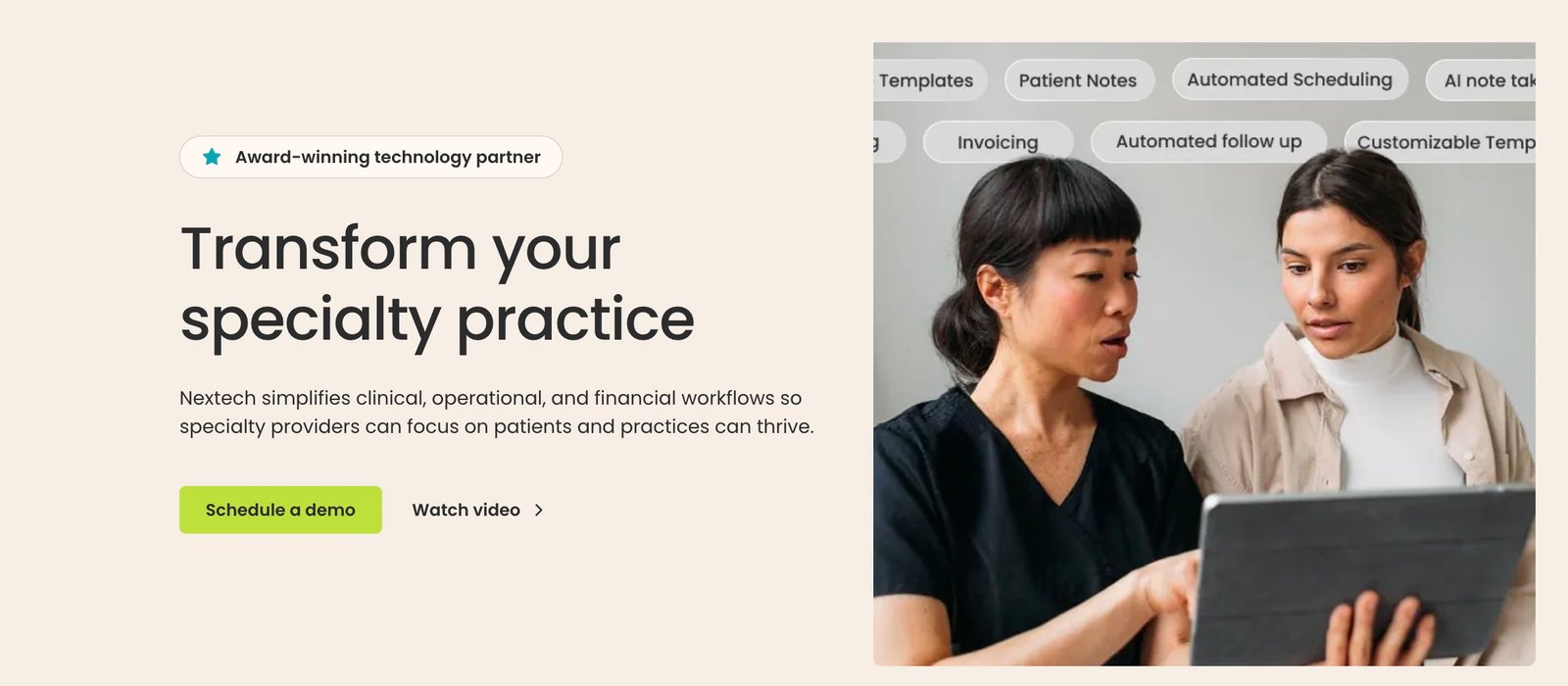
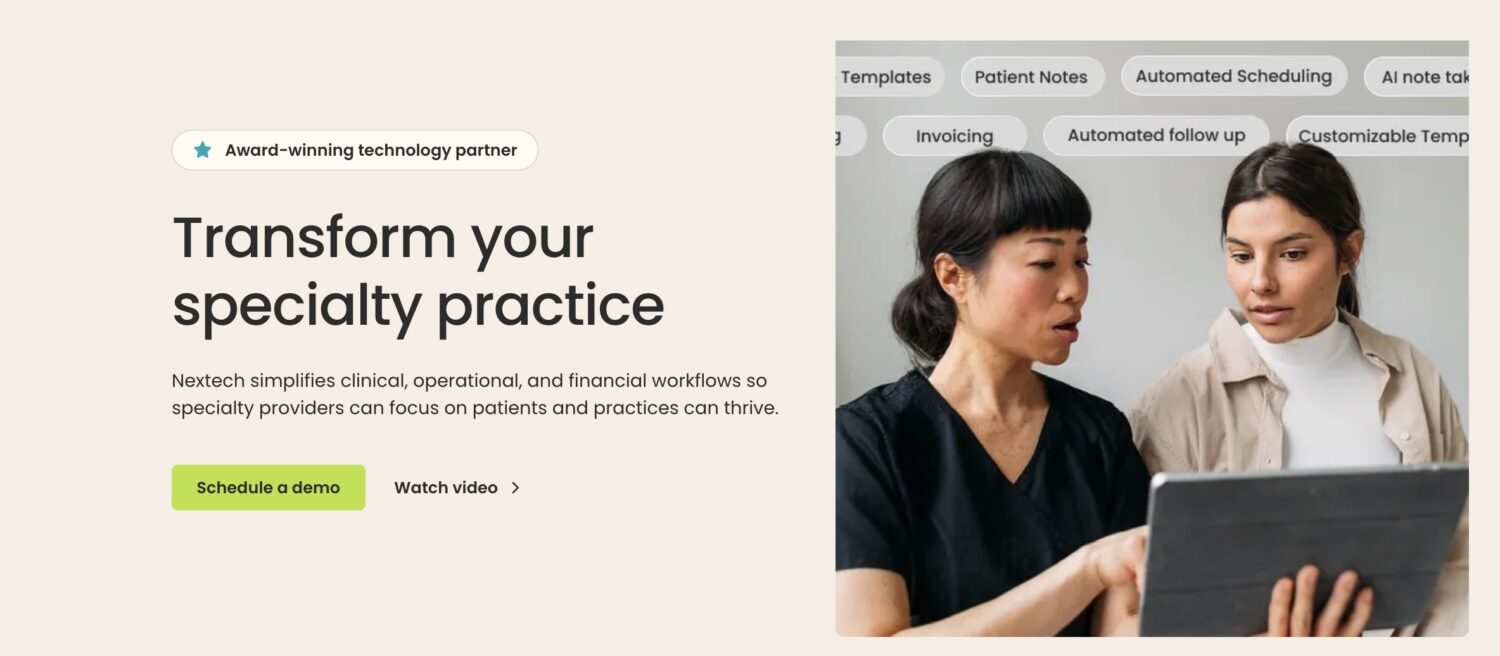
Specialty practice EHR and practice management leader Nextech announced major strategic partnerships with Assort Health and EliseAI in October 2026 (showcased at the AAO 2026 Annual Meeting in New Orleans), embedding conversational and agentic AI directly into its specialty healthcare operating system.
Directly addresses the front-office access bottleneck: specialty practices face growing clinical demand and acute administrative staffing shortages, where unanswered calls, hold times, and after-hours coverage gaps cause high rates of patient leakage and lost appointment volume.
Introduces a “choice-based platform” architecture: rather than locking medical practices into a single proprietary tool, Nextech allows specialty clinics to choose between two leading AI access platforms—Assort Health or EliseAI—both natively integrated into Nextech’s core Select/Cloud and Practice+ platforms.
Core Architecture: The “Dual-Partner” Platform Strategy
Rather than building a basic proprietary scheduling tool or forcing practices onto a single vendor, Nextech structured multi-year strategic alliances with shared engineering roadmaps and joint go-to-market commitments:
Practice Choice: Specialty practices can evaluate and select between two enterprise-grade AI platforms based on their operational profile, patient demographic mix, and administrative preferences.
Deep Native Integration: Both integrations connect directly into Nextech’s core PM/EHR products—including Nextech Select/Cloud and Nextech Practice+—ensuring appointment booking, intake forms, patient readiness checks, and follow-ups write back bi-directionally without disrupting existing clinic workflows.
24/7 Unattended Patient Access: Bridges after-hours demand by fielding patient calls and web inquiries outside regular operating hours, capturing patient intent at the moment of search or contact rather than forcing patients into daytime phone queues.
Partner Profiles and Enterprise Benchmarks
Assort Health (Specialty-Trained Healthcare AI)
Built on a repository of more than 300 million specialty patient interactions and deployed across hundreds of healthcare organizations, including 40% of the Fortune 20 healthcare enterprises.
Operational Metrics: Reports a 97% inquiry resolution rate, a 5% lift in completed appointment volume, a 115% increase in front-office labor capacity, and a 79% referral-to-appointment conversion rate.
Economic Yield: Delivers up to $4.3 million in incremental revenue captured per 100 providers by recovering lost referrals and optimizing provider template capacity.
EliseAI (Multimodal Patient Journey Automation)
Handles more than 20 million patient conversations per month (surpassing 100 million total patient interactions to date).
Commercial Velocity: Crossed $200M in annual recurring revenue (ARR) in 2026, marking five consecutive years of 100% year-over-year revenue expansion following its $350M($4 billion valuation.
Workflow Reach: Automates the end-to-end patient journey from initial conversational inbound triage through digital intake, insurance verification, chart preparation, and post-visit recall.
“Every practice is looking for ways to improve patient access while relieving pressure on their teams,” said Rusty Frantz, Chief Executive Officer of Nextech. “With Assort Health and EliseAI, we are giving practices the choice of two leading solutions, built into the Nextech operating system they already know and trust. This is an important step in bringing agentic AI into specialty practice workflows in a practical, connected way, and delivers on our vision to build an integrated ecosystem where the best capabilities work together as part of a unified experience.”
Cindi Carter, Global Chief Information Security Officer, Check Point Software
For years, healthcare organizations have encouraged patients to become more digitally connected to their care.
Use the patient portal. Check your test results online. Respond to appointment reminders. Communicate electronically with your care team. Use digital tools to take a more active role in managing your health.
Patients listened.
That progress has made digital engagement an important part of the healthcare experience. Unfortunately, cybercriminals understand that relationship, too.
Recent phishing campaigns impersonating MyChart demonstrate an important evolution in healthcare cyber risk. Attackers are using fraudulent emails, text messages, phone calls, and websites designed to look like familiar healthcare communications. Some promise free Medicare kits or health-related products. More concerning schemes have used fake MyChart websites and fabricated medical information to create urgency around supposedly critical test results.
The technology may be fraudulent, but the emotion it creates is very real.
Imagine receiving a notification that appears to come from your healthcare provider telling you that abnormal laboratory results require immediate attention. In that moment, most patients aren’t thinking like cybersecurity professionals. They’re thinking like patients.
What did they find? Is something wrong? What do I need to do?
That is precisely what makes these attacks so effective.
Cybercriminals Aren’t Just Exploiting Technology. They’re Exploiting Trust.
Healthcare has always operated on trust. Patients trust clinicians with deeply personal information and life-changing decisions. Increasingly, they must also trust the digital systems through which healthcare is delivered.
That makes cybersecurity part of the patient experience.
When an attacker impersonates a patient portal, the immediate objective may be to steal credentials or financial information, or to install malware. But there is another consequence healthcare leaders should consider: every convincing impersonation can make patients a little less certain about whether the next legitimate communication can be trusted.
That matters.
If patients become afraid to click an authentic appointment notification, access a test result, or respond to a message from their care team, the consequences move beyond information security. Security friction can become healthcare friction.
Trust is part of the treatment.
Protecting it requires healthcare organizations to think beyond defending their own infrastructure. The organization’s digital identity, and the communications patients associate with it, must also be protected.
Healthcare Organizations Need to Protect the Digital Relationship
The first priority is prevention. Healthcare organizations should continue strengthening email security, identity protections, multifactor authentication, domain protections, and monitoring for brand impersonation and lookalike domains. But technology alone is not enough.
Organizations should establish recognizable and consistent patterns for patient communications. Patients should know how their healthcare organization communicates, which domains and phone numbers it uses, what information it will request electronically, and, equally important, what it will never request.
Healthcare organizations should also make the trusted path easy to find.
Instead of asking patients to determine whether every link is authentic, teach a simpler behavior: when something feels unexpected, urgent, or unusual, leave the message and access the patient portal through the healthcare organization’s official app or known website.
Security, communications, digital health, patient experience, and clinical leadership should also have a coordinated response plan for patient-targeted impersonation campaigns. When a campaign emerges, organizations need to communicate quickly and consistently across their websites, patient portals, call centers, clinical practices, and other trusted channels.
This is an important distinction: an organization does not need to have suffered a breach for a cyberattack to affect its patients. Someone impersonating your organization can create risk for the people you serve even when your own systems remain secure.
Patients Have a Role, Too
Patients should approach unexpected healthcare messages with healthy skepticism, particularly those that create urgency, offer free products, or request personal, insurance, financial, or login information.
A few habits can dramatically reduce risk:
Access MyChart through the official mobile application or the healthcare provider’s known website rather than through an unexpected message.
Never provide passwords or verification codes by email, text, or phone. Legitimate MyChart support will not request them through those channels.
Be suspicious of unexpected offers for free healthcare products, Medicare kits, prizes, or rewards.
Never follow instructions from a website telling you to run commands, install software, or bypass a computer security warning.
If a message involves an alarming diagnosis or unexpected medical result, verify it through the official patient portal or contact the healthcare provider directly.
Patients who believe they interacted with a fraudulent message should change their portal credentials, review their contact information and account activity, and contact their healthcare organization’s support team.
But we should be careful not to place the entire burden on patients.
Modern phishing attacks are becoming increasingly sophisticated. Generative AI makes it easier to produce convincing language, personalize messages, and replicate trusted communications at scale. “Look for spelling mistakes” is no longer an adequate cybersecurity strategy.
The safer approach is to make verification habitual and simple.
Protecting Confidence in Digital Care
Healthcare’s digital transformation depends on patients being willing to engage with technology.
We want patients checking their records. We want them communicating with clinicians. We want them using digital tools to schedule appointments, manage medications, review test results, and participate more actively in their care.
Cybersecurity therefore has a responsibility beyond protecting systems and data. It must help preserve patients’ confidence in those interactions.
The MyChart phishing campaigns offer an important reminder for healthcare leaders: cybercriminals will exploit not only our vulnerabilities, but also the relationships and trusted brands we have worked for years to build.
The answer isn’t to make patients afraid of digital healthcare.
It’s to make trustworthy digital healthcare easier to recognize and harder to impersonate.
Because in an increasingly connected healthcare ecosystem, protecting the patient means protecting the technology, the communication, and the confidence that connects them.
Trust is part of the treatment.
About Cindi Carter
Cindi Carter is a global, multi-industry Cybersecurity and Information Technology Executive who consistently delivers the optimal outcome. As a transformational leader from startups to enterprises she excels at building cybersecurity practices in highly regulated industries, turning strategic goals into action, and highly collaborative engagement to lead the organization in managing cyber risk. At Check Point Software Technologies, Cindi is a Global Chief Information Security Officer in the Office of the CISO, leading Check Point’s Healthcare Center of Excellence where human safety is essential to care. With over two decades in the healthcare and financial industries, Cindi’s purpose is deeply rooted in human safety, bringing together the capabilities that protect the security and privacy of each individual.
A cursory glance across job descriptions at most major pharmaceutical companies will, if one is being unkind, look essentially identical to the 2010s: the same divisional divide of analytics, field, launch, CRM, and content, to name just a few, with essential requirements listing a relevant degree and a set number of years in the subdivision. Meanwhile, AI threatens to upend the commercial ecosystem as we know it, if we let it. There’s no shortage of investment in commercial AI: budgets exist, and pilots launch. What’s missing is a redefinition of the realm of commercial possibility. R&D teams talk about AI in terms of what’s possible, where Commercial teams mostly talk about it in terms of what’s faster: faster call planning, faster reporting, faster content approval. In the pharmaceutical industry, we’re not pondering what the Commercial function could become, only what it could do quicker. I believe that the pharmaceutical industry could learn several vital lessons from the digital health teams they are so frequently adjacent to, or in partnerships with.
Today
As it stands, commercial teams still remain largely siloed, despite a decades-long effort to the contrary: the SWAT teams who swoop in for launch, the marketing teams who focus on a “360-degree view of the customer” and pore over agency data on tactic performance, the sales teams who battle daily for two to five minutes with target HCPs, the digital teams optimizing Veeva or Salesforce and wrangling unwieldy data, and the market access teams negotiating, lobbying, and analyzing. Each function is a separate thread in the complex ball of yarn that is a Commercial team in 2026. Each trying to grapple with the pace of change driven by AI for specific, single threaded needs. For example, a rep getting handed a new “AI-driven next best action” tool but it’s bolted onto the same static quarterly system that existed before, and doesn’t address any fundamental underlying model improvements.
Opportunities for Pharma
The real question: if we designed a pharma commercial function from scratch today, would it look anything like this? My hypothesis is no, and that it would look much closer to the world of digital health.
Digital health and Pharma remain distant cousins in the family tree of life sciences and health. Where digital health can focus on specific interventions and inventions, Pharma, Big Pharma at least, has the unenviable task of spreading its approach across indications, therapeutic areas, and ultimately entire patient and HCP populations. The result is that digital health companies have grown up leaner, with commercial functions built as a specific, consolidated, and usually much smaller function than in pharma.
What pharma commercial could borrow from digital health isn’t complicated or novel, but it isn’t obvious in the day to day of a big pharma juggernaut. I once heard that in the beginning days of the internet, the NY Times typed in the full newspaper – just digitizing the physical copy. This is an exact analogy for how most of big pharma is using agentic AI now: focused on re-creation of existing ways of working and increasing efficiencies.
The less obvious side to the speed and efficiency coin is the idea of changing the actual operating rhythm of the portfolio: shipping concepts to production in days rather than months or years. A digital health team ships a feature in weeks based on a usage pattern; a pharma commercial team can spend a quarter just getting requirements gathered. Or radical focus: a digital health commercial function is built around a handful of clear outcomes, not a dozen sub-functions each optimizing their own area. Pairing radical focus with pharma’s strength in regulatory & compliance creates the opportunity to expedite patient outcomes in a way before unseen. Finally, digital health companies build with partners from day one because they have to, while pharma often plans in-house first and partner only once internal options are exhausted, organizational fatigue has taken grip, or the “build” is ready to get going.
Making It a reality
What would it look like if Pharma embraced a digital health style way of working? Potentially, it would be by replacing the sprawl of sub-divisional dashboards and systems with one shared data layer, a single source of truth on HCP engagement, patient journeys, tactic performance, and pipeline, with access rights layered on top rather than entirely separate systems per function. Instead of a field force, maybe it’s a cognitive command center AI that operates across functions instead of within one, flagging a stalled account to market access, content, and the field team simultaneously instead of routing sequentially through three approval chains. And rethinking the field model itself: rather than dispersing reps to chase five-minute HCP windows on a static cycle, that same investment could fund fewer, richer touchpoints, twice-yearly events, and deeper partnerships with different, AI native platforms with distribution & reach like OpenEvidence that HCPs are already choosing to use on their own terms.
None of this requires more commercial budget than pharma is already spending. It requires spending it on reimagining commercial as a function instead of speeding up an existing function. Digital health and pharma have plenty to learn from, and with, each other, and AI is the first real forcing function either industry has had to do it. The Pharma commercial teams that treat this as a chance to redesign the model, not just streamline it, will be the ones that change what’s possible for HCPs and patients. The remainder will only benefit from greater day to day efficiency.
Suzy Jackson is a Digital Health & Commercial Pharma subject matter expert and former Digital Health Chief Commercial Officer at RVO Health, as well as former Head of the North America Life Sciences Commercial Consulting team at Accenture. Suzy’s independent advisory focuses on Commercial technology, strategy, Go-To-Market efforts, market entry, partnership shaping, and competitive analysis across Pharma and Consumer Health. Outside of her advisory work, Suzy is an avid scuba diver, traveler, and sits on the Boards of two non-profits focused on women’s rights, legal advocacy, and survivorship from trauma and abuse.
This post appears through the MedCity Influencers program. Anyone can publish their perspective on business and innovation in healthcare on MedCity News through MedCity Influencers. Click here to find out how.
Clinical artificial intelligence platform Healthleap announced that it has raised $38M in combined seed and Series A financing backed by Sequoia Capital, First Round Capital, and Hummingbird Ventures (consisting of an $8M seed round co-led by Sequoia and First Round and a $30M Series A led by Hummingbird).
Directly targets an entrenched inpatient diagnostic blind spot: up to 50% of hospitalized patients are clinically at risk for disease-related malnutrition, yet fewer than 9% ever receive a formal clinical diagnosis, exacerbating patient morbidity, mortality, and hospital length of stay (LOS).
Replaces static, manual screening workflows: while acute hospitals historically screen for malnutrition using a two-question survey administered once at admission—routinely missing sedated, confused, intubated, or critically ill patients—Healthleap ingests every patient’s complete medical record every morning, synthesizing clinical notes, laboratory trends, vital signs, medication orders, and active problem lists.
Inpatient Record Synthesizer: Screening Every Patient Every Morning
Founded in 2022 by sibling duo Josiah Meyer (CEO) and Jemima Meyer (clinician and co-founder), Healthleap operates as an EHR-integrated clinical surveillance layer:
Continuous Multi-Source Chart Ingestion: The platform reads each patient’s complete electronic health record every morning—synthesizing physician progress notes, nursing assessments, laboratory panels, vitals trajectories, active medication orders, and historical problem lists.
Prioritized Clinical Worklists: Rather than overwhelming providers with static alerts, Healthleap ranks patient risk and routes actionable scores into optimized EHR workflows, highlighting for bedside clinicians and registered dietitians who requires evaluation first.
Proactive Diagnostic Capture: Enables hospitals to screen their entire inpatient census daily with high diagnostic precision, identifying deteriorating or undernourished patients who would otherwise go unnoticed until post-discharge complications develop.
Compliance and Security: The platform operates under full HIPAA compliance and maintains SOC 2 certification.
Measured Clinical Efficacy and Hard-Dollar Financial Returns
Healthleap’s adoption demonstrates significant clinical and revenue cycle impacts across academic health systems:
Penn Medicine Financial Return: At one Penn Medicine hospital, deployment of Healthleap generated $23.8 million annually through a combination of incremental reimbursement capture and the financial return of length-of-stay (LOS) reductions.
Diagnostic Expansion at Enterprise Scale: In enterprise health system rollouts, deployments yielded a 39% increase in identified and treated malnutrition cases, unlocking $11 million in incremental reimbursement revenue within a single health system network.
Appropriate Case-Mix and DRG Reimbursement: Because severe malnutrition qualifies as a major complication or comorbidity (MCC) under Medicare Severity Diagnosis Related Group (MS-DRG) payment methodologies, accurate identification and clinical nutritional intervention allow hospitals to capture approximately $11,000 in incremental reimbursement per qualified encounter while reducing avoidable inpatient days.
Expanding Beyond Malnutrition: The Multi-Condition Roadmap
Building on its validated clinical malnutrition algorithms, Healthleap is deploying its daily chart-surveillance architecture across high-cost acute inpatient conditions:
Congestive Heart Failure (CHF): Detecting early subclinical fluid retention and decompensation markers before acute exacerbation.
Pressure Ulcers: Flagging mobility, nutritional, and skin-integrity risk factors to initiate targeted nursing interventions and prevent hospital-acquired stage III/IV pressure injuries.
Hospital-Acquired Infections (HAIs): Identifying early physiologic and laboratory indicators of systemic sepsis, catheter-associated urinary tract infections (CAUTIs), and surgical site complications.
“Every week, millions of patients leave hospitals with unresolved health conditions that will erode their health and cost up to 10x more to treat later,” said Josiah Meyer, Co-founder and CEO of Healthleap. “Finding them now is prevention, and it’s a win for everyone. Patients get treated before they get sicker. Hospitals shorten stays and are paid for the care they deliver. Payers avoid the much larger cost of complications down the road. Our goal is to improve care and save lives by catching these conditions early.”
For decades, health systems have invested in creating operational visibility inside the hospital. Leaders are accustomed to tracking bed capacity, anticipating demand, identifying bottlenecks and coordinating the movement of patients and resources within the four walls of the hospital.
But healthcare no longer begins and ends at the hospital doors.
Care continues to move into physician practices, specialty clinics, imaging centers, ambulatory surgery centers, and at home with virtual care. Yet many health systems still lack the same enterprise-level operational visibility at these settings as they do inside the hospital. The result is a gap in ambulatory visibility that limits patient access, threatens network integrity, and stifles revenue growth.
Research has shown that missed appointments alone cost the U.S. healthcare system approximately $150 billion annually. At the same time, McKinsey has found substantial unused capacity within employed physician networks, and demonstrated the financial value health systems can realize by improving access and utilization.
The challenge is not necessarily a lack of capacity. Often, it’s a lack of visibility to where that capacity exists and the operational ability to act on it.
The patient journey has changed. The operating model must follow.
Historically, inpatient and ambulatory care developed as distinct operating environments. Physician practices were often independent organizations with their own technology, workflows and processes. As health systems acquired practices and expanded their outpatient footprints, many of those operations remained relatively independent.
The result today can be an enormous network of care supported by fragmented operational systems.
A scheduler may need to navigate multiple platforms to determine where a patient can be seen. An executive looking at an access KPI may have to ask analysts or operational leaders to determine which region, location, specialty or provider is causing the problem. A referral coordinator may know a patient needs specialty care but lack visibility into availability across the entire network.
The information exists. It simply exists in too many places.
A patient leaving the hospital may need primary care, a specialist, imaging, laboratory testing and other services. Each represents another point at which the health system can either maintain that person as a patient or risk losing them.
In many organizations, schedulers and referral coordinators work across multiple systems simply to find appropriate appointments for a patient. The result is fragmentation that limits the ability to identify the appointment that best meets a patient’s needs based on availability, location and provider type.
That fragmentation matters because an ambulatory visit can no longer be viewed as separate from the overall patient journey.
When patients leave the network, revenue follows
Consider a patient discharged from the hospital with a referral to a specialist.
The health system has already invested in that patient’s care. Clinicians understand the patient’s history, records are available, and maintaining continuity within the network benefits both the patient and the health system.
But what happens when the preferred specialist can’t see the patient for six weeks?
Without network-wide visibility, a scheduler may not know that another location has an opening next week. The patient only knows that they can’t be seen for six weeks and looks elsewhere to continue their care.
For patients managing a new diagnosis or recovering from a complex procedure, that gap is not simply inconvenient. It creates clinical risk that the health system is no longer positioned to see or manage.
Once that happens, the health system risks losing much more than one appointment.
The specialty visit may generate imaging, procedures, follow-up appointments or additional services. Losing visibility into the patient’s care can also make it harder to manage outcomes under value-based care arrangements.
The question, therefore, isn’t simply, “Do we have an appointment available?” It should be “Where across our entire network can we best meet this patient’s need?”
Capacity you can’t see is capacity you can’t use
One of the problems of ambulatory access is that patients can face long waits for appointments while capacity simultaneously goes unused.
McKinsey quantified the problem in an analysis of more than 10 health systems with large employed-physician organizations. Across those organizations, actual, or retrospective, appointment-slot utilization ranged from 48% to 93%, with a median of just 70%. McKinsey also found a difference of approximately 20 percentage points between prospective and retrospective fill rates, driven by cancellations that were not backfilled, late cancellations and no-shows.
That distinction is critical. A schedule may appear full when viewed prospectively, but that doesn’t always mean the available capacity translates into completed patient visits. Without visibility into actual utilization, leaders can overestimate how effectively capacity is being used.
At enterprise scale, this becomes increasingly important. A health system may have hundreds or thousands of providers spread across dozens of locations. One practice may have a three-week wait while another has appointments available. Without network-wide operational visibility, leaders and schedulers may not recognize that imbalance in time to act.
The result is more than an efficiency problem. Patients who can’t get timely care are likely to seek it outside the network, taking not only the immediate encounter but the imaging, procedures, specialty care and future services with them.
Visibility changes the growth equation
Limited visibility also makes it harder to determine where health systems should invest.
When access is constrained, the instinct may be to add providers, extend clinic hours or build additional locations. But those decisions should begin with a more fundamental question: Is there truly insufficient capacity, or is existing capacity distributed inefficiently across the network?
One location may be overwhelmed while another has unused appointments. A specialty may appear constrained across the enterprise when the real bottleneck exists within only a handful of providers or appointment templates.
The data needed to make those distinctions often already exists, but it may be fragmented across multiple systems, reports and departments. Bringing that information together creates an opportunity not only to identify access and capacity constraints, but also to make better decisions about where service lines should expand, where providers should be deployed and where resources may be underutilized.
Growth should begin with understanding the capacity you already have.
From visibility to action
The next evolution of ambulatory operations is not simply another dashboard, it’s complete operational orchestration.
Leaders need operational intelligence that allows them to move from seeing a problem to understanding its cause and then being able to act on it.
Imagine an executive seeing that days to access have increased and immediately drilling down by region, location, department and provider. At the same time, an operator could see that one clinic is approaching capacity while another has availability and redeploy resources accordingly. A scheduler could tell a patient, “This location can’t see you for three weeks, but another location 20 minutes away can see you Tuesday.”
Today, gathering that level of information can require multiple reports and hours of analysis. The opportunity is to surface that information immediately for executives, managers and schedulers so they can make decisions, open capacity and better navigate patients across the network.
Artificial intelligence is the next step in this evolution. Rather than simply identifying a capacity constraint, purpose-built operational orchestration platforms can analyze historical and anticipated demand and recommend actions like adjusting templates, shifting resources or adding provider coverage where demand warrants it while keeping the operator in control of the decision.
That moves ambulatory operations from reporting what happened to helping teams decide what should happen next.
Building a boundaryless health system
The opportunity ultimately extends beyond ambulatory care.
As care continues moving into outpatient, and eventually virtual home settings, health systems need to stop viewing the patient journey through organizational boundaries. The goal should be a truly boundaryless operating model capable of seeing demand, capacity and patient movement wherever care occurs.
We already understand the value of this kind of visibility inside the hospital. The next challenge is extending it across the rest of the health system.
That requires more than technology. It requires people, process and technology working together around a shared operational picture. It requires leaders prepared to use real-time data and increasingly AI-driven recommendations to make faster, more informed decisions.
Most importantly, it requires viewing ambulatory care not as a collection of individual clinics, but as an interconnected enterprise and an integral part of the complete patient journey.
The billions lost to missed appointments, unused capacity, patient leakage and inefficient utilization are symptoms of a larger challenge: health systems can’t optimize what they can’t see.
Closing the ambulatory operational visibility gap gives organizations an opportunity to change that equation, connecting patients to the right care at the right time and location, making better use of existing resources, protecting network integrity and building a more sustainable platform for growth.
As more care moves beyond the hospital, enterprise-wide visibility will no longer be optional. It will be fundamental to how health systems compete, grow and care for their patients.
About Michelle Skinner
Michelle Skinner is the Chief Clinical Executive at TeleTracking Technologies, where she brings together clinical insight and operational strategy to help health systems unlock capacity, expand access, and drive scalable growth. A former trauma and critical care nurse, Michelle has led enterprise transformation initiatives across hospital operations, service line development, and patient flow redesign. Her career spans the front lines of care to the executive table—making her a trusted partner to health system leaders navigating complexity and change. She is committed to solving the structural barriers that limit care delivery and believes that rethinking capacity is key to building a more resilient, responsive, and equitable health system.
Najib Jai, MD, Chief Operating Officer, Arbital Health
Equitable access to health care is more than just about geographical coverage. It depends on the healthcare system’s ability to identify risk early, intervene intelligently, and sustain those interventions across the most clinically and socially complex populations.
This is why many value-based care (VBC) models struggle. Underserved Medicaid and Medicare populations frequently experience a disproportionate burden of chronic diseases, behavioral health challenges, transportation barriers, food insecurity, language gaps, and disconnected care journeys. Once patients present in the emergency department or experience an avoidable admission, the opportunity for lower-cost, lower-acuity care is often less possible.
The challenges are well understood – most organizations are still operating with lagging data, subsequent incomplete visibility into contract performance, and limited ability to connect contractual risk with clinical action in real time. As healthcare continues shifting toward value-oriented reimbursement models, equitable care delivery increasingly depends on infrastructure capable of turning population-level data into timely, actionable clinical and operational decisions.
One Provider’s Experience
A large provider organization that serves roughly 141,000 Medicaid and Medicare patients recently confronted this reality. Nearly 45% of its patients managing diabetes were also navigating multiple comorbidities, creating a population vulnerable to acute exacerbations, hospitalizations, and readmissions.
The organization faced significant operational headwinds common to many serving underserved communities. Payer data often arrived months late, making it difficult to understand why contracts were under-performing or which patients were trending toward acute episodes before costs escalated. The organization was effectively trying to manage complex value-based risk arrangements while looking backward through incomplete data.
Unfortunately, this dynamic is not unique; across healthcare, providers serving high-risk populations are frequently asked to manage increasingly sophisticated contracts without the same actuarial visibility historically available to payers. The result is reactive care management instead of proactive intervention, particularly for populations where earlier outreach can make the greatest difference. Actuarial AI and predictive intelligence can help alter VBC’s trajectory by offering a more comprehensive, forward-looking framework.
Traditional Predictive Models Aren’t Up to the Challenge
Traditional predictive models often focus narrowly on utilization forecasting or retrospective reporting. The next generation of actuarial AI systems is beginning to amalgamate claims data, contract logic, demographics, utilization trends, and clinical workflows into a more operationally useful framework. Instead of simply identifying what happened, these systems can help organizations understand what is likely to happen next, and where intervention opportunities exist before costs spike.
The Importance of Operationalizing Insight
Risk presents heterogeneously across communities, age groups, languages, comorbidity profiles, and care access patterns; a one-size-fits-all intervention strategy inevitably leaves gaps. Predictive intelligence that can stratify risk dynamically across diverse patient populations allows providers to target outreach more precisely and allocate finite care management resources where they can have the greatest impact. This reduces costs as well as the friction that prevents appropriate care from happening proactively.
Much like with the technology that has preceded it, we’ve learned that AI adoption in healthcare only succeeds when it streamlines and is integrated into existing workflows rather than creating new administrative burdens. Physicians are not resistant to tools that help them, just to those that add unnecessary steps to already compressed processes and cluttered workdays. Organizations most likely to improve outcomes for vulnerable populations will not necessarily be the ones with the most sophisticated dashboards, but the ones capable of operationalizing insight directly into care delivery. If AI can surface which patients are at risk for avoidable admissions, identify the clinical and social drivers contributing to that risk, and simplify the pathway for intervention, then providers can act earlier and more impactfully.
Actuarial AI in Action
The experience of the provider organization mentioned earlier offers a practical example. After implementing actuarial AI tools, they were able to analyze utilization patterns and contract performance in real time, uncovering insights that traditional reporting had obscured. While initial payer data suggested pediatrics and OB were driving readmissions, deeper analysis identified hypertension as a leading root cause of avoidable hospital utilization. That insight materially changed their intervention strategy.
The system launched a hypertension management initiative specifically targeting Medicaid and Medicare patients with complex comorbidities, embedding prompts into clinical workflows and expanding outreach to previously unengaged patients within its risk contracts. Multi-lingual engagement campaigns helped convert previously disconnected patients back into care.
The organization moved from reacting to adverse events after they occurred to identifying risk trajectories earlier enough to intervene. That is the promise of combining actuarial AI with VBC infrastructure: strengthening the system’s ability to consistently deliver appropriate care at scale.
Transparency and Trust Are Critical Ingredients
There is a growing tension between regulated clinical AI and the informal use of ungoverned AI tools across healthcare environments. Across the industry, leaders agree that black-box outputs cannot become the foundation for clinical, operational, or financial decision-making.
For AI-driven VBC models to meaningfully support underserved populations, providers must understand how risk is being calculated, how interventions are prioritized, and how recommendations align with real-world patient needs. Otherwise, the industry risks replicating existing inequities inside more sophisticated systems.
The Future of Equitable Care
The future of equitable care delivery will depend on whether healthcare organizations can unify clinical intelligence, actuarial rigor, and operational execution into a single framework that supports both outcomes and sustainability. Healthcare already possesses enormous volumes of claims, utilization, demographic, and clinical information. The problem has been the inability to synthesize and operationalize that information quickly enough to change patient trajectories while there is still time to act. Actuarial AI and predictive intelligence are beginning to close that gap.
As VBC continues to evolve, the organizations best positioned to improve equity may be the ones that can transform data into earlier intervention, precise outreach, and more informed clinical decisions, not just for the easiest patients, but for the populations that healthcare has historically struggled to serve well.
About Najib Jai, MD,
Dr. Najib Jai, MD, is the Chief Operating Officer of Arbital Health. His career evolved from supporting value based care (VBC) models through private equity investing to joining Oak Street Health to lead specialty care strategy, improving outcomes for patients with complex, multimorbid conditions. He later co-founded Conduce Health, pioneering the first multi-specialty VBC platforms that match the right specialist with the right patient, considering their social drivers of health. Through predictive modeling and innovative contracting structures, his work improved care coordination and outcomes for high-risk populations. Now at Arbital Health, Dr. Jai continues to influence the industry by embedding clinical and operational insight into its Actuarial AI infrastructure, which enables payers and providers to identify the highest-risk members and their emergent needs to drive positive outcomes at scale.
The multi-year transformation has compressed rapidly: while 84% of healthcare executives in 2025 expected generative AI to transform treatment decisions within three to five years, 71% confirm it already has in 2026.
Financial payback is arriving twice as fast as originally underwritten: enterprise buyers modeled a 24-month horizon, yet realized a material return within ~12 months, generating an average 3.5x return on investment (ROI) and exceeding initial financial underwriting in roughly 40% of deployed use cases (with 54% seeing material ROI within year one).
Realized ROI and Autonomy Across Enterprise Domains
Rather than relying on soft satisfaction surveys or speculative multi-year projections, the 2026 Scorecard tracks realized return multiples on deployed capital:
Provider Revenue Cycle Management (RCM): Delivers a 4.0x realized ROI, with 67% of solutions operating as semi- or fully autonomous agents. Value is primarily driven by faster speed to output, increased net revenue capture, and direct labor efficiencies.
Payer Claims Operations: Generates a 3.4x realized ROI, powered by direct FTE reductions and accelerated claims turnaround times.
Pharma Preclinical Discovery: Posts a 3.4x realized ROI, driven by frontier model efficiency gains across target identification and molecular screening pipelines.
Payer Provider Network Management: Achieves a 3.3x realized ROI, primarily through accelerated credentialing timelines and automated directory maintenance.
Payer Member Engagement: Delivers a 3.2x realized ROI, with 62% of solutions deployed as semi- or fully autonomous agents that handle digital navigation and inbound call deflection.
Provider Front Office (Patient Access): Returns a 3.1x realized ROI, driven by conversational scheduling agents that expand capacity capture, maximize slot utilization, and reduce patient no-show rates.
Provider Clinical Workflows: Sits at a 2.9x realized ROI, with only 4% of solutions running with semi- or fully autonomous agency. Returns remain concentrated in optimized decision-making and quality metrics rather than hard-dollar labor reductions or new top-line revenue.
Pharma Commercial: Realizes a 2.6x realized ROI, led by field-force targeting and automated marketing content generation.
Pharma Clinical Development: Achieves a 2.3x realized ROI, where realizing near-term value remains constrained by multi-year clinical trial execution timelines.
Key Macro Trends & Market Dynamics
Payback Speed Has Exposed Systematic Underinvestment: Nearly every enterprise healthcare AI budget approved between 2024 and 2025 assumed a 24-month payback window. Because actual returns landed in roughly 12 months—exceeding expectations in approximately 40% of use cases—organizations continuing to model two-year paybacks are materially underinvesting relative to their own realized financial performance.
The Decay of Internal Hospital Builds: In 2025, health systems heavily favored proprietary internal software builds. Today, 61% of organizations report that half or fewer of their internally developed AI tools are still actively maintained and in use, with 32% reporting that less than a quarter survived. While internal IT teams successfully created functional MVPs, they struggled to maintain production-grade reliability, manage model drift, and defend algorithms during compliance audits.
Aggressive Vendor Consolidation: 42% of healthcare buyers have completed or are actively executing vendor consolidation initiatives, driven by desires to simplify their IT stacks (37%) and reduce software licensing costs (32%). Market share for recent deployments shifted sharply toward healthcare-specific AI vendors (+12 percentage points) and established HCIT incumbents (+7 percentage points), while internal builds dropped by 16 percentage points.
Platform Wedges Outcompeting Point Tools: With 57% of executives reporting that they are inundated by point-solution pitches, enterprise momentum has consolidated around platforms that entered via a sharp clinical or operational wedge (such as Abridge in ambient scribing or SmarterDx in prebill review) and systematically expanded into adjacent administrative workflows.
Workforce Restructuring and Headcount Reductions: 50% of surveyed organizations have already reduced headcount as a direct result of AI or plan to within six months, with targeted reductions averaging 8% to 13% of affected functions.
Labor Displacement Centered in the Back Office: Workforce reductions track financial returns closely: 73% of providers reporting labor cuts cite revenue cycle and billing, while 71% of payers cite claims operations.
Absorbing Structural Shortages Over Mass Displacement: Back-office automation is cushioning severe structural labor shortages rather than creating net unemployment. With the American Medical Association estimating a 30% nationwide shortage of certified medical coders (and the average certified coder now over age 50), automation closes an unfillable labor gap. Furthermore, health systems are actively redeploying clinical administrative staff—such as utilization review nurses—back into bedside care management and patient coordination.
The Clinical AI Paradox: Four Blockers to the $3 Trillion Opportunity
While 71% of healthcare executives state that generative AI has already begun transforming clinical treatment decisions (up from an expected 3-to-5-year horizon in 2025), clinical AI realization significantly lags administrative workflows, constrained by four structural barriers:
The Trust and Override Gap: Only 46% of clinicians trust AI-generated tools for clinical decision-making, and 77% override AI clinical recommendations more than half the time. Clinicians report that establishing trust requires stronger peer-reviewed clinical validation (67%), transparent recommendation rationales (53%), patient-specific performance data (47%), and native EHR integration (44%).
Individual Clinician Liability: 58% of providers affirm that the treating clinician bears primary legal responsibility for AI-influenced decisions, and 50% identify medico-legal exposure as the primary reason clinical AI fails to scale past pilots. The 77% override rate reflects a rational risk-mitigation strategy by clinicians who bear personal malpractice liability.
Regulatory and Compliance Ambiguity: 36% of organizations have canceled or delayed a clinical AI deployment due to regulatory uncertainty, driven by the absence of established FDA post-market surveillance regimes for autonomous, pan-indication clinical reasoning models.
Payment and Reimbursement Architecture: Fee-for-service payment models reimburse clinician time and specific procedural actions, offering no established billing codes for autonomous algorithmic care delivery. 48% of commercial payers explicitly refuse to reimburse fully autonomous AI care, whereas only 5% object to AI-assisted care where a clinician reviews and signs off on the recommendation.