
Category: drug discovery

  • Startup Arboretum Sprouts, Bringing a Precision Medicine Approach to Common Diseases

    Startup Arboretum Sprouts, Bringing a Precision Medicine Approach to Common Diseases

    The career of Anthony Philippakis has tracked with the evolution of molecular medicine. The cardiologist started medical school in 2001, one year after the first draft of the human genome was published. As a PhD student, he studied human genetics. At GV, where Philippakis is currently a general partner, he played a key role in the firm’s investment in Foundation Medicine, a precision medicine company that provides cancer tests and analyzes tumor samples, identifying genetic mutations that inform treatment decisions.

    “My professional career has been following the genome wherever it leads,” he said.

    Philippakis’s journey in genetics has reached its next stop. He’s the co-founder and CEO of Arboretum LifeSciences, a startup firmly planted in both diagnostics and drug development. The company is now out of stealth with a handful of partnerships and the ambition to leverage its genomic analyses into alliances with pharmaceutical companies, each side of its business working toward the shared goal of developing new medicines for common diseases. The Cambridge, Massachusetts-based company has raised $30 million in new funding to execute that mission.

    Arboretum is a molecular information company, a concept that Philippakis said goes back to an idea from Foundation Medicine. While a molecular diagnostics company only does diagnostics, a molecular information company does diagnostics and then uses the data generated from those tests to develop therapies, he explained. This concept first took root in cancer, where it’s easier to identify a particular genetic mutation as the driver of the disease — matching a drug to that genetic signature is fairly straightforward. But in a more common conditions like heart disease, there’s usually no single disease driver. To address such diseases, scientists need genetic approaches that define patients based on many variants rather than a single one.

    Arboretum supplies whole genome sequencing tests that support precision medicine programs at health systems. The company then analyzes data from those tests, using the analyses to guide drug development. The startup’s business model would not have been possible years ago, said Clare Bernard, Arboretum’s president. Alongside the rise of AI capabilities, the cost of genome sequencing has come down, making it easier to sequence larger numbers of patients, she explained. There’s also a growing number of indications where genetic testing is clinically indicated and payer reimbursed.

    Arboretum’s analysis yields a risk score indicating genetic predisposition to a particular disease. Bernard said these scores allow the company to identify disease targets as well as patients who could be a match to a clinical trial. These data can also help Arboretum design a clinical trial or match patients to a trial. These data can become the basis of partnerships with pharmaceutical companies, guiding their drug research. In these instances, Arboretum is not acting as a technology vendor. Philippakis said these deals involve risk sharing where the startup gets some of the financial upside if its analysis leads to a successful drug.

    “When we find one of those opportunities, either we approach a pharmaceutical company and say, ‘You’re developing a drug, we have insight on how to run a smarter trial,’ and do a partnership,” Philippakis said. “Alternatively, there might be an early-stage molecule somewhere in the world where we say, oh, let’s go in-license it because we have a differentiated insight on the development.”

    Arboretum aims to form startups around in-licensed assets. These startups would incubate within Arboretum. Philippakis said his company has “a number of active discussions” and he expects to have more to share in 2027.

    The alliances that are public are with health systems. Advocate Health, Geisinger, Providence Healthcare, and Cardiovascular Associates of America are all partners with Arboretum, using the startup’s genetic tests and creating longitudinal molecular registries. The startup also recently started sequencing its first patients in the United Kingdom, and Philippakis said the company aims to grow internationally.

    From the patient perspective, the patient’s doctor would order the Arboretum test, Bernard said. That could be an oncologist or a cardiologist. In some cases, it’s a primary care physician. The test is a simple cheek swab that can be done at a clinical site. Alternatively, a kit can be sent to the patient’s home. After the test, patients may consent to have their data included in a research biobank to be part of Arboretum’s research.

    “If they’re part of the research study, they can get additional results returned,” Bernard said. “That also gives them the opportunity to participate in clinical trials and gives us greater consent to match them to clinical trials in the future.”

    Arboretum started with $5 million in seed financing from GV and F-Prime. The new financing is a Series A round led by GV, F-Prime, .406 Ventures, Hims & Hers, Amgen and other unnamed healthcare investors. Philippakis estimates the capital will last at least three years. In that time, he aims for Arboretum to blossom to half a million people sequenced and several opportunities in drug development, either startups spun out of the company or partnerships with big pharma.

    The concept of Arboretum started taking shape during the Covid-19 pandemic, when Philippakis and Bernard both worked at the Broad Institute. During long outdoor walks, Philippakis said they talked about the confluence of automation, diagnostics, and biotechnology, as well as the shift of these disciplines to more capital-efficient approaches. The startup’s name is a reference to the Arnold Arboretum, which is near Bernard’s home and where the pair took those walks.

    “We like the metaphor an arboretum grows trees, we’re growing biotech companies,” Bernard said.

    Photo by Flickr user Jason Baker via a Creative Commons license
  • Immunology Startup ai3Bio Aims to Redefine What It Means to Reset the Immune System

    Immunology Startup ai3Bio Aims to Redefine What It Means to Reset the Immune System

    Immune reset has become a particularly active area of immunology R&D as companies develop therapies intended to eliminate disease-driving immune cells, enabling the immune system to start anew with cells that don’t attack the body. This growing field is still taking shape, but many of the approaches involve reprogramming one type of immune cell to pursue and deplete a different type of immune cell that’s driving autoimmune disease.

    Startup ai3Bio has a more straightforward strategy: tap into a built-in cellular pathway that leads pathogenic cells to self-destruct. The Watertown, Massachusetts-based company is now out of stealth, revealing its science along with $48 million in financing to support a pipeline that could start its first tests in humans next year.

    Immune reset is like a blank slate — give the immune system the opportunity for a fresh start with new cells that have no memory of attacking healthy tissue. But this approach also means eliminating protective antibodies built up over a patient’s lifetime, everything from childhood polio vaccination to this season’s flu shot. Ai3Bio aims for a more precise approach that doesn’t sacrifice a patient’s existing protections.

    “This strategy does not eliminate your pre-existing memory T cells that would be specific for [cytomegalovirus], flu, and all the other things that you want to maintain defense against,” said Jonathan Kagan, ai3Bio’s’s scientific co-founder. “We’d like to position ourselves as a very nice example of something that folks often champion but rarely achieve, and that is precision therapies.”

    The startup’s first target is Th17 cells, a type of helper T cell that fights infections. While Th17 cells are key for immune responses, excessive activity of these cells leads to autoimmune disease. Medicines are already available to address IL-17, a signaling protein secreted by Th17 cells. Novartis’s Cosentyx, Eli Lilly’s Taltz, and Bimzelx from UCB are all blockbuster-selling IL-17 inhibitors approved for several immunological indications. These monoclonal antibodies block the signaling protein but they don’t stop immune cells from churning out more of it, so the therapies must be taken chronically. Ai3Bio’s approach could offer the advantage of stopping IL-17 at the protein’s source, said CEO Steven Altschuler.

    Ai3Bio’s therapy consists of a lipid nanoparticle (LNP) that delivers messenger RNA with instructions that trigger cell death. This therapy finds its way to pathogenic Th17 cells with the guidance of a targeting antibody designed to bind to CD161, a protein overexpressed on these cells. When the therapy reaches its destination, mRNA activates an immunological pathway called cGAS-STING. For nearly 20 years, drug hunters have been researching ways to hit this pathway. So far, there are no FDA-approved drugs that target it.

    [The following two paragraphs updated to clarify the origins of ai3bio.] Ai3Bio’s name references three disciplines: advanced immunology, autoimmunity, and artificial intelligence. The company itself is the combination of technologies from two startups, Corner Therapeutics and Novasenta. Kagan, who holds positions at Harvard Medical School and Boston Children’s Hospital, was the scientific co-founder of Corner, a developer of immunotherapies for cancer and infectious diseases. Novasenta was a drug discovery startup launched by UPMC in 2021.

    Corner remains a standalone company; its autoimmune technology, including its experience with LNPs, was combined with Novasenta. Additional research showed that targeting the STING pathway in T cells would lead to cell death. Novasenta’s AI technology platform for identifying druggable targets led to the development of the CD161-targeting antibody that ai3Bio is using to go after Th17 cells.

    “We’re not delivering a grenade into the cell,” Kagan said. “We are effectively delivering instructions to the cell to kill itself or self-destruct.”

    Ai3Bio’s approach offers a potential safety edge compared to other immune reset strategies. Companies such as Cabaletta Bio and Kyverna Therapeutics are in the camp approaching autoimmune diseases with CAR T-cell therapies made by the ex vivo engineering of a patient’s T cells. Pharmaceutical companies are joining the immune reset chase with business deals. Over the summer, Johnson & Johnson began a partnership on a Sail Biomedicines therapeutic candidate that reprograms T cells in vivo, getting them to target pathogenic B cells. Other big pharma companies that have struck deals for in vivo cell therapies include AbbVie, Bristol Myers Squibb, Gilead Sciences, and Eli Lilly.

    Whether a cell therapy is produced in a lab or in the patient’s body, one known complication is an excessive immune response called cytokine release syndrome (CRS). Cell therapies eliminate disease-driving cells by breaking them open. The resulting release of cellular contents can trigger immune responses, such as CRS.

    Kagan said ai3Bio’s approach is naturally immunosuppressive, eliminating the bad-acting cells in a way that does not come with the risk of CRS. There are also manufacturing and logistical advantages. Engineering cell therapies from a patient’s own immune cells involves multiple steps. Furthermore, patients must undergo a preconditioning drug regimen to prepare for the therapy — a step that wipes out the immune system’s memory of its past protections. Altschuler said ai3Bio’s drug can treat patients in in a single step. Without the need for any preconditioning, infusion of the startup’s LNP-delivered therapy leads to self-destruction of the pathogenic cells.

    Eliminating T cells from diseased tissue typically leads to rapid replenishment of those cells. In ai3Bio’s animal testing, data indicate its therapy depleted inflammatory T cells, Kagan said. He added that ai3Bio’s approach also starts a process that prevents helper T cells from differentiating into Th17 cells, which goes further to achieving the immune reset goal. There’s more. Results from tests in monkeys indicate the therapy goes beyond the blood, leading to deep depletion in places such as the spleen and lymph nodes. That’s important because these are regions of the body that are difficult to manipulate immunologically, Kagan said.

    Immune reset is hoped to provide patients with a long-lasting, perhaps even a one-time treatment. Kagan said the durability of ai3Bio’s approach still needs to be shown in humans. Ai3Bio aims to pursue clinical testing in several immunological disorders starting with autoimmune diseases of the liver, Altschuler said. He noted that infiltration of Th17 cells into the liver drives primary sclerosing cholangitis, primary biliary cirrhosis, and autoimmune chronic active hepatitis — all indications with limited treatment options.

    The new funding behind ai3Bio, a Series A financing, was led by founding investors Ziff Capital Partners, which was an investor in Corner, and UPMC Enterprises, the investment arm of UPMC that was a financial backer of Novasenta. The new round also includes support from Cockrell Interests and Tanis Ventures.

    With ai3Bio now out of stealth, the startup will look to bring multiple programs to the clinic in the next two years, Altschuler said. He estimates the current financing will last into the second quarter of 2027, so ai3Bio will need more money. While the surge in immunology research and dealmaking makes immune reset competitive, Altschuler pointed out that nearly all of these deals involve B cell-focused therapies. Ai3Bio’s approach could also apply to B cells, but Altschuler said that for now, the startup aims to stand apart from the crowd.

    “While there are many strategies out there to treat autoimmune diseases, we would be one of the only that are in the business of actually resetting the T cell repertoire,” Altschuler said.

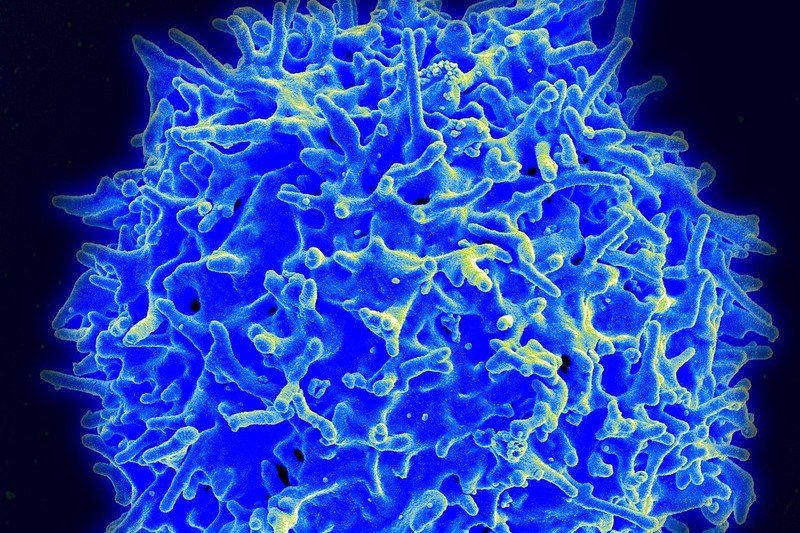
    Image by Flickr user NIAID via a Creative Commons license