Category: cancer

  • Before Saying Yes to the Medical Test, Know the Risks and Benefits

    Before Saying Yes to the Medical Test, Know the Risks and Benefits

    (Maria Fabrizio for WPLN and KFF Health News)

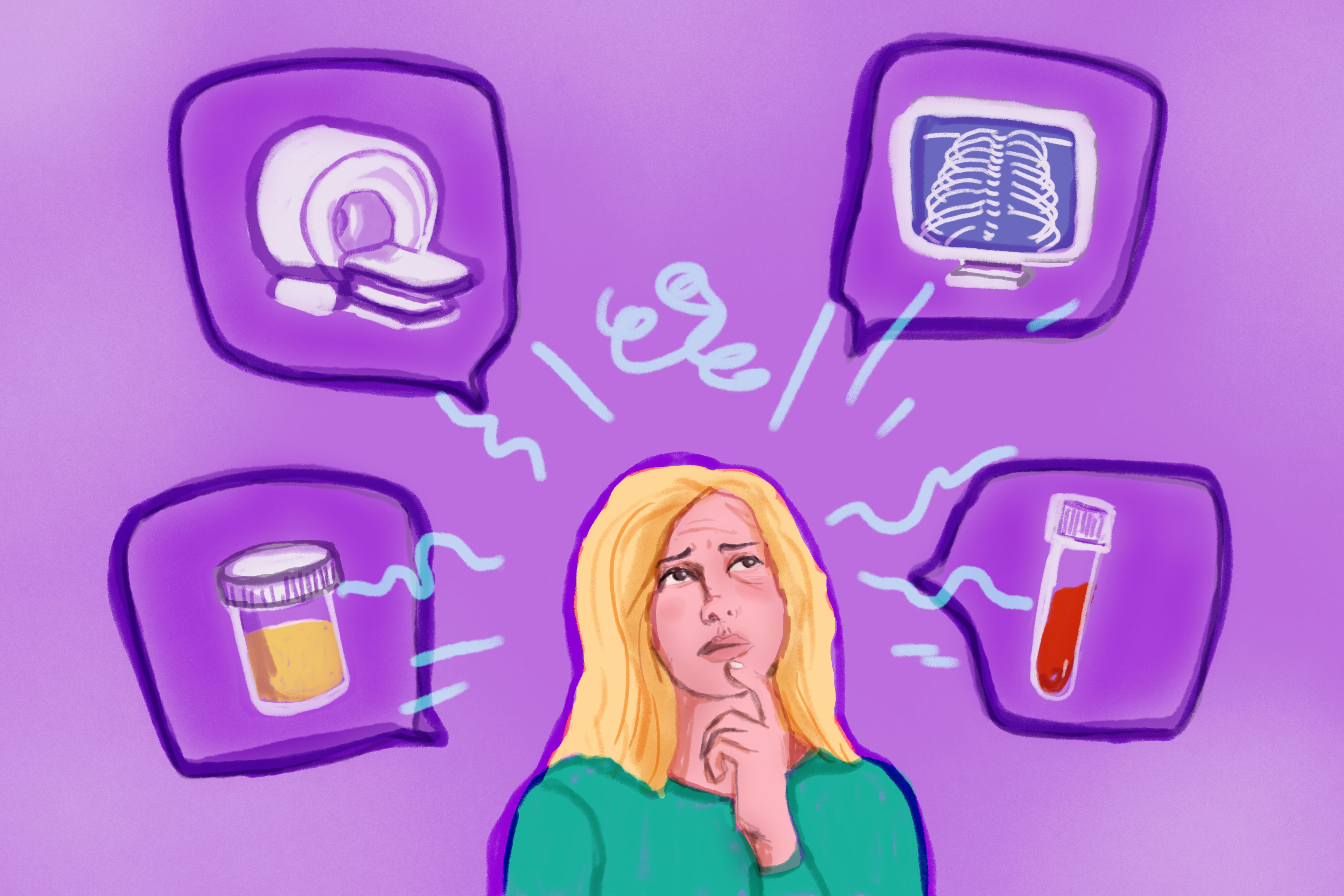
    When Lori Baute first learned about precautionary full-body MRI scans, she dismissed the idea.

    “ I heard Kim Kardashian got one, and some other wealthy people,” Baute said. But at 59, she was worried about her long-term health. She has a family history of cancer, and she’s a critical caregiver for her aging mom and her adult brother with special needs.

    After a close friend was diagnosed with bladder cancer, Baute decided to make an appointment with a clinic that offers full-body scans near where she lives in Ocala, Florida. Her results came back a week later. One major finding: She has lesions on her pancreas. “When I got that, I was really petrified,” she said.

    Worried about pancreatic cancer, Baute shared the results with her gastroenterologist, who ordered a targeted MRI scan as a follow-up. That test showed the lesions were benign cysts.

    Baute’s experience is becoming more common as companies pitch body scans directly to consumers as a way to detect cancer and other diseases early. But no major medical association — including the American Cancer Society and the American College of Radiology — recommends these scans for people without a very high risk of certain cancers.

    And even medical screenings that doctors do recommend can carry some of the same reasons for caution.

    The QTip:

    Before saying yes to the test, ask about the risks and benefits — even if your doctor recommends it.

    Here’s what to know:

    Every Test Comes With Costs and Risks

    At a minimum, a medical test will cost you time — and could mean a hefty medical bill. Many tests marketed directly to consumers, like full-body scans and at-home blood screening kits, are not covered by insurance, and some tests can cost several thousand dollars.

    Some laboratory tests might involve only the discomfort of a blood draw or the awkwardness of collecting a urine or stool sample, but others carry the possibility of physical harm. For example, a small percentage of people who get CT scans each year will develop cancer because of the radiation exposure from the tests, according to estimates from the National Institutes of Health. Relatively simple procedures like a biopsy or an endoscopy come with the risks of pain, infections, tearing, a reaction to anesthesia, or further serious complications.

    Plus, testing can cause anxiety and stress — as patients wait for results and if the results are inconclusive. “I see patients every week in my office who are tortured by the results of tests that they really didn’t need to ever have,” said Rita Redberg, a University of California-San Francisco professor and cardiologist and an advocate for less medical testing. For example, if you discover a cyst, then “you’re living for the next year, two years, three years getting repeated tests to figure out whether it’s benign or a cancer,” Redberg said. She cautions patients against testing unless they have specific symptoms.

    Testing Often Leads to More Testing — And More Risk

    A reality of getting a medical test is that the results often lead to additional, and potentially more invasive, testing. Doctors call this “diagnostic cascade.”

    Baute, for example, plans to continue monitoring her pancreas with annual scans. To her, she said, the financial cost and anxiety are worth it if she can feel “like I’m in control of my health and I have knowledge.”

    But Redberg points to a worst-case scenario, documented by JAMA Internal Medicine in 2011: After starting an exercise program, a 52-year-old woman experienced chest pain and went to see her doctor. Her exam suggested that her pain was muscular and she had a low risk for heart disease. Still, her doctor ordered a scan of her heart to reassure her. The results led her doctor to order another test, during which her artery was ripped. She had emergency bypass surgery, experienced complications, and ultimately, Redberg said, “she ended up with a heart transplant — all from this unnecessary scan just to reassure her.”

    A Few Simple Questions Can Help You Decide

    Before saying yes to the test, it’s important to know about the risks and benefits — even if your doctor recommends it, Redberg said. She suggests asking a medical provider and yourself questions like:

    • What am I going to learn from this test?
    • How is this test going to help in my care?
    • Could I improve my health without doing this test?

    She said many test results, especially in her field of cardiology, end up pointing patients back to the basics of a healthy lifestyle, like eating well, exercising, and not smoking. And those, she said, could be advised without a test.

    People and Policy

    If your health insurance covers a medical test, that means the test has most likely met vetted, scientific standards that demonstrate benefits to patients. Insurers must cover evidence-based services that have a rating of A or B from the U.S. Preventive Services Task Force. Private insurers, as well as Medicaid and Medicare plans, must cover the full cost of recommended preventive screenings. Many medical tests marketed directly to consumers are not covered by insurance.


    Emily Siner at Nashville Public Radio contributed to this report.


    HealthQ is a health series from reporters Cara Anthony and Blake Farmer, approachable guides to an unapproachable healthcare system. It’s a collaboration between Nashville Public Radio and KFF Health News.
  • What it’s like to wait for the call from the Nobel Prize committee

    What it’s like to wait for the call from the Nobel Prize committee

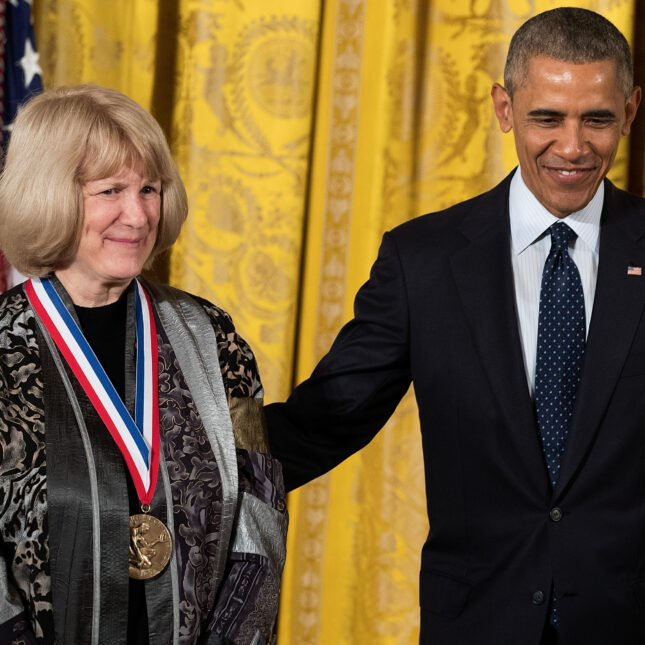
    Some 20 years ago, Mary-Claire King was asked to hold a seminar at the Karolinska Institutet in Stockholm. 

    The invite, the geneticist soon learned, was code for: You are being considered for a Nobel Prize. She traveled to Sweden, held the seminar, then spoke about her work with interested experts who she later understood to be the prize committee. 

    She couldn’t have been too surprised: Her work has saved hundreds of thousands of lives, and changed cancer therapy. 

    In 1994 and 1995, King, then a professor at the University of California, Berkeley, showed that breast and ovarian cancer could be hereditary, and identified that mutations in the BRCA1 and BRCA2 genes dramatically increased the risk of developing breast and ovarian cancer. 

    There is actionable power in this knowledge: Women who test positive for the mutations can have preventive mastectomies, or get their ovaries and fallopian tubes removed. Many have decided to do so, and preventive surgeries have reduced cancer mortality for thousands of women. 

    Naturally, when Nobel Prize predictions are made, King’s name is often on the list. Ahead of this year’s announcements, starting with the medicine and physiology prize on Monday, STAT spoke to her about what it feels like to be a finalist of sorts in the highest-profile intellectual competition in the world. Now 80 and at the University of Washington, she also talked about her work, her advice to young women scientists, and her favorite mantra — which she invented. 

    This interview has been edited for clarity and length.

    So, the Nobel announcement is next week.

    Oh, my God, it’s next week already. I can’t believe it. 

    Your name has been among the possible winners for many years. Do you have a routine? Do you set an alarm to check the winner? 

    I think if it were at any time other than truly the middle of the night, I might. But I’m on the Pacific Coast, so it is the middle of the night. 

    It’s not worth setting an alarm for 2 a.m. in the morning?

    It’s not that it’s not worth it! It’s just that it’ll still be there, and the chances of any one year are extremely low. 

    Still, it’s hard to predict.

    That’s true. The year that Katalin Karikó won [with Drew Weissman for work that led to the mRNA Covid vaccines], I think, was the most predictable. I mean, she saved the planet, it’s hard to argue that anything else could have surpassed that. It was the world’s largest experiment. But my guess would be GLP-1 this year. 

    It must be an interesting process. It’s certainly a tiny filter, and there’s a lot of stochastic features involved. 

    Do you remember the first time that you heard your name among the possible winners?

    It was when they invited me to the Karolinska Institutet to give a seminar. They were very open about saying that they do this with people who are under consideration, and that anyone in this position should bear in mind that these things take years to sort through, and they just want to have the information and be able to talk to us personally. 

    I had a lovely time. I gave a seminar. I interviewed with what I’ve now recognized in retrospect are the members of the committee, and it was fine. There was no feedback.

    That was the first time I realized that it was even a possibility.

    What were the discussions like?

    It varies a lot within the course of the visit. I think it’s largely about the personality of the individual and their belief in the work and their knowledge about the work. In my case, the individual discussions ranged from totally fascinating with someone who totally understood the work … and then another person who was very open about being skeptical about how genetics could possibly solve such a problem. He was extremely polite, absolutely delightful, and charming — but very skeptical. 

    In a way it’s like going for any other interview: You just have to be prepared for a variety of levels of skepticism and questioning. It was an interesting experience. 

    What does it feel like to know your work is so impactful that not only does it get noticed by the Nobel Committee, but becomes common knowledge? 

    I don’t think that scientists are necessarily aware of how important the positive impact that we have on other people is. It just boosts you. It just makes you feel so much stronger and so much more confident and so much more able to continue in rough patches, of which there are of course many. 

    It’s been a half-century now that I’ve been working on this, and I think when it comes up it’s more like a secret handshake. Thousands of women, or their husbands, fathers, brothers write to me for clarification, for information. It’s a huge network of women all over the world, multiple languages which I don’t speak, and we work together on this. 

    I got a letter a few years ago, which I’ll treasure forever, from a woman. It was a physical letter, just a note on a little piece of paper and with a photograph of her and her daughter. She said, “My mother died of breast cancer when I was 14. It was way before testing. I’ve since discovered I have a mutation in BRCA1. I’ve had the necessary surgeries. I have not had breast or ovarian cancer. As you see, my daughter just graduated from high school: I thought you’d like to know.” What can you say? I was in tears. I’m in tears telling you about it. 

    So that’s it, it’s a secret handshake, and we all know what it means, and we can help each other out. 

    You went into a line of work that didn’t have many women in it, and did work that benefited, first and foremost, women. You encouraged female scientists, and advocated for greater diversity in the field. What do you think of the state of women in research now?

    An enormous amount has changed for the better. We are a far greater proportion of the research pool. We’re a far greater proportion of senior faculty. We’re a far greater proportion of policymakers in the health arena. 

    What hasn’t changed is that the time of a woman’s life when she has small children is the same as the time of her life when her career is getting off the ground, and until we accept that responsibility as a society and have structured high-quality subsidized childcare, it’s not gonna be equal. It’s simply not. 

    But over the years, generation after generation, what I tell younger women is that careers are long, and children grow up quickly. So it’ll be OK if you just do what you can now. But as one physician-scientist said to me, “All that’s true, but while they’re growing up, there’s a lot going on [in the lab].”

    What is your advice for young scientists — perhaps women — looking to make a big discovery, something that can change the course of medicine, as you did?  

    What’s most important is picking problems that are important to you. That will, for many of us, be problems that are important to many people — but they have to be important to you, they have to involve ways of thinking and experiment approaches that appeal to you, that you like doing every day. 

    I think that’s the way to go because these things have a way of growing. What begins as a small problem becomes a larger problem and a larger problem and a larger problem, and if you still like it, and if it still seems plausible, stick with it and and accept the encouragement from people who care, both people who might be affected by it and, especially at the beginning, people that you see every day, that are right there in the lab with you. 

    When did you start realizing how major your discovery was going to be for medicine? 

    It was quite abrupt, because the whole time I was working on the problem, it was a 17-year period. I came out of evolutionary biology and genetics, and then when it was clear that that way of thinking applied just fine to proving that breast cancer was inherited, and furthermore there was a gene, and furthermore, here’s where it was — that was a huge creative leap. And as soon as that happened, all sorts of people who cared about breast cancer from a medical perspective as well as genetics realized its importance. And that’s when I did too.

    You have done a lot of work since the BRCA discoveries. What is it like, emotionally and intellectually, to continue doing research after you’ve found something this big? 

    It’s something I think about a lot. One can apply the same way of thinking with new tools to problems that are as old as people but haven’t been tackleable before. My favorite mantra — which I confess to having invented — is, genetics is a way of thinking, genomics is a set of tools, so then problems that one can tackle are ever more challenging. The kinds of approaches that we can use now are just fabulous. We can ask genetic questions that we could not have asked even a decade ago, or three years ago. 

    And then, within the area of inherited predisposition to cancer, where do I see myself having a long-term niche? I think that’s in two ways. One is a kind of public-facing way. But the other is in what I’m really good at, which is figuring out how to use genetics in really tricky areas, and we still do that a lot.

    When this [the BRCA discovery] clearly became a major issue in medicine, and far greater than I would have ever guessed, Bernie Fisher, who was the father of modern breast cancer treatment, said to me: “You’re not going to be able to control this. You need to, on the one hand, let it go, but on the other hand, be there for people when they have questions.” 

    What are you working on now in your lab? 

    I have a nice group, and we’re all all involved in all our projects. We’re working on de novo mutations in schizophrenia, we’re working on expanding repeats in bipolar disorder, we’re working on cryptic mutations, structural variations leading to inherited predisposition to breast and other cancers. We’re working on congenital abnormalities. 

    It’s a wide swath.

  • STAT+: NIH awarded all its grant funding, but delayed and opaque decisions stymied researchers

    STAT+: NIH awarded all its grant funding, but delayed and opaque decisions stymied researchers

    A STAT analysis of National Institutes of Health spending shows that in the 2026 fiscal year, which ended Wednesday, the agency continued reducing grant awards involving health disparities, race, and ethnicity but made little progress toward other Trump administration priorities, including disbursing funds more evenly across the country and expanding support for early-career scientists.

    While the agency, like last year, spent its entire external grants budget of roughly $34 billion after a slow start, the manner in which it did so is sowing deep uncertainty among researchers. In a survey and interviews, they said delays in the grant review process are slowing down the pace of their work, and making it difficult for them to propose and conduct the sort of innovative, impactful science that the NIH exists to support.

    Overall, the agency funded around 58,000 projects, a slight drop from the 61,000 awarded during the 2025 fiscal year and well below the roughly 63,700 grants awarded annually in the years before the second Trump administration. Though this number may increase somewhat in the coming weeks because of reporting lags in the NIH grants database, the smaller number of grants potentially resulted from the White House’s push to fully fund more multiyear grants in advance, which meant that there was less funding on hand to issue new awards. 

    STAT+ Exclusive Story

    Already have an account? Log in

    STAT+

    STAT+

    This article is exclusive to STAT+ subscribers

    Unlock this article — plus in-depth analysis, newsletters, premium events, and news alerts.

    Already have an account? Log in

    View All Plans

    To read the rest of this story subscribe to STAT+.

    Subscribe

  • Rural MAHA Followers Say Trump Health Policies Haven’t Reached Their Communities

    Rural MAHA Followers Say Trump Health Policies Haven’t Reached Their Communities

    About half of rural voters identify with Make America Healthy Again, a sprawling political movement championed by the Trump administration, but most said President Donald Trump’s healthcare policies have not benefited their communities, according to a new poll from The Associated Press in partnership with KFF.

    About 8 in 10 rural voters — an important voting bloc for Trump and fellow Republicans in recent elections — said the Trump administration’s policies have had a negative effect or no impact on the health of people where they live. Most MAHA supporters, 68%, also feel this way, according to the national survey of more than 2,000 rural registered voters.

    The findings signal an apparent disconnect between the Trump administration’s MAHA-branded policy priorities and rural America’s perception of their reach and effectiveness.

    Iowa pastor Mike Jager, 58, is a registered Republican and considers himself part of the MAHA movement. The Trump administration’s health policies have had “minimal” impact on the health of his community, Jager said, but he added that Trump’s health secretary, Robert F. Kennedy Jr., is moving the needle “in the right direction.”

    “It’s a beginning,” Jager said. “It’s a big ship to try and turn around and course-correct.”

    Kennedy has used the MAHA label to support various agendas, including abandoning long-standing vaccine guidance, researching ultraprocessed foods, and investing in regenerative agriculture.

    Jager lives in Sumner, Iowa, “less than a quarter mile from where the corn ends and the city begins.” He’s seen family members and neighbors develop diseases that he believes resulted in part from exposure to agricultural chemicals and consumption of unhealthy, processed foods.

    In the June Republican primary for governor, Jager voted for Zach Lahn, a businessman and farmer, who ran on a MAHA platform and beat out Trump-backed U.S. Rep. Randy Feenstra. He plans to vote for him again in November.

    A photo of Mike Jager standing in front of an altar inside of a church.
    Jager said that President Donald Trump’s health secretary, Robert F. Kennedy Jr., is moving the needle “in the right direction.” (Miriam Alarcón Avila for KFF Health News)

    Many Rural Voters Are Prioritizing Health Issues

    About two-thirds of rural voters who support MAHA said it’s “extremely” or “very” important to them to vote for a candidate who does, too, while only 4 in 10 rural voters overall said the same.

    Trump sought to seize on MAHA support during his campaign for another term two years ago. Now, amid tight midterm races, Kennedy has campaigned to galvanize the movement’s support. In May, he attended a MAHA bill signing with Iowa Republican Gov. Kim Reynolds, and in August, he went fishing with Lahn, posting about it on social media.

    Yet the survey indicates voters are noticing “this weird split in the Trump administration” between what Kennedy messages and what Trump says and does, said David Peterson, a political science professor at Iowa State University.

    “It’s this mix of things coming out of D.C., out of different pieces of the administration, that’s confusing people,” Peterson said.

    In Iowa, concerns about what’s causing rising cancer rates are “a big deal,” he said. For many people who identify with MAHA, being healthy includes taking on corporate agriculture and pharmaceutical companies that they think cause cancer, he added.

    “The sort of populist messaging around that is appealing right now,” Peterson said.

    In the poll, views on healthcare access and costs largely diverged along party lines. Most Democratic and independent voters said the Trump administration’s healthcare policies have had a negative impact on their healthcare costs and the health and well-being of people in their communities. Republicans were likelier to say there hasn’t been an impact.

    Talking on the phone from her 200-acre farm in Carroll County, Iowa, 71-year-old Donna Klocke said that her husband had died from cancer and that she has neighbors who also have cancer.

    “It’s just very prevalent,” Klocke said. “We’re in a farming community. We use chemicals and pesticides and all kinds of things that aren’t necessarily good for us.”

    Klocke, a Democrat, said the MAHA movement is a good idea because she cares about being healthy, but she does not consider herself part of it and will not be voting for a candidate who represents the movement.

    Kennedy, who was an anti-vaccine activist before entering politics and has sent mixed messages to Americans about getting the measles vaccine, scares her.

    “Measles are coming back and polio,” Klocke said. “It’s the measles that really gets me. It’s like, do you not understand how dangerous it is?”

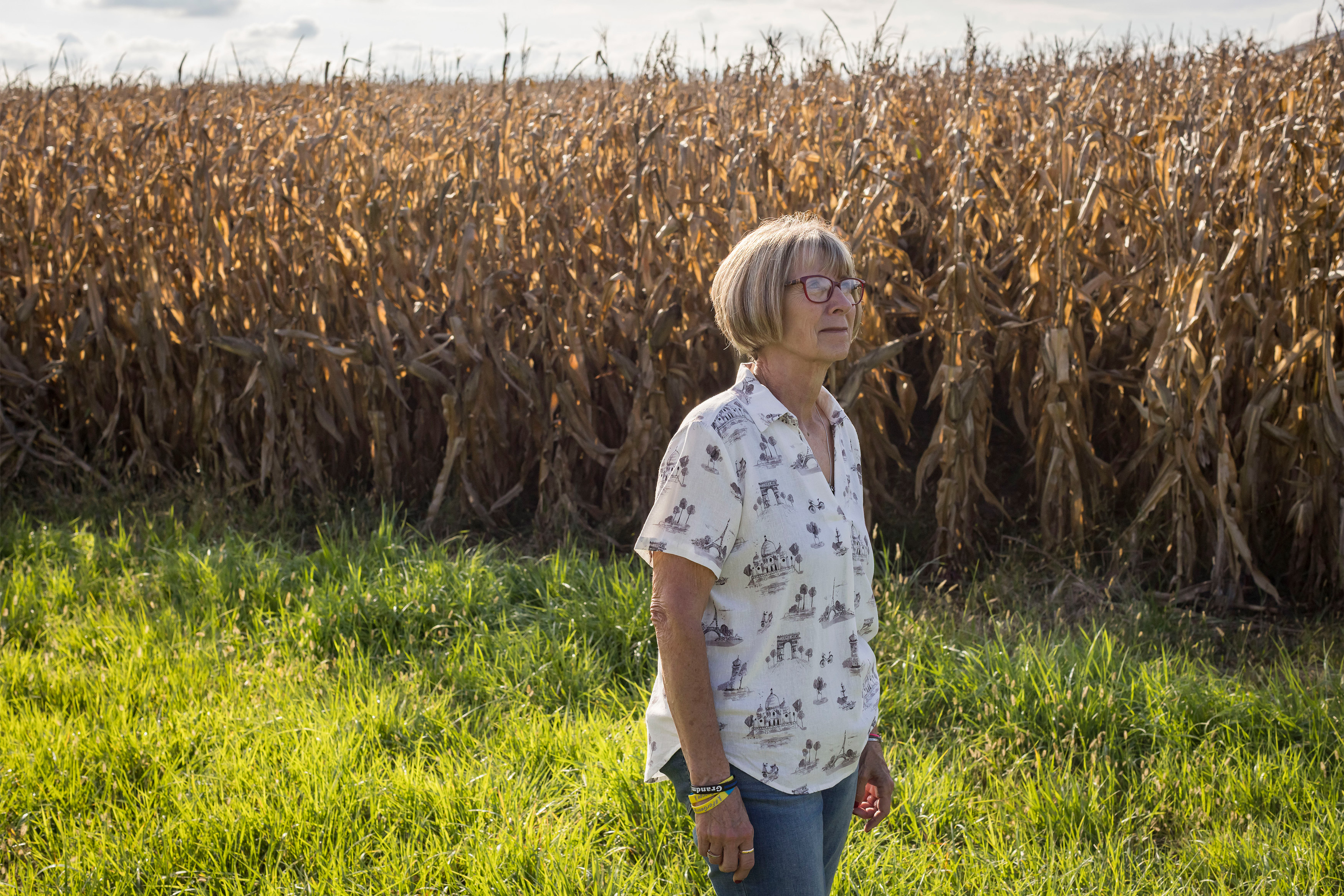
    A photo of Donna Klocke standing in front of a cornfield in Iowa.
    Donna Klocke cares about being healthy but does not consider herself part of the Make America Healthy Again movement. Her husband died from cancer after a life spent farming the family’s 200 acres in Carroll County, Iowa. (Kathyrn Gamble for KFF Health News)

    Survey Reflects Angst Over Healthcare

    About half of rural voters said their communities don’t have enough doctors or other healthcare providers, and even more said there aren’t enough mental health workers specifically. The share of rural voters who said their community does not have enough hospitals increased to 35% from 21% in a similar question asked in a KFF-Washington Post survey in 2017.

    And as with the general population, healthcare, gas, and grocery costs are top pain points. More than 6 in 10 rural voters said they were worried about healthcare costs.

    The level of worry varied based on coverage, with rural voters enrolled in employer plans or Medicare less likely to be worried. The survey found that 80% of working-age rural voters on Medicaid were very or somewhat worried about healthcare costs. Last year, Republicans passed a tax and spending bill that cut over $900 billion in projected Medicaid spending over a decade and mandated new eligibility requirements.

    Among rural voters who purchase their own insurance, such as the individual coverage plans available on Affordable Care Act marketplaces, 77% said they were worried.

    In the tiny community of Lipan, Texas, west of Dallas, Kim Solis and her husband have a handyman-and-home-remodel business and get their insurance on the marketplace. Since Trump was elected again, their premium payment jumped from zero to $166 a month. Their copays went up, and their deductibles each increased by $2,000.

    Solis, 62, said she worries what will happen if they get a big medical bill.

    “Certainly, we’d be in a world of hurt trying to take money out of savings or getting it out of our 401(k) just to be able to do something about it,” she said.

    Most MAHA Voters Are Also MAGA — But Not All

    Like the general population, rural voters said they trust their own doctors and healthcare providers for health information over government agencies or officials, according to the poll.

    Trust in Kennedy and Trump fell largely along partisan lines. About 10% of rural Democratic voters reported having a “great deal” or “fair amount” of trust in Kennedy, compared with 74% of rural Republican voters. About 5% of rural Democrats and 69% of rural Republicans said they trust Trump a “great deal” or “fair amount” for reliable health information.

    While Make America Great Again and MAHA identities are “linked in a lot of ways,” the rising costs of healthcare and groceries pose a challenge for those committed to the MAHA principles that Kennedy promotes, said Peterson, the Iowa State professor.

    Buying healthy food “becomes, ‘I can’t afford to do that because of Trump’s policies,’” he said.

    In Stamping Ground, Kentucky, Alma Johnson, 65, works as night security at a horse farm. Johnson said gas had gone up but her overall cost of living had decreased since Trump took office.

    Johnson voted for Trump in 2016, 2020, and 2024 and said she “pretty much” likes how Trump is running the country. But she said she is not a MAGA devotee, preferring to “think for myself.”

    MAHA, however, is an easy sell for Johnson because, she said, she doesn’t think people should be able to buy junk food through the Supplemental Nutrition Assistance Program, or SNAP.

    Still, she said she hasn’t seen much impact from the Trump administration’s healthcare policies, including the new food pyramid.

    “It takes a long time to change people, their habits, their thoughts, or the things they do,” Johnson said.

    About the Poll

    The KFF-AP Rural Voters Survey was conducted online and by telephone Aug. 12-24, 2026, among 2,241 registered voters living in rural areas, defined as census tracts that fall within codes 5-10 of the U.S. Department of Agriculture’s 2020 Rural-Urban Commuting Area codes. Voters were reached through a combination of the probability-based SSRS Opinion Panel and a registration-based sample from the L2 voter file. Overall results have a margin of sampling error of plus or minus 3 percentage points, including design effects due to weighting. Error margins are larger for subgroups. In collaboration with the AP, KFF researchers worked to design the survey sample and questionnaire and analyze and report findings.

    This report is from a collaboration between KFF Health News and The Associated Press.

  • Platinum-based chemotherapy in childhood causes mutations that age the liver

    Platinum-based chemotherapy in childhood causes mutations that age the liver

    Platinum-based chemotherapy — in particular cisplatin and carboplatin — are a lifeline for children with certain cancers. These treatments, for instance, transformed the prognosis of hepatoblastoma, a rare cancer of the liver that is the most commonly diagnosed in childhood, from a five-year survival rate of 20% to more than 80% for localized tumors. 

    However, these medications work by damaging the DNA of cancer cells, and they are also known to cause mutations in the DNA of healthy cells, potentially raising the risk of new cancers later in life. The mutations have been documented in adults, but the picture is less clear when it comes to children. A new study published Thursday in Science sought a clearer understanding of the long-term impact of platinum agents in children treated for hepatoblastoma. 

    The study looked at children who had received platinum therapy followed by surgery to remove the tumor. The researchers sampled tissues from the liver — both healthy and cancerous — and the patient’s blood, analyzing them through a sophisticated DNA sequencing technique called NanoSeq. 

    They then compared the sequencing results to those from children who had been treated with different drugs, or had not been treated prior to surgery, as well as to fetal liver tissue. They found that being exposed to platinum agents led to hundreds of mutations in genes (on average 2,200 per liver sample), a burden of mutation usually found in adult livers. In other words, platinum aged the liver cells of treated children, making them look more like adult liver cells.

    Mutation load also increased proportionally to platinum exposure: children who received only cisplatin had a smaller number of mutations than those who received both cisplatin and carboplatin. These mutations could increase the likelihood of liver pathologies, or the emergence of secondary tumors, the authors said. 

    “We found lots of cancer genes but also genes associated with long-term changes in liver metabolism,” said Foad Rouhani, one of the authors of the paper and a professor at King’s College in London. However, he stressed that “by no means does that mean that these cells will definitely become cancerous in time. All we talk about is there was evidence for potential for these cells to eventually cause problems further down the line.” 

    Liver cells showed many more mutations than blood cells, even though chemotherapy is a systemic treatment. “The platinum is doing something differently to liver cells than other cells. Either it’s been metabolized differently or the liver cells are repairing differently, we don’t really know yet,” said Rouhani. This could mean that the liver was more susceptible to the effects of platinum, or it could be the other way around: The extent of the mutations may explain why that liver got sick in the first place. 

    In a perspective article, Sanjeev Vasudevan and Donald Williams Parsons, both professors at Baylor College of Medicine in Houston, wrote that the findings “provide strong evidence for conducting survivorship studies of children that have undergone treatment for liver cancer beyond their third decade of life.”

    For the study authors, its primary contribution lies in establishing that the damage occurs, so clinicians can monitor these patients more closely during their lifetimes, said Rouhani, and identify issues at an earlier stage. 

    But there could be a prospective impact on treatment. “If we understand the mechanism, can we then eventually be able to design next-generation chemotherapies which are highly effective at treating the cancer but actually leave the background tissue largely untouched?” said Rouhani.

  • STAT+: After a rough stretch, mRNA gets a boost — at least for now

    STAT+: After a rough stretch, mRNA gets a boost — at least for now

    Angus reports on the basic research, clinical science, and drug development that may transform survival and quality of life for patients, as well as developments affecting the cancer community. You can reach Angus on Signal at angus.08.

    The mRNA technology that built Moderna and BioNTech’s Covid-19 vaccines and is now being used to build cancer vaccines has been through political whiplash. But now, with clinical success from Moderna and Merck on using a personalized mRNA vaccine for melanoma, experts are hoping for a more stable future for the field. 

    “I don’t know how this will be received among parts of our society that have become suspicious of the word ‘vaccine.’ There’s a possibility that people will say, ‘Oh, if we can vaccinate against cancer, that’s good,’” said Ryan Sullivan, a Mass General Brigham melanoma physician and immunologist who has worked with Moderna. “Maybe that will thaw some of the stigma around vaccines. I don’t think it’ll fix all of it, but maybe just a little bit helps us think of ‘vaccine’ not as a dirty word, ‘mRNA’ as not a four-letter word.”

    mRNA technology allows scientists to instruct cells to construct practically any protein or protein pieces by simply rewriting the mRNA’s genetic code. That is one of the technology’s greatest strengths, and what made it possible for scientists to develop Covid vaccines in under a year. It was also possible in part thanks to Operation Warp Speed, which helped fund and push the vaccine’s development. President Trump still calls it a “monumental national achievement” of his first term. 

    STAT+ Exclusive Story

    Already have an account? Log in

    STAT+

    STAT+

    This article is exclusive to STAT+ subscribers

    Unlock this article — plus in-depth analysis, newsletters, premium events, and news alerts.

    Already have an account? Log in

    View All Plans

    To read the rest of this story subscribe to STAT+.

    Subscribe