Category: Breaking News

  • STAT+: FTC demands Martin Shkreli divest his pharma stocks

    STAT+: FTC demands Martin Shkreli divest his pharma stocks

    Federal agency and seven states accuse ‘pharma bro’ of ‘flagrantly’ violating a court order

    Martin ShkreliDrew Angerer/Getty Images

    By Jason Mast

    Oct. 13, 2026

    General Assignment Reporter

    Jason is a general assignment reporter, with particular focus on genetic medicine and rare disease. Confidential tips can be sent on Signal at JasonMast.77.

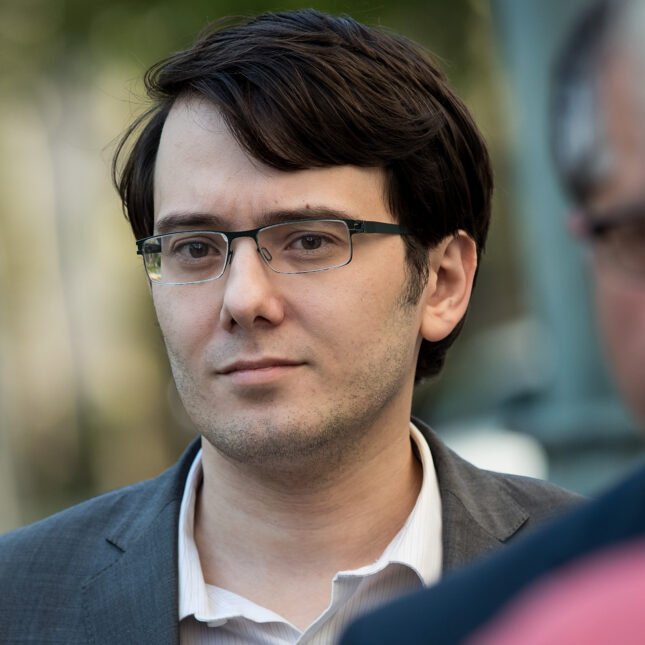
    Martin Shkreli is back. The Federal Trade Commission isn’t happy. 

    The FTC and seven states on Tuesday asked a federal court to hold Shkreli in contempt for “flagrantly and repeatedly” violating a court order banning him from working in the pharmaceutical industry. 

    Shkreli, who became known nationwide as “pharma bro” in the 2010s for imperiously defending his decision to raise the price of an anti-parasitic drug called daraprim by 5,000%, was sentenced to seven years in prison for defrauding investors in 2018. Before he was released in 2022, a court banned him from ever working in the drug industry again, saying he illegally tried to prevent generic competition to daraprim.

    STAT+ Exclusive Story

    Already have an account? Log in

    STAT+

    STAT+

    This article is exclusive to STAT+ subscribers

    Unlock this article — plus daily coverage and analysis of the pharma industry — by subscribing to STAT+.

    Already have an account? Log in

    View All Plans

    To read the rest of this story subscribe to STAT+.

    Subscribe

    1. General Assignment Reporter

      Jason is a general assignment reporter, with particular focus on genetic medicine and rare disease. Confidential tips can be sent on Signal at JasonMast.77.

  • 2026 Nobel Prize in chemistry awarded for ‘mirror image’ molecule research, with impact on pharmacology

    2026 Nobel Prize in chemistry awarded for ‘mirror image’ molecule research, with impact on pharmacology

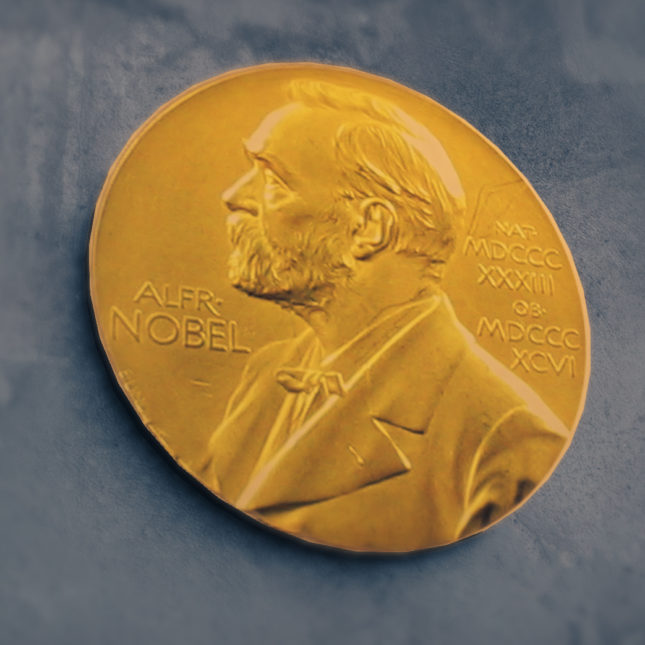
    Henri B. Kagan and Kenso Soai were awarded the 2026 Nobel Prize in chemistry on Wednesday for discovering how to manipulate “mirror image” molecules, paving the way for manufacturing more precise and safer drugs. 

    Kagan, 95, of the Université Paris-Sud in France, and Soai, 76, of Tokyo University of Science in Japan, solved a chemical mystery: Some molecules exist in the world that are mirror images of one another. This is a phenomenon known as chirality, from the Greek word for hand (as hands are mirror images of one another). Amino acids, the building blocks of proteins, are among chiral molecules, and a living organism can only contain one of the versions. The other mirror molecule is found rarely elsewhere in nature. More than half of clinically employed drugs are chiral, so understanding how this imbalance of two mirrored molecules occurs had crucial relevance for pharmacology.

    As the Nobel Committee puts it, imagine needing to make copies of a set of keys, but when you try to make them, you get both the key that correctly fits the lock, and a mirror image of it. It’s very hard to distinguish which is which, so you risk trying the wrong key into the lock. 

    The stakes are much higher if that key is a drug: when chemists develop new drugs, they often end up with some of their chiral versions, too. Sometimes, the mirror molecule does something completely different from what it was originally intended to — take novrad, a cough medicine, and darvon, a painkiller, which are chiral molecules (hence their mirror names, too). Other times the mirror molecule can cause serious side effects. 

    Still, drugs are typically sold as so-called “racemates” containing an equal mixture of both molecules, and prior to Kagan and Soai ,it was pretty much the only option, as chemists had not found a way to produce a molecule without its chiral version in equal parts. 

    That changed with the scientists’ “discovery of non-linear effects and autocatalysis in asymmetric organic synthesis,” as the Nobel Committee described it. In 1986, Kagan found a way to manipulate chemical reactions so that they produced more of one type of mirror images. Seventeen years later, Soai was finally able to develop an experiment that created only one of the two variants, creating a chiral molecule out of a non-chiral combination of molecules for the first time “since the dawn of life.” 

    “This is probably the coolest experiment in organic chemistry,” said Peter Somfai, a member of the Nobel Committee for Chemistry, referencing the Soai reaction.

    From a pharmaceutical point of view, this opened the door to the creation of chiral drugs containing only the necessary version of the molecule, achieving greater precision and lower side effects. 

    “I’m very excited to receive this very nice news about the Nobel Prize,” said Soai, calling into the award ceremony at the Karolinska Institutet in Stockholm, Sweden, from his native Hiroshima, Japan. “Of course this is one of the most exciting days of my life. I am very glad to share the award with professor Kagan.” 

    There have been 202 award winners since the first chemistry prize was awarded in 1901, of which 8 have been women. However, only 200 individuals won the award, as both Frederick Sanger and Barry Sharpless have been awarded twice. The youngest recipient was 35, the oldest 97. 

    The award has been given 118 times: 63 times to a single individual, and has been shared among two winners 26 times, and among three (the maximum allowed by the Nobel statute) 29 times. 

    The winners will receive 12 million Swedish Kronor (SEK), or roughly $1.2 million.  

    The medicine and physics prizes were awarded earlier this week.

  • 2026 Nobel Prize in Medicine awarded for brain research tool called optogenetics

    2026 Nobel Prize in Medicine awarded for brain research tool called optogenetics

    Karl Deisseroth, Peter Hegemann, and Georg Nagel are the joint recipients of the 2026 Nobel Prize in Physiology or Medicine “for their discoveries concerning light-gated ion channels and optogenetics,” the Karolinska Institutet in Stockholm, Sweden announced on Monday. 

    Deisseroth, 55, a professor at the Howard Hughes Medical Institute and Stanford University; Hegemann, 72, a professor at Humboldt University in Berlin; and Nagel, 73, a professor at the University of Würzburg, Germany, developed a method that uses light, combined with genetic modifications of neurons, to switch on or off individual cells in a living brain. This makes it possible to show how nerve cells shape memories, feelings and behavior in the brain, and is being studied as a treatment for disease. 

    The work started in the early 1990s at the Max Planck Institute, when Hegemann wondered how a single-cell green alga called Chlamydomonas could swim toward light. Teaming up with Nagel, they discovered the answer: a protein called channelrhodopsin, a light-sensitive ion channel in the cell membrane that rapidly opened when exposed to light. They found that this protein worked in any cell they injected it in.

    Deisseroth then introduced the gene for the protein into nerve cells from rats, making it possible to trigger a nerve signal in the living brain with blue light and enabling scientists to identify what cells are responsible for what functions, and which are connected to one another. 

    “Optogenetics provides opportunities for mapping the brain in a way that we could once only dream of,” said Per Svenningsson, chair of the Nobel Committee for Physiology or Medicine. 

    Deisseroth spoke with STAT shortly after the announcement. “When you think about light in science or light in medicine, you think of it as an observational tool. It’s a way to collect information. But with optogenetics, it’s the complete opposite of that,” he said. “We’re not using light to collect information, we’re using light to cause things to happen … it’s using light to turn cells on or off with that millisecond precision and the cellular resolution that is essential to brain function.”

    The committee was able to reach all three winners. “It was after midnight, and I was just drifting off to sleep. It was a very unexpected, but of course very delightful call,” said Deisseroth, who was the first of the three recipients to be notified of the award. He said he hasn’t yet had a chance to speak with the others, though he “really look forward to seeing my co-laureates and talking with them.”

    When informed of the shared award, “all three said the same thing, that they thought it was absolutely wonderful to receive the prize with the other two; they called them ‘my friends,’” said Thomas Perlmann, secretary for the Nobel Committee for Physiology or Medicine. 

    “These are two people who have been frequent collaborators of mine,” Deisseroth said. “We’ve written multiple papers together, and sort of shared this journey of discovery over many years. We met at conferences, met each other’s families, shared beers at meetings and talked — as scientists do — about the things that interest them, the things that are surprising, big picture details and everything in between. I couldn’t be happier than to share this with these two friends.”

    As often happens in science, others contributed to the creation of optogenetics, though were not named by the committee.The Nobel rules limit the award to no more than three collaborators. Deisseroth nodded to the community of scientists who worked with him and his co-laureates to make their advances possible. “We have so many collaborators, colleagues, and students and postdoctoral fellows in the lab over the years,” said Deisseroth. “It’s been a very broad community, and so many things had to be solved to make everything work and to make the discoveries happen.”

    On social media, many commentators noted Ed Boyden, who was the first author on Deisseroth’s landmark 2005 paper and a Ph.D. student in his lab, should not have been excluded. Boyden, now at MIT, didn’t respond to requests for comment. The Nobel committee mentioned several other researchers in its background information, including Austrian neurophysiologist Gero Miesenböck, who achieved the first genetic sensitization to light of nonphotoreceptive neurons in 2002, and Zhuo-Hua Pan a vision scientist at Wayne State University in Detroit, who in 2004 successfully tried channelrhodopsin in ganglion cells, which became responsive to the light. 

    His work was recognized through a $300,000 grant from the National Institutes of Health, with the comment that it was a “quite an unprecedented, highly innovative proposal, bordering on the unknown.”  But a paper showing the outcome of his research, initially submitted by the end of  2004, didn’t find a publication until 2006, when Deisseroth and Boyden’s paper had already made waves.  

    The committee chair declined to comment on the reasons behind selecting the winners. 

    Jeremy Berg, former editor-in-chief of the journal Science and a former NIH institute director, told STAT, “I have followed Karl Deisseroth’s career since he received an NIH Director’s Pioneer Award as an assistant professor in 2005. He proposed a vision for optogenetics that was quite compelling and he has developed his ideas remarkably ever since. His work displays the power of engineering approaches with a deep knowledge of human physiology.”

    Berg added, “I am not at all surprised that his work has ended up with a Nobel Prize. That seemed plausible even during his Pioneer interview in 2005.” 

    Don Hilgemann, a biophysicist at the UT Southwestern, mentored Nagel in 1991 and 1992. “Georg showed real pioneer spirit in applying the methods I had developed. He was an extremely adventurous experimenter who could quickly master difficult, technically challenging methods,” he said in a note to STAT.

    There have been 235 award winners since the first medicine prize was awarded in 1901, of which 14 have been women. The youngest recipient was 31, the oldest 87. 

    The award has been given 117 times: 40 times to a single individual, and has been shared among two winners 36 times, and among three (the maximum allowed by the Nobel statute) 41 times.

    The winners will receive 12 million Swedish Kronor (SEK), or roughly $1.2 million.  

    This story has been updated with comments from Karl Deisseroth.
  • STAT+: HHS announces new efforts to speed up, expand clinical trials with AI

    STAT+: HHS announces new efforts to speed up, expand clinical trials with AI

    WASHINGTON — The Department of Health and Human Services announced a set of new initiatives aimed at speeding up clinical trials by incorporating more artificial intelligence and computational models and moving away from sharply delineated trial phases. 

    The centerpiece five-year program, dubbed SURPASS — “Simulation-augmented, Real-time Platform Adaptive Seamless Trials” — will kick off later this fall by accepting “ground-breaking ideas from cross-disciplinary teams in statistics, AI, and clinical trial design, operations, and regulation,” reads a website about the program. 

    HHS is launching the program through the Advanced Research Projects Agency for Health. The initial announcement did not note how much funding was designated for the new initiatives, nor did it provide details on whether participants would be offered more flexibility or resources.  

    STAT+ Exclusive Story

    Already have an account? Log in

    STAT+

    STAT+

    This article is exclusive to STAT+ subscribers

    Unlock this article — plus daily coverage and analysis of the biotech sector — by subscribing to STAT+.

    Already have an account? Log in

    View All Plans

    To read the rest of this story subscribe to STAT+.

    Subscribe

  • Judge blocks Trump administration plans to limit visa length for grad students, postdocs

    Judge blocks Trump administration plans to limit visa length for grad students, postdocs

    A federal judge on Monday issued a preliminary injunction blocking the Trump administration from upending a long-standing policy that allows foreign students and scholars to stay in the U.S. for the duration of their training, a decision that suggests that plaintiffs opposed to the policy change are likely to ultimately succeed.

    The ruling halts plans by the Department of Homeland Security to place a four-year cap on the kinds of visas used by graduate students and postdoctoral researchers while a judge hears full arguments in a lawsuit over the new policy. Experts warn the outcome of the case could have a dramatic impact on the nation’s biomedical preeminence given that international researchers make up a large share of the U.S. life science workforce. The new policy had been set to take effect on Tuesday. 

    In his ruling, Judge F. Dennis Saylor IV of the U.S. District Court for the District of Massachusetts wrote that “the promulgation of the rule clearly failed to comply with the [Administrative Procedure Act].” Saylor added that the administration’s argument that the new visa policy is needed to safeguard national security was weak and “raises legitimate questions as to whether its real purpose is not to safeguard national security and protect our borders, but to achieve other, undisclosed, goals — such as, for example, asserting greater government control over academic institutions.” 

    While Saylor said that the plaintiffs have a “substantial likelihood of success” in the case, he declined to issue a summary judgment definitively striking down the DHS rule.

    In a Sept. 3 hearing, an attorney for the coalition of academic groups that challenged the visa restrictions, Paul Hughes from the firm McDermott, Will & Schulte, argued the government did not conduct a sufficient analysis of the fallout of the new policy. Without a delay in its implementation or throwing out the change, he said schools would experience “irreparable harm.” 

    Michael Celone, a Department of Justice lawyer, in turn, argued that the government had done its due diligence and that the plaintiffs had not demonstrated tangible harm that would result from the policy. Celone said students who are impacted by the policy could either apply for extensions or easily apply elsewhere, comparing students choosing schools to taking a book out of the library. 

    Saylor seemed skeptical of the government’s reasoning, questioning how the policy would diminish any national security risks posed by international students. “I am struggling to see any real, rational connection between national security issues identified, which is not even half of a dozen incidents over 50 years, and this change,” he said to Celone during the hearing. 

    The judge also took issue with the relatively short time the policy was open for public comments: “Can I say it’s illegal? Probably not. But it is part of the mix here to what extent the government was taking its duty seriously in weighing costs and benefits.”

    Academic groups, including the nonprofit NAFSA: Association of International Educators and the Presidents’ Alliance on Higher Education and Immigration, have joined the suit. DHS; Markwayne Mullin, secretary of the department; U.S. Immigration and Customs Enforcement; and David Venturella, acting director of ICE, are named as defendants.

    The case centers around a long-standing policy known as duration of status, which for more than 40 years has allowed international students and scholars to remain in the U.S. for however long it took them to complete their training. 

    The federal government implemented the policy in 1979 to streamline international students’ admission into the country. But the Trump administration has argued duration of status has led to the creation of “forever students,” whom they allege cheat the system by perpetually enrolling in courses to avoid leaving the U.S.

    In mid-July, DHS announced that, going forward, foreign students and postdocs won’t be allowed to stay in the U.S. for more than four years on nonimmigrant visas unless they apply for and receive an extension. Students and postdocs already in the U.S. wouldn’t need to apply for extensions if their training will end before September 2030.

    But in a suit filed in mid-August, the academic groups alleged that the new rules violate the Administrative Procedure Act, a law that governs how agencies implement new regulations. The plaintiffs alleged that DHS didn’t give interested parties enough time to comment on the new rule, didn’t respond substantively to comments, and hasn’t clearly explained why the new policy is a rational and necessary response to alleged visa fraud.

    The academic coalition warned in the suit that uncertainty around whether foreign researchers will be able to stay in the U.S. for the length of their training could prevent them from coming here in the first place. A NAFSA poll of more than 1,000 current students and postdocs found that nearly half of them would not have come to the U.S. under a fixed period of admission.

    In its response, the Trump administration dismissed the findings of the poll as “uncertain and speculative.” The government also argued that the new rule was necessary to safeguard national security and would have minimal downside, and that if international enrollment does decline, it could be for reasons unrelated to the end of duration of status.

    International researchers make up nearly a quarter of life science Ph.D. graduates and around 60% of postdoctoral researchers. The new policy would mean many of them would need to apply for a visa extension; the average biomedical Ph.D. takes five to six years to complete, and National Science Foundation data indicate that about a fifth of postdocs have worked in that role for more than six years.

    STAT’s coverage of the federal government’s impact on the biomedical workforce is supported by a grant from the Dana Foundation and the Boston Foundation. Our financial supporters are not involved in any decisions about our journalism.

  • STAT+: House votes to temporarily block Trump plan to politicize federal grants

    STAT+: House votes to temporarily block Trump plan to politicize federal grants

    Research policy was included in must-pass government funding bill

    Samuel Corum/Getty Images

    John writes about the politics of health care, and he is the author of the twice-weekly D.C. Diagnosis newsletter. You can reach John on Signal at John_Wilkerson.07.

    Anil Oza is a general assignment reporter at STAT focused on the NIH and health equity. You can reach him on Signal at aniloza.16.

    WASHINGTON — The House voted Tuesday to pass a stopgap government-funding bill that temporarily blocks the White House’s proposal to give political appointees more control over federal research grants.

    The vote was 370-48 in favor. The Senate passed the same bill a month ago, so it now goes to the president for his signature. 

    The reprieve is brief. The bill funds the government until Dec. 11 to get past the midterm elections without a government shutdown, and the ban on the research-funding policy expires at the same time.

    STAT+ Exclusive Story

    Already have an account? Log in

    STAT+

    STAT+

    This article is exclusive to STAT+ subscribers

    Unlock this article — plus in-depth analysis, newsletters, premium events, and news alerts.

    Already have an account? Log in

    View All Plans

    To read the rest of this story subscribe to STAT+.

    Subscribe

    1. John writes about the politics of health care, and he is the author of the twice-weekly D.C. Diagnosis newsletter. You can reach John on Signal at John_Wilkerson.07.

    2. General Assignment Reporter

      Anil Oza is a general assignment reporter at STAT focused on the NIH and health equity. You can reach him on Signal at aniloza.16.