Category: biotechnology

  • STAT+: Merck suffers a setback in Europe over its new Keytruda formulation

    STAT+: Merck suffers a setback in Europe over its new Keytruda formulation

    By Ed Silverman

    Oct. 7, 2026

    Pharmalot Columnist, Senior Writer

    Ed’s stories explore prescription drug pricing, affordability and access, as well issues surrounding patents, litigation, and legislation. He is also the author of the morning Pharmalittle newsletter and the afternoon Pharmalot newsletter.

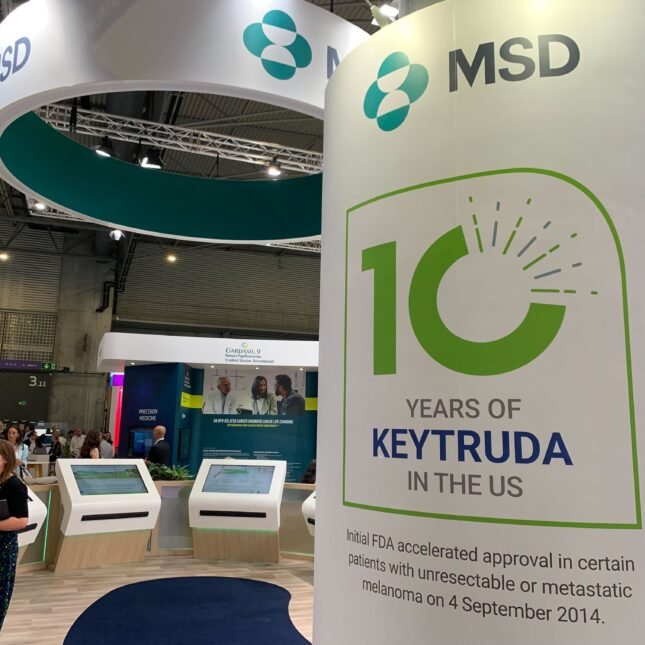
    In a setback for Merck, a Dutch court ruled that the company infringed on a patent pertaining to a subcutaneous formulation of its Keytruda cancer treatment and was ordered to halt manufacturing and marketing of the medication in several European countries, including France, Italy, Sweden, Switzerland, and the Netherlands.

    The ruling came as part of a widening patent infringement dispute with Halozyme Therapeutics over the best-selling cancer treatment. Patients requiring Keytruda will still have access to the existing intravenous version, which is not affected by the patent dispute or court order.

    In a statement, Merck said it “strongly” disagreed with the court’s decision.

    STAT+ Exclusive Story

    Already have an account? Log in

    STAT+

    STAT+

    This article is exclusive to STAT+ subscribers

    Unlock this article — plus in-depth analysis, newsletters, premium events, and news alerts.

    Already have an account? Log in

    View All Plans

    To read the rest of this story subscribe to STAT+.

    Subscribe

  • STAT+: Forbion raises $2.6 billion, its largest fundraise to date

    STAT+: Forbion raises $2.6 billion, its largest fundraise to date

    Promising Duchenne therapies will test FDA flexibility, Doudna-founded Caribou shutting down, and more biotech news

    Small people stand on a giant hundred-dollar bill
    Adobe

    Elaine’s stories explore the boom in new obesity treatments, new drug payment models, the ways companies are affected by FDA changes, and the emerging psychedelics drug sector. She co-writes The Readout newsletter, and co-hosts STAT’s weekly biotech podcast, The Readout Loud. You can reach Elaine on Signal at elaineywchen.70.

    Want to stay on top of the science and politics driving biotech today? Sign up to get our biotech newsletter in your inbox.

    Good morning. Today, STAT released our 2026 Wunderkinds, a group of early-career researchers recognized for doing innovative work in health and medicine. I had the pleasure of speaking with one NIH researcher who has been figuring out how GLP-1 drugs work in the brain. But check out all of the profiles here!

    The need-to-know this morning

    • Cerevance said its experimental pill solengepras reduced Parkinson’s patients’ daily off-time, alongside other symptoms, in a Phase 3 trial. The privately held company, which will now talk to regulators about a potential approval, touts the pill as one of the first potential Parkinson’s drugs that does not act directly on dopamine, sparing patients certain side effects.
    • Henri B. Kagan and Kenso Soai were awarded the 2026 Nobel Prize in chemistry for discovering how to manipulate “mirror image” molecules, paving the way for manufacturing more precise and safer drugs.

    Doudna-founded Caribou is shutting down

    Caribou Biosciences is shutting down after failing to raise enough money to fund a late-stage clinical trial of its off-the-shelf CAR-T therapy for lymphoma.

    STAT+ Exclusive Story

    Already have an account? Log in

    STAT+

    STAT+

    This article is exclusive to STAT+ subscribers

    Unlock this article — plus in-depth analysis, newsletters, premium events, and news alerts.

    Already have an account? Log in

    View All Plans

    To read the rest of this story subscribe to STAT+.

    Subscribe

    1. National Biotech Reporter

      Elaine’s stories explore the boom in new obesity treatments, new drug payment models, the ways companies are affected by FDA changes, and the emerging psychedelics drug sector. She co-writes The Readout newsletter, and co-hosts STAT’s weekly biotech podcast, The Readout Loud. You can reach Elaine on Signal at elaineywchen.70.

  • STAT+: Justice Department targets drugmakers in new directive on combating white-collar fraud

    STAT+: Justice Department targets drugmakers in new directive on combating white-collar fraud

    By Ed Silverman

    Oct. 7, 2026

    Pharmalot Columnist, Senior Writer

    Ed’s stories explore prescription drug pricing, affordability and access, as well issues surrounding patents, litigation, and legislation. He is also the author of the morning Pharmalittle newsletter and the afternoon Pharmalot newsletter.

    In a warning to life sciences companies, the Department of Justice last week issued a new directive for combating fraud that made a point of noting the agency will pursue violations of a federal law that tightly regulates the pharmaceutical industry.

    Typically, the agency has pursued health fraud cases centered on providers, clinics, home health agencies, and hospices. By expressly including the Federal Food, Drug, and Cosmetic Act in the directive, the National Fraud Enforcement Division appears to be placing drug and device makers, among others, more clearly in its crosshairs.

    “This is a subtle but significant expansion of their jurisdiction,” said Kevin Lowell, a member of the Miller & Chevalier law firm, who spent a decade at the DOJ, where he most recently had been a deputy chief in the National Fraud Enforcement Division’s health care fraud section.

    STAT+ Exclusive Story

    Already have an account? Log in

    STAT+

    STAT+

    This article is exclusive to STAT+ subscribers

    Unlock this article — plus in-depth analysis, newsletters, premium events, and news alerts.

    Already have an account? Log in

    View All Plans

    To read the rest of this story subscribe to STAT+.

    Subscribe

  • STAT+: In Duchenne muscular dystrophy, a promising therapy is available to a fortunate few

    STAT+: In Duchenne muscular dystrophy, a promising therapy is available to a fortunate few

    By Jason Mast

    Oct. 7, 2026

    General Assignment Reporter

    There’s a boy like you in Minnesota, Yannick’s mom told him a few years ago. He has the same disease. He has the same kind of smile. Maybe you could talk?

    They clicked. After school and on weekends, the two boys boot up their computers, Yannick in San Diego and Brecken in a suburb of St. Paul, Minn. They play Roblox or build virtual worlds on Minecraft: a zoo, for example, like the real-world one 13-year-old Yannick wants to build when he grows up, full of lions, tigers, and giraffes. 

    They seldom talk about Duchenne muscular dystrophy, the rare fatal muscle-wasting disease they live with. But lately it’s all their moms can talk about. In stolen phone calls on the way to coffee or back from school, they compare the two boys: how quickly Yannick is declining and how steadily Brecken is — shockingly — improving.

    Last winter, Brecken, 12, started receiving an experimental drug developed by Avidity Biosciences. The medicine makes the cell’s protein-building machinery “skip” part of the gene, called an exon, behind Duchenne, allowing patients to make a shortened but functional version of a protein essential for muscle survival. In trials, it appeared to virtually arrest the disease in some patients. 

    The approach, however, is out of most patients’ reach. In principle, “skipping” strategies could benefit about 70% of the 10,000 to 15,000 Duchenne boys and men in the U.S. (The disease almost exclusively affects males.) But the medicines have to be targeted to a patient’s specific mutation. Only about 7% of patients — or roughly 900 Americans — are eligible for Avidity’s drug, called Del-zota, which is now under Food and Drug Administration review.

    STAT+ Exclusive Story

    Already have an account? Log in

    STAT+

    STAT+

    This article is exclusive to STAT+ subscribers

    Unlock this article — plus daily coverage and analysis of the biotech sector — by subscribing to STAT+.

    Already have an account? Log in

    View All Plans

    To read the rest of this story subscribe to STAT+.

    Subscribe

  • STAT+: AstraZeneca opens new Boston site 

    STAT+: AstraZeneca opens new Boston site 

    Utah pilots AI service to prescribe acne treatment, drug price disclosures are coming, and more biotech news

    HECTOR RETAMAL/AFP via Getty Images

    Elaine’s stories explore the boom in new obesity treatments, new drug payment models, the ways companies are affected by FDA changes, and the emerging psychedelics drug sector. She co-writes The Readout newsletter, and co-hosts STAT’s weekly biotech podcast, The Readout Loud. You can reach Elaine on Signal at elaineywchen.70.

    Allison covers what hot startups are getting up to, and who’s financing them. She is also co-host of the weekly biotech podcast, “The Readout Loud.” You can reach Allison on Signal at AllisonDeAngelis.01.

    Want to stay on top of the science and politics driving biotech today? Sign up to get our biotech newsletter in your inbox.

    Good morning. From DC to Boston to Utah, we’ve got news from all over today.

    The need-to-know this morning

    • BridgeBio said the FDA granted priority review to its oral treatment for children with achondroplasia, a common form of dwarfism. An approval decision on the drug, called infigratinib, is expected by Feb. 4, 2027. 
    • Japan’s Shionogi has acquired for $2 billion the U.S.-based biotech IntraBio, the maker of an approved drug that treats the neurological symptoms of two rare diseases. 
    • Arrivent Biopharma said its experimental treatment for exon 20-mutated lung cancer failed to delay tumor progression in a Phase 3 study.

    Trump admin says drug price disclosures are coming

    Trump administration officials said yesterday they will start developing a system for health insurers to disclose prescription drug prices, and a “hopeful” final plan will come out by next May.

    STAT+ Exclusive Story

    Already have an account? Log in

    STAT+

    STAT+

    This article is exclusive to STAT+ subscribers

    Unlock this article — plus in-depth analysis, newsletters, premium events, and news alerts.

    Already have an account? Log in

    View All Plans

    To read the rest of this story subscribe to STAT+.

    Subscribe

    1. National Biotech Reporter

      Elaine’s stories explore the boom in new obesity treatments, new drug payment models, the ways companies are affected by FDA changes, and the emerging psychedelics drug sector. She co-writes The Readout newsletter, and co-hosts STAT’s weekly biotech podcast, The Readout Loud. You can reach Elaine on Signal at elaineywchen.70.

    2. Biotech Startups and Venture Capital Reporter

      Allison covers what hot startups are getting up to, and who’s financing them. She is also co-host of the weekly biotech podcast, “The Readout Loud.” You can reach Allison on Signal at AllisonDeAngelis.01.

  • STAT+: Are stem cell treatments about to have their day?

    STAT+: Are stem cell treatments about to have their day?

    You’re reading STAT’s D.C. Diagnosis newsletter

    Adobe

    John writes about the politics of health care, and he is the author of the twice-weekly D.C. Diagnosis newsletter. You can reach John on Signal at John_Wilkerson.07.

    You’re reading the web edition of D.C. Diagnosis, STAT’s twice-weekly newsletter about the politics and policy of health and medicine. Sign up here to receive it in your inbox on Tuesdays and Thursdays.

    Celebrity doctor Mike Varshavski has been contacted by The Bachelor for its 30th season. Send news tips and hot physicians to [email protected] or John_Wilkerson.07 on Signal.

    A lame lame-duck

    On Friday, President Trump said he will give $90 to more than 20 million seniors to help pay for Medicare premiums.

    STAT+ Exclusive Story

    Already have an account? Log in

    STAT+

    STAT+

    This article is exclusive to STAT+ subscribers

    Unlock this article — plus in-depth analysis, newsletters, premium events, and news alerts.

    Already have an account? Log in

    View All Plans

    To read the rest of this story subscribe to STAT+.

    Subscribe

    1. John writes about the politics of health care, and he is the author of the twice-weekly D.C. Diagnosis newsletter. You can reach John on Signal at John_Wilkerson.07.

  • STAT+: HHS announces new efforts to speed up, expand clinical trials with AI

    STAT+: HHS announces new efforts to speed up, expand clinical trials with AI

    WASHINGTON — The Department of Health and Human Services announced a set of new initiatives aimed at speeding up clinical trials by incorporating more artificial intelligence and computational models and moving away from sharply delineated trial phases. 

    The centerpiece five-year program, dubbed SURPASS — “Simulation-augmented, Real-time Platform Adaptive Seamless Trials” — will kick off later this fall by accepting “ground-breaking ideas from cross-disciplinary teams in statistics, AI, and clinical trial design, operations, and regulation,” reads a website about the program. 

    HHS is launching the program through the Advanced Research Projects Agency for Health. The initial announcement did not note how much funding was designated for the new initiatives, nor did it provide details on whether participants would be offered more flexibility or resources.  

    STAT+ Exclusive Story

    Already have an account? Log in

    STAT+

    STAT+

    This article is exclusive to STAT+ subscribers

    Unlock this article — plus daily coverage and analysis of the biotech sector — by subscribing to STAT+.

    Already have an account? Log in

    View All Plans

    To read the rest of this story subscribe to STAT+.

    Subscribe

  • STAT+: Will House delay Trump plan to politicize NIH grants? 

    STAT+: Will House delay Trump plan to politicize NIH grants? 

    You’re reading the web edition of D.C. Diagnosis, STAT’s twice-weekly newsletter about the politics and policy of health and medicine. Sign up here to receive it in your inbox on Tuesdays and Thursdays.

    A New York bar sells a spritz in a Hermès-esque glass purse, while in Baltimore you can get a spritz made with Miller High Life beer. Way to keep it real, guys. Send news tips and your favorite cocktail of the Deadliest Drug to [email protected] or John_Wilkerson.07 on Signal.

    The need-to-know this week

    • The House returns for one week and will vote on the Senate’s stopgap funding bill that temporarily blocks the White House’s proposal to give political appointees control over federal research grants. The House will use a fast-track process that requires two-thirds support for passage, signaling that House GOP leadership believes the Senate bill will pass. The House vote is expected Tuesday evening, according to Punchbowl News. Were it to fail, lawmakers would have to wait until the Senate returns on Sept. 14 to work out differences between the two chambers’ bills.
    • Congressional Medicare advisers kick off their annual public meeting cycle on Thursday. This cycle, the Medicare Payment Advisory Commission will analyze the Part D benefit redesign. The redesign reduced cost sharing for beneficiaries and gave insurers more reason to manage costs, but it has probably also contributed to more spending. MedPAC also will study clinician quality measurements, and commissioners will continue their work on Medicare Advantage.

    Nine, or 10, more MFN deals

    President Trump announced nine more deals to set drug prices in Medicaid on par with prices available in peer countries, Daniel Payne and Elaine Chen report. But it seems they missed one.

    STAT+ Exclusive Story

    Already have an account? Log in

    STAT+

    STAT+

    This article is exclusive to STAT+ subscribers

    Unlock this article — plus in-depth analysis, newsletters, premium events, and news alerts.

    Already have an account? Log in

    View All Plans

    To read the rest of this story subscribe to STAT+.

    Subscribe

  • STAT+: After a rough stretch, mRNA gets a boost — at least for now

    STAT+: After a rough stretch, mRNA gets a boost — at least for now

    Angus reports on the basic research, clinical science, and drug development that may transform survival and quality of life for patients, as well as developments affecting the cancer community. You can reach Angus on Signal at angus.08.

    The mRNA technology that built Moderna and BioNTech’s Covid-19 vaccines and is now being used to build cancer vaccines has been through political whiplash. But now, with clinical success from Moderna and Merck on using a personalized mRNA vaccine for melanoma, experts are hoping for a more stable future for the field. 

    “I don’t know how this will be received among parts of our society that have become suspicious of the word ‘vaccine.’ There’s a possibility that people will say, ‘Oh, if we can vaccinate against cancer, that’s good,’” said Ryan Sullivan, a Mass General Brigham melanoma physician and immunologist who has worked with Moderna. “Maybe that will thaw some of the stigma around vaccines. I don’t think it’ll fix all of it, but maybe just a little bit helps us think of ‘vaccine’ not as a dirty word, ‘mRNA’ as not a four-letter word.”

    mRNA technology allows scientists to instruct cells to construct practically any protein or protein pieces by simply rewriting the mRNA’s genetic code. That is one of the technology’s greatest strengths, and what made it possible for scientists to develop Covid vaccines in under a year. It was also possible in part thanks to Operation Warp Speed, which helped fund and push the vaccine’s development. President Trump still calls it a “monumental national achievement” of his first term. 

    STAT+ Exclusive Story

    Already have an account? Log in

    STAT+

    STAT+

    This article is exclusive to STAT+ subscribers

    Unlock this article — plus in-depth analysis, newsletters, premium events, and news alerts.

    Already have an account? Log in

    View All Plans

    To read the rest of this story subscribe to STAT+.

    Subscribe