Category: Audio

  • California’s Billionaire Tax Promises Healthcare Relief. The Fine Print Is Murkier.

    California’s Billionaire Tax Promises Healthcare Relief. The Fine Print Is Murkier.

    The pitch behind California’s billionaire tax proposal is simple: Tax the richest residents in the nation’s wealthiest state to offset steep federal cuts to healthcare, food assistance, and education.

    But if approved by voters in November, it’s unclear how much money the ballot initiative would raise, how quickly the funding would become available, and how lawmakers would spend it.

    The measure would steer proceeds from a first-in-the-nation wealth tax to a state healthcare fund, giving the governor and lawmakers the power to decide how to spend what California’s nonpartisan legislative analyst estimated would be “tens of billions of dollars.” Backers say it could raise up to $100 billion over five years to keep hospitals and emergency rooms open and preserve insurance coverage for millions of Californians. Yet, community health centers, doctors, and other healthcare entities that might benefit from such a cash infusion argue that the union spearheading the measure has readied a blank check for politicians.

    “I’m not sure that you can say, with full security, that this will stop clinics from being closed or healthcare workers from being laid off, or people from losing their healthcare,” said Chris Hoene, executive director of the California Budget & Policy Center, a left-leaning nonprofit.

    Taxing the Ultrarich

    Put on the ballot by one of California’s largest healthcare unions, Proposition 40 would impose a one-time 5% tax on roughly 200 Californians with a net worth of at least $1 billion, including most of their stock holdings, yachts, and artwork. It would apply to those who were residents of California on Jan. 1, 2026. Real estate, pensions, and retirement accounts would generally be exempt.

    The revenue raised is intended to offset the roughly $30 billion a year in anticipated losses to the Golden State from congressional Republicans’ One Big Beautiful Bill Act. Over the next four years, state and federal funding cuts are projected to nearly double California’s uninsured population, which stands at about 2.4 million people, according to the University of California-Berkeley Labor Center.

    Securing additional tax revenue is essential because state lawmakers have yet to come up with a way to pay for healthcare services that will be affected by the cuts, said Dave Regan, president of Service Employees International Union-United Healthcare Workers West, which represents hospital workers and got the wealth tax on the ballot. It would earmark 90% of the tax revenue for healthcare, while the remaining 10% would be split between food assistance and education at lawmakers’ discretion. Regan said such broad categories would give politicians flexibility to be more responsive to the looming cuts.

    “Figuring out or predicting exactly what the fallout will be, of where reductions and cuts get made, in a complicated healthcare system, it’s just too difficult to predict,” Regan said.

    Among the choices the next governor and lawmakers will face are whether to provide healthcare to people cut off by the new federal Medicaid work requirements, reverse state rollbacks limiting coverage for immigrants with legal status, or raise the low physician reimbursement rates that make some providers reluctant to accept patients enrolled in Medi-Cal, the state’s version of Medicaid.

    Lawmakers could also shore up subsidies on Covered California, the state’s health insurance marketplace, whose enrollees have seen their premiums skyrocket after losing millions in federal assistance after Congress last year let enhanced subsides expire.

    Most of the money must be spent on health, but healthcare experts said the measure’s ambiguous language could allow lawmakers to use the new billionaire health fund to replace existing state dollars, contrary to the text of the proposition.

    “A lot of times these propositions are written in a way to get attention and get support,” said Glenn Melnick, a healthcare economist at the University of Southern California. “But in fact, they can be used for other things later.”

    Instead, the healthcare industry is pushing for a long-term funding plan. René Bravo, a pediatrician in San Luis Obispo County and the president of the California Medical Association, worries that a one-time infusion of tax dollars “is going to run out.”

    “We need to work on a more sustainable, durable funding mechanism for the Medi-Cal system,” he said.

    At the same time, doctors are asking him what will happen when the biggest Medi-Cal eligibility cuts begin to take effect next year. Even if voters approve the ballot measure, the money wouldn’t be available for at least a few months while the state collects the tax. And billionaires could spread their payments over five years.

    Californians Divided

    Pasadena resident Lynne Wines, a 72-year-old retired banker, knows the state needs the money. But she worries that wealthy investors will see the measure as a precedent and flee the state. Even though the ballot measure is clear that it’s a one-time tax, Wines said it’s a slippery slope.

    “Taxes have a way of being needed over and over, and politicians have a way of finding those needs,” Wines said. “So, I don’t really feel secure that this is just a one-time thing.”

    She noted that Google co-founder and billionaire Sergey Brin bought a home in Nevada and moved some of his businesses to the Silver State late last year. He is backing ad campaigns opposing the measure. Brin has given more than $100 million to a nonprofit promoting two competing measures, Propositions 41 and 42, designed to blunt or block it, according to contributions filed with the secretary of state’s office. One would count some new state taxes toward California’s overall spending limit and require the state auditor to review new state tax proposals before voters weigh in. The other would prohibit new state taxes on personal property, intellectual property, retirement accounts, and other assets.

    GOP gubernatorial candidate Steve Hilton, who has been endorsed by President Donald Trump, warned on CNN in June that just the threat of the tax “has sent trillions of dollars, by some estimates, of wealth leaving the state.” A March study by the conservative Hoover Institution at Stanford University projected that the billionaire tax would cost California $25 billion, citing, in part, the lost revenue from billionaires who have already left the state.

    California voters appear torn over departing billionaires. Two independent September polls suggested voter support for Proposition 40 varied from a low of 45% to a high of 52%.

    Pasadena resident Steve Erler, 74, works full-time as a building manager because he can’t afford to retire. He worries that federal cuts will hurt children and seniors.
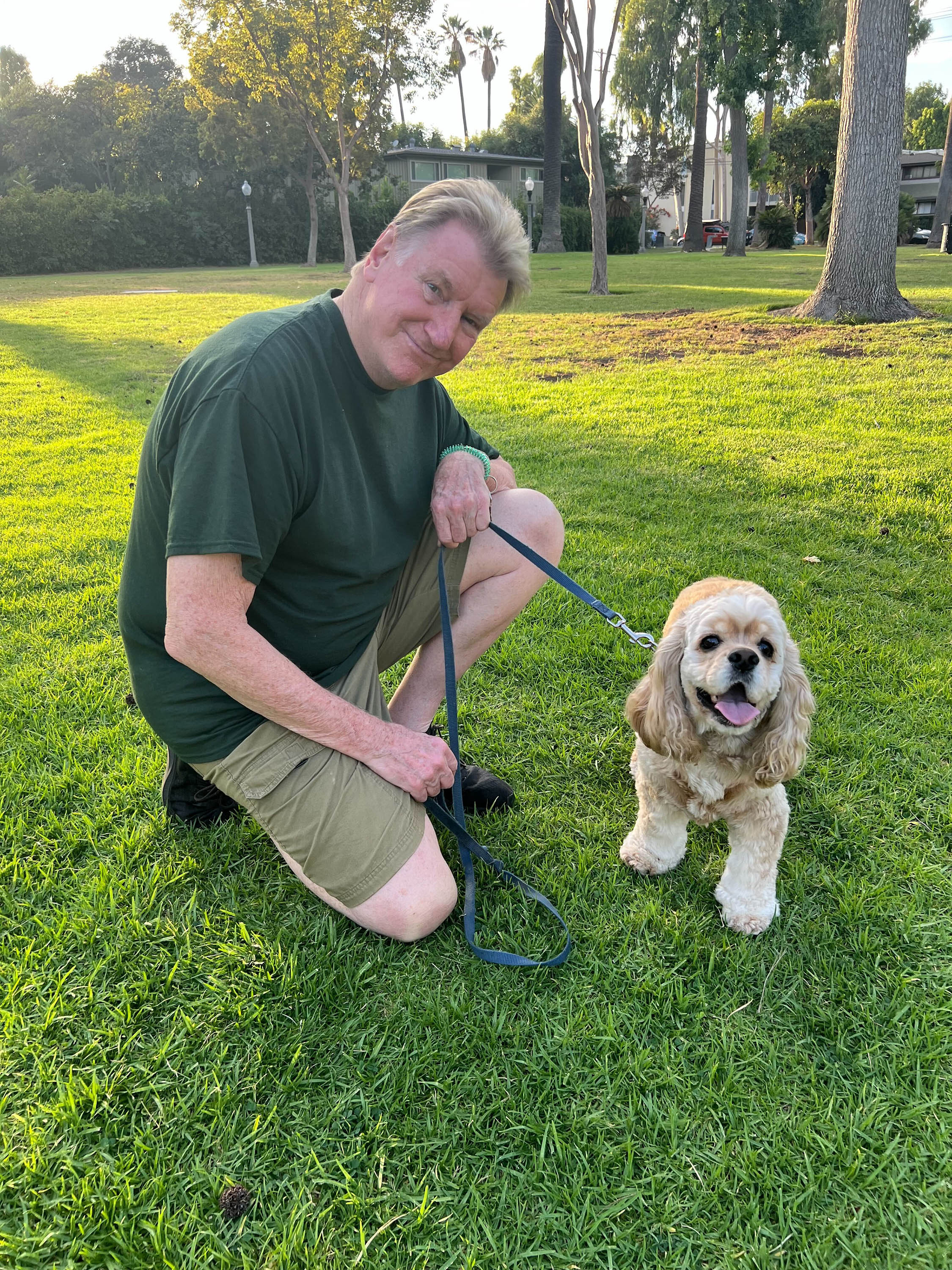
    A middle-aged man kneels on lush green grass with his medium-sized dog on a leash beside him.
    Steve Erler of Pasadena, California, works full-time as a building manager because he can’t afford to retire. He worries that federal cuts will hurt children and seniors, and he supports a California ballot measure that would tax billionaires. (Jackie Fortiér/KFF Health News)

    “These people who are making all this money, they can never spend it all. What are they going to do, buy another house in the Hamptons, buy another jet? They don’t need that,” Erler said while out walking his dog in August. “They need to be able to say when they go to bed at night, ‘I helped a child with healthcare. I helped a senior get fed.’ That’s what’s important,” he said.

    Democrats are divided — one of many ideological fights playing out nationwide this election cycle as progressives take on more centrist candidates. U.S. Sen. Bernie Sanders (I-Vt.) and the California Democratic Party have endorsed Proposition 40, while Gov. Gavin Newsom, who is exploring a presidential bid, and Democratic gubernatorial nominee Xavier Becerra oppose it while saying that ultrawealthy or high-earning people should pay more. “It’s time for an economic reset, a true minimum tax on billionaires that, well, ensures the people at the very top pay at least the tax rate their own workers pay,” said Newsom, who supports a federal wealth tax, although legislation for a federal wealth tax in Congress has stalled.

    If voters approve the ballot measure, political analysts said, it could show other states that taxing the wealthy may help close budget gaps and pay for essential services. Already several Democratic states, including Hawai‘i, Maine, Massachusetts, and Rhode Island, have approved millionaire taxes, but those have been limited to income, not overall wealth. Voters in Washington state will decide this fall whether to keep their millionaire tax.

    “I do think this is just the beginning of these proposals nationwide,” said Melnick, the USC healthcare economist.
  • The Sometimes-Awkward Art of Asking for a Second Opinion

    The Sometimes-Awkward Art of Asking for a Second Opinion

    When Carol Daniel, a veteran broadcast journalist who lives near St. Louis, was diagnosed with thyroid cancer in 2022, her husband encouraged her to seek a second opinion. She was worried that consulting another doctor might seem like a betrayal.

    Daniel said she wondered: “Am I cheating on him? Am I going behind his back? Am I acting like I don’t trust him by seeking a second opinion?”

    Many patients find themselves in this position, but family medicine physician Jen Caudle said patients shouldn’t feel awkward about asking for a second opinion. In fact, in her practice in New Jersey, she encourages people to have open conversations with their care team.

    “We shouldn’t be offended,” Caudle said. “We should support you.”

    Patients can also think of their primary care provider as the quarterback of their care team, Caudle said, and ask that doctor for help navigating opinions or diagnoses from specialists.

    Cara Anthony and Blake Farmer, hosts of the HealthQ series, spoke with Caudle about the sometimes-awkward art of asking for a second opinion.

    The QTip:

    Your primary care provider can help you navigate first and second opinions from specialists.


    Katherine Ruppelt and Emily Siner at Nashville Public Radio contributed to this report.


    HealthQ is a health series from reporters Cara Anthony and Blake Farmer, approachable guides to an unapproachable healthcare system. It’s a collaboration between Nashville Public Radio and KFF Health News.

  • Before Saying Yes to the Medical Test, Know the Risks and Benefits

    Before Saying Yes to the Medical Test, Know the Risks and Benefits

    (Maria Fabrizio for WPLN and KFF Health News)

    When Lori Baute first learned about precautionary full-body MRI scans, she dismissed the idea.

    “ I heard Kim Kardashian got one, and some other wealthy people,” Baute said. But at 59, she was worried about her long-term health. She has a family history of cancer, and she’s a critical caregiver for her aging mom and her adult brother with special needs.

    After a close friend was diagnosed with bladder cancer, Baute decided to make an appointment with a clinic that offers full-body scans near where she lives in Ocala, Florida. Her results came back a week later. One major finding: She has lesions on her pancreas. “When I got that, I was really petrified,” she said.

    Worried about pancreatic cancer, Baute shared the results with her gastroenterologist, who ordered a targeted MRI scan as a follow-up. That test showed the lesions were benign cysts.

    Baute’s experience is becoming more common as companies pitch body scans directly to consumers as a way to detect cancer and other diseases early. But no major medical association — including the American Cancer Society and the American College of Radiology — recommends these scans for people without a very high risk of certain cancers.

    And even medical screenings that doctors do recommend can carry some of the same reasons for caution.

    The QTip:

    Before saying yes to the test, ask about the risks and benefits — even if your doctor recommends it.

    Here’s what to know:

    Every Test Comes With Costs and Risks

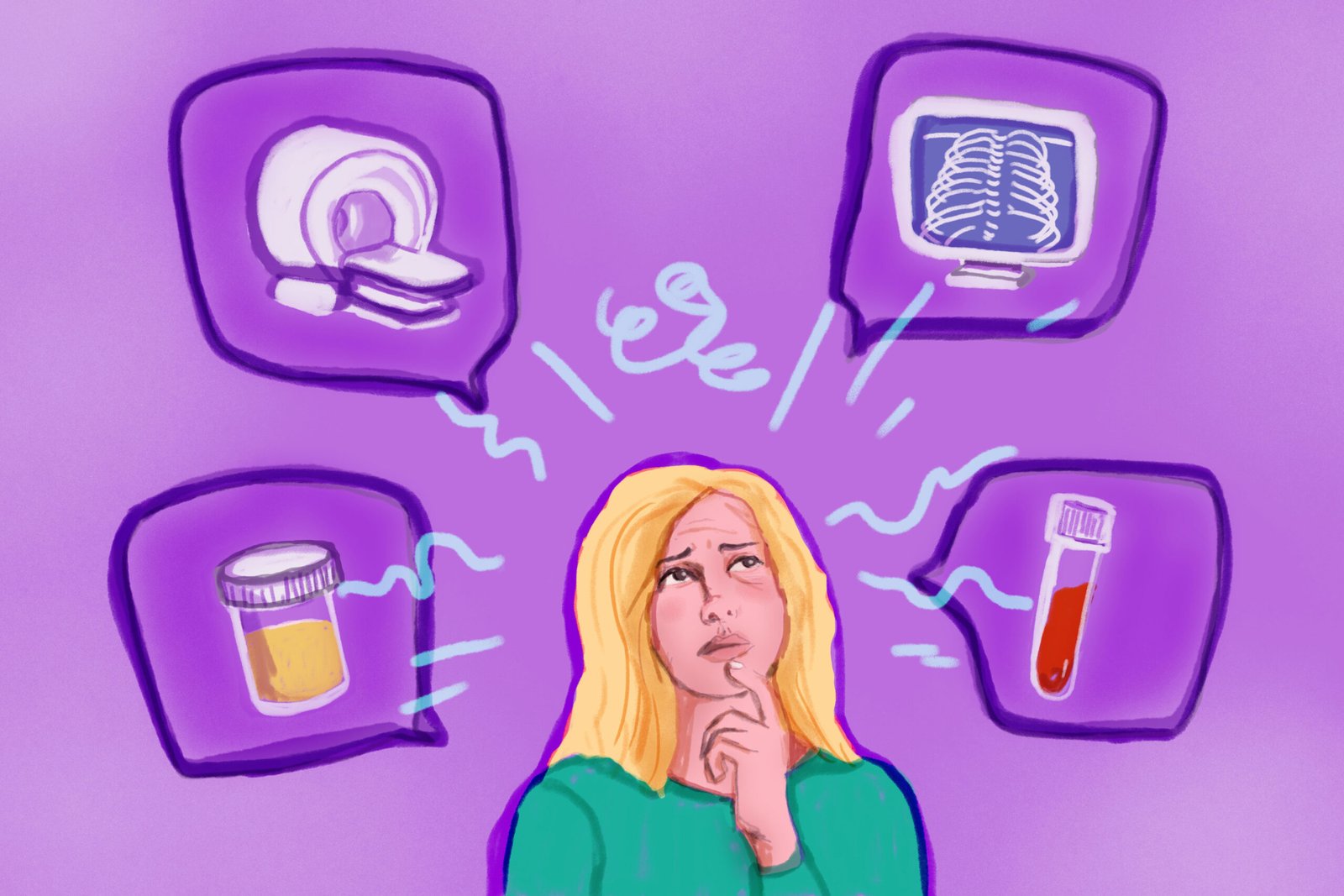
    At a minimum, a medical test will cost you time — and could mean a hefty medical bill. Many tests marketed directly to consumers, like full-body scans and at-home blood screening kits, are not covered by insurance, and some tests can cost several thousand dollars.

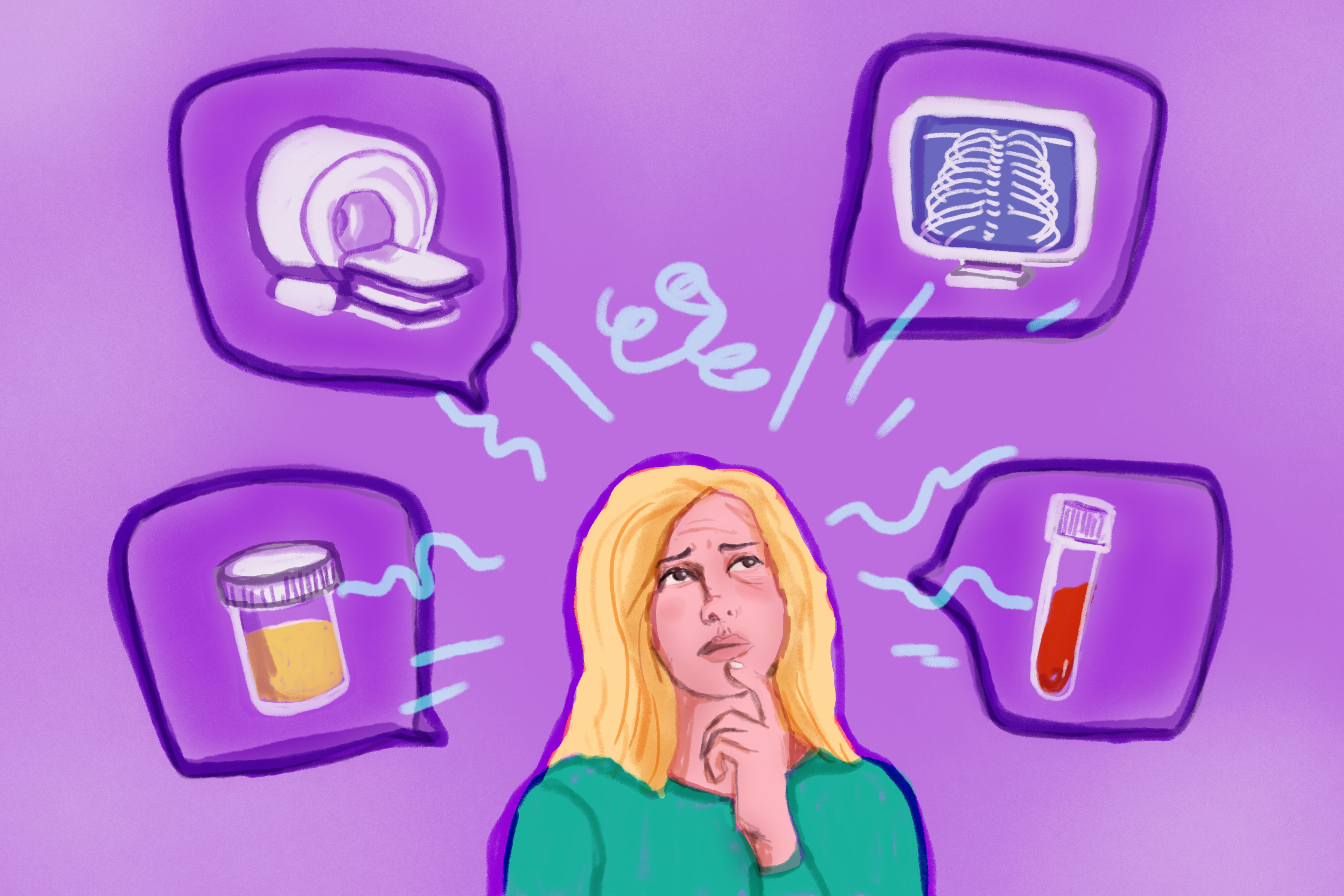
    Some laboratory tests might involve only the discomfort of a blood draw or the awkwardness of collecting a urine or stool sample, but others carry the possibility of physical harm. For example, a small percentage of people who get CT scans each year will develop cancer because of the radiation exposure from the tests, according to estimates from the National Institutes of Health. Relatively simple procedures like a biopsy or an endoscopy come with the risks of pain, infections, tearing, a reaction to anesthesia, or further serious complications.

    Plus, testing can cause anxiety and stress — as patients wait for results and if the results are inconclusive. “I see patients every week in my office who are tortured by the results of tests that they really didn’t need to ever have,” said Rita Redberg, a University of California-San Francisco professor and cardiologist and an advocate for less medical testing. For example, if you discover a cyst, then “you’re living for the next year, two years, three years getting repeated tests to figure out whether it’s benign or a cancer,” Redberg said. She cautions patients against testing unless they have specific symptoms.

    Testing Often Leads to More Testing — And More Risk

    A reality of getting a medical test is that the results often lead to additional, and potentially more invasive, testing. Doctors call this “diagnostic cascade.”

    Baute, for example, plans to continue monitoring her pancreas with annual scans. To her, she said, the financial cost and anxiety are worth it if she can feel “like I’m in control of my health and I have knowledge.”

    But Redberg points to a worst-case scenario, documented by JAMA Internal Medicine in 2011: After starting an exercise program, a 52-year-old woman experienced chest pain and went to see her doctor. Her exam suggested that her pain was muscular and she had a low risk for heart disease. Still, her doctor ordered a scan of her heart to reassure her. The results led her doctor to order another test, during which her artery was ripped. She had emergency bypass surgery, experienced complications, and ultimately, Redberg said, “she ended up with a heart transplant — all from this unnecessary scan just to reassure her.”

    A Few Simple Questions Can Help You Decide

    Before saying yes to the test, it’s important to know about the risks and benefits — even if your doctor recommends it, Redberg said. She suggests asking a medical provider and yourself questions like:

    • What am I going to learn from this test?
    • How is this test going to help in my care?
    • Could I improve my health without doing this test?

    She said many test results, especially in her field of cardiology, end up pointing patients back to the basics of a healthy lifestyle, like eating well, exercising, and not smoking. And those, she said, could be advised without a test.

    People and Policy

    If your health insurance covers a medical test, that means the test has most likely met vetted, scientific standards that demonstrate benefits to patients. Insurers must cover evidence-based services that have a rating of A or B from the U.S. Preventive Services Task Force. Private insurers, as well as Medicaid and Medicare plans, must cover the full cost of recommended preventive screenings. Many medical tests marketed directly to consumers are not covered by insurance.


    Emily Siner at Nashville Public Radio contributed to this report.


    HealthQ is a health series from reporters Cara Anthony and Blake Farmer, approachable guides to an unapproachable healthcare system. It’s a collaboration between Nashville Public Radio and KFF Health News.

  • Rural MAHA Followers Say Trump Health Policies Haven’t Reached Their Communities

    Rural MAHA Followers Say Trump Health Policies Haven’t Reached Their Communities

    About half of rural voters identify with Make America Healthy Again, a sprawling political movement championed by the Trump administration, but most said President Donald Trump’s healthcare policies have not benefited their communities, according to a new poll from The Associated Press in partnership with KFF.

    About 8 in 10 rural voters — an important voting bloc for Trump and fellow Republicans in recent elections — said the Trump administration’s policies have had a negative effect or no impact on the health of people where they live. Most MAHA supporters, 68%, also feel this way, according to the national survey of more than 2,000 rural registered voters.

    The findings signal an apparent disconnect between the Trump administration’s MAHA-branded policy priorities and rural America’s perception of their reach and effectiveness.

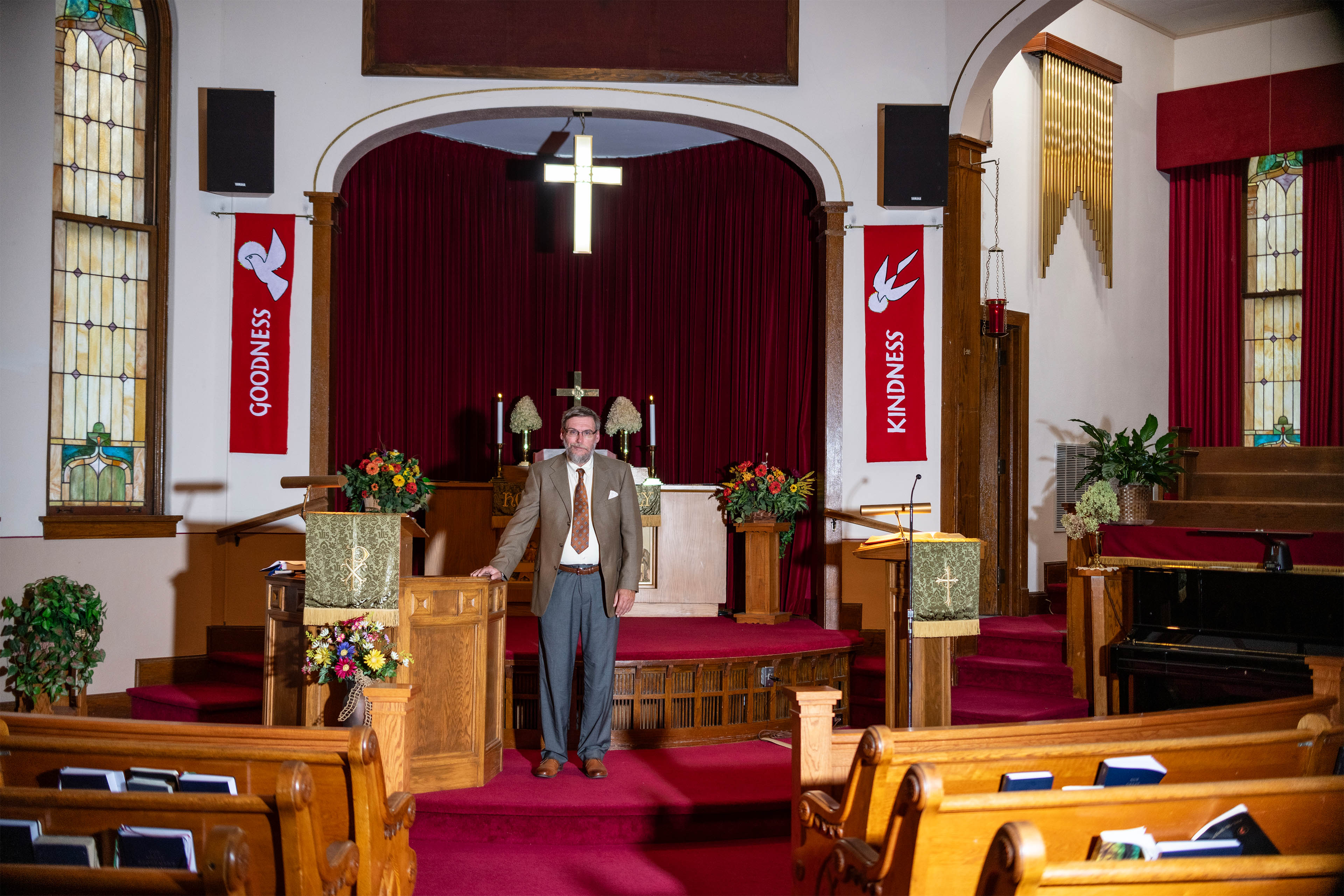
    Iowa pastor Mike Jager, 58, is a registered Republican and considers himself part of the MAHA movement. The Trump administration’s health policies have had “minimal” impact on the health of his community, Jager said, but he added that Trump’s health secretary, Robert F. Kennedy Jr., is moving the needle “in the right direction.”

    “It’s a beginning,” Jager said. “It’s a big ship to try and turn around and course-correct.”

    Kennedy has used the MAHA label to support various agendas, including abandoning long-standing vaccine guidance, researching ultraprocessed foods, and investing in regenerative agriculture.

    Jager lives in Sumner, Iowa, “less than a quarter mile from where the corn ends and the city begins.” He’s seen family members and neighbors develop diseases that he believes resulted in part from exposure to agricultural chemicals and consumption of unhealthy, processed foods.

    In the June Republican primary for governor, Jager voted for Zach Lahn, a businessman and farmer, who ran on a MAHA platform and beat out Trump-backed U.S. Rep. Randy Feenstra. He plans to vote for him again in November.

    A photo of Mike Jager standing in front of an altar inside of a church.
    Jager said that President Donald Trump’s health secretary, Robert F. Kennedy Jr., is moving the needle “in the right direction.” (Miriam Alarcón Avila for KFF Health News)

    Many Rural Voters Are Prioritizing Health Issues

    About two-thirds of rural voters who support MAHA said it’s “extremely” or “very” important to them to vote for a candidate who does, too, while only 4 in 10 rural voters overall said the same.

    Trump sought to seize on MAHA support during his campaign for another term two years ago. Now, amid tight midterm races, Kennedy has campaigned to galvanize the movement’s support. In May, he attended a MAHA bill signing with Iowa Republican Gov. Kim Reynolds, and in August, he went fishing with Lahn, posting about it on social media.

    Yet the survey indicates voters are noticing “this weird split in the Trump administration” between what Kennedy messages and what Trump says and does, said David Peterson, a political science professor at Iowa State University.

    “It’s this mix of things coming out of D.C., out of different pieces of the administration, that’s confusing people,” Peterson said.

    In Iowa, concerns about what’s causing rising cancer rates are “a big deal,” he said. For many people who identify with MAHA, being healthy includes taking on corporate agriculture and pharmaceutical companies that they think cause cancer, he added.

    “The sort of populist messaging around that is appealing right now,” Peterson said.

    In the poll, views on healthcare access and costs largely diverged along party lines. Most Democratic and independent voters said the Trump administration’s healthcare policies have had a negative impact on their healthcare costs and the health and well-being of people in their communities. Republicans were likelier to say there hasn’t been an impact.

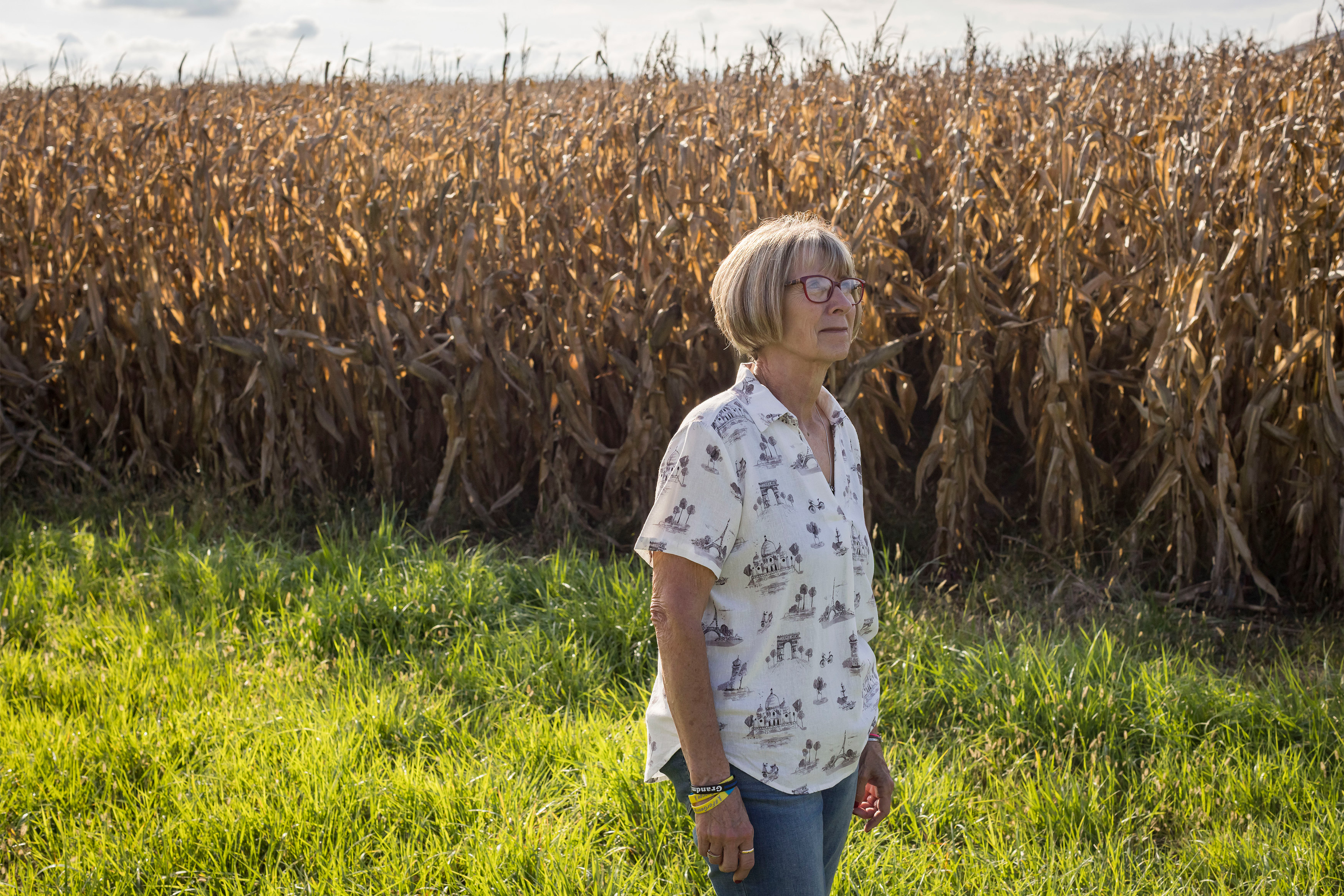
    Talking on the phone from her 200-acre farm in Carroll County, Iowa, 71-year-old Donna Klocke said that her husband had died from cancer and that she has neighbors who also have cancer.

    “It’s just very prevalent,” Klocke said. “We’re in a farming community. We use chemicals and pesticides and all kinds of things that aren’t necessarily good for us.”

    Klocke, a Democrat, said the MAHA movement is a good idea because she cares about being healthy, but she does not consider herself part of it and will not be voting for a candidate who represents the movement.

    Kennedy, who was an anti-vaccine activist before entering politics and has sent mixed messages to Americans about getting the measles vaccine, scares her.

    “Measles are coming back and polio,” Klocke said. “It’s the measles that really gets me. It’s like, do you not understand how dangerous it is?”

    A photo of Donna Klocke standing in front of a cornfield in Iowa.
    Donna Klocke cares about being healthy but does not consider herself part of the Make America Healthy Again movement. Her husband died from cancer after a life spent farming the family’s 200 acres in Carroll County, Iowa. (Kathyrn Gamble for KFF Health News)

    Survey Reflects Angst Over Healthcare

    About half of rural voters said their communities don’t have enough doctors or other healthcare providers, and even more said there aren’t enough mental health workers specifically. The share of rural voters who said their community does not have enough hospitals increased to 35% from 21% in a similar question asked in a KFF-Washington Post survey in 2017.

    And as with the general population, healthcare, gas, and grocery costs are top pain points. More than 6 in 10 rural voters said they were worried about healthcare costs.

    The level of worry varied based on coverage, with rural voters enrolled in employer plans or Medicare less likely to be worried. The survey found that 80% of working-age rural voters on Medicaid were very or somewhat worried about healthcare costs. Last year, Republicans passed a tax and spending bill that cut over $900 billion in projected Medicaid spending over a decade and mandated new eligibility requirements.

    Among rural voters who purchase their own insurance, such as the individual coverage plans available on Affordable Care Act marketplaces, 77% said they were worried.

    In the tiny community of Lipan, Texas, west of Dallas, Kim Solis and her husband have a handyman-and-home-remodel business and get their insurance on the marketplace. Since Trump was elected again, their premium payment jumped from zero to $166 a month. Their copays went up, and their deductibles each increased by $2,000.

    Solis, 62, said she worries what will happen if they get a big medical bill.

    “Certainly, we’d be in a world of hurt trying to take money out of savings or getting it out of our 401(k) just to be able to do something about it,” she said.

    Most MAHA Voters Are Also MAGA — But Not All

    Like the general population, rural voters said they trust their own doctors and healthcare providers for health information over government agencies or officials, according to the poll.

    Trust in Kennedy and Trump fell largely along partisan lines. About 10% of rural Democratic voters reported having a “great deal” or “fair amount” of trust in Kennedy, compared with 74% of rural Republican voters. About 5% of rural Democrats and 69% of rural Republicans said they trust Trump a “great deal” or “fair amount” for reliable health information.

    While Make America Great Again and MAHA identities are “linked in a lot of ways,” the rising costs of healthcare and groceries pose a challenge for those committed to the MAHA principles that Kennedy promotes, said Peterson, the Iowa State professor.

    Buying healthy food “becomes, ‘I can’t afford to do that because of Trump’s policies,’” he said.

    In Stamping Ground, Kentucky, Alma Johnson, 65, works as night security at a horse farm. Johnson said gas had gone up but her overall cost of living had decreased since Trump took office.

    Johnson voted for Trump in 2016, 2020, and 2024 and said she “pretty much” likes how Trump is running the country. But she said she is not a MAGA devotee, preferring to “think for myself.”

    MAHA, however, is an easy sell for Johnson because, she said, she doesn’t think people should be able to buy junk food through the Supplemental Nutrition Assistance Program, or SNAP.

    Still, she said she hasn’t seen much impact from the Trump administration’s healthcare policies, including the new food pyramid.

    “It takes a long time to change people, their habits, their thoughts, or the things they do,” Johnson said.

    About the Poll

    The KFF-AP Rural Voters Survey was conducted online and by telephone Aug. 12-24, 2026, among 2,241 registered voters living in rural areas, defined as census tracts that fall within codes 5-10 of the U.S. Department of Agriculture’s 2020 Rural-Urban Commuting Area codes. Voters were reached through a combination of the probability-based SSRS Opinion Panel and a registration-based sample from the L2 voter file. Overall results have a margin of sampling error of plus or minus 3 percentage points, including design effects due to weighting. Error margins are larger for subgroups. In collaboration with the AP, KFF researchers worked to design the survey sample and questionnaire and analyze and report findings.

    This report is from a collaboration between KFF Health News and The Associated Press.