Jason is a general assignment reporter, with particular focus on genetic medicine and rare disease. Confidential tips can be sent on Signal at JasonMast.77.
Martin Shkreli is back. The Federal Trade Commission isn’t happy.
The FTC and seven states on Tuesday asked a federal court to hold Shkreli in contempt for “flagrantly and repeatedly” violating a court order banning him from working in the pharmaceutical industry.
Jason is a general assignment reporter, with particular focus on genetic medicine and rare disease. Confidential tips can be sent on Signal at JasonMast.77.
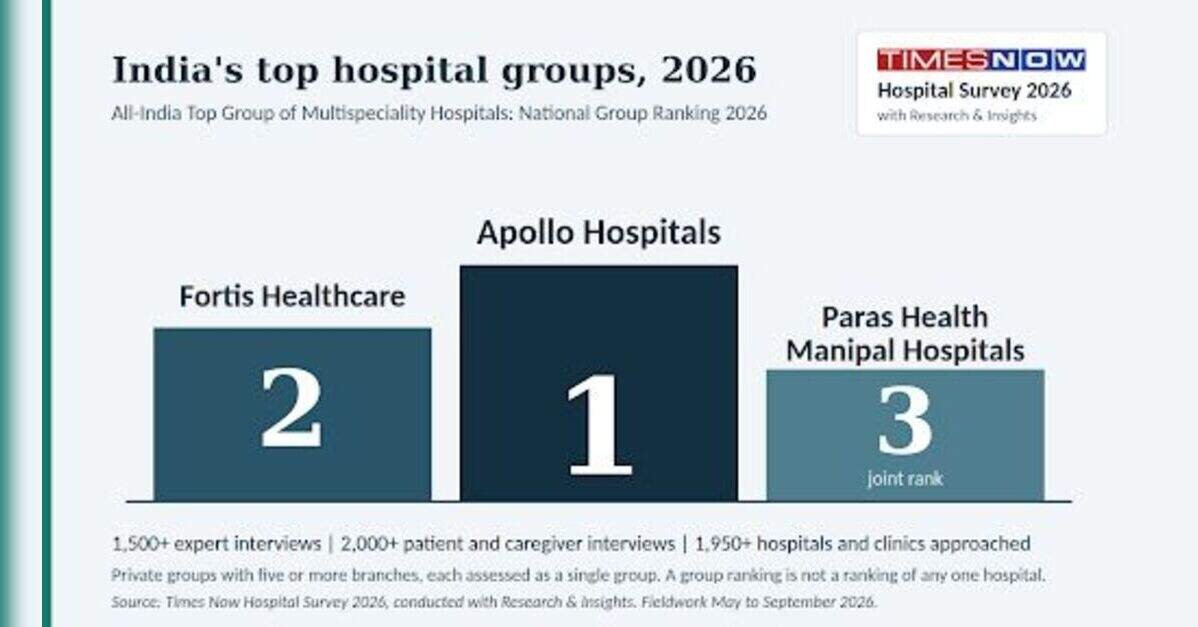
New Delhi, October 2026: Apollo Hospitals has secured the first position and Fortis Healthcare the second in the All-India Top Group of Multispeciality Hospitals – National Group Ranking 2026, conducted as part of the Times Now Hospital Survey 2026. Manipal Hospitals and Paras Health have jointly secured third place, bringing together four healthcare groups that represent different approaches to building and expanding multispeciality care in India.
Conducted by Times Now in association with research partner Research & Insights, the survey assessed private hospital groups as integrated healthcare networks rather than evaluating individual hospitals in isolation. The first results draw attention to a question facing India’s healthcare sector: how effectively can hospital groups maintain clinical capabilities, infrastructure and patient-care standards across multiple locations?
Which are India’s top hospital groups in 2026?
Source: Times Now Hospital Survey 2026, National Group Ranking.
How was the 2026 hospital group ranking calculated?
The survey was conducted between May and September 2026. Its methodology combined desk research, more than 1,500 interviews with doctors and medical specialists, more than 2,000 interviews with patients and caregivers, and fact sheets sent to more than 1,950 hospitals and clinics. The assessment combined expert and patient perceptions with factual information on clinical quality, infrastructure, human resources, accreditation, patient safety, and academic and research capability.
Only private hospital groups with at least five operational branches were eligible. Government, partly government-funded, charitable and not-for-profit hospitals were excluded. The results reflect each eligible group as a single entity and should not be read as rankings of individual campuses. The survey also allows the same rank where the statistical gap between two entities is very small, as in the joint third place.
Who made the top three in the 2026 hospital group ranking?
Figures in this section are as published by the groups on their own websites in October 2026.
Apollo Hospitals, which secured the first position, says it opened India’s first corporate hospital in 1983 and has since built a broad healthcare ecosystem spanning hospitals, pharmacies, diagnostics and primary-care clinics. The group reports more than 10,000 beds and a pharmacy network of over 4,000 outlets. Its scale reflects how organised private healthcare has moved from individual institutions to interconnected networks.
Fortis Healthcare, ranked second, reports 36 healthcare facilities across 12 states, with more than 6,000 operational beds, spanning hospitals, diagnostics and day-care specialty facilities. Its stated mission centres on clinical excellence and patient care.
Manipal Hospitals, which shares third place, traces its roots to the founding of Kasturba Medical College in 1953, with its first hospital opening in Bengaluru in 1991. The group reports 49 hospitals in more than 24 cities and over 12,600 beds, and says its network is expanding across metro and tier-II cities.
Paras Health’s joint third place brings a different dimension to the ranking: the development of advanced multispeciality care in markets where specialised treatment has often been harder to find close to home.
Which North India hospital group made the top three?
While much of India’s organised private healthcare infrastructure has historically been concentrated in the major metros, Paras Health has built a network across northern and eastern India, largely in cities beyond the largest metropolitan centres. Its eight hospitals are in Gurugram and Panchkula in Haryana, Patna and Darbhanga in Bihar, Ranchi in Jharkhand, Udaipur in Rajasthan, Kanpur in Uttar Pradesh and Srinagar in Jammu & Kashmir, a presence in five states and one Union Territory.
According to its website, Paras Health describes itself as having 20 years in healthcare, has treated more than 2.1 million patients across multiple states, and has a team of more than 2,100 doctors and nurses. Its clinical services include cardiac sciences, oncology, neurosciences, gastro sciences, orthopaedics, renal sciences, and liver transplant and GI surgery, among other specialties. The group’s Srinagar hospital marked three years in May 2026.
Why hospital groups outside the metros matter
Building a multispeciality hospital outside an established metropolitan hub takes more than physical infrastructure. Hospitals must attract and retain experienced clinicians, establish multidisciplinary teams, invest in specialised equipment, maintain quality and patient-safety systems, and develop the operational capability to support complex treatments.
These requirements can be harder to meet in Tier-II and Tier-III markets, where specialised clinical talent, supporting medical infrastructure and referral networks may differ from those in larger cities, and where providers must balance affordability against the cost of advanced services. For patients, having such services locally can reduce the need to travel to metropolitan centres for consultations, diagnostics and treatment.
Paras Health’s presence in Patna, Darbhanga, Ranchi, Kanpur, Udaipur and Srinagar illustrates an emphasis on building this capacity outside the largest markets. Manipal’s presence across metro and tier-II markets shows how established national networks are also broadening their reach. The two approaches differ in scale and geography, but both point to the growing importance of extending organised healthcare beyond traditional urban centres.
The challenge is not simply to open hospitals in more cities, but to sustain clinical capability, patient experience and quality systems across an entire network. The Times Now survey assesses groups against that institutional perspective. However, the published ranking does not provide criterion-wise scores showing that any single strategy or factor determined a group’s position. Paras Health’s joint third place should therefore be read as a national group-level outcome, with its expansion model an illustration of the wider shift towards advanced care in non-metropolitan India.
What the ranking signifies
The first release of the Times Now Hospital Survey 2026 places Apollo Hospitals, Fortis Healthcare, Manipal Hospitals and Paras Health within the national conversation on organised multispeciality healthcare. Their positions bring different network models into focus, from the scale of established national chains to the development of advanced care in markets beyond the largest cities. As hospital networks continue to expand, the ability to sustain clinical capability across locations will remain an important consideration for patients, healthcare professionals and the wider industry.
The survey’s campus-level, specialty, zonal and city-level results, being released in stages, are expected to add further perspective on individual hospitals and healthcare markets.
About the survey: The Times Now Hospital Survey 2026 was conducted by Times Now in association with Research & Insights. It assesses eligible private hospitals and hospital groups through desk research, medical-expert interviews, patient and caregiver interviews, and factual hospital data. Results are being released in stages across national group, hospital, specialty, zonal and city categories.
A note on the figures: Network figures for Apollo Hospitals, Fortis Healthcare, Manipal Hospitals and Paras Health are as published on each group’s website in October 2026 and may change. Survey details are from the Times Now Hospital Survey 2026 methodology.
Disclaimer: The above content is non-editorial, and TIL hereby disclaims any and all warranties, expressed or implied, relating to it, and does not guarantee, vouch for or necessarily endorse any of the content.
Join the community of 2M+ industry professionals.
Subscribe to Newsletter to get latest insights & analysis in your inbox.
All about ETHealthworld industry right on your smartphone!
As a rheumatologist, I treat rheumatoid arthritis (RA) and other complex autoimmune diseases. If you have or happen to develop one of these diseases, I am thankful that science has delivered amazingly effective targeted therapeutics and biologics in recent decades. While highly effective, these treatments come with a high economic cost, so I have grown accustomed to daily battles with commercial insurance plans to get working-age patients the treatments they need. While horror stories abound regarding commercial insurers, Medicare has traditionally been a more predictable partner for my older patients. Medicare reimbursement is low — an issue worthy of a separate commentary piece — but comes on time, typically without the hassle and administrative delays of prior authorizations, assuming we use our therapeutics within FDA-approved dosing and indications.
On top of these existing challenges here in the Midwest, providers recently won a battle we did not expect to have to fight with a Medicare administrative contractor (MAC). The story deserves scrutiny from legislators and regulators nationwide.
Medicare beneficiaries rightly assume, as have I, that policy spells out the services they are entitled to receive. Lawmakers in Congress establish patients’ benefits in law, while the Centers for Medicare & Medicaid Services (CMS) develops the national rules and policies to implement them. MACs fit into this process by administering those rules regionally (with some discretion), but they are not supposed to privately create new substantive conditions of payment.
Recently, the MAC overseeing Kentucky and Ohio began auditing and denying claims for intravenous Orencia, a biologic drug used to treat RA, citing a “lack of medical necessity.” The policy affected more than a hundred patients who had mostly been on Orencia for a decade or more. These patients were forced to stop or delay treatment or switch therapies, which resulted in serious RA flares. MAC administrators had decided that most patients on intravenous Orencia, covered under Medicare Part B, should instead receive subcutaneous Orencia, covered under Medicare Part D and often at substantially higher out-of-pocket cost.
The decision was made without a formal notice-and-comment process. In fact, this requirement does not even appear in the Medicare guidance cited for this decision. Worst of all, it effectively forced dozens of patients off a life-changing therapy.
Thanks to outreach from clinicians, national advocacy organizations, angry patients, and congressional representatives, this policy was walked back. Or at least, we think so. There was no announcement of a reversal. Instead, the MAC covering Kentucky and Ohio quietly revised a fact sheet on its website, removing language that preferred subcutaneous over intravenous dosing.
This whiplash has been devastating to my own small clinic, however, as the MAC continues to withhold the equivalent of roughly three payrolls’ worth of payments for treatments we rendered in good faith during this period. They have also not answered repeated inquiries about whether denials issued under the now-removed standard will be reversed.
This situation exposed several problems that need to be addressed before this happens to other MACs, Medicare beneficiaries and clinicians:
1. The current system allowed one medical director’s opinion to acquire the force of Medicare policy without an effective check. This violates the Supreme Court’s decision in Azar v. Allina, which limits the government’s ability to create substantive Medicare payment standards through informal guidance. Yet it still took months of work, worry, and countless hours distracted from providing clinical care to get the issue elevated to a level where the policy was reconsidered.
2. There is inadequate accountability and little transparency within MAC operations. After an initial call with the MAC medical director to raise this issue, we went for weeks with response and no clue as to where our appeal stood. Providers didn’t know how to “correctly” care for our affected patients. When the disputed language did quietly disappear from the fact sheet, there was no public explanation, formal announcement, or directive regarding claims already denied.
3. There is no clearly identified chain of command to move a critical issue of patient harm from a regional MAC to CMS. As an experienced advocate, I leveraged my relationship with my congressional representative and the American College of Rheumatology to elevate this issue to CMS, but what if I hadn’t had those relationships? Our system should not require physicians to become experts in Medicare law and policy just to ensure the Medicare system follows its own rules.
Medicare beneficiaries deserve better. While in this case we’ve been able to protect access to intravenous Orencia, this experience exposed flaws that extend far beyond one drug or one MAC contractor. We should all be concerned that MACs are increasingly making unilateral decisions that negatively impact patient access. Medicare policy should be transparent and include appropriate notice and stakeholder input. And when a contractor gets it wrong, there should be a clear and rapid way to stop the harm to patients, their relationship with their doctor and the doctor’s practice. A patient’s access to Medicare-covered care should never depend on whether their physician can find someone in Washington willing to intervene. Something must change.
Author bio:
Dr. Chris Phillips is an American College of Rheumatology leading rheumatologist and owner of Paducah Rheumatology.
Rise and shine, everyone, another busy day is on the way. And it is getting off to a pleasant start here on the Pharmalot campus, where clear blue skies and comfy breezes are greeting us. As for the official mascots, they are happily snoozing in their respective corners. As for us, we are firing up the trusty kettle for another cup of stimulation. Our choice today is butter pecan. Of course, you are invited to join us. For the full experience, we are now hawking replicas — take a look. Meanwhile, here are a few items of interest. As always, do keep in touch. We appreciate feedback, criticism, and tips. …
Two months after the release of an open letter on potential safety issues tied to a rare disease drug sold by Neurocrine Biosciences, patient advocates and some experts are expressing growing alarm over the perceived risks of the therapy, STAT reports. The drug, approved to treat Prader-Willi syndrome, which can cause an insatiable feeling of hunger, has been linked to the deaths of seven people and the hospitalization of nearly 100 others — all since the treatment, called Vykat XR, was approved 18 months ago. Case reports on those deaths and hospitalizations that were submitted to regulators do not prove causality; many of the Vykat cases involved complex medical issues and multiple medications. But some experts say the evidence is sufficient to conclude Vykat is causing unacceptable harm.
The gifts and payments that doctors receive from drugmakers increased inappropriate prescribing and the number of prescriptions written, likely leading to rising health care costs, STAT writes, citing a Cochrane review of dozens of previous studies that have explored the influence the pharmaceutical industry has on medical practice. In addition, pharmaceutical advertising or education aimed at doctors may also increase inappropriate prescribing, probably increases the number of prescriptions written, and may increase the costs of prescriptions. But conflict-of-interest policies that restrict or manage interactions between companies and doctors probably improved prescribing practices.
A venture fund’s objective is to invest capital into early-stage companies to fuel growth, increasing the probability that they are acquired or reach public markets. That’s how an “exit” is achieved, with the invested capital returned at a risk-adjusted profit. Corporate venture capital (CVC) differs from orthodox venture capital because, alongside financial returns, a CVC’s goal is often to create strategic value for a core business.
Delivering this strategic value is much easier said than done, and therefore not well addressed by most CVC funds.
Outlined below are four distinct practices that optimize strategic and financial value.
Define strategic value alongside financial return
Strategic value comes in many forms. Pharma corporate venture should develop investments that might generate a valuable new target, drug, or vaccine candidate, improve the probability of pipeline success, reduce the cost of R&D, accelerate clinical trials — and more through the entire value chain. It is not necessary to acquire such businesses outright, but it is necessary to cultivate them into standardized, scaled solutions for scientists, regulators, clinicians, patients, and payors.
Assessing the value of an asset — financial and/or strategic — is as much art as science. Financial value can be estimated using discounted cash flow analysis, which relies on pro forma projections and assumptions about future market pricing and multiples, or through comparable-company analysis. Quantifying strategic value is much more difficult. One derivative indicator of strategic value is whether the core CVC business engages with the portfolio company, through piloting, partnering, licensing, and/or purchasing products or services. A CVC that can’t generate this type of engagement is just delivering capital without a strategic return.
Lead internal collaborations that power sourcing and diligence
Placing relevant strategic investments requires deep familiarity with the parent company’s objectives and priorities. This means dedicated internal workstreams with business leaders and subject matter experts who help refine and prioritize use cases and understand unmet needs. In-house CVC resources also help with pipeline building and technical, scientific, and clinical due diligence. Proper engagement is time-consuming and requires operational, process, and communication excellence — skills anathema to the normal concerns of most venture investors.
Many benefits accrue from generating that upfront buy-in. Deep collaboration raises the CVC’s probability of succeeding in highly scientific and technical markets. It also instills early business awareness and engagement, so portfolio companies develop faster pilots and larger partnerships, executable in a shorter timeframe.
Drive leverage through syndication
Most CVC investors are equipped to lead negotiations and price rounds, but there’s a strong case for prioritizing syndicate creation.
Syndication provides leverage through agile, coordinated activity on negotiating terms, dividing or delegating board activities, and considering future mergers and acquisitions. It also extends financial leverage, allowing a fund to cover more of the market and back a broader range of strategic interest areas. Joining syndicated deals priced by expert financial investors tends to produce a fair market price. A CVC can always walk away when pricing runs ahead of what its internal modeling supports.
Even with reduced board involvement, a fund can stay engaged through shareholder and information rights — quarterly financials, board materials, regular check-ins — whether it holds a board or observer seat or is simply an shareholder.
Occasionally, a CVC will need to play a more significant company-building role, In such cases it can place a convertible note or lead a round outright — but always with an eye toward delegating responsibility over time. The correct level of involvement is a case-by-case decision, considering the strategic relevance of the platform, the stage of the company, and the experience of its board and management team.
Deliver the payoff
None of this works as one single move, but as a pattern: sourcing shaped by internal collaboration, pricing and development sharpened by syndication, and continued engagement all the way to exit. Funds that operate this way tend to see their strategic and financial returns reinforce each other over time rather than trade off against one another.
The key lies in recruiting and training leaders who roll up their sleeves and work seamlessly with internal partners. When portfolio investments help a business develop better therapies or reach patients faster, they deliver strategic value — and ultimately value to patients and providers.
David M. Rubin, Ph.D., is a Managing Director in Merck GHIF, where he leads the drug discovery and precision medicine practice. Dr. Rubin ran and helped build life sciences companies in the USA, UK, Denmark, Hungary, and India. He was awarded National Institutes of Health and American Cancer Society Fellowships to support his research at Harvard Medical School on ubiquitin-dependent protein degradation. He received a B.A. in biology from SUNY Binghamton and a Ph.D. from Temple University. Junk Birds, his collection of previously published short stories, was published in 2025.
This post appears through the MedCity Influencers program. Anyone can publish their perspective on business and innovation in healthcare on MedCity News through MedCity Influencers. Click here to find out how.
The combination establishes one of the largest value-based care platforms in the United States dedicated to underserved communities, entering 2027 with nearly 500,000 attributed Medicaid and Medicare lives and $3 billion in managed medical spend across nine states.
The 500k-Member Cohort, Embedded Community Teams, and AI-Driven Care Plans
The merger of Diverge Health and Medical Home Network brings together complementary operational, technical, and clinical models tailored to safety-net healthcare:
Unifying FQHC Networks and Independent Primary Care: Bridges two distinct provider segments that historically operated in silos. While MHN brings more than 15 years of experience managing FQHC networks—having launched one of the nation’s earliest and most successful community health center Medicaid ACOs—Diverge Health brings a proven track record partnering with independent primary care physicians. Entering 2027, the combined entity connects nearly 100 FQHCs and more than 300 independent practices, supported by over 20 payer contracts across nine states.
Demonstrated Actuarial and Engagement Outcomes: Backed by real-world performance metrics. In commercial payer deployments, Diverge’s model delivered a 2% net reduction in population-level Medical Loss Ratio (MLR) alongside a 6% increase in patient primary care visits in 2025, proving that proactive field outreach directly improves quality metrics and keeps patients anchored in primary care rather than emergency rooms.
Embedded Field Teams for Whole-Person Care: Solves the staffing bottleneck that constrains community clinics. Rather than demanding that clinic doctors manage non-clinical social needs, the platform embeds multidisciplinary community health teams directly alongside partner practices. These teams address behavioral health barriers, arrange transportation, coordinate social services, and engage disconnected patients in their homes and neighborhoods.
Proprietary Risk Modeling and Automated Care Planning: Modernizes the data input layer for complex patient populations. Diverge’s machine learning infrastructure ingests multi-source data—including clinical EHR records, Medicaid encounter data, and community social vulnerability indices—to identify “rising-risk” patients before an acute crisis occurs. The system automatically drafts customized, actionable care plans, placing them directly into the hands of local care coordinators to streamline field interventions.
Executive Leadership
Binoy Bhansali leads the combined organization as CEO of Diverge Health, with Cheryl Lulias serving as Co-Founder and President of MHN PBC. The platform is backed by prominent healthcare venture capital and growth equity firms, with Oak HC/FT joining the board of directors alongside Triple Aim Partners and GV (Google Ventures).
“Value-based care is notoriously hard, especially in Medicaid, but strengthening our country’s primary care backbone and supporting their patients to live their healthiest lives is a moral imperative,” said Binoy Bhansali, CEO and Co-Founder of Diverge Health. “Together, we are proving that succeeding in value-based care is very much possible if you support these practices with the right infrastructure, community health teams, and data.”
You’re reading the web edition of STAT’s Health Tech newsletter
Adobe
Mario covers technology in health care, including FDA regulation of artificial intelligence; how Medicare pays for health tech; the use of AI in clinical care; mental health chatbots; and consumer wearables. He’s also the co-author of the free, twice weekly STAT Health Tech newsletter. You can reach Mario on Signal at mariojoze.13.
You’re reading the web edition of STAT’s Health Tech newsletter, our guide to how technology is transforming the life sciences. Sign up to get it delivered in your inbox every Tuesday and Thursday.
Good morning health tech readers!
I’m getting on a train to Boston in couple of hours for STAT Summit. See some of you soon.
Mario covers technology in health care, including FDA regulation of artificial intelligence; how Medicare pays for health tech; the use of AI in clinical care; mental health chatbots; and consumer wearables. He’s also the co-author of the free, twice weekly STAT Health Tech newsletter. You can reach Mario on Signal at mariojoze.13.
Mount Sinai Health System researchers launched bioengineered human brain and cardiovascular tissue models into orbit aboard the SpaceX CRS-35 Commercial Resupply Services mission to the International Space Station (ISS).
Developed across Mount Sinai’s Departments of Stem Cell Biology and Regenerative Medicine, Neuroscience, and Surgery, alongside the Cardiovascular Research Institute, the dual investigations pair patient-derived stem cell organoids and microfluidic “organ-on-a-chip” systems with automated space biology hardware engineered by Space Tango in collaboration with NASA.
Leverages the microgravity and elevated radiation environment of low Earth orbit (LEO) as an accelerated biological model to study the cellular mechanics of human aging, neurodegeneration, and cardiovascular decline.
The Biological Payloads: miBrain and µCVchip
The mission deploys two distinct human tissue platforms into low Earth orbit to assess neurological signaling, vascular dynamics, and cellular stress in real time:
The miBrain Platform (Neural Aging & Genetic Susceptibility):
Cellular Composition: Derived from human induced pluripotent stem cells (iPSCs), the miBrain model reconstructs human brain tissue architecture by incorporating all major cerebral cell lineages—including neurons, astrocytes, microglia (immune cells), and functional microvasculature.
Orbital Science Objectives: Led by Joel W. Blanchard, PhD, the project evaluates how microgravity and elevated space radiation alter neural cellular communication, blood-brain barrier permeability, and neuroinflammatory injury markers.
Terrestrial Disease Modeling: Crucially, the mission tests how high-risk neurodegenerative genetic variants—specifically the APOE4 allele, the strongest genetic risk factor for late-onset Alzheimer’s disease—influence cellular aging kinetics and susceptibility to environmental stressors, comparing orbital degradation rates against baseline Earth controls.
The µCVchip Platform (Functional Cardiovascular Organoids):
Automated Microfluidic Architecture: Co-led by Kevin D. Costa, PhD, and David Sachs, PhD, the project sends two microfluidic chips containing up to 16 beating human cardiovascular organoids grown from healthy stem cells.
Autonomous Orbit Testing via Space Tango CubeLab: Building upon a 2023 preliminary cell viability mission aboard SpaceX CRS-29, the CRS-35 hardware integrates automated electrical pacing, hydraulic pressure testing, high-resolution microscopic imaging, and programmatic fluid sample collection to track cardiac contractility and vascular remodeling under continuous microgravitational unloading.
Translational Cardioprotection: The data aims to isolate cellular mechanisms behind spaceflight-induced cardiac deconditioning and vascular stiffness, informing novel therapeutic targets for heart failure and vascular disease in aging terrestrial populations.
The company said the new lens uses its proprietary ENLIGHTEN NXT optical technology which delivers the lowest light scatter and highest reported light utilization of any trifocal IOL.
According to Alcon, PanOptix Pro provides 94 per cent light utilisation, compared to a theoretical maximum utilization of 96 per cent for diffractive optics.
“PanOptix Pro offers powers ranging from +6.0 through +30.0 diopters (in 0.5 diopter increments), +31.0 through +34.0 diopters (in 1.0 diopter increments) with a +2.17 diopter intermediate and a +3.25 diopter near add power,” Alcon added.
Join the community of 2M+ industry professionals.
Subscribe to Newsletter to get latest insights & analysis in your inbox.
All about ETHealthworld industry right on your smartphone!