
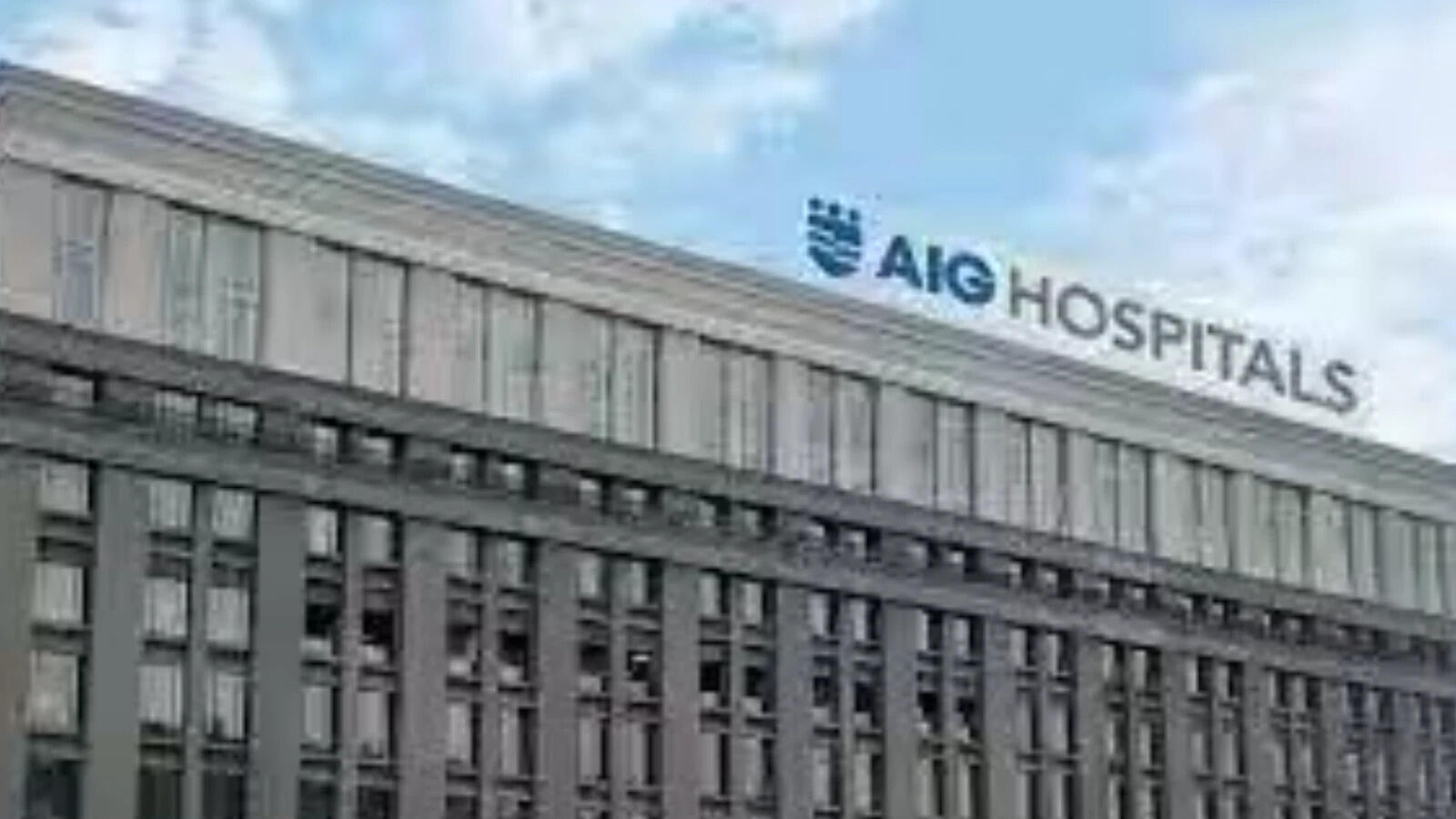
Mumbai: Novo Holdings, the controlling shareholder of Danish drugmaker Novo Nordisk, Abu Dhabi’s Axight and GIC of Singapore, the sovereign wealth fund of the city state, are in advanced discussions with EQT to invest Rs 2,000-2,500 crore in AIG Hospitals, a multi-speciality chain based in Hyderabad, said people with knowledge of the matter.
The Swedish buyout group plans a fund-to-fund transfer of its four-year old investment, they said. The investor interest comes amid private equity firms, including Blackstone and KKR, acquiring stakes in Indian hospitals, replicating a strategy they have followed in other countries for decades.
The stake-sale plan is led by the two promoters of the chain–chairman and managing director Duvvur Nageshwar Reddy and vice chair Penmetsa Venkata Subbaraju. It will involve a 10-12% dilution of their shares in the company at a valuation of Rs 22,000 crore ($2.29 billion) to Rs 24,000 crore ( $2.5 billion).
The AIG Hospitals investment took place in 2022 via Baring Private Equity Asia (BPEA) Private Equity Fund VII. In October 2022, BPEA combined with EQT to form BPEA EQT, later renamed EQT. BPEA had bought out Quadria Capital and invested $300-350 million for a near 40% stake. The remaining 60% stake is held by the two founders, Reddy and Subbaraju.
EQT and the founders have been working with advisors Goldman Sachs and UBS to help find new investors and facilitate the transfer. The plan has been to approach EQT’s limited partners (LPs) to co-invest with them as well as healthcare-focussed funds that can add strategic value. The two founders will continue to run the company. Fund-to-fund strategies are increasingly becoming prevalent in the PE industry as they hold on to prized and hard-to-sell assets for longer.
EQT, Novo and GIC declined to comment. Axight didn’t respond to queries. Reddy couldn’t be reached on his mobile.
AIG Hospitals was founded by Reddy in 1994 in Somajiguda, Hyderabad, as Asian Institute of Gastroenterology, India’s first dedicated day-care centre for digestive disorders and specialized gastrointestinal care. AIG is present in more than 40 medical specialities operating across three units in Hyderabad with more than 1,400 beds and over 350 ICU beds.
Last month, while laying the foundation stone of a fourth greenfield facility in Visakhapatnam, Reddy said the company is planning to invest Rs 2,000 crore over the next five years to add 1,000 beds.
The company is expecting a FY27 ebitda of Rs 800 crore but the transaction is based on its FY28 ebitda expectation of Rs 1,000 crore.
The traditional 10-year fund cycle is diminishing with exits getting pushed into the future. These continuation vehicles or even funds allow buyout groups to park assets with insurers or on their own balance sheets. The median life of a private equity fund has risen to 15 years.
According to consultants Bain, the industry has more than 32,000 unsold companies worth $3.8 trillion trapped in portfolios. These fund-to-fund vehicles now account for almost 14% of exits, according to a Jefferies report.
Denmark’s Novo, GIC and Abu Dhabi investment entities like Axight have strong linkages in healthcare as well as EQT. Axight is the Asia-Pacific focused unit of Abu Dhabi’s $115 billion asset manager Lunate and was set up in 2025 with the goal of increasing its exposure to that region. Axight is likely to partner the Swedish buyout group to acquire Nuvama Wealth. Earlier this year, Novo acquired Surya Hospitals while GIC has backed Asia Healthcare Holdings (AHH), a platform that includes Motherhood Hospitals, Nova IVF, and Asian Institute of Nephrology & Urology (AINU) hospitals.
Novo chairman Jean Eric Salata told ET recently that it’s looking to deploy at least $2 billion every year till 2030, buying out companies from industrial manufacturing to pharma, financial services and even sports franchises.
The world’s most populous nation has an estimated deficit of 2.4 million hospital beds, according to the Association of Healthcare Providers India. The BSE Hospitals index is up 10.3 per cent this year, compared with the benchmark Sensex’s 15% over the same period. Manipal Health Enterprises, one of the country’s largest hospital groups, has seen its share gain 5% since it raised nearly $1 billion in an initial public offering in August.
Join the community of 2M+ industry professionals.
Subscribe to Newsletter to get latest insights & analysis in your inbox.
All about ETHealthworld industry right on your smartphone!
- Download the ETHealthworld App and get the Realtime updates and Save your favourite articles.